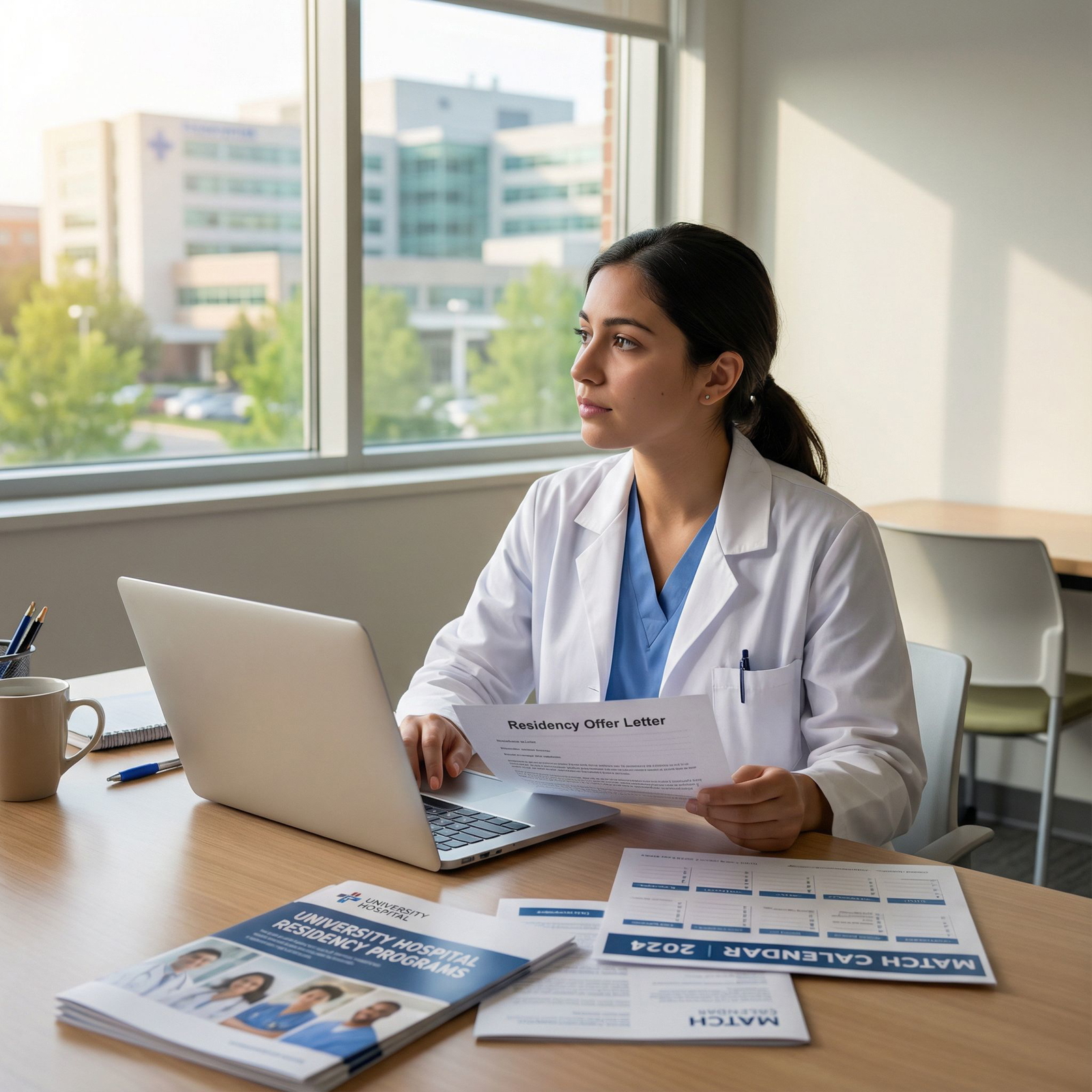
Understanding Pre-Match Communication for DO Graduates in Urology
Navigating pre-match communication as a DO graduate interested in urology residency can feel like trying to interpret an unwritten rulebook. You hear stories about pre-match offers, early commitment, unofficial “rank agreements,” and intense program communication before Match, but you rarely hear clear, practical guidance—especially tailored for osteopathic applicants.
Urology residency in the U.S. is competitive for everyone, and DO graduates often face additional challenges. Used well, pre-match communication can help you stand out, demonstrate fit, and clarify mutual interest with programs. Mismanaged, it can create awkwardness, misunderstandings, or even raise ethical concerns.
This guide walks you through how to approach pre-match communication as a DO graduate applying to urology, with actionable steps, example language, and DO-specific considerations.
1. The Landscape: Urology Match, DO Graduates, and Pre-Match Reality
1.1 How the Urology Match Works (Brief Orientation)
Urology participates in a separate match process, traditionally through the American Urological Association (AUA) Match (many aspects now coordinated with ERAS and NRMP timelines, but urology still has its own match). Key implications:
- Applications generally go out early in the cycle (often around September).
- Interviews occur in the fall through early winter.
- Rank lists are submitted earlier than most NRMP specialties.
- Official match results come out on a separate Urology Match Day before the NRMP Main Match.
Within this framework, programs and applicants are expected to follow match rules: no binding pre-match deals, no coercive statements, and no requirements around rank order. However, non-binding communication of interest and “fit” is allowed and widely practiced.
1.2 Where DO Graduates Stand in the Urology Match
As a DO graduate, you are competing in a field where the majority of applicants are still MDs, though the number of DOs matching into urology is steadily increasing. Key realities:
- Some urology programs historically interviewed few or no DOs; others are very DO-friendly.
- Urology is heavily Step/board-score-oriented, but letters, sub-internships, and professionalism matter tremendously.
- DO applicants often must be more intentional in:
- Choosing DO-friendly programs
- Securing strong home or away sub-internships (“sub-Is”)
- Using pre-match communication strategically to overcome unfamiliarity and bias
1.3 What “Pre-Match Communication” Actually Means
When we say pre-match communication, we’re talking about:
- Emails or letters of interest to programs before and after interviews
- Thank-you notes to interviewers and program leadership
- Updates (research, publications, new grades, board scores)
- Clarification of mutual interest or “where you stand”
- Rarely, explicit pre-match offers or discussions of early commitment (which are typically discouraged and can violate match rules depending on wording and context)
For DO urology applicants, thoughtfully timed communication can:
- Get your application actually read at programs that might overlook DOs by default
- Convert a “maybe” into an interview invite
- Convert an interview into a higher rank position because programs recognize your genuine interest and professionalism

2. Ethical and Professional Boundaries: What’s Allowed and What’s Not
Before writing a single email, understand the guardrails.
2.1 Match Rules and Professional Standards
Although exact language evolves, core principles from the AUA and NRMP ethics guidelines include:
No binding commitments before the Match.
Programs and applicants must not make or request explicit promises like “If you rank us #1, we will rank you to match.”No coercion or pressure about rank order.
You should not be asked to reveal your rank list, and you cannot demand to know theirs.Honesty is required.
You may state genuine preferences (e.g., “You are my top choice”), but you must not lie or make misleading statements about your intent.Communication is allowed, deals are not.
Expressions of interest, appreciation, and intent are acceptable if they are non-binding and truthful.
For DO graduates in urology, maintaining impeccable professionalism and integrity in communication is particularly important; you’re often being scrutinized as an “ambassador” for DO training.
2.2 “Pre-Match Offers” and “Early Commitment”: What They Mean in Practice
While urology matches through a formal system, applicants sometimes hear about:
- Informal pre-match offers – e.g., “If you rank us highly, we’re very confident you’ll match here.”
- Early commitment vibes – strong signals that “you’re our top candidate” or “we hope you’ll rank us first.”
Points to keep in mind:
Anything that sounds like a binding contract is a red flag.
Programs are not allowed to offer guaranteed positions outside the match (with rare institutional exceptions, and these are clearly structured, not back-channel deals).Soft signals are common but non-binding.
Programs may say “We intend to rank you highly” or “You’re a strong fit here.” They are not guarantees.Your ethical obligation:
- Do not tell more than one program that they are your “absolute #1” if that’s not true.
- Avoid language implying a contract (“I promise to rank you first if…”).
If you receive what sounds like a real “offer”:
- Clarify: “Thank you very much for your enthusiasm. I understand the match is a binding process and I intend to participate in it fully.”
- Discuss with your dean’s office or advisor; document unusual interactions.
2.3 DO-Specific Pitfalls to Avoid
Because you may feel extra pressure as a DO, be careful not to:
Sound desperate or defensive.
Avoid repeatedly explaining or apologizing for your DO degree. Let your performance, letters, and professionalism speak.Over-communicate to compensate.
Bombarding programs with multiple updates and reassurances can hurt you more than help.Cross the line into lobbying.
Friendly, concise updates are fine; pushing faculty or program directors (PDs) too aggressively can be perceived as unprofessional.
3. Strategic Timing: When to Communicate and What to Say
Think of pre-match communication as a phased process across the urology application cycle.
3.1 Before Interview Invitations: Opening the Door
Target audience:
- Programs you are very interested in but suspect may not automatically favor DOs
- Programs where you have a genuine geographic, personal, or professional connection
Goals:
- Get your file pulled from the pile and actually reviewed
- Introduce yourself as a serious applicant with a specific interest in their program
- Highlight 1–2 distinctive aspects of your profile (e.g., osteopathic perspective, research interest, regional ties)
What to include in a concise pre-invite email:
- Who you are (DO grad, medical school, anticipated graduation year)
- Step 1/COMLEX 1 (if particularly strong or relevant), urology exposure
- Clear, specific reason you’re interested in that program
- Any connection (home region, family, prior rotation, research overlap)
- Polite statement that you’d be honored to interview
Example (pre-interview interest email):
Subject: Urology Residency Applicant – DO Graduate with Strong Interest in [Program Name]
Dear Dr. [Program Director Last Name],
My name is [Your Name], a [4th-year osteopathic medical student/DO graduate] at [Your School]. I recently applied to the [Institution Name] urology residency program through ERAS and wanted to briefly express my strong interest.
I am particularly drawn to your program because of [1–2 specific features: e.g., your robust exposure to endourology and reconstructive urology, the resident-run clinic model, and your commitment to serving a diverse patient population]. As a DO, I value a holistic approach to patient care and have found this perspective especially meaningful in urologic oncology and men’s health.
I have completed [mention sub-Is, research, or relevant clinical experience] and am eager to train in a program that emphasizes both surgical excellence and longitudinal patient relationships. I have strong ties to [region/city] through [family, prior education, etc.], and I would be genuinely excited to contribute to your team.
Thank you for your time and consideration. I would be honored to interview at [Institution Name].
Sincerely,
[Your Full Name], DO
AUA ID / ERAS ID: [XXXX]
Use this sparingly—focus on your top 5–10 highest-priority programs.
3.2 After Receiving Interviews: Reinforcing Interest and Professionalism
Once you get an interview invitation:
- Reply promptly and professionally to schedule it.
- Prepare thoroughly for that program (read their website, faculty interests, case mix).
- After the interview, consider a thank-you email 24–72 hours later.
Post-interview thank-you email essentials:
- Express appreciation
- Reference a specific element of your conversation or the program that resonated
- Briefly restate your interest
- Stay concise (1–2 short paragraphs)
Example (post-interview thank-you):
Dear Dr. [Last Name],
Thank you again for the opportunity to interview with the [Institution Name] urology residency program. I especially appreciated our discussion about how your residents gain early autonomy in the OR while maintaining strong faculty support. The emphasis on both surgical technique and longitudinal patient follow-up aligns closely with how I hope to practice.
As a DO graduate, I strongly value the holistic, patient-centered approach that your program clearly emphasizes. My interest in [specific area, e.g., endourology and quality improvement in stone disease] would fit well with the opportunities you described. I would be thrilled to train at [Institution Name] and contribute to your team.
Sincerely,
[Your Name], DO
3.3 Between Interview Season and Rank List Submission: Clarifying Commitment
This is where urology match pre-communication often becomes more strategic and emotionally charged.
For your top few programs (1–3), it is appropriate to send a post-interview update/interest letter once you are genuinely confident about your preferences.
You may:
- Indicate the program is among your top choices
- If it is truly your number one, you may say so honestly
- Provide any important updates (new publication, honors, performance on a urology sub-I, etc.)
Example (letter of intent – only if truly #1):
Dear Dr. [Last Name],
I hope you are well. I wanted to thank you again for the opportunity to interview at the [Institution Name] urology residency program and to reiterate how strongly I feel about the fit between my goals and your training environment.
After completing my interviews, I have carefully considered what I am seeking in a residency: strong operative volume across all subspecialties, a culture of collegiality, and mentorship that supports DO graduates in academic and community practice. Your program stands out to me on all of these fronts.
I am writing to let you know that [Institution Name] is my first choice program, and I plan to rank it #1. I understand that the Match is a binding process and that both programs and applicants must submit their rank lists independently and honestly. Regardless of the outcome, I remain grateful for the chance to meet your team and learn more about your program.
Sincerely,
[Your Name], DO
Send only one true “#1” letter. For other highly ranked programs, you can say:
- “Your program remains one of my top choices”
- “I could see myself very happy training at [Program]”
without implying you will rank them first.

4. Communication Content: How to Highlight Your DO Background Effectively
Your osteopathic training is a strength, not a liability, when framed correctly.
4.1 Emphasizing the Value of a DO Background in Urology
As you craft emails and speak with programs, you can naturally weave in:
Holistic care and communication skills:
Urologic patients often face sensitive, chronic, or life-altering conditions (oncology, incontinence, sexual dysfunction). Emphasize how your DO foundation has trained you to address these issues with empathy and whole-person care.Additional clinical exposure:
Many DO schools emphasize early, hands-on patient contact. Highlight this as preparing you for the patient communication demands of urology.Resilience and adaptability:
DO graduates in competitive specialties often have nontraditional paths, additional work experience, or leadership roles. Frame these as assets.
4.2 Addressing Concerns Without Being Defensive
You do not need to preemptively apologize for being a DO or over-explain your board choices. However, you can proactively present your profile:
If you took both USMLE and COMLEX and scored well:
Mention this when appropriate as evidence of your ability to perform on standardized exams.If you only took COMLEX:
Emphasize strong performance, clinical grades, and urology-specific evaluations. Many programs are increasingly comfortable with COMLEX-only applicants, particularly if your overall dossier is strong.
Sample line integrating DO strengths in an email:
“My osteopathic training has given me a strong foundation in patient-centered communication and a holistic approach to care, which I find especially relevant in counseling urology patients about sensitive issues such as fertility, incontinence, and cancer treatment choices.”
4.3 Using Faculty Advocates and Mentors Strategically
For DO graduates, mentorship and advocacy can be decisive—especially in a specialty like urology where faculty networks are tight.
- Ask DO and MD urologists you’ve worked with if they are willing to:
- Reach out informally to programs on your behalf
- Clarify your strengths to urology PDs they know
- Coordinate timing so that your mentor’s communication aligns with your own:
- For example, after your interview at Program X, your mentor might send a short email to the PD: “I worked with [Your Name] on our urology service; they are an excellent, reliable candidate and I think they would be a great fit for your program.”
This kind of third-party advocacy can be a powerful counterpart to your own program communication before the match.
5. Practical Communication Game Plan for DO Urology Applicants
To avoid confusion and burnout, create a structured plan early.
5.1 Step-by-Step Communication Strategy
1. Pre-Application (Spring–Summer of Application Year)
- Identify DO-friendly programs (use program websites, current residents’ backgrounds, mentors’ advice, AUA/DO urology networks).
- Notify any urology mentors that you are applying and ask how they can help (letters, calls, emails).
2. Early Season (Shortly After Applications Submit)
- Send targeted pre-interview interest emails to your top 5–10 programs where DOs are less common but potentially welcome.
- Keep a spreadsheet: date contacted, response (if any), and any follow-up needed.
3. Interview Season (Fall–Early Winter)
- Confirm and schedule interviews promptly.
- Send thank-you emails to PDs and key faculty within 1–3 days of each interview.
- Log program impressions, call schedules, resident attitudes, and key differentiators while fresh in your mind—this will guide your later communication.
4. Post-Interview, Pre-Rank Period
- Narrow down your top 3–5 programs.
- Send update/interest letters:
- #1 program: one clear, honest letter of intent.
- Others high on your list: a brief message expressing strong interest, without claiming they’re #1.
- Provide meaningful updates only (e.g., new publication, award, excellent sub-I evaluation).
5. Final Weeks Before Rank Submission
- Avoid over-contacting. One well-written interest/update email per program is typically enough.
- If a program reaches out to you with questions or informal check-ins, respond promptly and professionally.
5.2 Tone, Length, and Frequency: What Programs Actually Prefer
- Tone: Respectful, confident, and concise.
- Length: Typically 150–250 words for emails; longer letters of intent can be up to 300–400 words but avoid rambling.
- Frequency:
- 1 pre-interview email (optional, selective)
- 1 thank-you email post-interview (standard)
- 1 interest/update email late in the season (select programs only)
Too many messages can dilute your impact and annoy faculty sorting through hundreds of emails.
5.3 Red Flags That Hurt DO Applicants in Pre-Match Communication
Avoid:
- Mass emails with generic content that clearly aren’t tailored to the program.
- Emotional appeals focused on how “hard it is to match as a DO” rather than your strengths and fit.
- Dishonesty about your rank list or intentions. Urology is a small community; reputations travel.
- Negativity about other programs, institutions, or prior experiences. Keep communication professional and forward-looking.
6. FAQs: Pre-Match Communication for DO Graduates in Urology
1. As a DO graduate, should I tell multiple urology programs they’re my “#1”?
No. You should only explicitly state that a program is your “first choice” or “#1” if it is genuinely true. Misrepresenting this to multiple programs is unethical and can damage your reputation if discovered. For other strong options, use language like “one of my top choices” instead.
2. Do urology programs actually read thank-you and interest emails?
Many do, especially from candidates they are seriously considering. While an email alone is unlikely to turn a weak application into a match, thoughtful and well-timed communication can:
- Keep you on their radar
- Reinforce positive impressions from your interview
- Help distinguish you from similarly qualified applicants
This is particularly valuable in a competitive field like urology, where subtle differences can influence rank positions.
3. Can pre-match communication significantly improve my chances as a DO graduate?
Yes—within reason. For DO graduates, strategic communication can:
- Increase the likelihood of getting an interview at programs that are open but unfamiliar with DO training
- Clarify mutual interest, potentially boosting your position on a rank list
- Counteract implicit bias by showcasing professionalism, maturity, and clear fit
However, communication cannot substitute for fundamentals: strong board scores (USMLE and/or COMLEX), solid clinical performance, strong letters—especially from urologists—and at least one urology sub-internship.
4. How do I handle it if a program hints at a “pre-match offer” or early commitment?
Remain professional and grounded in match ethics:
- Thank them for their enthusiasm and interest.
- Acknowledge your excitement about the program if true.
- Avoid making any binding promises; do not negotiate outside the match.
If the interaction feels uncomfortable or confusing, discuss it with a trusted advisor, dean, or urology mentor. Documenting unusual communication is wise, but most of these situations can be handled with a calm, noncommittal, and appreciative response.
Thoughtful pre-match communication can be a significant advantage for a DO graduate pursuing urology residency. By understanding the ethical boundaries, timing your outreach strategically, and presenting your osteopathic background as a strength, you can maximize your visibility and demonstrate genuine fit—without overstepping or undermining the integrity of the match process.