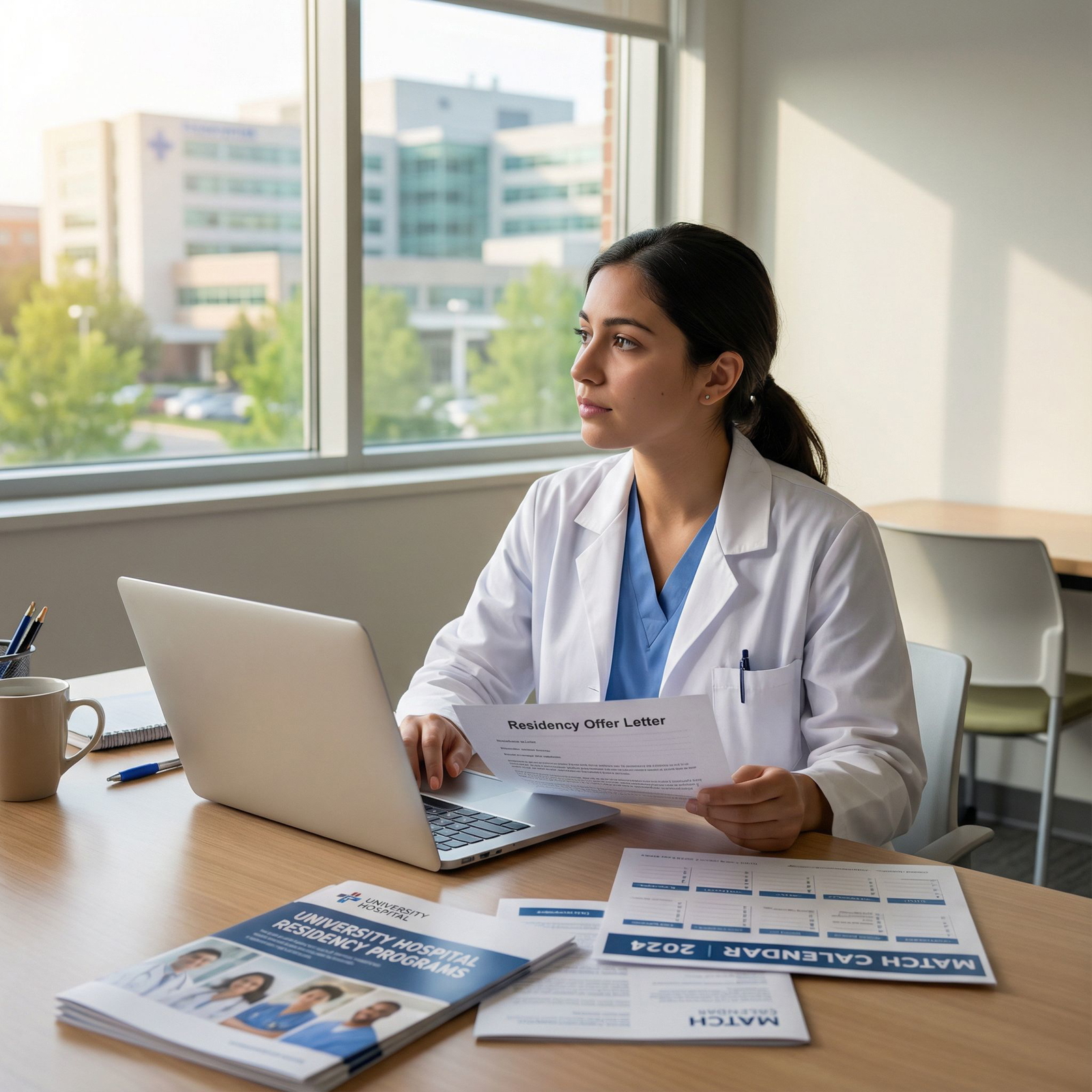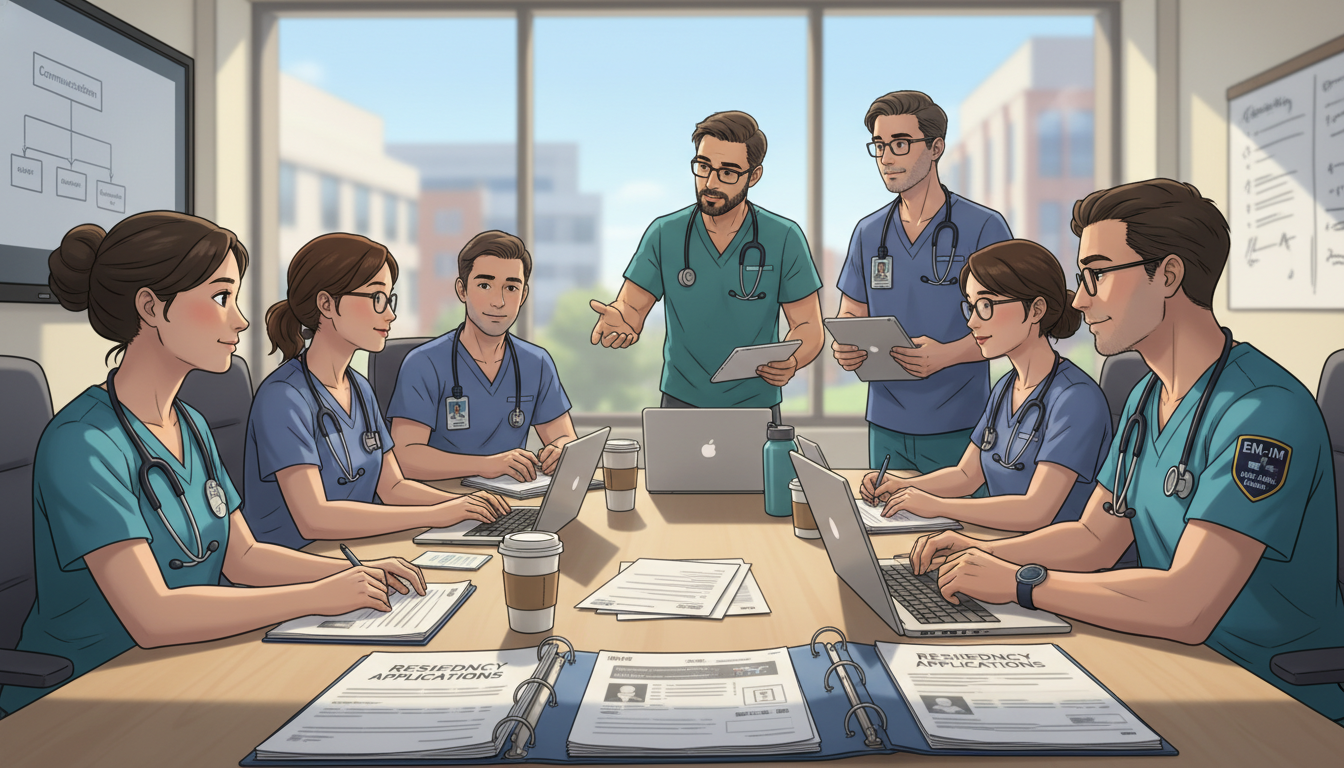
Understanding Pre-Match Communication in Radiation Oncology
For a US citizen IMG or an American studying abroad, the road to a radiation oncology residency is competitive and nuanced. Beyond scores, research, and letters of recommendation, pre-match communication plays a major role in how programs perceive you—and how you navigate interest, fit, and potential ranking decisions.
Radiation oncology has historically been a smaller specialty with relatively few positions. While the overall competitiveness has fluctuated, applicants—especially US citizen IMG candidates—must be strategic and professional in every interaction. Thoughtful, ethical pre-match communication can:
- Reinforce your genuine interest in a program
- Clarify logistical and visa-related questions (even as a US citizen IMG, training location and visa status can come up)
- Help you evaluate cultural and educational fit
- Avoid misunderstandings that could negatively affect your rank list or the program’s
This article focuses on how a US citizen IMG targeting radiation oncology residency can approach pre-match communication: what it is, what it is not, and how to manage it before, during, and after interviews—especially regarding pre-match offers, early commitment language, and program communication before the Match.
Important: Always review and follow NRMP Match Participation Agreement and your specific Match rules. Nothing in this article replaces those binding rules.
The Landscape: US Citizen IMG in Radiation Oncology
As a US citizen IMG or American studying abroad, you straddle two worlds. You have US citizenship (no visa sponsorship needed), but your medical degree comes from a non-US school. In rad onc, that combination creates both opportunities and challenges.
Opportunities for US Citizen IMG Applicants
No visa barriers
Programs often prefer applicants who do not require visa sponsorship. As a US citizen IMG, you can honestly state you do not require a work visa, removing a practical barrier faced by many non-US IMGs.Flexibility with geography
If you have ties to particular regions (family, prior schooling, or clinical experience), you can highlight these to demonstrate genuine interest and likelihood of staying—helpful in pre-match communication and interviews.Diverse clinical experiences
Many US citizen IMGs have exposure to different healthcare systems and patient populations. Framing this as a strength in pre-interview emails, personal statements, and conversation can make you memorable.
Challenges Unique to US Citizen IMGs in Rad Onc
Limited exposure and networking in the US
Radiation oncology is extremely network-driven. Many applicants from US schools rotate at home institutions and away electives, building relationships. As an American studying abroad, you may have more limited in-person networking, so your written and virtual pre-match communication carries extra weight.Perception of training quality
Some programs may be less familiar with your medical school. This doesn’t disqualify you, but you must be proactive in presenting your credentials, research, and US clinical experience clearly in your communications.Smaller number of rad onc positions
Each communication—email, thank you message, interest letter—becomes more impactful in a small field. You cannot afford generic, poorly targeted messages.
Understanding this context keeps your approach focused: your pre-match communication is not about “begging for a spot,” but about strategically representing your strengths and fit as a US citizen IMG in a highly specialized field.

Types of Pre-Match Communication: What’s Appropriate and What’s Not
Pre-match communication can be confusing. Terms like “pre-match offers,” “letters of intent,” and “early commitment” sometimes get mixed up. As a rad onc applicant, you must understand the categories and the ethical boundaries.
1. Program Communication Before the Match
This includes any interaction you have with programs prior to Match Day:
- Email exchanges (before and after interviews)
- Phone or video calls
- Interactions at conferences (ASTRO, ARRO events)
- Rotations and observership conversations
Appropriate content:
- Clarifying application status (Interview invitation? Waitlist?)
- Sharing updated CV information (new publication, Step scores, graduation details)
- Asking focused questions about curriculum, call schedule, or research
- Expressing genuine interest, especially if a program is a top choice
Avoid:
- Aggressively lobbying for a spot
- Fishing for their exact rank intentions
- Repeated “check-in” emails without new information
2. Post-Interview Communication: Thank You Notes and Interest Emails
Radiation oncology faculty vary in how much they value thank you notes, but polite follow-up is rarely harmful when done correctly.
Best practices for thank you notes:
- Send within 48–72 hours after the interview
- Individualize to each interviewer
- Mention 1–2 specific points from the conversation (clinical volume, research interest, mentorship, resident culture)
- Keep it short (5–10 lines) and professional
For example:
Dear Dr. Smith,
Thank you again for taking the time to speak with me during my interview with [Program] on [date]. I especially appreciated learning about your work in adaptive radiotherapy for head and neck cancers and the opportunities for residents to participate in prospective protocol design. As a US citizen IMG with a strong interest in clinical research, I found your description of resident involvement in ASTRO abstract submissions particularly exciting.
I am very enthusiastic about the possibility of training at [Program] and working with your team.
Sincerely,
[Your Name], MD
3. Letters of Interest vs Letters of Intent
These terms often get conflated but are different:
Letter of Interest:
States that you are very interested in a program, but does not claim you will rank them #1.- Appropriate for multiple programs
- Use when you want to signal strong enthusiasm without making an exclusive promise
Letter of Intent:
States explicitly that the program is your #1 choice and that you plan to rank them first.- Ethically, you should send this to only one program
- Your language should be accurate and honest
Example of Letter of Interest:
I remain very interested in [Program] and can strongly envision myself thriving within your department’s collaborative clinical and research environment.
Example of Letter of Intent:
I want to share that [Program] is my absolute top choice, and I plan to rank [Program] #1 on my rank order list.
As a US citizen IMG, a carefully worded letter of intent to your true top program can help solidify your interest, especially if you have any connection to the region or faculty.
4. Pre-Match Offers and Early Commitment in Radiation Oncology
For NRMP-participating radiation oncology programs, offering binding pre-match positions outside of the Match is generally not permitted. However, applicants sometimes hear phrases like:
- “We are very interested in you.”
- “We hope you will rank us highly.”
- “If you rank us first, we are likely to rank you very favorably.”
These are not formal pre-match offers. They are non-binding expressions of interest and must be treated as such.
True pre-match offers or early commitment agreements (e.g., “If you commit to us now we guarantee a position”) are typically not allowed for programs participating in the main Match. If you ever receive what feels like a binding pre-match offer:
- Review the NRMP rules.
- Consider contacting the NRMP or your dean’s office anonymously to clarify.
- Do not agree to anything that conflicts with Match rules.
As a US citizen IMG, it might feel tempting to accept anything that sounds like security in a competitive specialty, but your professional integrity and legal obligations to the NRMP come first.
Strategic Communication Timeline: Before, During, and After Interviews
To manage pre-match communication effectively, it helps to structure it along your application timeline.
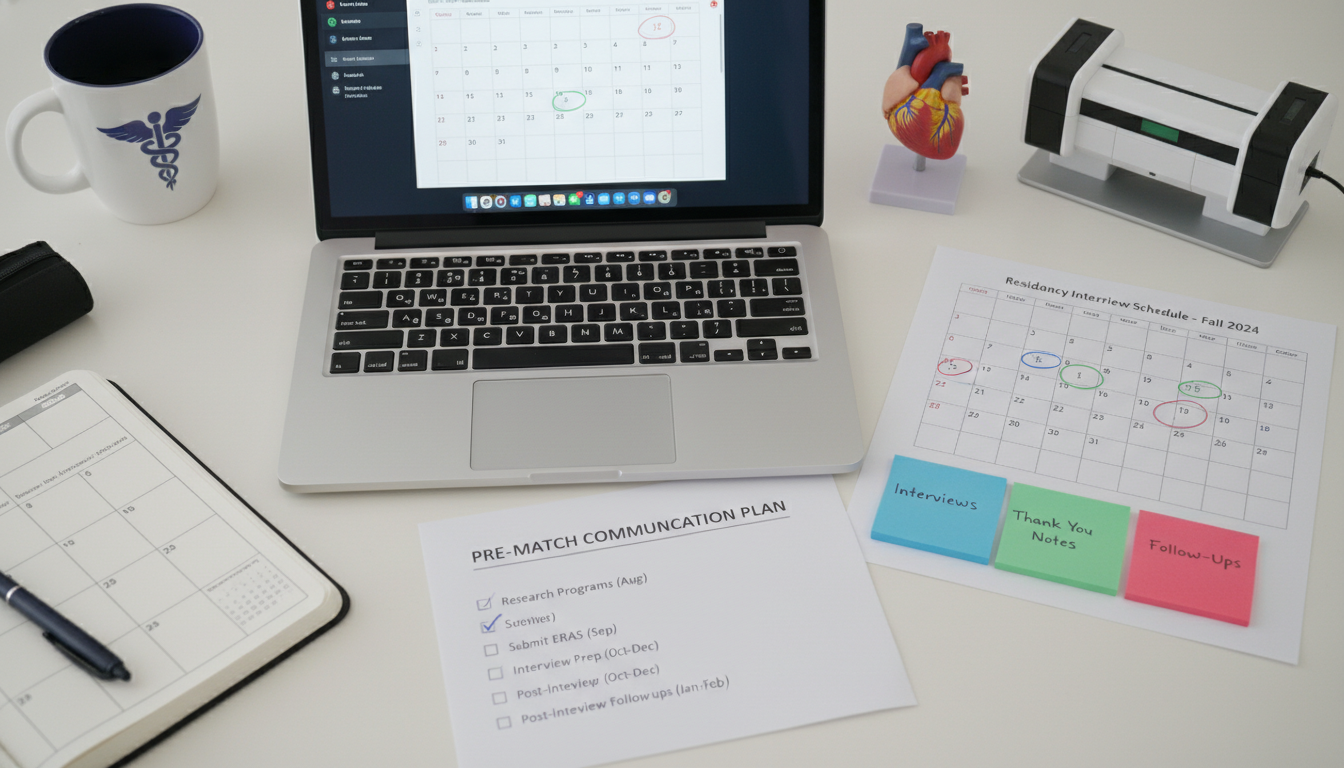
A. Before Interviews: Building Initial Contact and Visibility
1. Reaching out to programs pre-ERAS or before interviews
In radiation oncology, cold emails can occasionally help, especially if:
- You have a genuine connection (regional ties, shared mentor, prior research contact)
- You are an American studying abroad with limited US exposure and want to introduce yourself professionally
Keep these emails:
- Short (one screen)
- Focused on your background, specific interest in rad onc, and any tie to the program
- Attached CV (1–2 pages) if appropriate
Example structure:
- One-line introduction (name, school, US citizen IMG, application cycle).
- Brief summary of rad onc interest and any specific clinical/research focus.
- One or two specific reasons you are drawn to that program.
- Polite note that you’ve applied (or will apply) via ERAS.
Avoid repeatedly emailing if you do not receive a response.
2. Updating programs with major new accomplishments
If, before interviews, you obtain:
- A first-author publication in radiation oncology
- A major award
- An improved Step 2 CK score
You may send an update via ERAS and a short polite email to the program coordinator or PD, highlighting that you remain very interested in their program (especially helpful for US citizen IMG candidates striving to stand out).
B. During Interview Season: Professionalism and Clarity
1. On interview day
Every interaction—resident socials, pre-interview dinners, emails with coordinators—is part of pre-match program communication.
Key behaviors:
- Be consistent in describing your interests and long-term goals
- Ask program-specific questions that show you did your homework
- Avoid asking “How high would you rank me?” or “Will I match here if I rank you first?”
2. Documenting your impressions
After each interview, write quick notes:
- Program strengths and weaknesses
- Faculty or residents you connected with
- Your perceived fit, research alignment, geographic considerations
This will help you later craft authentic thank you notes and rank list decisions, especially when programs contact you with interest signals.
C. After Interviews: Thank You, Interest, and Intent
1. Thank you notes
Send them within a few days. Include:
- Specific reference to a topic discussed
- A sentence or two about why this program aligns with your goals in radiation oncology
- A neutral closing expressing appreciation and enthusiasm (no premature promises)
2. Clarifying your level of interest
After you’ve completed most or all of your interviews:
- Identify your top tier programs (e.g., top 3–5)
- Consider sending letters of interest to multiple programs where you are genuinely very interested
- Send one letter of intent to your clear #1 program if you feel confident in that choice
Be honest:
- Do not tell multiple programs they are your #1
- Use language like “very interested” or “highly interested” for other programs
3. Handling program-initiated communication
Programs may email or call you to:
- Express that you are a “competitive candidate”
- Say that they plan to rank you highly
- Emphasize their excitement about you joining their department
Your response should:
- Thank them for their message and their time
- Reiterate your appreciation for the interview and what you value in their program
- Avoid making specific ranking promises unless this is truly your #1 and you have thought it through
You might respond:
Thank you very much for your kind message and for the opportunity to interview at [Program]. I truly enjoyed learning more about your department and was particularly impressed by [specific feature]. I continue to feel that [Program] would be an excellent place for my training in radiation oncology, and I am grateful for your consideration in the Match.
Ethical and Practical Tips for US Citizen IMG Applicants
As an American studying abroad aiming for a radiation oncology residency, your credibility and professionalism in pre-match communication can distinguish you from both US grads and other IMGs.
1. Always Align with NRMP Rules
- Do not sign or verbally commit to any early, binding pre-match offer from NRMP-participating rad onc programs.
- You may tell a program that you plan to rank them highly or #1; this is allowed, but non-binding.
- Programs are not allowed to ask you to reveal your rank list or to commit to them outside the Match; if it feels uncomfortable or coercive, document it and seek advice from your dean’s office or NRMP.
2. Be Honest and Consistent
If you send a letter of intent promising to rank a program #1:
- Actually rank them #1.
- Do not send such a letter to more than one program.
Even though Match outcomes are not guaranteed, professional honesty matters in such a small field. People in radiation oncology often work together long-term; reputational damage can carry into your career.
3. Balance Enthusiasm with Boundaries
As a US citizen IMG, you might feel you must “work twice as hard” to gain attention. Enthusiasm is good, but:
- Avoid sending frequent, repetitive emails without new information.
- Do not show desperation or ask for reassurance you cannot obtain (“Can you tell me my chances?”).
- Maintain a steady, respectful tone in all interactions.
4. Leverage Your Strengths in Communication
Use your communications to highlight:
- US citizenship: “I do not require visa sponsorship.”
- Diverse training background: exposure to different systems or patient populations.
- Research productivity: especially rad onc or oncology-related work.
- Commitment to the specialty: elective choices, ASTRO attendance, scholarly projects.
Each email or conversation is a chance to reinforce your coherent narrative: “I am a US citizen IMG who brings X, Y, and Z strengths and is serious about a long-term career in radiation oncology.”
5. Document Everything
Keep a simple log:
- Date and type of communication (email, call, meeting)
- With whom (program director, faculty, coordinator)
- Key content (interest statements, any implied ranking comments)
This helps you:
- Stay organized
- Avoid sending inconsistent messages
- Recall what you’ve promised and to whom
Sample Communication Templates for US Citizen IMG Rad Onc Applicants
Here are some adaptable templates tailored to your situation.
1. Pre-Interview Introduction (If Appropriate)
Subject: Radiation Oncology Applicant – [Your Name], US Citizen IMG
Dear Dr. [Last Name],
My name is [Your Name], and I am a US citizen graduating from [Medical School, Country] in [Month, Year]. I am applying for the [Year] radiation oncology residency cycle and have a particular interest in [brief clinical or research focus].
I am especially drawn to [Program] because of [one or two specific program features—e.g., strong brachytherapy training, commitment to underserved populations, integrated physics and biology curriculum]. My recent work includes [brief description of key scholarly activity], and I have completed [US clinical experiences, if any].
I have submitted (or will be submitting) my application through ERAS, but I wanted to briefly introduce myself and express my sincere interest in your program. I have attached my CV for your reference.
Thank you very much for your time and consideration.
Sincerely,
[Your Name], MD
US Citizen IMG, [Medical School]
2. Post-Interview Thank You with Clear Interest
Subject: Thank You – [Your Name], Radiation Oncology Interview on [Date]
Dear Dr. [Last Name],
Thank you again for the opportunity to interview with [Program] on [Date]. I truly appreciated our discussion about [specific topic—e.g., resident-led quality improvement projects or GI tumor board participation].
As a US citizen IMG committed to a career in academic radiation oncology, I was especially impressed by [program-specific detail, such as integrated research time, mentorship structure, or community outreach efforts]. My interests in [your area—e.g., stereotactic body radiotherapy] align closely with the work being done at your institution.
I remain very enthusiastic about the possibility of training at [Program] and am grateful for your consideration in this year’s Match.
Sincerely,
[Your Name], MD
3. Letter of Intent to Your #1 Program
Subject: Continued Strong Interest in [Program] – [Your Name]
Dear Dr. [Last Name],
I hope you are well. I wanted to express my sincere gratitude again for the opportunity to interview at [Program] and for the time you and your faculty spent sharing details about the department.
After completing my interviews and carefully reflecting on my goals and values, I have decided that [Program] is my absolute top choice for radiation oncology residency. I will be ranking [Program] #1 on my rank order list.
The combination of [mention 2–3 key strengths: e.g., your strong mentorship culture, robust clinical training across disease sites, and opportunities for resident involvement in clinical trials] aligns perfectly with my aspirations as a US citizen IMG seeking comprehensive training and a foundation for an academic career.
Regardless of the outcome of the Match, I am grateful for the chance to have met you and your team. Thank you again for considering my application.
Sincerely,
[Your Name], MD
Use these as starting points; adapt the language to reflect your genuine voice and experiences.
FAQs: Pre-Match Communication for US Citizen IMG in Radiation Oncology
1. As a US citizen IMG, should I send more emails than US grads to get noticed?
No. You should send targeted, high-quality communications, not a higher volume. Over-emailing can backfire. Focus on:
- One thoughtful pre-interview introduction if you have a real connection
- Professional thank you notes
- One letter of intent to your #1 program and select letters of interest to others
Quality and authenticity matter far more than quantity.
2. Can I ask a program where I am on their rank list?
You should not ask directly where you are ranked. Programs are generally discouraged from disclosing precise ranking information, and such questions can place both sides in an uncomfortable ethical position. Instead, focus on asking about the program itself and use any voluntary expressions of interest from them as non-binding data points, not guarantees.
3. Is it okay to tell multiple programs they are “among my top choices”?
Yes, as long as you do not claim that more than one is your #1. Statements like “among my top choices” or “a program I am strongly considering ranking highly” are acceptable, as they reflect genuine enthusiasm without deception. Reserve specific “I will rank you #1” wording for a single true top program.
4. What should I do if a program seems to offer me an early, off-Match commitment?
If a radiation oncology program participating in NRMP suggests or offers a binding pre-match position:
- Politely acknowledge their interest.
- Do not agree to any binding commitment that conflicts with NRMP rules.
- Review the NRMP Match Participation Agreement and consider speaking confidentially with your dean’s office or NRMP.
Your obligation is to follow Match rules; do not compromise your ethics or risk sanctions for perceived short-term security.
Thoughtful, ethical pre-match communication will not magically guarantee you a rad onc match, but for a US citizen IMG it can sharpen your competitiveness, clarify your fit, and build relationships that sustain your future career. Approach every email, call, and conversation as part of your professional identity—someone programs would trust to care for patients, collaborate with colleagues, and represent their department well.