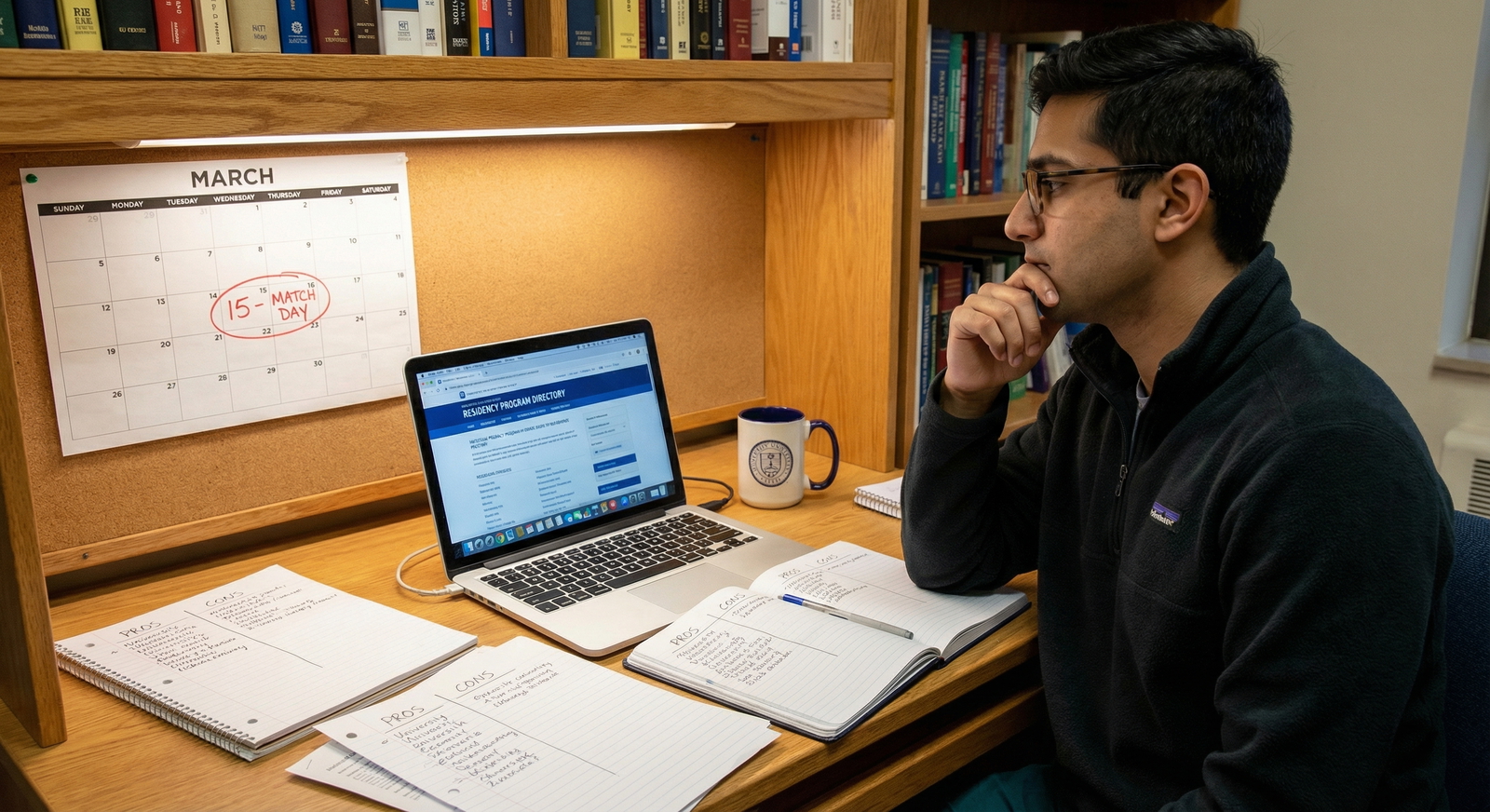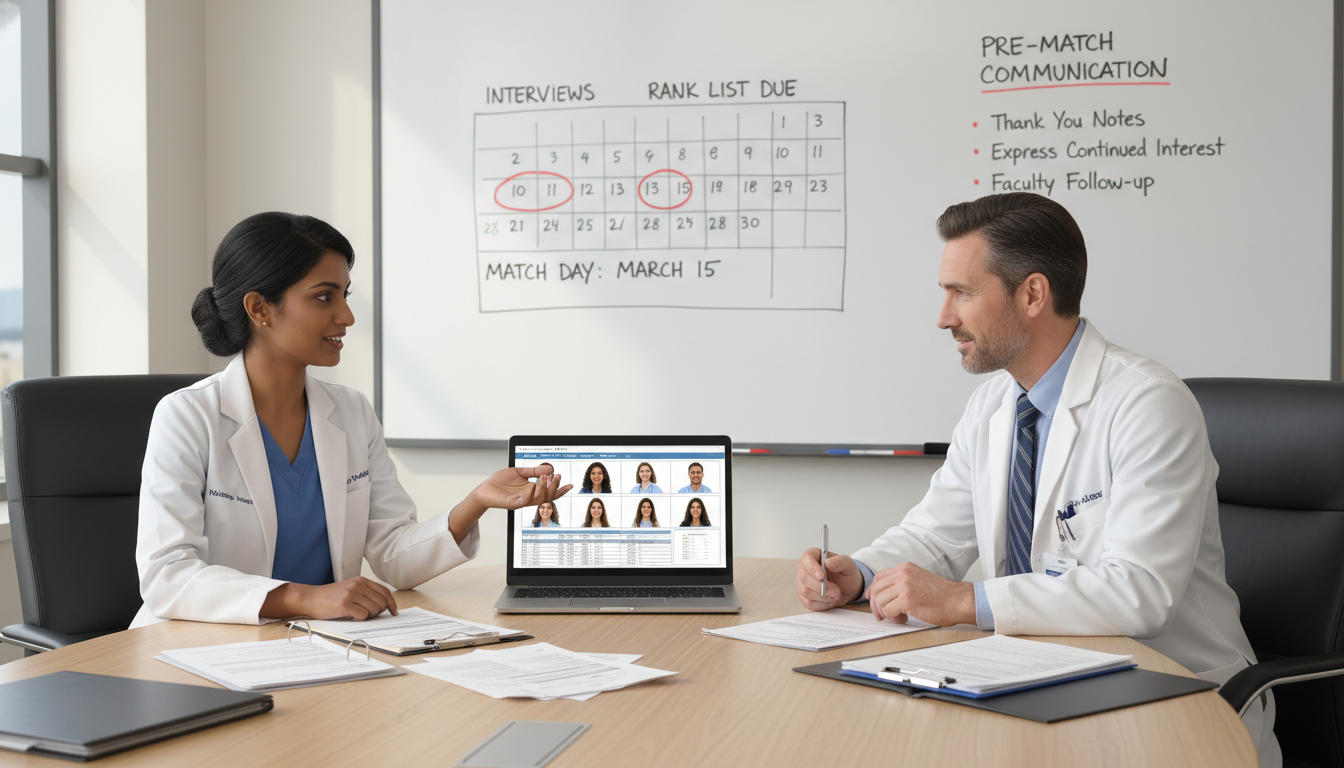
Pre-match communication can make or break your psychiatry residency application—especially if you’re a US citizen IMG or an American studying abroad. Understanding what is allowed, what is strategic, and what is risky is critical for protecting your chances in the psych match while also maximizing opportunities like pre-match offers and early signals of interest.
This guide walks you through how to communicate with programs before Match Day—email, calls, interviews, and follow-up—specifically from the lens of a US citizen IMG applying to psychiatry residency.
Understanding Pre-Match Communication in Psychiatry
Pre-match communication refers to any contact between you and a residency program after you submit ERAS but before the NRMP Match results are released. It includes:
- Emails to and from program directors (PDs), coordinators, and faculty
- Phone calls or virtual meetings not part of the formal interview
- Thank-you notes and post-interview updates
- Expressions of interest such as “You are my top choice”
- Informal signals from programs (“You will be ranked highly,” “We’d love to have you here”)
For US citizen IMGs in psychiatry, this is especially important because:
- You may be competing with both US MD/DOs and non-US IMGs. Clear, professional communication can help you stand out and counteract assumptions about IMGs.
- Some psychiatry programs are IMG-friendly but cautious. How you handle communication can reassure them about your professionalism, commitment, and understanding of US training culture.
- Your location and visa status are unique. As a US citizen IMG or American studying abroad, you have an advantage: no visa sponsorship required. But programs may not realize this unless you communicate it clearly.
Match vs. Pre-Match vs. Early Commitment
There are three overlapping concepts that often confuse applicants:
NRMP Match:
- The formal, binding process many psychiatry residency programs use to fill positions.
- You and programs rank each other; a computer algorithm pairs you.
Pre-match offers / Early commitment (more common in some states and specialties, less common in psychiatry but still possible in certain community programs):
- A program offers you a position outside the Match (or expects you to rank them #1 in an informal “agreement”).
- Can be verbal or in writing; may involve a contract in non-NRMP positions.
- Must be approached very cautiously because of NRMP rules and ethical concerns.
Pre-match communication:
- All conversation prior to the Match—most of it is legal and normal (interview invitations, questions about the program, thank-you notes, etc.).
- Some forms become problematic if they pressure you to disclose your rank list or to make binding promises.
As a psychiatry applicant, most of your interaction will be standard pre-match communication within the Match, but you must recognize when a conversation starts to feel like early commitment or a de facto pre-match offer.
NRMP Rules and Ethics: What You Can and Cannot Say
Before you send a single email, you need a working understanding of NRMP communication rules, which apply to most psychiatry residency programs in the US.
Key NRMP Principles Relevant to You
No soliciting rank information
- Programs cannot ask:
- “Are we your first choice?”
- “Where are you ranking us?”
- You, as an applicant, are also discouraged from asking programs how they will rank you.
- Programs cannot ask:
No coercion or pressuring
- Programs cannot say things like:
- “We will only rank you highly if you promise to rank us #1.”
- “If you don’t commit now, we will offer the spot to someone else.”
- Any attempt to pressure you into an early commitment is inappropriate.
- Programs cannot say things like:
Non-binding communication of interest is allowed
- Programs may say: “We are very interested in you” or “You will be ranked highly.”
- You may say: “You are my top choice” or “I intend to rank you highly.”
- These statements are not binding and must not be treated as a contract.
No contracts for NRMP-participating positions before Match
- If a psychiatry program participates in the Match, it should not offer binding contracts for PGY-1 or PGY-2 positions before Match Day.
- If they do, this may violate NRMP rules and put both you and the program at risk.
How This Applies to a US Citizen IMG
As a US citizen IMG:
- You are attractive to programs that want:
- Diverse educational backgrounds
- Candidates comfortable with cross-cultural psychiatry
- No visa complications
- However, you may be less familiar with NRMP norms than US MD/DO classmates. You must:
- Avoid making promises you cannot keep (“I will rank you #1” to multiple programs)
- Avoid letting programs pressure you into early commitments
- Document and clarify any ambiguous offers or communications
If a program’s message makes you uncomfortable or feels like a “deal,” ask yourself:
“Is this consistent with a fair, transparent Match process, or does it feel like a side agreement?”
If it’s the latter, pause and seek guidance from your dean’s office or an advisor familiar with NRMP rules.
Strategic Pre-Match Communication: Before, During, and After Interviews
For a US citizen IMG in psychiatry, the quality and timing of your communication can signal maturity, insight, and professionalism—qualities highly prized in psych.
1. Before the Interview: Reaching Out Without Overstepping
You can reasonably communicate with programs pre-interview in a few scenarios:
A. Post-ERAS Submission Introduction (Selective, Not Mass Emails)
As an American studying abroad, you do not need to email every program to say “I applied.” However, consider a short, targeted email if:
- You have a very specific connection (e.g., you rotated there, did research with their faculty, used to live in the area).
- The program is particularly IMG-friendly or has US citizen IMGs currently.
- Your application has a key aspect that may be unclear from ERAS alone (e.g., US citizenship but foreign grad, step scores recently reported, a strong psych research background that just got published).
Structure of such an email:
- Subject: “Application to [Program Name] – US Citizen IMG with Strong Interest in Psychiatry”
- 2–3 concise paragraphs:
- Who you are (US citizen IMG, school, graduation year)
- Why their specific program fits your goals (e.g., community psychiatry, addiction, psychotherapy emphasis)
- One line clarifying any key point: “As a US citizen, I do not require visa sponsorship.”
Avoid:
- Mass emails with vague language
- Asking for an interview directly (“Please grant me an interview”)
- Attaching your CV unless specifically requested
B. Responding to Interest
If a program emails you:
- Reply within 24–48 hours, even if just to acknowledge and thank them.
- Be polite, brief, and professional; psychiatry programs notice communication style.

2. During Interview Season: Email, Calls, and Professionalism
Once you start receiving interviews, pre-match communication becomes more frequent.
A. Thank-You Emails
Psychiatry is relationship-based, and programs often expect some follow-up:
- Send individualized thank-you emails within 24–72 hours.
- Address the interviewer by name and reference one or two specific things you discussed.
- Keep it to 1 short paragraph unless you truly have something meaningful to add.
Example:
Dear Dr. Smith,
Thank you for the opportunity to interview at the [Program Name] Psychiatry Residency. I especially appreciated our conversation about your community psychiatry rotation and the emphasis on psychotherapy training. As a US citizen IMG with a strong interest in serving underserved populations, I can see myself thriving in your program’s environment.
Sincerely,
[Your Name]
B. Clarifying Your Citizenship and Training Background
If it’s not already obvious from your application, somewhere in your communication (ERAS personal statement, interview responses, or follow-up) make it crystal clear:
- That you are a US citizen IMG
- That you do not need visa sponsorship
- That you understand and are committed to training and practicing in the US
You might say in an interview or follow-up email:
As a US citizen who completed medical school abroad, I’m particularly drawn to your program’s strong integration into the local community. I plan to build my long-term career in US psychiatry, ideally in settings like [X], and I would be excited to do that training at [Program Name].
This reduces any subtle hesitation programs may have about IMGs in general.
C. Appropriate Questions to Ask Programs
Pre-match communication is a good time to clarify:
- Rotation structure and psychotherapy training
- Fellowship match outcomes (child psych, addiction, consult-liaison, forensics)
- Support for IMG graduates (mentorship, US clinical systems orientation)
- Research or scholarly opportunities
Avoid questions that sound like you’re negotiating or testing them, such as:
- “How high will I be on your rank list?”
- “Are you planning to rank me?”
3. After Interviews: Signals of Interest and Rank List Season
This is the most delicate phase of pre-match communication.
A. Can You Tell a Program They Are Your Top Choice?
Yes—if it’s true and you say it to only one program.
A typical email to your #1 psychiatry program might be:
Subject: Continued Strong Interest in [Program Name] Psychiatry
Dear Dr. [PD Name],
I wanted to thank you again for the opportunity to interview at the [Program Name] Psychiatry Residency and to reiterate how strongly I feel about your program. After completing all my interviews and reflecting carefully on my goals, I have decided that [Program Name] will be ranked as my top choice in the Match.
The combination of [specific feature A] and [specific feature B] aligns very closely with my interest in [eg, community psychiatry, psychotherapy, research]. I would be truly honored to train in your program and contribute to your team.
Sincerely,
[Your Name], US Citizen IMG
AAMC ID: [#]
This kind of message is allowed and often appreciated—but it is not a contract. They are free to rank you as they wish; you must still submit your rank list based on your true preferences.
Do not send “you are my first choice” emails to multiple programs. That’s unethical and can damage your reputation.
B. When to Send Post-Interview Updates
Consider sending a brief update if:
- You have a new publication or poster related to psychiatry
- You completed an elective in US psychiatry and got strong feedback
- You have significant life/location updates that strengthen your case (e.g., spouse employed in the program’s city)
Keep the email short, focused, and respectful of their time.
Handling Pre-Match Offers and Early Commitment Pressure
While psychiatry is predominantly filled through the NRMP Match, US citizen IMGs occasionally encounter pre-match offers, early commitments, or strong suggestions of guaranteed ranking—especially from smaller community programs.
Recognizing a Pre-Match Offer
A program’s communication may cross from “interest” into “offer” if they:
- Explicitly say:
- “We are offering you a guaranteed position if you commit to us.”
- “We will rank you to match if you promise to rank us #1.”
- Ask you to sign something indicating commitment prior to Match
- Suggest that not committing now might lead to losing the spot
As a US citizen IMG, this can be tempting—particularly if you’re anxious about your competitiveness—but there are risks.
Risks of Early Commitment
NRMP Violations
- Formal contracts outside the Match for NRMP-participating programs can violate NRMP policy.
- If discovered, this can result in penalties for the program and possibly affect your status.
Limiting Your Options
- Psychiatry is a rapidly growing specialty with many IMG-friendly programs.
- Locking into one place too early may prevent you from landing somewhere that fits you better academically, clinically, or geographically.
Pressure and Power Imbalance
- You may feel you “owe” the program or have no right to change your mind, even though the Match system is designed to free applicants from this kind of pressure.

How to Respond When a Program Pushes for Early Commitment
If a program hints at or presents a pre-match offer or early commitment:
Pause. Do not commit immediately.
- Thank them for their interest; buy yourself time to think.
Clarify the nature of the offer.
You might reply:Thank you so much for your strong interest in my application. To ensure I fully understand, may I clarify whether this represents a guaranteed position outside the NRMP Match or a statement that I will be ranked highly within the Match?
Seek confidential advice.
- Talk to your dean’s office, school advisor, or an experienced mentor.
- If necessary, you can reach out confidentially to NRMP or your school’s Match advisor.
Protect your flexibility.
If you are uncomfortable, you can respond:
I truly appreciate your strong interest in me as a candidate. At this time, I plan to participate fully in the NRMP Match and will be ranking programs in accordance with my preferences. I remain very interested in [Program Name] and will consider your program carefully when finalizing my rank list.
If the program is not participating in the Match
- Clarify this explicitly. Non-NRMP positions can legitimately offer contracts outside the Match.
- Evaluate like any job offer: training quality, supervision, board eligibility, location, future fellowship prospects.
Should You Ever Accept a Pre-Match Offer?
For most US citizen IMGs in psychiatry, the safest pathway is to fully participate in the NRMP Match and avoid any binding pre-match contracts with NRMP-participating programs.
It might be reasonable to consider a non-NRMP position or highly unusual situation only if:
- You fully understand the implications;
- You have verified board eligibility and accreditation; and
- It aligns with your long-term psychiatry career goals.
Communication Templates and Practical Tips for US Citizen IMGs
Below are examples and strategies tailored to you as a US citizen IMG or American studying abroad.
Template 1: Brief Pre-Interview Interest Email
Subject: Application to [Program Name] Psychiatry Residency – US Citizen IMG
Dear Dr. [PD Name],
My name is [Your Name], and I am a US citizen currently completing my medical education at [Your School] in [Country]. I recently applied to the [Program Name] Psychiatry Residency through ERAS and wanted to briefly express my strong interest in your program.
I am particularly drawn to your emphasis on [community psychiatry / integrated care / psychotherapy / research area], which aligns with my experiences in [brief, specific example]. As a US citizen IMG, I am committed to building my career in US psychiatry and do not require visa sponsorship.
Thank you for your time and consideration of my application.
Sincerely,
[Your Full Name], US Citizen IMG
AAMC ID: [#]
Use this sparingly for truly top-choice or logical-fit programs.
Template 2: Post-Interview Thank-You to PD
Subject: Thank You – [Your Name], [Interview Date]
Dear Dr. [PD Name],
Thank you for the opportunity to interview at the [Program Name] Psychiatry Residency on [date]. I very much appreciated learning more about your program and your vision for training psychiatrists who are both clinically skilled and attuned to the psychosocial needs of diverse communities.
As a US citizen IMG with a strong interest in [e.g., community mental health and psychotherapy], I was particularly impressed by [specific aspect of the program]. I would be honored to contribute to and learn from this environment.
Thank you again for your time and consideration.
Sincerely,
[Your Full Name]
AAMC ID: [#]
Template 3: “Top Choice” Email
Use only if 100% accurate.
Subject: [Program Name] – My Top Choice for Psychiatry Residency
Dear Dr. [PD Name],
I hope you are well. I wanted to express my sincere gratitude for the opportunity to interview at the [Program Name] Psychiatry Residency and to share an update now that I have completed my interviews.
After careful consideration, I have decided that [Program Name] will be ranked as my top choice in the Match. The program’s strengths in [e.g., psychotherapy training, community psychiatry, research], along with the supportive culture I witnessed during the interview day, align perfectly with my goals as a future psychiatrist.
As a US citizen IMG, I am committed to building my long-term career in US psychiatry, and I would be truly honored to train at [Program Name].
Thank you again for your consideration.
Sincerely,
[Your Full Name], US Citizen IMG
AAMC ID: [#]
Efficiency and Tone Tips
- Professional but warm: Psychiatry values empathy and insight; your communication should reflect that.
- Concise: PDs and coordinators are overwhelmed. Aim for 150–250 words max per email.
- Error-free: Grammar, spelling, and structure matter. They reflect your attention to detail.
- Consistent identity: Use the same email address, signature, and identifying information (AAMC ID) each time.
Frequently Asked Questions (FAQ)
1. As a US citizen IMG, should I email every psychiatry program I apply to?
No. Sending generic emails to every program can seem insincere and may be ignored. Instead:
- Prioritize programs where you have:
- A special connection (elective, mentor, geographic tie)
- A particularly strong fit (community psychiatry, research focus, psychotherapy emphasis)
- Evidence they are especially IMG-friendly
- Use targeted, personalized messages.
Your ERAS application and personal statement remain the primary tools for being noticed.
2. Is it okay to tell a program they are my “top choice” or that I will rank them #1?
Yes, if it is truthful and said to only one program. This is considered acceptable pre-match communication.
However:
- Do not make similar statements to multiple programs.
- Recognize that such statements are not binding on either side.
- Phrase it respectfully: “I have decided to rank [Program Name] as my top choice” rather than implying a contract.
3. What if a program hints that I will “definitely match” there or says they will “rank me to match”?
You can acknowledge and appreciate their enthusiasm, but you must still:
- Submit your rank list according to your true preferences.
- Understand that nothing is guaranteed until the Match results are released.
- Avoid changing your strategy solely based on verbal reassurances.
These statements can be genuine, but programs may say similar things to multiple applicants.
4. How should I handle a program that pressures me to commit before Match?
If a psychiatry program pushes for early commitment or a pre-match arrangement:
Politely thank them and ask clarifying questions.
Do not rush into agreements, especially if they participate in NRMP.
Seek guidance from your dean’s office, an advisor, or NRMP resources.
If you wish to remain in the Match, you can say:
I plan to participate fully in the NRMP Match and will rank programs based on my preferences. I remain very interested in your program and appreciate your consideration.
Protect your flexibility and compliance with NRMP rules; these are critical for your long-term career in psychiatry.
Thoughtful, ethical pre-match communication is especially powerful for a US citizen IMG pursuing psychiatry. Used correctly, it can underscore your maturity, clarify your unique strengths as an American studying abroad, and help programs see you as a safe, committed, and insightful future psychiatrist—without compromising your integrity in the Match.