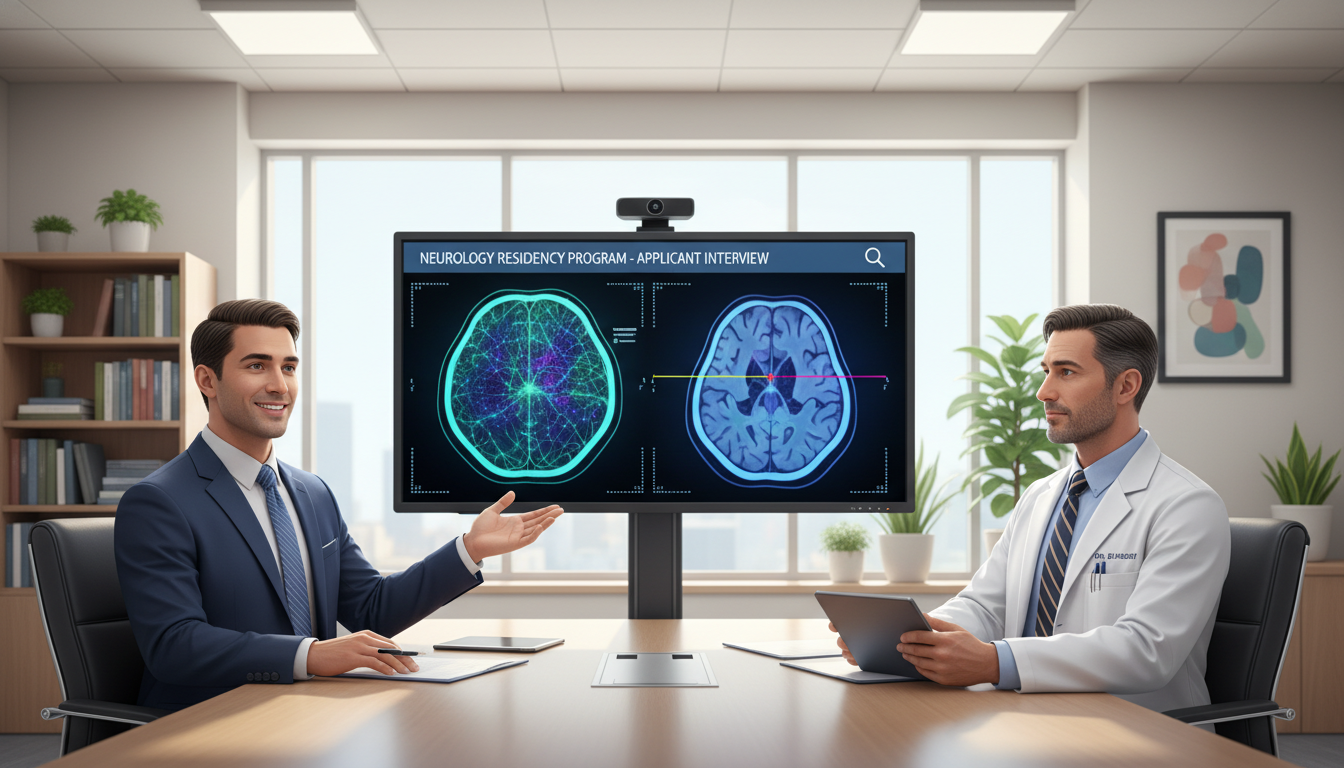
Pre-match communication can shape how programs perceive you and how you build your rank list, especially in a relationship-driven specialty like neurology. For an MD graduate residency applicant, understanding what is appropriate, ethical, and strategically wise—particularly in the allopathic medical school match system—is essential.
Below is a detailed guide tailored to neurology residency applicants navigating pre-match communication, with a focus on the NRMP Match rules, specialty-specific nuances, and practical templates you can use.
Understanding Pre-Match Communication in Neurology
What “Pre-Match Communication” Actually Means
“Pre-match communication” refers to any interaction between you and residency programs after you apply and interview, but before the official Match results are released. It typically includes:
- Thank-you emails after interviews
- Clarification questions about the program
- Updates on your application (new publications, Step 3, visa changes, etc.)
- Expressions of interest or intent (e.g., “I plan to rank your program highly”)
- Responses to program-initiated outreach
In neurology, which is considered moderately competitive with close-knit departmental cultures, sustained and thoughtful communication can impact how well programs remember and advocate for you during their rank meetings. However, it must remain within NRMP and institutional guidelines.
NRMP Rules You Must Know
Allopathic medical school match rules (NRMP) clearly regulate what both sides can and cannot say.
Permitted:
- Applicants may express interest, including saying a program is their “top choice” or “ranked highly,” as long as they do not request or imply a guarantee.
- Programs may express general enthusiasm or interest in you.
- Both parties may ask or answer questions about program features, training, and lifestyle.
Prohibited:
- Any statement from either side that is a guarantee of how they will rank the other (e.g., “We will rank you to match” or “I will rank you #1 if you rank me #1”).
- Any contingent arrangements (e.g., “If you commit to ranking us first, we will rank you to match”).
- Coercive language or pressure (“You must tell us where you plan to rank us”).
- Binding “early commitment” agreements outside of official institutional pathways.
Violations can lead to NRMP sanctions for both applicants and programs. Assume that all commitments are non-binding until Match Day.
Pre-Match Offers vs. Pre-Match Communication
Are There “Pre-Match Offers” in Neurology?
In the classic sense—formal offers to sign a contract before the Match—pre-match offers are rare in neurology for MD graduates participating in the NRMP. Most ACGME-accredited neurology programs fill positions through the Main Residency Match.
However, confusion arises because people use “pre-match offer” informally to mean:
- Strongly worded emails from programs expressing high interest
- Verbal indications that a program will “rank you highly”
- Internal or categorical positions offered to current rotators or prelim trainees
- Non-NRMP positions (e.g., some fellowships, research positions, or rare non-participating programs)
For an MD graduate residency applicant in neurology, assume that any core PGY-2 neurology position in the U.S. is filled through the NRMP neuro match unless the program explicitly states otherwise and is listed as non-participating.
Early Commitment in an NRMP Environment
“Early commitment” within the NRMP framework is non-binding and informal. Examples:
- You tell a program: “I plan to rank your neurology residency #1.”
- A program tells you: “You are one of our top applicants, and we hope you rank us highly.”
These statements:
- Do not guarantee a match.
- Do not replace a proper rank list strategy.
- Must not involve quid-pro-quo or pressure.
Your safest approach: treat all such language as signals of interest, not contracts. Rank programs in your true order of preference, regardless of who “shows the most love.”
Strategy: How to Use Pre-Match Communication Wisely
Goals of Pre-Match Communication in Neurology
Your objectives as an MD graduate applying to neurology residency are to:
- Reinforce positive impressions from interviews.
- Clarify program details that affect your rank list (e.g., EMG exposure, stroke volumes, ICU rotations, research opportunities).
- Update your file with new achievements or exam results.
- Signal genuine interest, especially to top-choice programs.
- Maintain professionalism and avoid behaviors that could raise concerns about boundaries or judgment.
Timing Your Outreach
A simple timeline:
Within 48–72 hours after each interview
- Send a concise thank-you email to your main interviewer(s) and/or program director (PD) or program coordinator (PC).
Late interview season / after most interviews are done
- Consider a more detailed follow-up to your top few programs (e.g., top 3–5), clarifying your fit and interest.
- This is a good time to signal if a program is your top choice (if you are certain).
After significant updates
- New Step 3 score
- New publication or accepted abstract (especially neurology-related)
- Visa status change (if relevant)
- Graduation or completion of a major project
Send a brief update to the PD and/or PC.
Final month before rank list certification
- One final, well-considered message to your #1 program (and possibly #2–3) may be appropriate.
Do not send weekly or repetitive emails. Over-communication can be more harmful than under-communication.

Crafting Effective, Professional Messages
1. Post-Interview Thank-You Emails
Keep these short, specific, and sincere.
Key elements:
- Subject line: “Thank you – Neurology Interview [Your Name]”
- Express gratitude for the opportunity.
- Mention 1–2 specific aspects of the program that resonated with you.
- Reaffirm your interest in the program.
- Keep to one short paragraph, or two at most.
Example (MD graduate neurology applicant):
Dear Dr. [Last Name],
Thank you for taking the time to speak with me during my interview at [Program Name] on [date]. I really appreciated our discussion about the comprehensive stroke training and the early exposure to EEG in the first year. The collegial atmosphere among the residents and your emphasis on mentorship make [Program Name] a particularly appealing place for my neurology residency training.
Sincerely,
[Your Name], MD
AAMC ID: [#######]
2. Interest/Intent Emails to Top Programs
If you have a clear #1 neurology residency program, communicating that (once you are sure) is reasonable and common.
What you can say:
- “You are my top choice.”
- “I intend to rank your program #1.”
- “I would be thrilled to train at [Program Name] and plan to rank your program at the top of my list.”
What you should avoid:
- Asking the program how they will rank you.
- Requesting a guarantee or “pre-match offer.”
- Implied or explicit quid pro quo.
Example “Top Choice” Email:
Dear Dr. [Last Name],
I wanted to thank you again for the opportunity to interview at [Program Name] and for the warm welcome I received from the residents and faculty. After completing my interviews and reflecting on what I am seeking in a neurology residency, I have decided that [Program Name] is my top choice.
The breadth of clinical exposure, especially in acute stroke and neurocritical care, along with the supportive resident culture I observed, aligns closely with my goal of becoming a well-rounded academic neurologist. I would be honored to train at [Program Name] and intend to rank your program #1 on my rank list.
Thank you again for your consideration.
Sincerely,
[Your Name], MD
AAMC ID: [#######]
This is entirely within NRMP rules; it is a non-binding statement of preference.
3. Update Emails: Step Scores, Publications, and Achievements
Keep update messages factual and concise.
Example Update Email:
Dear Dr. [Last Name] and [Program Coordinator],
I hope you are doing well. I am writing to share a brief update to my application for the neurology residency position at [Program Name].
- I recently received my Step 3 score: [Score].
- A manuscript on [brief topic, e.g., “clinical predictors of outcome in intracerebral hemorrhage”] that I co-authored was accepted for publication in [Journal Name].
I remain very interested in [Program Name] and would be grateful for the opportunity to train in such a strong neurology program.
Thank you for your time and consideration.
Sincerely,
[Your Name], MD
AAMC ID: [#######]
Navigating Program Communication Before Match
When a Program Reaches Out to You
Some neurology residency programs will contact applicants late in the season. This can range from:
- Quick “check-ins” expressing interest
- Requests to see if you have questions
- Strong statements of enthusiasm like “You are one of our top candidates”
- Invitations to second looks or informal chats
How to interpret these signals:
- Positive sign, but not a guarantee.
- Often reflects genuine interest or advocacy from specific faculty.
- May indicate you will be discussed favorably at rank meetings, but you might still not match there depending on the algorithm and other applicants.
How to respond:
- Be appreciative but measured.
- Reaffirm interest if you feel it aligns with your goals.
- Avoid asking, “Where will you rank me?” or “Am I guaranteed to match if I rank you #1?”
Sample Response:
Dear Dr. [Last Name],
Thank you very much for your message and for your kind words about my application. I truly enjoyed meeting the faculty and residents at [Program Name], and I remain very interested in your neurology residency program.
I particularly value [specific aspect you liked, such as the epilepsy training, continuity clinic structure, or supportive resident culture], and I believe your program would be an excellent fit for my career interests in [brief area, e.g., vascular neurology, neuroimmunology].
Thank you again for reaching out.
Sincerely,
[Your Name], MD

Handling Implicit or Explicit “Pre-Match Offer” Language
Occasionally, a program may use language that feels very close to a pre-match offer in an allopathic medical school match environment:
- “We will rank you very highly.”
- “You are one of the strongest candidates we have seen this year.”
- “We would love to have you here.”
This is typically enthusiastic but non-committal and allowed as long as there is no explicit guarantee of rank position.
If anyone (even informally) hints at a “deal” (e.g., “If you rank us #1, we’ll make sure you match here”), you should:
- Recognize that such statements conflict with NRMP rules.
- Avoid reciprocating with any binding language.
- Continue to build your rank list based on your genuine preferences.
- You may consider documenting or reporting egregious violations, though this is a personal decision.
Second Looks and Unofficial Visits
Some neurology programs may offer optional second looks. Use these primarily to:
- Clarify training structure details (e.g., EEG, EMG, subspecialty clinics).
- Get a clearer sense of resident culture and support.
- Better understand call schedules and wellness resources.
Do not interpret an invitation as a guarantee of matching. Also, never feel you must attend a second look to match—many applicants do not.
Be professional, courteous, and curious; this is part of program communication before Match, but it’s still not a commitment.
Specialty-Specific Considerations for the Neurology Neuro Match
What Neurology PDs Often Look for
Program directors in neurology often value:
- Solid clinical performance (especially in neurology, medicine, ICU).
- Evidence of interest in the field: electives, sub-internships, neurology-focused research.
- Communication skills and empathy (neurology requires extensive counseling and longitudinal care).
- Professionalism in all interactions, including pre-match communication.
- Maturity and insight, particularly for MD graduates who may have taken gap years or done prior training.
This makes thoughtful, concise, and respectful communication an asset. Unprofessional messages, pressure tactics, or disorganized emails can hurt your standing more than silence would.
How Pre-Match Communication Might Affect Your Ranking
Programs sometimes discuss individual applicants during ranking meetings, and positive impressions from:
- Memorable thank-you notes
- Mature, clear statements of interest
- Relevant updates showing continued academic activity
can give you a modest advantage among similarly qualified candidates.
However:
- No single email will override a poor interview or weak application.
- Overly aggressive communication can generate negative discussion (“red-flag” behavior).
- Your actual neuro match outcome will still fundamentally follow the algorithm based on mutual rankings.
Your goal is to be the candidate they remember positively and feel comfortable ranking highly, not the loudest or most insistent voice in their inbox.
Building Your Rank List: Separating Signals from Strategy
As an MD graduate residency applicant in neurology, the safest and most effective approach is:
Rank programs in your true order of preference—where you genuinely want to train, balancing:
- Clinical breadth (stroke, epilepsy, neuromuscular, neuroimmunology, etc.)
- Fellowship pathways
- Culture and resident support
- Geography and personal considerations
- Research opportunities and mentorship
Use pre-match communication as a supplement, not the foundation, of your strategy:
- It can help clarify your preferences.
- It may slightly improve your standing at certain programs.
- It should not convince you to rank a program higher than you truly want.
Be honest but not transactional:
- Do not tell multiple programs they are your “#1.”
- If you are unsure, use softer but truthful language: “I plan to rank your program highly.”
Do not chase perceived “pre-match offers.”
- In the NRMP allopathic medical school match, these are typically non-binding expressions of enthusiasm.
- Rely on program fit more than on “love letters.”
FAQs: Pre-Match Communication for MD Graduate in Neurology
1. Can I tell more than one neurology program that they are my number one choice?
Ethically, you should not. While the NRMP does not police applicant statements of preference, telling multiple programs they are each your “#1” misrepresents your intentions and can be considered dishonest.
A better approach:
- Choose one true #1 and tell only that program.
- For other programs you like, say:
- “I plan to rank your program highly,” or
- “Your program will be among my top choices.”
2. Will sending thank-you emails or updates significantly change my chances of matching?
They usually have a small effect—helpful but not decisive. Strong pre-match communication may:
- Make you more memorable in a positive way.
- Reinforce perceptions of professionalism and genuine interest.
But your neuro match outcome will still depend primarily on:
- Application strength
- Interview performance
- How your and the program’s preferences align in the Match algorithm
3. What should I do if a program seems to make a “pre-match offer” or asks how I will rank them?
Stay within NRMP rules and maintain professionalism:
- You may share that you are very interested or plan to rank them highly.
- Do not feel pressured to disclose the exact order of your rank list.
- Avoid agreeing to any “deal” or mutual guarantee.
- If you feel uncomfortable or coerced, you may politely deflect (e.g., “I am still finalizing my list but I am very interested in your program”) and consult your dean’s office or advisor.
4. How often is it appropriate to email a program before the Match?
As a guideline:
- 1 thank-you email after the interview (to PD and/or interviewers).
- 1–2 update or interest emails later in the season (especially to your top programs).
- Additional email(s) only if:
- You have meaningful new information (e.g., Step 3, significant publication), or
- You are responding to their outreach.
If you find yourself drafting more than 3–4 emails to the same neurology residency program without clear purpose, reconsider. Quality and relevance always matter more than quantity.
Thoughtful, rule-abiding pre-match communication can enhance your neurology residency application by underscoring your professionalism, maturity, and genuine interest. Use it to clarify your goals, express sincere preferences, and strengthen your relationships with programs—while always letting your authentic priorities guide your final rank list.