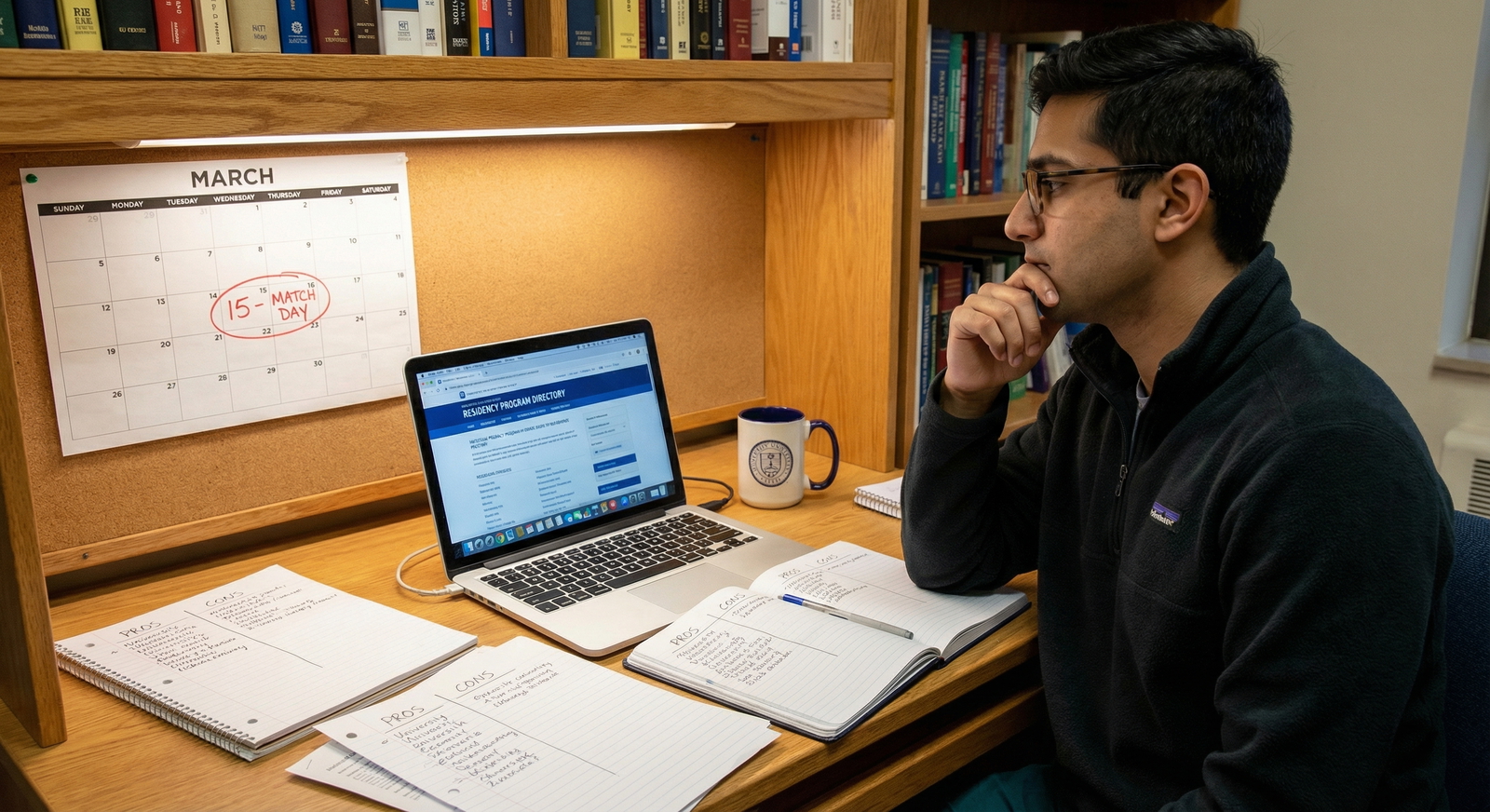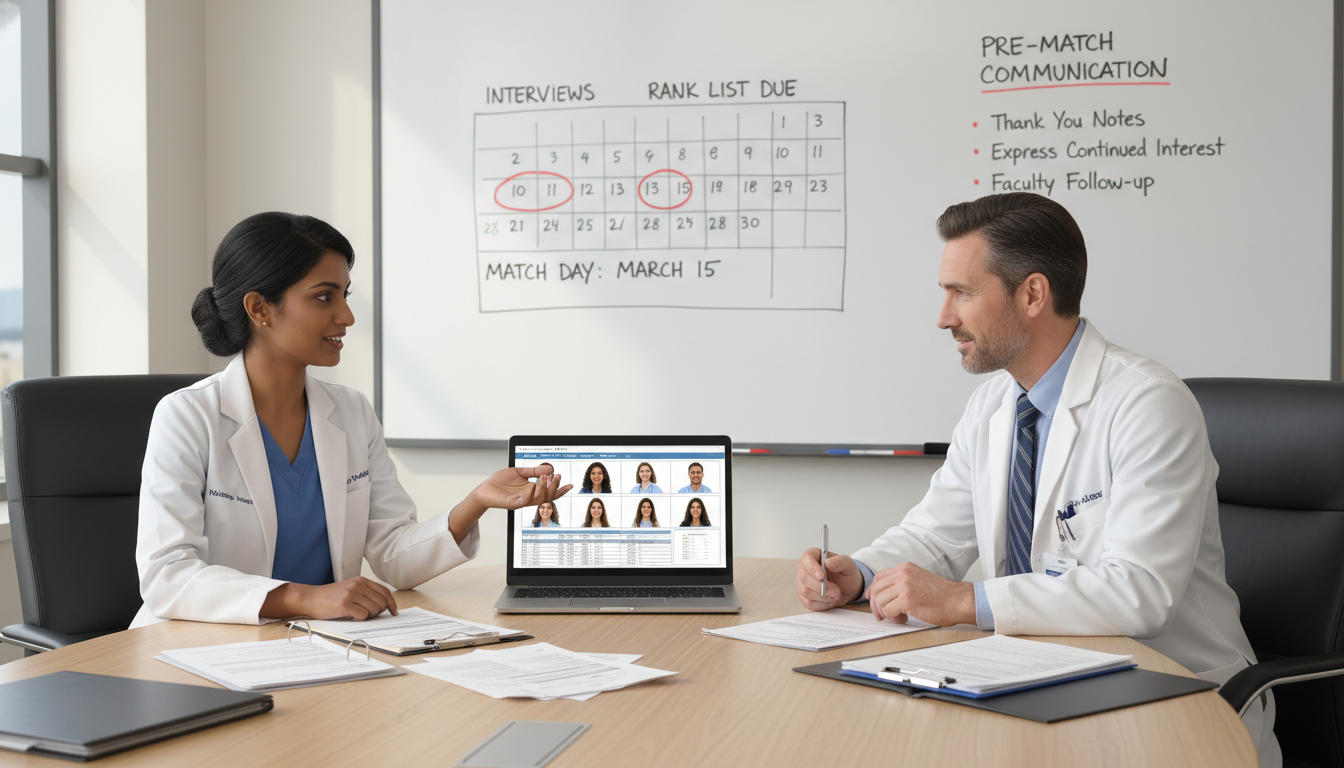
Understanding Pre-Match Communication in Orthopedic Surgery
Pre-match communication is any contact between you and residency programs that occurs before the official NRMP Match results are released. For an MD graduate aiming for orthopedic surgery residency—one of the most competitive fields—navigating this phase strategically can influence where you interview, how programs perceive your interest, and in some cases how they rank you.
To be clear: “pre-match communication” is not the same as a “pre-match offer.”
- In NRMP-participating allopathic orthopedic surgery residency programs, binding pre-match offers (outside the Match) are not permitted.
- However, programs can and do communicate interest, request updates, and respond to your messages before the rank list deadline.
This article focuses on:
- What pre-match communication is and is not
- How MD graduates from allopathic medical schools can use it ethically and effectively
- Specific strategies tailored to the ortho match
- When and how to respond to perceived “early commitment” pressure
- Professional, NRMP-compliant communication templates
Throughout, remember the golden rule: Always protect your integrity and NRMP compliance—even if other people don’t.
The Rules: NRMP Guidelines and What They Mean for You
Before you plan any strategy, you must understand the guardrails. The allopathic medical school match (NRMP) has clear rules around pre-match communication, especially for competitive specialties like orthopedic surgery.
What Programs Cannot Do
For NRMP-participating ACGME orthopedic surgery programs, they may not:
- Ask you to:
- Disclose your rank order list
- Promise you will rank them first
- Create any binding or quasi-binding early commitment
- Offer:
- A residency position outside the NRMP Match (for categorical ortho positions)
- A conditional offer (“If you rank us #1, we will rank you to match”)
- Require:
- Written or verbal agreements of future ranking behavior
- “Pledges” or screenshots of your rank list
Any form of pressure to commit outside the Match process—including explicit or implicit—violates the spirit (and often the letter) of NRMP rules.
What Programs Can Do
Programs are allowed to:
- Express strong interest:
- “You are a highly competitive candidate.”
- “We expect to rank you very highly.”
- Communicate frequently and positively
- Invite you to second looks or informal visits (within institutional policy)
- Ask whether you:
- Have questions or need more information
- Are interested in ranking them highly (without requiring a promise)
- Respond to your update emails or letters of intent
What You Can Do as an Applicant
As an MD graduate, you are allowed to:
- Send thank-you notes after interviews
- Send update letters (USMLE Step 2 CK scores, new publications, honors, etc.)
- Express genuine interest and enthusiasm for a program
- Say that you plan to rank a program highly or first (if it’s true)
- Politely ask about where you stand, as long as you don’t pressure programs to break rules
You are not required to:
- Tell any program your exact rank order
- Give exclusive commitments
- Respond to inappropriate questions; you can deflect and redirect politely
When in doubt, consult your medical school’s student affairs or dean’s office. They are very familiar with the allopathic medical school match and NRMP rules and can confidentially advise you.
Strategic Goals of Pre-Match Communication in Ortho
For MD graduates pursuing orthopedic surgery residency, the purpose of pre-match communication is not to “game” the system, but to:
Convey genuine, specific interest
- Programs want residents who actually want to be there.
- In a crowded ortho match, targeted communication can distinguish you from equally qualified peers.
Solidify your image in their minds
- Thoughtful communication can reinforce:
- Professionalism
- Maturity
- Fit with program culture
- Ortho is small—reputations matter.
- Thoughtful communication can reinforce:
Provide updates that can move the needle
- New Step 2 CK score
- New publications, posters, or podium presentations (especially ortho-related)
- AOA induction, honors in orthopedic rotations, strong sub-I feedback
- Evidence of continued clinical productivity if you’re a grad or reapplicant
Clarify mutual fit
- Is the case volume, subspecialty exposure, trauma vs. sports balance, or research culture what you want?
- Pre-match communication and follow-up questions can reveal what life will actually be like there.
Manage and respond to “early commitment” pressure
- While true “pre-match offers” are generally not valid in NRMP ortho programs, you may sense:
- “We’ll rank you to match if you rank us high.”
- “We hope you’ll make us your top choice.”
- Knowing how to handle this gracefully is crucial.
- While true “pre-match offers” are generally not valid in NRMP ortho programs, you may sense:

Types of Pre-Match Communication and How to Handle Each
1. Thank-You Emails After Interviews
Timing: Within 24–72 hours after your interview day.
Purpose:
- Reinforce your interest
- Highlight a specific part of the interview or program that resonated with you
- Keep you on the radar of the program director (PD) and key faculty
Practical Tips:
- Send individualized notes to:
- Program director
- Chair (if you had a meaningful interaction)
- Primary interviewers
- Use professional tone; keep it brief (1–2 short paragraphs)
- Reference a specific conversation, rotation, or research topic
Sample Structure:
- Brief thank-you
- One concrete program strength (and why it matters to you)
- Short reiteration of interest
2. Update Letters
When to Send Updates:
- After you receive a substantially improved/important USMLE Step 2 CK score
- When you have:
- New ortho-related research acceptance/publication
- A significant award or honor (e.g., AOA, clerkship honors, sub-I commendation)
- A new leadership or teaching role that fits ortho culture (teamwork, coaching, etc.)
Who to Send To:
- Program Director (PD)
- Program Coordinator (CC’d)
- Occasionally Chair or APD if previously involved with you
Key Principles:
- Be selective and substantive. Don’t send an update for minor CV tweaks.
- Title subject line clearly, e.g.:
- “Application Update – USMLE Step 2 CK and Research – [Your Name], AAMC ID #######”
- Brief bullet list of updates works well for busy orthopaedic faculty.
Example Highlights (for an ortho candidate):
- “USMLE Step 2 CK: 25x (previously 23x on Step 1)”
- “First-author podium presentation accepted at [AAOS/ORS/etc.] on [topic]”
- “Honors in Orthopedic Surgery Acting Internship – [Institution]”
3. “Love Letters” and Expressions of Interest
This is where the line between legitimate interest and NRMP gray zones can blur.
If the Program Is Your Clear #1
If you are confident that you will rank a program first, a carefully worded letter of intent can be appropriate.
Key Guidelines:
- Only send this to one program.
- Only make statements that are 100% true.
- You do not need to say, “You are my #1” if you’re uncomfortable, but if you do, it must be honest.
Example (Ethical) Phrasing:
“After completing my interviews, I can say with confidence that [Program Name] is my top choice. I intend to rank your program first on my rank list. The breadth of trauma exposure, early operative experience, and the strong mentorship culture align closely with my goals in orthopedic surgery.”
Programs may appreciate this clarity, and it may influence marginal rank decisions if they are on the fence between otherwise similar candidates.
If It’s a Top Tier Choice (But Not Clearly #1)
You can still communicate strong interest without making promises:
“Your program remains one of my top choices in the ortho match. I was particularly impressed by your resident camaraderie, volume of complex trauma, and opportunities for sports and arthroplasty research.”
Avoid:
- Stating or implying that multiple programs are your top choice
- Vague, generic flattery that could be pasted into any email
4. Responding to Programs That Express Strong Interest
You may receive messages like:
- “We were very impressed with your application and interview.”
- “You are ranked very highly on our list.”
- “We hope you will rank us highly as well.”
These are not binding commitments, nor are they guarantees of matching. But they indicate genuine interest.
Your Best Responses:
- Stay warm but noncommittal, unless it truly is your #1.
- Reaffirm appreciation and interest.
- Do not ask for rank list details or offer your ranking position in exchange.
Example Reply:
“Thank you very much for your message and for the opportunity to interview at [Program]. I truly enjoyed meeting the residents and faculty, and I was particularly impressed by [specific aspect]. I remain very interested in your program and believe it would be an excellent place for my orthopedic surgery training.”
5. Handling “Early Commitment” Pressure and Implied Pre-Match Offers
In some specialties or in certain institutions (especially outside the U.S. allopathic medical school match), “pre-match offers” and early commitment arrangements may still occur. For standard ACGME orthopedic surgery residency positions, formal pre-match offers violating NRMP rules are generally not allowed.
But you may still encounter:
- “If you rank us first, we will rank you to match.”
- “We need to know whether we’re your #1.”
- “Can you assure us we are your top choice?”
How to Respond Without Breaking Rules or Burning Bridges:
If they are truly your #1 and you’re comfortable saying so:
- You may state:
“I plan to rank your program first and would be honored to train there.”
- You still do not need to negotiate or seek guarantees.
- You may state:
If you are unsure or they are not your #1:
- Use honest but noncommittal language:
“I am very interested in your program and see it as an outstanding place for orthopedic surgery training. I am still in the process of finalizing my rank list and intend to create it in a way that is true to my preferences, in accordance with NRMP guidelines.”
- Use honest but noncommittal language:
If you feel a clear rules violation:
- You can redirect:
“I want to be respectful of NRMP guidelines, which discourage discussing specific rank list positions. I can say that I am very enthusiastic about your program and grateful for the opportunity to have interviewed.”
- Discuss with your dean’s office if you feel uncomfortable or pressured.
- You can redirect:

Best Practices: What, When, and How to Communicate
Timeline Overview for an Ortho Applicant (MD Graduate)
1. Interview Season (Roughly November–January):
- Send tailored thank-you emails within 1–3 days of each interview.
- Keep notes on each program: strengths, concerns, gut feelings, resident morale, case mix.
2. Post-Interview to Rank List Deadline:
- Send one major update email per program if you have significant new information.
- Consider one interest/intent letter to your top or #1 program.
- Respond promptly and courteously to all program emails.
3. Final Weeks Before Rank List Deadline:
- Limit further outreach unless:
- You have a meaningful new update.
- A program has reached out to you first.
- Focus on creating a rank list true to your preferences, not what you think programs want.
Crafting Strong, Professional Messages
Aim for messages that are:
- Short: PDs and chairs are busy.
- Specific: Comment on genuine program strengths.
- Professional: Formal but warm tone; correct spelling, grammar, and formatting.
Example: Post-Interview Thank-You (Orthopedic Surgery)
Subject: Thank You – Orthopedic Surgery Interview on [Date]
Dear Dr. [Last Name],
Thank you for the opportunity to interview with the [Institution] Orthopedic Surgery Residency Program on [date]. I greatly appreciated learning more about your approach to early operative exposure and the strong mentorship culture within your department.
I was particularly impressed by the breadth of trauma and sports cases residents encounter and the structured research support you described. I can easily see myself thriving in such a rigorous, team-oriented environment.
Thank you again for your time and consideration.
Sincerely,
[Your Full Name]
MD Candidate, Class of [Year] – [Your Medical School]
AAMC ID: [########]
Example: Update Email with Step 2 and Research
Subject: Application Update – [Your Name], Orthopedic Surgery Applicant
Dear Dr. [Last Name],
I hope you are doing well. I wanted to share a brief update since my interview at [Program] on [date].
- USMLE Step 2 CK: 251
- Research: First-author podium presentation accepted at [Conference] on [topic], with Dr. [Mentor] at [Institution].
- Clinical: Received Honors in my Orthopedic Surgery Sub-Internship at [Institution].
My experience interviewing at [Program] reaffirmed how much I value your strong operative volume, diverse pathology, and supportive resident culture. I remain very interested in your program and would be honored to train there.
Thank you again for your consideration.
Sincerely,
[Your Full Name]
[Contact Info]
Common Mistakes to Avoid
Spamming Programs
- Multiple unnecessary emails or repetitive “just checking in” messages can hurt you.
- Stick to meaningful, well-timed communication.
Overpromising or Misrepresenting
- Claiming a program is your #1 when it isn’t.
- Sending multiple “you’re my first choice” messages to different programs.
- This can damage your reputation, especially in a small specialty like orthopedic surgery.
Emotional or Unprofessional Language
- Avoid sounding desperate or frustrated:
- “I really need this spot.”
- “I haven’t heard back; does that mean I’m not ranked?”
- Maintain composure. The tone of your emails reflects how you might act under stress.
- Avoid sounding desperate or frustrated:
Pushing for Inside Information
- Asking, “Where am I on your rank list?”
- PDs generally will not (and should not) disclose this. Asking pressures them to violate norms.
Violating NRMP Rules—Even Indirectly
- Don’t let anyone convince you to:
- Provide screenshots of your ROL
- Commit to ranking a program first as a condition for anything
- When in doubt, keep your phrasing general and honest.
- Don’t let anyone convince you to:
Special Considerations for MD Graduates and Reapplicants
For Recent MD Graduates (Non-Current Students)
If you are already a graduate rather than a current MS4, programs may:
- Ask what you’ve been doing since graduation
- Want reassurance that your clinical skills are current
Pre-match communication can help you:
- Highlight ongoing orthopedic or clinical experiences (research fellowships, prelim year, observerships)
- Demonstrate maturity, professionalism, and persistence
- Clarify any gaps in training positively and succinctly
For Reapplicants to Orthopedic Surgery
If you previously did not match, be prepared to:
- Show growth and change:
- Higher Step 2 CK
- Stronger letters (especially from ortho faculty)
- More research or publications
- Use pre-match communication to:
- Emphasize what you’ve done since the last cycle
- Address the narrative: “Why are you a stronger applicant this year?”
Example line for an update letter:
“Since my last application cycle, I have completed a dedicated orthopedic surgery research fellowship at [Institution], resulting in [X] presentations and [Y] manuscripts. This experience has further solidified my commitment to a career in orthopedic surgery and strengthened my clinical and academic readiness for residency.”
Final Thoughts: Matching Your Strategy to Your Values
Pre-match communication in orthopedic surgery is less about clever wording and more about consistent professionalism, authenticity, and clarity.
Key takeaways for an MD graduate aiming for an orthopedic surgery residency:
- Know the rules: NRMP guidelines protect you; do not feel obligated to break them.
- Be selective and strategic: Quality over quantity in your messages.
- Stay honest: Especially about your preferences and intentions.
- Respect the Match algorithm: Rank programs in true order of preference, not based on who sent the nicest email.
Handled well, pre-match communication can:
- Reinforce your candidacy
- Help you stand out in a highly competitive ortho match
- Strengthen your relationship with programs you genuinely love
Handled poorly, it can:
- Create ethical concerns
- Damage your reputation in a small specialty
- Distract you from what matters most: your long-term fit and success as an orthopedic surgeon
Use communication as a tool—not a shortcut—and you’ll navigate this phase with confidence and professionalism.
FAQ: Pre-Match Communication for Orthopedic Surgery Applicants
1. Can an orthopedic surgery residency program give me a “pre-match offer” outside the NRMP Match?
For ACGME-accredited allopathic orthopedic surgery residency programs participating in the NRMP Match, formal pre-match offers for categorical positions are not allowed. Any arrangement that bypasses the Match (or is conditional on how you rank them) would typically violate NRMP rules. If you suspect something is off, speak confidentially with your student affairs dean.
2. Should I tell my #1 program that they are my top choice?
If you are absolutely sure a program is your #1 and you are comfortable saying so, a single, honest letter of intent can be appropriate and sometimes helpful. Do this only once, and be fully truthful. If you are not sure, you can still express strong interest without promising they are your first choice.
3. How many emails should I send to each program after my interview?
For most candidates:
- 1 thank-you email soon after the interview.
- 0–1 update email if you have substantial new information (Step 2 CK, publications, major awards).
- Possibly 1 interest/intent letter to your top or #1 program.
Beyond that, repeated non-substantive emails can be counterproductive.
4. Will pre-match communication change whether I match at a program?
Pre-match communication alone will not compensate for a significantly weaker application, but it can:
- Help you stay memorable among similarly qualified candidates
- Signal genuine interest, which matters when programs finalize rank lists
- Clarify fit and enthusiasm
Ultimately, your application strength (scores, clinical performance, letters, research, interview performance) drives most of the decision, with communication playing a supporting—but sometimes meaningful—role.