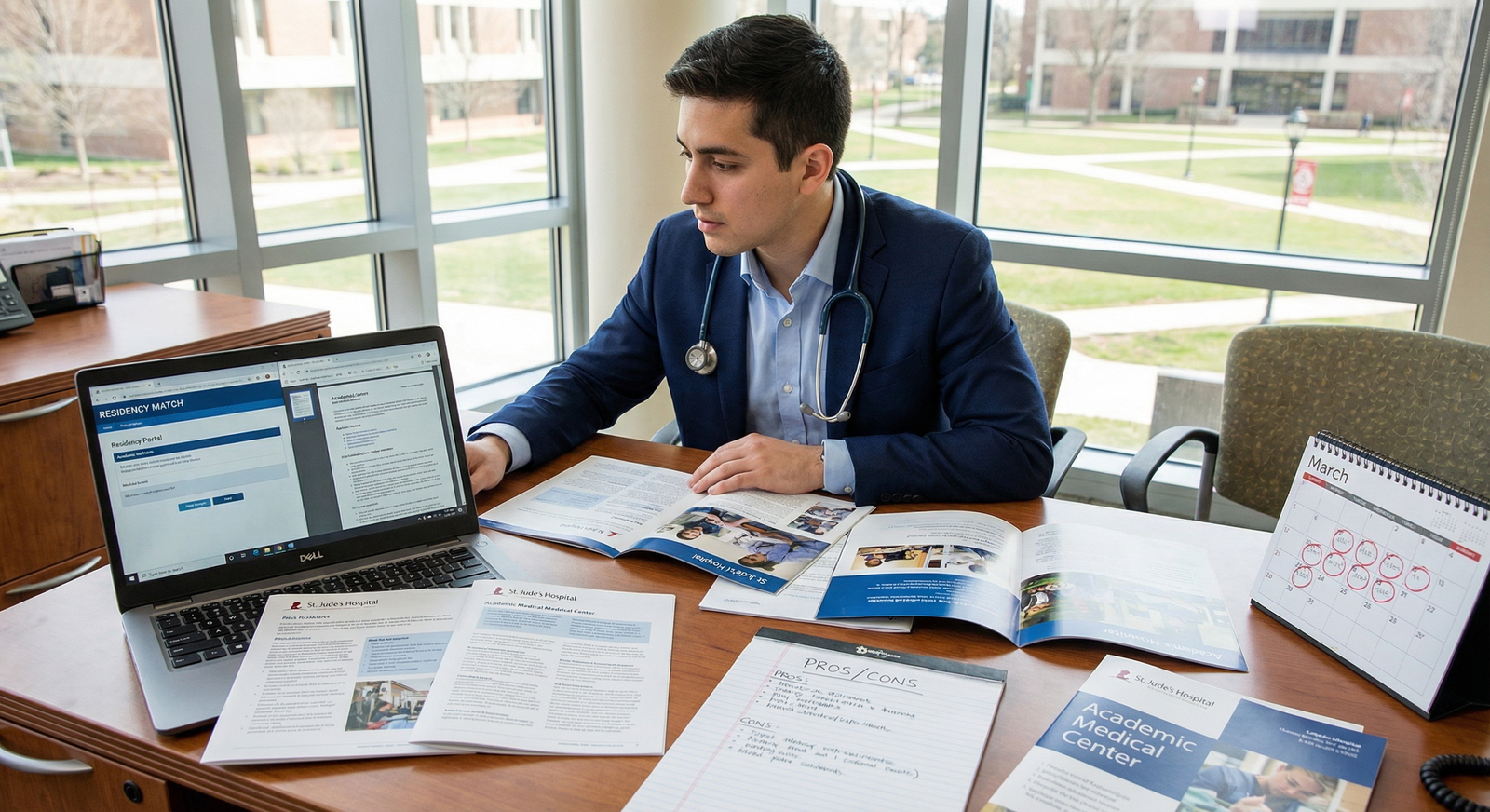
Understanding Pre-Match Communication in Transitional Year Programs
Transitional Year (TY) residencies occupy a unique space in the residency landscape, and pre-match communication can be especially nuanced in this setting. Many applicants are simultaneously managing a categorical application (e.g., Radiology, Anesthesiology, Dermatology) while also navigating transitional year residency options, including pre-match offers and early commitment discussions.
This guide explains what pre-match communication is, how it works in the context of a transitional year residency, what is ethical and allowed, and how to strategically manage contacts with programs before the Match—without violating NRMP rules or damaging your chances.
1. The Basics: What “Pre-Match Communication” Really Means
1.1 Defining Pre-Match Communication
Pre-match communication refers to any contact between you and a residency program that discusses interest, ranking, or potential offers before Rank Order Lists (ROLs) are certified and the Match is run.
For Transitional Year programs, this may include:
- Emails before or after your interview
- Phone calls from program directors (PDs) or coordinators
- Thank-you notes and update letters
- “Second look” visit coordination
- Conversations about pre-match offers or early commitment
In the TY space, this is often more complex because:
- Some Transitional Year positions participate fully in the NRMP Match only
- Some historically participated in pre-match contracts (especially in certain states or institutions)
- Many applicants are “dual-track” (categorical + TY program), complicating how and when to commit
1.2 NRMP vs. Non-NRMP Settings
Most TY programs are NRMP-participating, which means:
- They must not solicit or require your ranking intentions.
- They must not offer you binding pre-match contracts for positions that are in the Main Match.
- You must not sign any residency contract for a Match-participating position outside the NRMP process.
However, institutional policies and local cultures may vary, especially at community hospitals or in states where non-NRMP positions still exist. Always verify:
- Whether a specific TY program is NRMP-participating
- Whether the position you’re being discussed for is categorical, preliminary, or transitional
- Whether it’s part of the Main Match or an “outside” pre-match pathway
If in doubt, politely ask the coordinator or PD for clarification and review the program’s NRMP participation status on official NRMP or ERAS directories.
2. Types of Pre-Match Communication in Transitional Year Residency
2.1 Routine, Low-Stakes Communication
These are normal, expected interactions with a TY program:
- Application-related questions (interview dates, supplemental requirements, logistics)
- Thank-you emails after your interview
- Update letters about new publications, STEP scores, or honors
- Clarifying information about call schedules, didactics, or moonlighting
- Scheduling second looks (where allowed)
These communications are safe and encouraged—as long as you avoid:
- Asking directly, “Where will you rank me?”
- Pressuring the program for a guarantee
- Implying you expect special treatment
2.2 Interest Signaling and “Love Letters”
Transitional Year applicants often want to show serious interest in a specific TY program to improve chances for a pre-match or strong rank outcome.
You might send:
- A “continued interest” email:
- Affirming your enthusiasm after the interview
- Mentioning specific features of the TY program you value (teaching culture, rotation mix, ICU exposure, wellness initiatives)
- A “you are my top choice” email (only if true):
- Declaring a program as your first choice for your transitional year residency
- Being explicit but not demanding a reciprocal promise
Example phrasing:
“I remain highly interested in your Transitional Year program and, at this time, it is my top choice for my internship year. I would be honored to train at your institution.”
In NRMP-participating programs, this is allowed, as long as:
- You do not ask for a binding commitment
- You understand that programs cannot promise specific ranking positions
2.3 Substantive Pre-Match Discussions
Higher-stakes pre-match communication in a TY program context may involve:
- Program directors informally hinting:
- “You’re a very competitive applicant; we’d love to have you.”
- “We plan to rank you highly.”
- Early conversations about:
- Couples match considerations
- Coordination with your categorical program (e.g., radiology, neurology)
- Your willingness to commit early if a pre-match pathway exists
Pay attention to wording. There is a legal and ethical difference between:
- “We will rank you highly” (allowed statement of intent)
- “We guarantee you a spot” or “If you tell us we’re #1, you will match here” (not allowed in NRMP positions)
If you’re unsure whether a discussion has crossed a boundary, you can redirect:
“Thank you for your confidence in me. I understand the Match rules and know that neither of us can make binding promises about rank order. I’m very interested in your TY program and plan to rank it highly.”

3. Pre-Match Offers and Early Commitment: What You Need to Know
3.1 Distinguishing True Pre-Match Offers from NRMP-Participating Positions
Pre-match offers are binding contracts offered outside the Match. They typically occur in:
- Non-NRMP participating programs or positions
- Certain institutions with a local pre-match tradition
- Specific specialties or visa-sponsored positions
Most Transitional Year positions in the U.S. are now NRMP-participating, meaning a true pre-match contract is not allowed. But informally, people still say “pre-match” when they mean:
- A program strongly indicating they will rank you to match
- You indicating they are your clear first choice
- A mutual, non-binding “early commitment” in terms of intent
You must clarify:
“To confirm, is this offer part of the NRMP Main Match, or is this a separate pre-match contract outside the Match?”
If it is NRMP-participating, the program cannot legally offer you a binding position outside the Match. Any such arrangement would violate NRMP rules.
3.2 Risks and Benefits of Early Commitment
If you are genuinely presented with a non-NRMP pre-match offer for a transitional year residency:
Potential benefits:
- Certainty about your internship year
- Less anxiety and fewer applications/interviews
- Ability to synchronize with a categorical program (for advanced specialties)
Risks:
- You may lock yourself into a less ideal location or training environment
- You sacrifice the chance to see your full options through the Match
- If the categorical and TY locations become misaligned, it may complicate life logistics
Key questions to ask before accepting any pre-match or early commitment:
- Is this position NRMP-participating or not?
- Is the offer in writing (contract or letter)?
- Does accepting it restrict me from participating in the Main Match for other positions?
- How will this affect my planned advanced specialty start (e.g., PGY-2)?
- Is this truly my top choice, or just my first offer?
3.3 Strategy: When to Consider a Pre-Match TY Offer
Typical scenarios where a TY pre-match or early commitment could make sense:
- You are an international medical graduate (IMG) with visa needs and a secure, supportive institution offers a non-NRMP slot.
- Your advanced specialty program has a strong preference for its affiliated TY program and encourages a specific early commitment pathway.
- Your application portfolio is weaker, and a guaranteed, reasonably solid internship is safer than an uncertain Match.
Scenarios where you might wait for the Match instead:
- You have multiple interviews at strong TY programs.
- You’re competitive and want the best fit—location, teaching, specialty exposure.
- Your advanced program is independent of any specific TY program.
4. Ethical and NRMP-Consistent Communication Strategies
4.1 What You Are Allowed to Say
You are allowed to:
- Express genuine interest in a TY program
- Tell a program that they are your top choice or that you will “rank them highly”
- Ask clarifying questions about program features, call, salary, support, and culture
- Describe your geographic or personal priorities (family, partner, mentors)
- Provide updates: new publications, Step 3, AOA, research abstracts
Example safe statements:
- “Your Transitional Year program is my first choice for internship, and I plan to rank it #1.”
- “I strongly prefer to stay in this region for family reasons, and your program is my highest-ranked TY option in this area.”
- “I will be ranking your program highly and would be honored to match here.”
4.2 What You Should Avoid Doing
You should not:
- Ask, “Where will you rank me?”
- Request or imply a verbal contract: “If I put you #1, will you rank me to match?”
- Attempt to negotiate positions: “If you promise me a spot, I will cancel other interviews.”
- Share or compare specific rank lists publicly or on social media
- Make false statements about your ranking intentions to multiple programs
NRMP emphasizes honesty in post-interview communication. It is ethically problematic and professionally risky to tell three different TY programs that each is your #1.
If you are not ready to fully commit, use more general but truthful language:
“Your program remains among my top choices, and I will be ranking it highly.”
4.3 How Programs Typically Communicate (and How to Interpret It)
Common pre-match phrases from TY program directors, and how to interpret them:
- “We really liked you and think you’d be a great fit.”
- Translation: Positive feedback, but no ranking guarantee.
- “You will be ranked very highly on our list.”
- Strong interest, but not a binding promise.
- “We plan to rank you to match.”
- Very strong statement, but still not a contract—sometimes accurate, sometimes used more broadly.
- “If you’re very interested, please keep in touch and let us know.”
- They want to gauge your level of commitment; still not a promise.
You may respond:
“I appreciate your support and enthusiasm. I am very interested in your Transitional Year program and plan to submit a competitive rank order list that reflects that.”
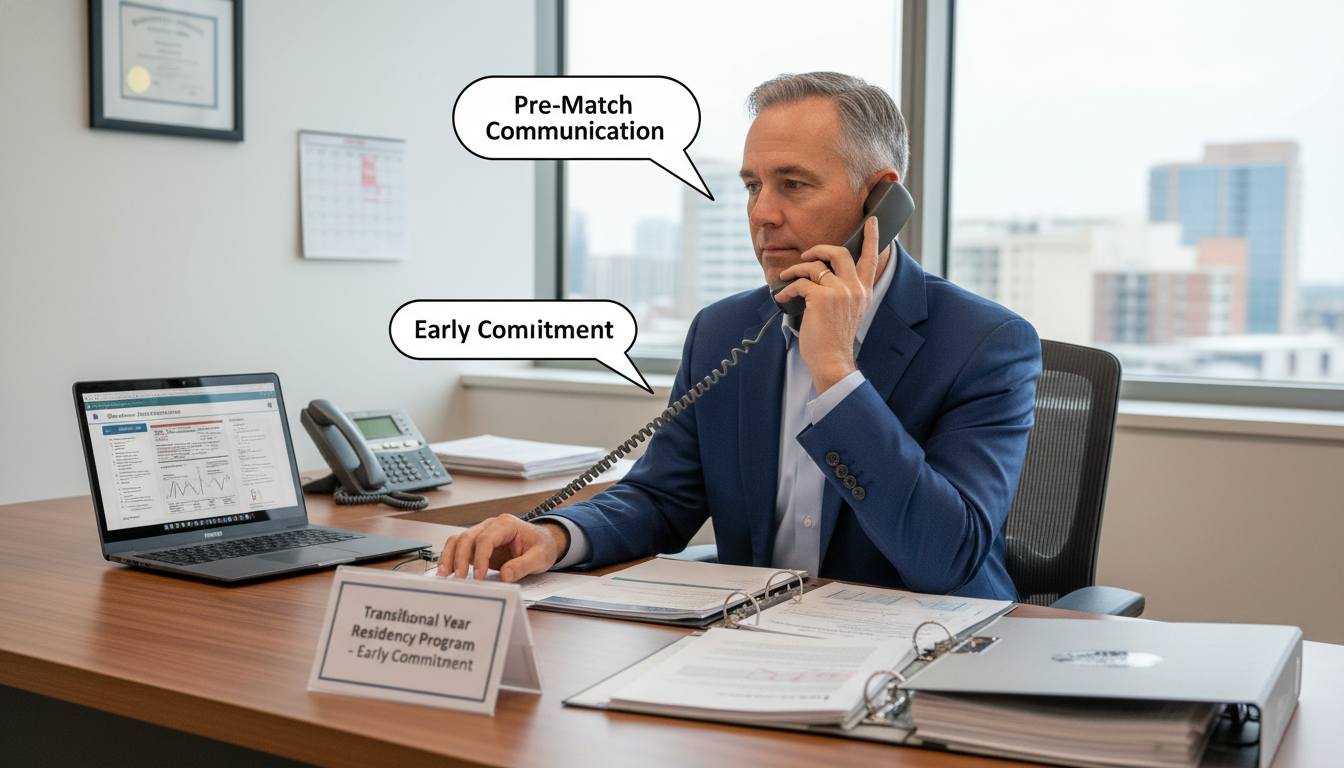
5. Practical Communication Tips for Transitional Year Applicants
5.1 Timing: When to Reach Out
Before Interviews:
- Clarify logistics, scheduling, and requirements
- Avoid content about ranking or offers
After Each Interview (within 24–72 hours):
- Send a concise thank-you email
- Reference a specific part of the interview (teaching style, rotation structure, wellness resources)
- Reiterate interest, especially for TY programs high on your list
Between Interview Season and ROL Deadline:
- Send one focused update or interest letter to your top TY program(s)
- If they are truly #1, consider a clear commitment statement
5.2 How to Structure Emails and Letters
Subject line examples:
- “Thank You – [Your Name] – Transitional Year Interview on [Date]”
- “Update and Continued Interest – [Your Name], Transitional Year Applicant”
Core structure:
- Greeting and thanks
- Specific detail about the program that resonated with you
- Statement of interest and how the program fits your goals
- Optional: Update on achievements
- Respectful closing
Example:
Dear Dr. [Last Name],
Thank you again for the opportunity to interview with the [Hospital Name] Transitional Year residency on [date]. I especially appreciated learning about your program’s strong ICU exposure and the emphasis on mentorship for residents going into advanced specialties like [your field].
I remain very enthusiastic about your TY program and believe it would provide an outstanding foundation for my future training in [advanced specialty]. At this time, your program is my top choice for transitional year residency, and I intend to rank it #1.
Since we last spoke, I have [brief update if applicable].
Thank you again for your time and consideration. I would be honored to train at your institution.
Sincerely,
[Your Full Name, AAMC ID, Contact Information]
5.3 Coordinating TY and Advanced Programs
Transitional Year applicants frequently must manage two parallel tracks:
- Advanced (PGY-2+) specialty: e.g., Radiology, Anesthesiology, Neurology
- Preliminary/Transitional (PGY-1): internship year
Key strategies:
- Ask advanced programs if they prefer or strongly recommend a specific TY program.
- If both programs are at the same institution, clarify whether there is linked ranking or just informal preference.
- When communicating with your TY program, it’s acceptable to mention your advanced field:
“I am excited to be pursuing Diagnostic Radiology and believe your Transitional Year’s ICU and medicine-heavy curriculum will prepare me well for that path.”
Be careful never to imply that your advanced program has pre-arranged placement for you in a TY program unless they have clearly told you this and it is compliant with NRMP rules.
5.4 Handling Phone Calls and “Soft Commitments”
If a PD or faculty calls you:
- Take a deep breath; stay calm and polite.
- Listen carefully to what they are actually saying.
- Avoid making a binding promise in the moment if you are uncertain.
You can say:
“Thank you very much for calling and for your support. I am very interested in your TY program and will take your comments into serious consideration as I finalize my rank order list.”
If they ask directly, “Will we be your #1 TY program?” and you’re not sure:
“I’m still finalizing my list, but your program is among my very top choices. I want to be honest and thoughtful about my final decision.”
Being honest, measured, and respectful protects your integrity and reputation.
6. Common Pitfalls and How to Avoid Them
6.1 Over-Emailing or Being Perceived as Pushy
- Sending multiple messages every week to a TY program rarely helps and may hurt.
- Limit yourself to:
- One thank-you note
- One significant update/interest email
- Possibly one brief question if genuinely needed
Avoid:
- Demanding status updates (“Have you decided where to rank me?”)
- Repeatedly asking for assurance or guarantees
6.2 Misrepresenting Your Intentions
Telling multiple TY programs that each is your “#1” is:
- Ethically wrong
- Professionally risky if PDs compare notes (which does happen)
- Unnecessary—ranking algorithms already favor you ranking programs in your true preference order
Stick with the truth. If multiple programs are truly close, use more general language like “among my top choices” or “I will rank your program highly.”
6.3 Confusing Program Communication Before Match with Official Outcomes
- Positive emails and calls are encouraging but not guarantees.
- Some applicants receive enthusiastic messages and still do not match at that specific program.
- Conversely, some applicants receive no pre-match communication at all and still match to their top TY program.
Don’t over-interpret any single communication. Your overall application strength, interview performance, and rank list strategy matter much more.
FAQs: Pre-Match Communication in Transitional Year Residency
1. Can a Transitional Year residency program give me a guaranteed pre-match spot?
If the TY program is NRMP-participating, it cannot legally offer a binding pre-match contract for a Main Match position. Programs may state that they intend to “rank you to match,” but this is not a contract.
True pre-match offers are limited to non-NRMP positions. Always confirm whether the position is in the NRMP and review any contract carefully.
2. Should I tell a TY program that they are my #1 choice?
If a Transitional Year program is genuinely your top choice, it is appropriate and often beneficial to tell them so in a clear, honest email. Be specific and truthful. However, you should only make this statement to one program. For other programs you like, use language such as “I will rank your program highly.”
3. How often should I email programs about my interest?
A reasonable pattern is:
- One thank-you email soon after your interview
- One update/continued interest letter later in the season, especially for your top TY program(s)
- Additional emails only for substantive questions or logistical issues
Over-communicating can annoy busy faculty and coordinators and may not help your chances.
4. What if a program director asks me directly how I will rank their TY program?
You are free to answer honestly but are not required to disclose your exact rank order. If they are your true #1, you can say so. If not, a safe and honest response is:
“Your program is among my top choices, and I will be ranking it highly.”
Avoid making deceptive statements; the NRMP Match algorithm already works best when you rank programs in genuine preference order, regardless of what you think programs will do.
Thoughtful, ethical pre-match communication can strengthen your candidacy for a transitional year residency without violating rules or compromising your integrity. Focus on honest signaling, clear professional correspondence, and ranking programs in your true order of preference. The Match algorithm, combined with respectful early commitment conversations where appropriate, will do its work from there.