Understanding Pre-Match Communication as a US Citizen IMG in EM–IM
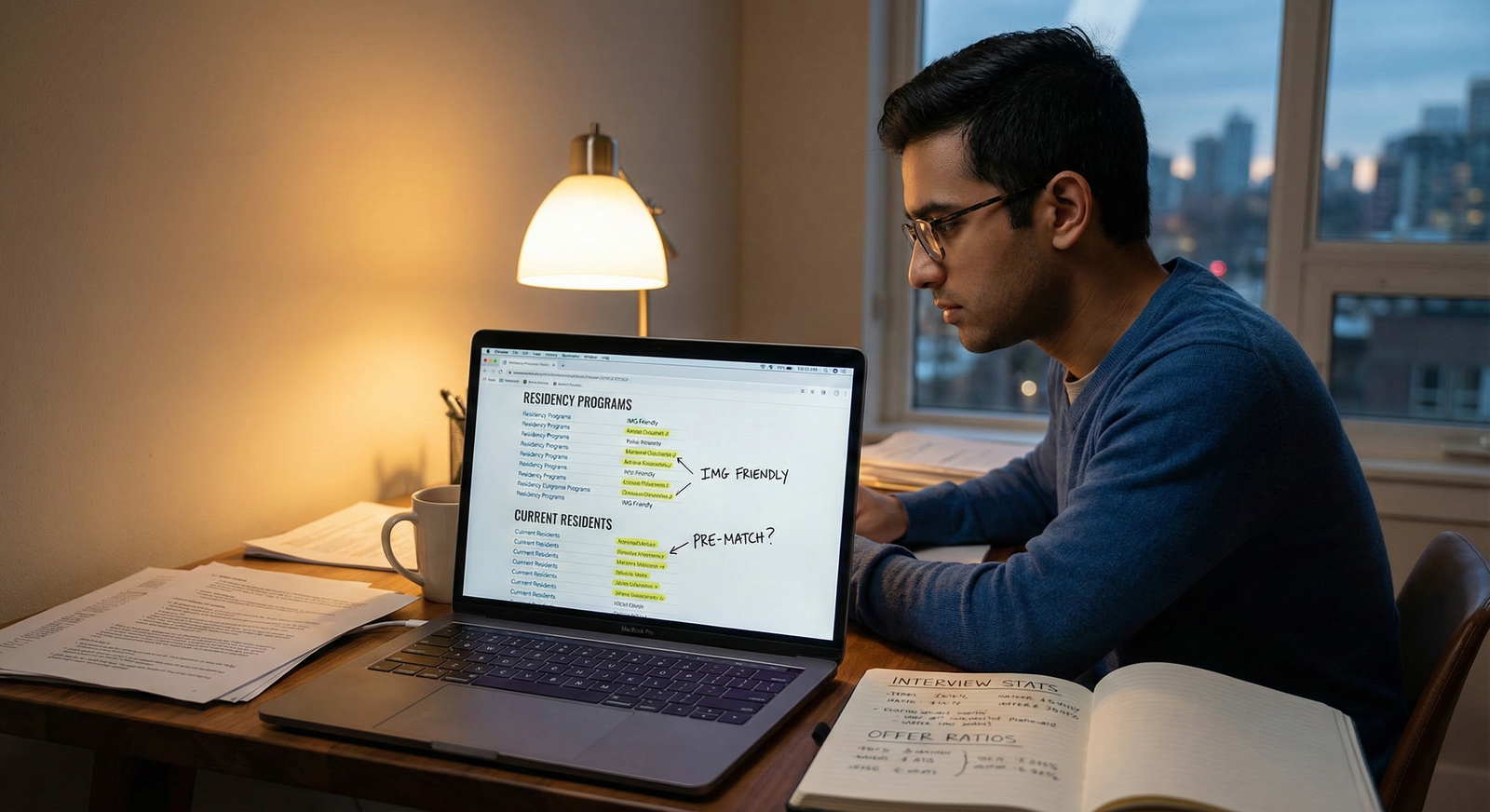
Pre-match communication is everything that happens between you and residency programs outside of the ERAS and NRMP formal processes—emails, phone calls, thank-you notes, “interest” updates, and informal conversations. For a US citizen IMG interested in Emergency Medicine–Internal Medicine (EM–IM combined), how you handle this communication can have a real impact on interview invitations, ranking decisions, and in some cases, pre-match offers or early commitment–style discussions in non-NRMP systems.
In EM–IM combined programs, stakes are even higher. These programs are small, highly competitive, and often housed in busy academic centers. Their faculty and coordinators are used to getting dozens of emails from applicants. Distinguishing yourself requires strategy, professionalism, and a clear understanding of what is allowed—and what is wise.
This guide explains:
- What pre-match communication really means in the context of EM–IM
- How rules differ for US citizen IMGs and for American studying abroad candidates
- How to communicate before, during, and after interviews
- How to handle pre-match offers, early commitment discussions, and program communication before Match Day
- Concrete email templates and phrasing you can adapt
The Landscape: Rules, Ethics, and Realities
1. NRMP Rules vs Real-Life Communication
For most EM–IM combined programs in the United States:
- They participate in the NRMP Match
- They are bound by NRMP rules:
- Programs cannot offer positions outside the Match (i.e., formal binding pre-match offers) if they are Match-participating
- Programs cannot require you to reveal your rank list
- You cannot ask for a guaranteed ranking position or contract outside of the Match
However, there is still a wide area of “permitted but not binding” communication:
- You can tell a program it is your top choice (honestly!)
- Programs can tell you that you will be ranked highly
- Both sides can express strong interest and ask clarifying questions
If a program is not in the NRMP (uncommon for EM–IM, more common for some prelim/TY or off-cycle positions), they may discuss pre-match offers or early commitment directly. As a US citizen IMG, you may see more of these opportunities in:
- Community-based transitional year or preliminary IM spots
- Off-cycle or supplemental positions
- Some non-ACGME or special pathway programs
But your EM–IM combined training should almost always be through the formal Match. That means “pre-match communication” here focuses mostly on interest signaling and relationship building, not signing early contracts.
2. Unique Considerations for US Citizen IMGs and Americans Studying Abroad
As a US citizen IMG or American studying abroad, you have some advantages and some barriers:
Advantages:
- No visa sponsorship needed → often more attractive to borderline-IMG-friendly programs
- Cultural familiarity with US healthcare and patient expectations (especially if you’ve done US clinical rotations)
- Often better understanding of American-style interviewing and communication norms
Challenges:
- Some EM–IM combined programs are historically MD/DO preferred and less IMG-heavy
- Your school may be less known to program leadership
- Limited or no home EM–IM department to advocate for you
Strategic, high-quality pre-match communication can help mitigate these challenges by:
- Humanizing you beyond your Step scores
- Demonstrating professionalism and maturity
- Showing that you understand both Emergency Medicine and Internal Medicine culture
- Making letter writers and US mentors more visible to program faculty

Before Interviews: Smart, Targeted Outreach
1. When Is It Appropriate to Reach Out?
Appropriate times to contact EM–IM combined programs before an interview invite:
- Post-ERAS submission (late September to mid-October)
- A brief interest email to your top EM–IM programs is reasonable.
- After a US clinical rotation (especially EM, IM, or EM–IM)
- To highlight a new letter of recommendation or achievement.
- If you have a strong geographic or institutional connection
- Example: grew up in the city, spouse works at that hospital, or did a Sub-I there.
- If you are on a waitlist or “hold” (occasionally communicated explicitly)
- A short reminder of continued interest can be helpful.
Avoid multiple repetitive emails with no new information—that becomes noise.
2. What to Include in a Pre-Interview Email
Focus on clarity and value, especially as a US citizen IMG:
- Who you are: name, US citizen IMG / American studying abroad, medical school, grad year
- Why EM–IM combined: honest, specific reasons that go beyond “I like variety”
- Why this program: concrete features—patient population, curriculum, 5-year plan, combined training outcomes
- US clinical experience and exam readiness (since you’re an IMG)
- One to two unique strengths that fit their needs:
- Example: prior EMS/paramedic work, research in resuscitation or chronic disease management, QI projects that bridge ED and wards
Example: Pre-Interview Interest Email (US Citizen IMG, EM–IM)
Subject: EM–IM Applicant – [Your Full Name], US citizen IMG, ERAS #[XXXX]
Dear Dr. [Program Director Last Name],
My name is [Full Name], a US citizen IMG from [School Name], applying to Emergency Medicine–Internal Medicine combined programs this cycle. I wanted to briefly express my strong interest in the EM–IM program at [Institution].
I am particularly drawn to your program’s integrated approach to managing complex patients from the ED through inpatient care, especially your [name a unique feature: ED-based observation unit, ICU rotations, global health track, etc.]. During my US clinical rotations in [Hospital/City], I found that my strengths lie in resuscitation, critical thinking under pressure, and building longitudinal relationships with high-risk patients—traits I hope to develop further in a combined EM–IM environment.
As a US citizen trained abroad, I have completed [X] months of US clinical experience in EM and IM, all with strong clinical evaluations and letters of recommendation pending upload. I am confident I can transition smoothly into your rigorous academic setting.
Thank you for your time and for considering my application. I would be honored to interview at [Institution] and learn more about how I can contribute to your EM–IM program.
Sincerely,
[Full Name]
ERAS # [XXXX]
[Phone] | [Email]
Keep it under ~200–250 words and send to:
- The Program Director
- CC the Program Coordinator (they often manage the inbox)
3. Common Mistakes in Pre-Interview Communication
Avoid:
- Mass emails with no personalization
(“Dear Program Director, I am passionate about EM and IM…” sent to 40 places) - Asking directly: “Will I get an interview?” or “Can you please review my application now?”
- Over-explaining or apologizing for being an IMG
- Attaching your entire CV or personal statement in the first email
Your goal: A clear, respectful signal that you’re serious about their EM–IM combined program—not desperate.
After Interviews: Thank-You Notes, Updates, and Interest Statements
Once interviews start, your communication pattern should change from “notice me” to “maintain professional contact”.
1. Thank-You Emails: Still Worth It?
While not universally required, thoughtful thank-you emails can matter more in small EM–IM programs, where:
- Faculty actually remember individual applicants
- Committees discuss “professionalism” and “fit” as part of ranking
Best practices:
- Send within 24–72 hours of the interview
- Short, specific, and individualized
- No mention of ranking or “you’re my #1” at this stage
Example: Post-Interview Thank-You Email
Subject: Thank you – EM–IM Interview on [Date]
Dear Dr. [Interviewer Last Name],
Thank you for taking the time to speak with me during my EM–IM interview at [Institution] on [Date]. I appreciated our discussion about the program’s approach to [example: managing high-acuity ED patients with complex chronic conditions] and your insight into balancing dual training over five years.
Our conversation reinforced my belief that [Institution] would be an excellent environment for me to grow as a physician capable of caring for patients across the ED and inpatient settings. I was especially excited to hear about [specific rotation, scholarly opportunity, or culture point].
Thank you again for your time and for considering my application.
Sincerely,
[Full Name]
Send separate notes to:
- Program Director
- Key faculty interviewers
- (Optional) Chief residents if you had meaningful 1:1 discussions
2. Post-Interview Updates: When and What to Send
Appropriate updates to EM–IM programs include:
- New Step 2 CK score (especially if it’s strong or an improvement)
- New US clinical experience or an EM or IM Sub-I
- New publication, poster, or significant project in EM, IM, or quality improvement
- Match-relevant life changes (e.g., geographic commitment: spouse job, family situation)
Send 1–2 updates total unless the program explicitly invites more. Overdoing it can backfire.
Example: Concise Update Email
Subject: Update to EM–IM Application – [Your Name], ERAS #[XXXX]
Dear Dr. [PD Last Name] and [Coordinator First Name],
I hope you are well. I wanted to share a brief update to my EM–IM application. Since our interview on [Date], I received my Step 2 CK score, which is [Score], and completed a four-week EM Sub-I at [Hospital], where I was commended for [example: leadership during resuscitations, strong presentations, etc.].
These experiences have further confirmed my desire to pursue combined Emergency Medicine–Internal Medicine training, and I remain very interested in the opportunity to train at [Institution].
Thank you again for your time and consideration.
Best regards,
[Full Name]
3. Signaling Interest vs. Crossing the Line
Near ranking time, some applicants feel pressure to say things like:
- “You are my #1 choice.”
- “I will rank you to match.”
Under NRMP rules:
- You are allowed to voluntarily share how you intend to rank a program.
- Programs cannot require this information and cannot ask you to disclose it.
Ethically, you should:
- Only tell one program they are your clear #1 if that is absolutely true.
- Avoid making conditional promises like:
- “If you rank me in your top 3, I will rank you #1.”
- Use phrases like “very highly” when you genuinely plan to rank them near the top but not necessarily #1.
Example: Honest “Top Choice” Email (Use Sparingly and Truthfully)
Subject: Continued Strong Interest in [Institution] EM–IM Program
Dear Dr. [PD Last Name],
I wanted to express my sincere appreciation again for the opportunity to interview with the EM–IM program at [Institution]. After completing all of my interviews and carefully reflecting on my career goals, I can say that your program is my top choice.
The combination of high-acuity emergency care, robust internal medicine training, and the supportive culture I observed among residents aligns exactly with the type of physician I aspire to become. As a US citizen IMG, I am especially grateful for how welcoming your team was and how clearly you value residents’ education and well-being.
Thank you again for considering my application.
Sincerely,
[Full Name]
Use this kind of message once, late in the season (January–February), and only if absolutely true.

Pre-Match Offers, Early Commitment, and Program Signals
1. Pre-Match Offers in an EM–IM Context
True pre-match offers—formal contracts offered outside the NRMP Match—are:
- Rare in EM–IM combined ACGME programs
- Generally prohibited if the program participates in the NRMP
However, as a US citizen IMG, you may encounter:
- Non-NRMP institutions, off-cycle positions, or international EM–IM-like pathways
- Offers in related fields (e.g., preliminary IM year, non-ACGME EM fellowships)
Before considering a pre-match offer or early commitment:
- Confirm whether the program is bound by NRMP rules
- Understand that accepting a valid pre-match offer in a non-NRMP setting might:
- Make you ineligible for that cycle’s NRMP Match, or
- Create contractual/ethical conflicts
Always check:
- NRMP rules for that cycle
- The contract language
- With a trusted advisor (US EM faculty, IM faculty, dean’s office, or GME office)
2. Early Commitment Style Communication: Reading Between the Lines
Programs sometimes send emails like:
- “You will be ranked to match.”
- “You are one of the top candidates we interviewed.”
- “We were very impressed and hope to see you here in July.”
These are non-binding and may be sent to multiple candidates. Treat them as positive but not definitive signals. Your response should be appreciative and professional, not interrogative.
Example Response to a Positive Signal
Dear Dr. [PD Last Name],
Thank you very much for your encouraging note. I truly enjoyed meeting the residents and faculty at [Institution] and continue to feel that your EM–IM combined program is an excellent fit for my training goals.
I appreciate your time and consideration and look forward to the outcome of the Match.
Sincerely,
[Full Name]
3. Program Communication Before Match: What’s Appropriate?
Permitted program communication before Match includes:
- Invitations to second looks (virtual or in-person, where allowed)
- Replies to your questions about curriculum, schedule, and logistics
- General statements of interest (“We enjoyed meeting you”)
You should not:
- Pressure programs for their rank list position
- Attempt to “negotiate” rank placement
- Ask for written confirmation of “guaranteed” matching
The safest approach: use pre-match communication to clarify your interest, understand the program, and show professionalism—not to extract promises.
Practical Communication Strategy for US Citizen IMGs in EM–IM
1. Build a Short, High-Yield Program List
For EM–IM combined programs, there are relatively few spots nationwide. As a US citizen IMG, you should:
- Apply broadly to EM-only, IM-only, and EM–IM combined if your goal is combined exposure but you’re realistic about competitiveness.
- Identify which EM–IM programs have:
- History of interviewing or matching IMGs
- Strong ties to community hospitals (sometimes more IMG-friendly)
- Alumni who are US citizen IMGs or Americans studying abroad
Use this intel to prioritize where you focus your deeper pre-match communication.
2. Leverage Mentors and Networks
Strong indirect communication can be as powerful as your own emails:
- Ask US EM/IM faculty to email or call PDs where they know someone:
- “I have a very strong US citizen IMG applicant who is genuinely interested in your EM–IM program…”
- Use alumni networks of your school who matched to EM, IM, or EM–IM
- Attend virtual open houses or EM conferences where PDs are present, then follow up with a short email referencing your interaction
This kind of behind-the-scenes advocacy often matters more than a dozen direct messages from you.
3. Tone and Style: How to Write Like a Future Colleague
As an EM–IM candidate, your emails should reflect:
- Clarity under pressure (well-organized, concise messages)
- Respectful assertiveness (you show interest without demanding)
- Professional language (no slang, correct titles, proper salutations)
- Attention to detail (no typos, correct program name)
Imagine your email being read aloud in a resident report room—would it make you sound like someone the team wants on night shift?
4. Handling Silence and Rejection
Not hearing back after an email is common and not necessarily negative:
- Program directors are overwhelmed; coordinators triage emails.
- Many polite interest emails receive no direct response.
Do not:
- Send follow-up emails every week asking if they received your message.
- Take silence personally.
Do:
- Focus your time on:
- Strengthening your application
- Performing excellently on current rotations
- Maintaining professional communication where you actually interview
Frequently Asked Questions (FAQ)
1. As a US citizen IMG, should I email every EM–IM program before interviews?
No. Target your communication:
- Prioritize your top EM–IM programs (e.g., 5–10)
- Programs where you have a geographic or institutional connection
- Programs where your mentor has a relationship and can co-advocate
Mass generic emails often dilute your impact and can be counterproductive.
2. Can I directly ask if an EM–IM program will rank me?
You can ask how to strengthen your application or if they need more information, but you should not ask:
- “Will you rank me to match?”
- “What position will I be on your list?”
Most programs will not answer and it can make interactions awkward. Instead, focus on clearly expressing your sincere interest and fit.
3. Is it okay to tell more than one program they are my #1 choice?
Ethically, no. You should only tell one program they are your clear top choice, and only if that is the truth. You can tell other programs that you will rank them very highly or that they are among your top choices—statements that can be honestly true for multiple programs.
4. Do pre-match offers exist for EM–IM combined programs?
For accredited EM–IM combined programs that participate in the NRMP, true pre-match offers (contracts outside the Match) are essentially not allowed. You may see offers in related areas (e.g., prelim IM, off-cycle roles, or non-NRMP systems), but your primary EM–IM combined training will virtually always go through the regular Match. Always verify NRMP participation and seek advice before signing any early contract.
Thoughtful, honest, and well-timed pre-match communication will not magically override major application weaknesses, but it can meaningfully tip decisions at the margins—especially for a US citizen IMG aiming for a competitive EM–IM combined path. Treat every email and interaction as a small sample of how you will communicate as a resident: clear, respectful, reliable, and focused on patient-centered, team-oriented care.