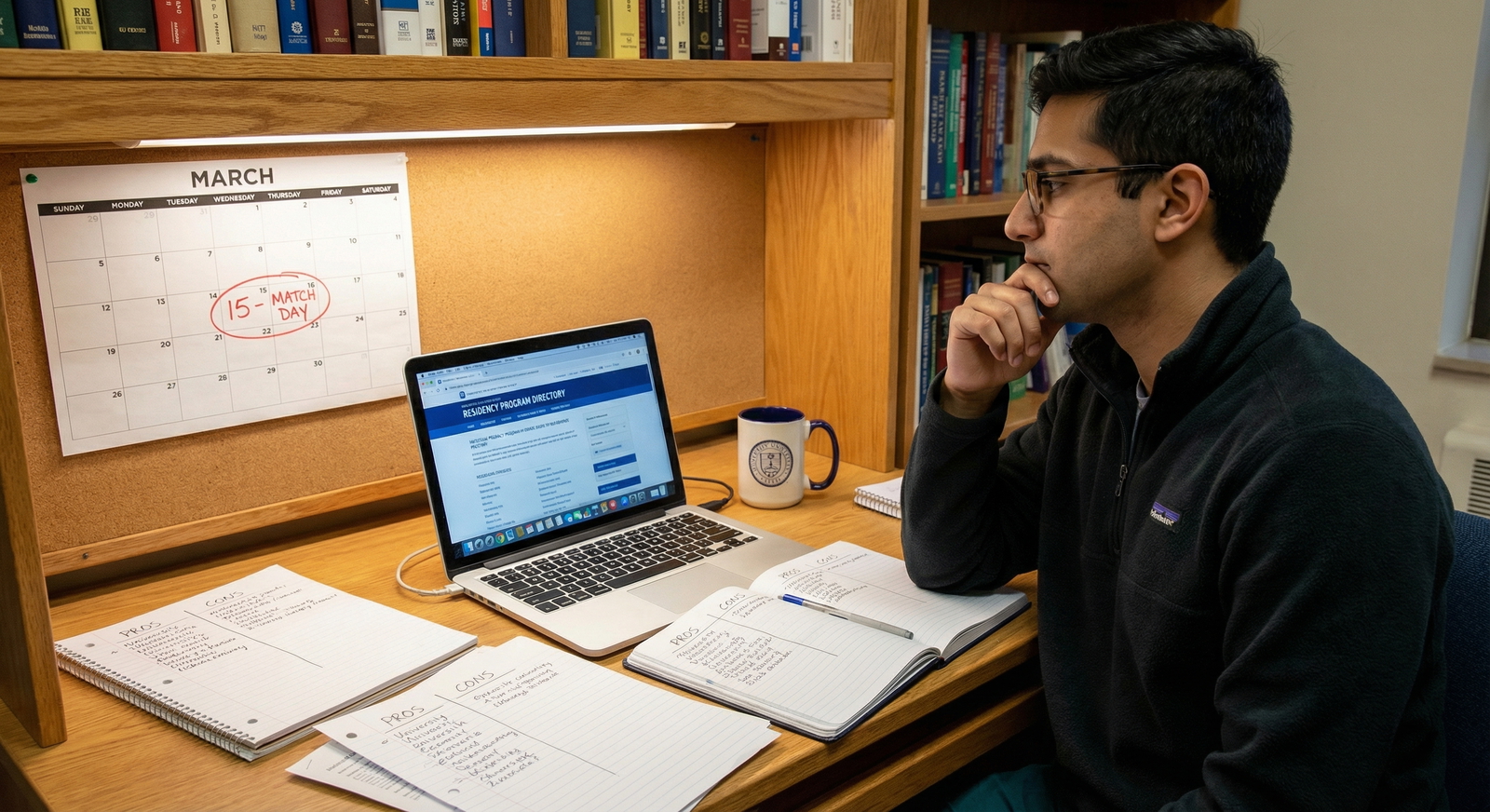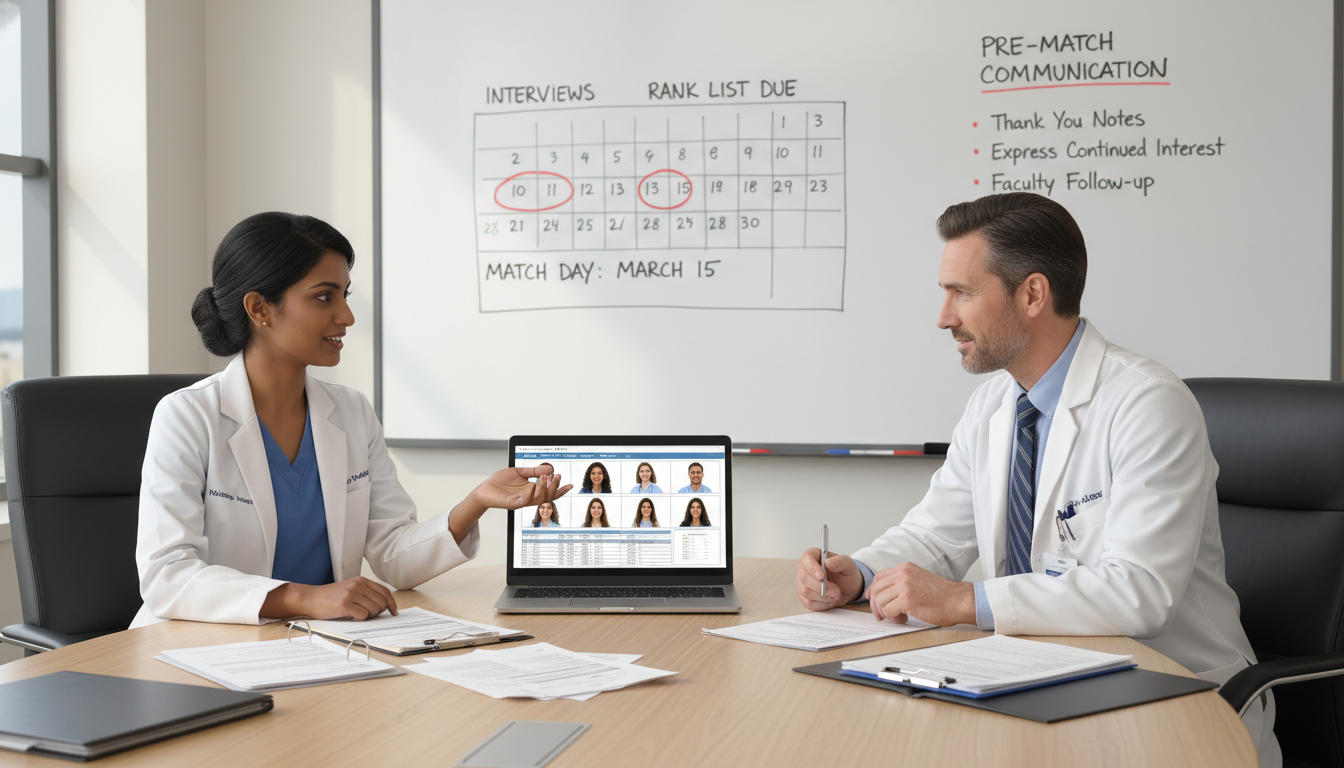
Understanding Pre‑Match Communication in Nuclear Medicine
For a US citizen IMG or American studying abroad, pre‑match communication in nuclear medicine residency can feel ambiguous and high‑stakes. You’re hearing about pre‑match offers, early commitment, “strong interest” emails, and you want to be proactive—without crossing ethical or NRMP lines or hurting your nuclear medicine match chances.
This article focuses on how to communicate with nuclear medicine programs before the Match in a way that is:
- Professional and ethical
- Strategically beneficial
- Tailored to the realities of US citizen IMG applicants
We’ll walk through what pre‑match communication actually is, what’s allowed, what’s risky, and step‑by‑step strategies for emails, calls, and follow‑up.
Note: This article is informational and does not replace official NRMP, ACGME, ERAS, or program‑specific policies. Always verify current rules, as they can change.
1. What “Pre‑Match Communication” Really Means
Before talking tactics, you need precise definitions—especially as a US citizen IMG navigating two systems (your school and US GME).
1.1 Core Terms to Understand
Pre‑match communication
Any contact between you and a residency program after you apply but before the official Match results—emails, phone calls, in‑person chats, virtual info sessions, etc. This includes:
- Thank‑you emails after interviews
- “Love letters” expressing interest
- Faculty advocates emailing on your behalf
- Clarifying questions about curriculum or visa (less relevant for US citizens, but sometimes still asked)
Pre‑match offers
In some specialties and states, programs outside the NRMP or before the Match historically offered contractual positions before Match Day. Nuclear medicine is highly NRMP‑integrated and formal “pre‑match offers” are uncommon, but you might still see:
- Strong verbal signals that you’ll “rank very highly”
- Pressure to disclose your rank intentions
- Requests for “early commitment” or reassurance
Early commitment
Any verbal or informal understanding that you will rank a program highly or first. Under NRMP rules, you may express interest, but you and programs may not make or request binding commitments about rank order.
Program communication before Match
All the ways programs reach out to you during interview season:
- Invitations, waitlist movement
- Interview scheduling logistics
- Interest check‑ins (“Are you still interested in us?”)
- Post‑interview follow‑up & second looks
For a US citizen IMG in nuclear medicine, the key is recognizing that most communication is signaling and relationship‑building, not formal offers. Your job is to signal interest and professionalism—not desperation or rule‑breaking.
2. The Rules: What’s Allowed, What’s Risky, What’s Off‑Limits
Knowing the guardrails helps you be confident and assertive without making mistakes that could jeopardize your candidacy.
2.1 NRMP & Professionalism Basics
Standard NRMP Match rules (paraphrased):
- No program or applicant may request or require that the other party make a statement about ranking intentions.
- You may voluntarily tell a program you intend to rank them highly or first.
- You may not enter into any agreement that attempts to bypass the Match (if the program participates in NRMP).
- Any written or verbal commitments are not binding under the NRMP Match Participation Agreement.
For nuclear medicine residency:
- Most ACGME‑accredited nuclear medicine programs participating in the NRMP Match must abide by these rules.
- Some nuclear medicine pathways (e.g., combined diagnostic radiology–nuclear medicine, or one‑year advanced positions) may have specific match cycles; check each program’s website and NRMP listing.
2.2 What You Can Do as a US Citizen IMG
You can:
- Send polite update emails about new publications, Step scores, or additional nuclear medicine exposure.
- Express genuine interest in a program (“You are among my top choices” or “You are my top choice”).
- Ask clarifying questions about curriculum, research, call, or institutional imaging infrastructure.
- Have mentors or faculty reach out informally to say, “I strongly recommend this candidate.”
- Attend second looks, virtual Q&A sessions, or department open houses.
2.3 What You Shouldn’t Do
You should not:
- Ask programs where they will rank you (“Will you rank me to match?”).
- Offer anything that resembles a quid pro quo (“I’ll rank you #1 if you do X”).
- Pressure programs for a pre‑match contract (in NRMP‑participating nuclear medicine programs).
- Harass programs with excessive emails or calls (weekly “check‑ins” are counterproductive).
2.4 Special Considerations for US Citizen IMGs
As a US citizen IMG or American studying abroad, you may feel more urgency because:
- Some PDs are less familiar with your school.
- You may have fewer home‑institution nuclear medicine mentors.
- You often have a stronger story to tell about why nuclear medicine and why the US.
That makes well‑timed, strategic communication particularly important—but it must remain within ethical boundaries.
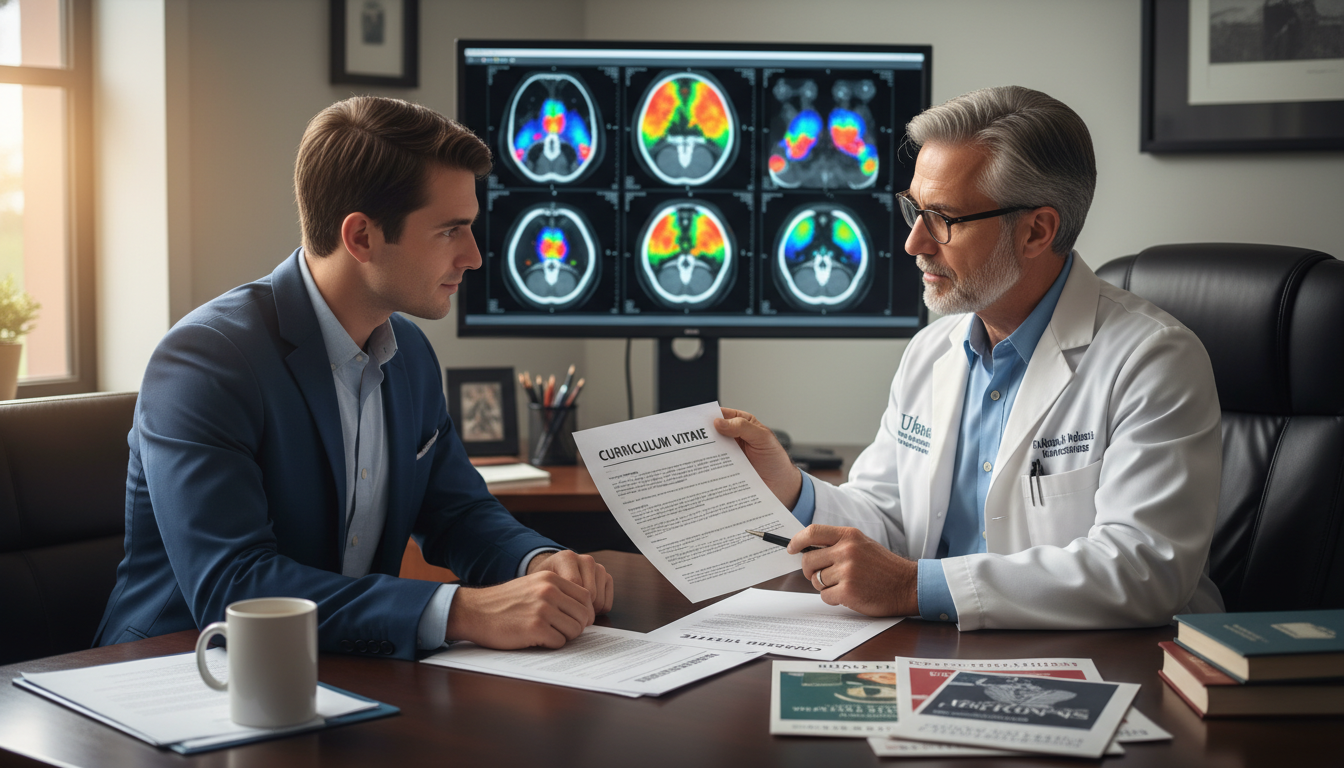
3. Strategic Communication Timeline: Before and After Interviews
Think of pre‑match communication as a timeline with specific objectives at each stage. For a US citizen IMG in nuclear medicine, timing and relevance are crucial.
3.1 Before You Apply (Early Preparation)
Objective: Build legitimate reasons and relationships so later communication feels natural, not forced.
Actions:
- Identify IMG‑friendly nuclear medicine programs
- Check program websites for “We welcome IMGs” language.
- Review past residents on program pages and LinkedIn; look for IMGs and especially US citizen IMG backgrounds.
- Connect with nuclear medicine mentors
- At your medical school, affiliated hospitals, or via alumni networks.
- Through professional organizations like SNMMI (Society of Nuclear Medicine and Molecular Imaging).
- Engage academically
- Join nuclear medicine or radiology interest groups.
- Present posters or case reports in nuclear medicine or molecular imaging.
Communication at this stage is mostly mentorship‑oriented, not program‑directed.
3.2 After ERAS Submission, Before Interviews
Objective: Put your name on the radar of a few high‑priority programs—especially those that are IMG‑friendly or align with your goals.
You may send selective, brief “interest” emails to programs where you have:
- Geographic ties (e.g., grew up in that city or state).
- Prior rotation, research experience, or strong personal connection.
- Specific interest in their focus (e.g., theranostics, PET/MRI, cardiac nuclear imaging).
Example Email (Interest / Introduction)
Subject: US Citizen IMG with Strong Interest in [Program Name] Nuclear Medicine Residency
Dear Dr. [Program Director Last Name],
My name is [Your Name], a US citizen IMG and fourth‑year medical student at [School Name]. I recently applied to the [Program Name] Nuclear Medicine Residency through ERAS and wanted to briefly express my strong interest in your program.
I am particularly drawn to your program’s strengths in [e.g., theranostics and PET/CT in oncology] and the opportunity to work with [specific faculty or research area if relevant]. My background includes [1–2 concise points: US clinical experience, Step scores, nuclear medicine research, or a visiting elective].
Thank you for considering my application. I would be honored to interview and learn more about how I might contribute to your department.
Sincerely,
[Your Name], MS4
[Medical School]
AAMC ID: [Number]
Limit these to a focused list (e.g., 5–10 key programs). Over‑emailing every program with the same generic text can hurt you.
3.3 After You Receive an Interview Invitation
Objective: Confirm professionalism and maintain clear communication.
Key tips:
- Respond quickly to interview offers—same day if possible.
- If dates don’t work, politely request alternatives once; avoid sounding entitled.
- Keep all email responses succinct and error‑free.
This is not the time for “rank talk.” Focus on logistics and gratitude.
3.4 Immediately After Each Interview
Objective: Solidify a positive impression and remind programs of your fit.
Send a thank‑you email within 24–72 hours to:
- Program Director
- Key faculty you spoke with
- Chief resident or resident host (when appropriate)
Example Post‑Interview Thank‑You Email
Subject: Thank You – [Your Name], Interview on [Date]
Dear Dr. [Last Name],
Thank you for the opportunity to interview for the Nuclear Medicine Residency at [Program Name] on [date]. I appreciated learning more about your program’s [1–2 specific strengths: multidisciplinary tumor boards, theranostics clinic, strong physics teaching, etc.].
Our discussion about [mention a specific case, project, or aspect of training] reinforced my belief that [Program Name] would be an excellent environment to develop as a nuclear medicine physician. As a US citizen IMG with strong interest in [e.g., oncologic imaging and research], I am particularly excited by the possibility of contributing to [specific project, clinic, or initiative].
Thank you again for your time and consideration.
Sincerely,
[Your Name]
This type of program communication before Match is standard and expected. It also subtly emphasizes your nuclear medicine commitment and US citizen IMG status without sounding defensive.
3.5 Late Season / After All Interviews (January–February)
Objective: Clarify your preferences, signal sincere interest, and avoid misrepresentation.
Common late‑season communications:
- Update letters: New publications, Step 3, research progress.
- Interest letters: Stating a program is among your top choices or is your top choice (if true).
- Clarification emails: Asking about case volume, board pass rates, research support, or fellowship placement.
“Top Choice” Letter: When and How
Send only one genuine “you are my top choice” letter.
Subject: Strong Interest in [Program Name] Nuclear Medicine Residency
Dear Dr. [Last Name],
I wanted to thank you again for the opportunity to interview at [Program Name] and to express my sincere enthusiasm for your nuclear medicine residency. After completing my interviews, I have carefully considered what I am looking for in a training program, including [3–4 criteria: case diversity, theranostics exposure, mentorship, research opportunities, geographic considerations].
I am writing to let you know that [Program Name] is my top choice for residency training, and I intend to rank your program first on my rank list. As a US citizen IMG with a strong commitment to a career in nuclear medicine in the United States, I am confident that your program offers the environment and mentorship that align with my goals.
Thank you again for your consideration.
Sincerely,
[Your Name]
You may write that. The key is honesty—do not tell multiple programs they’re #1.
4. Handling Pre‑Match Offers, “Early Commitment,” and Ranking Talk
In nuclear medicine, formal pre‑match offers are rare among NRMP‑participating programs. But you may still experience:
- Strong hints: “You would be an excellent fit here.”
- Questions: “How will you rank us?”
- Implied early commitment pressure: “We hope to know that we’re a top choice for you.”
4.1 If a Program Asks How You’ll Rank Them
You are not obligated to disclose your rank list. You can answer honestly without giving specifics.
Option A – You truly plan to rank them very highly
“I’m very interested in your program and plan to rank it among my top choices. I’m still finalizing my list, but I feel strongly about what your program offers.”
Option B – You’re unsure or they’re lower on your list
“I’m still in the process of finalizing my rank list and considering multiple factors, but I appreciate the opportunity to interview here and I see many aspects of your program that I value highly.”
Both answers are compliant and professional. Avoid explicit ranking promises unless you are absolutely certain and choose to share voluntarily.
4.2 If You Sense Pressure for Early Commitment
If a program hints that they’re looking for early reassurance (“We’d love to know if you’re planning to put us first”), you can:
- Reaffirm your genuine interest.
- Avoid creating or agreeing to a “contract.”
- Reference NRMP standards if needed (carefully and respectfully).
Example response:
“I’m very grateful for your interest, and I am strongly considering [Program Name]. I’m committed to following the NRMP Match process and will be finalizing my rank list based on overall fit, including [specific aspects you value]. I can say that your program is one I’m seriously considering.”
4.3 When You Receive Very Positive Signals
Sometimes programs send clear signals:
- “You will be ranked to match.”
- “We plan to rank you very highly.”
Remember:
- These are not guarantees until Match results are official.
- Programs may over‑signal; ranking strategy can change late.
- You should not stop interviewing or ranking other programs.
For a US citizen IMG in nuclear medicine, strong signals are encouraging but should not lead you to:
- Cancel other interviews prematurely.
- Leave many rank list spots empty.
- Assume anything is certain.

5. Communicating as a US Citizen IMG: Positioning and Differentiation
Your status as a US citizen IMG or American studying abroad is neither purely an advantage nor purely a disadvantage—it’s context. How you communicate about it can help you stand out in a positive way.
5.1 How to Frame Your Background
In emails and conversations, emphasize:
US ties & long‑term commitment
- “I am a US citizen planning to build my long‑term career in nuclear medicine here.”
- Mention any US state ties (family, prior schooling, prior jobs).
Adaptability & maturity
- Studying abroad can be framed as evidence of resilience, adaptability, and cross‑cultural communication skills.
Specific preparation for nuclear medicine
- Electives in nuclear medicine, radiology, or oncology.
- Research in imaging, theranostics, or radiopharmaceuticals.
- Attendance at SNMMI or similar conferences.
5.2 Addressing Concerns Without Being Defensive
Some program directors may worry about:
- Quality of training at your medical school
- Board exam preparation
- Lack of US clinical experience (USCE)
You usually do not need to address these explicitly in every email, but you can weave in reassurances:
- Mention US clinical rotations in radiology or nuclear medicine.
- Cite USMLE Step scores and exam success.
- Reference US mentors who know your clinical work (and can advocate for you).
Example phrase in a follow‑up email:
“During my US clinical rotation in nuclear medicine at [Hospital], I gained experience with [PET/CT, SPECT, theranostic clinics], which further confirmed my commitment to the field and to practicing in the US.”
5.3 Using Advocates and References Strategically
As a US citizen IMG, program‑to‑program communication can be powerful:
- A US nuclear medicine faculty member who knows you can email PDs:
- “This candidate is excellent; I highly recommend them.”
- Alumni from your med school now in US radiology or nuclear medicine can vouch for you.
You can politely ask mentors:
“Would you feel comfortable reaching out to any nuclear medicine program directors where you have connections to endorse my application?”
Do not pressure mentors, but recognize that such communication can be more influential than anything you send yourself.
6. Practical Do’s and Don’ts for Pre‑Match Communication
6.1 Do’s
Do be prompt and professional
- Respond to program emails within 24 hours.
- Proofread for spelling and tone.
Do personalize messages
- Mention specific aspects of the program.
- Reference conversations or unique program strengths.
Do keep messages concise
- Most emails should be 1–3 short paragraphs, not essays.
Do track your communication
- Maintain a spreadsheet: program, contacts, date emailed, type (thank‑you, update, interest), response.
Do remain honest and consistent
- Don’t tell multiple programs they’re your top choice.
- Align what you say in emails with what you’ll do on your rank list.
6.2 Don’ts
Don’t send weekly “check‑in” emails
- Over‑communication feels pushy and may backfire.
Don’t copy‑paste generic messages
- Programs can sense template language with no specifics.
Don’t argue or negotiate
- If you’re rejected or waitlisted, be gracious; don’t debate the decision.
Don’t misrepresent your intentions
- Saying “I will rank you #1” when untrue undermines your integrity.
Don’t ignore program instructions
- Some explicitly say “no post‑interview communication will affect ranking.” If they ask you not to send updates, respect that.
FAQs: Pre‑Match Communication for US Citizen IMG in Nuclear Medicine
1. As a US citizen IMG, should I send interest emails to nuclear medicine programs before I get interviews?
Yes, but selectively. Target programs where you have clear reasons to be interested—geographic ties, research fit, or evidence of IMG‑friendliness. Brief, personalized emails can help you stand out, but mass‑mailing every program with a generic note is counterproductive.
2. Can pre‑match communication help me get an interview or move off a waitlist?
It can, but there are no guarantees. A well‑timed, thoughtful email—especially when supported by a faculty advocate—may:
- Remind the program of your interest
- Highlight new achievements (e.g., publication, improved Step score)
- Nudge your application from “maybe” to “yes”
However, programs vary widely in how much they weigh such communication.
3. Is it okay to tell a program they are my top choice in the nuclear medicine match?
Yes, if it is true. Under NRMP rules, you may voluntarily state your ranking intentions, and programs may voluntarily share general impressions. That said:
- Only do this for one program.
- Use clear but professional language.
- Understand that your statement is not legally binding—nor is any response from them.
4. Do nuclear medicine programs commonly make pre‑match offers or require early commitment?
Among NRMP‑participating nuclear medicine residency programs, formal pre‑match offers are uncommon and would generally conflict with match policies. You may encounter softer forms of “early commitment” pressure (e.g., requests to know if you’ll rank them highly). In those situations, affirm your interest but stay aligned with NRMP rules, avoid contractual language, and maintain honesty in your final rank list.
Thoughtful, ethical pre‑match communication won’t magically guarantee a nuclear medicine residency position, but for a US citizen IMG it can be the difference between being an anonymous application and a remembered, respected candidate. By understanding the rules, timing your messages strategically, and presenting your unique background with clarity and integrity, you maximize your chances of a successful nuclear medicine match while upholding the professionalism expected of a future specialist.