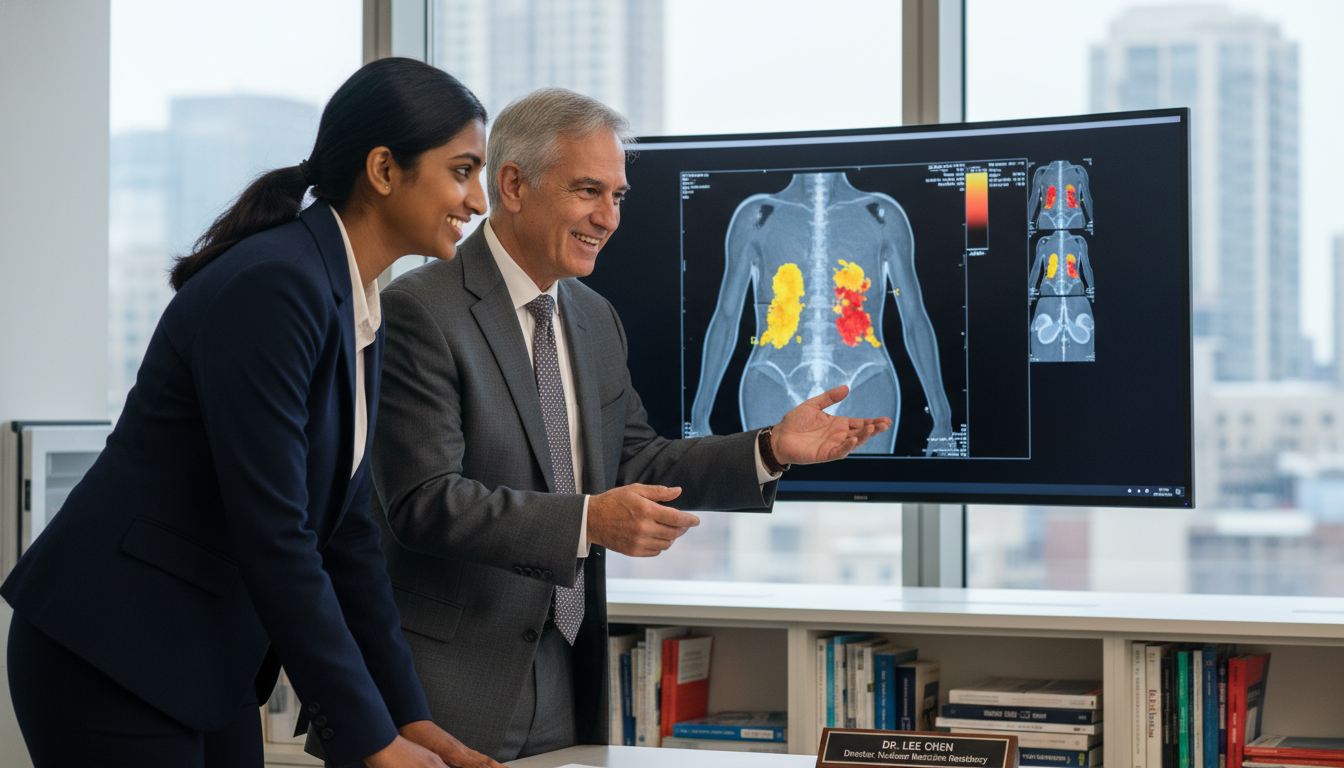
Pre-match communication is one of the most misunderstood parts of the residency journey—especially for a non-US citizen IMG aiming for a nuclear medicine residency. Handled well, it can significantly improve your visibility and chances in the nuclear medicine match. Handled poorly, it can raise red flags or even violate Match rules.
This article walks you step-by-step through how to approach pre-match communication, what to say (and not say), and how to strategically manage early commitment and possible pre-match offers as a foreign national medical graduate.
Understanding Pre-Match Communication in Nuclear Medicine
Pre-match communication includes any contact between you and a residency program after you apply and before the official Match results:
- Emails to or from program directors (PDs) and coordinators
- Phone or video calls
- Communication during and after interviews
- Thank-you notes and update letters
- Signals of interest or early commitment
- Informal discussions about rank intentions
For a non-US citizen IMG targeting nuclear medicine, pre-match communication has three big purposes:
- Visibility – Helping programs remember you among many applicants.
- Clarifying Fit – Showing why you are a strong match for their specific training environment.
- Managing Risk as a Visa-Dependent Applicant – Communicating clearly about visa needs and long-term plans in the US.
Match Rules You Must Respect
Whether you participate in the NRMP Match or a separate institutional match, a few consistent rules apply:
- Programs cannot require you to disclose rank preferences.
- Programs cannot make you promise to rank them first.
- You cannot request or pressure for a “guarantee” or binding pre-match agreement through NRMP-participating programs.
- You can express genuine interest, including that you will “rank highly” or “rank #1” if you choose to do so—but it is not binding.
Always check:
- NRMP Rules & Policies for the relevant year
- Specialty-specific match rules (some nuclear medicine spots are through NRMP, some are institutional or fellowship-like)
- Program websites for explicit policies on communication and post-interview contact
Unique Challenges for Non-US Citizen IMGs in Nuclear Medicine
As a foreign national medical graduate, your pre-match communication strategy must address barriers beyond clinical competence.
Visa and Sponsorship Concerns
Nuclear medicine programs may be cautious about:
- Visa sponsorship costs and paperwork
- Long-term retention (will you stay in the US after training?)
- Timing constraints if your visa process may delay your start date
Your communication should proactively and calmly clarify:
- Which visa(s) you are eligible for (J-1, H-1B, etc.)
- Whether you’ve held US visas before without issues
- Your long-term plan to stay in academic or clinical nuclear medicine in the US
Example phrasing by email:
“As a non-US citizen IMG, I am currently eligible for J-1 sponsorship and am working closely with my mentors to ensure timely visa processing. I have successfully completed [observership/externship] in the US previously without any visa issues.”
Limited US Clinical Exposure in Nuclear Medicine
Many non-US citizen IMGs have:
- Strong nuclear medicine exposure in their home country
- But limited US-based nuclear medicine experience
Use communication to:
- Bridge the gap between your home-country experience and US expectations
- Emphasize any US radiology or internal medicine rotations that relate to imaging
- Highlight research or publications in PET/CT, SPECT, theranostics, or dosimetry
Example email line:
“Although most of my nuclear medicine experience has been at [Home Institution], I have actively worked with PET/CT, hybrid imaging, and multidisciplinary tumor boards, and I am eager to train in a US academic system where these skills can be refined and aligned with SNMMI and ACGME standards.”
Perception: Will You Integrate and Stay?
Programs worry about:
- Communication challenges (accent, cultural differences, teamwork)
- Whether IMGs will adapt to US hospital systems
- Whether graduates will remain in the US workforce
Your communication should show:
- Clear, structured English writing
- Polite, professional tone
- Evidence of teamwork in international environments
- Serious intent to build a nuclear medicine career in the US
Strategic Pre-Interview Communication: Before You Even Meet the Program
Pre-match communication begins before interview invitations.
1. Writing an Effective Initial Contact Email
Contacting a program before you receive an interview can be helpful when done strategically—especially for smaller nuclear medicine programs that may not receive many applicants.
When It’s Reasonable to Email Before an Interview Invite
- You have strong nuclear medicine research connected to that institution
- You have faculty contacts or mentors who worked there
- Their website mentions a special clinical or research focus you share (e.g., theranostics, cardiac PET, neuroimaging)
- You are a non-US citizen IMG with a specific visa situation and want to confirm sponsorship
Keep your email concise (8–12 lines), professional, and customized.
Sample Pre-Interview Email (for a Foreign National Medical Graduate)
Subject: Application to [Program Name] Nuclear Medicine Residency – Non-US Citizen IMG with [Specific Focus]
Dear Dr. [Last Name],
I recently submitted my application to the [Program Name] nuclear medicine residency. I am a non-US citizen IMG from [Country], currently completing [internship/clinical experience], with a strong interest in [e.g., PET/CT-guided theranostics and oncology imaging].
My clinical work has included [brief, specific example], and I have participated in research on [topic] with [Institution/PI], resulting in [publication/abstract]. I am particularly drawn to your program’s emphasis on [specific feature from website—e.g., dosimetry in therapy planning, translational molecular imaging research].
I am eligible for [J-1 / H-1B] visa sponsorship and am committed to building a long-term career in nuclear medicine in the US. I would be honored to be considered for an interview and would welcome any opportunity to contribute to your department’s work in [area of overlap].
Thank you for your time and consideration.
Sincerely,
[Full Name], MD
[ERAS AAMC ID]
[Contact Info]
2. Using Faculty and Mentor Networks
For non-US citizen IMGs, indirect communication through mentors often carries more weight than your own emails.
You can:
- Ask a US-based faculty mentor to send a short email of support to a PD they know.
- Request that your nuclear medicine research PI mention you when speaking with colleagues at target programs.
Sample mentor message you might politely request (never script aggressively):
“If you feel comfortable, I would be grateful if you could briefly mention my application to Dr. [Name] at [Program]. I am particularly interested in their nuclear medicine residency because of their work in [specific area].”

High-Impact Communication During and Immediately After Interviews
Interviews are the centerpiece of your nuclear medicine residency candidacy. Pre-match communication in this phase is about reinforcing fit and professionalism.
During the Interview: Verbal Signals of Interest
Appropriate ways to signal strong interest without breaking rules:
- Ask program-specific questions:
- “How do your residents get exposure to radiotheranostics?”
- “What percentage of your graduates stay in the US academic workforce?”
- Mention your alignment clearly:
- “This program’s emphasis on hybrid imaging and multidisciplinary tumor boards matches how I hope to practice nuclear medicine.”
Avoid:
- Asking directly: “Will you rank me highly?”
- Suggesting: “If you rank me highly, I’ll rank you #1.”
- Pressuring for pre-match offers or guarantees.
Post-Interview Thank-You Emails
For a non-US citizen IMG, a well-crafted thank-you email is critical to:
- Reinforce your commitment to nuclear medicine
- Clarify any visa topics or future goals you may not have fully addressed
- Keep you in the PD’s memory when the rank list is discussed
Guidelines:
- Send within 24–72 hours after the interview.
- Write individual messages for PD, key faculty, and sometimes chief residents.
- Keep it to 1 short paragraph or 6–8 lines.
Sample Thank-You Email (PD)
Subject: Thank you – [Your Name] – Nuclear Medicine Residency Interview
Dear Dr. [Last Name],
Thank you for the opportunity to interview for the nuclear medicine residency at [Program Name] on [date]. I was particularly impressed by your program’s commitment to [e.g., theranostic services, collaborative tumor boards, resident research in PET/CT]. Our conversation about [specific topic] confirmed for me that this is an environment where I could grow as both a clinician and an investigator.
As a non-US citizen IMG with [J-1/H-1B] eligibility and a long-term goal to practice and contribute academically in the US, I would be honored to train in your program and contribute to your department’s work in [specific area].
Sincerely,
[Your Name], MD
Navigating Post-Interview Communication, Early Commitment, and Pre-Match Offers
This phase is where many non-US citizen IMGs become anxious—especially when programs hint at interest or possible early commitment.
Understanding “Pre-Match Offers” and “Early Commitment”
Terminology can be confusing:
- Pre-match offers: Historically, some programs (especially non-NRMP or independent tracks) would offer positions outside the Match, asking you to commit early.
- Early commitment: A program may suggest informally that they are “very likely to rank you highly” or that they “would like you to join,” hoping you will also rank them highly.
- Program communication before match: Any email, letter, or call where a program shares its level of interest or asks about your rank intentions.
In ACGME-accredited nuclear medicine residency programs that participate in NRMP, formal pre-match offers are generally not allowed. However:
- Some institutions may have non-NRMP nuclear medicine tracks or transition-year arrangements where separate agreements still occur.
- Fellowship-style nuclear medicine positions (for those who completed radiology or internal medicine) may follow different rules.
Always clarify:
- “Does this position participate in the NRMP Match, or is it filled outside the Match?”
- “Is there any institutional contract or early commitment process?”
Responding to “We Will Rank You Highly”
If a program emails you:
“We intend to rank you highly and hope you will strongly consider us.”
You can:
- Acknowledge appreciation
- Reaffirm interest
- Maintain honesty about your decision-making process
Sample Response:
Dear Dr. [Last Name],
Thank you very much for your message and for your consideration. I truly enjoyed getting to know [Program Name], especially [specific strengths]. I remain very interested in your nuclear medicine residency and believe I would thrive in your department’s environment and clinical volume.
I will carefully consider all of my options and create my rank list based on where I feel I can contribute most and receive the best training, and your program is certainly among my top choices.
Sincerely,
[Your Name], MD
This response:
- Shows genuine interest
- Maintains honesty
- Does not make a binding promise
If You Are Ready to Tell a Program They Are Your First Choice
NRMP permits expressing rank intentions as long as there is no coercion or false statements. If you are certain a nuclear medicine program is your #1:
Sample “First Choice” Email:
Dear Dr. [Last Name],
I wanted to express my sincere appreciation for the opportunity to interview at [Program Name]. After reflecting on my experiences and goals in nuclear medicine, I have decided to rank your program as my first choice in the Match.
Your emphasis on [theranostics / PET/CT research / multidisciplinary collaboration], combined with your support for international graduates and visa sponsorship, aligns exactly with what I am seeking in residency training. I would be honored to join your team and contribute to your department’s clinical and academic mission.
Thank you again for your consideration.
Sincerely,
[Your Name], MD
Only send such a message if:
- You genuinely intend to rank them #1
- You’re comfortable that they may share this with their committee
When a Program Hints at an Early Contract (Non-NRMP Tracks)
In some cases (typically independent or non-NRMP nuclear medicine positions):
- A program may offer a written contract before Match season or outside NRMP.
- This can be attractive for a non-US citizen IMG needing early visa security.
Before agreeing:
Confirm Accreditation and Board-Eligibility
- Will this training qualify you for ABNM or appropriate board certification?
- Is it ACGME-accredited residency or fellowship?
Check Visa Implications
- Does the institution sponsor J-1 or H-1B for this specific role?
- When will paperwork start?
Evaluate Long-Term Strategy
- Will this pre-match commitment limit your chances at other, possibly stronger programs?
- Is the training environment adequate for your career goals (academia vs. private practice, theranostics vs. diagnostic-heavy, etc.)?
If you accept such a contract, you’re usually ethically—and sometimes contractually—bound to withdraw from the Match for that specialty. Always seek:
- Advice from trusted faculty or mentors
- Possible legal review of the contract, especially regarding visa language

Practical Email Templates and Communication Tips for Non-US Citizen IMGs
1. Update Letter (Mid-Season)
If you have new achievements (USCE, research, visa clearance), an update letter can refresh the program’s attention.
Sample Update Email:
Subject: Application Update – [Your Name] – Nuclear Medicine Residency
Dear Dr. [Last Name] and the Selection Committee,
I hope this message finds you well. I wanted to share a brief update regarding my application to the nuclear medicine residency at [Program Name].
Since submitting my application, I have [completed a US observership at X / presented a poster at SNMMI / had a manuscript on PET/CT accepted by Y journal / received confirmation of J-1 visa eligibility]. These experiences have further solidified my desire to pursue a career in nuclear medicine, particularly in a program with strong emphasis on [align with their strengths].
As a non-US citizen IMG, I remain fully committed to building a long-term career in the US, and your program continues to be one of the environments where I strongly hope to train. Thank you again for your time and consideration.
Sincerely,
[Your Name], MD
2. Clarifying Visa Issues Professionally
You may need to ask about visa sponsorship explicitly, especially as a foreign national medical graduate.
Sample Visa Inquiry (Before or After Interview):
Dear Ms./Mr. [Coordinator Last Name],
Thank you again for coordinating the interview process at [Program Name]. I am very interested in your nuclear medicine residency and wanted to respectfully clarify one logistical question.
As a non-US citizen IMG, I am currently eligible for [J-1 / H-1B] sponsorship. Does your institution sponsor this visa type for nuclear medicine residents? I am asking to ensure that, if matched, my visa situation can be processed smoothly for the expected start date.
Thank you for your assistance.
Best regards,
[Your Name], MD
This direct approach is professional and shows you are planning ahead, not creating problems.
3. Communication Do’s and Don’ts
Do:
- Use a clear subject line with your name and purpose.
- Mention “nuclear medicine residency” explicitly (some institutions have many residency types).
- Customize each message with 1–2 program-specific details.
- Proofread for grammar and tone; ask a native English speaker to review, if possible.
- Keep emails short, focused, and respectful of time.
Don’t:
- Send daily or repeated messages if you get no reply.
- Ask for special favors or exceptions (e.g., “Please interview me even if the deadline passed”).
- Criticize other programs or compare them negatively.
- Lie about your rank list or other programs’ interest.
- Sound desperate (“This is my only chance to stay in the US”).
Putting It All Together: A Strategic Timeline for Pre-Match Communication
For a non-US citizen IMG pursuing nuclear medicine residency, here’s a recommended timeline:
At Application Submission
- Identify 8–15 key nuclear medicine programs where you have specific alignment (research, clinical focus, geography, visa support).
- For 3–5 of them where you have a compelling connection, send a brief introductory email to the PD or coordinator.
When Interviews Begin
- For each invitation: respond promptly, confirm date, and express appreciation.
- Before interviews: research each program’s nuclear medicine services, faculty interests, and visa policies.
During Interview Season
- Ask thoughtful, program-specific questions.
- At the end of each interview day, note:
- Pros and cons
- Nuclear medicine case mix (oncology, cardiac, neuro, theranostics)
- Department culture and IMG support
After Each Interview
- Within 24–72 hours: send individualized thank-you emails to PD and key faculty.
- If visa issues were discussed: follow up with clear, concise confirmation of your eligibility and plan.
Mid-Season / After Major Updates
- If you gain new publications, SNMMI abstracts, or US observerships in nuclear medicine or radiology, send a short update letter to top-interest programs.
Before Rank List Deadline
- Reflect on your priorities: training quality, visa security, geography, research options.
- If there is a true #1 program, consider sending a first-choice email (once, and honestly).
- Do not send “you are my first choice” messages to multiple programs—this can backfire and is unethical.
FAQs: Pre-Match Communication for Non-US Citizen IMG in Nuclear Medicine
1. As a non-US citizen IMG, should I mention my visa status in early emails?
Yes—briefly and confidently. Programs need to know you are aware of your own visa situation and prepared to handle it. One line such as, “I am eligible for J-1 visa sponsorship” or “I am currently on [visa type] and will require [visa type] sponsorship for residency” is sufficient.
2. Can a nuclear medicine residency program legally offer me a pre-match position?
If the position is part of the NRMP Match, formal binding pre-match offers are generally not allowed. However, some nuclear medicine positions (especially non-ACGME or institutional tracks) may be filled outside NRMP with direct contracts. Always ask whether the position is NRMP-participating and review any early contracts carefully, especially regarding visa and board-eligibility.
3. How many emails are too many to the same program?
For most applicants:
- Initial contact (optional)
- Thank-you after interview
- One update letter if there is a meaningful change
- Possibly one final expression of strong interest
Beyond this, repeated messages can appear pushy or anxious. Quality and relevance matter more than frequency.
4. Will telling a program they are my first choice guarantee I match there?
No. The nuclear medicine match (through NRMP or similar systems) uses an algorithm based on both the program’s rank list and your own. Telling a program they are your first choice may encourage them to rank you higher, but there is no guarantee. Do not rely on verbal or email assurances; rank programs in your true order of preference.
Thoughtful, honest, and strategic pre-match communication can significantly strengthen your candidacy as a non-US citizen IMG in nuclear medicine residency. Focus on clarity about your visa status, genuine alignment with each program’s strengths, and professional, measured outreach. That combination will help you stand out ethically and effectively in a competitive match process.