Understanding Pre-Match Communication as a Caribbean IMG in Addiction Medicine
Pre-match communication can feel like a gray zone—especially for a Caribbean IMG aiming for an addiction medicine fellowship or an addiction-focused residency track. You may be hearing terms like “pre-match offers,” “early commitment,” and “program communication before Match” without clear guidelines on what is appropriate, ethical, or strategic.
For Caribbean medical school graduates (including those from SGU, Ross, AUC, Saba, etc.), this is especially important because:
- You may rely heavily on strong communication to stand out.
- You may be navigating unique visa and geographic constraints.
- You may be targeting specialized pathways, such as addiction medicine, where positions are limited and relationships matter.
This article will walk you through how to approach pre-match communication in addiction medicine as a Caribbean IMG—what’s allowed, how to do it well, and how to avoid red flags—while keeping the focus on long-term success in fellowship and addiction-focused careers.
1. Foundations: Match Rules, Ethics, and Terminology
Before learning how to communicate, you need to clearly understand the playing field.
1.1. What Is “Pre-Match Communication”?
Pre-match communication is any professional interaction between you and a residency or fellowship program before the official Match results are released. This can include:
- Thank-you emails after interviews
- Letters of interest or intent
- Clarification emails about ranking, schedule, or program details
- Informal conversations at conferences or open houses
- Occasional, rare, but possible direct pre-match offers (outside NRMP in some states or non-NRMP specialties)
For addiction medicine, this typically applies in two pathways:
- Residency level: Internal medicine, family medicine, psychiatry, or pediatrics programs with a strong addiction medicine focus or track.
- Fellowship level: Dedicated addiction medicine fellowship programs, many of which participate in a Match system (e.g., NRMP for some, or institution-specific match processes).
1.2. NRMP Rules and What They Mean for You
Most core residencies and many addiction medicine fellowships in the U.S. participate in the NRMP (National Resident Matching Program) or similar matching systems. NRMP rules apply to both applicants and programs.
Key points:
- Programs cannot ask you to reveal your rank list or demand any commitment prior to the Match.
- You cannot ask programs how they will rank you.
- Verbal promises are not enforceable and do not override the Match outcome.
- Voluntary communication of interest is allowed (e.g., “I plan to rank your program highly”), as long as it’s truthful and not coercive.
Always confirm whether your target addiction medicine fellowship participates in NRMP or another Match system, or uses direct offers. Rules may differ between:
- U.S. addiction medicine fellowships
- Addiction psychiatry vs. addiction medicine pathways
- Canadian programs
- Non-NRMP institutions or community programs
1.3. Pre-Match Offers and Early Commitment
Some areas (e.g., parts of Texas, certain non-NRMP programs, or international addiction medicine fellowships) may still use pre-match offers or early commitment contracts, especially outside the traditional NRMP Match.
As a Caribbean IMG:
- Clarify whether the program participates in NRMP (look it up on the NRMP or program website).
- If they do not participate in NRMP, a pre-match offer may be a formal, binding job contract outside the Match.
- If they do participate in NRMP, any “offer” before the Match is usually informal and not enforceable; be cautious about relying on it.
If a program suggests early commitment, ask directly and politely:
- “Do you participate in the NRMP (or another formal match)?”
- “Is this an official pre-match offer or an expression of strong interest?”
- “Would accepting this impact my eligibility or status in any Match process?”

2. Strategic Goals for Caribbean IMGs in Addiction Medicine
You’re not just trying to “game” pre-match communication; you’re building a professional narrative that will sustain you into fellowship and beyond.
2.1. Your Unique Caribbean IMG Profile
Coming from a Caribbean medical school, including those known for a strong SGU residency match record, you bring:
- Diverse clinical exposure with resource variability
- Often strong exam prep and resilience
- Flexibility around practice settings
- Sometimes unique experiences with substance use in low-resource or global settings
Program directors in addiction medicine care about:
- Your commitment to vulnerable populations
- Your comfort with psychiatric comorbidities and chronic disease
- Your reliability and professionalism
- Your ability to work within multidisciplinary teams (social work, psychology, primary care, community programs)
Your pre-match communication should repeatedly and clearly signal:
- “I understand what addiction medicine demands.”
- “I am ready for this work, in terms of empathy, endurance, and boundaries.”
- “I’ve sought out substance abuse training and addiction medicine exposure intentionally.”
2.2. Clarifying Your Pathway: Residency vs Addiction Medicine Fellowship
Caribbean IMGs may pursue addiction medicine in two main phases:
Residency with addiction focus
- Psychiatry, internal medicine, family medicine, or pediatrics programs with strong addiction curricula or tracks.
- Goal: Build a strong foundation and line up for an addiction medicine fellowship later.
Addiction medicine fellowship
- After completing a primary residency (in an ABMS-recognized specialty), apply to addiction medicine fellowships.
- Here, your previous pre-match communication style and reputation will follow you.
Your communication strategy should be tailored:
- Core residency application (e.g., IM, FM, Psych)
Emphasize: Interest in addiction, but also breadth and reliability as a general resident. - Addiction medicine fellowship application
Emphasize: Depth of addiction work, substance abuse training, research, advocacy, and clinical exposure.
3. What to Say, When to Say It: Practical Pre-Match Communication Tactics
3.1. Before the Interview: Building a Professional Foundation
Your first pre-match communication typically occurs in the form of:
- Your ERAS application and personal statement
- Emails to program coordinators about application completeness, visas, or scheduling
- Brief networking at conferences or webinars
For a Caribbean medical school residency target with an addiction focus:
- Email tone: Always professional, concise, and respectful of time.
- Subject lines: Clear and specific:
- “ERAS Application Status – [Your Name], Caribbean IMG, Interest in Addiction Medicine”
- “Invitation Availability – [Your Name] – Addiction Medicine-Focused Applicant”
You can subtly highlight your interest even in logistical emails. Example:
“I’m particularly interested in your program’s emphasis on substance use disorders and integrated behavioral health, as this aligns closely with my prior clinical experiences and future goal of pursuing an addiction medicine fellowship.”
3.2. During and Right After the Interview: Being Memorable and Ethical
Your best pre-match communication is still your performance on interview day.
During the interview:
- Ask targeted questions about:
- Existing substance abuse training
- Availability of addiction medicine electives
- Collaboration with community or inpatient detox programs
- Support for addiction medicine fellowship applications
Examples of questions:
- “How do residents interested in addiction medicine build a focused training pathway here?”
- “Have your residents successfully matched into addiction medicine fellowships, and what support do they receive?”
- “What opportunities are there for working with patients with co-occurring substance use and psychiatric disorders?”
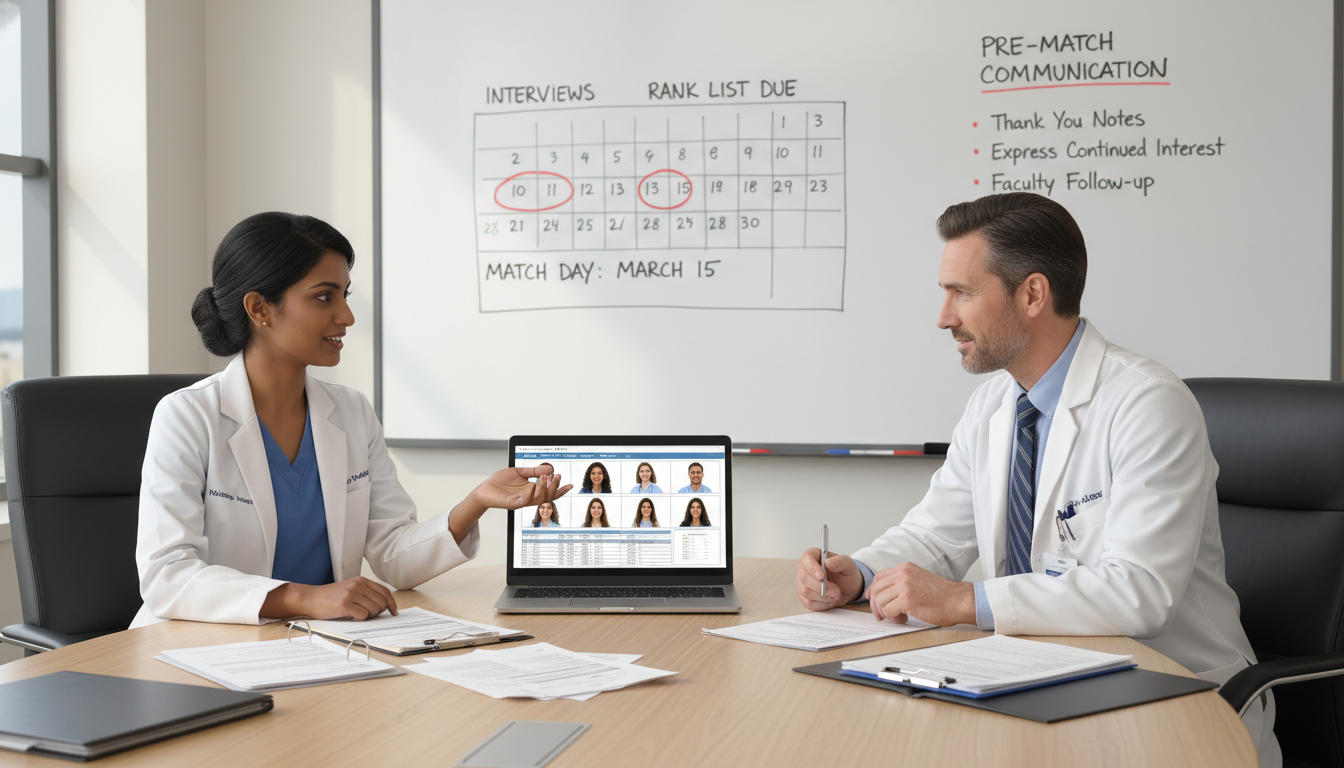
Immediately after the interview (within 24–48 hours):
Send a personalized thank-you email to:
- Program director
- Key faculty you interviewed with (especially if they have addiction medicine expertise)
- Occasionally the program coordinator (brief, appreciative)
Template example (shortened):
Subject: Thank You – Interview Day [Date]
Dear Dr. [Last Name],
Thank you for the opportunity to interview with [Program Name] on [date]. I especially appreciated our discussion about [specific detail – e.g., your outpatient buprenorphine clinic or continuity of care for patients with substance use disorders].
As a Caribbean IMG with long-term plans to pursue an addiction medicine fellowship, I was impressed by the program’s commitment to integrated substance abuse training and care for underserved populations. I would be honored to train in an environment that so clearly values both scientific rigor and compassionate care.
Sincerely,
[Your Full Name, Credentials]
[AAMC/ERAS ID]
This type of communication:
- Reinforces your addiction medicine interest.
- Shows attention to detail and professionalism.
- Keeps you memorable without crossing NRMP boundaries.
3.3. Between Interviews and Rank List Submission: Letters of Interest vs Letters of Intent
This is where many Caribbean IMGs get nervous: what can you say to programs before the Match?
Letters of interest and letters of intent are commonly used terms:
- Letter of Interest:
“I am very interested in your program and plan to rank it highly.” - Letter of Intent:
“Your program is my first choice, and I intend to rank it #1.”
You must be truthful. Misleading multiple programs with “you’re my top choice” emails is unethical and can backfire.
For addiction medicine–oriented programs (residency or fellowship), consider:
- Sending letters of interest to several programs where you had strong rapport and genuine interest.
- Sending one clear letter of intent to your actual first-choice program—if you are certain.
Example letter of intent (for a residency with strong addiction focus):
Subject: Follow-Up and Continuation of Strong Interest – [Your Name]
Dear Dr. [Last Name],
I hope you are well. I wanted to sincerely thank you again for the opportunity to interview at [Program Name] on [date].
After carefully considering my interviews and long-term career goals in addiction medicine, I have decided that [Program Name] is my top choice, and I intend to rank it first. The program’s emphasis on integrated substance use disorder care, the opportunity for addiction medicine electives, and your mentorship in this field align exactly with the training I am seeking.
As a Caribbean IMG, I have deeply valued every opportunity to work with patients facing complex substance use and social challenges. I am confident that I could contribute meaningfully to your team, while developing the skills required to pursue an addiction medicine fellowship and serve high-need communities.
Regardless of the outcome, it has been an honor to learn more about your program. Thank you again for your time and consideration.
Sincerely,
[Your Full Name, Credentials]
[AAMC/ERAS ID]
This type of communication is allowed under NRMP rules as long as:
- It’s voluntary and not requested or coerced.
- It is honest (you truly plan to rank them #1).
- You do not pressure them to disclose their ranking decisions.

4. Handling Pre-Match Offers, Early Commitment, and Difficult Situations
4.1. When a Program Hints at a Pre-Match Offer
Sometimes, especially in non-NRMP programs or early-offer addiction medicine fellowships, you may get language like:
- “We would really like you here.”
- “If you rank us highly, we will rank you highly.”
- “We are prepared to offer you a position if you’re ready to commit.”
Steps to handle this:
Clarify the system.
- “Does your program participate in NRMP or another Match?”
- “Is this an official pre-match offer requiring a contract?”
Confirm documentation.
- If it is truly a pre-match, you should see written terms (employment contract, start date, salary, etc.).
Consider your goals carefully.
- Will this program support your future addiction medicine fellowship aspirations (strong teaching, relevant patient population, mentoring)?
- Is the geographic and visa situation favorable?
Never lie or misrepresent your intentions.
Do not sign a binding early commitment while still planning to participate in NRMP against its rules.
4.2. Balancing Risk: Pre-Match vs Waiting for the Match
For some Caribbean IMGs, a secure pre-match or early offer can be very tempting, especially if:
- You are concerned about overall competitiveness.
- You need a visa and that program is willing to sponsor.
- You feel uncertain about the number of interviews.
But also consider:
- Will this program give you adequate addiction medicine exposure?
- Will you be in a position to match into an addiction medicine fellowship later?
- Does the program have a history of successful fellowships or advanced training for Caribbean graduates?
If you already have multiple interviews at strong programs with known addiction medicine pipelines, it may be reasonable to wait for the Match rather than lock into a weaker environment.
4.3. Red Flags in Program Communication
Be cautious if:
- A program pressures you aggressively to commit early.
- They ask you directly: “Where are you ranking us?” or “Will you rank us #1?” (against NRMP rules in NRMP-participating programs).
- They disparage other programs or promise things that sound too good to be true (e.g., “We can guarantee you a future addiction medicine fellowship if you come here”).
You can respond professionally while protecting yourself:
“I am very interested in your program and appreciate your enthusiasm. I’m committed to following NRMP guidelines and will submit my rank list based on the best overall fit for my training and career in addiction medicine.”
5. Communicating Your Addiction Medicine Focus Effectively
5.1. Show, Don’t Just Tell: Demonstrating Commitment
Programs see many applicants who say, “I’m interested in addiction medicine.” You need to back it up:
Possible evidence to highlight in communication:
- Rotations/electives:
- Inpatient detox, dual diagnosis units, addiction consult services
- Projects or research:
- Quality improvement on opioid stewardship
- Projects involving medication-assisted treatment (MAT)
- Community work:
- Needle exchange programs
- Shelter clinics
- Peer support group involvement (as a facilitator or observer)
- Coursework or certifications:
- Buprenorphine waiver training
- CME modules in substance use disorders
When writing emails or speaking with programs, mention concrete experiences:
“During my psychiatry rotation at [Hospital], I spent four weeks on an inpatient addiction unit, where I managed patients withdrawing from alcohol and opioids and observed long-term recovery planning. This solidified my goal of pursuing addiction medicine fellowship after residency.”
5.2. Tailoring Messages for Different Program Types
For a general internal medicine or family medicine program with strong addiction exposure:
- Emphasize your interest in whole-person, longitudinal care and how addiction medicine fits into that.
- Express appreciation for continuity clinics, MAT in primary care, and working with multidisciplinary teams.
For a psychiatry program:
- Highlight your comfort with co-occurring disorders, trauma, and chronic mental illness with substance use.
- Discuss any exposure to dual diagnosis units, psychopharmacology related to addiction, and therapy modalities.
For a dedicated addiction medicine fellowship:
- Focus on depth: cases handled, skills with buprenorphine, naltrexone, methadone systems (if applicable), motivational interviewing, harm reduction, and your scholarly interest in addiction (research/QI).
Your pre-match communication—emails, conversations, thank-you notes—should reinforce this alignment without sounding repetitive or scripted.
6. Practical Communication Templates and Common Pitfalls
6.1. Sample Short Follow-Up After an Addiction-Focused Interview
Subject: Gratitude and Continued Interest – [Your Name], Interview [Date]
Dear Dr. [Last Name],
Thank you again for the opportunity to interview for the [Residency/Fellowship] at [Institution]. I especially appreciated learning about your collaboration with [e.g., local methadone clinics, community recovery centers, integrated behavioral health team].
My clinical experiences with patients facing substance use disorders in both Caribbean and U.S. settings have convinced me that addiction medicine is where I can make the greatest impact. Your program’s structure and mentorship in this area make it an ideal environment for my growth.
Thank you for your time and consideration.
Sincerely,
[Your Name]
[Contact Info]
6.2. Emailing Before Rank List Certification: Clarifying Questions
Subject: Clarification about Addiction Medicine Training Opportunities
Dear Dr. [Last Name],
I hope you are well. I greatly enjoyed my interview at [Program Name] and have been reflecting carefully on my rank list. Because I am specifically interested in eventually pursuing an addiction medicine fellowship, I had a brief follow-up question:
– Are there opportunities for residents to participate in addiction-related research or quality improvement projects?
– How have past graduates with interests similar to mine (e.g., addiction medicine, substance abuse training) been supported in their fellowship applications?I appreciate any guidance you can provide.
Sincerely,
[Your Name]
This is appropriate, shows focused interest, and avoids asking about your ranking status.
6.3. Common Pitfalls to Avoid
Over-Emailing
- Sending multiple unsolicited emails every week is counterproductive.
- Limit yourself to:
- Post-interview thank you
- One letter of interest/intent (if appropriate)
- Occasional clarification question if truly necessary
Copy–Paste Messages
- Programs often sense generic language. Customize at least 2–3 sentences for each program.
Exaggerating or Fabricating addiction medicine experience
- You may be questioned in detail during interviews or later, and inconsistencies damage credibility long term.
Ethical Misrepresentation
- Telling more than one program they are your “number one” is unethical.
- Even as a Caribbean IMG feeling pressure, your reputation matters across the small addiction medicine community.
Ignoring Visa/Logistical Topics Until the End
- For IMGs, it’s better to be transparent early about visa needs (J-1 vs H-1B).
- This can be done professionally in communication with program coordinators, not as a demand.
FAQ: Pre-Match Communication for Caribbean IMG in Addiction Medicine
1. As a Caribbean IMG, should I send letters of intent to multiple programs to improve my chances?
No. You should send a genuine letter of intent only to your true first-choice program. Sending “you are my #1” messages to multiple programs is unethical and could harm your reputation if discovered. You can, however, send letters of interest to several programs, where you honestly state you are very interested and plan to rank them highly.
2. How important is pre-match communication compared with my actual SGU residency match statistics or exam scores?
Your scores, clinical performance, and letters of recommendation remain the most important factors. However, thoughtful pre-match communication can:
- Reinforce your interest in addiction medicine
- Help programs remember you positively
- Clarify fit and alignment with your goals
It is best seen as a multiplier of a solid application—not a replacement for competitiveness.
3. Can I ask programs directly if they think I will match there or how they plan to rank me?
No. Under NRMP rules, programs cannot reveal their rank decisions, and applicants should not request that information. Instead, focus on professional questions about training structure, addiction medicine opportunities, and mentorship. You are free to voluntarily share your plans (e.g., “I will be ranking your program highly”), but you cannot demand reciprocal disclosures.
4. How can I align my residency choice with the goal of an addiction medicine fellowship later?
When choosing and communicating with programs, look for and ask about:
- Existing substance abuse training (rotations, clinics, didactics)
- Faculty with addiction medicine or addiction psychiatry expertise
- Past graduates who matched into addiction medicine fellowships
- Opportunities for QI or research in substance use disorders
These factors will help you select a residency that naturally leads to an addiction medicine fellowship and make your pre-match communication more focused and persuasive.
By understanding the rules, honoring ethical boundaries, and crafting clear, honest communication that centers your addiction medicine goals, you can use pre-match contact to enhance—not distort—your path as a Caribbean IMG on the way to a career in addiction medicine.