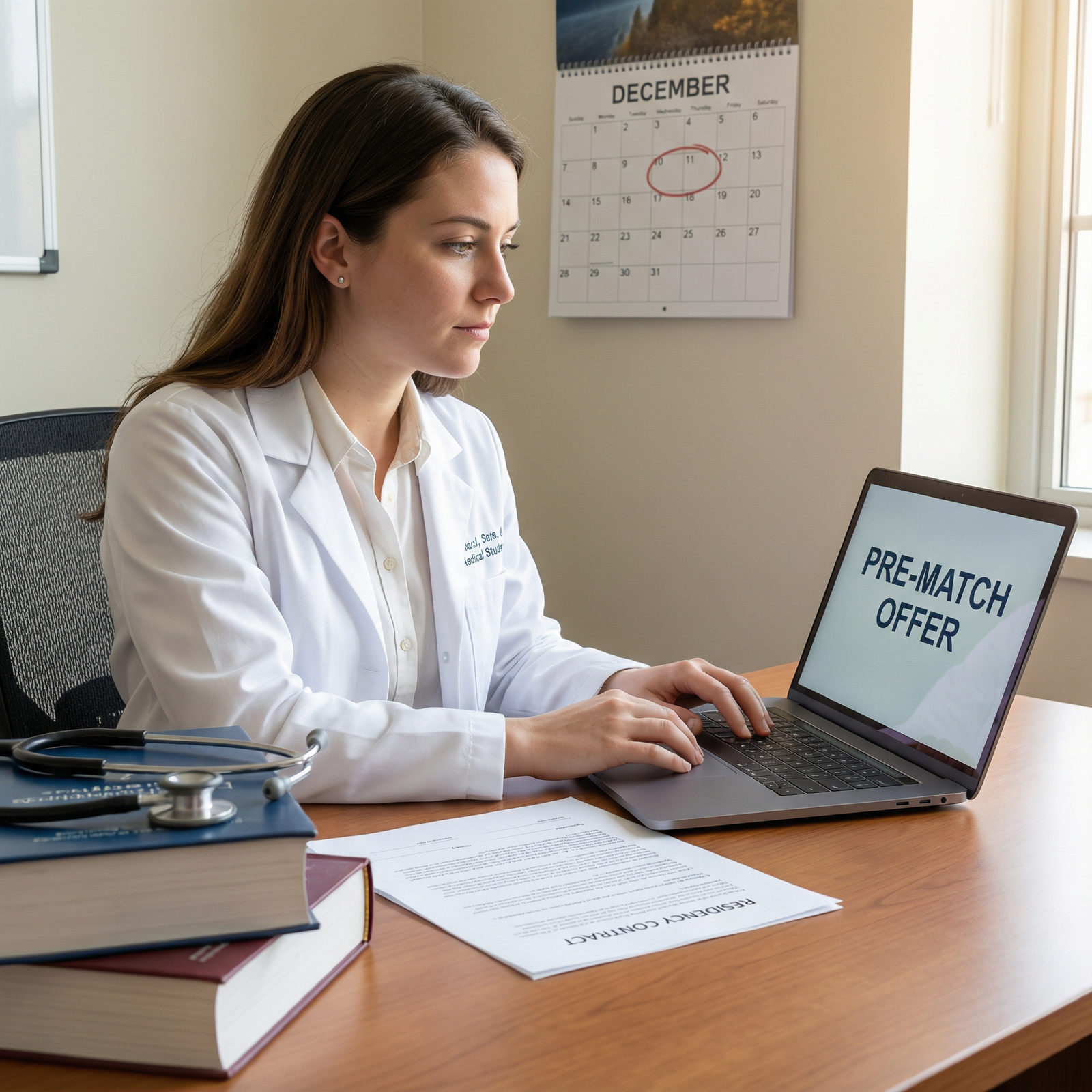
Understanding Pre-Match Communication in Clinical Informatics
Pre-match communication in Clinical Informatics is more nuanced than in many other fellowships. As a subspecialty that blends medicine, data, and technology, programs often have small cohorts, varied funding models, and evolving policies on pre-match offers and early commitment. For applicants, this creates both opportunity and potential confusion.
In this guide, you’ll learn:
- What “pre-match communication” actually means in the context of Clinical Informatics
- How it intersects with NRMP rules, institutional policies, and ethics
- How to handle expressions of interest, “ranking signals,” and informal feedback
- What to do if you sense a pre-match offer or early commitment is being implied
- How to communicate professionally with programs before, during, and after interviews
This is written primarily for physicians applying to Clinical Informatics fellowship in the U.S., but much of it generalizes to international or non-physician informatics training programs that mirror the residency/fellowship match process.
1. The Landscape: Clinical Informatics and the Match
Clinical Informatics (CI) is a relatively young subspecialty with unique structural features that shape pre-match communication.
1.1 Small cohorts and variable funding
Compared to large clinical fellowships, Clinical Informatics fellowship programs:
- Often take 1–3 fellows per year
- Are sometimes co-sponsored by health systems or IT departments
- May have grant- or project-based funding that affects how and when they interview and rank
- Frequently have fellows integrated into health IT training initiatives, EHR optimization projects, and analytics work
Because of these features, programs may feel more pressure to ensure that whoever they rank highly is truly committed to their site. This sometimes drives informal pre-match communication aimed at gauging interest.
1.2 NRMP vs. non-NRMP programs
You must determine whether each program participates in:
- The NRMP Specialties Matching Service (SMS) (common for many CI fellowships tied to ACGME-accredited residencies), or
- A non-NRMP process, which may use internal offers, institutional match systems, or rolling offers
This distinction is critical:
- NRMP-participating programs must follow very specific rules:
- No binding or coercive pre-match offers
- No requiring or soliciting statements like “I will rank you first”
- No asking about how you’ll rank other programs
- Non-NRMP programs may:
- Offer positions outside of a centralized match
- Provide early offers or request early decisions
- Use rolling deadlines and direct contracts
You must know which rules apply to each program you’re talking with. Always cross-check on:
- NRMP website (for SMS specialties and participating programs)
- ACGME and program websites
- Direct communication with program coordinators (if unclear)
2. What Counts as Pre-Match Communication?
“Pre-match communication” includes any interaction with programs before rank lists lock (for NRMP) or before a formal offer/contract is executed (for non-NRMP programs).
2.1 Common forms of pre-match communication
These include:
- Initial outreach emails (before you apply or early in the season)
- Application updates (new publications, leadership roles, QI or IT projects, USMLE/board status)
- Scheduling and logistics emails with coordinators
- Thank-you emails and follow-ups after interviews
- Informal networking through conferences, informatics societies (e.g., AMIA), or shared projects
- Phone calls or virtual meetings with program leadership or fellows after interviews
In Clinical Informatics, there’s often more bidirectional communication about ongoing research, EHR implementations, or data projects, which can blur the line between standard academic networking and match-related signaling.
2.2 What programs are allowed to say (and not say)
For NRMP-participating programs (general principles, not legal advice):
Allowed (if not coercive or binding):
- “We were very impressed with you.”
- “We hope to work with you next year.”
- “You would be a great fit for our program.”
- “Please reach out with any questions as you make your decision.”
Restricted or prohibited:
- Asking you to disclose your rank list
- Asking you to commit to ranking them first
- Suggesting your position is guaranteed if you say you’ll rank them first
- Pressuring you to make a binding early commitment before ranking deadline
For non-NRMP programs, institutional or regional policies may still prohibit coercive tactics, but the absence of NRMP rules means you must read contracts carefully and clarify timelines explicitly.
2.3 What applicants can say (and should avoid)
Applicants are generally permitted to:
- Express non-binding interest (“You are my top choice at this time”)
- Signal enthusiasm, alignment, and specific reasons for interest
- Ask for program details that help you rank realistically
What to avoid:
- Making explicit binding promises (“I guarantee I will rank you #1” if you’re in the NRMP process)
- Misrepresenting your intentions or the number of programs you’re considering
- Pressuring programs with statements like “I will only rank you if you guarantee I’ll match”
Ethically and practically, you want to preserve credibility. Clinical Informatics is a small world; program leadership, faculty, and alumni often know one another well. Being seen as honest and professional can affect not only your fellowship but also future job opportunities in health IT and informatics.

3. Communicating Before the Match: Strategy and Etiquette
This section focuses on tactical communication to maximize your options while respecting ethical and regulatory boundaries.
3.1 Before interviews: smart outreach and positioning
Before interview season ramps up, pre-match communication can:
- Help you get noticed at highly competitive programs
- Clarify fit based on informatics focus (EHR optimization vs. data science vs. AI, etc.)
- Demonstrate genuine interest and initiative
Example: Professional initial outreach email
Subject: Prospective Clinical Informatics Fellow – [Your Name]
Dear Dr. [Program Director Last Name],
I recently applied to your Clinical Informatics fellowship program for the [Year–Year] cycle. I am currently a [PGY-3 Internal Medicine resident at X / practicing hospitalist at Y] with strong interests in EHR usability, clinical decision support, and data-driven quality improvement.
Over the past year, I have led [briefly mention 1–2 key informatics/IT projects, publications, or leadership roles]. I am particularly drawn to your program’s work in [specific initiative or area identified from the program’s website, AMIA presentations, or publications], and would value the opportunity to contribute to and learn from your team.
I’ve attached my CV for your reference and would be grateful for any guidance regarding your selection timeline or if there are additional materials that would be helpful to your review.
Thank you for your consideration,
[Name, credentials, contact information]
Key principles:
- Be specific about why you’re interested in that program
- Demonstrate relevant health IT training or project experience
- Keep it concise and respectful of their time
- Do not ask for special treatment or imply you expect an interview
3.2 During interview season: questions and subtle signaling
While interviewing, every interaction is a form of pre-match communication. How you frame questions can signal seriousness and sophistication.
Useful topics to explore:
- Project portfolio: “How do fellows choose between EHR optimization, data analytics, and AI/ML projects?”
- Protected time & structure: “What proportion of time is spent on clinical vs. informatics work in each year?”
- Health system integration: “How does your fellowship collaborate with IT, data science, and operations teams?”
- Career outcomes: “What roles do your graduates move into—CMIO, data science, vendor roles, etc.?”
You also signal maturity by asking about:
- Support for AMIA participation, abstract submissions, and board exam prep
- Role of fellows in governance (e.g., clinical decision support committees, EHR steering committees)
- Opportunities to influence real-world health IT deployments
3.3 After interviews: thank-you notes and clarifying interest
Thoughtful follow-up can reinforce your candidacy without crossing into coercive territory.
Example: Post-interview thank-you email
Dear Dr. [Interviewer Last Name],
Thank you for speaking with me on [date]. I enjoyed learning more about your Clinical Informatics fellowship, particularly your team’s work on [specific project or area]. Our conversation about [specific topic—e.g., CDS governance, physician burnout and EHR usability, population health dashboards] resonated with my experiences and reinforced my interest in your program.
I remain very enthusiastic about the possibility of training at [Institution Name] and contributing to [project or initiative you discussed]. Please let me know if I can provide any additional information.
Sincerely,
[Name]
Later in the cycle, if this program has become your clear top choice (and if it does not violate any policies you or they are bound by), you might send a carefully worded interest clarification:
Dear Dr. [Program Director],
As I finalize my fellowship preferences, I wanted to let you know that [Institution] remains my top choice for Clinical Informatics training. The blend of [specific reasons—e.g., enterprise EHR environment, strong data science collaborations, exposure to operational leadership] aligns closely with my long-term goals in [e.g., CMIO leadership, population health informatics].
I understand and respect that the match process is non-binding and confidential, and I will be submitting my rank list through the appropriate system. Regardless of the outcome, I am grateful for the opportunity to interview and for your time and consideration.
Best regards,
[Name]
Note: Adjust language based on whether the program is NRMP-participating and any explicit communication policies they state.
4. Pre-Match Offers, Early Commitment, and Grey Zones
This is the most anxiety-provoking part of pre-match communication: what to do when a conversation feels like it’s edging into pre-match offers or early commitment.
4.1 Recognizing a pre-match offer (explicit and implicit)
An explicit pre-match offer might sound like:
- “We’d like to offer you one of our fellowship positions now, before the rank list deadline.”
- “If you agree to commit to us, we will rank you to match and send you a contract.”
An implicit or “soft” early commitment request might sound like:
- “If we rank you highly, would you be willing to rank us highly as well?”
- “We want to be sure that if we invest in you, you won’t go somewhere else.”
- “We need to know if you’ll accept an offer from us if we extend one.”
In NRMP settings, many of these statements are problematic; in non-NRMP settings, they may be permissible, but you still must protect your own interests and ethical comfort.
4.2 How to respond without burning bridges
If a program is NRMP-participating and you’re concerned they’re skirting rules, consider responses that:
- Express gratitude
- Maintain your flexibility
- Avoid explicit commitments about rank ordering
Example response (verbal or written):
I’m very grateful for your strong interest and for the opportunity to interview. I remain highly interested in your program and think it’s an excellent fit. As part of the NRMP process, I’ll be submitting my final rank list through the Match system and will base my decisions on overall fit and training goals.
For non-NRMP programs that genuinely extend an early offer:
- Ask for clear written details: role, salary, clinical load, duration, expectations, and any noncompete or repayment clauses
- Clarify timelines:
- “By when do you need my final decision?”
- “Are you able to hold the offer while I complete currently scheduled interviews?”
- Consider asking (politely):
- “Would there be any flexibility to allow me to complete the interviews already scheduled before I provide a final answer?”
4.3 Balancing risk: accepting early vs. waiting for the match
Decision-making in the face of early offers or implied early commitment is fundamentally about trade-offs:
Arguments for accepting a strong early offer (when allowed/appropriate):
- The program is an excellent fit and realistically in your top tier
- You value certainty and want to avoid the risk of not matching elsewhere
- The position includes unique opportunities (e.g., rare data science collaboration, dual-degree options, or integrated CMIO mentor relationship)
Arguments for waiting:
- You have not yet interviewed at all of your most desired programs
- You’re unsure if the clinical or IT environment will truly support your goals
- You feel pressured or uncomfortable with the tone of the offer
- The offer demands an unreasonably short decision timeline
In some Clinical Informatics markets, there are more positions than highly qualified applicants; in others (e.g., a few elite academic programs), demand far exceeds supply. Talk to current fellows, mentors, or informatics faculty who know the landscape.
When in doubt:
- Seek confidential guidance from:
- Your residency program director
- A trusted CI mentor
- Institutional GME leadership
- Professional societies (e.g., AMIA career mentorship programs)

5. Professionalism, Ethics, and Long-Term Reputation
Clinical Informatics is not just a fellowship; it’s a relatively small professional ecosystem that you’ll inhabit for decades. How you handle pre-match communication can influence your reputation, even beyond matching.
5.1 Honesty and clarity
Core principles:
- Do not lie about your level of interest or your other options
- Avoid overpromising: Don’t tell multiple programs that each is your “definite #1” in a binding-sounding way
- Be upfront when you need time to decide about an early offer
If you must adjust your plans (e.g., withdraw from a program’s consideration):
Dear Dr. [PD],
Thank you again for the opportunity to interview for your Clinical Informatics fellowship and for your consideration of my application. After careful reflection on my personal and professional goals, I have decided to focus my ranking/application on a smaller set of programs and will be withdrawing from further consideration at this time.
I’m grateful for the chance to learn about your program’s impressive work in [X] and hope our paths may cross again in the informatics community.
Sincerely,
[Name]
This preserves goodwill while being direct and respectful.
5.2 Respect for rules and boundaries
Even if a specific program’s behavior feels aggressive or “game-playing,” resist the urge to respond in kind. Adhering to NRMP rules, institutional policies, and widely accepted ethics:
- Protects you from future disputes
- Signals maturity and reliability
- Aligns with the culture of informatics, which values governance, compliance, and data ethics
If you suspect a serious rule violation, you can:
- Document the interaction (dates, language, written correspondence)
- Discuss confidentially with your home program leadership or GME
- Consider contacting NRMP or relevant regulatory bodies if necessary
5.3 Thinking beyond fellowship: the health IT career lens
Your behavior in this stage can influence:
- Future collaborations (multi-institution research, EHR vendor partnerships, modernization projects)
- Invitations to speak, teach, or lead workgroups in AMIA and other professional forums
- Recruiters and CMIOs hearing informal feedback about how you handled early-career negotiations
You are not just choosing a training site; you are entering the Clinical Informatics community. Model the transparency, respect for rules, and patient-centered ethics that the field demands.
6. Practical Action Plan for Applicants
To make this concrete, here is a step-by-step approach to navigating pre-match communication in Clinical Informatics fellowship applications.
6.1 Before application season
Clarify your goals
- Clinical vs. technical: Are you aiming for CMIO, data scientist, vendor leadership, or hybrid roles?
- Academic vs. community: Do you want heavy research, or mainly applied operational work?
Build your informatics narrative
- Highlight EHR optimization, CDS, QI, analytics, or AI projects
- Demonstrate health IT training (courses, AMIA attendance, certificates, Epic/Cerner experience)
Map programs and match participation
- Create a spreadsheet: NRMP vs. non-NRMP, deadlines, contact info
- Identify at least a few “reach,” “target,” and “safety” programs
6.2 During application and interviews
Initiate professional pre-match communication
- Send carefully worded outreach to top programs (as appropriate)
- Ask clarifying questions about structure, expectations, and culture
Track every interaction
- Maintain a log of emails, calls, and impressions
- Note any language that may suggest pre-match offers or early commitments
Stay consistent and honest
- Keep your story aligned across all programs
- Avoid contradictory signals or overpromising
6.3 Approaching rank lists and decisions
Assess interest and fit systematically
- Clinical exposure and supervision
- Informatics project quality and alignment
- Long-term mentorship and job placement record
- Geography, family needs, and lifestyle
Manage early offers and implied pre-match commitments
- Clarify whether the program is bound by NRMP rules
- Request reasonable time to decide; avoid snap choices under pressure
- Consult trusted mentors
Communicate decisions with professionalism
- Send targeted “high interest” messages where appropriate and allowed
- Withdraw from programs you know you would not attend if matched (in non-NRMP situations, follow institutional guidance)
- Preserve relationships; this is a small, interconnected field
By following a structured plan, you transform pre-match communication from a stressor into a set of deliberate, strategic, and ethical actions.
FAQs: Pre-Match Communication in Clinical Informatics
1. Can I tell a Clinical Informatics program they are my first choice?
Yes, in most settings you may express strong interest or say a program is your “top choice,” as long as you:
- Do not violate specific NRMP or institutional policies
- Avoid making or implying binding commitments (e.g., “I guarantee I will rank you #1” when the system relies on confidential rank lists)
- Are honest—don’t tell multiple programs the exact same binary “you are my #1” if you don’t mean it
When in doubt, phrase it as: “Your program is my top choice” or “I remain most excited about training at your institution,” and acknowledge that you’ll submit your final list through the appropriate match process.
2. Is it okay to ask a program where I stand on their rank list?
It is generally not recommended. Many programs are prohibited by policy from disclosing rank positions, and asking can:
- Create an awkward situation for the program
- Make you appear less sophisticated about the match process
- Lead to non-specific, formulaic responses (“We think highly of you”) that don’t actually help you
Instead, use your judgment based on:
- Strength of the interview day interactions
- Follow-up enthusiasm from faculty or leadership
- The overall alignment between your goals and what the program offers
3. What should I do if I feel pressured to accept a pre-match offer?
First, clarify:
- Whether the program is NRMP-participating
- Whether the offer is truly binding or more of a “soft” indication of strong interest
Then:
- Politely ask for time to decide and for details in writing
- Consult mentors or GME leadership about ethical and strategic implications
- Reflect honestly on whether this program is truly a location and environment where you would be happy to train and grow
If the pressure feels inappropriate or coercive—especially in an NRMP context—document the interaction and seek guidance from trusted institutional leaders.
4. How often can I email a program without seeming annoying?
Aim for purposeful, spaced communication, such as:
- Initial outreach (if you have a clear reason)
- Thank-you note after the interview
- One targeted update or clarification of interest later in the season (if you have meaningful new information or a genuine change in your preference)
If you’re emailing multiple times without new information, or asking the same question repeatedly, you risk being seen as overly persistent. Remember that program directors and coordinators manage many applicants and have limited bandwidth.
Handled thoughtfully, pre-match communication in Clinical Informatics can help you signal fit, clarify expectations, and position yourself for a successful match or early offer—without compromising ethics or professionalism. Use each interaction to demonstrate not only your technical and clinical acumen, but also the judgment and integrity expected of a future leader in health IT.