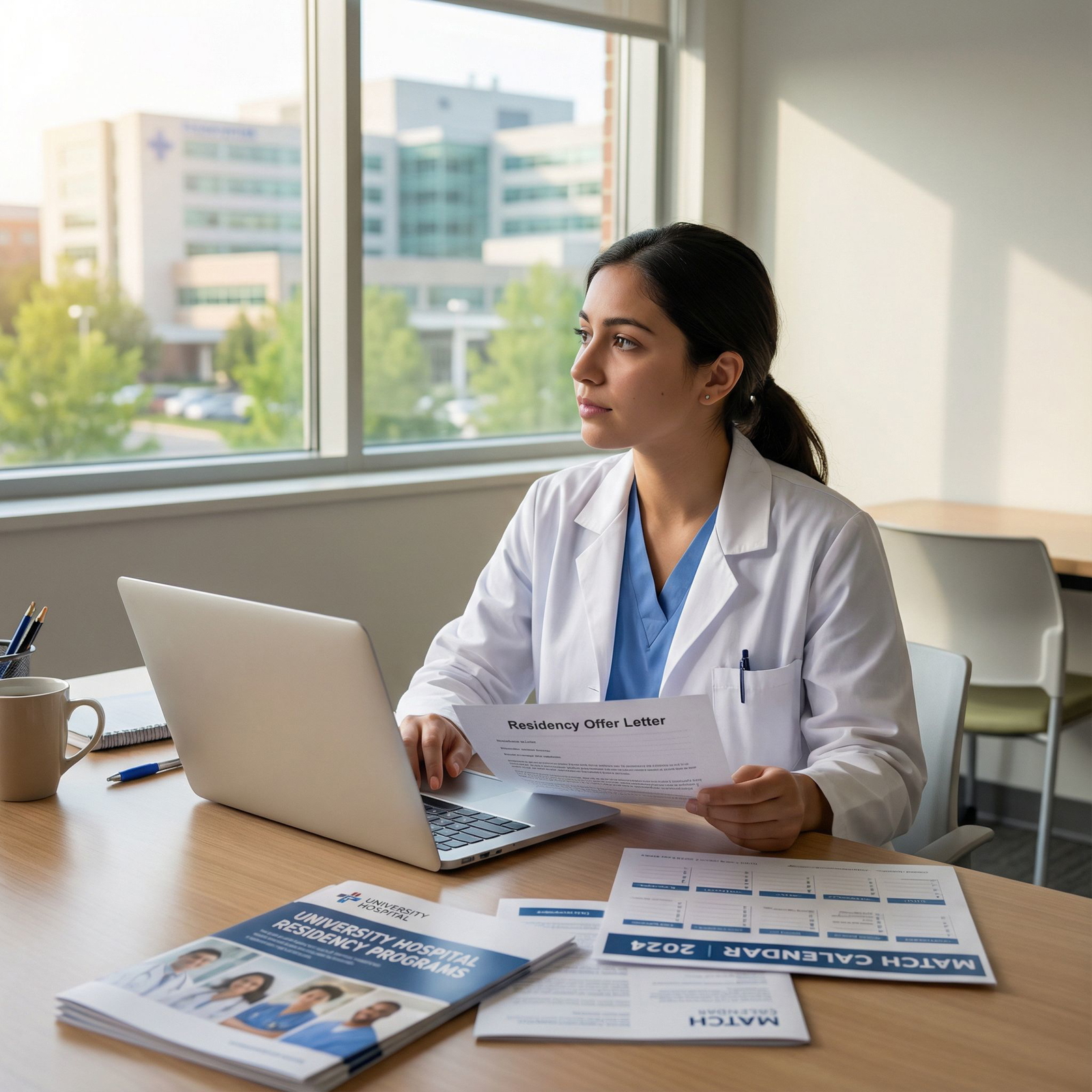
Pre-match communication in dermatology—especially as a DO graduate—can feel like navigating a maze: you know everyone is talking, but no one is fully explaining the rules. This article breaks down what pre-match communication really is, what’s allowed, what’s risky, and how you, as a DO applicant, can use it strategically and professionally to support your dermatology residency goals while staying fully compliant with NRMP rules.
Understanding Pre-Match Communication in Dermatology as a DO Grad
Pre-match communication refers to any interaction between you and residency programs after you’ve submitted your application and before the Match results are released. This includes:
- Emails
- Phone calls
- Video meetings
- In-person conversations at interviews or second looks
- Thank-you notes and update letters
- “Interest” letters and “intent” letters
For a competitive specialty like dermatology—where DO applicants can face additional barriers compared with MD applicants—effective, ethical communication can:
- Reinforce your genuine interest
- Help programs remember you in a very crowded pool
- Clarify your fit and priorities
- Show professionalism and maturity
However, it’s also an area where applicants can accidentally violate NRMP rules or damage their reputation by appearing pushy, desperate, or uninformed about etiquette.
Key Concepts and Terms
To understand the landscape, you need to distinguish between several related ideas:
Osteopathic residency match / DO graduate residency: As a DO, you now participate in the single accreditation system. Most dermatology positions are in the NRMP Match, and some formerly “osteopathic dermatology” programs still may have unique cultures or expectations around communication—but they are under the same Match rules.
Pre-match offers: In some specialties or settings (e.g., certain states or non-NRMP positions), programs can offer a contract before the Match (“pre-match”). For dermatology under NRMP rules, most positions are obligated to the Match, meaning true binding pre-match offers are generally prohibited. You should be extremely cautious if approached with something that sounds like a binding offer outside the Match.
Early commitment: Programs or applicants hinting that “If you rank us #1, we’ll rank you highly” is common, but no one can require a binding early commitment or ask you to reveal your rank list in a way that violates NRMP policy.
Program communication before Match: This encompasses all the messages programs send you after interviews—expressing interest, requesting updates, or answering your questions. How you interpret and respond to this program communication before Match can influence your overall strategy.
The Rules: What’s Allowed, What’s Not, and NRMP Policies
Dermatology applicants—especially those from DO backgrounds hoping for a strong derm match—must be crystal clear on NRMP rules to avoid jeopardizing their eligibility.
NRMP Policy Basics Relevant to Pre-Match Interactions
(Always verify directly with the current NRMP Match Participation Agreement, but these general principles are consistent over recent years.)
No Binding Commitments Outside the Match (for NRMP-coded positions)
- Programs and applicants cannot make binding agreements about ranking or commitment outside the Match.
- A program cannot say:
“If you agree not to rank anywhere else, we promise you a position.”
- You also cannot promise:
“I will sign with you and withdraw from the Match if you’ll take me.”
Statements of Intent vs. Promises
You are allowed to:- Express interest (“I remain very interested in your program.”)
- Express intent (“Your program is among my top choices.”) Programs are allowed to:
- Express interest (“You are a competitive candidate; we enjoyed meeting you.”)
But:
- They cannot require that you reveal your final rank order list.
- They cannot condition ranking on a statement of intent (e.g., “We will only rank you if you promise we’re #1.”)
Honesty and Non-Misrepresentation
- You must not lie about your rank list:
- Don’t say “I will rank you #1” if you know you won’t.
- Don’t tell multiple programs they are all your unequivocal #1.
- Programs also should not misrepresent their intentions.
- You must not lie about your rank list:
Voluntary Communication
- You are never obligated to respond to post-interview communication.
- Programs cannot pressure you for a response, ranking details, or commitment.
Pre-Match Offers and Dermatology: What’s Real and What’s Not?
In some specialties or institutions (especially non-NRMP positions), you may still hear about “pre-match offers” or “early commitment.” In dermatology:
- Most ACGME-accredited dermatology residency programs in the U.S. are NRMP participants.
- For these, true pre-match contracts are not allowed.
- If someone hints at an offer like:
“We’d like to lock you in before the Match,”
your response should be cautious and informed.
Actionable advice:
- If a program suggests a pre-match agreement:
- Clarify: “Is this a position that participates in the NRMP Match?”
- If yes, you can respond:
“I’m excited by your interest. I am committed to participating fully and ethically in the NRMP Match process and will rank programs according to my true preferences.”
- If the program is non-NRMP and truly outside the Match:
- Seek guidance from your dean, mentors, and review the NRMP “All-In Policy” and institutional rules before signing anything.
- Be sure you understand whether accepting that position would require you to withdraw from the dermatology residency Match.

Strategic Pre-Match Communication: Step-by-Step Timeline
Let’s walk through how to handle communication across the dermatology application season as a DO graduate, with an emphasis on maximizing your derm match chances.
1. Before Interview Invitations
Goal: Get noticed and demonstrate fit—without being spammy.
Targeted interest emails (optional, but can help for DO grads):
- Briefly introduce yourself, ideally with a connection:
- Regional ties
- Research collaboration interest
- Osteopathic principles or skills that align with program values
- Example:
Dear Dr. Smith,
I am a fourth-year DO student at [School] applying to dermatology this cycle. Having grown up in [region], I am particularly drawn to your program’s emphasis on community outreach and complex medical dermatology. My research in [topic] and my osteopathic training in holistic patient care align closely with your program’s mission. I look forward to the possibility of interviewing and learning more about your residency.
Sincerely,
[Name], DO candidate
- Briefly introduce yourself, ideally with a connection:
Keep it to 1 short email per program; don’t repeatedly contact programs if you don’t hear back.
2. After Receiving an Interview Invite
Goal: Confirm logistics, show professionalism, and begin relationship-building.
- Prompt confirmation and polite responses.
- You generally don’t need a long reply, but you can include:
- A brief note of appreciation.
- Any necessary clarification (e.g., DO-specific questions about osteopathic recognition or prior DO residents).
Example:
Thank you very much for the opportunity to interview at [Program]. I look forward to speaking with you and learning more about your dermatology residency.
Best regards,
[Name]
3. Immediately After the Interview
This is a high-yield window, particularly important when you are a DO graduate aiming for dermatology residency spots where many applicants are MDs.
A. Thank-You Emails
- Send within 24–72 hours.
- Short, individualized, sincere.
- Avoid language that implies ranking promises or pressure.
Example structure:
- Thank them for their time.
- Reference a specific topic from your conversation.
- Reaffirm your interest and fit.
- Keep it to 1–2 concise paragraphs.
Dear Dr. Johnson,
Thank you for taking the time to speak with me during my interview day at [Program]. I especially enjoyed our discussion about your clinic’s multidisciplinary approach to managing complex autoimmune dermatologic conditions. As someone who has pursued [related research or experience], I appreciated hearing how residents are involved in these cases and in quality improvement initiatives.
My experience as a DO has emphasized patient-centered, holistic care, and I can see that philosophy reflected in your program’s culture. I remain very interested in the opportunity to train at [Program].
Sincerely,
[Name], DO
B. Program Coordinator Note (optional)
A brief thank-you to the coordinator acknowledging their support and organization can reinforce your professionalism and leave a positive impression.
4. Late Interview Season: Updates and Interest Letters
As interview season winds down, you may consider update or interest letters, especially if:
- You are a DO graduate who wants to combat implicit bias by emphasizing strong achievements.
- You have new research, awards, or publications relevant to dermatology.
- You’ve developed a clear sense that certain programs are top choices.
Types of messages:
Update Letter
- New publications, abstracts, leadership roles, improved board scores, etc.
- Neutral phrasing about ranking:
“I continue to be very interested in [Program] and believe it would be an excellent fit for my training.”
Letter of Intent (use sparingly)
- If allowed by your school’s advising office and if you truly mean it, some applicants send one letter to their genuine #1 program stating clear intent.
- Must be honest and non-binding:
“At this time, I intend to rank [Program] as my top choice, as I believe it best aligns with my career goals in academic dermatology and reflects the supportive learning environment I seek.”
Important cautions:
- Only one true “intent” letter; do not tell multiple programs they’re #1.
- Even with intent letters, programs know the Match remains binding, not emails.
- For DO grads, an intent letter can help at programs that don’t routinely take many DOs, but it cannot overcome large gaps in academic competitiveness.
5. The Quiet Period and Rank Order Submission
As Match Day nears, communication usually slows. Some programs explicitly state in their policies that they do not communicate about ranking at all; respect this fully.
- If a program emails you:
- You may respond briefly and appreciatively—but avoid lobbying or pushing for information about where they will rank you.
- If you feel tempted to send multiple follow-ups:
- Pause. Excessive emails near rank list deadlines can appear unprofessional.
Interpreting Program Communication Before Match: What Does It Mean?
A major source of anxiety is trying to decode what program emails really mean, especially when you’re hoping for a dermatology residency and worrying about being a DO graduate in a competitive field.
Here are common scenarios and how to interpret them.
1. “We were very impressed with you…”
Example message:
“We were very impressed with you during your interview and appreciate your interest in our program. We wish you the best in the Match.”
Interpretation:
- Almost always a generic message sent to many applicants.
- It indicates that you are not out of the running.
- It does not guarantee a strong rank position.
2. “You will be ranked to match”
Some programs send:
“We plan to rank you in a manner that should allow you to match here, provided you rank us highly.”
Interpretation:
- Stronger interest, but still not a guarantee.
- They might say this to many applicants, especially in competitive specialties.
- Evaluate with a realistic lens and do not change your honest preferences solely based on such wording.
3. “We hope you will rank us highly / #1”
Programs may say:
“You are a highly competitive candidate, and we hope you will strongly consider ranking us #1.”
Interpretation:
- Indicates genuine interest, but again, not binding.
- It is allowed for programs to express interest; it is not allowed to demand your rank order list.
What you can say:
You can thank them and reaffirm interest:
“Thank you for your kind note. I truly enjoyed my interview day and continue to see [Program] as an excellent fit with my goals in dermatology. I will carefully consider this as I finalize my rank list.”
You don’t have to reveal exact ranking unless you choose—and if you do, it must be truthful.
4. “Silence” after the interview
Silence is common and does not always equal rejection.
- Many programs—especially larger academic dermatology programs—do not engage in post-interview persuasion.
- They may have internal policies against any post-interview recruitment.
How to handle:
- Send a thoughtful thank-you email once; no need to “check in” multiple times.
- If you have a genuine update (new derm publication, award, or Step/COMLEX score), you can send one concise update.
- Otherwise, interpret silence as neutral and rank based on your true preferences.

Special Considerations for DO Graduates in the Dermatology Match
As a DO graduate, you face a unique set of challenges and opportunities in the dermatology residency landscape. Pre-match communication can help address bias, clarify your strengths, and showcase how your osteopathic training enhances your candidacy.
Addressing the DO–MD Gap Strategically
Some dermatology programs have a long history of taking MD graduates and may be less familiar with DO training pathways.
Tactics to use communication to your advantage:
Highlight DO strengths in your messages
- Holistic patient care approach
- Strong primary care and clinical exam foundation
- Comfort managing musculoskeletal and systemic aspects of disease—relevant to autoimmune derm conditions.
Example phrase for emails:
“My osteopathic training has emphasized holistic, systems-based thinking and strong physical diagnostic skills, which I believe are highly applicable to complex dermatologic care.”
Address exam equivalency clearly
- If you have taken USMLE (in addition to COMLEX), brief updates about strong scores are appropriate.
- If you have only COMLEX, and a program has concerns, emphasize your clinical and research performance and strong evaluations.
Emphasize derm-specific achievements
- Dermatology electives (especially at ACGME academic centers)
- Dermatology research, case reports, QI projects
- Presentations and derm-related leadership roles
Choosing Where to Invest Your Communication Efforts
Given the competitive nature of the derm match for DOs, be strategic:
Prioritize communication with:
- Programs that have a history of matching DO residents.
- Programs where you completed away rotations or sub-internships.
- Programs that verbally expressed particular interest during your interview.
Still, don’t burn bridges with any program:
- Keep all communication professional and respectful, even if you think a derm match there is less likely.
Common Pitfalls for DO Applicants in Pre-Match Communication
Avoid these mistakes:
Over-emphasizing “I’m a DO” as a deficit
- Don’t apologize for being a DO; instead, present it as a strength.
- Focus on what you bring, not what you lack.
Overselling or frequent “check-in” emails
- Regular weekly messages or repeated “just following up” emails can be off-putting.
- Aim for 1–3 substantive communications per program total (thank-you, possible update, possible interest/intent).
Misrepresenting your rank intentions
- Even under pressure, don’t lie about ranking. It’s unprofessional and can harm others and your own reputation.
Putting It All Together: Practical Communication Templates
Here are some concise templates you can adapt to construct your own dermatology pre-match communication as a DO graduate.
1. Post-Interview Thank-You (Program Director)
Subject: Thank You – [Your Name], DO – Dermatology Interview
Dear Dr. [Last Name],
Thank you for the opportunity to interview at [Program] on [date]. I appreciated learning more about your department’s commitment to [specific aspect: complex medical dermatology, resident teaching, community outreach, etc.]. Our conversation about [specific topic discussed] strongly resonated with my interests.
My osteopathic training at [School] has emphasized holistic, patient-centered care and close interdisciplinary collaboration—values I saw clearly reflected in your program. I remain very interested in the possibility of training at [Program].
Sincerely,
[Full Name], DO
[AAMC/ERAS ID]
2. Update Letter (New Publication or Achievement)
Subject: Application Update – [Your Name], DO – Dermatology Applicant
Dear Dr. [Last Name],
I hope you are doing well. Since my interview at [Program] on [date], I wanted to share a brief update relevant to my application.
My manuscript titled “[Title]” was recently accepted for publication in [Journal], focusing on [brief 1–2 line description of dermatology relevance]. This project reflects my strong interest in [subfield, such as complex medical derm, pediatric derm, or dermatopathology] and my commitment to scholarly work within dermatology.
I remain very interested in [Program] and continue to feel that it would be an excellent fit for my goals as a future dermatologist.
Thank you again for your time and consideration.
Best regards,
[Full Name], DO
[Contact Info]
3. Letter of Intent (If You Truly Have a #1 Program)
Subject: Continued Interest – [Your Name], DO – Dermatology Applicant
Dear Dr. [Last Name],
I want to sincerely thank you and your team for the opportunity to interview at [Program] on [date]. After careful consideration of all the programs where I interviewed, I have determined that [Program] is my top choice for dermatology residency.
The combination of [specific strengths: resident camaraderie, strong medical dermatology exposure, research opportunities, supportive faculty mentorship, etc.] aligns perfectly with my professional goals in dermatology. I am particularly excited about [specific clinic/research initiative/educational component], and I feel that my background as a DO, including [brief highlight of distinctive strengths], would allow me to contribute meaningfully to your program.
While I understand that the Match process is binding and that both applicants and programs must rank according to their true preferences, I wanted to be transparent in sharing that I intend to rank [Program] as my first choice.
Thank you again for your consideration.
Sincerely,
[Full Name], DO
Use these as frameworks, not scripts; authenticity and personalization matter more than exact wording.
FAQs: Pre-Match Communication for DO Graduates in Dermatology
1. As a DO applicant, should I send more emails than MD applicants to compensate?
No. Quality matters more than quantity. While a well-timed thank-you and a genuine update letter can help you stand out, especially in an osteopathic residency match context, over-communication can hurt you. Aim to be professional, concise, and purposeful, not frequent.
2. Can I tell more than one program they are my “top choice” or “#1”?
You should not tell multiple programs they are your unequivocal #1. It is considered dishonest and unprofessional. You can, however, say:
- “Your program is among my top choices” to multiple programs (if true).
- Reserve one true letter of intent for the single program you honestly intend to rank first.
3. What should I do if a program hints at a pre-match or asks for a commitment?
Clarify the nature of the position (NRMP vs. non-NRMP) and restate your commitment to following Match rules:
“I am fully participating in the NRMP Match and will be ranking programs based on my true preferences.”
Seek guidance from your dean, advisors, or mentors before agreeing to anything that sounds like early commitment or a pre-match offer.
4. Does silence from my top dermatology program mean I have no chance as a DO graduate?
Not necessarily. Many programs, including those that are DO-friendly, have policies against post-interview ranking communication. Silence is neutral, not inherently negative. Focus on what you can control: crafting a thoughtful rank list that reflects your true preferences, supported by the information you gathered on interview day.
Pre-match communication is not about gaming the system; it’s about clear, respectful, and honest professional dialogue. As a DO graduate entering a highly competitive dermatology residency match, you can use thoughtful communication to underscore your strengths, align with NRMP rules, and advocate for yourself—without sacrificing integrity or professionalism.