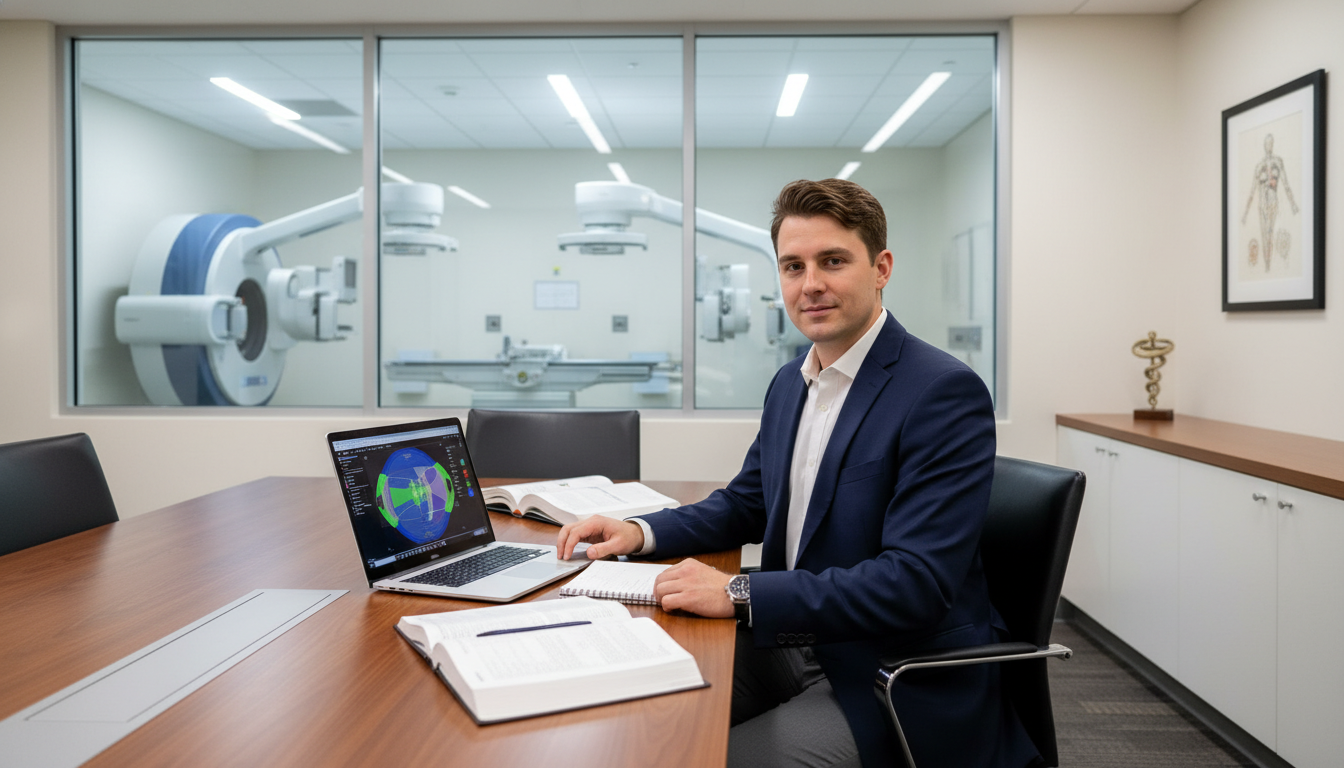
Understanding Pre-Match Communication in Radiation Oncology
For a DO graduate pursuing a radiation oncology residency, pre-match communication can feel both exciting and intimidating. You may hear about “pre-match offers,” “early commitment,” or “off-cycle positions,” and wonder what is allowed, what is wise, and how it all applies specifically to the osteopathic residency match landscape.
Radiation oncology is a small, highly specialized field where reputation, mentorship, and individualized communication matter a great deal. As a DO applicant, thoughtful, ethical, and well-timed communication with programs can:
- Clarify your interest and fit
- Help you understand where you realistically stand
- Position you as a mature, professional candidate
- Avoid missteps that could harm your chances in both the osteopathic residency match and the broader NRMP match process
This article focuses on how to approach pre-match communication as a DO graduate targeting a radiation oncology residency, including what to say, when to say it, and how to stay compliant with match rules.
The Landscape: Match Rules, DO Applicants, and Rad Onc
1. What “Pre-Match Communication” Actually Means
Pre-match communication is any contact between you and programs outside the official Match process that relates to:
- Your level of interest
- Their level of interest
- Potential ranking plans
- Possible earlier or “preemptive” offers
- Clarification about your application
This can happen via:
- Email (most common)
- Phone calls or Zoom calls
- In-person conversations at rotations, conferences, or meet-and-greets
- Messages relayed via mentors
In radiation oncology, where program sizes are small and faculty know each other well, even subtle communications and impressions can have a large impact.
2. Match Rules You Must Respect
You must understand core principles of the NRMP (and any relevant osteopathic match mechanisms or military match, if applicable). In general:
- Programs cannot ask you to reveal your rank list.
- Programs cannot require a commitment to rank them first.
- You cannot solicit offers outside Match if the program participates in NRMP.
- Any early or “pre-match” offers at NRMP-participating programs may violate rules and put you at risk.
Always verify current NRMP and AOA/ACGME policies (they are updated periodically). When in doubt, ask your dean or GME office, not the program.
3. DO Graduate-Specific Context
As a DO graduate:
- You may have slightly more variable exposure to radiation oncology depending on your school and rotations.
- Some programs have less experience with DO graduates; others have a strong track record of training DOs.
- You must be especially diligent about early networking, audition rotations, and communication to show your commitment and preparation for this physics-heavy, research-oriented field.
Your goal is to demonstrate that you bring the same academic rigor, clinical acumen, and research interest as MD peers—while using pre-match communication to highlight your strengths, not to “beg” for spots.
Strategic Pre-Match Communication Timeline for DO Applicants

To use pre-match communication effectively in a radiation oncology residency application, align your outreach with each phase of the cycle.
1. Pre-ERAS Submission (Spring–Summer Before Application)
Goals:
- Build genuine relationships with faculty and program directors (PDs)
- Learn which programs are DO-friendly
- Clarify expectations about board scores, research, and letters
Actions:
Audition/away rotations in radiation oncology.
During these, focus on:- Reliability and professionalism
- Eager participation in contouring, treatment planning discussions, and journal clubs
- Asking thoughtful questions rather than trying to “perform” your intelligence
Professional follow-up after rotations.
Within 1–2 weeks of completing a rad onc rotation:- Email the PD and key faculty:
- Thank them for the opportunity
- Briefly mention what you learned
- Express specific reasons you might apply to their program
- Ask if they would be comfortable writing a strong letter of recommendation if your performance merits it.
- Email the PD and key faculty:
Example language:
“I really appreciated the opportunity to rotate with your radiation oncology team in July. The structured contour review sessions and exposure to head and neck cases confirmed my interest in pursuing rad onc. I plan to apply to your program this upcoming cycle and would be honored if you feel able to support my application with a strong letter of recommendation.”
This is not a pre-match “offer” conversation; it is relationship-building and clarity.
2. ERAS Submission to Interview Invites (September–October)
Goals:
- Confirm program receipt of your application (only if necessary)
- Highlight key aspects of your DO background and rad onc preparation
- Avoid over-communicating or appearing desperate
When to Write:
- If you have a significant connection (rotated there, worked with a faculty member, strong geographic tie).
- If you are a borderline candidate on paper but have strong experiential strengths you want them to notice (e.g., robust osteopathic manipulative medicine background plus physics or engineering experience, or strong research in cancer biology).
Email Strategy:
- Keep it short (1–2 paragraphs).
- One email per program at this stage is usually enough.
- Time it a few days to two weeks after ERAS opens, not the moment it opens.
Content to include:
- Your rotation or connection to the program (if any)
- Why their radiation oncology residency specifically interests you
- Brief mention that you are a DO graduate committed to rad onc and to the region or patient population, if applicable
- No mention of “ranking” or “promises”
Example:
“As a DO graduate with a deep interest in radiation oncology, I was excited to submit my ERAS application to your program. During my research year in radiation physics and my rotation in your department this summer, I was particularly impressed with your emphasis on integrating SBRT and immunotherapy trials into resident education. I would be grateful for the opportunity to interview and learn more about how I can contribute to your team.”
3. Interview Season (October–January)
Goals:
- Clarify your interest post-interview
- Keep programs accurately informed of major updates
- Maintain professionalism with each contact
After Each Interview:
- Send a concise, individualized thank-you email to the PD or program coordinator within 24–72 hours.
- Highlight:
- One specific conversation or aspect of the program
- Why it aligns with your goals in radiation oncology
- That you remain very interested
Avoid disclosing your tentative rank at this point; interest is enough.
If You Have Significant Updates:
Examples:
- New first-author oncology publication
- Acceptance of an abstract at ASTRO or other major cancer meeting
- Step/COMLEX scores released, especially if improved performance
- A meaningful leadership role, QI project, or scholarship award
Send a brief update email to key programs, especially those high on your list. For rad onc, research productivity and scholarly work are particularly valued; programs will notice timely updates.
Navigating Pre-Match Offers, Early Commitments, and Rank Communication
This is the section that worries many DO graduates: What if a program wants an early commitment? What if I want to tell a program they’re my top choice?
1. Pre-Match Offers and Early Commitment
In the context of NRMP-participating radiation oncology programs, true “pre-match offers” (e.g., “Accept us now and we’ll take you outside the Match”) are generally not permitted. Still, there are scenarios to understand:
- Non-NRMP or off-cycle positions: Very rare in rad onc but possible in other specialties or transitional/preliminary years.
- Informal pressure: A faculty member hinting, “If you tell us we’re your #1, we’ll rank you to match.”
For NRMP-participating rad onc programs, the algorithm is designed to protect applicants if everyone plays by the rules. Accepting any offer that conflicts with NRMP policy can put your match status at risk.
What You Should Do:
Know the rules. Before the season, formally review NRMP and ACGME guidelines about:
- Pre-match offers
- Early commitments
- Binding nature of the Match
If you feel pressured:
- You can respond with something like:
“I’m very enthusiastic about your program and will be making my final rank list based on overall fit and training opportunities. I want to be fully compliant with NRMP policies, which limit what I can say about ranking and commitments.”
- You can respond with something like:
Talk to your dean’s office or advisor. If a conversation seems to cross a line, get institutional guidance immediately.
2. Expressing Genuine Preference Without Violating Rules
It is allowed, and often strategically wise, to communicate strong interest—including saying that a program is your top choice—as long as you do not:
- Ask them to tell you where they will rank you
- Make multiple “you are my #1” claims to different programs
- Suggest a binding commitment outside the Match mechanism
“Love Letters” vs. Honest Communication
Rad onc programs are used to hearing from applicants who send so-called “love letters.” The key is honesty and restraint:
- If you truly have a clear #1 program, it is acceptable to tell them this in late interview season.
- Only send one such letter.
- Use precise language: “You are my top choice, and I plan to rank your program first.”
Example email:
Subject: Continued Strong Interest in [Program Name] Radiation Oncology
Dear Dr. [PD Last Name],
I hope you’re well. I wanted to thank you again for the opportunity to interview with [Program Name] Radiation Oncology. After completing all of my interviews, I have reflected carefully on where I see the best fit for my training and long-term career in rad onc.
I am writing to let you know that your program is my top choice, and I plan to rank [Program Name] first on my list. I was especially drawn to your strong mentorship in CNS radiosurgery and the supportive culture among your residents.
Thank you again for your time and consideration.
Sincerely,
[Your Full Name], DO
AAMC ID: [ID]
This is clear, honest, and compliant. Do not send this message to multiple programs.
3. What About Programs Communicating with You?
Programs may say:
- “We will rank you highly.”
- “You’re a very competitive candidate here.”
- “We really hope you match with us.”
Remember:
- They are also bound by NRMP rules.
- Their statements are not a contract.
- Programs sometimes overestimate how high they can rank applicants or how far down their list they will match.
Use such messages as positive signals, but construct your rank list based on your genuine priorities (training quality, geography, wellness, family factors, DO-friendliness, and program culture).
Radiation Oncology–Specific Considerations for DO Graduates

1. Highlighting Your DO Background Positively
In a radiation oncology residency application, your DO degree can be an asset:
- Emphasize holistic patient care and communication skills.
- Highlight exposure to symptom management, pain, fatigue, and survivorship, which are critical in rad onc.
- If you have OMT/OMM experience, be thoughtful about how it translates:
- You probably won’t be doing manipulative treatments daily.
- But your understanding of musculoskeletal and functional anatomy and your focus on patient-centered care are valuable.
In pre-match communication:
- Avoid apologizing for being a DO.
- Don’t overcompensate with defensiveness.
- Instead, show that your training has prepared you to handle the complex, long-term relationships that rad onc demands.
2. Building Credibility in a Small, Academic Specialty
Rad onc is relatively small, with a culture often grounded in:
- Physics and technology (IMRT, SBRT, SRS, proton therapy)
- Clinical research and trials
- Multidisciplinary cancer care
As a DO graduate, pre-match communication should reinforce that you:
- Understand the academic expectations
- Have or are building research experience
- Are comfortable discussing trials, contouring, dosimetry, and evidence-based guidelines
Concrete ways to do this in communication:
- Mention any radiation oncology research, even if retrospective or QI-based.
- Reference specific aspects of a program’s academic environment that resonate with you: e.g., “Your emphasis on resident involvement in prospective clinical trials” or “the weekly contouring conference.”
- If you attended ASTRO or another oncology conference, mention specific sessions or posters that shaped your interests.
3. Managing Limited Rotations as a DO
Some DO students have fewer rad onc electives locally. Use communication strategically to overcome this:
- Explain your path: If you only had one or two rad onc rotations, outline how you maximized them.
- Clarify interest: “Given limited home exposure to radiation oncology, I actively pursued away rotations and research electives to gain additional experience.”
- Seek guidance via communication: You can email mentors or PDs asking what additional reading or experiences would help you prepare, demonstrating proactive learning.
Professionalism, Pitfalls, and Best Practices in Program Communication
1. Professional Email Etiquette
Every email you send to a radiation oncology program is part of your professional record in their eyes.
Key principles:
- Use a clear subject line (e.g., “Thank you – [Your Name], DO – 11/20 Interview”).
- Use formal salutations: “Dear Dr. [Last Name]” or “Dear Drs. [Last Name] and [Last Name].”
- Keep it brief, focused, and typo-free.
- Use your institutional or professional email, not a casual account name.
2. Frequency: Avoid Over-Communication
Signs of over-communicating:
- Multiple emails per week to the same program
- Asking for reassurance (“Am I still being considered?”) repeatedly
- Sending long, emotional messages
Reasonable cadence:
- One initial interest email (if warranted)
- One thank-you after the interview
- One substantial update later in the season (if you have new information)
- One final “top choice” or “high interest” email where appropriate
3. Red Flags to Avoid
Avoid these behaviors:
- Dishonest ranking statements: Telling more than one program they are your “#1.”
- Name-dropping without consent: “Dr. X told me you would be very interested in me” when Dr. X did not explicitly say so.
- Pressuring programs: “I need to know where you plan to rank me.”
- Unprofessional tone: Complaining about other programs, over-sharing personal issues, or using humor that may not land.
Your written communication should reflect the same maturity and professionalism you show in person.
4. Using Mentors to Support Your Communication
Especially in a small field like radiation oncology, mentors can be powerful allies in your pre-match communication strategy.
Ask mentors to:
- Offer candid feedback on your competitiveness.
- Review and refine key emails, especially to top-choice programs.
- In some cases, reach out to PDs to advocate for you, if they genuinely support your candidacy.
When mentors contact programs on your behalf, their emails are taken seriously—use that channel sparingly and honestly.
Frequently Asked Questions (FAQ)
1. As a DO graduate, should I mention that your program is my #1 choice in pre-match communication?
Only if it is truly your top choice after you’ve completed all or almost all interviews. It is acceptable (and sometimes helpful) to send one honest “you are my first choice” email to a single program. Do not send similar messages to multiple programs or imply a binding agreement; simply state your genuine preference.
2. What if a radiation oncology program asks me directly where they stand on my rank list?
You are not required to disclose your complete rank list. You can respond with:
“I’m very enthusiastic about your program and feel it’s one of my top choices. I’m still finalizing my rank list but will be making my decisions based on overall fit and educational opportunities while remaining compliant with NRMP guidelines.”
This keeps you honest, shows interest, and respects the rules.
3. How much does pre-match communication actually affect my rad onc match chances?
It rarely “rescues” a very weak application, but in a small field like radiation oncology it can:
- Move you from “borderline to interview” to “offer interview”
- Reassure a program that you’re serious about them, which may subtly influence ranking
- Clarify misunderstandings or highlight new achievements (e.g., publications)
Pre-match communication is a tiebreaker, not a substitute for strong letters, solid board performance, and meaningful oncology experience.
4. Is it appropriate to ask a program for feedback if I don’t receive an interview or don’t match there?
During the active cycle, many programs will not provide individual feedback due to volume and policy. If you:
- Don’t receive an interview: It’s usually better not to request feedback at that time.
- Don’t match and plan to reapply in radiation oncology: In the spring, you can respectfully ask a few key programs (particularly where you interviewed) if they can share general feedback about strengthening your application, recognizing that some may still decline.
Thoughtful, honest, and rule-compliant pre-match communication can help you stand out as a DO graduate pursuing radiation oncology. Use it to build relationships, express genuine interest, and highlight your unique strengths—without overstepping boundaries or compromising your integrity in the residency match process.