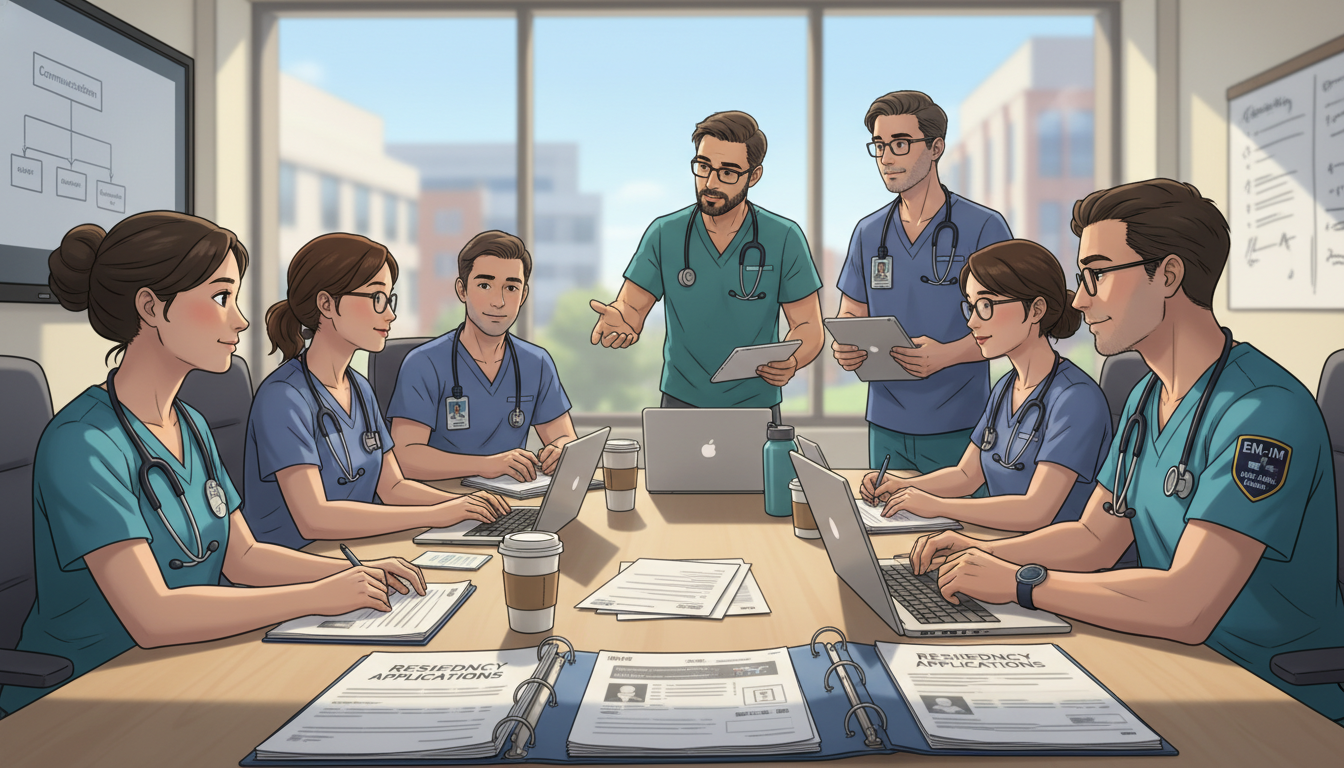
Understanding Pre-Match Communication as a DO Applicant in Ophthalmology
Pre-match communication is one of the most confusing—and high-stakes—parts of the ophthalmology residency process, especially for a DO graduate. Between early applications, shifting match timelines, and mixed messages about what is “allowed,” it’s easy to feel unsure about how to communicate with programs without crossing ethical or NRMP boundaries.
For DO graduates pursuing ophthalmology, thoughtful, professional pre-match communication can:
- Increase your visibility at programs that traditionally favor MDs
- Signal sincere interest in specific programs
- Help you clarify where you stand and when to move on
- Potentially open the door to pre-match offers or early commitment discussions (where applicable and allowed)
This article breaks down how to approach pre-match communication before and after interviews, what to say, what to avoid, and how to leverage your osteopathic background as a strength—not a liability—in the ophtho match.
1. The Landscape: Ophthalmology Match, DO Graduates, and Pre-Match Culture
Before diving into email templates and strategies, you need a clear view of the current environment: how ophthalmology residency works, how DO graduates fit into it, and where pre-match communication fits into the bigger picture.
1.1 The Ophthalmology Match Structure in Brief
Most ophthalmology residencies in the U.S. participate in the SF Match (San Francisco Match), which runs on a slightly earlier timeline than the NRMP. You’ll typically:
- Apply through SF Match for ophthalmology (PGY-2 positions)
- Apply through ERAS/NRMP for a separate prelim or transitional year (PGY-1)
Key implications:
- Ophthalmology programs may start reviewing your application earlier than other specialties.
- Program communication before match may span several months—from initial invitations to post-interview follow-up.
- Some institutions may have internal policies about pre-match offers or early commitment, but these must still align with SF Match rules.
While SF Match doesn’t operate under NRMP’s “All-In” policy, both systems emphasize fairness and discourage coercive behavior. Always verify the current year’s SF Match rules, as policies can evolve.
1.2 DO Graduates in Ophthalmology: Challenges and Opportunities
As a DO graduate, you may face:
- Programs that have historically taken mostly or exclusively MDs
- Concern about how your COMLEX scores will be interpreted
- Limited DO mentorship in ophthalmology compared to other specialties
But you also bring:
- A holistic, patient-centered training philosophy that is increasingly valued
- A tangible narrative about perseverance and growth
- Often, strong hands-on clinical and procedural skills from community or osteopathic-focused training sites
For a DO graduate, proactive, polished pre-match communication can:
- Put you on the radar of programs that might otherwise overlook you
- Clarify whether programs are truly DO-friendly or just “open in theory”
- Demonstrate professionalism, maturity, and genuine interest—factors that matter tremendously in a small field like ophthalmology
1.3 What “Pre-Match Communication” Really Means
In this context, pre-match communication includes:
- Emails to express interest before interviews
- Thoughtful thank-you notes after interviews
- Follow-up messages later in the season to reaffirm interest
- Clarifying questions about fit, culture, research, or training
- In some cases, discussions around pre-match offers or early commitment (where permitted)
It does not include:
- Pressuring programs for a guaranteed spot
- Asking for your exact rank position
- Suggesting any form of quid pro quo (e.g., “I will rank you #1 if you guarantee me a position”)

2. Strategic Goals of Pre-Match Communication for DO Applicants
Effective pre-match communication is purposeful, not random. Before you send any message, be clear about what you’re trying to accomplish.
2.1 Your Core Goals
For a DO graduate applying in ophthalmology, pre-match communication mainly aims to:
Increase Visibility at DO-Flexible Programs
Programs that have historically taken few or no DOs may still be open to you if you demonstrate exceptional interest and fit. A well-crafted email can move your file from “maybe later” to “review now.”Reinforce Interest and Fit After Interviews
Most programs would rather match with residents who are enthusiastically committed than those who appear ambivalent. Post-interview communication helps you underline why you belong there.Gather Information for a Realistic Rank List
Communication before match can give you qualitative data: responsiveness of faculty, tone, openness to your background, and interest in your career goals, such as pediatric ophthalmology, retina, or academic research.Position Yourself for Any Early Opportunities
Although true “pre-match offers” or early commitment are less common and often constrained by policy, you want to be on the short list of strong candidates if a spot opens unexpectedly or a program is particularly eager to secure specific applicants.
2.2 Understanding “Pre-Match Offers” and Early Commitment
In some specialties and eras, “pre-match offers” referred to off-cycle or outside-the-match agreements. In modern ophthalmology, particularly through SF Match, these are less typical and more regulated.
Key points:
- Some programs may hint they are “very interested” or that you are “ranked highly.” This is not a binding pre-match offer.
- If a program explicitly suggests an early commitment outside the usual match process, you must:
- Verify that this is permitted by SF Match rules
- Understand whether accepting would require withdrawing from the match
- Consult mentors, your dean’s office, and official policies
When in doubt, prioritize transparency and rule compliance over the excitement of an early commitment.
3. Pre-Interview Communication: Getting on the Radar
Before interviews are offered, many DO applicants wonder: “Should I email programs first, or is that annoying?” Done correctly, this early program communication before match can help rather than hurt you.
3.1 When It Makes Sense to Reach Out Before Interviews
Consider a polite, concise pre-interview email if:
- You are a DO graduate applying to a historically MD-heavy program but:
- Have a faculty connection, research collaboration, or away rotation there
- Have geographic ties or a compelling reason to be in that city
- Your file has a clear strength (e.g., ophthalmology research, leadership, strong letters) that might not be obvious from your school name alone
- The program has listed DO graduates among recent or current residents, suggesting they are open to DOs
Avoid mass-emailing every program with a generic message. Instead, be selective and specific—quality over quantity.
3.2 The Structure of a Strong Pre-Interview Email
A high-quality email from a DO graduate to an ophthalmology program might follow this pattern:
Subject line: Specific and easy to parse
- “Ophthalmology Applicant – DO Graduate with Interest in [Program Name]”
- “Prospective DO Ophthalmology Resident – Geographic Ties to [City]”
Brief introduction (1–2 sentences)
- Identify yourself as a DO applicant, your school, and your degree completion year.
- Mention that you have applied through SF Match.
Program-specific connection
- A rotation, a faculty member, a research area, or a geographic tie.
- Avoid generic praise like “Your program is excellent.”
Key strengths
- One or two focused highlights: e.g., USMLE/COMLEX scores, publications, leadership, or a strong ophthalmology letter.
Clear, respectful closing
- Express genuine interest in interviewing there.
- Thank them for the time and consideration.
Example (condensed):
Dear Dr. Smith and the Ophthalmology Residency Selection Committee,
My name is [Name], a 4th-year DO student at [School], applying this cycle to ophthalmology through SF Match. I am writing to express my strong interest in [Program Name].
I grew up in [City/Region] and hope to return long-term to serve this community. During my third year, I completed a visiting rotation at [Affiliated Hospital], which confirmed my interest in academic ophthalmology and your program’s emphasis on [specific strength: surgical exposure, research, underserved care, etc.].
As a DO applicant, I have pursued robust ophthalmology preparation, including [X] publications in [subspecialty], a Sub-I at [Institution], and letters of recommendation from [Names]. I am particularly interested in [program feature] and believe my background in osteopathic medicine and patient-centered care aligns well with your mission.
I would be truly honored to be considered for an interview. Thank you very much for your time and consideration.
Sincerely,
[Name], DO Candidate, Class of [Year]
[School] | AOA/Alpha Omega Alpha (if applicable) | Contact info
3.3 Common Mistakes to Avoid Before Interview Offers
Do not:
- Ask directly, “Will you interview me?”
- Attach large files (CV, letters, etc.) unless specifically requested
- Send follow-up “Did you see my email?” messages if they don’t respond
- Oversell or sound desperate (“This is my only dream program”)
- Criticize your own DO background or apologize for being a DO graduate
Your goal is to signal interest and professionalism, then step back and let your application speak.

4. Post-Interview Communication: Thank-You Notes, Updates, and Signals
Once interviews are underway, the tone of pre-match communication shifts from “Notice me” to “This is why I fit here.”
4.1 Thank-You Notes: Still Worth It?
Most programs don’t require thank-you notes, but they are low-risk, potentially high-yield.
Guidelines:
- Send within 48–72 hours of the interview.
- Keep it brief (1–2 short paragraphs).
- Reference a specific conversation or aspect of the program.
- Reiterate sincere interest—especially if the program is a top choice.
Example elements to mention as a DO graduate:
- Appreciation for how the program values diverse educational backgrounds
- Interest in how your osteopathic training can contribute to patient care and wellness
- Enthusiasm about the mentorship or research opportunities you discussed
4.2 Later-Season Emails: Clarifying Interest and Fit
As rank list decisions approach, you might send one well-timed follow-up to your top 1–3 programs.
Possible purposes:
- Update them on new accomplishments (publications, awards, step scores).
- Express that they are a top choice or that you “would be thrilled to train there.”
- Clarify specific program features that align with your goals: e.g., strong cataract volume, retina research, global health electives.
Be cautious with “I will rank you #1” language. Some match systems and institutions discourage promises from either side. If you choose to use that language, it should:
- Be absolutely truthful
- Be used sparingly—ideally for one single program only
- Be consistent with your final rank list
If you are uncomfortable making explicit rank statements, you can still signal clear enthusiasm:
- “Your program remains at the very top of my list.”
- “I can confidently say I would be thrilled to match at [Program Name] and would be highly committed to your program.”
4.3 How Programs View Aggressive vs. Professional Communication
From the program side:
- Professional, concise, program-specific emails are usually appreciated.
- Overly frequent or emotional messages can be a red flag about future resident behavior.
- Dishonesty (telling multiple programs they are your #1) may come to light, as ophthalmology is a small, interconnected field.
As a DO graduate, you are under more scrutiny simply because you may be less familiar to programs. Use this as a chance to demonstrate maturity and judgment through measured communication.
5. Handling Pre-Match Offers and Early Commitment Scenarios
While less common in ophthalmology than in some other specialties, DO applicants sometimes ask about pre-match offers and whether early commitment is realistic or advisable.
5.1 Recognizing a True Pre-Match Offer
A true pre-match offer would sound like:
- “We would like to offer you a position outside the match, contingent on you withdrawing from SF Match.”
- “If you agree now, we expect you not to participate in the match.”
If you receive a message like this:
- Pause – do not respond immediately in the heat of the moment.
- Review the current SF Match and institutional policies.
- Consult mentors (ophthalmology faculty, program directors at your home or away sites, your dean’s office).
- Weigh pros and cons:
- Pros: Security, relief from uncertainty
- Cons: Potential ethical or rule complications, loss of opportunity to see other programs, possible career limitations if the program is not a strong fit
5.2 Subtle Variants: “We Will Rank You Highly”
Far more commonly, programs use language like:
- “You will be ranked highly on our list.”
- “We hope to work with you next year.”
- “You are a very competitive candidate for our program.”
These are not binding offers. They may reflect genuine enthusiasm, but they can also be:
- Standard messages sent to multiple applicants
- Efforts to encourage you without breaching formal regulations
Respond graciously, but do not interpret these as guarantees. Continue to build a realistic rank list based on your own priorities and risk tolerance.
5.3 Ethical and Professional Boundaries
As a DO graduate seeking an ophthalmology residency, your long-term reputation matters more than any single match cycle. Avoid:
- Pushing for explicit promises: “If I rank you #1, will you rank me to match?”
- Implying you’ll withdraw or violate match policies to secure a position
- Making commitments you don’t intend to honor
Programs value residents who respect process, policy, and professionalism—qualities you can display throughout your program communication before match and especially in sensitive early-commitment conversations.
6. DO-Specific Strategies to Strengthen Your Pre-Match Position
Pre-match communication is only one part of your ophtho match strategy as a DO graduate. It is most effective when built on a solid foundation of preparation and self-advocacy.
6.1 Make Your Osteopathic Training a Strength, Not an Apology
In your emails and conversations:
- Emphasize how osteopathic training shaped your approach to whole-person, longitudinal care.
- Connect DO principles (holism, body-mind integration, emphasis on function) to ophthalmology:
- Chronic disease management (diabetic retinopathy, glaucoma)
- Patient education and adherence
- Interdisciplinary collaboration with primary care, neurology, rheumatology, etc.
You are not “competing despite being a DO.” You are competing as a strong ophthalmology applicant who is also a DO.
6.2 Anticipate and Address Concerns Indirectly
Programs may have unspoken concerns about DO graduates related to:
- COMLEX vs USMLE comparisons
- Perceived variability in clinical training sites
- Historical familiarity (or lack thereof) with DO applicants
Pre-match communication can help:
- Briefly highlight any USMLE scores (if taken) alongside COMLEX.
- Mention strong performance on ophthalmology rotations and Sub-Is at reputable institutions.
- Reference robust letters of recommendation from well-known ophthalmologists.
You don’t need to say, “I know you usually take MDs.” Instead, show that you have already thrived in competitive, MD-heavy environments.
6.3 Manage Expectations While Staying Ambitious
The osteopathic residency match in ophthalmology has improved over the years, but it remains competitive. When communicating with programs:
- Be ambitious but realistic—spread your applications across a range of programs.
- Use pre-match communication to boost your chances at stretch programs, but don’t rely on it alone to carry you.
- Have well-thought-out backup plans, including:
- Reapplying with a research or preliminary ophthalmology year
- Considering related fields (neurology, internal medicine, radiology) if ophthalmology opportunities are limited
This mindset helps you project confidence rather than desperation in your communication.
Frequently Asked Questions (FAQ)
1. As a DO graduate, should I send pre-interview emails to every ophthalmology residency program?
No. Mass-emailing programs with generic messages usually backfires. Instead, target programs where you have:
- Geographic ties
- Completed away rotations or research collaborations
- Evidence of DO-friendliness (DO graduates among recent classes)
Focus on quality, specificity, and professionalism rather than volume.
2. Can I tell more than one program they are my “#1 choice” in the ophtho match?
You should not do this. Even if not technically prohibited, it is dishonest and can damage your reputation in a small specialty. If you decide to use explicit “#1” language, reserve it for one program only and ensure your rank list reflects that. Otherwise, use more general but sincere language about being “very highly interested” or “thrilled to match” at a program.
3. Do ophthalmology programs expect thank-you notes after interviews?
Expectations vary, but thank-you notes are generally seen as polite, optional, and occasionally helpful. Keep them short, specific, and genuine. Lack of a thank-you note is rarely fatal, but a well-written one can reinforce a positive impression—especially for a DO graduate aiming to stand out among many MD applicants.
4. How do I know if a program is truly open to DO graduates?
Look for:
- DOs in current or recent residency classes (check program websites or contact residents)
- Positive responses to your initial emails and interactions
- Comments during interviews that focus on your individual merits rather than repeatedly circling back to your DO degree
Your pre-match communication can itself be a test: programs that respond respectfully and with interest are more likely to genuinely consider you, while silence or dismissiveness may suggest limited openness.
Thoughtful, ethical, and strategic pre-match communication can meaningfully improve your chances as a DO graduate in the ophthalmology residency match. Use it to highlight your strengths, clarify mutual fit, and build relationships—without overstepping boundaries or compromising your integrity.