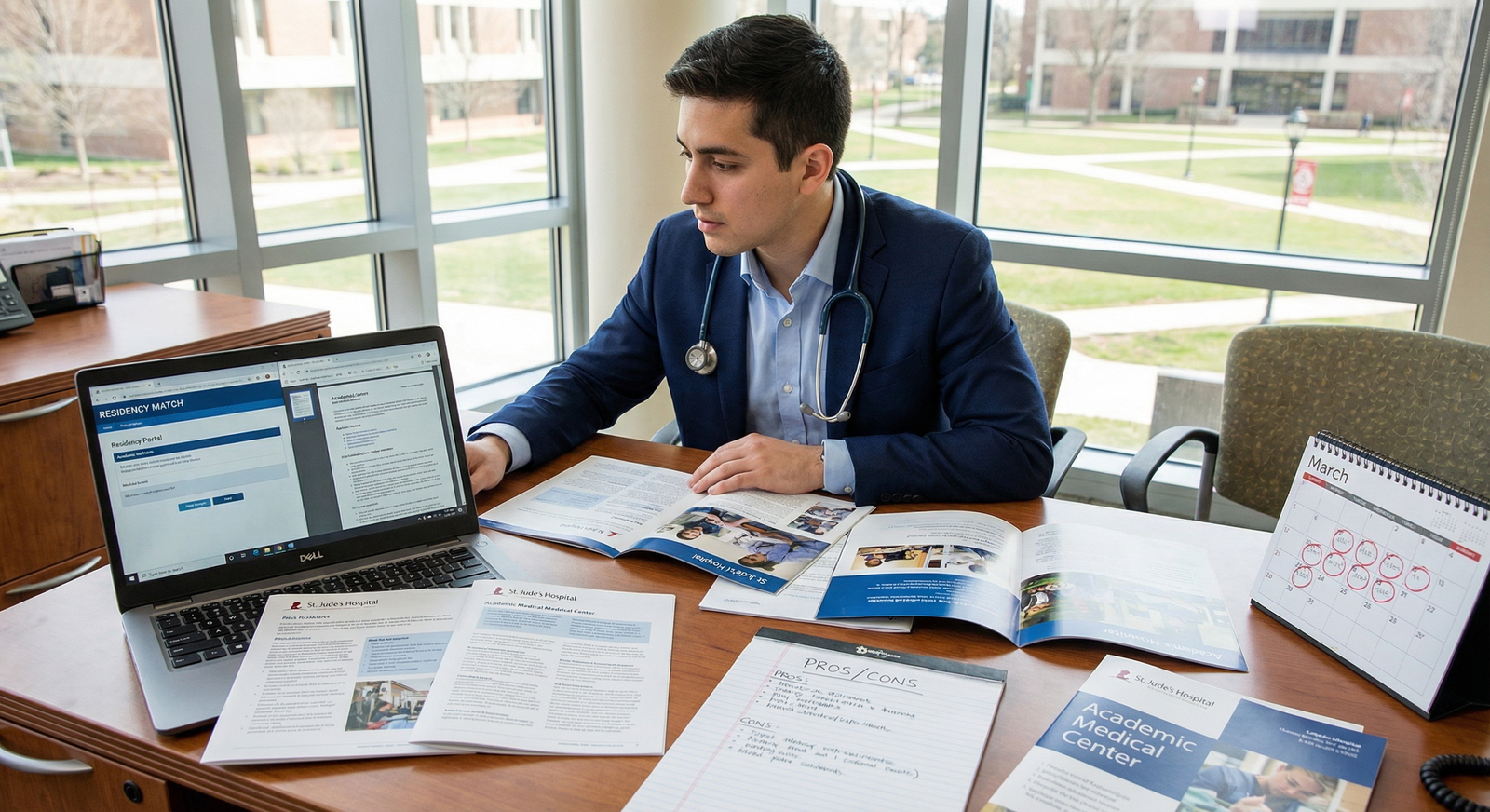
Pre‑match communication in general surgery is often confusing, anxiety‑provoking, and filled with mixed messages. Applicants worry about what is “allowed,” how to read between the lines, and how to respond to emails or calls from programs without violating the Match rules or hurting their chances.
This guide breaks down how pre‑match communication works in general surgery residency, what it typically means, how to respond professionally, and how to protect yourself while still advocating for your goals.
Understanding the Landscape: What “Pre‑Match Communication” Actually Means
Before talking strategy, it’s essential to clarify terminology and the rules that govern the surgery residency match.
What counts as pre‑match communication?
In the context of general surgery, “pre‑match communication” typically includes any interaction between you and a residency program after your ERAS application is submitted but before the official Match results are released:
- Emails from program directors (PDs), associate PDs, or coordinators
- Phone calls or Zoom calls from PDs or faculty
- Conversations on interview day that extend into “interest” territory
- Post‑interview thank‑you emails and replies
- Informal communication facilitated by residents or mentors
- Follow‑up letters of interest or “intent” from you to the program
It does not include:
- Routine logistics emails (interview invites, Zoom links, schedule info)
- Mass messages to all interviewees about ranking deadlines, second looks, etc.
Match rules you must know
The National Resident Matching Program (NRMP) has strict rules to preserve fairness. A few key ones (paraphrased, not legal language):
- No soliciting rank information: Programs cannot ask you how you intend to rank them, and you cannot ask a program how it intends to rank you.
- No guarantees or coercion: Programs cannot guarantee you a position or pressure you to make a particular ranking decision in exchange for promises.
- You may express interest: You are allowed to tell a program you are very interested or intend to rank them highly, but you cannot sign any binding contract or agreement related to a Match position.
- The Match is binding: Once the Match results are out, both sides are contractually obligated to honor them (with very limited exceptions).
Always verify the current NRMP Match Participation Agreement each year, as details and enforcement mechanisms can evolve.
Pre‑match offers vs. pre‑match communication
In some states and for some specialties/program types, true pre‑match offers (offering a contract outside of the NRMP Match) may exist, especially in non‑NRMP or non‑ACGME programs, or in the Supplemental Offer and Acceptance Program (SOAP) context.
For ACGME‑accredited general surgery residency programs participating in the NRMP, this is rare and usually not allowed. If your general surgery program of interest participates in the NRMP Match (almost all categorical programs do), they should not be offering you a binding position outside of the Match.
However, what you may see more commonly are “soft pre‑match offers” or “early commitment language”:
- “If you rank us highly, we will rank you highly.”
- “You will be very competitive for a spot here.”
- “We intend to rank you in a way that should match you here.”
None of this is binding and must be interpreted cautiously.
Typical Forms of Pre‑Match Communication in General Surgery
Understanding the patterns can help you decode intent and respond appropriately.
1. Warm follow‑up emails from programs
These often arrive:
- A few days to a few weeks after your interview
- Around the time rank lists are being discussed or finalized
Common language:
- “We very much enjoyed meeting you.”
- “We believe you would be an excellent fit for our program.”
- “We hope you will strongly consider ranking us highly.”
What it usually means:
You made a positive impression and are under serious consideration. It does not necessarily mean you are at the top of their list.
How to respond:
A short, professional thank‑you, reiterating interest if it’s genuine, is appropriate.
Example reply:
Dear Dr. Smith,
Thank you very much for your kind note and for the opportunity to interview at [Program Name]. I greatly enjoyed meeting the residents and faculty and was particularly impressed by [specific aspect of program].
I remain very interested in [Program Name] and will be giving it serious consideration as I finalize my rank list.
Sincerely,
[Your Name], [AAMC ID]
2. Direct emails or calls from the Program Director
In general surgery, PDs sometimes call or send personalized emails to top candidates, especially at mid‑sized or smaller programs that worry about “losing” strong applicants to big‑name institutions.
Language may be stronger:
- “We plan to rank you very highly.”
- “You are one of our top candidates.”
- “If you come here, we believe you will thrive.”
What it usually means:
You are very competitive at that program, and they want to increase the chances you rank them highly. It is a positive sign but still not a guarantee.
How to respond:
- Thank them for the communication.
- Acknowledge any specific comments or feedback.
- If true, you may say they are one of your top choices or you intend to rank them highly—but do not lie.
Example reply:
Dear Dr. Lee,
Thank you for taking the time to speak with me and for your encouraging words. My interview day at [Program Name] confirmed that your program’s strong operative volume, early autonomy, and supportive culture align very closely with what I am seeking in a general surgery residency.
I will be ranking [Program Name] very highly on my list.
With appreciation,
[Your Name]
You are not obligated to give a precise ranking position (“#1”) unless you are absolutely certain and comfortable making that commitment ethically.

3. Resident‑to‑applicant communication
Current residents may:
- Email you after interview day
- Connect via social media or school listservs
- Answer questions informally
Residents are not usually making ranking decisions, but they may share impressions like:
- “We really liked you; the PD mentioned you positively.”
- “You seem like the kind of person who would fit in well here.”
What it usually means:
You fit socially and culturally, which is important in general surgery. It can signal that the program environment would be supportive. It is not a direct indicator of your exact rank list position.
You can:
- Ask honest questions about lifestyle, culture, and operative experience
- Reiterate your interest in the program
- Avoid pressing for insider information about your ranking
4. Your own outreach: thank‑you notes and interest letters
Post‑interview thank‑you emails
- Optional, but widely considered polite and professional in general surgery
- Best sent within 24–72 hours after the interview
- Should be concise, specific, and personalized
Post‑interview “update” or “interest” letters
- Often sent a few weeks after the interview or near rank list deadlines
- More appropriate if you have substantial new information (e.g., a new publication, an award, a rotation grade) or if you want to emphasize particular interest
Letters of Intent (“You are my #1 choice”)
- If you choose to send one, send it to only one program and mean it.
- You may say: “I plan to rank [Program Name] first.”
- This is not legally binding, but misleading statements are unethical and can damage your reputation if discovered.
Strategy: How to Communicate Without Breaking Rules or Trust
Once you understand the formats, the main challenge is how much to say, and how to balance honesty with strategy.
Principles for ethical pre‑match communication
Never lie about your rank list
- Do not tell multiple programs they are your #1.
- Do not promise something you might not follow through on.
Separate interest from commitment
- “I am very interested in your program” is honest even if they are not your top choice.
- “I will be ranking you first” should be reserved for your genuine first choice.
Presume emails are shareable
- Anything you send may be seen by PDs, faculty, or even other applicants.
- Maintain a professional, respectful tone throughout.
Let the Match work as intended
- Rank programs in true order of preference, not based on perceived odds of matching.
- The Match algorithm favors the applicant’s preferences when possible.
When (and how) to express high interest or early commitment
You may want to communicate different levels of interest:
If it’s your clear #1 program:
- One, sincere Letter of Intent is appropriate.
- Timing: typically after all your interviews and once you are confident in your decision, but before rank list submission deadlines.
- Content:
- Express clear, unambiguous enthusiasm.
- Briefly explain why the program is your best fit.
- State directly that you plan to rank them first.
Sample Letter of Intent:
Dear Dr. Gomez,
Thank you again for the opportunity to interview at [Program Name]. Since our interview day, I have reflected extensively on what I am seeking in a general surgery residency. Your program’s strong operative experience, commitment to resident education, and emphasis on mentorship and collegiality align exceptionally well with my goals.
I am writing to let you know that I will be ranking [Program Name] as my first choice in the upcoming NRMP Match. I would be honored to train as a general surgery resident at your institution.
Thank you again for your time and consideration.
Sincerely,
[Your Name], [AAMC ID], [Medical School]
If it’s one of your top programs, but not clearly #1:
- You can still express strong interest:
- “I will be ranking your program highly.”
- “Your program remains among my top choices.”
- Avoid misleading language that implies they are your absolute top choice.
If you liked the program but it’s mid‑rank:
- A sincere thank‑you note is sufficient.
- You do not need to comment on ranking at all.
Handling ambiguous or pressured communications
Some applicants experience discomfort when a PD or faculty member seems to push for rank disclosure or commitment.
Scenario 1: PD asks, “Where do you plan to rank us?”
Programs are not supposed to ask this directly, but it sometimes happens.
Possible responses:
If they are high on your list:
“I am very interested in your program and expect to rank it very highly.”
If you’re not ready to say:
“I’m still in the process of finalizing my rank list, but I was very impressed with your program and it is under serious consideration.”
You are not obligated to give a specific position.
Scenario 2: Program implies a “deal”
For example:
“If you rank us first, I’m confident we can match you here.”
How to interpret:
- This may reflect genuine enthusiasm, but it is not binding.
- The NRMP rules explicitly discourage these kinds of implied agreements.
How to respond:
You can deflect while remaining professional:
“I appreciate your confidence and support. I’m still finalizing my rank list based on overall fit and career goals, and your program is certainly one I’m considering very seriously.”
Specialty‑Specific Considerations in General Surgery
General surgery has unique culture and dynamics that shape pre‑match interactions.
High volume, early autonomy, and reputation anxiety
Many applicants view “big‑name” academic centers as highly desirable while also applying broadly, including community and hybrid programs. As a result:
- Smaller or less well‑known general surgery programs may be more proactive with program communication before Match to avoid going under‑filled.
- They may reach out earlier and more frequently with personalized messages or invitations for second looks.
If a smaller program reaches out enthusiastically, it does not mean they are desperate or low‑quality; it often means they are invested in finding residents who truly want to be there.
Categorical vs. preliminary positions
Communication may differ by position type:
Categorical general surgery positions:
- More likely to involve long‑term interest conversations, fit discussions, and potential letters of intent.
Preliminary surgery positions:
- Communication may be more logistical and focused on your future plans (e.g., aiming for categorical surgery, other specialties, or future re‑application).
- Explicit rank‑related communications are still not binding, but there may be more openness about how they view prelim applicants.
Research‑heavy vs. community‑focused programs
Research‑intensive academic programs:
- May be less reliant on direct rank‑related communication and more on the overall competitiveness of applicants.
- A PD email from such a program is often especially meaningful.
Community or hybrid programs:
- May be more likely to call or email you directly, especially if they value your specific background (e.g., ties to the region, previous rotation, strong letter from a local surgeon).

Practical Tips and Common Pitfalls
Bringing it all together, here are concrete, actionable points to guide your pre‑match communication strategy in general surgery.
Do: Be organized and intentional
- Keep a spreadsheet or notes with:
- Each program, interview date, and your impressions
- Any communications received from PDs or residents
- Whether you sent a thank‑you note or interest letter
- Draft email templates early, then personalize them for specific programs.
Do: Use clear, professional email etiquette
- Subject lines:
- “Thank you for the interview – [Your Name]”
- “Update and continued interest – [Your Name]”
- Address PDs formally: “Dear Dr. [Last Name]”
- Keep emails concise (1–3 short paragraphs).
Do: Seek mentor guidance
- Discuss any strong or confusing communication with:
- Your surgery clerkship director
- Your home institution PD or advisor
- Trusted faculty mentors
- They may know the program’s reputation and typical behavior in the Match.
Do: Protect your integrity
- Assume your words and actions reflect not only on you, but on your medical school and mentors.
- General surgery is a relatively small community; PDs talk to one another.
Don’t: Over‑email or appear desperate
- One thank‑you email is enough.
- One later email expressing continued interest or an important update is usually sufficient.
- Daily or weekly check‑ins are unnecessary and can be counterproductive.
Don’t: Manufacture “updates”
- Only send updates if they are meaningful:
- Accepted publication or major abstract
- New honor or award
- Substantial leadership or QI milestone
- Minor changes or restated interest do not need repeated emails.
Don’t: Fixate on “signals” at the expense of fit
Program communication can inform your understanding of interest, but:
- A program that never emails you may still rank you highly.
- A program that emails you frequently may still rank others above you.
Ultimately, rank programs in the order you’d prefer to spend the next 5–7 years training, with special attention to:
- Operative volume and case variety
- Resident culture and support
- Faculty mentorship in your areas of interest (e.g., colorectal, trauma, surgical oncology)
- Location, cost of living, and support systems
Frequently Asked Questions (FAQ)
1. Does a PD email or call mean I will definitely match at that program?
No. A PD reaching out is a strong positive sign, but it is not a guarantee of matching. Programs often contact more applicants than they have spots for, and final rank lists can change. Take the communication as encouragement, not a promise.
2. Should I tell a program they are my #1 choice?
Only if:
- You are truly certain they are your first choice, and
- You are comfortable stating it ethically.
If you do so, you should follow through by ranking them first. Misrepresenting your ranking intentions to multiple programs is considered unprofessional and can harm your reputation.
3. Will sending thank‑you notes or interest letters significantly improve my chances?
Thank‑you notes and professional communication can reinforce a positive impression, show professionalism, and keep you on a program’s radar. However, they rarely override the core components of your application (scores, letters, performance, interview). Think of them as polishing the edges, not rewriting your candidacy.
4. What should I do if a program seems to violate Match rules?
If a program:
- Pressures you to reveal your exact rank order,
- Asks you to sign anything suggesting a binding commitment before Match results, or
- Makes explicit quid‑pro‑quo statements (“Rank us first and we’ll rank you first”),
You can:
- Politely deflect in the moment.
- Document the interaction (date, time, who was present, what was said).
- Discuss it with a mentor or advising dean.
- If serious or repeated, you may report it confidentially to the NRMP.
Pre‑match communication in general surgery can feel like a minefield, but with a clear understanding of the rules, an ethical framework, and a structured approach, you can navigate it confidently. Use every interaction—emails, calls, resident conversations—not only to “signal” your interest, but to gather the information you need to rank programs in the order that truly matches your goals, values, and vision for your surgical career.