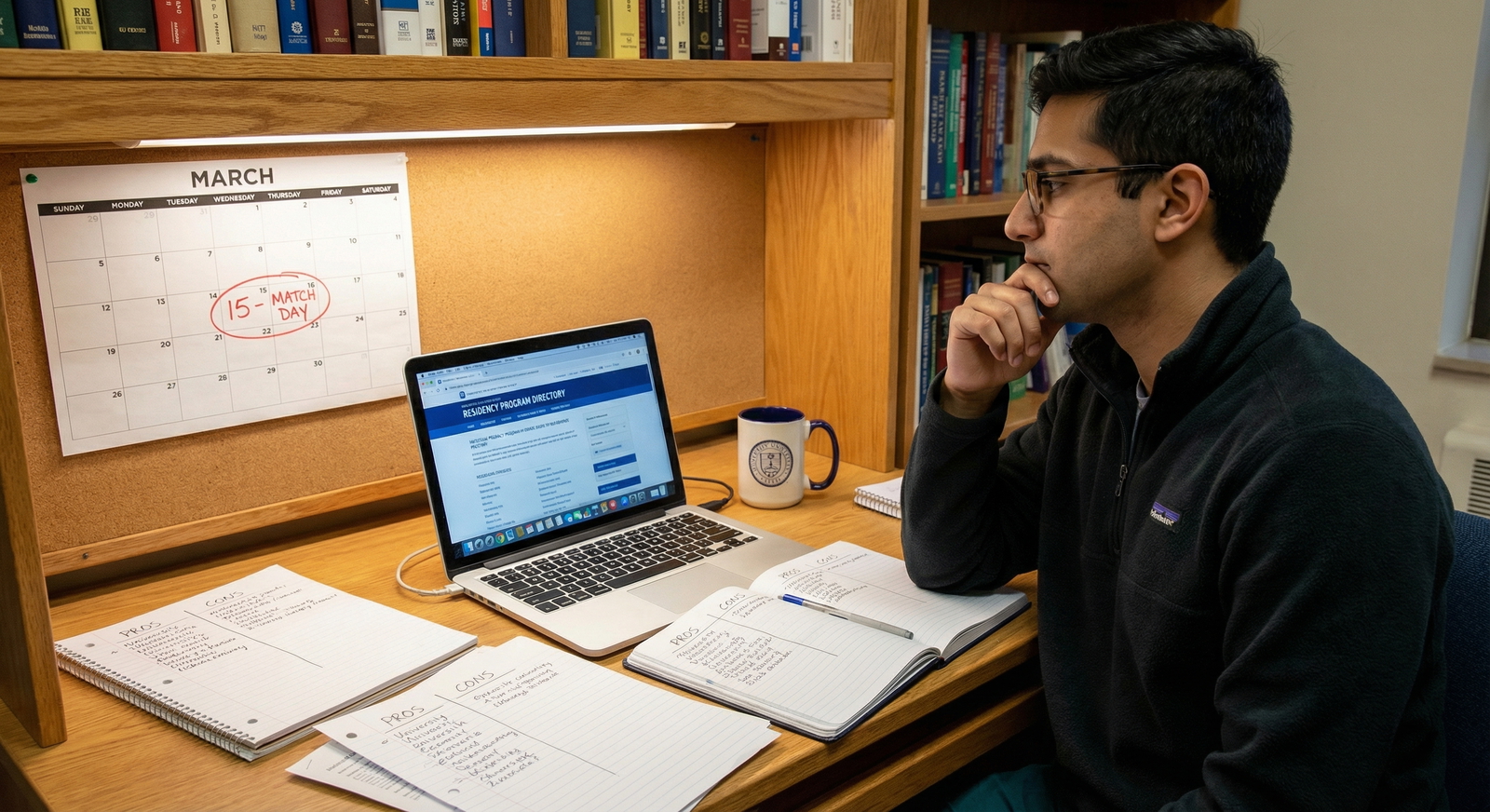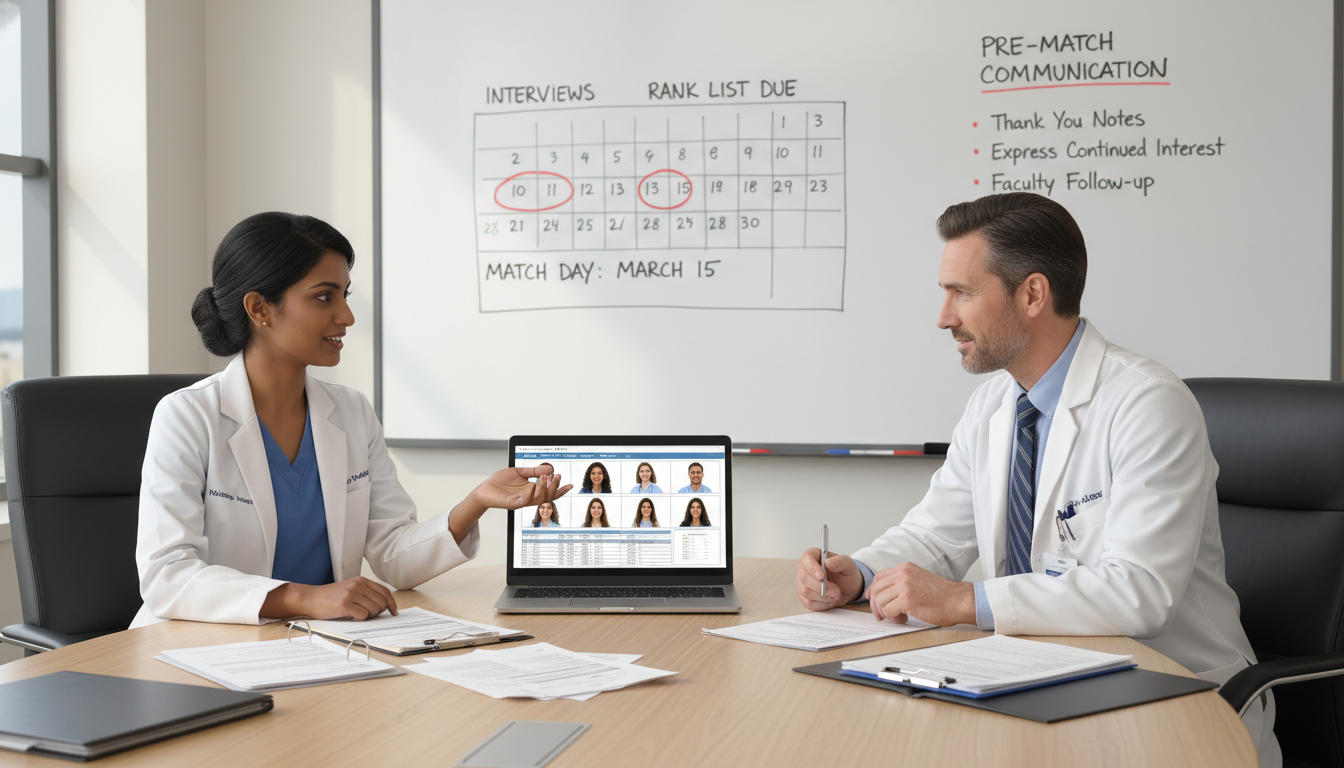
As an MD graduate aiming for a global health–focused residency, how you communicate with programs before Match Day can significantly shape your trajectory. Pre-match communication—everything from the first email to a program coordinator to a post-interview thank-you—helps residency programs understand not just that you are qualified, but that you are genuinely aligned with their global health mission.
This guide walks you step-by-step through pre-match communication tailored specifically for MD graduates pursuing global health, international medicine, or a global health residency track. You’ll learn what to say, when to say it, and how to stay within National Resident Matching Program (NRMP) rules while still powerfully advocating for yourself.
Understanding Pre-Match Communication in the Global Health Context
Pre-match communication refers to any contact you have with residency programs between submitting your application and Match Day. For MD graduate residency applicants in global health, this includes:
- Initial emails to introduce your interest in global health or international medicine
- Questions sent to coordinators or faculty
- Responses to interview invitations
- Thank-you emails after interviews
- Follow-up communication about rank intentions (without violating NRMP policy)
- Occasional, specialty-specific updates (e.g., new global health publications, electives, or leadership roles)
Why Pre-Match Communication Matters More in Global Health
Global health residency tracks and international medicine–oriented programs often look for:
- Sustained commitment to underserved populations
- Ability to work across cultures and health systems
- Maturity, humility, and adaptability
- Long-term career vision in global health, including ethical engagement and partnership
Because these qualities are difficult to quantify solely through test scores or transcripts, pre-match communication offers a powerful channel to:
- Demonstrate depth of your global health experiences (beyond what fits in the ERAS boxes)
- Clarify your fit with a specific global health residency track (e.g., global health equity, humanitarian medicine, refugee health)
- Show that you understand the program’s international partnerships and mission—and aren’t just applying “because global health sounds interesting”
NRMP Rules You Must Understand
Regardless of whether you’re considering pre-match offers, early commitment arrangements, or simply strong expressions of interest, NRMP rules apply:
- Programs cannot ask you how you will rank them.
- You cannot request a guarantee or promise of ranking position.
- Both sides may express interest and appreciation, but may not engage in coercive or binding arrangements outside of the Match if both are Match participants.
- Pre-match offers or early commitment agreements are more common in non-NRMP or pre-Match systems (e.g., certain states or specialties internationally); if you’re participating in the NRMP allopathic medical school match, know the rules clearly.
Always frame your program communication before match in ways that are honest, non-coercive, and NRMP compliant while still expressing genuine enthusiasm.
Mapping Your Communication Strategy Across the Application Timeline
To use pre-match communication effectively, you need a timeline. Below is a structured approach for MD graduates applying to global health–focused programs.
1. Before ERAS Submission: Strategic Program Research
Your communication is only as strong as your research.
Action steps:
- Identify programs with:
- A defined global health residency track or global health pathway
- International rotations or partnerships (e.g., East Africa, Latin America, Southeast Asia, refugee clinics)
- Faculty with active global health or international medicine research
- Review:
- Program websites and global health track pages
- Resident and faculty profiles
- Recent global health publications, community projects, or global medicine electives
How this informs communication:
When you email programs, you can reference specific aspects:
“I’m particularly interested in your longitudinal global health residency track that partners with the district hospital in Rwanda, as I’ve previously worked on maternal health quality-improvement initiatives in low-resource settings.”
This precision sets you apart from generic applicants.
2. Immediately After Application Submission: Targeted Introduction Emails
You do not need to email every program. For MD graduate residency applicants in global health, focus on:
- Programs where your global health background is a very strong fit
- Programs that state they value or require prior global health experience
- Places where you have a geographic, language, or personal connection
Who to email:
- Program coordinator (always safe)
- Associate program director for global health, or
- Director of global health track (if clearly identified on the website)
Sample structure for an introduction email:
- Subject: “Application to [Program Name] – Global Health–Focused MD Graduate”
- Brief introduction (name, medical school, PGY level if applicable)
- One or two sentences on your global health experience
- One to two specific reasons why you’re interested in their global health pathway
- Optional: Attach CV or mention that your ERAS application has been submitted
Example:
Dear Ms. Smith and Dr. Rodriguez,
My name is Alex Kim, an MD graduate from [Allopathic Medical School Name], applying to your categorical Internal Medicine program with a focused interest in your global health residency track.
During medical school, I completed a one-year global health certificate and spent six months working with a primary care project in rural Guatemala, focusing on diabetes management and community health worker training. I was particularly drawn to your program’s longitudinal partnership with the clinic in Malawi and the integration of global health seminars into the core curriculum.
I submitted my ERAS application to your program and wanted to briefly express my strong interest in your global health–oriented training. I would be grateful for the opportunity to interview and learn more about how residents integrate international medicine experiences into their academic training.
Thank you for your time and consideration.
Sincerely,
Alex Kim, MD
AAMC ID: XXXXXXXX
Keep this type of email succinct, targeted, and respectful of their time.

Professional Communication Before and After Interviews
Once interview invitations start arriving, your pre-match communication changes in tone and purpose. Now the focus is on professionalism, clarity, and reinforcing your fit.
Responding to Interview Invitations
When invited to interview at a program known for global health or international medicine:
- Respond promptly (within 24 hours when possible)
- Express appreciation and confirm your interest
- Avoid oversharing or unnecessary detail in this first reply
Example response:
Thank you very much for the invitation to interview at [Program Name]. I am excited about the opportunity to learn more about your residency and global health training opportunities. I have scheduled my interview for [date].
Best regards,
[Name], MD
Professional, brief, and positive.
Asking Thoughtful Global Health–Focused Questions
Many programs will invite you to email questions either before or after interview day. This is a prime opportunity to show you’re serious about global health:
Examples of good, specific questions:
- “How do residents in the global health residency track balance international rotations with core training requirements?”
- “Are there opportunities for residents to initiate new global health research or QI projects with existing international partners?”
- “How does your program address ethical considerations in international medicine and sustainability of partnerships?”
Avoid questions easily answered on their website.
Post-Interview Thank-You Emails
Post-interview communication is often where MD graduate residency applicants either under-communicate (or overdo it). The goal is to:
- Show appreciation
- Reiterate your fit, especially with their global health mission
- Add one or two points that extend your conversation
You may write:
- One email to the program director
- One email to the global health track director (if separate)
- Optional, shorter notes to one or two key faculty or residents you spoke with
Example to a Program Director:
Dear Dr. Patel,
Thank you for the opportunity to interview with the [Institution Name] Internal Medicine Residency yesterday. I especially appreciated our discussion about your program’s commitment to global health equity and the longitudinal partnership with the district hospital in Kenya.
As we discussed, my prior experiences working on TB/HIV co-management in South Africa and my MPH capstone on health system strengthening have reinforced my desire to train in a program that integrates global health, primary care for underserved populations, and rigorous academic Internal Medicine training. Your residents’ ability to pursue both local and international medicine projects resonated strongly with my long-term goal of working at the intersection of global health implementation and medical education.
I remain very interested in your program and would be honored to train at [Institution Name]. Thank you again for your time and consideration.
Sincerely,
[Name], MD
This type of message weaves your background with the program’s strengths without making ranking promises.
Navigating Interest Signals, “Love Letters,” and Rank List Season
The period between the end of interviews and the rank order list deadline is when program communication before match tends to get more emotionally charged—and more ethically tricky.
Are Interest Emails (“Love Letters”) Appropriate?
Many MD graduates wonder whether to send programs an email stating they will “rank them #1.” Within the allopathic medical school match (NRMP):
- You may voluntarily tell a program that they are your “top choice” or that you plan to rank them highly.
- Programs may voluntarily tell you that they are very interested in you.
- However, these statements are not binding and must not be used coercively.
When your interest is genuine and you can articulate why a particular global health residency track is uniquely suited to your goals, a carefully written interest email can be ethical and helpful.
How to Phrase Strong Interest Without Overcommitting
Use precise, honest language. Examples:
- “Your program is one of my top choices because…”
- “I plan to rank [Program Name] very highly.”
- If truly your number one: “I intend to rank [Program Name] as my top choice.”
Only use the “number one” language if it is unequivocally true.
Sample late-season interest email:
Dear Dr. Nguyen,
As the ranking period approaches, I wanted to reiterate my strong interest in the [Program Name] Internal Medicine residency and its global health residency track. After reflecting on all of my interviews, I intend to rank [Program Name] as my top choice.
The combination of rigorous clinical training, the structured global health curriculum, and the opportunity to engage in longitudinal work with your partners in Haiti and the local refugee clinic align uniquely with my career goal of practicing international medicine while contributing to capacity building and medical education.
Thank you again for the interview opportunity and for the thoughtful conversations with your residents and faculty. I would be honored to train at [Program Name].
Sincerely,
[Name], MD
Keep this to one concise message, not repeated weekly emails.
Distinguishing Between NRMP Match and True “Pre-Match Offers”
You may hear terms like pre-match offers or early commitment in different contexts:
- In NRMP-participating allopathic programs: True pre-match offers (binding contracts before Match) are generally not permitted for NRMP positions. Any “early commitment” language is usually informal expressions of intent, not contractual.
- In non-NRMP or specific regional systems (e.g., some Texas programs in the past, some international contexts): Programs may make actual pre-match offers with contracts before a centralized match. If you encounter these:
- Carefully review the terms (program, position type, duration, visa implications).
- Understand that accepting a binding early commitment can remove you from the national match in that specialty.
- For a global health–oriented MD graduate, an early commitment should only be considered if the program’s global health track and career alignment are exceptionally strong.
When in doubt, speak with your dean’s office or an advisor experienced in the allopathic medical school match process before signing anything.

Crafting Messages That Showcase Your Global Health Identity
To stand out for global health–focused positions, your program communication before match should consistently reinforce a coherent professional identity.
Elements of a Strong Global Health Narrative
Across your emails and conversations, aim to highlight:
Trajectory
- How did you become interested in global health or international medicine?
- What sustained that interest (not just a single 2-week trip)?
Depth and Reflection
- What did you learn from working with low-resource settings or diverse communities?
- How has this shaped your understanding of systems, ethics, and humility?
Skills and Contributions
- Global health research, QI projects, language skills, teaching experience, or leadership
- Clinical adaptability (e.g., working with limited diagnostics, complex social determinants)
Future Vision
- How you hope to integrate global health into your long-term career (academia, NGOs, policy, teaching, clinical leadership)
Scenario-Based Examples
Scenario 1: You completed an MPH with a global health concentration
When emailing a program with a strong global health track:
“During my MD-MPH training, I focused my thesis on evaluating community-based hypertension programs in rural Nepal. I’m particularly drawn to your program’s emphasis on implementation science within your global health residency track and would be excited to contribute a public health perspective to ongoing projects.”
Scenario 2: You have substantial domestic underserved experience, limited overseas exposure
You can still convey a strong fit by emphasizing principles of equity and structural competence:
“Although my primary experience has been working with immigrant and refugee populations in [U.S. city], I’ve developed a deep interest in the structural determinants of health and cross-cultural care. I see your global health pathway—particularly the combination of local refugee health and international partnerships—as an ideal environment to grow in both domestic and international medicine.”
Scenario 3: You’re an international medical graduate who completed an MD in an allopathic medical school and are now applying to U.S. programs
You can link your background with global health interests:
“Having grown up and completed early clinical experiences in [Country], I bring first-hand experience with resource-limited health systems and the challenges of delivering longitudinal care. I’m especially interested in your global health track’s focus on capacity-building and bidirectional exchanges, as it resonates with my goal of contributing to sustainable academic partnerships between the U.S. and [Region].”
Your message should always flow from your authentic story, not what you think the program wants to hear.
Practical Do’s and Don’ts of Pre-Match Communication
To avoid common pitfalls, keep this checklist in mind.
Do:
- Be timely: Respond to emails and interview offers within 24–48 hours when possible.
- Be concise: Most emails should be 1–3 short paragraphs.
- Be specific: Mention concrete program features (global health sites, curricula, faculty).
- Be honest: About your level of interest, rank intentions, and experiences.
- Be respectful of boundaries: One to two thoughtful follow-ups are usually enough.
- Align your message with global health values:
- Humility over heroism
- Partnership over charity
- Sustainability over short-term optics
Don’t:
- Don’t send mass, copy-paste emails with the same content and just the name changed.
- Don’t exaggerate your global health work, publications, or roles; programs can often tell.
- Don’t pressure programs for guarantees, ranking information, or pre-match offers in NRMP settings.
- Don’t over-email: Weekly “check-ins” can harm your candidacy.
- Don’t contradict yourself: If you tell multiple programs they’re all your “#1 choice,” word can spread informally.
- Don’t neglect professionalism: Double-check grammar, tone, and email signatures.
FAQs: Pre-Match Communication for Global Health–Focused MD Graduates
1. Should I email every program I apply to?
No. For an MD graduate residency applicant in global health, prioritize quality over quantity. Email:
- Programs with a clearly defined global health residency track or substantial international medicine involvement
- Programs where your background is a particularly strong match
- Places where you have strong geographic or personal connections
A handful of targeted, well-written messages are more effective than dozens of generic emails.
2. Is it acceptable to tell a program they are my top choice?
Yes, as long as it is true and you understand it is not binding for either party. Under NRMP rules, you may voluntarily share that you intend to rank a program highly or as your top choice. Use this sparingly and only when you are certain.
3. How do I ask about global health opportunities without sounding like I only care about international travel?
Emphasize:
- Long-term commitment, not “medical tourism”
- Interest in local underserved work as much as, or more than, short-term trips
- Ethical partnership, capacity-building, and sustainability
- Integration with solid core clinical training
Example framing:
“I’m particularly interested in how your global health pathway integrates care for local underserved populations with your international partnerships, and how residents are prepared for long-term engagement beyond short rotations.”
4. Can pre-match communication actually change how programs rank me?
It can contribute meaningfully, especially in global health–focused programs that value fit and mission alignment. Strong, genuine communication can:
- Make your global health interests clearer
- Help faculty remember you positively at ranking meetings
- Clarify your commitment to their program
However, it cannot compensate for major deficiencies in academic performance or professionalism. Think of it as an important amplifier of your application, not a substitute for it.
Thoughtful, strategic pre-match communication allows you to present a coherent global health identity, demonstrate professionalism, and build authentic connections with programs. As an MD graduate navigating the allopathic medical school match with a focus on global health, use every email, question, and thank-you note as a chance to show who you are, what you value, and how you envision contributing to global and local health equity throughout your career.