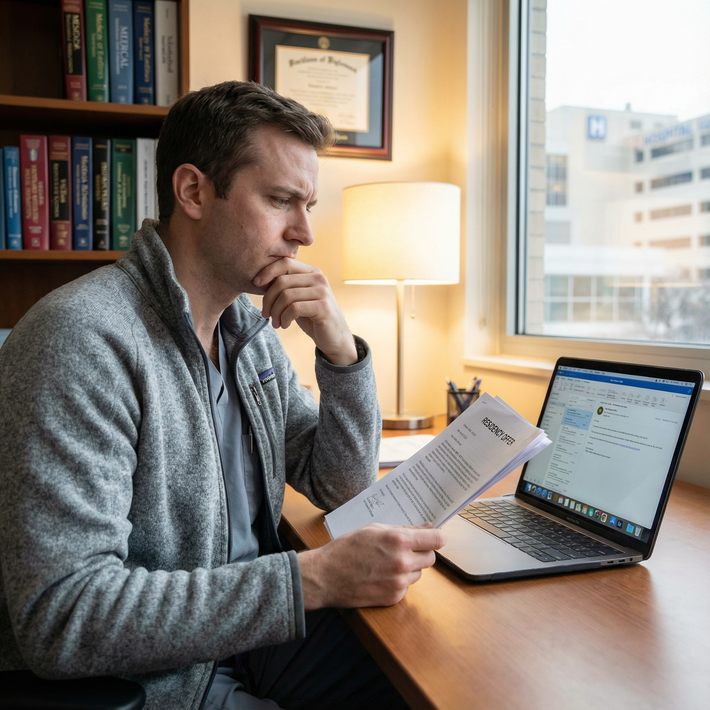
Pre-match communication is one of the most misunderstood—and underused—tools in the residency application process, especially for MD graduates interested in a medical genetics residency. Used wisely, it can improve program familiarity with your application, clarify mutual interest, and sometimes open the door to pre-match offers or early commitment pathways. Used poorly, it can damage your candidacy with the very programs you hope will rank you highly.
This article walks you through how to approach pre-match communication strategically as an MD graduate targeting the allopathic medical school match in Medical Genetics, with a focus on ethics, professionalism, and maximizing your chances in an increasingly competitive genetics match environment.
Understanding Pre-Match Communication in Medical Genetics
Before you start emailing program directors, it’s critical to understand what “pre-match communication” really means—and what it does not mean—in the context of the genetic residency match.
What is pre-match communication?
In the context of the NRMP and ERAS, pre-match communication refers to any contact between an applicant and a residency program that occurs before rank lists are certified. It often includes:
- Emails to/from:
- Program Director (PD)
- Program Coordinator (PC)
- Associate/Assistant PDs
- Core faculty
- Conversations:
- During or after interviews
- At conferences (e.g., ACMG, ASHG)
- Institution-initiated calls or Zoom meetings after the interview
- Thank-you notes and follow-up messages
- Interest or “intent” emails near the rank-list deadline
For MD graduates pursuing a medical genetics residency (often categorical, combined programs like Pediatrics-Medical Genetics, Internal Medicine-Medical Genetics, or Medical Genetics alone), pre-match communication is common and expected at some level.
What it is not
Pre-match communication is not:
- A way to negotiate contracts in NRMP-participating programs
- A guarantee of a specific rank position
- A substitute for a strong application or interview performance
- A license to pressure programs or seek binding agreements outside official processes
Most allopathic medical school match programs in Medical Genetics participate in the NRMP and must follow strict rules. While there are some contexts where pre-match offers or early commitment may occur (e.g., non-NRMP positions, physician-only positions, or institution-specific early pathways), they remain the exception, not the rule.
How Medical Genetics is unique
Medical Genetics has a few distinct features that influence communication:
Smaller program sizes
- Many programs take only 1–3 residents per year.
- Applicant-program communication tends to be more personal and individualized.
Subspecialty and dual pathways
- Many MD graduates enter genetics through combined or sequential training (e.g., Pediatrics → Medical Genetics).
- You may be communicating with both the “front-end” core specialty program and the genetics program or division chief.
Academic, niche, and mentorship-driven field
- Program directors look for clear commitment to genetics, research interest, and long-term academic or clinical niche goals.
- Thoughtful communication helps highlight your genuine interest and fit.
Rules, Ethics, and NRMP Considerations
Before planning any outreach, you must understand the professional and regulatory boundaries around program communication before match.
NRMP and post-interview communication
Key principles from NRMP policies and Match Participation Agreements (paraphrased for clarity; always refer to official NRMP documents):
- Programs cannot:
- Ask you to reveal your rank list.
- Require that you state a program is your “number one choice” as a condition of ranking you.
- Guarantee that you will match or promise a certain rank position.
- Applicants cannot:
- Ask programs how they will rank you.
- Seek binding commitments or attempt to make side agreements.
- Misrepresent their intentions or rank plans.
However, both applicants and programs may:
- Express sincere interest (e.g., “We are very interested in you as a candidate” or “Your program is one of my top choices”).
- Provide factual information about the program or about an applicant’s fit (e.g., “You are a competitive candidate for our program” without promising rank).
- Communicate reasonably after interviews, as long as they avoid coercion, pressure, or misrepresentation.
Ethics for MD graduate residency applicants
For an MD graduate, especially one from an allopathic medical school, your behavior during pre-match communication is part of your professional identity:
- Be honest about your level of interest.
- Do not tell more than one program they are your unequivocal “#1” if you don’t mean it.
- Avoid language that implies a contractual promise you cannot control (e.g., “I will absolutely rank you first” if that might change).
- Keep everything you send in writing professional, because it may be forwarded to selection committees, PDs, and division chiefs.
Ethical, transparent communication builds trust—and program directors in small fields like Medical Genetics talk to each other.
Strategic Timeline: When and Why to Contact Programs
Understanding when to communicate is as important as what to say. Here’s a practical timeline for pre-match communication geared to the genetics match.
1. Pre-application (before ERAS submission)
Goals:
- Clarify fit and eligibility (especially for non-traditional or international pathways).
- Seek mentorship or advice from genetics faculty.
- Confirm how the medical genetics residency at a given institution is structured (categorical vs combined vs sequential).
Appropriate communication examples:
- Brief email to a PD or program coordinator asking:
- Whether they consider applicants directly to Medical Genetics vs after core training.
- How MD graduates can best signal interest.
- Whether they recommend attending an institutional information session or open house.
Keep this light and professional—do not “sell yourself” aggressively before you’ve even applied.
2. Application submission to interview invitations
Goals:
- Ensure your application is complete.
- Address any major issues (e.g., delayed transcript, pending USMLE score, visa questions).
- Express specific interest in a limited number of key programs.
Appropriate communication:
- Short, focused emails to:
- Confirm receipt of supplemental materials.
- Explain a very specific situation (e.g., a late LOR from a genetics mentor).
- Signal genuine, evidence-based interest in a small number of “dream-fit” programs (especially if they are realistic targets and you have a real connection).
When to avoid contact:
- Do not mass-email dozens of programs with generic interest statements.
- Avoid pressuring emails asking when/if you will get an interview—this generally does not help.
3. Post-interview thank-you and clarification phase
This is often the most important window for pre-match communication in Medical Genetics.
Goals:
- Reinforce your fit and enthusiasm.
- Clarify anything that was not discussed during the interview.
- Maintain professional visibility without being intrusive.
Recommended actions:
- Send a thank-you email within 48–72 hours:
- To the PD (almost always).
- Optionally CC or send separate short notes to key faculty interviewers.
- Highlight:
- A specific aspect of the program that matches your interests (e.g., cancer genetics, metabolics, prenatal genetics, genomic research).
- Something memorable from your conversation (e.g., patient cases, research discussion, educational philosophy).
Many Medical Genetics PDs do read and remember these.
4. Late season / pre–rank-list-certification (“final communication”)
As rank list deadlines approach, some applicants send a final, strategic message to a small number of programs.
Goals:
- Clearly communicate your genuine level of interest.
- Provide any meaningful updates (e.g., newly accepted publication, new leadership role).
- Keep communication honest, brief, and respectful of the NRMP rules.
For example:
- If you have a clear #1 program:
- One direct, sincere email to that PD expressing that their program is your “top choice” is appropriate and common.
- For other highly ranked programs:
- You may say you “will rank them highly” or that they are “among your top choices” without implying a specific rank order.
Use this phase sparingly; credibility matters.

How to Write Effective Pre-Match Emails for Medical Genetics
The quality of your communication matters as much as the timing. Below is a structured approach to crafting effective messages in the context of an MD graduate residency application.
Core principles of strong program communication before match
Brevity
- 1–3 short paragraphs.
- Respect the reader’s time.
Specificity
- Refer to unique aspects of that specific medical genetics program.
- Avoid generic phrases that could be sent to any program.
Professionalism
- Use formal salutations and clear formatting.
- Avoid emojis, overly casual language, or slang.
Authenticity
- Communicate real interest and real reasons.
- Don’t oversell or exaggerate your background.
No pressure, no demands
- Never ask “where will you rank me?”
- Never suggest they “should” rank you highly.
Basic email structure
Subject line ideas:
- “Thank you and continued interest – [Your Name], Medical Genetics Applicant”
- “Follow-up and interest in [Program Name] Medical Genetics Residency – [Your Name]”
- “Update and appreciation – Medical Genetics Applicant [AAMC ID: #######]”
Content outline:
Greeting
- “Dear Dr. [Last Name],”
- “Dear Dr. [Last Name] and the [Institution] Medical Genetics Residency Team,”
Opening line with context
- Reference your interview date, or your application if pre-interview.
- Eg: “Thank you again for the opportunity to interview with the [Institution] Medical Genetics Residency on [date].”
Specific compliment or alignment
- One or two sentences about:
- A specific clinical strength (e.g., metabolic disorders program, genomic sequencing lab).
- Educational structure (e.g., integrated adult–peds genetics clinic, interdisciplinary case conferences).
- Research or niche interest alignment.
- One or two sentences about:
Your fit and interest
- Briefly connect your background and goals to those features.
- Eg: “My prior work in cancer predisposition clinics and my long-term goal to lead a hereditary cancer program align strongly with your emphasis on oncology genetics.”
Closing
- Reaffirm interest without pressuring.
- Offer to answer questions or provide additional information.
- Professional sign-off.
Example: Post-interview thank-you email
Dear Dr. Patel,
Thank you again for the opportunity to interview with the [Institution] Medical Genetics Residency on November 10. I truly enjoyed learning more about your program and meeting your residents and faculty.
I was particularly impressed by your integration of adult and pediatric genetics in a shared clinic space, and by the breadth of your metabolic and cancer genetics services. Our discussion about your longitudinal, case-based genomics curriculum resonated with my interest in building a career in academic medical genetics with a strong focus on clinical teaching.
My prior experience working in a hereditary cancer clinic and conducting research in germline variant interpretation makes your program an especially strong fit for my long-term goals. I would be honored to train in such a collaborative and academically oriented environment, and I remain very interested in matching at [Institution].
Thank you again for your time and consideration. Please let me know if I can provide any additional information.
Sincerely,
[Your Name], MD
AAMC ID: #######
Example: Final “top choice” message (use sparingly, only if true)
Dear Dr. Nguyen,
I hope you are well. I wanted to thank you again for the opportunity to interview with the [Institution] Medical Genetics Residency and for such a warm welcome from your team. After careful consideration, I wanted to let you know that [Institution] is my top choice for residency training in Medical Genetics.
Your program’s emphasis on adult-onset genetic disease, your robust undiagnosed disease program, and the opportunity to work closely with your clinical genomics lab align uniquely with my goal of building a career focused on rare disease diagnostics and translational genomics. I would be thrilled to join your team and contribute to the clinical and academic mission of your division.
Thank you again for your time and for considering my application.
Sincerely,
[Your Name], MD
Again, ensure any such statement is truthful and directed to one program as your clear #1.
Pre-Match Offers and Early Commitment in Genetics: What to Know
While the allopathic medical school match for Medical Genetics is largely governed by NRMP rules, applicants occasionally encounter the concepts of pre-match offers and early commitment. Clarifying these terms is essential to avoid misunderstandings or violations.
What is a pre-match offer?
Broadly, a pre-match offer is any offer of a residency position outside the NRMP Match, typically made before the official Match Day. These are more common in:
- Non-NRMP programs.
- Certain transitional or preliminary programs.
- Some international or non-ACGME-accredited training positions.
In Medical Genetics, most standard ACGME-accredited programs participate in the match, so classic pre-match offers are uncommon for categorical or combined genetics programs. However, you may encounter:
- Early verbal indications of strong interest (“We will rank you very highly”).
- Physician-only tracks or off-cycle positions with different processes.
- Internal pathways if you are already in a core residency at that institution (e.g., Pediatrics resident offered an “early commitment” future spot in their Medical Genetics track).
Early commitment scenarios
These typically occur in one of the following contexts:
You are already a resident in the same institution
- Example: You are a PGY-2 in Pediatrics at Institution X. The Medical Genetics division expresses interest in committing you to an integrated or subsequent genetics residency spot.
- These pathways may be handled internally and may or may not involve NRMP, depending on the structure and timing.
Physician-only track or advanced positions not in the main match
- Certain genetics or genomics fellowships or non-standard tracks may be outside the NRMP main match.
- These can sometimes involve earlier offers or negotiations.
Programs outside the NRMP
- Rare for ACGME Medical Genetics residencies, but possible for some related positions.
How to handle possible early offers
If you receive communication that sounds like a pre-match offer or early commitment:
Clarify participation in the Match
- Politely ask: “Is this position filled through the NRMP Match, or is it offered outside the Match process?”
Ask for details in writing
- If any offer is made, request written confirmation of:
- Program type and start date.
- Accreditation status.
- Whether this affects your eligibility or obligations in the NRMP Match.
- If any offer is made, request written confirmation of:
Check NRMP rules and your obligations
- If you have already registered for the NRMP Match, there may be specific rules about withdrawing from the match if you accept a position outside it.
- Consult:
- Your medical school or GME office.
- Official NRMP guidelines.
- A trusted advisor (e.g., Dean, mentor, or institutional GME representative).
Consider the long-term implications
- Is the position ACGME-accredited?
- Does it lead to board eligibility in Medical Genetics?
- Is the training environment strong and aligned with your goals?
An early commitment should only be accepted if you are confident it is the right training environment and you clearly understand the regulatory implications.

Practical Tips and Common Pitfalls for MD Graduates in the Genetics Match
Practical strategies to strengthen your position through communication
Leverage institutional and mentor connections ethically
- If a genetics faculty member knows the PD at your target program, it is appropriate to:
- Ask if they are comfortable sending a brief note of support.
- Request advice on how best to communicate with that program.
- Do not demand or expect “backdoor guarantees.”
- If a genetics faculty member knows the PD at your target program, it is appropriate to:
Align your messaging with your CV
- If you describe yourself as passionate about cancer genetics in your application but emphasize metabolic genetics in your emails (without a good explanation), programs may question your focus or authenticity.
- Ensure your stated interests are consistent, or explicitly explain if your interests are broad or evolving.
Use updates strategically
- When sending a late-season update (publication accepted, new poster, leadership role), include:
- 1–2 sentence summary of the achievement.
- A short statement on how it connects to your future in Medical Genetics.
- When sending a late-season update (publication accepted, new poster, leadership role), include:
Respect boundaries and frequency
- 1–2 well-timed, meaningful communications per program (thank-you and possibly final note) are usually sufficient.
- Multiple follow-ups asking about interview status, rank, or decisions can hurt rather than help.
Common pitfalls to avoid
Mass, generic emails
- Programs recognize copy-pasted messages.
- Generic content reduces your credibility and may make you appear unfocused.
Overstating interest or making false statements
- Saying, “I will rank you first” to multiple programs is unethical and risky.
- The genetics community is small; reputational damage can follow you.
Unprofessional tone or formatting
- Typos, casual abbreviations, or poorly formatted emails reflect negatively on your attention to detail.
- Medical Genetics is detail-oriented by nature; your communication should reflect that.
Pressuring language
- Avoid phrases like:
- “I hope you will rank me highly.”
- “I would like to know where I stand on your list.”
- Instead, focus on your interest and fit, not on asking them to disclose rank strategy.
- Avoid phrases like:
Ignoring international/visa nuances (if applicable)
- If you are an IMG or require a visa, you may need to clarify:
- Whether the program sponsors your visa type.
- Whether there are additional steps they expect from you.
- Keep these inquiries concise and respectful; do not repeatedly pressure coordinators.
- If you are an IMG or require a visa, you may need to clarify:
FAQs: Pre-Match Communication for MD Graduates in Medical Genetics
1. Do I have to send thank-you or interest emails to match in Medical Genetics?
No. Many applicants successfully match without sending any post-interview emails beyond basic logistics. However, thoughtful, professional communication can:
- Reinforce your genuine interest.
- Help you stand out, especially in a small, academic field.
- Clarify unique aspects of your fit or provide meaningful updates.
It is an opportunity—not a requirement—and quality matters more than quantity.
2. Can I tell more than one program they are my “top choice” in the genetics match?
You can, but you should not. It is considered unethical and can damage your reputation if discovered. In a small specialty like Medical Genetics, PDs and faculty often know one another. A more appropriate strategy:
- Tell one program (truthfully) if they are your clear #1.
- For others, use language like “I will rank your program highly” or “Your program is among my top choices.”
3. How do I know if something is a real pre-match offer or just strong interest?
A true pre-match offer or early commitment usually involves:
- Explicit language offering a position.
- Clear details about start date, program structure, and terms.
- Clarification about whether the position is inside or outside the NRMP Match.
Expressions like “we are very interested” or “you are a strong candidate” do not constitute an offer. If unsure, politely ask if the position is part of the NRMP Match and request clarification in writing.
4. As an MD graduate from an allopathic medical school, does pre-match communication matter more or less for me?
Your training background (MD graduate from an allopathic medical school) may position you well in the allopathic medical school match for Medical Genetics, but pre-match communication remains equally relevant. It can:
- Highlight your specific genetics interests beyond the generic CV.
- Showcase your professionalism and communication skills.
- Distinguish you in a small applicant pool, especially if programs are choosing between candidates with similar objective metrics.
Whether you are a domestic MD, DO, or IMG, the same principles apply: be honest, professional, concise, and strategic in your communication.
Used thoughtfully, pre-match communication can support your journey to a successful genetics match and a strong start in a medical genetics residency. Focus on clear, ethical, evidence-based outreach that reflects who you are as a future clinical geneticist and colleague.