
Understanding Pre-Match Communication in Medicine-Psychiatry
For an MD graduate interested in Medicine-Psychiatry, the period between submitting ERAS and Match Day can feel like a long, uncertain wait. You’re balancing interviews, thank-you emails, potential pre-match offers, and subtle signals from programs. Knowing how to handle program communication before match can give you a real advantage—especially in a niche combined specialty like med psych residency.
This article focuses on pre-match communication: what it includes, what’s allowed, how it differs in allopathic medical school match systems, and how to protect your integrity while maximizing your chances of matching into a medicine psychiatry combined program.
We’ll center this around the MD graduate residency experience in Medicine-Psychiatry, but most concepts apply broadly to other specialties as well.
1. What Counts as Pre-Match Communication?
Pre-match communication includes any contact between you and a residency program after your application is submitted and before the official Match Day results are released. For a med psych residency applicant, this communication can come from:
- Program Directors (PDs)
- Associate Program Directors (APDs)
- Faculty interviewers
- Coordinators
- Residents
- Department chairs
Common Forms of Pre-Match Communication
Routine, administrative communication
- Interview invitations, confirmations, and logistics
- Requests for additional documents (USMLE transcripts, LORs, transcripts)
- Group informational emails about the program or second looks
Professional follow-up
- Your thank-you emails after interviews
- Clarifying questions about curriculum, call schedule, or research
- Requests for a second look visit (if allowed) or virtual follow-up
Interest/signaling-related communication
- “We are very interested in you” style emails from programs
- “You remain highly ranked on our list” or similar messages
- Programs asking you about your rank intentions (this gets ethically complex)
Pre-match offers & early commitment discussions (where applicable)
- Some institutions or states (particularly in certain non-NRMP systems or special tracks) may extend a formal pre-match offer early, requesting some form of early commitment.
- In the standard NRMP allopathic medical school match, formal binding pre-match offers are generally not allowed, though some specialties/do systems have separate early-commitment pathways.
For MD graduate residency applicants in Medicine-Psychiatry, most pre-match communication will fall into categories 1–3; category 4 is rarer but crucial to understand if it arises.
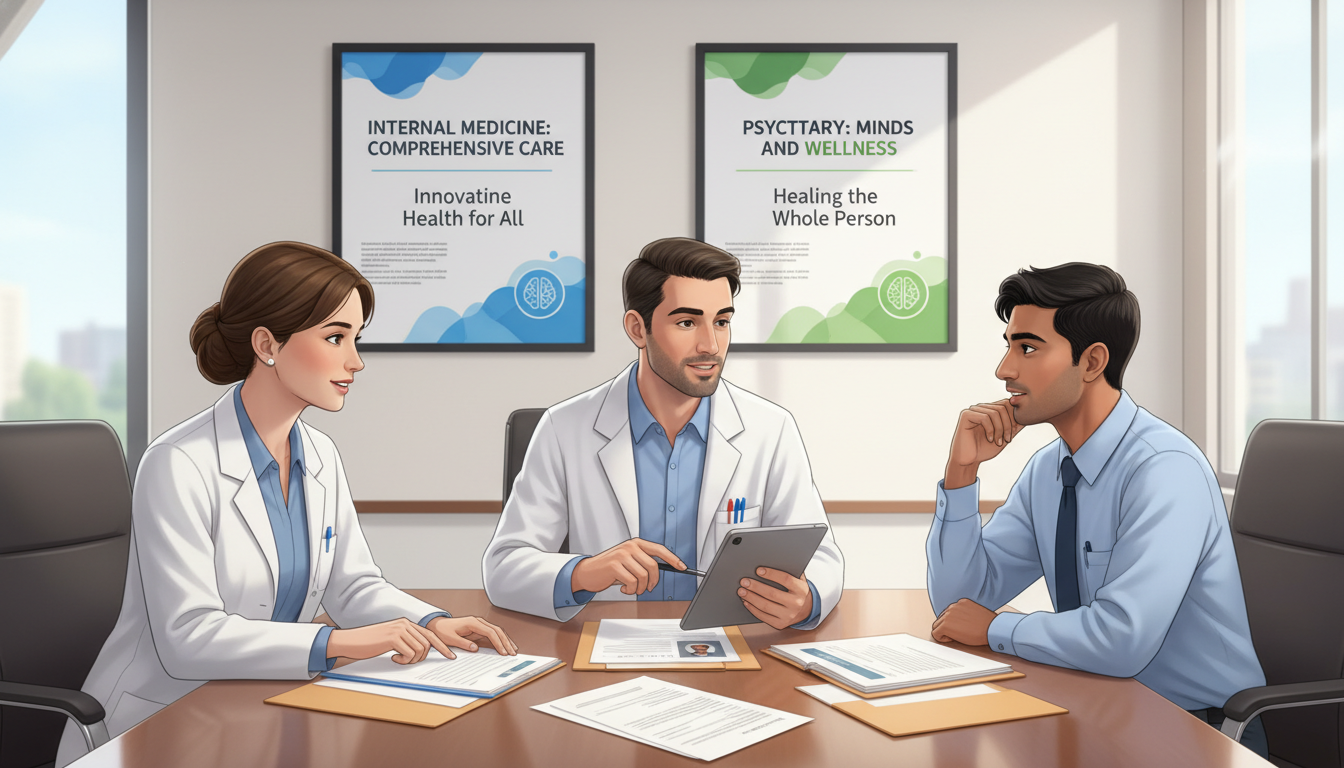
2. Rules, Ethics, and What Programs Can (and Can’t) Say
Before you decide how to communicate, you must understand the rules that govern program communication before match, especially for NRMP-participating allopathic medical school match programs.
NRMP and ERAS Ground Rules (U.S. Focus)
Most Medicine-Psychiatry programs in the U.S. participate in the NRMP Main Residency Match. Under NRMP rules:
No soliciting ranking commitments
Programs cannot require or pressure you to reveal how you will rank them. You may voluntarily share your intentions, but you should never feel coerced.No guarantees of ranking or matching
Programs are not allowed to say:- “We will rank you #1.”
- “If you rank us first, you are guaranteed to match here.”
They can say more general statements like “We will rank you highly” or “You remain a strong candidate for us,” though interpretations of strength vary.
No binding pre-match offers in NRMP-participating programs
In a standard MD graduate residency under NRMP, a formal pre-match contract that bypasses the Match is not allowed.
Exceptions may occur for:- Certain off-cycle or non-NRMP positions
- Some military, couples match variations, or special tracks outside the main Match
Honesty and professional ethics expected
You should not:- Falsely claim a program is your “number one” if you’re telling multiple programs the same thing
- Promise to rank a program first and then fail to do so without a significant reason
While not legally binding, dishonesty can damage your reputation, particularly in a small specialty like medicine psychiatry combined programs.
What Programs Commonly Do in Practice
In med psych residency recruitment, you may encounter:
Warm but vague interest emails
- “We really enjoyed meeting you and think you would be an excellent fit for our program.”
- “You remain one of our top candidates.”
More direct—but still non-binding—statements
- “We plan to rank you highly.”
- “You will be very competitive to match here if you rank us highly as well.”
Occasional boundary-pushing questions
- “Where are you planning to rank us?”
- “Are we your number one?”
You are not required to answer these directly.
How This Differs in Some Non-NRMP or Special Contexts
- Certain states or specific institutions (often in non-U.S. systems) may use:
- Pre-match offers: A program offers you a position before the formal match, often in exchange for early commitment.
- Parallel match systems: Some combined or new programs may use institutional matching processes.
If you’re an MD graduate trained in an allopathic medical school but applying in multiple systems (e.g., NRMP plus another country’s system), clarify the rules in each system so you don’t accidentally violate any agreements.
3. Strategic Communication as an MD Graduate in Medicine-Psychiatry
Pre-match communication is not just about avoiding mistakes; it’s an opportunity to differentiate yourself in a competitive med psych residency environment.
3.1 Professional Principles to Guide All Communication
Be prompt but not needy
- Respond to emails within 24–48 hours.
- Avoid multiple follow-ups if you don’t get a reply; one polite follow-up after 7–10 days is sufficient.
Be honest and consistent
- Don’t make conflicting promises.
- Avoid exaggerating your level of interest to every program.
Stay specific to Medicine-Psychiatry
- Programs want to see your dual passion for internal medicine and psychiatry, not just a generic interest in “mental health” or “holistic care.”
- Illustrate how your experiences make you a strong fit for medicine psychiatry combined training.
Keep everything in writing professional
- Assume emails may be shared within the program.
- Use a respectful, clear, and concise tone; no casual slang.
3.2 After the Interview: Thank-You and Interest Letters
1. Immediate Thank-You Emails (within 24–72 hours)
- Send brief, personalized notes to:
- Program Director
- Key faculty with whom you had substantial conversation
- Sometimes chief residents or fellows if highly involved in your interview day
Basic structure:
- One sentence thanking them for their time.
- One or two specific points you appreciated about their med psych residency (curriculum, integrated clinics, research, patient population, advocacy).
- A line reaffirming your interest.
Example (Medicine-Psychiatry specific):
Dear Dr. Smith,
Thank you for the opportunity to interview with the Medicine-Psychiatry residency at [Institution] on [Date]. I especially appreciated learning about your integrated inpatient service that manages both complex medical and psychiatric conditions, and your emphasis on longitudinal continuity clinics bridging internal medicine and psychiatry. The program aligns closely with my goal of caring for patients with serious mental illness and chronic medical comorbidities.
Thank you again for your time and consideration.
Sincerely,
[Your Name]
2. Follow-Up Interest/Update Letters (4–6 weeks later or near rank list time)
Use these when:
- You have a significant update (new publication, award, leadership role).
- You want to reiterate interest in a program that is high on your list.
Key tips:
- Keep it concise (1–2 short paragraphs).
- Reference specific features of the medicine psychiatry combined program that fit your goals.
- Do not claim they are “number one” unless that is definitively true.
3.3 Communicating “Number One” vs. “High Interest”
Many MD graduate residency applicants wonder how transparent to be.
If you truly know your #1 Medicine-Psychiatry program:
- It is ethical and often beneficial to send a single, clear “number one” message late in interview season.
Example:
I wanted to share that after completing my interviews, [Program] is my top choice, and I plan to rank it first. The combination of robust internal medicine training, strong psychiatric services, and opportunities to work with individuals with severe mental illness and complex medical needs aligns uniquely with my long-term goals.
Avoid:
- Telling multiple programs they are your #1.
- Implied promises if you’re uncertain.
For other strong programs you like but will not rank #1:
- Use language such as:
- “Your program will be ranked very highly on my list.”
- “I remain very enthusiastic about the possibility of joining your program.”
This preserves your credibility while still signaling strong interest.

4. Pre-Match Offers, Early Commitment, and How to Decide
While many NRMP-participating Medicine-Psychiatry programs will not legally issue pre-match offers, you might encounter:
- Programs outside the NRMP system
- Special institutional tracks
- Informal “we would love to have you if you rank us highly” messages that feel like pre-match offers
4.1 What Is a Pre-Match Offer?
A pre-match offer is typically:
- A formal offer of a residency position extended before a centralized match result is released.
- Often involves a request for early commitment, sometimes with a contract or written agreement.
For an MD graduate residency applicant, especially from an allopathic medical school, this is more common in:
- Some non-U.S. systems or local/institutional matches.
- Certain off-cycle or non-ACGME positions.
- Rare special arrangements where a program doesn’t participate in NRMP.
In a standard NRMP-participating med psych residency, a binding pre-match offer circumventing the Match is generally prohibited. If you think you’re receiving one, clarify politely and consider discussing with your dean’s office or advisor.
4.2 Evaluating Informal “Soft” Offers or Signals
Sometimes, the reality is softer than a formal offer, such as:
- “If you rank us first, there is a very high chance you will match here.”
- “We would be thrilled if you decide to train here; you are one of our top candidates.”
These are not legally binding. Evaluate them by considering:
How well does this program fit your goals in Medicine-Psychiatry?
- Are there integrated clinics with both medical and psychiatric care?
- Does the program have robust rotations in consult-liaison psychiatry, addiction, primary care for SMI (serious mental illness)?
- Are there faculty mentors in your areas of interest (e.g., psychosomatic medicine, chronic disease management, health equity)?
Stability and reputation of the program
- Is it a well-established med psych residency or a newer combined program?
- Board pass rates for both Internal Medicine and Psychiatry.
- Alumni career paths (academic, integrated care, VA systems, community mental health).
Your personal circumstances
- Geographic preferences (family, cost of living).
- Visa or licensure considerations if you are an international MD graduate.
- Your tolerance for risk vs. desire for certainty.
4.3 How to Respond to a Strongly Interested Program
If a program communicates strong interest but does not explicitly state rank position:
Acknowledge and appreciate
- Thank them for their message and reiterate that you are enthusiastic about their program.
Be honest about your stance
- If they are your #1: say so directly.
- If they’re among your top choices: say “I will be ranking your program very highly.”
- If you’re still undecided: it’s acceptable to say you are still in the process of finalizing your rank list.
Clarify ambiguous “offers”
- If the communication feels like a pre-match offer, you can ask:
To ensure I understand correctly and remain in compliance with NRMP guidelines, can you clarify whether this is an informal expression of interest or a formal offer that would require early commitment outside of the Match?
- If the communication feels like a pre-match offer, you can ask:
Discuss any true offers with:
- Your dean or residency advisor
- A trusted mentor in Medicine or Psychiatry
- If necessary, the NRMP or relevant regulatory body
5. Common Pitfalls and How to Avoid Them
5.1 Over-Communicating
- Sending multiple “check-in” emails when a program does not respond is counterproductive.
- Limit yourself to:
- Initial thank-you
- One follow-up/update message
- One final interest or “number one” message (if applicable)
Excessive communication can be interpreted as anxiety or lack of professional boundaries.
5.2 Misrepresenting Your Rank List
In a small field like Medicine-Psychiatry, word travels. If you:
- Tell multiple programs they are your #1, or
- Publicly contradict written promises,
you may harm your reputation with faculty networks that cross institutions (especially in Psychiatry and Internal Medicine academic circles).
5.3 Ignoring Cultural and System Differences
If you trained in an allopathic medical school but are also applying in systems with true pre-match offers (e.g., some international or local matches), you must:
- Understand which system you are in for each program.
- Avoid signing binding contracts that conflict with NRMP rules.
- When in doubt, seek written clarification and professional guidance.
5.4 Neglecting the Combined Nature of Med Psych
Your communication should consistently emphasize:
- A genuine interest in both medicine and psychiatry, not merely a fallback from one to the other.
- How you see your future role (e.g., integrated care for SMI, CL-psych, primary care-psych interface, academic leadership in dual training).
- Concrete examples from rotations, electives, or research that tie these interests together.
Programs are wary of applicants who appear:
- Primarily interested in only psychiatry or only medicine.
- Unclear about what they want from dual training.
6. Practical Scripts and Templates for MD Graduates
This section offers short, adaptable phrases you can use in your emails regarding program communication before match, tailored for medicine psychiatry combined programs.
6.1 Post-Interview Thank-You (Short Version)
Dear Dr. [Name],
Thank you for the opportunity to interview with the Medicine-Psychiatry residency at [Institution] on [Date]. I was especially impressed by [specific element: e.g., your integrated inpatient team managing both complex medical and psychiatric presentations / your longitudinal clinic caring for patients with SMI and chronic medical comorbidities].
I remain very interested in your program and appreciate your consideration.
Sincerely,
[Your Name]
6.2 Update/Continued Interest Letter
Dear Dr. [Name],
I hope you are doing well. Since our interview in [Month], I wanted to share a brief update and reiterate my strong interest in the Medicine-Psychiatry residency at [Institution]. [Brief update: e.g., I recently presented my QI project on improving metabolic monitoring in patients taking antipsychotics at our institution’s research day.]
This experience further solidified my commitment to caring for patients at the intersection of internal medicine and psychiatry, which is why your program’s emphasis on [specific program feature] is particularly appealing to me. I will be ranking your program very highly.
Thank you again for your time and consideration.
Best regards,
[Your Name]
6.3 “Number One” Message
Dear Dr. [Name],
Thank you again for the opportunity to interview for the Medicine-Psychiatry residency at [Institution]. After reflecting on all of my interviews, I wanted to let you know that your program is my top choice, and I plan to rank it first.
The combination of rigorous internal medicine training, strong psychiatric services, and opportunities to work with patients who have severe mental illness and complex medical comorbidities aligns exactly with my long-term goal of practicing as a dual-trained physician in integrated care settings.
I would be honored to train at [Institution]. Thank you for your consideration.
Sincerely,
[Your Name]
6.4 Responding to Strong Interest Without Over-Commitment
Dear Dr. [Name],
Thank you for your message and for sharing your enthusiasm about my application. I truly enjoyed meeting the faculty and residents at [Institution], and I am very excited about the possibility of joining your Medicine-Psychiatry residency.
As I finalize my rank list, your program will be among those ranked very highly due to [specific features: e.g., the integrated medicine-psychiatry clinic, strong CL experience, and faculty mentorship in psychosomatic medicine].
I appreciate your time and consideration.
Best regards,
[Your Name]
FAQs: Pre-Match Communication for MD Graduates in Medicine-Psychiatry
1. Can I tell more than one program they are my top choice?
You can, but you shouldn’t. In a small combined field like Medicine-Psychiatry, honesty and reputation matter. If you choose to send a “you are my #1” message, limit it to one program and mean it. You can still tell other programs they are “very high” on your list.
2. What if a program asks me directly how I will rank them?
You are not obligated to reveal your exact ranking. You can respond with:
“I am very interested in your program and will be ranking it highly, but I am still finalizing my list.”
This maintains professionalism without violating your privacy or comfort.
3. Are pre-match offers allowed in the MD allopathic medical school match for Medicine-Psychiatry?
For NRMP-participating med psych residency programs, formal binding pre-match offers that circumvent the Match are generally not allowed. If a program suggests an early commitment or offer, clarify whether they participate in NRMP and, if necessary, consult your dean’s office or NRMP policies.
4. How often should I contact a program after interviewing?
Most MD graduate residency applicants will send:
- One thank-you email soon after the interview
- Possibly one update/interest email mid-season
- (Optionally) one final message expressing that they will rank the program highly or first
Beyond this, repeated outreach usually does not help and may be seen as excessive.
Thoughtful, ethical pre-match communication can strengthen your candidacy without compromising your integrity. As an MD graduate targeting Medicine-Psychiatry, use this period to demonstrate maturity, clarity of purpose, and a sincere commitment to caring for patients at the intersection of medicine and psychiatry.