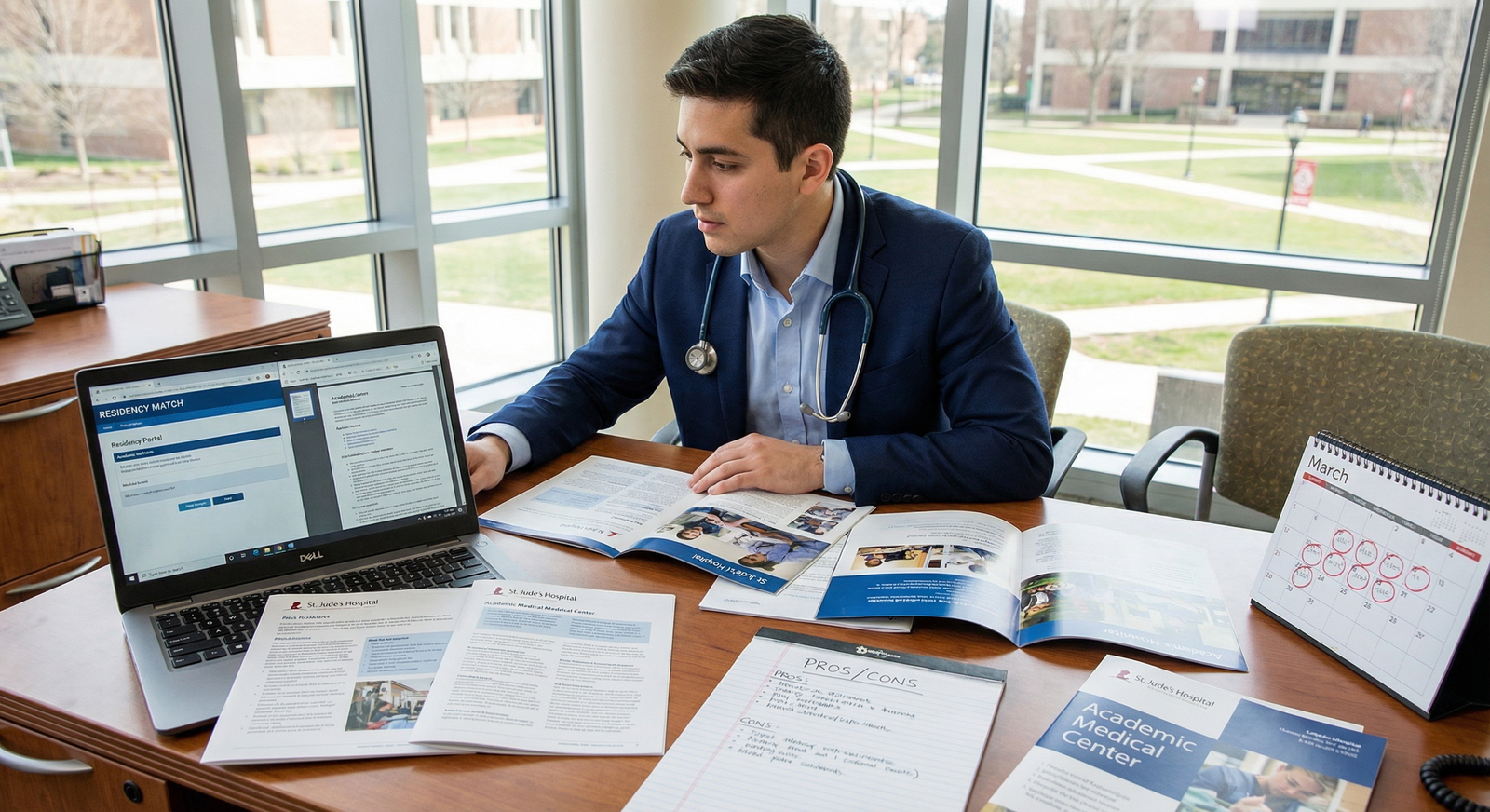
Pre-match communication is one of the most misunderstood—and anxiety-provoking—parts of the integrated plastic surgery match. As an MD graduate residency applicant from an allopathic medical school, you’re navigating a competitive landscape where every email, phone call, and signal can feel like it carries enormous weight.
This article breaks down what pre-match communication really is, what’s allowed, what’s risky, and how to use it strategically and ethically to support your integrated plastics match—without crossing NRMP boundaries or appearing unprofessional.
Understanding Pre-Match Communication in Plastic Surgery
Pre-match communication refers to any contact between you and a residency program between ERAS submission and Match Day that relates (directly or indirectly) to ranking, fit, interest, or potential training.
Common forms include:
- Emails between you and faculty/program leadership
- Post-interview thank-you or follow-up messages
- Invitations to “second looks” or informal visits
- Social media interactions (e.g., replying to a program director’s X/Twitter post)
- Phone calls or virtual meetings after interviews
- Categorical or veiled statements about rank order or “early commitment”
Why Plastic Surgery Is Unique
Plastic surgery residency—especially integrated plastics match positions—is:
- Small: Limited number of positions and programs.
- Tight-knit: Many faculty know each other; your reputation and communication can spread.
- Highly competitive: Small differences in communication, professionalism, and perceived “fit” can influence rank lists.
Because of this, pre-match communication can feel amplified in plastics. Programs are seeking residents who are skilled, collegial, and trustworthy. Your behavior during this phase is a window into how you will function as a colleague.
NRMP & Ethical Boundaries
As an MD graduate residency applicant participating in the NRMP:
- Programs cannot:
- Ask you how you will rank them.
- Request that you disclose your rank list.
- Require or pressure you to commit to them verbally or in writing.
- You cannot:
- Sign any contract or binding agreement for an NRMP-participating program before Match.
- Misrepresent your intentions (“I will rank you #1” when you know you won’t).
You may express general interest and intent, but you must not enter into true pre-match offers or early commitment agreements with programs participating in the NRMP Main Match. Some institutions or non-NRMP positions may use pre-match contracts; in that case, the dynamics are different, but for integrated plastic surgery in the NRMP, assume no binding pre-match deals are permitted.
Core Principles of Professional Pre-Match Communication
Before getting into scripts and tactics, anchor yourself in a few fundamental principles.
1. Honesty Above All
Your professional credibility starts now. Even subtle dishonesty can be remembered and shared.
- Do not:
- Tell multiple programs, “You’re my #1,” if that’s not true.
- Hint at a commitment you do not intend to fulfill.
- Do:
- Use honest, flexible language:
- “I am very enthusiastic about your program and strongly considering ranking it highly.”
- “Your program is one of my top choices.” (Only if true.)
- Use honest, flexible language:
2. Respect for NRMP Rules
NRMP violations can have serious consequences (investigation, sanctions, even being barred from the Match). To stay safe:
- Avoid any language that sounds like a contract, e.g., “I guarantee I will come if you rank me to match.”
- Avoid soliciting information on how they will rank you (“Where am I on your list?”).
- If a program seems to be pressuring you for commitment, keep your response neutral and compliant:
- “I am very interested and will consider everything carefully when creating my rank list in accordance with NRMP policies.”
3. Brevity and Clarity
Faculty and program directors are busy. The strongest impression often comes from concise, clear, and respectful emails.
- Aim for:
- 1–2 short paragraphs.
- A clear purpose (thank you, update, expression of interest).
- No emotional oversharing or repeated follow-ups.
4. Professional Tone and Timing
Your tone should match that of a junior colleague:
- Polite but confident
- Grateful but not desperate
- Interested but not intrusive
Timing considerations:
- Do not send multiple emails in short succession.
- Avoid high-pressure windows (e.g., midnight emails or constant follow-up).
- Post-interview thank-yous are typically sent within 24–72 hours.

Strategic Use of Pre-Match Communication
Used wisely, pre-match communication can:
- Reinforce your interest in a program
- Provide important updates (new publication, award, Step score if improved)
- Clarify fit, expectations, or concerns about the program
- Help faculty remember you positively when creating rank lists
Here’s how to handle typical touchpoints in the allopathic medical school match for plastic surgery.
1. Before the Interview
You generally do not need to reach out cold to request interviews in integrated plastics unless:
- You have a strong institutional connection (home program, away rotation, shared mentor).
- You have a significant update after ERAS submission (e.g., first-author publication in a major journal, national meeting podium presentation, improved Step 2 CK).
If you write before the interview season:
- Keep it short.
- Have a specific reason (not just: “I like your program, please interview me.”)
Example:
Dear Dr. [Last Name],
I hope this message finds you well. My name is [Name], an MD graduate from [Allopathic Medical School]. I recently applied to your integrated plastic surgery residency program. I wanted to briefly share an update that my manuscript, “[Title],” was accepted as a first-author publication in [Journal]. This work further solidified my interest in reconstructive microsurgery and aligns well with your program’s clinical and research strengths.
Thank you for your time and consideration.
Sincerely,
[Name], MD
AAMC ID: [#]
Use such emails sparingly. Overuse can appear pushy or unfocused.
2. After the Interview: Thank-You and Interest Emails
Most pre-match communication occurs post-interview. This is where your professionalism as an MD graduate residency candidate is most visible.
Thank-You Emails
Best practices:
- Send within 24–72 hours.
- One brief message to:
- Program director (PD)
- Possibly the associate PD
- Key faculty who interviewed you (if you had meaningful discussions with them)
- Avoid copy-paste identical emails—customize 1–2 sentences to reference a specific aspect of your conversation or the program.
Example to PD:
Dear Dr. [Last Name],
Thank you for the opportunity to interview with the [Institution] integrated plastic surgery residency program on [date]. I appreciated learning more about your approach to graduated autonomy and the emphasis on early operative exposure. Our discussion about resident involvement in [specific service, e.g., craniofacial or microsurgery] resonated with my long-term goal of pursuing an academic career.
I left the interview feeling even more enthusiastic about the possibility of training at [Institution] and contributing to your team.
With appreciation,
[Name], MD
Note: This is not the place to make ranking commitments. It’s simply about gratitude and professional interest.
Post-Interview Interest/Update Emails Closer to Rank List Time
Plastic surgery programs often finalize rank lists in late January to mid-February. A single, well-timed follow-up can be appropriate if:
- You have a new achievement (publication, award, national presentation, new leadership role).
- You want to clarify or reinforce your interest, especially for your top few programs.
Example:
Dear Dr. [Last Name],
I hope you are well. I wanted to share a brief update and reiterate my strong interest in the [Institution] integrated plastic surgery residency. Since we met in [month], I was notified that my abstract on [topic] was accepted for podium presentation at [meeting], and I recently co-authored a manuscript submitted to [journal] focusing on [brief topic].
My interview experience confirmed that the strong reconstructive volume, mentorship culture, and resident camaraderie at [Institution] align closely with what I am looking for in a training program. I will be ranking programs soon and [Institution] remains one of the programs I am strongly considering at the top of my list.
Thank you again for your time and consideration.
Sincerely,
[Name], MD
This expresses genuine enthusiasm without making an explicit promise you may not keep.
Pre-Match Offers, Early Commitment, and How to Respond
The language around pre-match offers and early commitment often creates confusion. In a standard NRMP-participating integrated plastics match, true pre-match contracts are not allowed, but you might still encounter:
- Programs hinting that if you “strongly signal” you’ll rank them highly, they’ll rank you to match.
- Vague or suggestive language such as:
- “We would really like to work with you.”
- “You would be a great fit here; we hope you will rank us highly.”
- “If you rank us first, things should work out well.”
Recognizing Problematic Communication
If a program says or implies:
- “If you promise to rank us #1, we will rank you to match.”
- “We expect a verbal commitment from you.”
These statements approach or cross NRMP policy boundaries. You should:
- Not give explicit ranking promises if you’re unsure.
- Maintain a neutral, professional response.
Example response if pressured:
Thank you very much for your confidence in me and for sharing your enthusiasm. I am very interested in your program and had an excellent experience during my interview. In accordance with NRMP policies, I will create my rank list honestly based on overall fit and training opportunities. I remain very appreciative of your consideration.
This is respectful but does not lock you into a binding promise.
Handling a Genuine “You Are Our Top Choice” Message
Sometimes a PD may write:
“You are one of the top applicants we’ve interviewed, and we plan to rank you highly.”
Or even:
“We will rank you to match.”
Important points:
- Programs are allowed to express interest, but these statements are not guaranteed.
- Do not alter your rank list based solely on unsanctioned promises.
- Remember: NRMP’s algorithm favors your preference. Rank programs in your true order of desirability, not perceived likelihood.
How to respond:
Dear Dr. [Last Name],
Thank you very much for your kind message and for your confidence in me as a candidate. I greatly enjoyed learning more about [Institution] and continue to view your program as an excellent environment for training in plastic and reconstructive surgery.
I appreciate the time and effort you and your team have invested in the interview process and in getting to know me.
Sincerely,
[Name], MD
You acknowledge their message without over-committing.
Ethically Signaling Strong Preference
If you genuinely know that a program is your #1 choice, you may consider telling them—carefully and honestly—once, late in the season.
Example:
Dear Dr. [Last Name],
I hope you are well. As I finalize my rank list, I wanted to let you know that [Institution] is my top choice for integrated plastic surgery residency. My interview day, conversations with residents, and learning more about your program’s operative exposure and mentorship solidified my belief that this is the best environment for my training and career goals.
Thank you again for the opportunity to interview and for your consideration in this process.
Sincerely,
[Name], MD
Key safeguards:
- Only send such a message to one program.
- Only send it if you actually plan to rank them first.
- Do not share or imply similar messages to other programs.
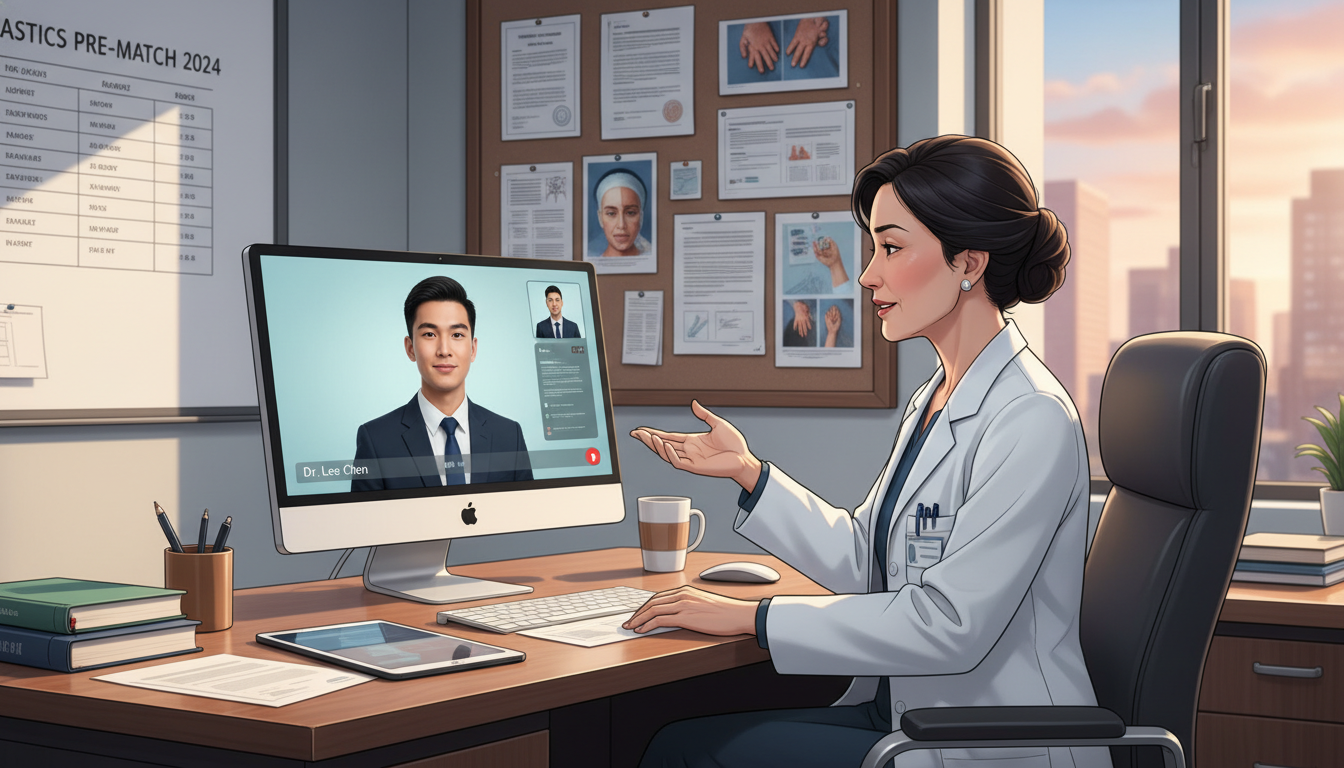
Communication with Programs Before Match: Do’s and Don’ts
The period between interviews and rank list certification invites lots of uncertainty. Here’s a practical framework for program communication before match—what moves your application forward and what risks harming it.
Do’s
Do send concise thank-you notes.
- Shows professionalism and appreciation.
- Reinforces positives from your interview day.
Do provide meaningful updates.
- New publications, leadership titles, awards, or Step improvements.
- Tie updates to the program’s strengths (e.g., research focus, subspecialty emphasis).
Do be reachable and responsive.
- If a program emails with a question, answer promptly and courteously.
- Maintain a professional email address and voicemail greeting.
Do maintain consistency with your application.
- If you emphasized academic plastics in your personal statement, ensure your communication aligns with that narrative.
- Sudden shifts (e.g., from “I’m committed to microsurgery” to “I only want hand surgery”) may confuse programs.
Do treat every interaction as part of the interview.
- Administrative staff and coordinators often share feedback with PDs.
- Courtesy, promptness, and gratitude matter.
Don’ts
Don’t send multiple “check-in” emails without purpose.
- Programs interpret repeated, content-light emails as anxiety or poor judgment.
- One post-interview thank-you and one later-season update/interest email is usually sufficient for a top program.
Don’t ask programs how they will rank you.
- This is unprofessional and can place faculty in an uncomfortable position.
- Violates the spirit, if not the letter, of NRMP guidelines.
Don’t overstate your interest or make false promises.
- Avoid statements like “I will definitely come if you rank me to match” unless you are 100% certain and understand the implications.
- Reputation matters in the small plastic surgery community.
Don’t gossip, complain, or speak negatively about other programs.
- Even in informal conversations with residents or fellows.
- Word travels—especially in a small specialty like plastics.
Don’t let communication drive your rank list over fit.
- A program that emails you frequently is not necessarily the best training environment.
- Base your rank list on operative volume, resident culture, mentorship, career outcomes, geography, and your personal goals.
Practical Scenarios for MD Graduates in Plastic Surgery
To bring this together, here are common scenarios and recommended strategies.
Scenario 1: You Loved a Program and Want Them to Remember You
- Send a well-written thank-you to PD and key faculty.
- Later (2–4 weeks before rank list lock), send a brief email:
- Mention a specific strength of the program that fits your goals.
- Note any recent updates to your CV.
- Express that it is one of your top choices, if true.
Scenario 2: You Have a Major Update After Interviews
Examples:
- First-author publication in PRS or JAMA Surgery.
- Podium presentation at APSA/ASPS.
- Prestigious research or teaching award.
Action:
- Email programs where you interviewed.
- One concise paragraph summarizing the update and tying it to your interest in academic plastic surgery.
- Do not expect this to force a rank change, but it can strengthen their perception of your trajectory.
Scenario 3: A Program Sends a Very Enthusiastic Email
They say you’re “one of our top candidates” or “we plan to rank you highly.”
Your response:
- Thank them sincerely.
- Reaffirm your enthusiasm.
- Do not ask for specifics about your ranking.
- Do not overpromise in return.
Scenario 4: A Program Pressures You for a Commitment
If a faculty member implies that they want you to verbally commit to ranking them first:
- Stay calm and professional.
- Reiterate your appreciation.
- Clearly state that you will follow NRMP policy and rank programs based on true fit.
- If the pressure feels uncomfortable, discuss with a trusted mentor or advisor.
FAQs: Pre-Match Communication for MD Graduates in Plastic Surgery
1. Do I have to send thank-you emails to every plastic surgery program?
No, but it is strongly recommended. In plastic surgery, the culture leans toward professionalism and courtesy. A concise, thoughtful thank-you to the PD (and optionally to key interviewers) is standard. You don’t need to write to every single faculty member you met; focus on those with whom you had substantive conversations.
2. Can I tell more than one program they are my “top choice”?
You should not. Telling multiple programs they are your #1 is dishonest and can damage your reputation if it comes to light. You may truthfully say “one of my top choices” to more than one program, but reserve explicit “top choice” or “ranked first” language for the program you genuinely intend to rank #1.
3. Will not emailing a program hurt my chances in the integrated plastics match?
Lack of extra communication rarely harms you, especially if your interview performance and application are strong. Excessive or poorly timed communication, however, can hurt you. Think of pre-match communication as a way to polish your impression, not to rescue a weak one. Quality and professionalism matter more than quantity.
4. What if a program asks, “Where will you rank us?” or hints strongly?
You are not obligated—and in fact are discouraged by NRMP guidelines—from sharing your specific rank position. A safe, professional response is:
“I am very impressed with your program and will be considering it seriously when creating my rank list.”
This maintains honesty, satisfies their curiosity minimally, and avoids locking you into statements you may later regret.
Thoughtful, honest, and measured pre-match communication won’t single-handedly secure a plastic surgery residency position—but it can distinguish you as a mature, reliable colleague in a very small specialty. As an MD graduate residency applicant in an allopathic medical school match, your goal is to align your communication with your values, NRMP rules, and the long-term relationships you will build in plastic surgery.