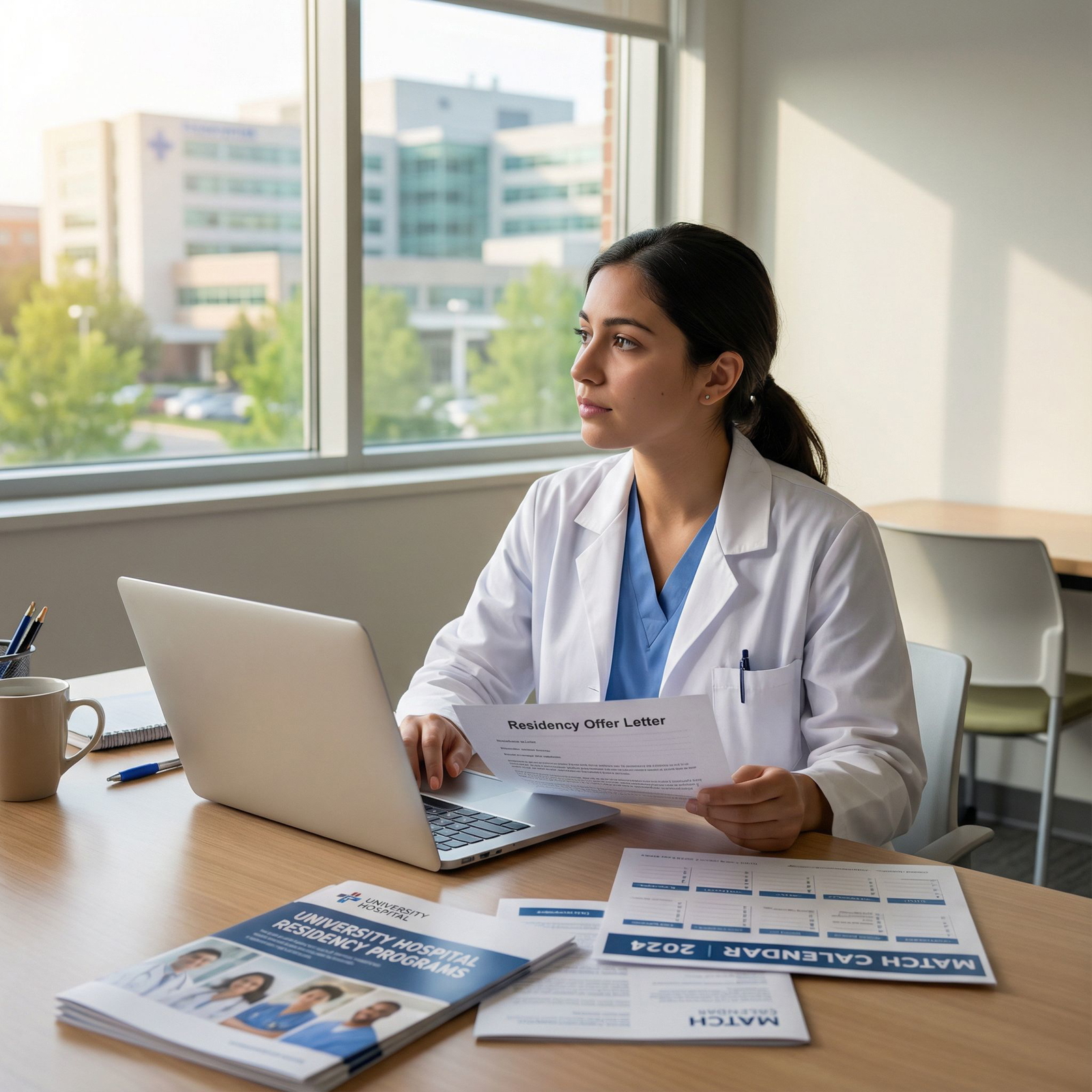
Understanding Pre-Match Communication in Vascular Surgery
For an MD graduate interested in a vascular surgery residency, pre-match communication can feel like walking a tightrope: you want to express strong interest without overcommitting, stay professional without sounding generic, and protect your options while still signaling enthusiasm. This is even more nuanced in an integrated vascular program, where spots are extremely limited and each interaction can meaningfully shape how faculty perceive you.
Pre-match communication refers to any interaction you have with programs after you submit your application but before the Match results are released. This includes:
- Emails to program directors (PDs) and coordinators
- Thank-you notes after interviews
- Updates about new publications, scores, or experiences
- “Love letters” or letters of intent
- Phone calls or virtual meetings initiated by the program
- Any contact that might be associated with pre-match offers or early commitment discussions (when relevant in your system)
For MD graduate residency applicants from allopathic medical schools, these interactions are common and often expected—especially in competitive fields such as vascular surgery.
This article will walk you through:
- What kinds of pre-match communication are appropriate
- How vascular surgery culture and competitiveness shape expectations
- When communication may cross ethical or NRMP boundaries
- Practical templates and examples tailored to vascular surgery
- How to handle program communication before Match, including implicit and explicit signals
The Landscape: Vascular Surgery, Match Rules, and Early Commitment
Why Vascular Surgery Is Unique
Vascular surgery is a small, relationship-driven specialty. The integrated vascular program (0+5) pathway often takes only 1–3 residents per year. That means:
- Every email and interaction is more visible
- Faculty often know each other across programs
- A strong endorsement or clear expression of interest can truly tip the scale
- Programs may be more proactive in their program communication before match—especially if they are particularly interested in you
Most MD graduate residency applicants aiming for vascular surgery are high-achieving: high Step scores, research experience, sub-internships, and strong letters. Because the applicant pool is relatively small and competitive, pre-match communication is often used to:
- Confirm continued interest
- Clarify an applicant’s rank intentions
- Help programs refine their rank lists
- Occasionally explore the possibility of pre-match offers or early commitment in systems outside the NRMP (e.g., specific institutional recruitment tracks, international or non-ERAS settings)
NRMP and Ethical Boundaries (For U.S. MD Graduates)
If you are matching through the NRMP (which is the norm for U.S. allopathic medical school match processes), there are strict rules:
- Programs cannot ask you to reveal your rank list
- You cannot be required to make a binding verbal commitment
- Any suggestion of guaranteed positions before Match Day is inappropriate
- You are free to express your honest interest and intentions (e.g., “You are my top choice”) but it is not binding on either side
Keep these principles in mind whenever you consider early commitment language or “promises” in your communication.
Types of Pre-Match Communication and How to Use Them
1. Pre-Interview Emails
After your ERAS applications go out for MD graduate residency positions, you might consider selected pre-interview communication, particularly to vascular programs where:
- You rotated (home or away sub-internship)
- You have a strong geographic or personal tie
- You have a close mentor who suggests it is appropriate
These emails should be brief, targeted, and respectful of program time.
When it helps most in vascular surgery:
- You completed a sub-I at that program and want to underscore that it’s a top choice
- You have significant new vascular-related work (e.g., first-author paper, podium presentation at SVS) right as applications go out
- You are reapplying to vascular surgery and need to update programs directly
Sample pre-interview email (MD graduate, US allopathic school):
Subject: Continued Interest in [Program Name] Integrated Vascular Program
Dear Dr. [PD Last Name],
I hope this message finds you well. My name is [Your Name], an MD graduate from [Your Allopathic Medical School]. I recently applied to your integrated vascular program through ERAS and wanted to briefly reiterate my strong interest in training at [Institution].
My sub-internship in vascular surgery at [Institution or Home Program] solidified my commitment to a career in vascular surgery. I am particularly drawn to your program’s strengths in [e.g., complex aortic work, limb salvage, endovascular training, outcomes research].
Since submitting my application, I [briefly mention 1–2 updates if applicable—e.g., “have had a manuscript on peripheral arterial disease outcomes accepted for publication in Annals of Vascular Surgery”].
Thank you for considering my application. I would be honored to interview if given the opportunity.
Best regards,
[Your Full Name], MD
AAMC ID: [XXXXX]
[Contact Info]
Keep this sort of message for just a few select programs. Over-emailing can dilute your impact and annoy PDs.
2. Post-Interview Thank-You Letters
Thank-you letters are one of the most common forms of pre-match communication.
Should you send them?
For most vascular surgery programs, yes—brief, tailored thank-you emails are viewed positively. Many faculty genuinely appreciate them, and they can help reinforce your fit with the program.
Key principles:
- Send within 24–72 hours of the interview
- Email individual interviewers or one combined email to the PD, depending on what feels appropriate for the program’s culture
- Be specific: reference a case, a conversation, or a feature of the program that resonated with you
- Do not ask about your rank position or push for reassurance
Example thank-you note to PD:
Subject: Thank You – [Your Name], Vascular Surgery Interview on [Date]
Dear Dr. [PD Last Name],
Thank you for the opportunity to interview for the vascular surgery residency position at [Institution] on [date]. It was a pleasure learning more about your integrated vascular program, especially the opportunities for early operative exposure and involvement in [e.g., the limb preservation clinic, complex thoracoabdominal aneurysm program].
I was particularly impressed by the culture of mentorship and the way your residents described the close working relationship with faculty in the OR and clinic. Our discussion about [e.g., your approach to managing complex PAD in underserved populations] reinforced my belief that [Institution] would be an excellent place to train and grow as a vascular surgeon.
Thank you again for your time and consideration. I remain very interested in your program.
Sincerely,
[Your Full Name], MD
[Contact Info]
You can send shorter notes to other faculty:
Dear Dr. [Name],
Thank you for taking the time to speak with me during my interview day at [Program]. I enjoyed our conversation about [specific topic], and it further confirmed my interest in training in vascular surgery at [institution].
Best,
[Your Name], MD
3. Post-Interview Updates and “Signals of Interest”
After interviews, the allopathic medical school match environment can feel quiet and stressful. You might want to signal that a particular program is a top choice.
You can ethically do this by:
- Emailing to express that the program ranks highly on your list
- Clarifying a geographic or family tie
- Sharing important updates (new publication, award, exam result)
Letters of Interest vs. Letters of Intent
- Letter of interest: You are highly interested; they are one of your top programs.
- Letter of intent: You explicitly state that the program is your number one choice and you intend to rank them first.
Programs know that students may send more than one “you are among my top choices” message, but most PDs take a clear “You are my #1” or “I will rank you first” statement very seriously. Do not lie about this in vascular surgery—it’s a small world.
Example letter of intent (to your true #1 only):
Subject: Strong Interest in [Program] Integrated Vascular Surgery Residency
Dear Dr. [PD Last Name],
I wanted to sincerely thank you and your faculty again for the opportunity to interview for your integrated vascular program. After completing all of my interviews and careful reflection, I have decided that [Institution] is my top choice, and I plan to rank your program number one on my rank list.
The combination of high-volume open and endovascular cases, robust research mentorship, and the collegial atmosphere among your residents aligns perfectly with my goals for vascular surgery training. I am especially excited about the opportunity to work with [named faculty] in [e.g., complex aortic disease, limb salvage, or health services research].
I understand that the Match is a binding process and that no outcome can be guaranteed, but I felt it was important to clearly communicate my intentions and enthusiasm for your program.
Thank you again for your consideration. I would be honored to train as a vascular surgery resident at [Institution].
Sincerely,
[Your Full Name], MD
[Allopathic medical school name]
AAMC ID: [XXXXX]
Example letter of interest (for other highly ranked programs):
Subject: Continued Strong Interest in [Program] Vascular Surgery Residency
Dear Dr. [PD Last Name],
I hope you are doing well. I wanted to reiterate my strong interest in the vascular surgery residency at [Institution]. After completing my interviews, your program remains one of my very top choices.
I continue to be especially drawn to [specific program feature—e.g., multidisciplinary aortic center, early autonomy in open procedures, robust outcomes research, commitment to resident wellness]. Since my interview, I [brief update—e.g., “presented our carotid stenting outcomes project at a regional vascular meeting”], which has further strengthened my commitment to a career in vascular surgery.
Thank you again for the opportunity to interview and for your continued consideration.
Best regards,
[Your Full Name], MD
[Contact Info]
These messages should be used sparingly and thoughtfully. Sending strongly worded interest emails to many programs can damage your credibility.

Program-Initiated Contact, Pre-Match Offers, and Early Commitment
When Programs Reach Out Before Match
Sometimes, vascular surgery programs initiate program communication before match, especially if they are very interested in you. This might look like:
- A friendly check-in email from the PD expressing that you are “highly ranked”
- A phone call from a faculty member who says, “We really liked you and hope to see you here.”
- Invitations to optional follow-up conversations or second-look visits
- More rarely, in non-NRMP or special contexts, hints of pre-match offers or early commitment
For U.S. NRMP-participating vascular surgery residencies, this communication should not:
- Ask you where you plan to rank them
- Promise you a guaranteed spot
- Require any form of early commitment outside of the Match
However, they might say:
- “You are ranked to match at our program.”
- “We will be ranking you very highly.”
- “We hope you will consider us strongly.”
These statements may be genuine, but you should always remember: nothing is guaranteed until Match Day.
How to Respond Professionally
When a program expresses interest:
- Acknowledge the communication
- Express appreciation
- Reiterate genuine interest if true
- Do not feel obliged to reveal your rank list order
Example response:
Dear Dr. [PD Last Name],
Thank you very much for reaching out and for your kind words. I truly enjoyed meeting you and the faculty at [Institution], and I remain very interested in the opportunity to train in your integrated vascular program.
I appreciate your consideration, and I look forward to seeing how things unfold in the Match.
Best regards,
[Your Name], MD
If you already know they are your top choice and you honestly plan to rank them #1, you may choose to state that explicitly, as in the earlier letter of intent.
Pre-Match Offers and Early Commitment Outside of NRMP
There are a few scenarios where pre-match offers or early commitment may legitimately come into play:
- Programs outside the NRMP/ERAS structure (e.g., some international or non-U.S. systems)
- Special institutional tracks or “contract” positions not going through the standard Match (rare in vascular surgery but possible in some contexts)
- Transitional or research positions that could lead to a categorical or integrated vascular program slot later
If you receive what appears to be a pre-match offer:
- Clarify the terms in writing: Is this outside the Match? Is it binding? Will they still participate in the regular Match?
- Consult trusted mentors and, if applicable, your dean’s office
- Consider how accepting an early commitment might limit your options elsewhere
- Ensure you are not violating any Match agreements or contracts
For a typical MD graduate in U.S.–based vascular surgery, a true pre-match offer for an integrated vascular slot would be unusual and potentially problematic under NRMP rules. Treat anything that sounds like this with caution and seek guidance.
Strategy: How to Balance Honesty, Professionalism, and Your Options
Stepwise Approach for an MD Graduate Targeting Vascular Surgery
Before interview season:
- Identify your top-priority vascular programs (home, away, geographic ties).
- For those select programs, consider a short pre-interview email if you have a real connection or meaningful update.
During interviews:
- Actively engage with residents and faculty; your behavior here matters more than any future email.
- Take notes right after each interview—specific details will be useful for thank-you emails and ranking.
Right after each interview:
- Send thank-you notes within 1–3 days.
- Keep them personalized but concise.
As rank lists are forming (late interview season):
- Decide honestly which program is your true #1.
- Consider sending one letter of intent to that program.
- Send a small number of letters of interest to a few other highly ranked vascular surgery programs if desired.
If programs reach out to you:
- Respond promptly and professionally.
- Express appropriate appreciation and (if true) interest.
- Avoid disclosing your full rank order unless you freely choose to reveal your #1.
Common Pitfalls to Avoid
- Over-communicating: Weekly emails or multiple “updates” with marginal content can be irritating.
- Dishonesty: Telling more than one program they are your #1 is a serious breach of professional integrity, especially in a small field like vascular surgery.
- Pressure tactics: Asking programs where they will rank you or demanding reassurance is generally frowned upon.
- Over-sharing personal circumstances: It’s okay to mention a family or geographic tie, but balance transparency with professionalism.
How Vascular Surgery PDs Actually Read Your Communications
Most PDs and faculty:
- Skim emails rather than study them line-by-line
- Notice tone, sincerity, and specificity
- Value signals of commitment when they are believable
- Keep a rough sense of who has expressed strong interest as they finalize their rank list
Your communications probably won’t rescue a weak application, but they can:
- Distinguish you positively when you’re already competitive
- Reassure a program that you would be happy there
- Sometimes help with “tie-breaker” decisions between similar candidates
Frequently Asked Questions (FAQ)
1. Do I have to send thank-you letters to every vascular surgery program?
No, it is not mandatory, and some programs explicitly discourage follow-up emails. However, in vascular surgery, a short, specific thank-you to the PD (and occasionally key faculty) is usually viewed positively. If a program says “no post-interview communication needed,” respect that.
2. Can I tell one program they are my #1 and another that they are “among my top choices”?
Yes. You should only tell one program that it is your clear number one and you intend to rank it first. It is acceptable to tell a few others that they are “very highly ranked” or “among your top choices,” as long as that is truthful and not misleading.
3. Will expressing strong interest change how a program ranks me?
It can, especially in a small field like vascular surgery. A credible letter of intent may move you up on a rank list if the program was already favorable toward you. But it cannot compensate for major weaknesses in your application or interview performance.
4. What should I do if a program hints at a guaranteed spot or pre-match offer?
If you are in the NRMP-based allopathic medical school match for vascular surgery:
- Be cautious—true guaranteed or pre-Match offers for an NRMP-participating integrated vascular program are unusual and potentially violate rules.
- Seek guidance from your dean’s office or trusted faculty mentor.
- Confirm all details in writing and make sure you understand whether the position is inside or outside the Match.
- Remember: until Match Day, nothing is truly guaranteed for NRMP programs.
Navigating pre-match communication as an MD graduate targeting vascular surgery residency requires judgment, professionalism, and honesty. Thoughtful emails and authentic expressions of interest can strengthen your candidacy, especially in the intimate, relationship-driven world of vascular surgery. Use them strategically—never as manipulation, but as a clear, respectful way to show programs where you see your future.