
How to Make the Most of Your Volunteer Work Before Medical School
As a future physician, your journey to medical school is shaped not only by GPA and test scores but also by your experiences with real people facing real health challenges. Thoughtful, sustained Volunteer Work can deepen your empathy, sharpen your clinical curiosity, and clarify why you want to practice medicine in the first place.
This guide will help you strategically choose, engage in, and leverage your volunteer experiences so they become a powerful foundation for Medical School, future Healthcare Experience, and long-term Career Development. You’ll learn how to turn “I volunteered in a hospital” into a compelling, authentic story that strengthens your Application Strategies and prepares you for a life in medicine.
Why Volunteer Work Matters Before Medical School
More Than a Checkbox: The Real Value of Volunteering
Admissions committees can usually tell when an applicant has treated volunteering as a checklist item. They are looking for evidence that:
- You understand medicine as service, not just science.
- You have experience with diverse patients and communities.
- You can sustain commitment and responsibility over time.
- You have started to develop the interpersonal skills physicians rely on daily.
Strategic Volunteer Work helps you:
Gain genuine Healthcare Experience
Seeing patients, families, and teams in action teaches you things no textbook can: how people cope with illness, how care teams communicate, and how systems do (or don’t) function well.Clarify your motivation for medicine
Volunteering can either confirm your passion or reveal that another path might fit better. Both outcomes are valuable and honest.Develop core professional skills
Communication, cultural humility, conflict resolution, confidentiality, time management, and teamwork are all built in real communities, not just in lecture halls.Demonstrate your commitment to service
Sustained involvement—months to years in one or two organizations—signals reliability and genuine concern for others.
How Admissions Committees View Volunteer Experience
While every school is different, most admissions committees look for:
- Consistency over years, not short bursts right before applications.
- Breadth and depth: a mix of clinical and non-clinical roles, with deeper involvement in a few key experiences.
- Reflection and insight: Can you explain what you learned, how you grew, and how it changed your view of medicine and yourself?
- Impact: Did you improve a process, build a program, mentor others, or advocate for change—even on a small scale?
Types of Volunteer Work: Clinical and Beyond
Clinical Volunteering: Direct Exposure to Patient Care
Clinical volunteering places you closer to patients and healthcare teams. These roles often include:
Hospital volunteer programs
Common tasks:- Transporting patients or specimens
- Assisting at information desks
- Stocking supplies
- Sitting and talking with lonely patients (companion roles)
What you learn:
- Professionalism in a clinical environment
- Hospital workflow and interprofessional teamwork
- How patients and families experience the healthcare system
Nursing homes and long-term care facilities
Activities might include:- Assisting with recreational activities
- Providing companionship and conversation
- Helping staff with non-clinical tasks
What you learn:
- Chronic illness, aging, dementia, and end-of-life issues
- Patience, listening skills, and emotional resilience
Clinics and community health centers
You may:- Help with patient check-in and navigation
- Support health education or screening events
- Assist with translation if you are bilingual
What you learn:
- Health disparities and barriers to care
- The importance of trust and cultural competence
Public Health and Community-Focused Volunteering
Not all impactful Healthcare Experience happens inside hospitals. Public health and community roles show that you care about the bigger picture of health.
Potential roles:
Community health outreach
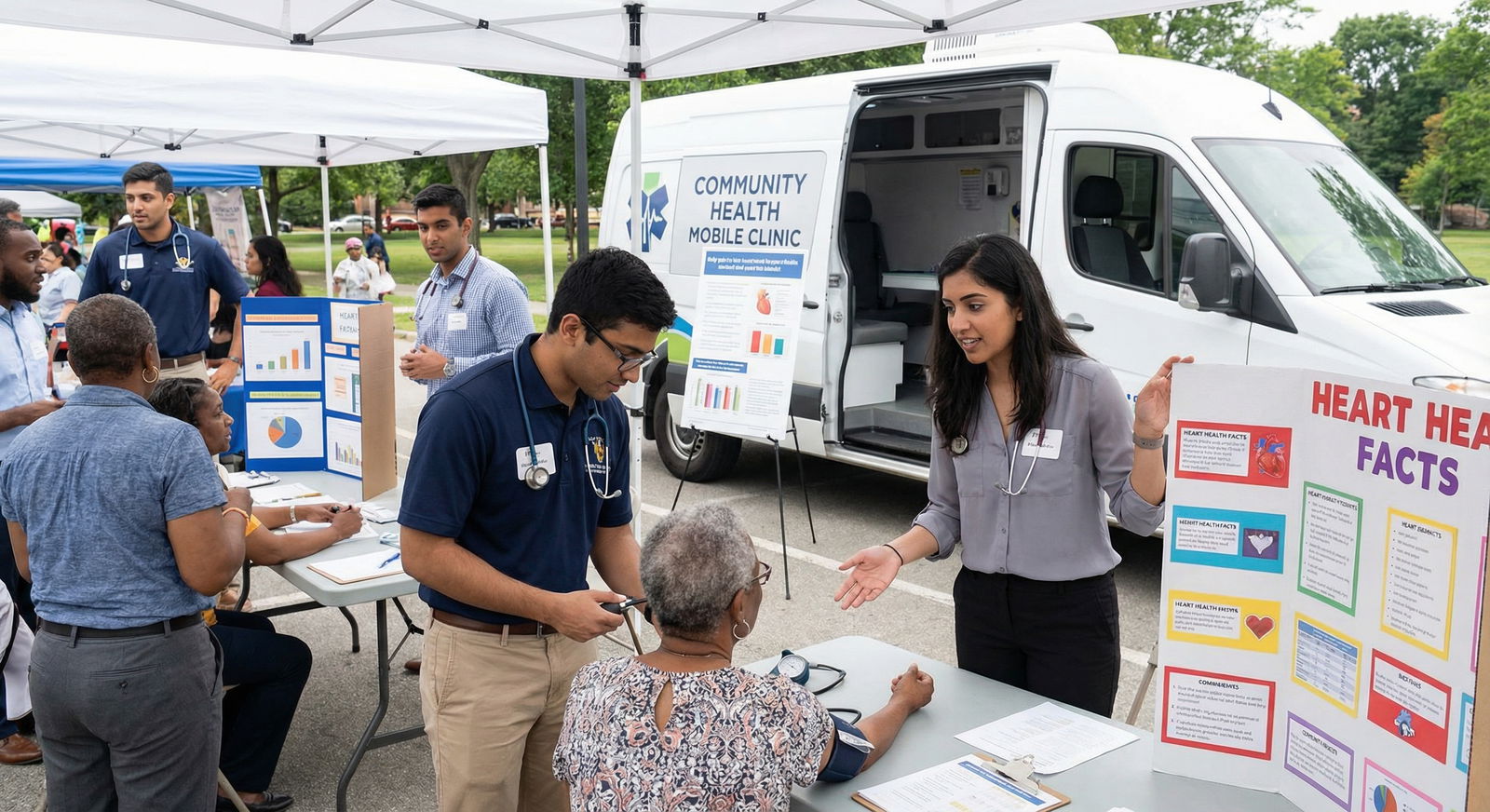
- Supporting vaccine drives or health screenings
- Assisting at mobile clinics for underserved populations
- Educating communities about nutrition, exercise, or chronic disease
Health education and prevention programs
- Designing or delivering workshops on sexual health, substance use, or mental health
- Creating educational materials for schools, shelters, or community centers
What this shows:
- Understanding that health is shaped by social determinants (housing, income, education, environment).
- Interest in prevention and population-level solutions, not just treatment.
Academic and Mentorship Volunteering
Your Volunteer Work doesn’t have to be clinical to be meaningful or relevant to medicine.
Examples:
Tutoring and mentoring
- Tutoring younger students in STEM subjects
- Mentoring first-generation college students or premeds
- Leading after-school or summer enrichment programs
Skills developed:
- Explaining complex ideas clearly
- Patience and adaptability
- Leadership and role-modeling
Ethics, advocacy, or health policy groups
- Volunteering with organizations focused on health equity, disability rights, or access to care
- Participating in letter-writing campaigns or local policy efforts
What you gain:
- A deeper understanding of the ethical and societal dimensions of healthcare
- Experience speaking up for vulnerable communities
Disaster Relief and Crisis-Focused Volunteer Work
If you have the opportunity and proper training:
- Disaster relief organizations
- Supporting shelters during natural disasters
- Helping coordinate supplies or logistics
- Providing non-medical support to affected families
Lessons learned:
- Functioning under pressure and uncertainty
- Flexibility and rapid problem-solving
- The human impact of large-scale crises
Research-Related Volunteering
Though technically not always categorized as “volunteering,” unpaid research assistantships can function similarly and support your Career Development:
- Clinical or basic science research labs
- Data collection and entry
- Literature reviews
- Shadowing researchers in clinics or labs
Benefits:
- Exposure to evidence-based medicine
- Understanding how clinical questions become research projects
- Potential for posters, presentations, or publications
Strategic Planning: How to Choose and Structure Your Volunteer Work
Set Clear Goals Before You Start
Before you sign up, ask yourself:
What do I want to learn?
- Do you need clinical exposure to confirm your interest in patient care?
- Are you curious about public health, geriatrics, pediatrics, psychiatry, or another field?
What skills do I want to build?
- Communication with distressed or anxious patients
- Cultural competence and language skills
- Leadership, teaching, or program design
How does this fit into my long-term Career Development?
- Could this lead to research, leadership roles, or a long-term mentorship?
- Does it align with specific populations you’re passionate about (e.g., refugees, rural communities, LGBTQ+ patients)?
Write down your initial goals. Revisit them every few months to see how your experiences are evolving.
Choose the Right Organization: Fit, Structure, and Support
When comparing opportunities, consider:
Mission and values alignment
Does the organization serve a population or health issue you genuinely care about (e.g., addiction, homelessness, maternal health)?Role clarity and training
- Will you receive orientation and ongoing support?
- Are there clear expectations for your responsibilities and schedule?
Opportunities for growth
- Can you eventually take on more responsibility, such as training new volunteers, leading a project, or joining a student board?
- Are there ways to move from basic tasks to more meaningful engagement over time?
Practical considerations
- Commute time, transportation, and schedule flexibility
- Minimum time commitments (e.g., 3 hours/week for 6 months)
- Safety and professionalism standards
When in doubt, talk to current or former volunteers about their experiences.
Be Proactive, Not Passive
Once you start:
Show up consistently and on time
Reliability is one of the strongest signals you can send—to both supervisors and future admissions committees.Ask for meaningful responsibilities over time
Start with what’s offered, but once you’ve gained trust, say:- “I’ve noticed this process is confusing for patients—could I help improve the instructions?”
- “I’d like to develop my communication skills. Is there a way to take on more direct patient interaction?”
Seek out learning moments
When appropriate and respectful:- Ask staff about their roles and career paths.
- Inquire (without violating privacy) about how certain clinical decisions are made.
- Observe how the team handles conflict, emergencies, and complex cases.
Reflect and Document: Turn Experience into Insight
Reflection is what transforms volunteer hours into evidence of maturity and readiness for Medical School.
Practical ways to reflect:
Keep a simple reflection journal
After each shift (or weekly), jot down:- A memorable patient or interaction (de-identified—no names or identifiers)
- What you learned about healthcare, humanity, or yourself
- Emotions you felt (frustration, admiration, confusion, sadness) and how you handled them
Periodically zoom out
Every few months, ask:- How has this altered my understanding of medicine?
- What patterns do I notice in the challenges patients face?
- What kind of physician do I want to become based on what I’m seeing?
Track concrete details
- Dates and duration of your involvement
- Approximate total hours
- Roles, responsibilities, and any leadership positions
- Outcomes: Did you help launch a new program, improve a workflow, or expand outreach?
This documentation will make your application writing much easier and more specific.
Building Relationships and Finding Mentors Through Volunteering
Networking in a Genuine, Professional Way
Your Volunteer Work can connect you with:
- Physicians
- Nurses and allied health professionals
- Social workers and case managers
- Public health experts
- Community leaders
To build meaningful relationships:
Be curious and respectful
Ask people about their path to their current role:- “What led you to choose this specialty or career?”
- “What do you find most challenging and most rewarding?”
Ask for advice, not favors
Once you have some rapport:- “I’m thinking about applying to medical school in two years. Is there anything you wish you had known at my stage?”
Stay in touch professionally
- Connect via email or LinkedIn (if appropriate).
- Periodically update mentors on your progress and express gratitude for their guidance.
Earning Strong Letters of Recommendation
Not every volunteer supervisor will be an ideal recommender, but some may become powerful advocates for you.
To position yourself for strong letters:
Perform consistently well over time
Show responsibility, initiative, and compassion—day in and day out.Have explicit conversations about your goals
- Let your supervisor know you are premed.
- Share your timeline for applying.
- Ask for feedback on how you’re doing and how you can improve.
When it’s time to ask for a letter
- Ask if they feel they can write a “strong, positive letter of recommendation.”
- Provide:
- Your CV or résumé
- A short summary of what you did with them and what you learned
- Your personal statement draft, if available
- Any specific qualities or experiences you hope they can highlight
This context makes it easier for your recommender to write a detailed, persuasive letter that supports your Application Strategies.
Using Volunteer Work Strategically in Your Medical School Application
Personal Statement: Telling a Coherent Story
Volunteer experiences should not appear as a random list; they should support a clear, authentic narrative about why you want to practice medicine and how you’ve prepared.
When writing:
Prioritize depth over volume
Instead of briefly referencing ten activities, dive deeply into one or two stories:- A patient who changed your understanding of empathy or bias
- A moment when you realized the limits of medicine and the importance of listening
- A public health project that reframed health as a social issue, not just a biological one
Show, don’t just tell
Weak statement: “I care deeply about underserved populations.”
Stronger statement: Describe a concrete experience where you engaged with underserved patients, what you observed, how you responded, and what it taught you.Connect back to your future role as a physician
Explain how your Volunteer Work informed:- The kind of doctor you aspire to be
- The populations or issues you hope to focus on
- The values that will guide your practice (equity, compassion, integrity, etc.)
Activity Descriptions: Highlighting Impact and Growth
In AMCAS or other application systems, you’ll describe your most meaningful activities. For each key volunteer role:
Be specific about what you did
“Assisted with weekly blood pressure screenings for 50+ community members, provided education on hypertension management, and created a bilingual handout that was adopted by the clinic.”Quantify when possible
- Approximate hours
- Number of events, participants, or projects
- Any measurable outcomes (e.g., increased attendance, reduced wait times)
Highlight reflection and growth
- “This experience taught me to communicate complex medical information in plain language and reinforced my interest in primary care.”
Interview Preparation: Turning Experience into Conversation
Your Volunteer Work will almost certainly come up in interviews.
To prepare:
Review your journal and activity lists
Refresh your memory on key stories, challenges, and turning points.Practice answering common questions
- “Tell me about a meaningful patient interaction.”
- “What did you learn from your time volunteering in X setting?”
- “Have you ever faced an ethical dilemma while volunteering?”
Demonstrate maturity and humility
- Be honest about what you don’t know.
- Reflect on mistakes or discomfort and how you grew from them.
Balancing Volunteer Work With Academics and Well-Being
Quality Over Quantity
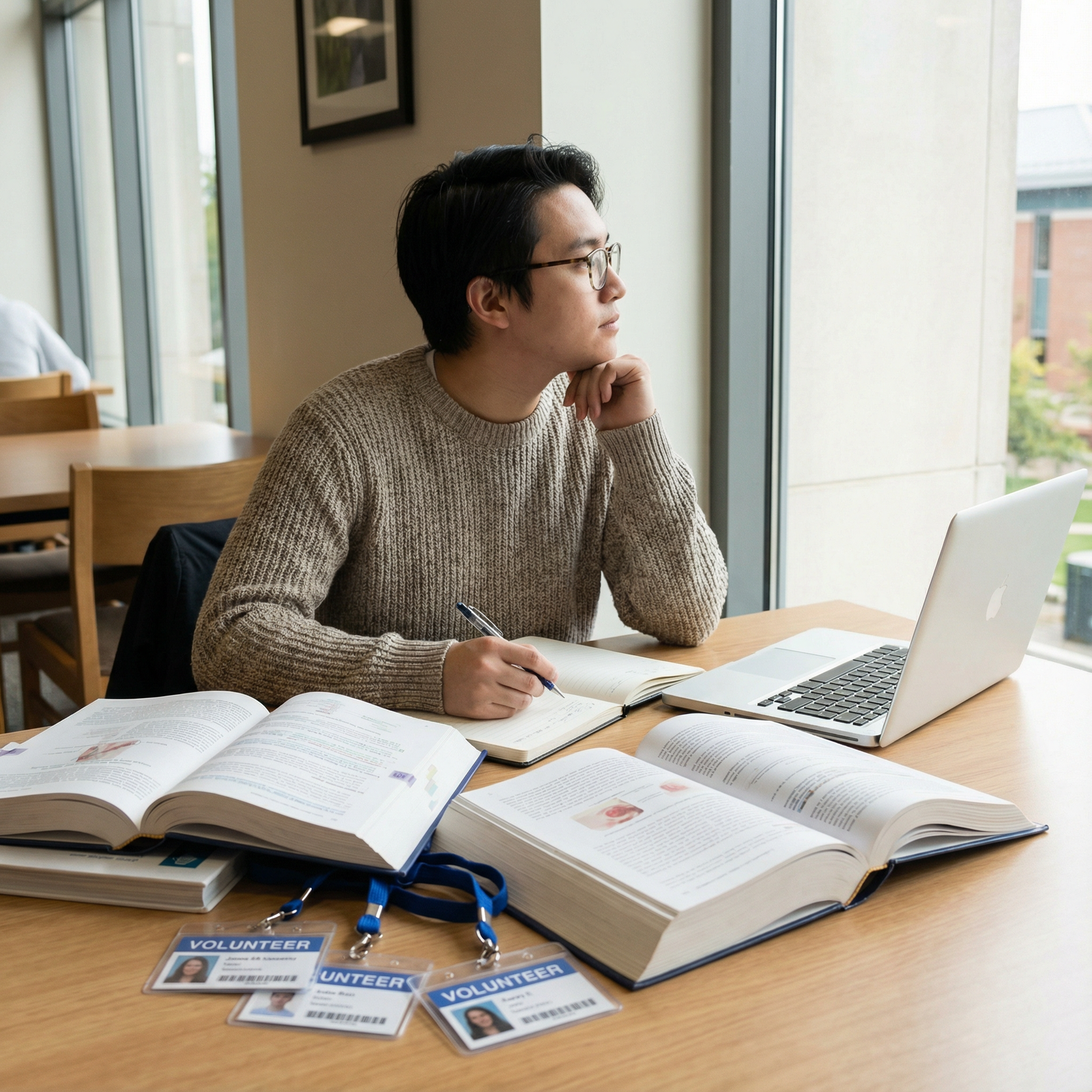
Medical schools care far more about consistent, meaningful engagement than sheer hours. Overscheduling yourself can lead to burnout and harm your grades.
Aim for:
- A sustainable weekly or monthly commitment
- One or two major long-term roles, rather than many scattered, brief ones
- Occasional short-term projects (e.g., a weekend health fair) that complement, not replace, long-term involvement
Protecting Your Own Health
Compassion fatigue and emotional exhaustion are real, especially if you volunteer with vulnerable populations.
Protect yourself by:
- Setting boundaries (you are a volunteer, not a therapist or physician)
- Debriefing difficult experiences with supervisors, mentors, or peers
- Practicing self-care and seeking support if you feel overwhelmed
Remember: taking care of your own mental and physical health is part of being a safe, effective future physician.
FAQ: Volunteer Work and Medical School Preparation
Q1: Do I have to volunteer in a clinical setting for it to “count” for medical school?
No. Clinical experience is very helpful and often expected, but non-clinical Volunteer Work can be just as valuable. Admissions committees want to see a pattern of service, empathy, and responsibility. Ideal preparation usually includes:
- At least one significant clinical role (hospital, clinic, hospice, nursing home)
- Additional non-clinical service (tutoring, community outreach, advocacy) that shows broader commitment and perspective
Q2: How many volunteer hours do I need before applying to medical school?
There is no universal “magic number.” Many successful applicants accumulate anywhere from 100–300+ hours of combined service over several years, but what matters more is:
- Consistency over time
- Depth of involvement and responsibility
- Evidence of reflection, learning, and growth
It’s better to have 150 meaningful, sustained hours in one clinic than 400 scattered hours across ten disconnected activities.
Q3: I’m working and studying full-time. How can I fit volunteering into my schedule?
Focus on realistic, high-impact options:
- Weekly or biweekly shifts (2–3 hours) at one organization
- Short-term but intense roles during school breaks or summers
- Remote or flexible roles (e.g., virtual mentoring, telehealth support, health education content creation)
Be upfront with organizations about your availability and choose roles that you can sustain without sacrificing academics or well-being.
Q4: What if I started volunteering late or had gaps (e.g., due to COVID-19 or personal reasons)?
Gaps don’t automatically hurt you, especially if you can explain them honestly. In your application and interviews:
- Acknowledge the gap briefly
- Emphasize how you refocused once circumstances allowed
- Highlight the depth, quality, and reflection in the experiences you did have
If in-person volunteering was limited, consider including remote outreach, caregiving for family, public health initiatives, or other responsibilities that demonstrate maturity and service.
Q5: How can I tell if my volunteer work is making me a stronger applicant—and future physician?
Ask yourself:
- Am I more comfortable and skilled interacting with people who are different from me?
- Do I better understand the challenges patients face outside the hospital (financial, social, cultural)?
- Have I developed clearer reasons for wanting to practice medicine?
- Can I point to specific examples where I took initiative, solved problems, or demonstrated leadership?
If the answer to these is increasingly “yes,” your Volunteer Work is not just enhancing your Application Strategies—it is actively shaping you into the kind of physician patients need.
By approaching your volunteer experiences with intention, reflection, and humility, you transform them from “hours on a résumé” into the foundation of your identity as a future physician. Choose settings that align with your values, engage fully and consistently, seek feedback and mentorship, and thoughtfully integrate your experiences into your medical school application.
This investment in meaningful Volunteer Work before Medical School will not only strengthen your chances of admission—it will help you enter training with clearer purpose, deeper empathy, and a richer understanding of what a life in medicine truly involves.