The belief that you cannot get into medical school from a small rural college is flat-out wrong—and dangerous if you let it dictate your choices.
If you are at a small rural school with limited research, no big-name teaching hospital, and a tiny pre-med advising office (or none at all), your path is different. Not doomed. Different. You do not need to “overcome” your college; you need to understand it and then strategically compensate for what it cannot give you.
(See also: Managing Pre‑Med Demands While Working a Part‑Time Job for insights on balancing responsibilities.)
This is the playbook for that situation.
Step 1: Reframe Your “Weakness” as Your Strategy Anchor
A small rural college usually means:
- Few or no on-campus research labs
- Limited or no academic medical center nearby
- Sparse shadowing and clinical volunteering opportunities
- Minimal MCAT prep or advising infrastructure
- Very few pre-meds ahead of you to model
All of that feels like a disadvantage when you compare yourself to students at big universities next to major hospitals. But admissions committees do not compare your file to theirs in a vacuum. They read you in the context of your environment.
Your goal is not to magically produce the same opportunities as a student at UCLA or Johns Hopkins. Your job is to demonstrate:
- You recognized the limits of your environment
- You actively and creatively sought ways around those limits
- You still reached a high bar in academics, clinical exposure, and service
That mindset will shape everything else you do. You’re not apologizing for your school; you are showing evidence of grit, initiative, and resourcefulness.
Step 2: Build a Clinical Exposure Plan Without a Major Hospital
You cannot skip clinical experience just because you are rural. But you can redefine what clinical experience looks like.
Find Real-World Patient Contact Locally
Start by mapping what actually exists within 30–60 miles:
- Critical access hospitals
- Community clinics and family medicine practices
- FQHCs (Federally Qualified Health Centers)
- Rural health clinics
- Nursing homes and assisted living facilities
- Hospice programs
- Home health agencies
- County health department clinics
- Free/low-cost mobile clinics
Then, take specific action:
Cold-call with a script
Do not just email once and quit. Call.Script you can adapt:
“Hi, my name is [Name]. I’m a pre-med student at [College]. I’m hoping to learn more about patient care in a rural community. Do you ever take college volunteers or observers? I’m especially interested in [primary care/geriatrics/public health]. Could I speak with whoever coordinates volunteer or student opportunities?”
Accept the “less glamorous” roles
Transporting patients, helping at check-in, stocking rooms, wiping down exam chairs, clerical tasks. If there is patient flow and you’re around it, you can learn. You’re not collecting titles; you’re collecting understanding of how care happens.Use EMT/CNA strategically
Rural areas often do have:- Volunteer EMS squads
- Nursing homes that hire CNAs
- Small hospitals needing techs
If feasible:
- EMT course → join local volunteer EMS (solid clinical + service)
- CNA course → work weekends/evenings in a nursing home
These credentials can be your way of getting intensive patient exposure without living next to a massive hospital.
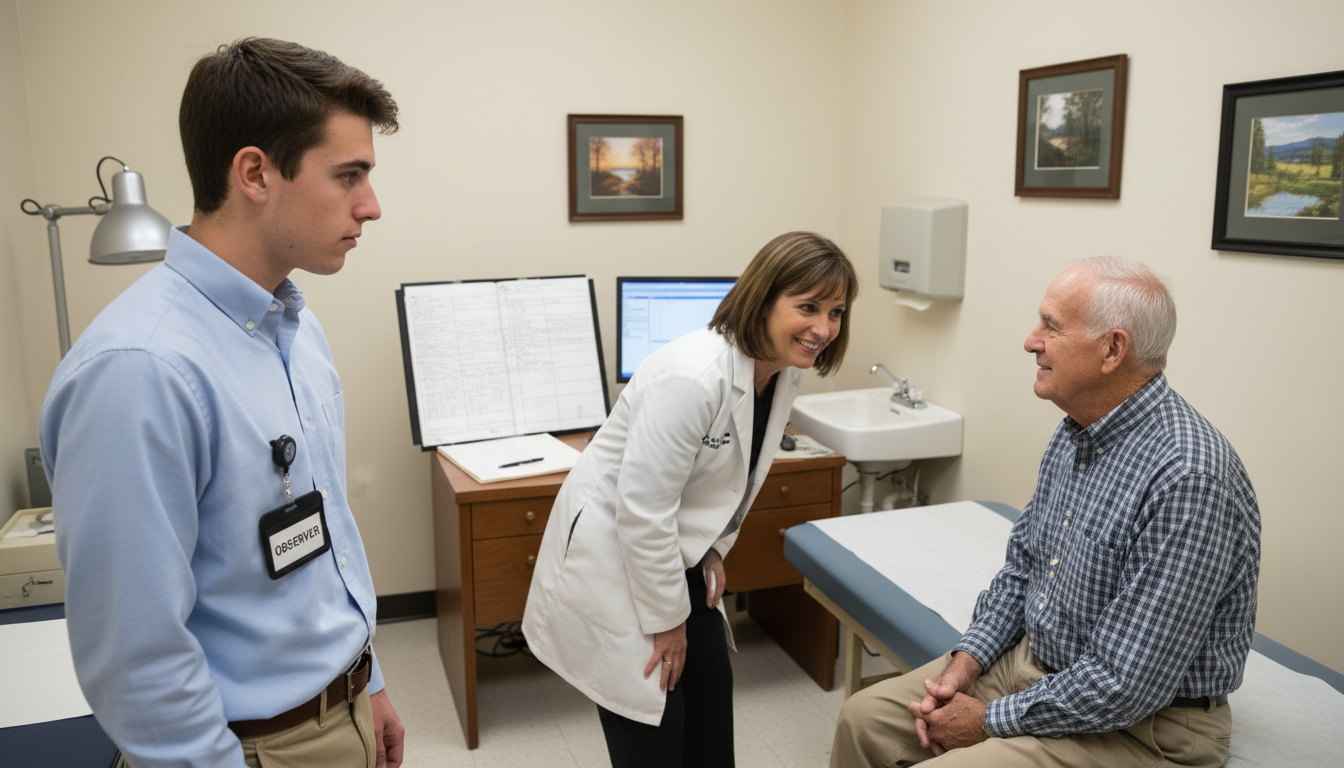
Shadowing in a low-resource environment is a strength
Shadow local family docs, internists, ER docs in small hospitals, NPs, PAs. Rural medicine is a huge topic in admissions. You can credibly talk about:- Physician shortages
- Wide scope of practice in rural settings
- Barriers to care (transportation, cost, broadband, etc.)
That context can become a differentiator if you articulate it well later in personal statements and interviews.
Step 3: Manufacture Research and Scholarly Work When Labs Are Scarce
You may not have a big NIH-funded lab. That does not mean you cannot show academic curiosity or scholarly work.
Think in three categories:
1. On-Campus but “Non-Traditional” Research
Ask science faculty:
- “Are you working on any data projects, literature reviews, or small-scale studies that a student could help with?”
- “Do you know anyone at another institution who might accept a remote student assistant?”
At a small college, “research” can be:
- Ecology or environmental studies (e.g., water quality, land use, agriculture)
- Behavioral/social science projects
- Education research
- Faculty-led survey projects in psychology, sociology, or public health
You can frame this as:
- Data collection → analysis → poster/presentation at a regional conference
- Honors thesis or capstone project that uses real methodology and statistics
Med schools care more about how you think than about whether your PI is famous.
2. Off-Campus or Remote Research
You’ll need to be proactive and systematic.
Steps:
Target schools within 1–2 hours
Look up nearby universities or academic medical centers, even if they’re in another state. Check:- Departments of biology, chemistry, neuroscience, psychology
- Departments of family medicine, internal medicine, pediatrics, public health
Send tailored emails to PIs
Subject: “Undergraduate interested in assisting with [brief topic] research”Body (short version):
- Who you are (rural college, year, major, GPA ~ if strong)
- Why their specific work interests you (one sentence referencing a paper or project)
- What you are asking: remote data work, literature reviews, or summer in-person work
- Willingness to do unpaid, flexible work initially
Expect a 5–10% response rate. That’s normal. Send 20+ emails over 2–3 weeks.
Look for structured programs open to outside students
Some summer research opportunities (often called SURP, SURF, REU) accept students from anywhere. You’ll need:- Solid GPA (ideally >3.5 for the competitive ones)
- A professor willing to write a strong letter
- A clear explanation of why research excites you
Lean into “rural health” topics
If you can join a project about:- Access to care in rural areas
- Telemedicine
- Substance use, mental health in rural communities
- Agricultural worker health
…that syncs perfectly with your lived context and future essays.
3. Solo or Faculty-Mentored Scholarly Projects
If labs are truly nonexistent, think creatively:
- Systematic literature review (co-authored with a professor in biology/psychology/public health)
- Data analysis using public datasets:
- CDC, NHANES, BRFSS, Medicare data
- Rural health utilization patterns
- County health rankings vs outcomes
You can aim for:
- Undergraduate journal publication
- Poster at regional conference
- On-campus symposium presentation
This is all legitimate. You just have to treat it seriously: IRB if needed, proper methodology, clear outcomes.
Step 4: Replace Weak Advising with a DIY Support System
If your “pre-med advising office” is basically one overworked professor with a spreadsheet, you must build your own advising network.
Build an External Advising Spine
Use these layers:
Online resources you can trust
- Official AAMC resources (MSAR, Fee Assistance Program info, competency expectations)
- Medical school admissions pages (many have explicit prerequisite charts)
- SDN and Reddit only for data points and trends, never as gospel
Virtual or remote mentorship
- Contact alumni (LinkedIn + your college’s alumni office) who are now:
- In med school
- In PA/NP/public health/healthcare careers
- Ask specific questions:
- “What do you wish you’d done differently at our college to prep for med school?”
- “Can I send you my school list when I’m closer to applying?”
- Contact alumni (LinkedIn + your college’s alumni office) who are now:
Use faculty strategically
Even if they are not pre-med experts, they can:- Check your trajectory in science coursework
- Help you plan research or independent studies
- Write letters highlighting your work ethic, initiative, and academic strength
Go to office hours with an agenda:
- “I’m aiming for medical school. Here’s my current plan of classes and activities. Can you help me identify any academic gaps or opportunities for deeper work?”
Build a Peer-Like Network Even If You’re the Only Pre-Med
If you are literally one of three pre-meds on campus:
- Join pre-med or pre-health clubs at nearby universities virtually (if they allow)
- Use online communities:
- Pre-med Discord servers
- Specialty-interest groups (e.g., family medicine, emergency medicine) that welcome pre-meds
- Form a “grind group” for MCAT and applications, even if it’s only online
The idea is simple: do not stay in your own head. Get feedback, compare timelines, and learn from others’ mistakes.
Step 5: Use Academics as Your Non-Negotiable Foundation
In a low-resource context, there’s one area you cannot afford to be average: your grades in core science and your MCAT.
Coursework Strategy
- Aim for a strong science GPA. For MD schools, try to be >3.6 if possible. For DO, >3.4 still gives you a lot of options.
- Avoid the trap of overloading yourself with 18 credits of all-hard sciences just to “prove” something. You need As.
Take:
- Core pre-reqs:
- 2 semesters gen chem + lab
- 2 semesters orgo + lab (or 1 orgo + 1 biochem depending on school)
- 2 semesters physics + lab
- 2 semesters bio + lab
- Strong upper-levels if offered:
- Biochem
- Genetics
- Physiology
- Cell biology
- Microbiology
If your college doesn’t offer something (e.g., biochem), ask:
- Can you cross-register at a nearby university?
- Can you take it in the summer elsewhere and transfer the credit?
MCAT Without a Big Prep Ecosystem
You will likely not have an on-campus Kaplan or Princeton Review course. That is survivable.
Your plan:
Lock in a target window
- Usually spring of junior year or summer before senior year
- Make sure core pre-reqs are done first (especially biochem if possible)
Use proven self-study resources
- AAMC materials (CARS packs, section banks, full-lengths)
- One set of trusted content books (e.g., Kaplan, Blueprint, or TPR)
- UWorld or Anki decks if that fits your learning style
Study in cycles, not chaos
- 3–6 months of consistent studying
- Start with content review, quickly move to practice Qs and full-lengths
- Track your scores in a spreadsheet; adjust as needed
Find one person ahead of you to sanity-check your plan
- A recent alum who took the MCAT
- An online mentor willing to look over your schedule
- Avoid reinventing the wheel here. Copy what works with small adjustments.
Your MCAT score is one of the few things that is not affected by your college’s resource level in the eyes of schools. Use that to your advantage.
Step 6: Turn “Rural” Into a Narrative Asset, Not Just a Location
If you handle this correctly, your small rural college becomes the setting of your story, not the excuse.
What You Can Legitimately Emphasize
- Community connection: Longitudinal experiences (e.g., 2 years at the same clinic, EMS squad, or nursing home)
- Understanding of rural health challenges:
- Limited specialists
- Transportation problems
- Cultural factors about seeking care
- Resourcefulness:
- Building your own research opportunities
- Traveling long distances for key experiences
- Balancing work, family, and school because income options are limited
Examples of Experiences That Stand Out from Rural Settings
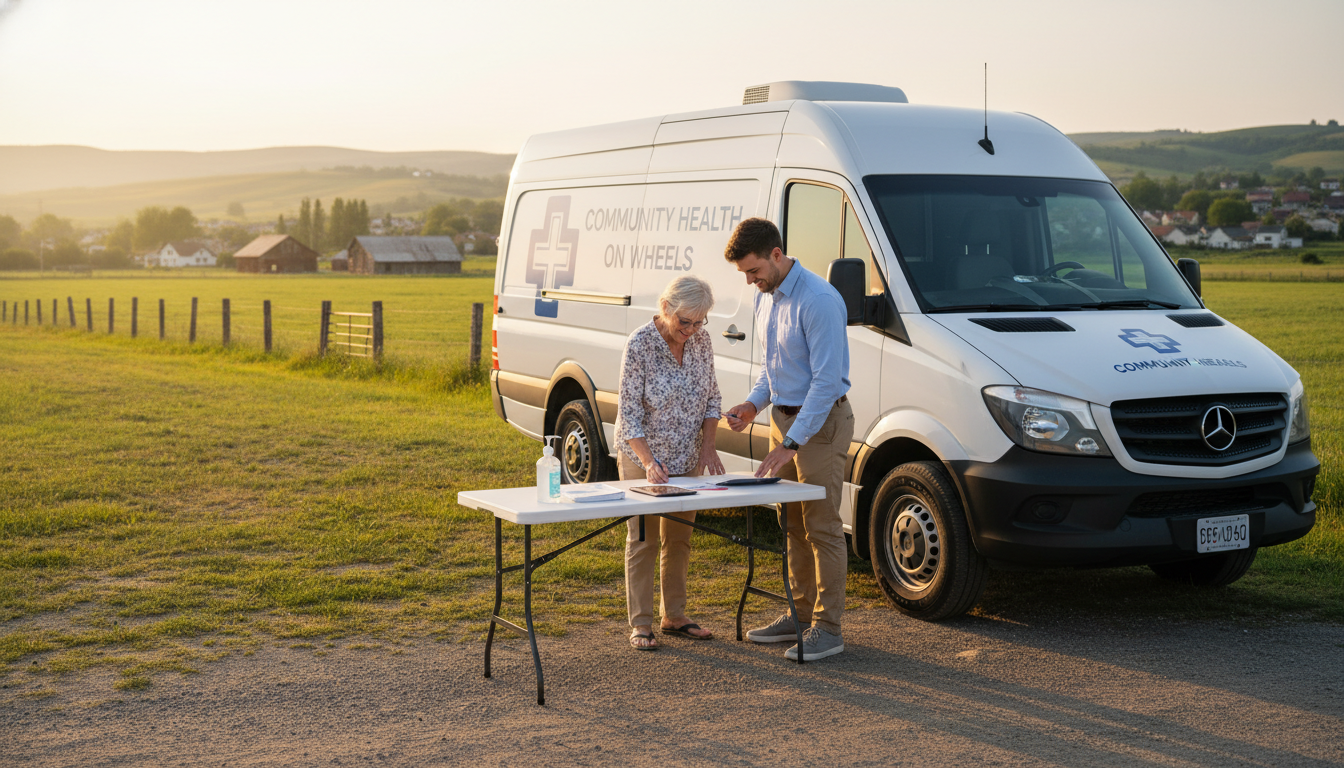
- Volunteering with a mobile clinic alternating between several small towns
- EMT on a rural squad responding to farms, remote residences, long drives to the nearest ED
- Helping to design a small-scale health education program through a local church, school, or community center
- Working with the county health department during a vaccination or health-screening campaign
In your personal statement and secondaries, do not over-dramatize, but do not undersell. Phrase it like:
“At a college where most students commuted home on weekends and the nearest tertiary hospital was 75 miles away, I learned to build my own opportunities rather than wait for them to appear. When my campus lacked research labs, I collaborated with a professor to analyze public health data on rural diabetes outcomes, later presenting our findings at a regional conference.”
You’re not complaining. You’re demonstrating pattern recognition and agency.
Step 7: Build a Thoughtful School List Given Your Context
You will not benefit from a random scattershot application.
Account for:
State schools: Many have a mission to serve in-state or rural communities. If you grew up rural and attended a rural college, you can be very attractive to:
- State MD schools with rural tracks
- DO schools with primary care/rural missions
Mission fit: Look for phrases like:
- “commitment to underserved/rural populations”
- “primary care workforce”
- “community engagement”
Stats reality: Use MSAR (for MD) and school websites (for DO) to:
- Compare your GPA and MCAT to their middle 50% ranges
- Include:
- 25–30% “reach” schools
- 40–50% “target” schools
- 20–30% “safety/likely” DO and mission-fit MD schools
When secondaries ask about “why our school” or “service to underserved,” your rural background and creative path can become your strongest selling points.
Step 8: Practical Timeline If You’re Already in the Situation
Here’s a compact roadmap you can adjust by class year.
Freshman year
- Nail grades, especially in bio/chem/math
- Explore local volunteering (hospital, clinic, nursing home, EMS)
- Meet at least 2 science professors and go to office hours
- Learn basic pre-req sequence and rough med school timeline
Sophomore year
- Deepen 1–2 clinical/service roles
- Start asking about on-campus or remote research
- If interested, consider EMT/CNA certification during a break
- Begin lightly learning about the MCAT (structure, content areas)
Junior year
- Lock down at least one consistent clinical role
- Engage in research more seriously (project, thesis, or remote work)
- Study for and take the MCAT if on a traditional timeline
- Begin drafting personal statement by late spring if applying that cycle
Senior year (if applying straight through)
- Finish strong academically
- Maintain and deepen your longest activities
- Prepare thoroughly for interviews with emphasis on:
- Rural context
- Resourcefulness
- Understanding of healthcare disparities
If you need a gap year (common and fine), use it strategically: more clinical, more research, more maturity, not just “time off.”
Frequently Asked Questions
1. Will attending a small rural college hurt my chances compared to a big-name university?
Not automatically. Admissions committees evaluate your achievements in context. If your GPA and MCAT are competitive and you’ve clearly built meaningful clinical, service, and (ideally) some scholarly experience given the resources available, you’re absolutely viable. What will hurt you is using the college as an excuse for a thin application. What will help you is showing that you identified gaps early—no research, no pre-med advising, few hospitals—and then deliberately filled those gaps through creative choices.
2. I have almost no research options. Can I still get into medical school?
Yes, especially at schools that don’t heavily prioritize research. Many DO schools and some MD programs care more about clinical dedication and service than extensive lab experience. You should still try to do something scholarly—an honors thesis, a small independent project, a data analysis using public health datasets, or remote work with a mentor at another institution. But if you have to choose between shallow, box-checking “research” and deep, sustained clinical engagement in your rural community, depth in clinical and service often carries more practical weight.
3. I am the only pre-med at my college. How do I know if I’m on the right track?
You need external benchmarks. Use MSAR for stats comparisons, AAMC guidelines for competencies, and structured MCAT prep schedules from reputable sources. Reach out to alumni in medical school or health professions for one-off advising sessions. You can also post anonymized stats and activity summaries in moderated pre-med spaces online to get general feedback. The key is to not rely solely on your campus bubble. Compare your progress to established norms, not to the one other student who “might” be pre-med. And if you’re unsure, that’s your signal to seek outside eyes on your plan this semester, not next year.
Open a notes file today and create three lists: (1) clinical opportunities within 60 miles, (2) potential research mentors on your campus or nearby universities, and (3) alumni or external contacts you can email for guidance this week. Then pick one from each list and take a concrete action within the next 48 hours.