Every fourth-year medical student hears the same advice: "Apply regionally. Programs prefer local applicants. You'll match better if you stay close to home." It's repeated in advising offices, on Reddit threads, in alumni mentorship sessions, and it's mostly wrong. Regional residency guides have become gospel, handed down year after year, built on anecdote and institutional inertia rather than any rigorous look at what actually drives match outcomes. The real data tells a completely different story, and if you're cutting your application list based on geography, you're probably hurting your chances.
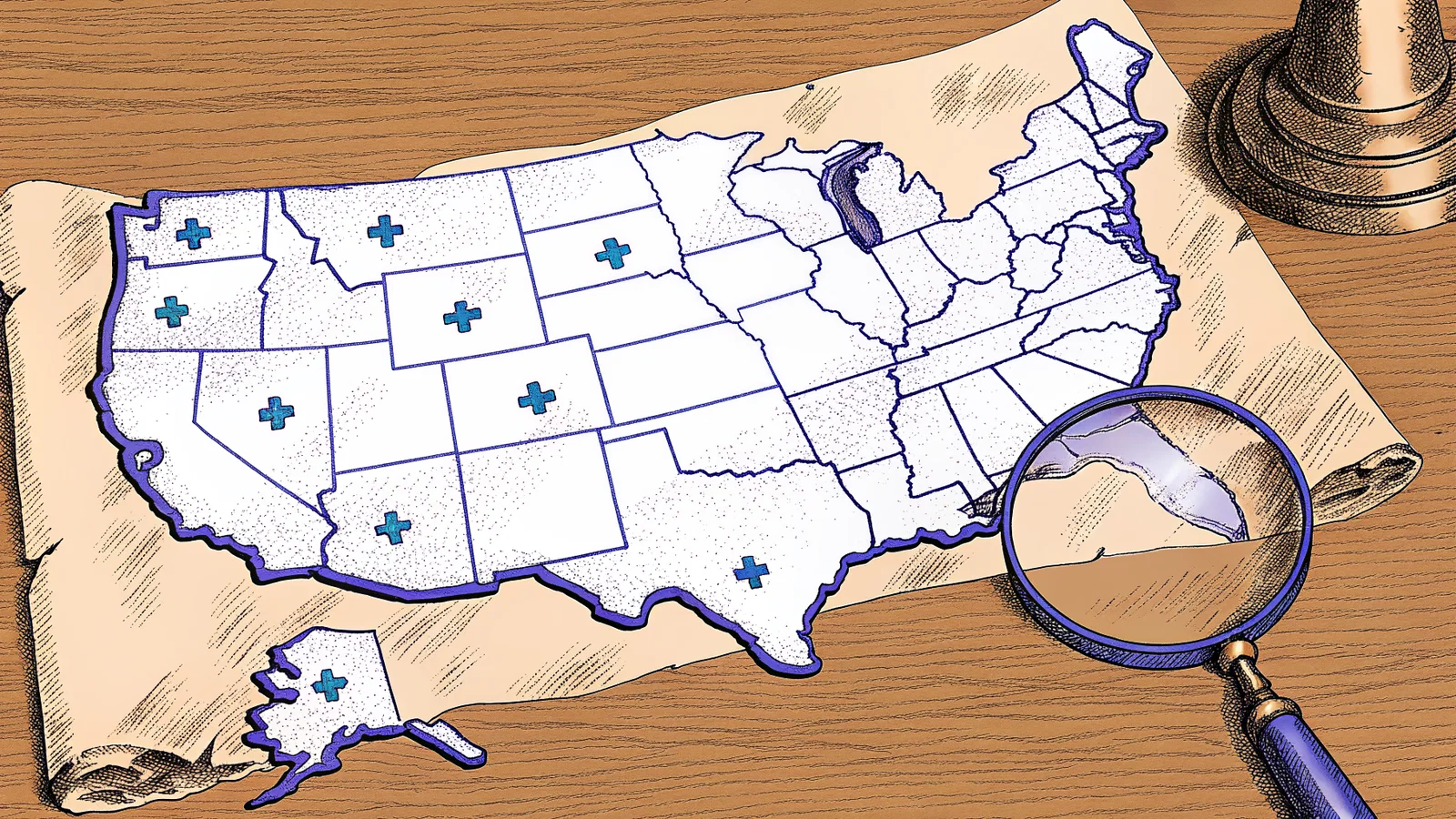
The Myth of Regional Preference, What the Data Actually Shows
Here's what nobody tells you when they say "programs prefer regional applicants": the NRMP Program Director Survey ranks geographic preference near the bottom of selection criteria. Not middle of the pack. Bottom. Program directors care about your Step 2 CK score, your letters, your clinical grades, your research output. Where you went to medical school geographically? That's noise.
I've seen applicants with strong profiles torpedo their chances by applying to only twelve programs in a single region because some well-meaning advisor told them "programs here know our school." Meanwhile, their classmate with identical scores applied to forty programs across four regions and matched without a sweat. The difference wasn't quality, it was application strategy poisoned by bad advice.
For more on this, read about how local grad biases affect regional match success.
When you actually look at the NRMP match data from 2019 through 2023, the gap between in-region and out-of-region match rates is surprisingly small. For Internal Medicine, in-region applicants match at roughly 88-90%, while out-of-region applicants match at 83-87%. That's a 3-5 percentage point difference. In General Surgery, the pattern holds, maybe a 4% edge for in-region applicants. Pediatrics? Even narrower. And here's the critical point almost everyone misses: that small gap shrinks further when you control for Step scores and research productivity. Applicants with competitive metrics match regardless of their mailing address.
The chart above tells the story plainly. Yes, there's a slight regional edge. But a 3-5% difference is not a wall. It's a speed bump. And it's one you can easily overcome by applying to a few more programs, which you'd be doing anyway if you weren't artificially constraining your list based on a map.
Understand why zero geographic signals can doom your match and how to avoid that pitfall.
Regional bias exists, sure. Some programs have historical relationships with certain medical schools. But it's overstated to the point of being misleading, and it leads applicants to narrow their options unnecessarily. That's not strategy. That's self-sabotage dressed up as conventional wisdom.
Why Regional Guides Persist, Institutional Bias and Limited Data
So if the data doesn't support regional preference as a major factor, why do these guides keep getting published and quoted? Two words: institutional bias.
Most regional residency guides are created by alumni networks or individual medical schools. They survey their own graduates, maybe thirty, forty, fifty people, and draw sweeping conclusions. That's not data. That's a focus group with a sample size too small to mean anything. But it gets packaged into a nice PDF, distributed to students, and suddenly it's "the way things work."

These guides also perpetuate outdated narratives. The big one: "You need to do your residency in the region where you plan to practice." I hear this constantly. "If you want to end up in California, you'd better match in California." The AAMC's own data dismantles this. Only about 30% of residents end up practicing in the same region where they completed residency. Thirty percent. That means seven out of ten physicians pack up and go somewhere else. The "stay local" pipeline is largely a fiction.
Why does the myth survive? Because it feels intuitive. It feels like it should be true. Programs in the same region as your medical school know your curriculum, your faculty, your clinical sites. There's a comfort factor. But comfort isn't strategy. And the reality is that residency is portable. You train, you build skills, you take those skills wherever the jobs are. Fellowship applications don't care about regional residency location, they care about your clinical and academic record.
Regional guides persist because they're easy to produce, they give advising offices something concrete to hand students, and nobody has the incentive to go back and check whether the advice actually worked. The students who matched regionally credit the strategy. The ones who didn't? They just assume they weren't competitive enough. It's survivor bias all the way down.
The True Factors That Predict Match Success, and How to Strategize
If geography isn't the lever, what is? The data is unambiguous on this. The strongest predictors of match success are your Step 2 CK score, the number of interview invitations you receive, and your research productivity. That's it. Those three factors dwarf everything else, including regional preference, away rotations, and even letters of recommendation in some specialties.
The single most actionable thing you can do is apply broadly. NRMP data consistently shows that applicants who apply to 30 or more programs have match rates above 90%. Applicants who apply to fewer than 15? Their match rates drop significantly. And it doesn't matter what region those programs are in, the breadth of application matters far more than the geographic distribution.
Here's what I recommend. Don't use geography as a primary filter. Use it as a tiebreaker, maybe your last criterion, after you've already built a competitive, broad list. Your algorithm should look like this:
If your Step 2 CK is above 250, you're in a strong position. Apply to 40-50 programs. Across all regions. Don't overthink it. Rank based on program fit, culture, curriculum, mentorship opportunities, not based on which time zone the program sits in.
If your Step 2 CK is below 250, your priority isn't geography. It's strengthening your application. Focus on research output, away rotations in your target specialty, and improving your scores if you have the opportunity. Then apply to 30-40 programs, including realistic safety options in multiple regions.
The point is simple: geography enters the conversation last, if at all. Your competitiveness and application breadth are the variables you can control, and they're the ones that actually move the needle.
I've watched applicants with Step scores in the 240s match into competitive programs in regions they'd never set foot in before, because they applied to 45 programs and interviewed well. I've also watched applicants with 260+ scores go unmatched because they applied to ten programs in one state. The difference was never geography. It was strategy.
Closing: Evidence Over Tradition, Don't Let Regional Guides Limit Your Potential
The data is clear. Your Step scores, your interview count, your research productivity, and the breadth of your application list matter far more than where those programs sit on a map. Regional residency guides can be useful for one thing: understanding program culture, cost of living, and lifestyle factors. That's it. They should never be used as a reason to cut programs from your application list.
Remember that only 30% of residents practice where they train. The "stay local" narrative is a myth. Trust the evidence, not the anecdotes, you have more control over your match outcome than the regional guide industrial complex would have you believe.
Key Takeaways
- Regional preference is a weak predictor of match success. Step scores and interview count are far stronger predictors, NRMP Program Director Survey data ranks geography near the bottom of selection criteria.
- Applying broadly (30+ programs) is the single best strategy to maximize match probability. Applicants applying to 30+ programs match at rates above 90%, regardless of region.
- Regional residency guides often rely on small, biased samples. Built from alumni networks and institutional anecdotes, they shouldn't be used to limit applications.
- Only 30% of residents practice in the same region as their residency. The "stay local" advice is debunked by AAMC data, residency is portable, and so are you.