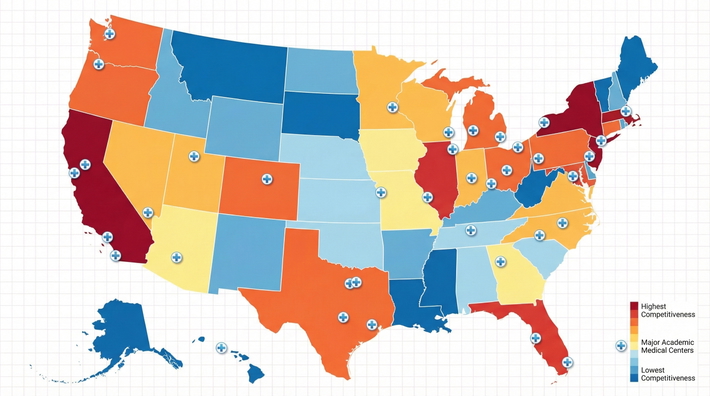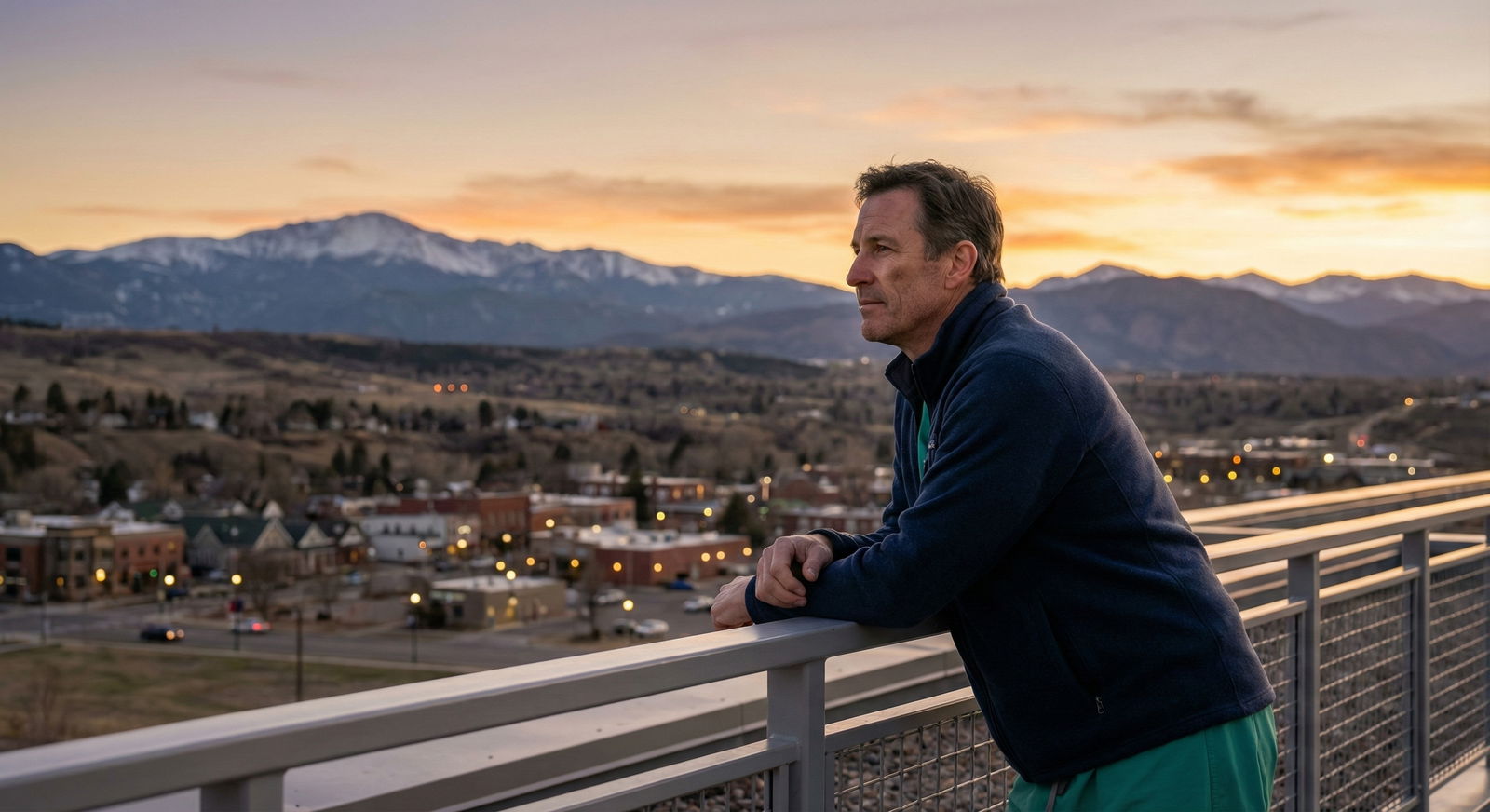
The Mountain West has quietly become where burned‑out attendings go to disappear—and then decide if they still want this career.
Let me walk you through what’s really happening behind the recruitment emails and glossy hospital brochures, because none of this shows up on FREIDA.
What Program Directors Won’t Say Out Loud
I’ve sat in those closed‑door meetings where department chairs in Colorado, Utah, Idaho, Montana, Wyoming, Nevada, and New Mexico talk about “recruitment strategy.” They use phrases like “lifestyle positioning,” “late‑career capture,” and “market recalibration.”
Translation: they know exactly who they’re fishing for—mid‑career and late‑career attendings who are tired, disillusioned, and ready to trade prestige for peace.
And they know something else: residents are the lubricant that makes this transition possible.
Burned‑out academic hospitalist from Chicago? They pitch:
“Come out here. Lighter call. Real mountains. 15‑minute commute. You’ll have residents to help with the scut and still get home before dark.”
Tired surgeon from the East Coast tertiary center? They whisper:
“You’ll still operate, but not at that volume. Ski passes, great schools, no traffic. We’ll build a service around you with residents who are hungry.”
The residents are the selling point. The buffer. The reason a worn‑down attending can move west and still function.
Behind the scenes, a lot of Mountain West residencies are being built—or expanded—explicitly to attract these burned‑out attendings and keep them working another decade.
You, as a resident, are part of the bargain.
Why The Mountain West Is Catnip For Burned‑Out Physicians
Let’s get brutally honest about why this region pulls in exhausted attendings from the coasts and big metros.
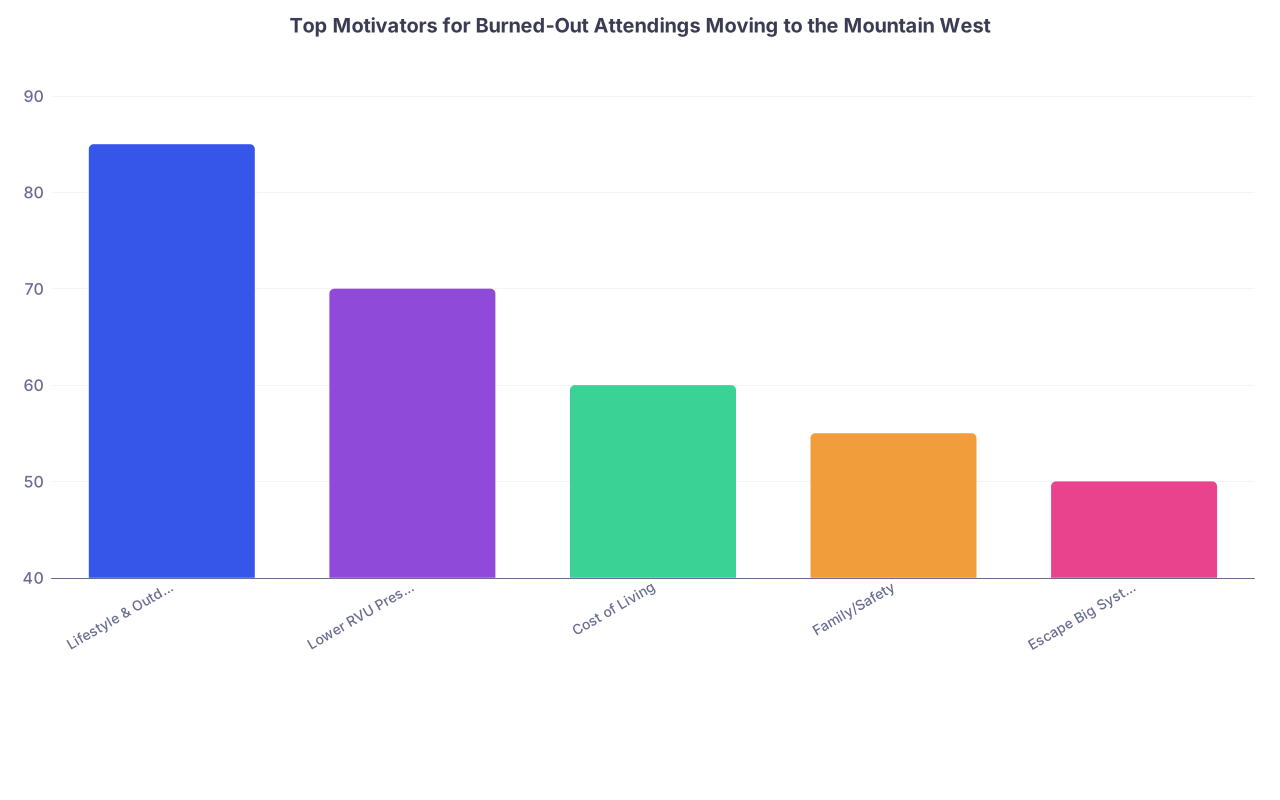
| Category | Value |
|---|---|
| Lifestyle & Outdoors | 85 |
| Lower RVU Pressure | 70 |
| Cost of Living | 60 |
| Family/Safety | 55 |
| Escape Big Systems | 50 |
1. The “I Just Want My Life Back” Factor
By the time someone starts poking around jobs in Boise, Billings, Reno, or Albuquerque, they’ve usually lived some version of this:
- 60–80 hour weeks in a coastal or major metro center
- RVU hamster wheel with constantly shifting productivity targets
- Endless “initiatives” and metrics: door‑to‑needle, door‑to‑balloon, “throughput,” “panel size optimization”
- Admin layers that multiply faster than nursing staff
- Commutes that chew up another 1–2 hours a day
The Mountain West pitch is simple:
Same job. Less chaos. Less noise. More control. More sky.
I’ve seen it happen:
A cardiologist from Boston lands at a mid‑size program in Colorado. Day one, she parks 50 feet from the entrance, walks into a hospital that smells like coffee instead of industrial cleaner, and her first words to me on rounds are, “I didn’t fight traffic this morning for the first time in 15 years.”
That feeling is intoxicating to someone on the edge of leaving medicine entirely.
2. The Not‑So‑Secret Financial Play
People assume the Mountain West means lower pay. That’s naïve.
In plenty of specialties—EM, anesthesia, hospitalist medicine, some surgical fields—compensation in places like Idaho, Nevada, Wyoming, and rural Utah or Montana is at or above national averages because they’re desperate.
But here’s what attendings figure out quickly:
- Cheaper housing than most coastal cities
- Less daily spending (no $40 parking, no $18 salads)
- Sometimes no state income tax (e.g., Wyoming, Nevada)
So a burned‑out doc can work slightly less, earn similar or slightly more, and actually feel wealthier. They can buy a house with actual land, not a shoebox condo.
For a 45‑year‑old anesthesiologist thinking, “I cannot do this pace to 65,” that’s not a small thing.
| Factor | Coastal Metro Academic | Mountain West Regional |
|---|---|---|
| RVUs Expected | Very High | Moderate |
| Commute Time | 45–90 min | 10–25 min |
| Home Size (similar $) | Small condo | House with yard |
| Call Frequency | Heavy | Moderate |
| Admin Oversight | High | Medium |
3. Identity Rehab: From “Cog” to “Needed”
In a huge academic machine, one more attending is just that—one more. Nobody’s rolling out a red carpet for “Hospitalist #42.”
In the Mountain West, a single attending arrival can literally shift coverage patterns for an entire hospital. You can feel that difference immediately.
Programs say it outright in recruitment dinners:
“We really need you here. You’ll help us grow this service. Our residents will benefit from your teaching. You’ll shape this place.”
After years of feeling like RVU fodder, that’s addictive. It’s ego rehab wrapped in “mission.”
And it’s not entirely fake. A new cardiologist in Billings or a new intensivist in Idaho Falls really may be the difference between transferring patients six times a week versus twenty.
How Residency Programs Quietly Use This Dynamic
Here’s the part you don’t hear on interview day.
Those smiling faculty around the conference table? A disproportionately high number of them are:
- Mid‑career refugees from bigger centers
- Late‑career attendings soft‑landing into semi‑retirement
- Former high‑flyers who chose mountains over manuscripts
And program leadership leans into that—hard.
1. Residents As “Burnout Buffer”
Burned‑out attendings are more willing to sign contracts in tough markets when they hear there are residents to help:
- “You’ll never be alone in the ICU at night. Our residents take first call.”
- “The residents admit; you supervise and teach.”
- “You’ll scrub with residents so you’re not doing every straightforward case solo.”
So residencies become the pressure‑release valve that turns impossible jobs into tolerable ones for attendings desperate for a slower lane.
Does this help you? Sometimes yes.
More procedures. More autonomy. More direct teaching.
But sometimes you’re inheriting their workload without their paycheck. Especially in smaller or newer programs trying to “do more with less.”
2. Academic Lite: Just Enough Teaching To Feel Noble
Mountain West programs are often “academic lite”:
- A few research projects, mostly QI
- Teaching responsibilities, but not endless committees
- Grand rounds that are earnest but not cutting‑edge
- Promotion criteria that are… let’s call it flexible
For the burned‑out academic wanting to still say, “I’m faculty” without the grind of publishing or constant grant pressure, it’s perfect.
That’s why you see CVs like:
- “Associate Professor, East Coast Big Name → Clinical Faculty, University of X Mountain West Affiliate”
You won’t see the backstory: they were cooked, done, and needed out. This is the halfway house between full‑speed academics and pure private practice.
3. The “We’ll Build Around You” Promise
I’ve heard this exact line from a CMO in a Mountain West hospital:
“If we can land two more strong attendings in GI and Pulm, I can justify another fellowship and expand the residency. The residents will follow the faculty.”
They know that residents want teaching and mentorship. So they dangle program growth to lasso specialists who are looking for a softer landing.
And yes, sometimes this is great for you. Brand‑new services. Fellowship‑level exposure. One‑on‑one time in the OR or cath lab that you’d never get in a huge program.
But there’s risk. When they “build around” burnt‑out people, the stability of what they build is only as solid as those attendings’ remaining fuel.
What This Means For You As A Resident
Now we get to the part you actually care about: how this dynamic shapes your training and your life.

| Step | Description |
|---|---|
| Step 1 | Burned out attending moves West |
| Step 2 | Lower volume but broader scope |
| Step 3 | Residents used as support |
| Step 4 | More autonomy for residents |
| Step 5 | Higher service burden |
| Step 6 | Strong clinical growth |
| Step 7 | Risk of resentment or fatigue |
1. You’ll Get More Autonomy—Sometimes Faster Than You Expect
In many Mountain West hospitals, it’s you and one attending between your patient and a helicopter ride to the nearest tertiary center 3–6 hours away.
When that attending is mid‑career and burned out, here’s what often happens:
- They’re very happy to let you take the first swing at management.
- They’re not trying to micromanage every order.
- They’re grateful that you can handle the bread‑and‑butter so they can focus on the outliers.
Trauma in rural Wyoming. STEMI in northern Nevada. DKA in Idaho with no endocrinologist for 200 miles. You will actually run those cases under guidance, not just stand in the back of a crowded team.
Is that good training? Absolutely.
Is it also slightly terrifying? Also yes.
2. Faculty Mood Is… Variable
Burned‑out attendings don’t leave their baggage at the state line.
Some arrive, decompress, and genuinely become different people: calmer, more patient, more invested in teaching. The outdoors, slower pace, and better sleep do their job.
Others just relocate their bitterness. They’re still angry—just now with a better view.
You’ll see versions of:
- The attending who keeps saying, “At [Former Big Name Hospital], we did it this way,” and makes everyone miserable.
- The attending who’s clearly doing “just enough” because they checked out years ago.
- The attending who wants to care but is emotionally dry—and you feel that when you need mentorship.
You need to be smart about this when interviewing. Watch how attendings talk about their past lives and their current ones. Are they genuinely relieved to be there, or just less miserable?
3. You Become the Continuity in a Rotating Cast
Some Mountain West programs have relatively high attending turnover because of this rescue‑mission dynamic. People come broken, try this life, and either recover or leave medicine.
Result: you may have a surprisingly short list of stable, long‑term faculty.
I’ve seen residents who are the institutional memory for a service because their attending lineup changed three times in a single year.
That can be slightly chaotic. It can also force you to grow up clinically and professionally a lot faster than your peers at big coastal powerhouses.
The Hidden Upsides For Residents Who Play It Right
If you understand what’s really driving faculty recruitment in the Mountain West, you can use it to your advantage instead of being collateral damage.
1. You Get Access You’d Never Touch At Big Names
In Denver, Salt Lake City, Albuquerque, Boise, Reno, Billings, Missoula—residents in many programs are on a first‑name basis with department chairs and CMOs.
A burned‑out transplant surgeon who left a major East Coast center might now be the only one of their kind in the region. They’re not buried in 15 fellows and 50 residents. You can actually stand next to them and learn.
You can walk into a PD’s office. You can shape curricula. You can pitch a QI project and have it actually implemented instead of drowned in committees.
Those mid‑career attendings who came here to breathe? Many of them finally have the time to talk. If you’re smart, you’ll be the one they invest in.
2. You Learn “Real World” Medicine, Not Just Academic Theater
The Mountain West is where residents learn to practice with limited resources and long transfer times. That matters.
You’ll get used to:
- Stabilizing sick patients without every toy
- Making calls when you can’t just “consult five services”
- Owning outcomes because there is no backup system to hide behind
And guess what? The burned‑out attendings who fled high‑powered centers often secretly love practicing like that again. They remember why they went into medicine.
If they trust you, they’ll pull you into that mindset. Less meeting, more medicine.
3. You See Firsthand What Burnout Really Does
This is the part nobody talks about, but you absolutely should pay attention.
Training in the Mountain West right now is like watching a live epidemiology study of burnout recovery, remission, and relapse.
You will see:
- Who actually heals with a change of environment
- Who just relocates their misery
- Who leaves anyway, even after a “lifestyle” move
- What happens when people tie their entire identity to their specialty and then lose the ability to work the way they used to
If you’re paying attention, you’ll learn how to build a career that doesn’t crash at 45.
Ask your attendings directly—after trust builds:
- “What made you leave your last place?”
- “Would you do it earlier if you could?”
- “What would you tell your resident‑self now?”
Those conversations are where the real education happens.
The Future: More Programs, More Burnout Refugees
We’re not at the peak of this trend. Not even close.
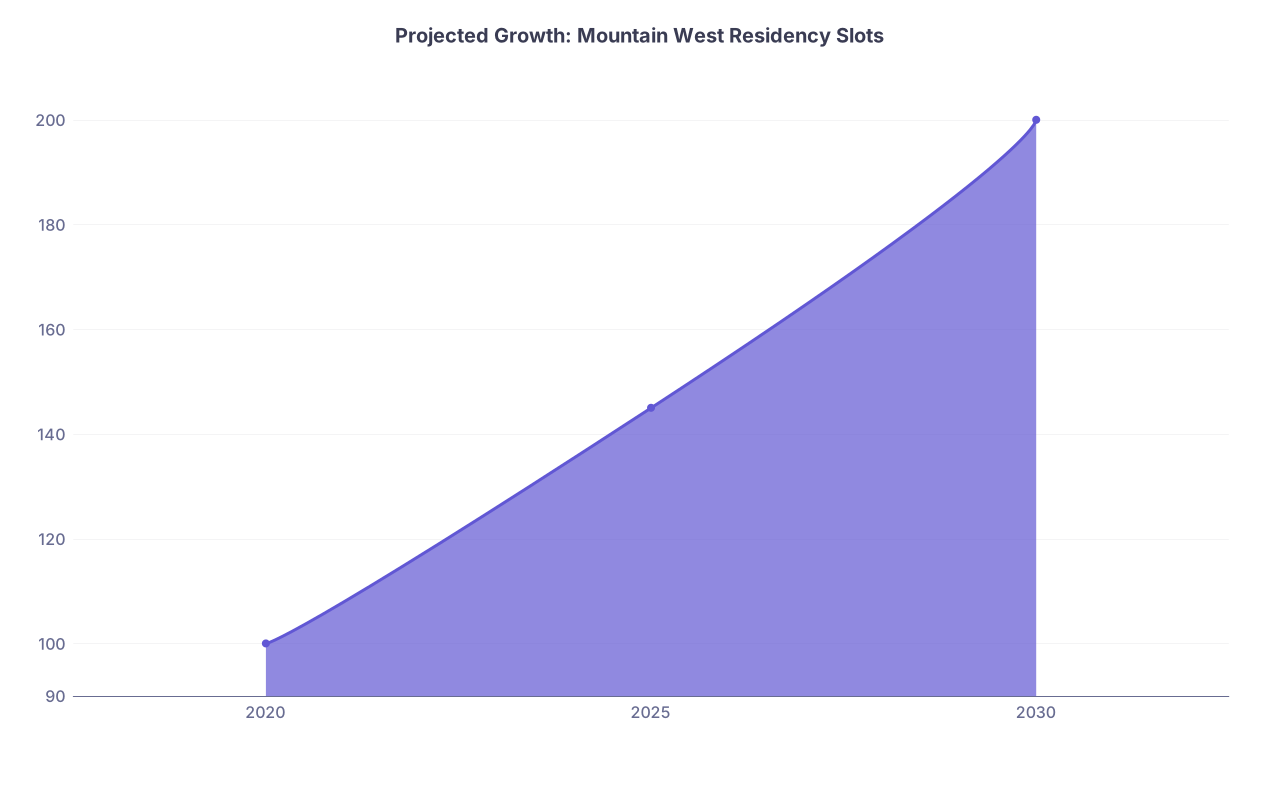
| Category | Value |
|---|---|
| 2020 | 100 |
| 2025 | 145 |
| 2030 | 200 |
Institutions see the writing on the wall:
- Burnout isn’t going away.
- Big coastal academic centers are not getting gentler.
- Physicians are increasingly vocal about lifestyle and autonomy.
- Patients in the Mountain West are aging and sicker, and they’re not all moving to the coasts.
So you’ll see:
- More community‑based, university‑affiliated residencies in places you’d never heard of in med school
- More aggressive recruitment of mid‑career faculty with “quality of life” packages
- More departments explicitly telling burned‑out attendings, “Let us be your reset.”
Residencies are the infrastructure that make these packages viable. Because an attending with residents can cover more ground with less energy and still feel they’re “teaching.”
Is that cynical? Somewhat. Is it real? Absolutely.
The smart move is not to run from that reality, but to walk into it with eyes open and use it to build the career you actually want.
How To Read Between The Lines On Interview Day
One last thing. When you’re evaluating Mountain West residencies and trying to detect how much of this burnout‑refuge dynamic is in play, stop listening to the brochure language and start watching behavior.
Ask specific questions like:
- “How long have most of your core faculty been here?”
- “Where did they come from before this?”
- “What’s faculty turnover been like in the last five years?”
- “How many new services or programs have started recently, and who’s staffing them?”
- “How often do faculty move into nonclinical roles or leave medicine entirely from here?”
You’re not interrogating them. You’re mapping the ecosystem you’re signing into.
Then watch:
- Does the hospital lobby feel like an airport terminal or a community hub?
- Do attendings look like they’re sprinting or walking?
- Do residents introduce faculty with warmth or with politeness and distance?
Burned‑out attendings who’ve truly found a better life will give off a different energy than those who are just slightly less miserable than before. Residents know the difference. So will you, if you’re paying attention.
Years from now, you will not remember the exact RVU expectations or call schedules from each program brochure. You will remember the look on a mid‑career attending’s face when they told you, “I almost left medicine, and here’s why I didn’t.” That’s the real curriculum the Mountain West is quietly offering.