The way most applicants “evaluate” a new city on interview day is useless.
You fly in, see the inside of an airport, an Uber, a hotel lobby, a conference room, then leave telling yourself you could “see yourself there.” That is not evaluation. That is vibes. And vibes are a bad basis for a 3–7 year decision that will shape your career and personal life.
You need a repeatable system. A checklist that forces you to look past the free lunch and the shiny simulation center and actually test-drive the region.
Here is that checklist. Use it every time you travel for an interview and you will make fewer bad location choices and far fewer regret-filled rank lists.
1. Pre-Arrival: 20-Minute Research That Actually Matters
Do not land in a new city blind. You can do a focused scan the night before in under 20 minutes.
A. Core “Will My Life Work Here?” Scan
Look up:
Cost of living
- Search: “City X cost of living vs [your current city]”
- Quickly check rent for:
- 1-bedroom near main hospital
- 2-bedroom within 20–30 min commute
- Use: Zillow, Apartments.com, Craigslist (for reality check)
Taxes and finances
- State income tax rate
- Typical gas prices
- Parking costs near the hospital (monthly passes if published)
Weather reality
- Average highs/lows in:
- January
- July
- Annual snowfall or days above 90°F
- Check extreme weather risk: hurricanes, wildfires, tornadoes, flooding zones
- Average highs/lows in:
Commute and traffic
- Map hospital location and search:
- “Traffic [City] rush hour”
- Plug in a few random apartment areas → map drive times at 7:00 and 16:30 on Google Maps using “depart at” feature
- Map hospital location and search:
Safety snapshot
- Search: “City X crime map”
- Overlay hospital and common residential neighborhoods
- Look for pattern, not perfection: where do residents actually live?
B. Quick “Lifestyle Fit” Scan
Five-minute pass on:
- What airports serve this region? Any direct flights home?
- Religious/cultural communities you care about (temple, mosque, church, specific ethnic groceries).
- Outdoor activities: trails, parks, water, mountains.
- Nearby academic and non-academic hospitals (for partner jobs, moonlighting, or future fellowship).
You are not making decisions yet. You are calibrating expectations so you know what to look for on the ground.
2. Arrival Day: Run Your “Commute and Logistics Drill”
You learn more about a city in your first 90 minutes on the ground than from weeks of online searching—if you pay attention.
A. Transportation Reality Check
At the airport:
- Time how long it takes from:
- Plane door opening → exiting the terminal
- Terminal → rideshare pickup or train/bus stop
- Check:
- Cost of Uber/Lyft/taxi to the hospital area and to likely residential areas
- Whether public transit actually works (not just exists)
If you think you might not own a car during residency, treat this like a stress test.
- Ask yourself:
- Could I reliably get to a 5:45 AM pre-round start?
- How much would repeated rideshare costs hurt on a resident salary?
B. Run a Test Commute
Do this even if the program offers a shuttle. Before or after your interview day:
- Pick a plausible neighborhood you found online.
- From there, map a drive or bus/train trip to the hospital at:
- 6:30 AM on a weekday (use Google “depart at” function or actually do it if timing allows).
- Pay attention to:
- Traffic choke points
- Parking situation at or near hospital
- Realistic walking distance from parking garages / transit stops in bad weather
If parking seems like a nightmare now, it will be hell when you are post-call and exhausted.
3. The Hospital Bubble: Extract Real Info While You Are There
Most applicants waste the interview day asking the same bland questions and accepting vague answers. You need to interrogate the region through the lens of the people who live there.
A. Ask Current Residents Targeted Regional Questions
Skip “Do you like it here?” That is useless. Ask specifics:
Housing and neighborhoods
- Where do most interns live?
- How long is your door-to-door commute on a normal weekday? Post-call?
- What is your rent and how many roommates do you have?
- Would you live in the same place again as a PGY1 if you could restart?
Safety and comfort
- Where would you absolutely not live?
- Have you ever felt unsafe commuting, especially at night?
- Any issues with car break-ins, porch theft, or harassment walking home?
Day-to-day life
- If your pager is silent on a Sunday, what do you actually do?
- Do people regularly go out after shifts? Or is everyone too wiped?
- What do people with kids do for childcare and schools?
- Does anyone here live on a single resident salary with family?
If residents hesitate or give diplomatic non-answers, pay attention. They live there. If they cannot easily say “I like X area, but avoid Y,” that tells you something.
B. Ask Faculty and Program Leadership Different Questions
They will often be more “chamber-of-commerce” in their answers. That is fine. You just need different data.
Examples:
- How long is the average resident commute?
- Are there specific neighborhoods the program recommends for safety / convenience?
- Does the hospital provide any housing assistance, parking support, or shuttle systems?
- How often do weather events disrupt care or commuting here?
- How long do graduates tend to stay in the region after residency?
Faculty will also expose something subtle: whether they actually know how residents live, or if they are disconnected from on-the-ground reality.
4. Reality Walk: Evaluate the Hospital Surroundings
Take 30–60 minutes either before or after your interview to walk the area around the main hospital. Not a scenic campus tour. A honest radius walk.
A. 15-Minute Radius: “Could I Walk Here Safely?”
Walk in at least two directions from the hospital:
- Look at:
- Street lighting
- Pedestrian crossings
- Sidewalk conditions
- Presence of other pedestrians vs abandoned-feeling blocks
- Open businesses at different times of day
Try walking:
- To a coffee shop or small grocery if there is one
- Around nearby residential blocks (if any exist)
Flag:
- Areas where you would not feel comfortable walking alone at 5:30 AM or 9:00 PM.
- Areas full of bars with loud night traffic you would hate after nights.
B. Daily Needs Check
On foot or via a short drive:
- Where is the nearest:
- 24-hour pharmacy
- Grocery store that is not just a convenience store
- Affordable restaurants you could realistically eat at twice a week
- Gym or fitness option (if that matters to you)
Ask yourself bluntly: “Could I meet 90% of my weekly needs without turning it into a major expedition?”
If the answer is no, your life will become small and stressed quickly.
5. Housing Drill: Test Your Future Apartment Before You Rank
Do not wait until after Match to find out the housing market is a mess. Run this drill while you are in the region.
A. Sample-Search While You Are Physically There
On your free evening:
- Open Zillow / Apartments.com / local listings.
- Filter for:
- Your realistic budget (after taxes, loan payments, and basic expenses)
- 1- or 2-bedroom
- Within 20–30 minutes of the hospital
Save 3–5 listings that look decent. Then:
- Check their location on a map.
- If you have time, drive past at least one or two of them.
You do not need tours. Just get a feel for:
- What the block looks like
- Street parking vs secure parking
- How “real” the listing feels compared with what you are seeing
B. Compute a Quick “Life Budget”
On a scratchpad (I recommend doing the same structure for every city so you can compare apples to apples):
| Category | Estimated Monthly Amount |
|---|---|
| Net Take-Home Pay | $X,XXX |
| Rent | $X,XXX |
| Utilities/Internet | $XXX |
| Transportation (gas/transit/parking) | $XXX |
| Groceries | $XXX |
| Loans | $XXX |
| Childcare (if applicable) | $XXX |
If your rent alone is pushing 40–45% of your net pay in this region, that is a major red flag unless you have other support.
6. Life Infrastructure: People, Community, and Support
Residency is not just “do I like this city?” It is “can I survive 3–7 brutal years here without my entire support system collapsing.”
A. Social and Emotional Support
Ask yourself, and be brutally honest:
- How far is this from:
- Family
- Partner
- Close friends
- What does travel actually look like from this region?
- Direct flights vs connections
- Holiday flight costs (example: New York → Midwestern small city vs New York → Chicago)
Use a quick comparison:
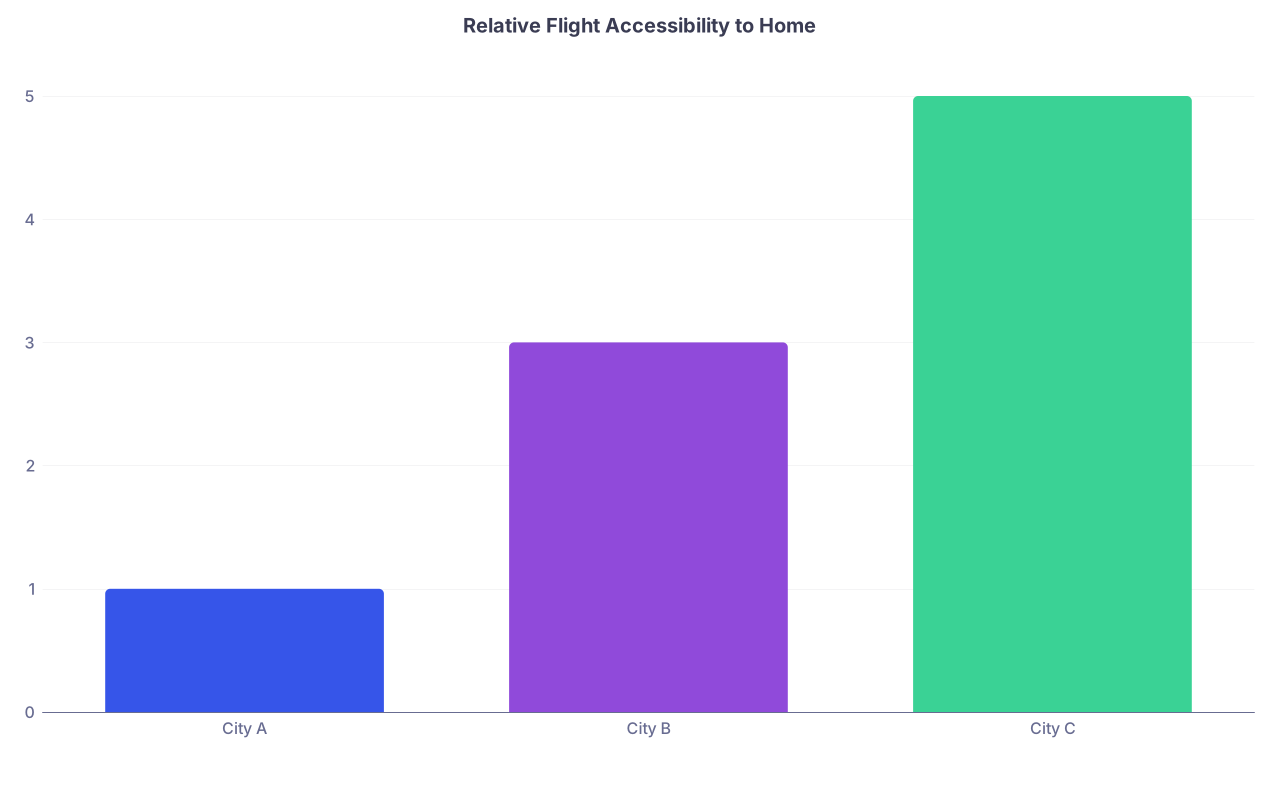
| Category | Value |
|---|---|
| City A | 1 |
| City B | 3 |
| City C | 5 |
Legend you define for yourself:
- 1 = direct route, multiple flights per day, cheap
- 3 = mixed, some direct, some connections, moderate price
- 5 = always connections, limited schedule, expensive
Residency is when people get sick, relationships strain, and you will need to go home for emergencies. If getting home is a nightmare, factor that in.
B. Partner and Family Feasibility
If you have a partner, kids, or are planning them:
-
- Are there jobs in their field within reasonable commuting distance?
- How common are remote roles in their industry here?
Child-related realities
- Daycare cost and waitlists
- Schools near likely housing (even if kids are not here yet but planned during residency)
- Pediatric care access (if program is in a saturated vs medical desert area)
Ask a resident with kids directly: “If you had to do it over, would you still raise young kids here during residency?” Their face will tell you a lot before their words do.
7. Lifestyle and Well-being: Your Non-Negotiables
You are going to be tired. What restores you in your current life? If a region removes that, it matters.
A. Identify Your Top 3 Non-Negotiables
Common categories:
- Outdoor access (trails, water, mountains, parks)
- Cultural scene (music, theater, museums, food diversity)
- Religious / spiritual community
- Athletic / recreational leagues
- Specific cuisine or cultural community (Korean, Indian, Middle Eastern, etc.)
While you are in town:
- Check one real example for each non-negotiable:
- Actually walk through a park.
- Visit a local grocery you would likely use.
- Drive by a religious center during an actual service time, if possible.
- Eat at a local restaurant that reflects the food scene you care about.
If you cannot find your top 2–3 non-negotiables at all, or they are so far away you would rarely get to them, that is a serious signal.
B. Test “Off Day” Reality
Imagine a golden post-call day when you are not a zombie. What would you do here?
- Can you:
- Walk somewhere pleasant without planning a day trip?
- Get coffee and sit in a public space that feels safe and somewhat alive?
- Do something that is not eating and scrolling your phone?
On one evening, give yourself 2–3 hours as if it were an off day:
- No agenda beyond “live like a local.”
- Take transit or drive to where residents say they actually hang out.
- See if you like existing there.
Not love. Just not resent.
8. Safety and Fatigue: The Night Shift Test
Night shift changes how a city feels. A safe city at noon may feel very different at 11 PM or 5 AM.
A. Night Environment Drill (If Timing Allows)
If you can stay for an evening:
- Go back near the hospital area after dark (not alone in obviously unsafe zones, use common sense).
- Ask:
- Would I feel okay walking from hospital → parking garage at midnight?
- Is the area dead empty, or are there at least some people around?
- Is the lighting adequate? Are there security personnel visible?
If you cannot do this physically, ask residents directly:
- How safe do you feel leaving the hospital after nights?
- Do you or anyone you know avoid certain routes / garages?
- Any specific incidents you are aware of in the past year?
B. Fatigue Logistics
You will be driving or commuting exhausted. Repeatedly.
- Is your likely commute:
- Mostly highway (less stopping, but higher speed risk)
- Stop-and-go city driving (fatigue + constant vigilance)
- Are there:
- Shoulders or pull-off areas if you feel yourself nodding off
- Reliable, safe parking at your building you can access easily when wiped out
Ask residents: “Where do you nap if you are too tired to drive after a 28-hour call?” If the answer is “we just push through,” that is not a great system.
9. Decision Framework: Convert Impressions into a Score
After each interview trip, while you are still in the airport or on the plane home, run through a quick rating system. Same categories. Same scale. Every time.
Use a 1–5 scale (1 = disaster, 5 = ideal) for:
- Housing feasibility (cost, availability, realistic neighborhoods)
- Commute sanity (reliability, safety, time, fatigue risk)
- Daily living convenience (groceries, pharmacies, gyms, basic errands)
- Safety and comfort (especially at odd hours)
- Community/support (friends/family access, partner viability)
- Non-negotiables (your top 3)
- Overall “could I survive 4 bad years here?” gut check
Example scoring table:
| Category | Score (1–5) |
|---|---|
| Housing Feasibility | 3 |
| Commute Sanity | 4 |
| Daily Living Convenience | 2 |
| Safety and Comfort | 3 |
| Community/Support | 2 |
| Non-negotiables | 4 |
| Overall Survival Gut | 3 |
Keep these for every city. When you sit down to build your rank list, you are not trying to reconstruct fuzzy memories from hotel breakfasts. You have hard comparisons.
10. One-Day “City Stress Test” Template
Put this all together into a simple, repeatable day plan you can tweak. Here is a skeleton:

| Step | Description |
|---|---|
| Step 1 | Arrive in City |
| Step 2 | Airport Transport Check |
| Step 3 | Hotel Check in |
| Step 4 | Evening Sample Commute |
| Step 5 | Walk Hospital Perimeter |
| Step 6 | Interview Day Resident Questions |
| Step 7 | Post Interview Neighborhood Drive |
| Step 8 | Visit Grocery or Cafe |
| Step 9 | Optional Night Area Check |
| Step 10 | Score Region in Notebook |
You will not run this perfectly every time. That is fine. Even doing 60–70% of it consistently will massively improve your signal.
Common Pitfalls To Avoid
A few patterns I have seen repeatedly from residents who later regret their region choice:
Overweighting prestige, underweighting life
They matched a big-name program in a city they hate. Three years later, they are burned out, socially isolated, and scrambling to get out of the area.Taking residents’ “it’s fine” at face value
Pay attention to specifics. When someone says “the commute is not that bad,” ask: “How long door to door on a typical morning?” 45 minutes twice a day is not “not that bad” for everyone.Ignoring financial math
High COL markets can still work if the salary, moonlighting, or family support offsets it. But most people do not run even a back-of-the-envelope budget. Then they move and discover they are one car repair away from disaster.Assuming you will “never leave the hospital anyway”
You will crave life outside the wards. If the only thing to do when off is sit in your overpriced apartment, that wears on you fast.Treating red flags as personal toughness tests
“I can handle a 60-minute commute” or “I will be fine without any nearby friends or family” is easy to say from your current life. Much harder during your fifth consecutive 70-hour week.
Summary: What Actually Matters
Boil all of this down and your regional evaluation hangs on three things:
- Can I realistically live here on a resident salary without constant financial stress?
- Can I get to and from the hospital safely and sanely at all hours, for years?
- Does this region support the minimum version of a life I want outside work — community, basics, and maybe one or two things that bring me joy?
Run the checklist. Write down your scores. Trust the patterns more than the free catering. Your future self will thank you.