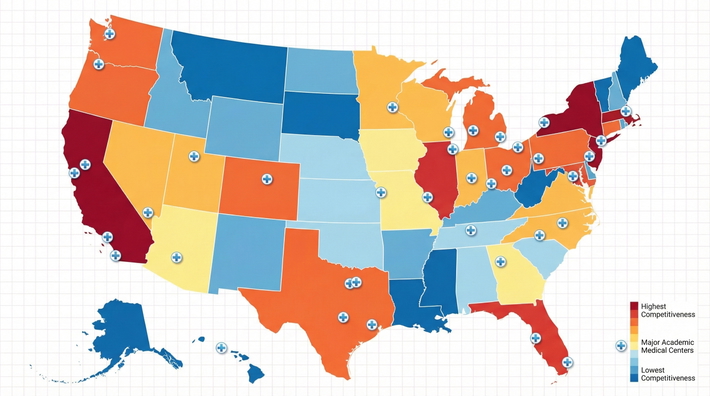
The worst residency decision LGBTQ+ applicants make is assuming “blue state = safe” and “red state = hostile.” That shortcut will burn you. Culture is hyper-local, and you need to evaluate it like your life, sanity, and career depend on it—because they do.
If you’re LGBTQ+ and evaluating regional culture for residency, you cannot just look at the map and vibes. You need a system. You’re juggling three overlapping worlds:
- The program culture
- The hospital/health system culture
- The surrounding community/region culture
You can survive a mediocre city with a great program and hospital. You will struggle in a hostile program no matter how “progressive” the city looks on paper. Let’s walk through how to actually assess this—step by step—before you sign yourself up for three to seven years somewhere that quietly erodes you.
1. Start With Hard Data, Not Vibes
Do the easy, objective homework first. This gives you a baseline before you start reading between the lines.
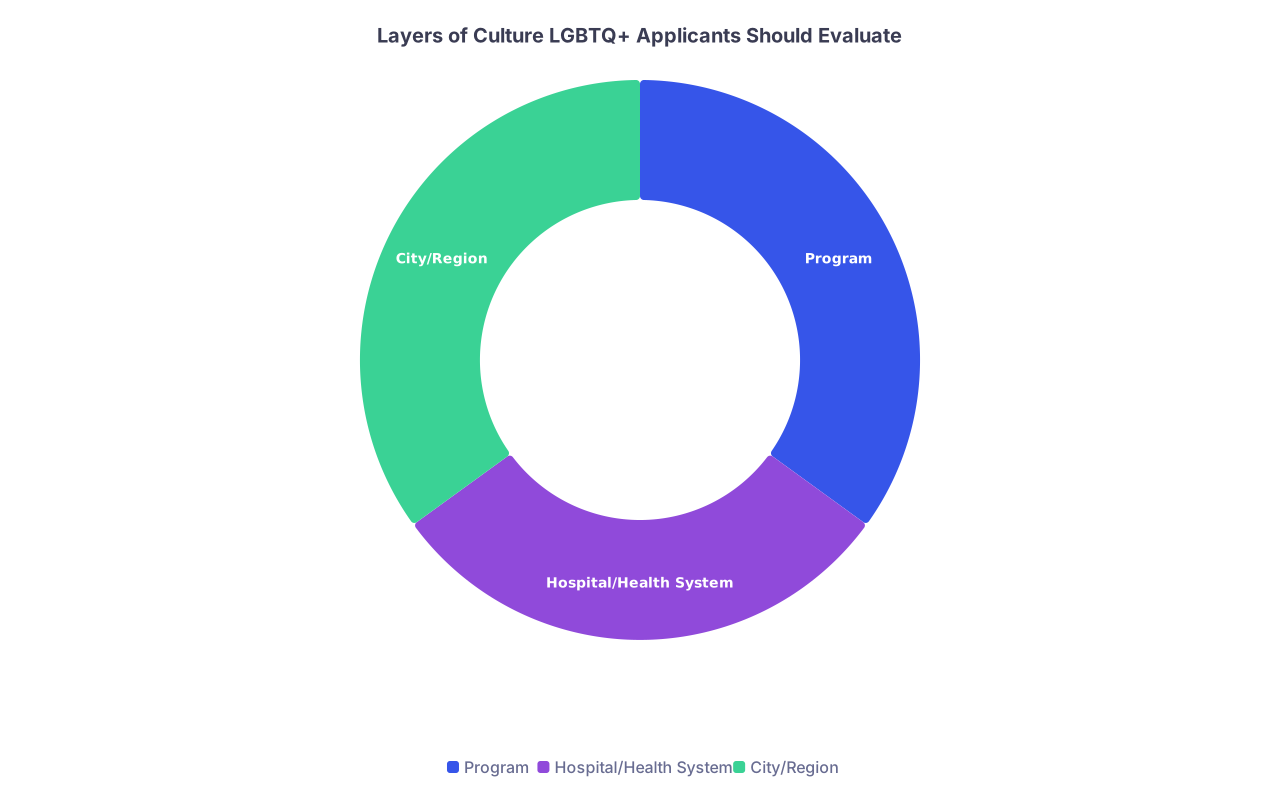
| Category | Value |
|---|---|
| Program | 35 |
| Hospital/Health System | 30 |
| City/Region | 35 |
Look at state and city-level protections
Do not stop at “this state voted X in the last election.” The actual legal landscape matters for your day-to-day life: housing, healthcare access, partner rights, parental rights, name/gender marker changes, etc.
Start with:
- State nondiscrimination laws (sexual orientation and gender identity – both matter).
- Hate crime protections.
- Healthcare bans or restrictions affecting transgender people.
- Second-parent adoption and parental rights if you have or plan to have kids.
- Local ordinances in the city/county—some blue cities in red states have stronger protections than entire blue states.
Good sources: Movement Advancement Project, GLSEN, HRC’s State Equality Index. Cross-check at least two. Laws change faster than most institutional DEI pages.
Compare locations in a structured way
You’re a future or current physician—treat this like clinical decision-making, not vibes from Reddit.
| Location | State Protections | City Ordinances | Trans Healthcare Climate | Cost of Living |
|---|---|---|---|---|
| Large Blue City | Strong | Strong | Supportive | High |
| Blue City in Red State | Weak/Moderate | Strong | Mixed | Moderate |
| Mid-size Swing City | Moderate | Patchy | Variable | Moderate/Low |
| Rural Region | Weak | Rare | Often Hostile | Low |
You’re not looking for perfection. You’re looking for: “Can I reasonably live, date, be partnered, dress how I dress, access healthcare, and not be in a constant cortisol storm?”
2. Audit the Program and Hospital Like an Insider
State laws tell you the “ceiling” and “floor.” The program and hospital tell you your actual daily life.
Start with what’s written down—but don’t trust it blindly
Things to look for on the program and hospital websites:
- Explicit non-discrimination that includes sexual orientation and gender identity/expression
- Domestic partner benefits or same-sex spouse parity
- Trans-inclusive health coverage (hormones, surgeries, mental health, fertility preservation)
- Clear policies for name and pronoun use in EMR, ID badges, email systems
- LGBTQ+ employee resource group (ERG) or affinity group
- Prior Pride month statements, events, or grand rounds that aren’t clearly performative fluff
These are baseline. Their absence is a red flag. Their presence is not proof of real safety—but they’re better than nothing.
Then look at what’s actually happening
Here’s where you separate brochure-speak from reality.
Concrete questions to find answers to (online, then by asking people):
- Have there been out residents/fellows/faculty in this program? Did they stay? Advance?
- Does the program show LGBTQ+ residents in photos or resident spotlights in a way that feels normal, not tokenized?
- During Pride, does the hospital just light up the lobby and do nothing else, or are there actual educational events, clinical initiatives, or policy changes?
Red flags I’ve personally seen:
- “We don’t ask that kind of thing here; everyone is just a doctor” when you inquire about LGBTQ+ residents. Translation: you’ll be expected to be invisible.
- Program “jokes” at interview dinners about “crazy pronouns.” Nobody pushes back.
- DEI page is heavily race-focused with zero mention of sexual orientation or gender identity. Not that race focus is bad—ignoring queer identity is the problem.
3. Use Interviews and Second Looks Like Recon Missions
You’re not just selling yourself at interviews. You’re collecting intel. Quietly. Systematically.

| Step | Description |
|---|---|
| Step 1 | Identify Programs |
| Step 2 | Review State and City Climate |
| Step 3 | Review Hospital and Program Policies |
| Step 4 | Reach Out to Current Residents |
| Step 5 | Interview Day Recon |
| Step 6 | Postinterview Reality Check |
| Step 7 | Rank List Adjustments |
Questions to ask (and how to ask them)
To program leadership (PD, APD):
- “How has the program supported LGBTQ+ residents or staff in the past?”
- “Can you tell me about any DEI initiatives that explicitly include sexual orientation and gender identity?”
- “How does the program handle harassment or discriminatory behavior from patients or staff?”
You’re not asking if they have LGBTQ+ people. You’re asking how they behave when real life happens.
To residents (ideally privately, away from faculty):
- “Would you say residents feel comfortable being out in this program?”
- “How comfortable would you feel bringing a same-sex partner or visibly gender-nonconforming partner to a program event?”
- “How does the attending/resident culture respond to homophobic or transphobic comments from patients?”
- “Do you feel safe and comfortable in the neighborhoods where residents typically live and go out?”
If someone lowers their voice, glances around, or says “it’s… fine” with a pause, treat that as strong data.
Pay attention to tiny social cues
This is where people mess up. They listen to polished speeches and ignore live behavior.
Watch for:
- Does anyone introduce themselves with pronouns unprompted? Do they mock it?
- How do attendings talk about “that trans patient” or “those people”?
- If someone mentions a “partner” at dinner, does anyone pry about gender in a weird way?
- Does the program mention religious or “values-based” culture in a way that feels like a euphemism for conservative social norms?
You’re not trying to find a perfect bubble. You’re assessing: will I have to constantly manage other people’s discomfort just to exist?
4. Talk to Real LGBTQ+ People in That Region
This is the part nearly everyone skips. You should not.
Find people off the official grid
Places to look:
- LGBTQ+ physician Facebook groups, signal groups, discord servers
- Specialty-specific LGBTQ+ groups (e.g., GLMA, specialty pride sections)
- Alumni from your med school who matched there, or who grew up in that region
- Hospital LGBTQ+ employee resource groups—email the contact and say you’re a prospective resident wanting honest insight
When you reach out, keep it simple and respectful:
“Hi, I’m an LGBTQ+ fourth-year applying to [specialty]. I’m strongly considering [Program/Hospital] and I’m trying to get a realistic sense of what it’s like to live and train there as a queer/trans person. Would you be open to a 10–15 minute chat or a quick email exchange about your experience? Totally fine if not.”
Then ask the real questions:
- “How out are you at work? By choice or necessity?”
- “Do you feel safe being visibly queer/trans in your day-to-day life there?”
- “Have you had issues with housing, bathrooms, documentation, or healthcare coverage?”
- “If you had to decide again, would you still come here?”
The most honest answers often come after you ask: “Is there anything you wish someone had told you before you moved here?”
5. Analyze the Day-to-Day Life Outside the Hospital
Residency is not just wards and clinics. You’re going to grocery stores, bars, gyms, dating apps, Pride events, LGBTQ+ centers—or you’re avoiding them because it does not feel safe.
Check the local queer ecosystem
You do not need a West Village clone. But you do need something.
Look for:
- LGBTQ+ centers or community organizations
- Queer-friendly faith communities if that matters to you
- Pride events: are they large, small, police-heavy, frequently protested?
- Queer-owned or queer-friendly bars/cafes (and whether they last, not just exist for a year and die)
- Local trans support groups and clinics
Then sanity-check via Google Maps reviews, Reddit city threads, and Instagram. If everything queer-coded looks hidden, apologetic, or constantly harassed in reviews—pay attention.
Factor in dating and relationships
If you’re single and want to date: open the apps. Don’t overthink it.
- Change your location to that city/region
- Look at radius ~10–15 miles from where you’d likely live
- Ask yourself: are there people like me here? My age? My interests? My gender preferences?
- Will your partner be able to work there without major discrimination?
- Are there queer couples around, or will you be the only ones getting stared at in restaurants?
- Would your partner have community independent of you?
If the answer to all of that is “no idea, but the program is top 10,” be careful. Prestige does not hug you when a neighbor harasses you for holding hands.
6. Special Considerations If You’re Trans or Nonbinary
I’m going to be blunt: if you’re trans or nonbinary, your calculations may look very different from a cis gay or bi applicant. Safety, legality, and healthcare access move to the top of the list.
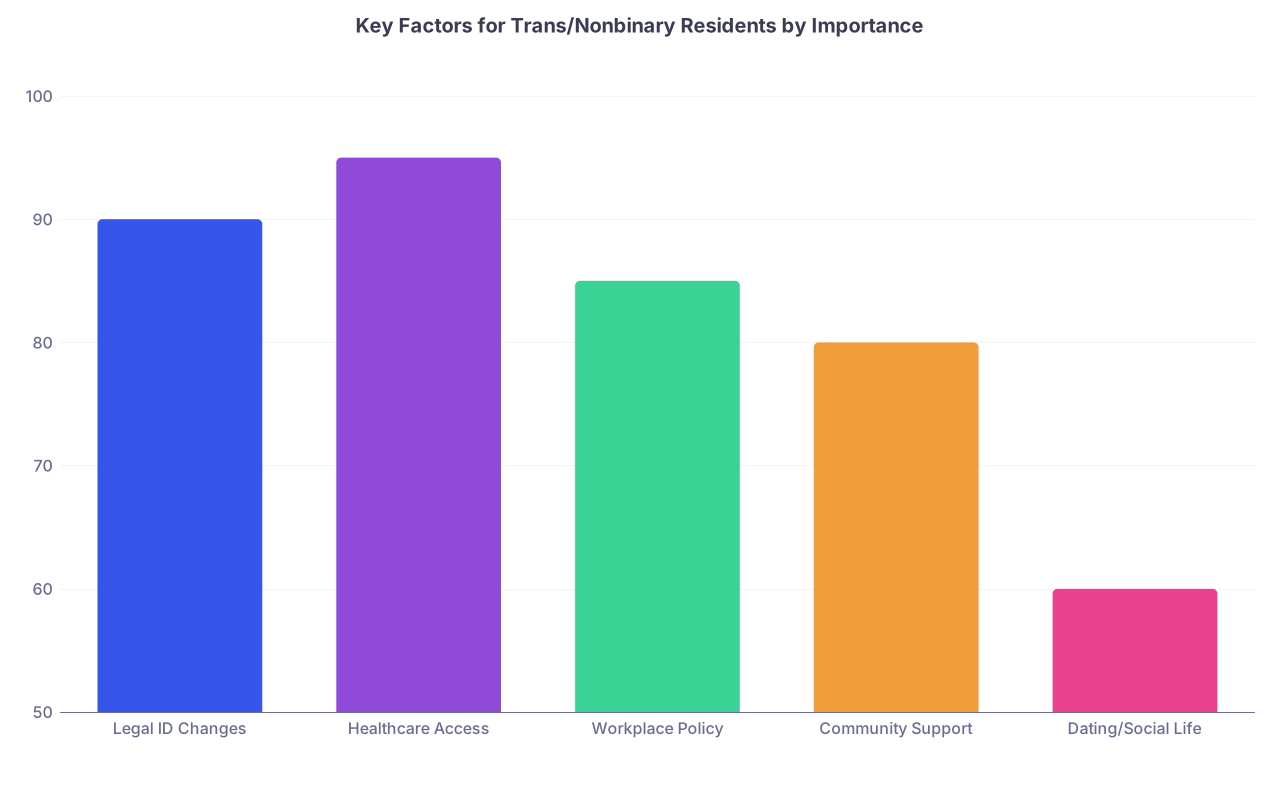
| Category | Value |
|---|---|
| Legal ID Changes | 90 |
| Healthcare Access | 95 |
| Workplace Policy | 85 |
| Community Support | 80 |
| Dating/Social Life | 60 |
Legal and administrative reality
Before ranking a place highly, find out:
- Can you change your name and gender marker in that state without surgery? Without court nightmares?
- Does the hospital allow chosen name and pronouns on badges, email, call schedules, and EMR display? Not just “we’ll see.” Actual policy.
- Are there known issues with airport, traffic stops, or law enforcement in that region targeting trans people?
Ask directly during the process (to someone in HR or GME if needed):
- “How are name and pronoun changes handled for residents?”
- “Do your health plans cover gender-affirming care? Hormones? Surgeries?”
- “How are issues with misgendering or harassment addressed?”
Vague answers or “we haven’t had to deal with that before” are not reassuring.
Clinical environment
If you’re trans and also interested in LGBTQ+ or gender-affirming care clinically, this is a bonus lens:
- Does the program serve trans patients? How are they talked about?
- Any gender clinics, WPATH-affiliated providers, or queer health rotations?
- Does anybody on faculty visibly “get it”?
Even if you do not plan to be “the trans doctor,” being in a program that thinks trans healthcare is real medicine, not political theater, makes life easier.
7. Build a Rank List That Reflects Reality, Not Ego
You’re going to have people—advisers, classmates, sometimes even family—telling you to prioritize prestige, fellowship match lists, NIH funding. Those matter. But they matter less if you’re burned out, closeted, or chronically unsafe.
Here’s how I’d structure decision-making if you’re LGBTQ+:
Hard pass tier:
- Hostile laws targeting your identity
- Zero hospital protections
- Program where residents quietly warn you away
- No realistic path to being at least partially out, if that’s important to you
Caution tier (apply and rank only if you must):
- Mixed state climate with strong city/hospital protections
- Program leadership supportive, but broader hospital or city not great
- You have a clear personal reason you’d still consider it (family nearby, perfect specialty fit) and a coping plan
Safe-ish tier:
- Legally okay, hospital decent, community small but present
- You can be out to colleagues and some patients without constant drama
- There’s at least one other LGBTQ+ person in the system you’ve actually spoken to
Green tier:
- You can see yourself living a full life there—dating, partnered, gender expression, social circles
- Program has visible, not-hidden queer residents/faculty who aren’t all planning to flee after graduation
- Leadership that has already stuck their neck out for LGBTQ+ issues
If a place is “famous program, terrible environment” and another is “solid program, genuinely safe and supportive,” pick the second. You’ll be a better doctor when your whole nervous system isn’t locked in fight-or-flight.
8. Reality Check: You Won’t Find Perfect. Aim for Sustainable.
There is no residency where every patient is kind, every attending enlightened, every neighbor affirming. You will hear things that hurt. You will occasionally decide it’s not worth coming out to someone.
The goal is not perfection.
The goal is:
- You do not feel physically unsafe where you live and work.
- You can be out to someone at work—ideally more than one someone.
- The system has your back on paper and at least somewhat in practice.
- You can have some joy outside of medicine—friends, partners, community, hobbies—without constant fear.
If you’re reading program websites thinking, “Maybe I’m overthinking this, maybe I should just ignore the LGBTQ+ stuff and chase the brand name,” listen: I have watched residents regret that decision. Quietly. Deeply. Three years can feel like a prison sentence in the wrong environment.
You deserve to train where you can become a better physician and stay a whole person.
Today, do one concrete thing: pick your top 5 target regions and run each of them through a quick check—state protections, city climate, hospital policies, and whether you can identify even one LGBTQ+ doc there. If a place fails all four, move it down. Hard.