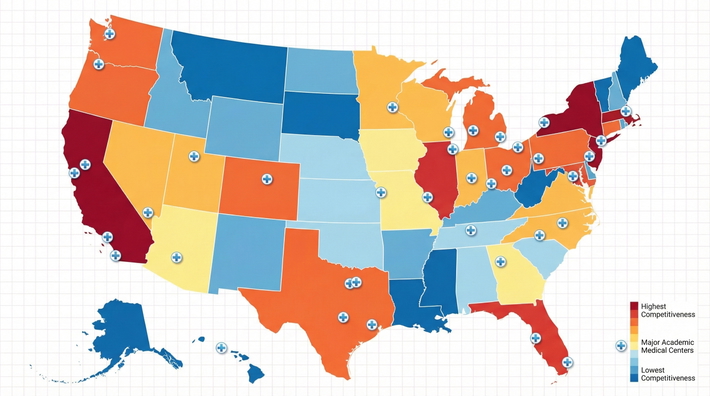
The obsession with brand‑name cities is quietly sabotaging residency training decisions.
You’re not just picking a zip code. You’re picking what kind of physician you’ll become. And too many smart people are chasing New York/LA/Boston vibes while ignoring brutal regional training gaps that actually determine skills, confidence, and future options.
Let me be direct:
Choosing “NYC” or “San Diego” as a personality trait is not a training strategy. It’s how you end up underprepared, overworked on the wrong types of patients, or locked out of the region you actually want to practice in later.
The Core Mistake: Confusing City Prestige With Training Quality
You know the conversation. I’ve heard it every cycle:
“I just want to be in a big coastal city. I’ll figure out the rest.”
“I’m ranking all the programs in Chicago above anything else.”
“I don’t care about fellowship yet; I just need to be in LA.”
This is the trap.
You’re using the city name as a proxy for:
- Good training
- Strong reputation
- Fun life
- Easy fellowship match
- Endless opportunities
And half of that is just…wrong.
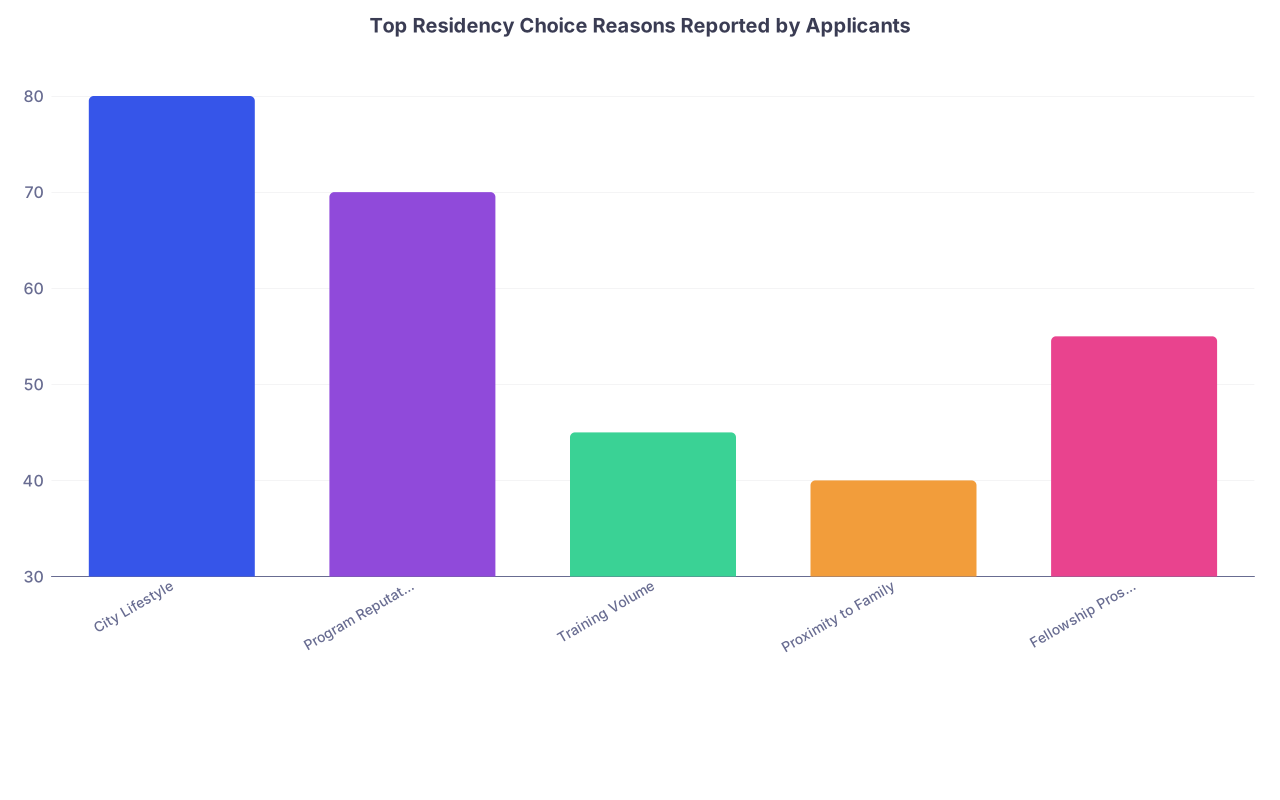
| Category | Value |
|---|---|
| City Lifestyle | 80 |
| Program Reputation | 70 |
| Training Volume | 45 |
| Proximity to Family | 40 |
| Fellowship Prospects | 55 |
See the problem? City lifestyle often outweighs training volume and case mix in people’s minds. That’s backwards.
Here’s what you risk when you let the city brand make the decision:
- Weak exposure to bread‑and‑butter community medicine
- Skewed case mix (ultra‑tertiary zebras, no “normal” patients)
- Poor region-specific experience (rural health, border health, reservation medicine, etc.)
- Less operative/autonomy time because there are 12 other learners in line
- Minimal networking in the geographic area you actually want to end up long‑term
You’ll graduate with a great Instagram archive and an uncomfortable sense you’re not fully ready.
What “Regional Training Gaps” Actually Look Like
Do not romanticize the big name at the expense of what your training will miss.
Regional training gaps show up in a few predictable ways:
1. The Urban Bubble Problem
Big coastal academic centers are fantastic for rare pathology. And often terrible for “this is what you’ll see daily in practice” if you end up outside of that bubble.
Common gaps:
- Chronic disease management in low‑resource, non‑academic settings
- Procedures done independently (central lines, scopes, deliveries, basic surgeries)
- Bread‑and‑butter outpatient continuity in non‑glamorous populations
- Rural transfer systems and limited resource decision‑making
If you train in a Manhattan ivory tower and later practice in a midwestern community hospital, you may suddenly realize you’ve never:
- Been the only physician in-house at night
- Run codes without six subspecialists sliding into the room
- Managed sick patients when “call cardiology” isn’t an option
You’re not weak. Your environment was.
2. The Fellowship Mirage
Big cities don’t guarantee better fellowship options. They just make it feel that way.
Common blind spots:
- Some regional powerhouses in the Midwest or South absolutely crush fellowship placement
- A “mid-tier” city program with strong regional reputation can outrun a big coastal program in specific subspecialties
- PDs and fellowship directors care more about:
- Letters from people they know
- Real responsibility and skills
- Research productivity in the right niche
| Program Type | City Type | Perceived Prestige | Actual Fellowship Placement Strength |
|---|---|---|---|
| Big Academic Flagship | Brand-name | Very High | High |
| Regional Academic Anchor | Mid-size | Medium | Very High |
| Community-University Hybrid | Smaller | Low-Medium | Medium-High |
| Pure Community | Suburban | Low | Variable |
I’ve watched applicants rank a big-city “name they recognize” above a regional academic beast that sends people into every competitive fellowship, every year. They just did not bother to look past the city label.
3. Geographic “Lock‑In” You Didn’t Plan For
Residency is the single biggest determinant of where you ultimately practice. Not med school. Residency.
Programs tend to feed:
- Into their own hospital systems
- Into their surrounding city or region
- Into fellowship pipelines that are geographically clustered
If you do all of this in the wrong region:
- Med school in the Northeast
- Residency in LA because “I always wanted California”
- Then decide you want to raise a family near your parents in Ohio
You’ve created unnecessary friction. Your mentors, PD, alumni network, and reputation are all anchored somewhere else.

| Step | Description |
|---|---|
| Step 1 | Med School Region |
| Step 2 | Residency Region |
| Step 3 | Fellowship Region |
| Step 4 | First Job Region |
You can break the pattern, sure. But why fight gravity you created for yourself just because a city looked cool at 24?
The Big-City Illusions That Trap Applicants
Let’s dismantle a few myths that push people towards brand-name cities and away from better regional fits.
Illusion 1: “Brand-Name City = Better Training”
Sometimes true. Often lazy thinking.
Training quality depends on:
- Autonomy
- Volume
- Case mix
- Quality of teaching faculty
- Ability to see patients across settings (tertiary, community, rural)
Not:
- The city’s NBA team
- The skyline
- Whether there’s a Michelin-starred restaurant nearby
I’ve seen:
- A “no one outside the region knows it” midwestern IM program where PGY‑3s run entire ICUs competently
- A huge Boston name where residents complain: “We never do XYZ procedure; the fellows take everything”
If you care about skills, be wary of going where there’s always a subspecialty fellow between you and the patient.
Illusion 2: “If I Survive in X City, I Can Work Anywhere”
No. Not automatically.
If your training city:
- Never sees rural trauma
- Never deals with critical access hospital transfers
- Never treats certain regional diseases (e.g., valley fever in the Southwest, tick‑borne stuff in the Northeast, sickle cell–heavy populations in specific areas)
You may be clinically underexposed for the region you end up in.
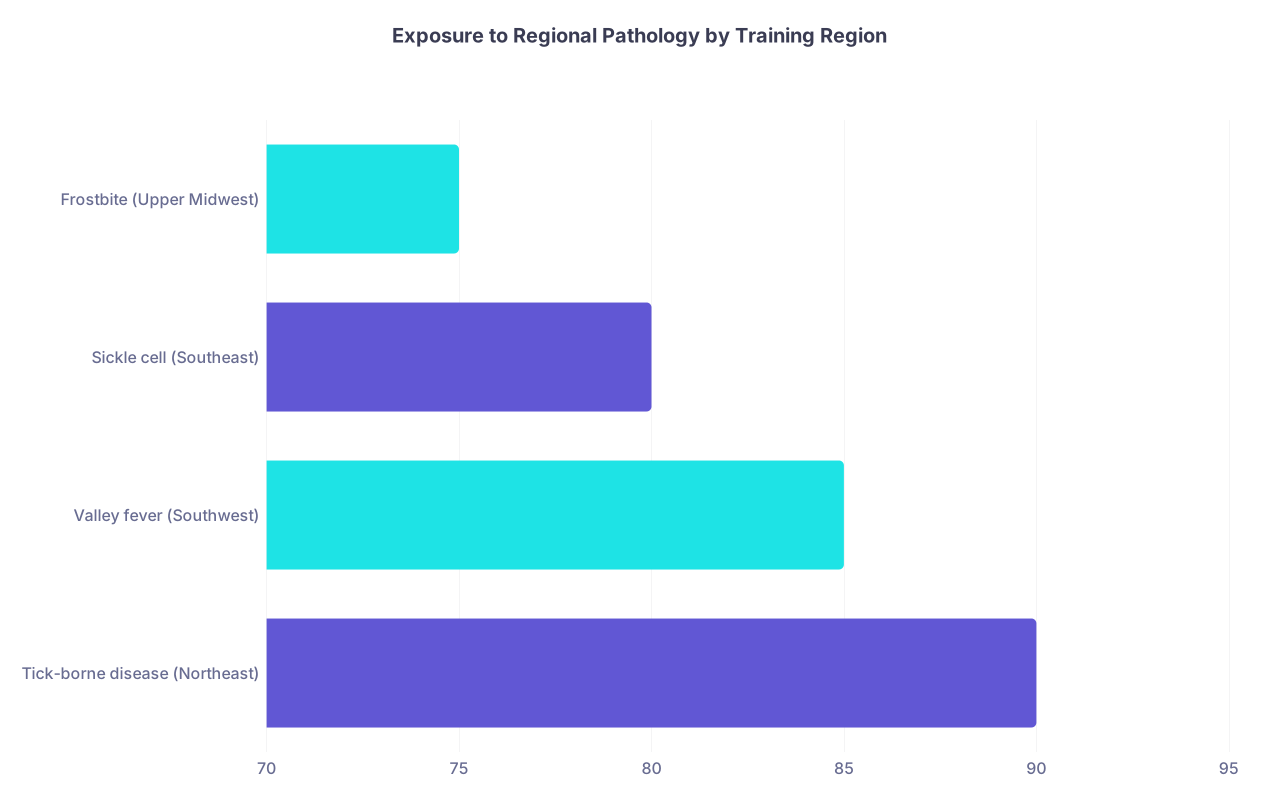
| Category | Value |
|---|---|
| Tick-borne disease (Northeast) | 90 |
| Valley fever (Southwest) | 85 |
| Sickle cell (Southeast) | 80 |
| Frostbite (Upper Midwest) | 75 |
If you know there’s a high chance you’ll practice in the Southeast, do not blow off residency programs there just because “I want to be in San Francisco.”
You’re ignoring the “dialect” of medicine you’ll actually need to speak fluently.
Illusion 3: “Big City = Best Networking”
Yes, there are big names in big cities. There are also:
- 10x more trainees
- More competition for mentor attention
- Politics you don’t see coming
Meanwhile, in a regional center:
- You might be one of only a few residents deeply involved in a given subspecialty clinic
- Your attendings might be “the” regional experts who actually pick up the phone for fellowship directors
Networking isn’t about how many total people are around. It’s about how many people know you and will go to bat for you.
Concrete Training Gaps You’ll Regret Ignoring
Let’s get painfully specific. These are the gaps people only realize during PGY‑3 or as attendings.
Gap 1: Procedural Autonomy
In oversaturated academic mega-centers:
- Fellows snatch procedures for their logs
- Roles are rigid and hierarchical
- Residents become “consult coordinating machines” instead of hands-on clinicians
In many regional/community-heavy programs:
- Resident is the default operator
- Fewer fellows → more chances for you
- You learn how to manage complications because it’s your complication
If you want to be a hands-on clinician or proceduralist, privileging city name over autonomy is a rookie mistake.
Gap 2: Outpatient Reality
Patients in glossy downtown academic clinics are not the same as patients in:
- Rural Midwest
- Deep South
- Tribal clinics
- Border towns
If you train entirely in a rarefied environment:
- Complex but super-engaged patients
- Easy follow‑up
- 20 subspecialty clinics down the hall
You’ll get crushed the first time you work where:
- Patients live 2 hours from the nearest ED
- No reliable transportation
- No transplant team just down the hallway
You needed exposure to those realities during training. Not just at conferences.
Gap 3: Resource Constraints
This is one of the biggest regional blind spots.
Some big-city academic hospitals:
- Have every toy, every scanner, every service
- Order “CT everything” because it’s there
- Consult away risk constantly
Then grads land in hospitals where:
- CT is 8 hours away
- Night coverage is one hospitalist and one nurse for 16 patients
- Specialist consults are phone-only
Who’s more prepared for that?
The person who trained where things were occasionally held together with duct tape and grit.
When Brand-Name Cities Make Sense (And When They Don’t)
I’m not telling you to avoid big cities. I’m telling you not to worship them.
They make sense when:
- The specific program is truly elite in your intended subspecialty
- You know you want to stay in that region long-term
- They still provide solid bread‑and‑butter and not just zebra rounds
- You’ve checked the autonomy, volume, and fellowship match data
They do NOT make sense when:
- Your only real reason: “I want to live in [insert city]”
- You haven’t compared regional alternatives that train better for your long‑term goals
- You’re going to a weaker big‑city program over a stronger regional academic center purely for the zip code
- You have a high chance of eventually working in a totally different region with different needs

| Step | Description |
|---|---|
| Step 1 | Define Career Goals |
| Step 2 | Identify Likely Practice Region |
| Step 3 | Research Regional Training Needs |
| Step 4 | Consider Ranking High |
| Step 5 | Prioritize Regional Programs |
| Step 6 | Compare Autonomy and Outcomes |
| Step 7 | Big City Program Meets Needs? |
How to Avoid This Mistake Step‑By‑Step
Here’s how to protect yourself from the brand‑name city trap.
1. Decide Your Probable Practice Region(s)
Not your fantasy. Your probable options.
Ask yourself:
- Where are your support systems (family, partner, kids)?
- Where are you realistically willing to live long-term?
- Do visa, licensure, or family obligations anchor you to certain states?
You don’t need a perfect answer. But you need a short list. “Anywhere” is usually a lie people tell themselves when they’re 24 and not yet tired.
2. Learn What That Region Actually Needs Clinically
Do some homework:
- Look up major regional health issues
- Ask attendings who practice there: “What new grads are usually weak in?”
- Seek out community docs, not just academics
You’ll hear things like:
- “Our new hires are great with rare autoimmune stuff, terrible with basic diabetes management in low-resource patients.”
- “They’ve never handled a night alone with 12 ICU patients and no in-house intensivist.”
Now you have a target.
3. Audit Programs With Ruthless Clarity
Stop asking “Is this city cool?” and start asking:
- What’s the call structure?
- How many procedures per resident per year?
- How much community/rural exposure?
- Where do grads actually end up practicing?
- What fellowships do people match into—and where?
| Domain | Big-City Program | Regional Program |
|---|---|---|
| Autonomy Level | ? | ? |
| Procedure Volume | ? | ? |
| Rural/Community | ? | ? |
| Fellowship Match | ? | ? |
| Alumni Locations | ? | ? |
Fill this out for your top choices. If you still choose the flashy city after seeing the gaps clearly, at least you’re not doing it blind.
4. Watch for Red-Flag Thought Patterns in Yourself
Catch yourself when you think:
- “I just can’t imagine not living in a big city.”
- “I’d rather be in [city] even if training is a bit weaker.”
- “I’ll figure out the region thing later.”
That’s you prioritizing lifestyle now over competence and options later. You can do it. Just admit what you’re trading away.
5. Use Residents and Alumni, Not Just Websites
During interviews and socials, ask targeted questions:
- “What surprised you as a PGY‑1 about the training realities here?”
- “Which skills do grads here have that you don’t see from other programs?”
- “Where do most people go for their first jobs?”
If all the answers cluster around staying in that same city or coastal bubble, and you’re not sure you want that, pay attention.
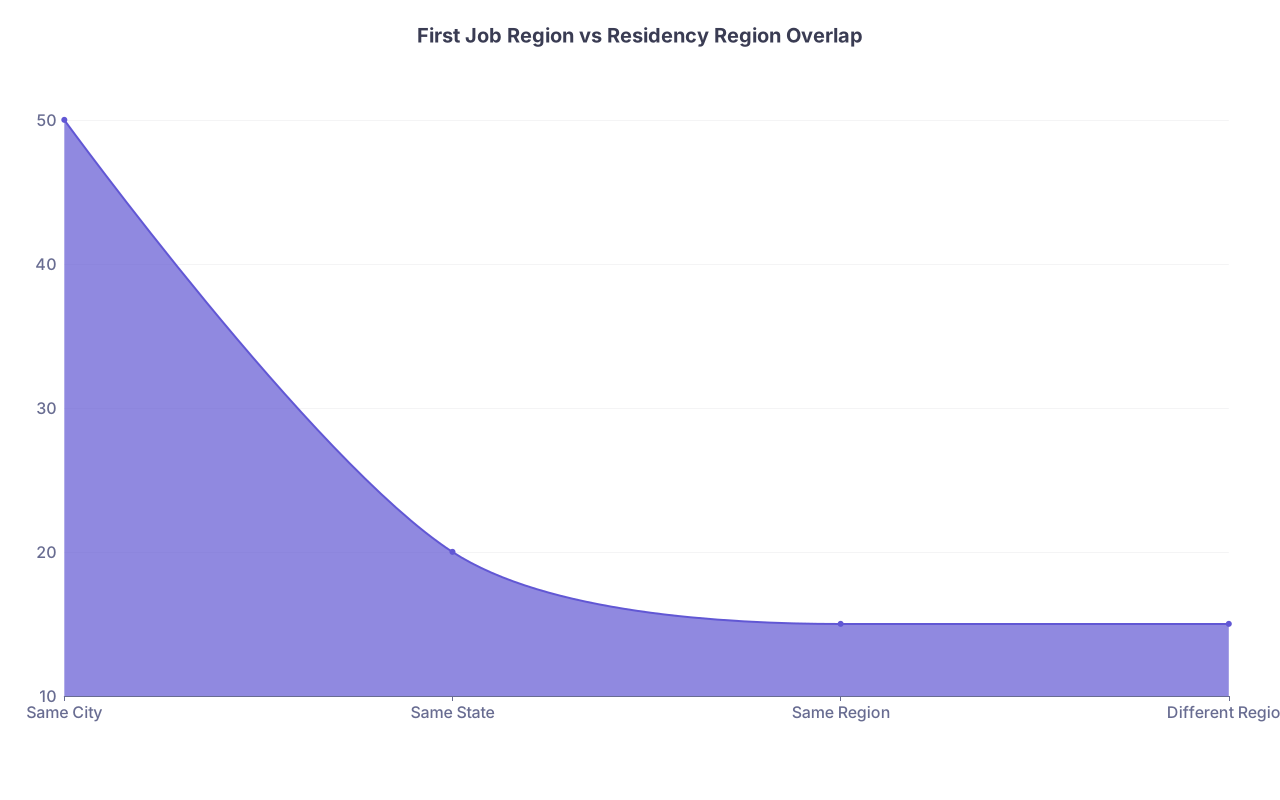
| Category | Value |
|---|---|
| Same City | 50 |
| Same State | 20 |
| Same Region | 15 |
| Different Region | 15 |
Half or more of grads often stay in the same city. That’s not random. That’s path dependence. Do not pretend you’re immune.
6. Rank With Future You in the Room
People rank with 26‑year‑old priorities and wake up at 36 stuck in the wrong market.
Picture 10‑years‑from‑now you:
- Maybe with kids
- Maybe wanting to be closer to aging parents
- Definitely wanting to feel competent and not constantly behind
Which program actually serves that person?
Not the one with the coolest skyline. The one that:
- Trains you hard
- Prepares you for your likely practice environment
- Leaves doors open in the region you care about
FAQs
1. If I know I want a competitive fellowship, shouldn’t I just go to the biggest-name city program I can?
Don’t make that automatic. Look at actual fellowship match lists, not vibes. Plenty of regional academic centers in “boring” cities have ridiculously strong fellowship pipelines because their faculty are deeply networked and their residents are well-trained. If the big‑city program gives you low autonomy and weak research support in your area of interest, its “brand” may help less than you think.
2. What if I genuinely value city lifestyle a lot—am I wrong to prioritize that?
You’re not wrong to value it. You are wrong if you ignore the tradeoffs. If your mental ranking is “NYC > everything, no matter the program quality,” then own the fact you might sacrifice procedural competence, regional fit, or post‑training options. Just don’t pretend it’s a purely career‑optimized decision. It’s a lifestyle choice with career consequences.
3. How can I tell if a program has good regional training exposure?
Look for: required community or rural rotations, affiliation with regional hospitals (not just the flagship), clear talk from residents about how often they rotate outside the ivory tower, and explicit curricula on local health issues. If everything is happening inside one gleaming academic castle in a downtown core, expect gaps.
4. I have no idea where I want to practice long-term—what should I prioritize then?
In that case, maximize flexibility. Choose programs that: send grads to multiple regions, include both tertiary and community training sites, and provide strong, generalist skills plus good fellowship options. Avoid hyper‑niche, ultra‑tertiary programs whose grads almost only stay in that city or system. You want a broad base, not a narrow brand.
Open your preliminary rank list or program shortlist today and write one thing next to each program: “What region does this actually prepare me for?” If you can’t answer that, you’re not done evaluating it.