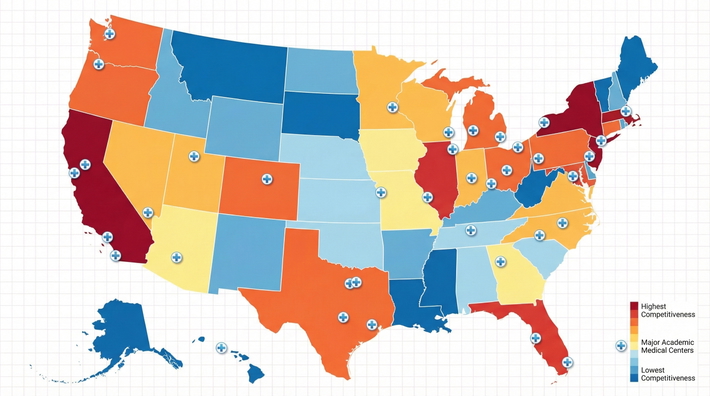
Your obsession with coastal “dream” programs can quietly destroy your match chances.
Let me be blunt: ranking too many reach coastal programs is one of the fastest ways to end up scrambling, reapplying, or matching somewhere you never seriously considered. I’ve watched it happen to smart, hardworking applicants who “just really love the West Coast” or “can’t imagine living away from the ocean.” They think they’re being aspirational. They’re actually being reckless.
This is a hidden risk, because on paper their rank list looks fine: 10–15 programs, all “good.” But look closer and you see the trap: 8–10 of those are high‑demand coastal programs that like 260+ Step scores, AOA, or home‑school ties. The applicant has none of those. They matched their fantasy, not their profile.
You’re here so you don’t make that mistake. Good. Let’s dissect it carefully.
Why Coastal Programs Are More Dangerous Than You Think
The problem isn’t that coastal programs are “bad.” They’re not. The problem is supply, demand, and denial.
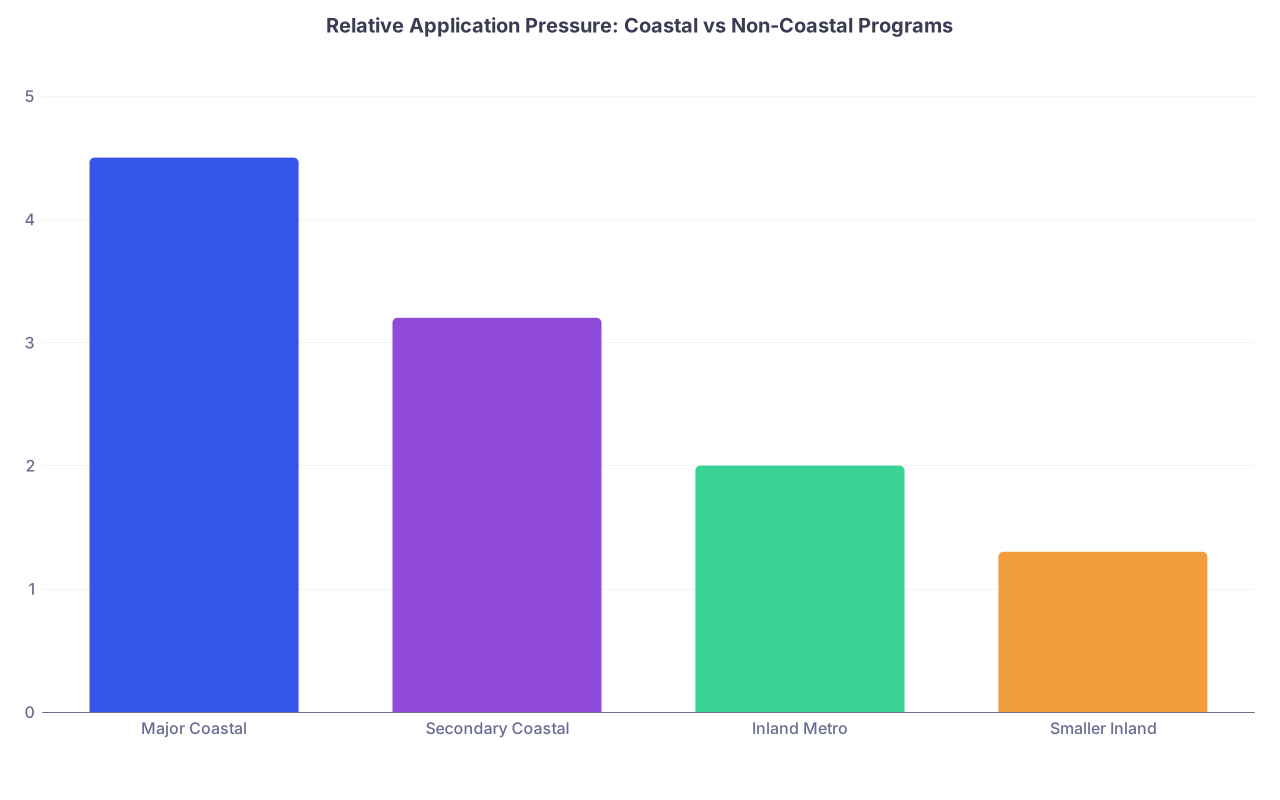
| Category | Value |
|---|---|
| Major Coastal | 4.5 |
| Secondary Coastal | 3.2 |
| Inland Metro | 2 |
| Smaller Inland | 1.3 |
Interpret that as “relative pressure” — number of competitive applicants per spot. The scale’s not exact, but the pattern is real:
- Major coastal cities (NYC, Boston, LA, SF, Seattle, San Diego, Miami) are absolutely flooded.
- Even mid‑tier coastal programs get treated like “safety” by people who are actually borderline for them.
- Inland or non‑glamorous metros get fewer applications from top‑tier candidates, which helps mid‑range applicants a lot.
Here’s the trap: applicants mentally reclassify programs based on geography, not competitiveness.
They say things like:
- “It’s not a big‑name program, so it should be safe.”
- “I didn’t apply to MGH or UCSF, just normal coastal programs.”
- “Everyone says this program is chill; it’ll be a good backup.”
What they ignore:
- That “normal” coastal program has 1,200+ applications for 8 spots.
- They screen heavily for:
- Higher Step 2 scores
- Top quartile class rank
- Strong letters from “known” faculty
- Regional ties (which you may not have)
So what looks like a backup is, statistically, as competitive as a “big name” program in a less popular city.
You cannot afford to classify programs only by brand name and location. That’s how you end up with a rank list full of landmines.
The Classic Reach‑Heavy Coastal Rank List (And Why It Fails)
Here’s a pattern I’ve seen more than once.
Applicant:
- Step 2 CK: 237
- Middle of the class at a mid‑tier MD school
- Solid but not spectacular research
- No AOA, no major awards
- Wants Internal Medicine, is “open” but strongly prefers West Coast
Their interview season:
- 4 interviews in California (two in LA, one in SF Bay, one in San Diego)
- 2 interviews in the Pacific Northwest
- 3 interviews in inland cities they don’t really want
- 2 low‑tier “safety” programs in small non‑coastal areas
Their rank list ends up like this:
| Rank | Location Type | Program Category |
|---|---|---|
| 1 | Major West Coast | Strong academic / reach |
| 2 | Major West Coast | Strong academic / reach |
| 3 | Major West Coast | Community but high‑demand |
| 4 | Coastal PNW | Reach |
| 5 | Coastal PNW | Mid‑tier but selective |
| 6 | Inland Metro | Mid‑tier academic |
| 7 | Inland Metro | Mid‑tier community |
| 8 | Small Non‑Coastal | True safety |
| 9 | Small Non‑Coastal | True safety |
On paper: 9 programs. That “should” be safe for IM, right?
No. Because here’s the unspoken reality:
- Ranks 1–5 are serious reaches for this specific profile.
- Rank 3 is geographically coastal but has insane demand.
- Rank 5 quietly prefers applicants with ties to the region and higher scores.
- So this person is realistically competing only at ranks 6–9.
That means:
- 5 of 9 spots on the list are mostly fantasy.
- 4 of 9 spots are actually in play.
Now factor in:
- Maybe they didn’t interview as strongly at #6 or #7.
- Maybe #8 had a weird vibe and is unlikely to rank them highly.
- Maybe #9 is a true safety but fills mostly with home students or DOs with strong local ties.
This is how a seemingly “normal” list becomes dangerous.
The mistake is not loving the coast. The mistake is failing to honestly categorize how those programs see you.
The Hidden Cognitive Biases That Push You Toward This Mistake
You’re not irrational. You’re human. But if you don’t catch these biases, they will quietly wreck your rank list.
1. The Geography Halo
You subconsciously think: coastal = cool = must be right for me.
So you:
- Downplay concerns about fit or support.
- Overweight vague things like “lifestyle,” “vibes,” and “I love the beach.”
- Talk yourself into “it’s worth the risk” without quantifying the risk.
2. The Prestige / Brand Drift
This one’s sneaky. You say you’re not prestige‑driven. But then your list is 70%:
- High‑reputation academic centers in coastal cities
- Community programs attached to big‑name universities
- Places all your classmates are bragging about
The drift goes like this:
- “I’ll apply broadly, but I really hope for West Coast.”
- “I’ll apply to some mid‑tier places there; I’m not aiming for the top 5.”
- “I got 5 interviews in coastal cities, so I must be competitive.”
No. You’re competitive enough for an interview. That doesn’t automatically mean you’re competitive enough to be ranked to match at those places.
3. Survivorship Bias From Social Media
You hear:
- “My friend with a 230 matched in SF.”
- “This DO from my school got into a great LA program.”
- “Somebody with worse scores than me matched in NYC.”
You don’t hear:
- The dozens of people with similar or better stats who did not match there.
- The IMGs who got 15 interviews inland and still went unmatched by aiming too high.
- The DO who ranked only 7 programs, 5 of which were huge reaches, because they were “set on the West Coast.”
You’re seeing the tiny fraction of success stories, and extrapolating them as normal.
How to Classify Coastal Programs Honestly (Not Optimistically)
If you want to avoid blowing your match on fantasy lists, you need a harsh, realistic classification system.
Here’s one that actually works.

Step 1: Build a Realistic Self‑Profile
For your specialty, collect:
- Step 2 score
- Class rank or quartile
- AOA or honors (or not)
- Number/quality of letters
- Research: quantity and impact
- Region: where you have real ties (grew up, med school, partner’s job, family)
Write it down. Don’t inflate. You’re not “top‑quarterish” if your school literally ranked you in the third quartile.
Step 2: Use Data, Not Vibes, to Gauge Competitiveness
For each program (coastal or not), look at:
- NRMP Charting Outcomes (for your degree type and specialty)
- Program’s own website (average Step, typical med schools, fellowship matches)
- Where current residents trained — do you see many like you, or mostly:
- Top med schools
- High Step scores
- Strong research backgrounds
Then classify each program relative to your profile, not your feelings:
- Reach: You’re clearly below their typical profile
- Target: You fit squarely in their usual range
- Safety: You’re at or above their usual range, or you have strong regional ties plus a solid profile
Now overlay geography:
| Type | Coastal | Non‑Coastal |
|---|---|---|
| Genuine Reach | Yes | Yes |
| Solid Target | Rare | Common |
| True Safety | Very rare | More common |
Notice the problem:
- True coastal safeties are basically mythical for average applicants.
- Many “mid‑tier” coastal programs are still reaches.
If your list ends up as:
- 6 coastal reaches
- 2 coastal “targets” (actually soft reaches)
- 3 true targets/safeties inland
You’re in danger.
Safe Ratios: How Many Coastal Reaches Can You Afford?
Let’s get practical. You want numbers. Good.
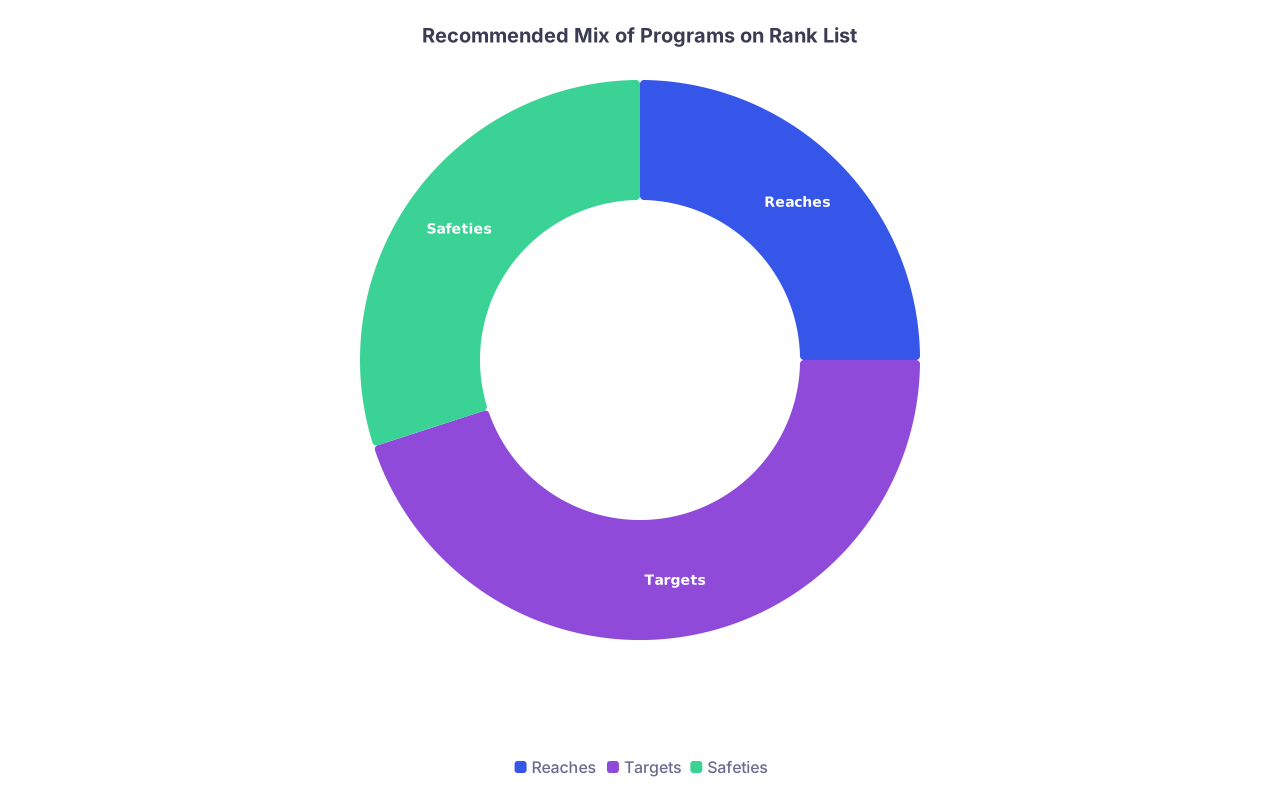
| Category | Value |
|---|---|
| Reaches | 25 |
| Targets | 45 |
| Safeties | 30 |
I don’t care how strong you are; a reach‑only list is arrogant and stupid. Generically, aim for:
- ~20–30% reaches
- ~40–50% targets
- ~25–35% safeties
For coastal‑heavy applicants, impose one more rule:
No more than half of your reach slots should be coastal.
Why? Because coastal reaches are usually more competitive than inland reaches at the same “academic level.”
Example for a mid‑range Internal Medicine applicant with 14 interviews:
Reasonable distribution:
- 3–4 reaches total
- 2 coastal
- 1–2 inland but academically strong
- 6–7 targets
- Maybe 2–3 coastal, rest inland
- 3–4 safeties
- Mostly inland or less popular metros
If your actual rank list looks like:
- 7 reaches (5 coastal)
- 4 targets (3 coastal)
- 1 safety
You’ve basically bet your career year on weather and fantasy.
Coastal “Lifestyle” vs. Career Reality: The Tradeoff People Misjudge
There’s a sentence I hear constantly: “I know it’s competitive, but I just really want a good lifestyle on the coast.”
Here’s the part people miss:
The “lifestyle” you’re imagining:
- Beach runs after clinic
- Farmers markets on weekends
- Walkable, cool neighborhoods
- Endless restaurant options
That’s not the actual PGY‑1 lifestyle in most coastal cities. The real picture:
- 60–80 hour weeks in a hospital that looks the same in Kansas as it does in LA
- Packed commute if you can’t afford to live near the hospital
- Insane rent, roommates well into your 30s, financial stress
- Being too tired on your days off to “take advantage of the city”
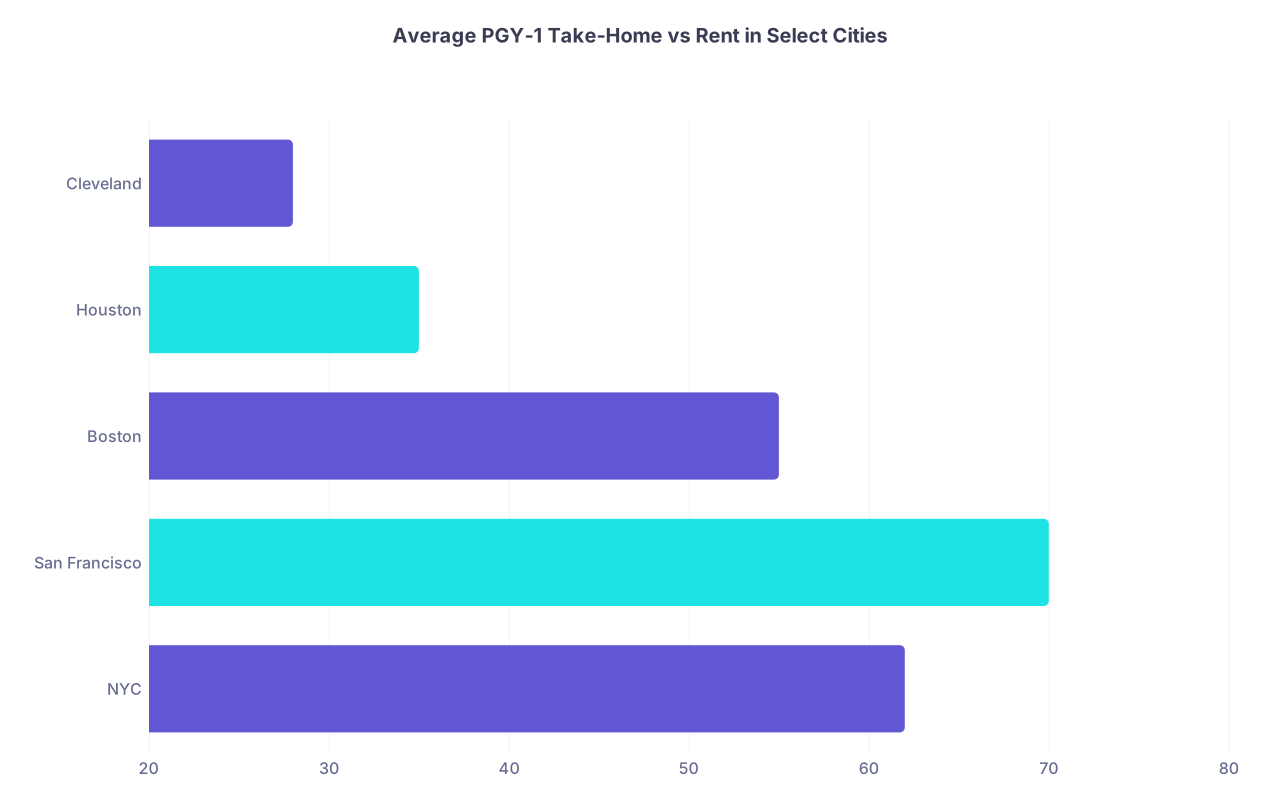
| Category | Value |
|---|---|
| NYC | 62 |
| San Francisco | 70 |
| Boston | 55 |
| Houston | 35 |
| Cleveland | 28 |
Interpretation example: approximate percent of take‑home pay eaten by average rent for a modest 1‑bedroom near the hospital. Again, numbers are illustrative, but the trend is obvious: coastal “dream” cities can strangle you financially.
So you’re taking extra match risk for a lifestyle you may not actually experience meaningfully during residency.
Is it wrong to want the coast? No. But it’s foolish to:
- Sacrifice match security
- Ignore financial reality
- Overrate city branding and underrate training quality and support
Especially when you’ll work mostly indoors, at night, exhausted.
A Safer Way to Chase the Coast (Without Torching Your Match)
You don’t have to give up your coastal dream. You just have to stop being naive about it.

| Step | Description |
|---|---|
| Step 1 | Clarify Coastal Priority |
| Step 2 | Add More Regions with Similar Lifestyle |
| Step 3 | Build Balanced List |
| Step 4 | Increase Total Applications |
| Step 5 | Classify Each Program as Reach Target Safety |
| Step 6 | Shift Some to Inland Targets |
| Step 7 | Lock Rank List |
| Step 8 | Non-Negotiable or Preference? |
| Step 9 | Too Many Coastal Reaches? |
Strategy 1: Multiple “Lifestyle‑Friendly” Regions
If you want:
- Outdoors
- Mild climate
- Walkable neighborhoods
That doesn’t exist only in LA or SF. Don’t make the rookie mistake of equating “coastal” with “only two cities I know.”
Consider:
- PNW inland cities
- College towns with strong hospital systems
- Medium metros with good parks, bike infrastructure
You can get 80% of the lifestyle with 30% of the competition.
Strategy 2: Use Residency as a Stepping Stone, Not a Final Destination
Your first job is much more flexible than your residency location. Matching inland does not mean:
- You’ll never work on the coast
- You can’t move to California later
- You’re stuck in the Midwest forever
But not matching absolutely does mean:
- Delayed training
- Reapplication stigma
- Often needing to compromise even more next cycle
Take the secure training spot now. Move to the coast in 3 years with a solid CV and a paycheck that actually supports living there.
The Red Flags Your Rank List Is Coastal‑Reach Heavy
Here’s your quick diagnostic. If 3 or more of these are true, your list probably isn’t safe.
- You’d “be disappointed” with more than half of your inland programs and are secretly expecting the coast to work out.
- You can name more coastal programs on your list than you can inland ones from memory.
- When friends ask where you want to match, you only mention coastal cities.
- You’ve said “I have X coastal interviews, so I should be fine.”
- You have fewer than 3 genuine safeties, and at least one of those is coastal (it probably isn’t really a safety).
- You have no strong regional ties to at least half of the coastal programs you ranked above your safeties.
If that stung, good. Fix it now, not on Match Week.
FAQs
1. If I have 12–15 total interviews, don’t the odds say I’ll match somewhere regardless of my list balance?
No. The NRMP data about “X interviews → high match rate” assume a rational, well‑balanced rank list. If you load your top 8–10 spots with reaches, you’re not playing the same game as that statistic. The match algorithm can’t save you from a list that doesn’t reflect where programs are realistically likely to rank you.
2. What if I value location more than program reputation or even specialty?
Then be honest with yourself and consciously accept higher risk. But don’t lie to yourself by pretending that high‑demand coastal programs are safe. If location is truly your top priority, you must: (a) apply more broadly within that region, including less popular programs, and (b) be ready to change specialties or level of competitiveness to make that location viable.
3. Are community programs on the coast reasonable safeties for mid‑range applicants?
Often not. Many “community” coastal programs are de facto mid‑tier or high‑tier because of demand. They get flooded with strong applicants who didn’t get interviews at top university hospitals. That pushes the bar way up. Don’t assume “community” automatically means easier; look at resident profiles and where they come from.
4. How many true safeties do I actually need on my rank list?
For most core specialties, I’d tell a typical applicant: at least 3–4 programs where you are clearly above their average profile or have strong regional ties, preferably both. And no, a program is not a safety just because your interview “felt good.” It’s a safety if your objective metrics and background match or exceed what they usually take, and you’re confident they didn’t interview far stronger competition in huge numbers.
Remember:
- Coastal ≠ safe. Treat coastal programs as statistically more competitive until proven otherwise.
- A fantasy‑heavy rank list can erase years of work in one match cycle.
- You can always move to the coast later. You can’t undo a no‑match year.