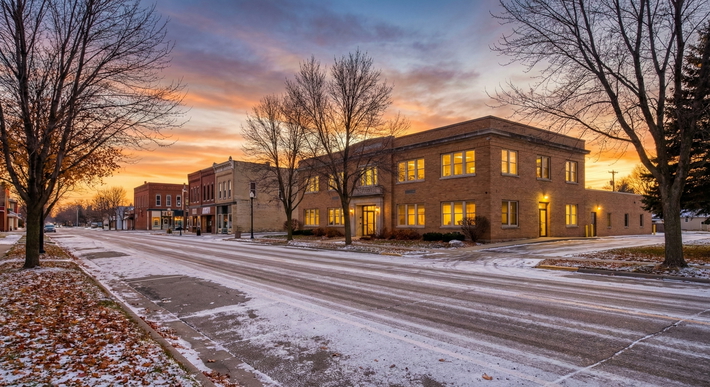
Only 21% of US residency programs are in rural or small-town settings, yet almost 60% of counties in the Midwest are primary care shortage areas.
That mismatch is exactly where rural Midwest residency tracks live. They sit in the gap between what academic medicine thinks trainees want (big-name tertiary centers, complex sub-specialty care) and what actual communities need (a competent physician who can manage a crashing septic farmer at 2 a.m. when the nearest tertiary center is 90 minutes away).
You want detail. Structure, case mix, career paths. Let’s break those down specifically, and we will stay anchored in the actual geography: Minnesota, Wisconsin, Iowa, the Dakotas, Nebraska, Kansas, Missouri, rural Illinois, rural Michigan, Indiana, Ohio.
1. What “Rural Midwest Residency Track” Actually Means
Most applicants think “rural track” = “weak program with fewer resources.” That is lazy thinking. The better mental model is “distributed training network.”
You are usually looking at one of three structures:
- Rural track embedded in a larger university or regional program
- Standalone community program in a micropolitan / frontier town
- 1–2 specific longitudinal “rural pathways” that layer on top of a normal categorical residency
Let’s make this concrete.
| Model Type | Example Region/Program Style | Home Base |
|---|---|---|
| University-affiliated track | University of Minnesota, UW, KU | Academic center |
| Community-based standalone | Critical access / regional hospitals | Local hospital |
| Longitudinal rural pathway | FM, IM, Psych “rural focus” tracks | Mixed sites |
The label on ERAS often looks like:
- “Family Medicine – Rural Training Track”
- “Internal Medicine – Community/Rural Track”
- “Psychiatry – Rural Focus Track”
- Sometimes: “Duluth Track”, “Siouxland Track”, “Northwoods Track”, etc.
You should always ask:
“Is this a separately accredited program, or a track within the main program sharing the same ACGME ID?”
Why you care:
- Separate ACGME ID → Usually separate match list, separate complement, more defined structure.
- Track within main ID → Same core rotation requirements, but with added rural blocks or continuity clinic in a rural setting.
2. Structural Anatomy: How Training Is Split Between Sites
Here is the core design choice: how many months per year are you physically remote from the main tertiary center?
A fairly typical breakdown for a 3-year rural family medicine track in the Midwest:
- PGY1: 9–10 months at “mothership” regional center, 2–3 months at rural site
- PGY2: ~6 months regional, ~6 months rural
- PGY3: 9–11 months rural, a few elective months back at regional
For IM and psych, the ratio is often more “academic-heavy” early, with rural electives and offsite clinics sprinkled later.
To make that tangible:
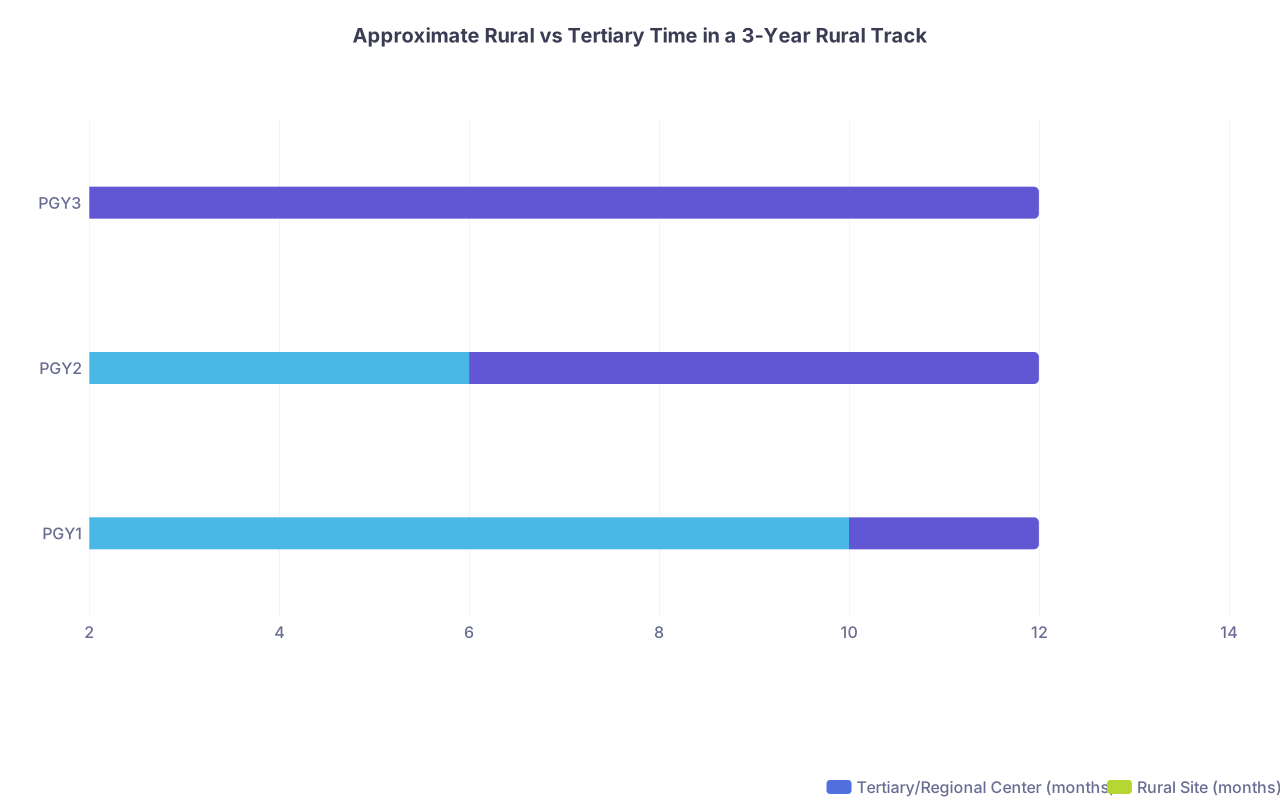
| Category | Tertiary/Regional Center (months) | Rural Site (months) |
|---|---|---|
| PGY1 | 10 | 2 |
| PGY2 | 6 | 6 |
| PGY3 | 2 | 10 |
There are 4 structural components you should examine closely.
2.1 Home Base and “Identity”
Where do you live most of the time, who signs your evaluations, and whose culture you inherit.
Patterns:
University-affiliated rural tracks:
- Faculty meetings, didactics often anchored at the main program.
- Rural site faculty may be community docs with voluntary faculty appointments.
- You might be driving or Zooming to weekly academic half-days.
Standalone rural community programs:
- Program director is on-site.
- Didactics are local, often with teleconferenced subspecialty talks from a regional partner.
- Culture is more “this town is your residency” than “you are a satellite of Big University X.”
Ask on interview day:
- “Where do most residents actually live after PGY1?”
- “If I walk into the hospital, who actually knows me and owns my education?”
The answer tells you whether you are truly embedded, or just a tourism rotation at a rural clinic.
2.2 Didactics and Subspecialty Exposure
Rural Midwest tracks solve the subspecialty problem in three ways:
- Front-loaded tertiary rotations: All your cardiology, nephrology, ICU time concentrated at the larger partner site during PGY1–early PGY2.
- Tele-education model: Weekly didactics via Zoom, subspecialist-run case conferences, virtual M&M, remote EKG/echo reviews.
- Visiting specialist clinics: Community cardiologist comes 2 days per month; you staff consults and follow-ups with them.
The trade-off: you do not get the constant daily drip of tertiary subspecialty exposure that big urban residencies get. You do get repetition of bread-and-butter problems with occasional spikes into severe pathology.
2.3 Call Structure and Supervision
This is where rural tracks separate the adults from the children.
Typical rural Midwest call patterns when you are out at the rural site:
- Inpatient census: 5–12 patients (FM/IM mix), plus a small swing-bed / SNF population
- Night call: In-house in PGY1 (usually at the tertiary site), home call or hospitalist-style nights PGY2–3 at rural site
- Supervision:
- Often 1 in-house attending on call for the hospital
- Or home-call attending with mandatory in-person presence for unstable cases / codes
- Tele-ICU support from a larger system (very common in MN, WI, IA, ND, SD)
Key questions:
- “Who is in the building at 2 a.m. when I am covering the floor and ED admits?”
- “How often does the attending actually come in for sick patients?”
- “Who runs codes? Me or the attending?”
I have seen programs where PGY3 FM residents are essentially the first call for everything: floor, ED admit, OB, nursery. That can be outstanding training. It can also be a malpractice trap if supervision is lax.
2.4 Procedural Training Setup
Rural Midwest hospitals run on procedures. Because if you do not do them, nobody else is driving in from the tertiary center at midnight.
Common procedural areas for rural-track FM and IM:
- Hospital: central lines, intubation, chest tubes (varies by hospital), thoracentesis, paracentesis, lumbar puncture
- Outpatient: skin biopsies, joint injections, IUDs/implants, endometrial biopsy, abscess I&D, toenail procedures
- OB (FM OB-heavy tracks): vaginal deliveries, operative deliveries in selected programs, 1st-assist C-sections
Psych tracks: less procedural, but more ECT exposure at regional centers, and a lot of emergency psychiatry in hospitals with no in-house psych.
Your red flag: “We do a lot of procedures” but no log system, no minimums, no dedicated block to teach them. Look for explicit numbers and tracking.
3. Case Mix: What You Actually See All Day
Assume a typical critical access hospital or 50–150 bed regional facility in the Midwest. What walks through the door is determined by three things:
- Distance to tertiary center
- Availability of specialists (cardio, ortho, general surgery, OB, psych)
- Weather and industry (farming, meat packing, manufacturing, oil/gas in parts of ND)
Let’s go category by category.
3.1 Inpatient Medicine
You are not doing ECMO. You are absolutely managing real, complicated medicine.
Typical inpatient panel during flu season:
- Decompensated CHF with COPD overlap, on 2–4 L oxygen baseline
- Uncontrolled type 2 DM with DKA or HHS
- Community-acquired pneumonia, often severe in elderly
- Alcohol withdrawal, sometimes severe
- Sepsis from urinary or skin source, sometimes ERCP-level biliary disease that gets transferred out
- Stroke/TIA (CT capable, tPA decision, then transfer vs keep)
You also see a lot of:
- Nursing home decompensations
- Failure to thrive / complex geriatric syndromes
- Post-op general surgery and ortho patients with medical comorbidities
The biggest difference from big-city training: continuity of very sick but not-quite-ICU patients. You follow them from admission through discharge and often see them back in clinic. You learn what your decisions look like three months later.
3.2 Emergency and Trauma
Rural Midwest ERs have a hierarchy:
- Minor trauma and medical complaints handled locally
- Major trauma (rollovers, high-speed collisions, farm crush injuries) stabilized then shipped
Patterns you will see:
- ATV and snowmobile trauma in MN/WI/MI
- Combine and machinery trauma in IA/NE/KS/SD/ND
- Hunting accidents, particularly in the Upper Midwest
- Lots of lacerations, minor fractures, concussions
For medical emergencies:
- STEMIs → often PCI center 60–120 minutes away; you give thrombolytics if indicated, then transfer
- Strokes → tPA decision, telestroke consults, then helicopter or ground transfer
- Severe sepsis → central line, vasoactive agents, tele-ICU involvement
If you are FM or IM in a track that staffs the ER, you will learn fast where your comfort zone ends. Good programs have strict transfer criteria and clear protocols. Bad ones “cowboy” cases they should not.
3.3 Obstetrics and Women’s Health
This is where programs diverge dramatically.
- Some rural hospitals in the Midwest have lost OB altogether. No L&D, just triage and transfer.
- Others deliver 300–800 babies per year and are excellent sites for FM OB or rural-track OB-GYN exposure.
Common scenarios:
- Multiparous women with limited prenatal care
- Gestational diabetes and hypertension, often with poor follow-up
- VBAC policies vary; some hospitals refuse them entirely
- Epidural coverage may be spotty. Nights and weekends can get “interesting.”
If you are specifically interested in rural OB:
- Ask for exact delivery numbers per resident
- Ask what proportion of those are continuity patients
- Ask who manages shoulder dystocia, PPH, category II tracings at 3 a.m. (resident vs attending in-house vs on-call)
3.4 Psychiatry and Behavioral Health
The rural Midwest has horrific mental health access. Which is precisely why rural psych tracks exist, and why FM/IM residents end up doing quite a bit of front-line psych.
What you see:
- High volumes of depression, anxiety, PTSD, bipolar
- Substance use disorders: alcohol, meth, opioids (pattern varies by state and region)
- Suicidal ideation without easy access to inpatient beds
- A lot of interface with law enforcement
Psych-specific rural tracks often use this model:
- Inpatient psych at a regional center (20–60 beds)
- Outpatient clinics in rural townships, sometimes traveling clinics
- Tons of telepsychiatry exposure
Non-psych residents: you become the de facto mental health provider for many of your continuity patients. You will write more SSRI/SNRI/bupropion scripts than you expect.
3.5 Outpatient / Continuity Clinic
This is where rural Midwest training really separates itself.
Your continuity clinic panel is often:
- Multigenerational families
- Chronic disease management with inconsistent insurance coverage
- A mix of Blue-collar workers, farmers, retirees on fixed income, and immigrants working in meatpacking or manufacturing
Common outpatient problems:
- Very poorly controlled diabetes (A1c 9–12%) with late complications
- Chronic back pain and legacy opioid prescriptions
- OSA, obesity hypoventilation, BMI frequently >35–40
- Occupational disease: hearing loss, COPD in farmers, repetitive strain injuries
- Preventive care gaps that are frankly shocking if you come from an urban, insured environment
You learn to do actual primary care. Negotiation, not just guideline recitation.
4. Career Paths After Rural Midwest Tracks
Let me be blunt. These tracks are not designed to send 80% of graduates into cardiology fellowships on the coasts.
They can send a small subset into fellowship. But their primary product is:
- A physician who can practice broad-scope FM or IM in small-town America
- Or a psychiatrist who is comfortable managing high-need patients with limited resources
- Or occasionally an EM doc who came through FM/IM then did additional training
Let’s break down realistic career arcs.
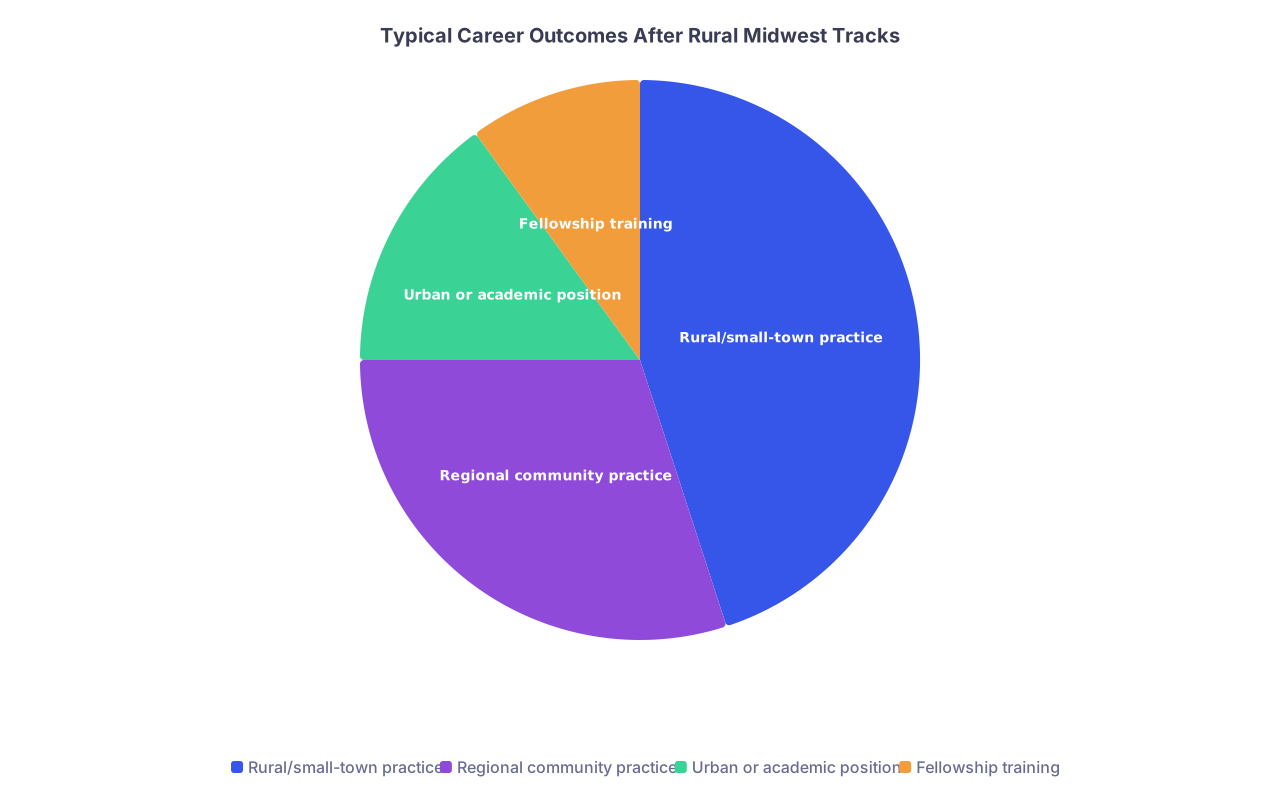
| Category | Value |
|---|---|
| Rural/small-town practice | 45 |
| Regional community practice | 30 |
| Urban or academic position | 15 |
| Fellowship training | 10 |
4.1 Direct Rural or Small-Town Practice
The most common route.
You finish residency and either:
- Stay on staff at your training hospital
- Or move to a similar-sized town in the same state or region
Pros:
- Strong demand. Multiple offers, sign-on bonuses, loan repayment.
- You already know the referral patterns and specialists.
- You are used to the practice style and expectations.
You may end up as:
- FM physician doing clinic + inpatient + possibly OB + occasional ED shifts
- IM hospitalist in a 50–150 bed hospital
- Outpatient internal medicine with light inpatient coverage
- Full-spectrum rural psychiatrist, often with telehealth mixed in
4.2 Regional Community or Suburban Practice
A decent chunk of graduates decide pure rural life is not for them but remain in the same health system.
Example:
- Train in a rural track at a critical access in northern Minnesota.
- Take a job in a 100k-pop mid-sized city like Duluth or St. Cloud.
- Or move closer to Des Moines, Madison, Kansas City, etc.
Health systems love this. You are already credentialed, you know their EMR, their politics, their transfer policies.
4.3 Urban or Academic Positions
Yes, it happens. Usually:
- You are the unusual resident who published, networked, or had a niche focus.
- You want to bring genuine broad-scope experience to an academic role.
Urban centers occasionally snap up rural-trained graduates for:
- Community faculty positions (precepting residents, working in system-owned clinics)
- Hospitalist roles where they explicitly value independent decision-making
- Teaching positions in “rural medicine” or primary care tracks
Is it the majority? No. But it is not fantasy either.
4.4 Fellowship Training
This is where applicants get anxious.
Reality:
- Fellowship from a rural track is entirely possible in primary-care heavy fields:
- Sports medicine
- Geriatrics
- Palliative care
- Addiction medicine
- OB fellowships for FM
- Slightly harder but still realistic from good tracks:
- Cardiology
- Pulm/CC
- GI
- Heme/Onc
- Very feasible in psych:
- Child and adolescent
- Addiction
- Forensic psychiatry
- Consultation-liaison
The bottleneck is not your “rural” label. It is whether:
- You got strong letters from recognizable faculty
- You fought for research or QI projects
- You rotated at tertiary sites with subspecialists who can advocate for you
If you want fellowship, you must engineer that from PGY1. Do not drift and blame “the rural track” when you applied with a CV that screams “intended to be a generalist.”
5. Who Thrives (and Who Struggles) in Rural Midwest Tracks
Personality fit matters more here than in almost any other setting.
I will be unapologetically direct.
You will likely do well in a rural Midwest residency track if:
- You are comfortable with responsibility and controlled uncertainty.
- You like the idea of being “the doctor” for a community, not just “one of 50 residents on a massive team.”
- You do not need a Michelin-star restaurant and live theater every weekend to feel alive.
- You can tolerate weather: real winter (MN/ND/SD/WI/MI) or storm seasons (KS/NE/IA/MO).
- You actually enjoy building long-term relationships with patients.
You will struggle if:
- You want ultra-narrow sub-specialization as early as possible.
- You resent home call or feel unsafe without 24/7 in-house attending presence.
- You need the anonymity of a large city. In a town of 8,000, your patients will see you in the grocery store.
- You are inflexible about cultural or political differences; rural Midwest culture is not a Twitter feed.
6. How to Evaluate Specific Rural Midwest Programs
Here is a practical evaluation framework I would actually use.
6.1 Ask for Hard Numbers
Not vibes. Numbers.
- Inpatient census averages by season
- OB deliveries per resident, if applicable
- Procedure counts with minimum targets
- Fellowship match list for the last 5–10 years
- Percentage of graduates staying rural, and where
If they cannot answer that, either the program is young or disorganized. Neither is ideal.
6.2 Examine the Rotation Map
You want to see exactly where you are each month.

| Step | Description |
|---|---|
| Step 1 | PGY1 Start |
| Step 2 | Regional Center - Inpatient |
| Step 3 | Regional Center - ICU |
| Step 4 | Regional Center - OB |
| Step 5 | Rural Site - Inpatient/Clinic |
| Step 6 | PGY2 Mixed Sites |
| Step 7 | Rural Site - Continuity Heavy |
| Step 8 | PGY3 Mostly Rural |
Look for:
- Clear progression of responsibility
- Balance between high-acuity learning early and longitudinal continuity later
- Reasonable commute or housing arrangements during rural blocks
6.3 Look at Faculty and Stability
Red flags:
- Constant PD turnover
- Heavy reliance on locums for attending coverage
- One or two overworked core faculty trying to keep everything afloat
Green flags:
- Multi-year stable PD with clear vision
- Faculty who are themselves broad-scope rural clinicians
- Active involvement in state AAFP/ACP/APA, rural health organizations
6.4 Ask Residents the Real Questions
Off-camera, away from PDs, ask:
- “When you are out at the rural site, do you ever feel unsafe clinically?”
- “How responsive are attendings when you call at night?”
- “What is the worst logistical problem of this track: housing, driving, weather, call?”
- “If you could do it again, would you still choose the rural track?”
You will get at least one unvarnished answer. Listen to that one.
7. How Rural Midwest Training Fits into the “Future of Medicine” Narrative
You asked to classify this under “Miscellaneous and Future of Medicine.” Good. Because rural tracks are not a side-show; they are the stress test for all the big buzzwords: telemedicine, scope-of-practice battles, care equity, workforce planning.
7.1 Telehealth and Distributed Care
Rural residency tracks are already living inside the “virtual team” model:
- Tele-ICU oversight from larger centers
- Tele-psych consults for EDs with suicidal patients and no local psych
- Remote radiology reads overnight
- Remote didactics and case conferences
The trainee who learns in this environment will be much better adapted to the hybrid in-person/virtual healthcare system we are drifting into.
7.2 Expanding Physician Scope vs Midlevel Expansion
You will see the sharp edge of the scope-of-practice debates:
- NPs/PAs running rural clinics
- CRNAs covering anesthesia in small hospitals
- Sometimes a single physician “supervising” multiple midlevels scattered over a 50–100 mile radius
How you are trained will determine whether you are:
- A broad-scope physician who is irreplaceable in complex or high-risk situations
- Or a glorified protocol follower who is indistinguishable from midlevels in real-world function
Well-run rural tracks lean heavily into autonomy + robust training to make their graduates the former.
7.3 Workforce and Policy
If you care about policy, this is fertile ground:
- J-1 waiver sites for international graduates
- National Health Service Corps positions
- State loan repayment programs targeted at rural counties
- Experiments with team-based care, community health workers, mobile clinics
Many rural-track graduates end up doing informal policy work: serving on hospital boards, county health committees, school boards. That is part of the job whether anyone says it on interview day or not.
8. Final Thoughts
Rural Midwest residency tracks are not “backup” options for people who could not match in the city. The good ones are intense, demanding training environments that turn out broad, flexible, clinically tough physicians.
Your job is to be honest with yourself about what you want:
- If you crave narrow subspecialty focus and urban amenities, these tracks will feel suffocating.
- If you want to be the kind of doctor who can walk into almost any medical situation in a small hospital and make good decisions with limited help, this is where you train.
With these structural, case-mix, and career realities in your head, you are ready for the next step: putting actual program names on a list and dissecting them one by one. But that is a story for another day.
FAQ (Exactly 6 Questions)
1. Are rural Midwest residency tracks considered less competitive than urban university programs?
Generally yes, on raw application numbers and average board scores, rural tracks tend to be less “competitive” in the superficial sense. But that does not mean they are easy spots. The best ones still screen hard for fit, resilience, and genuine interest in rural practice. You can get in with middle-of-the-pack scores if you show strong clinical performance and a credible rural story; you will not get in just because you need a backup.
2. Will a rural track limit my ability to get a fellowship later?
It can, if you treat residency as a three-year rural vacation. If you plan early, do electives at tertiary sites, cultivate subspecialist mentors, and produce some basic scholarship or QI work, you can absolutely match primary-care oriented fellowships and even some competitive ones. Program name matters less than letters, performance, and evidence that you can function at a tertiary level when required.
3. How bad is the isolation and lifestyle in small Midwestern towns for residents?
That depends heavily on you. If your happiness is tied to nightlife, diverse restaurant scenes, and anonymity, you will feel boxed in. If you are comfortable with quiet, outdoor recreation (hunting, fishing, hiking, snow sports), and a slower social rhythm, it can be excellent. The real issue for many is spousal/partner employment and social support; ask specifically how the program supports partners and families.
4. Do rural Midwest programs pay less or offer weaker benefits than urban ones?
Resident base salaries are surprisingly similar across many regions, driven more by larger system policies than location. Some rural-affiliated programs add housing stipends, loan repayment supplements, or retention bonuses if you stay on after graduation. The real financial difference comes post-residency: rural attending jobs often pay significantly more with generous incentives and loan support compared to urban positions in the same state.
5. I did not grow up rural. Will programs take me seriously if I apply to rural tracks?
Yes, if you can articulate a believable reason you want to be there. That might be values (continuity, broad-scope practice), a spouse’s hometown, previous Peace Corps or AmeriCorps-style work, or meaningful rotations in underserved settings. What tanks applicants is vague “I want to help people” rhetoric with zero evidence. Show concrete steps you have taken toward rural or underserved medicine, even if you grew up in a city.
6. Should I rank a rural track above a solid urban community program if I am undecided about future plans?
If you are truly undecided, my bias is this: choose the program that gives you the broader skill set and more autonomy with strong supervision. That is usually the rural track or a very strong community program, not the hyper-specialized urban residency where you are the third person writing notes on a 30-patient team. Skills generalize; niche exposure can be added later. But you need to be honest about whether you and your family can handle three years in a small town before you put it at the top of your list.
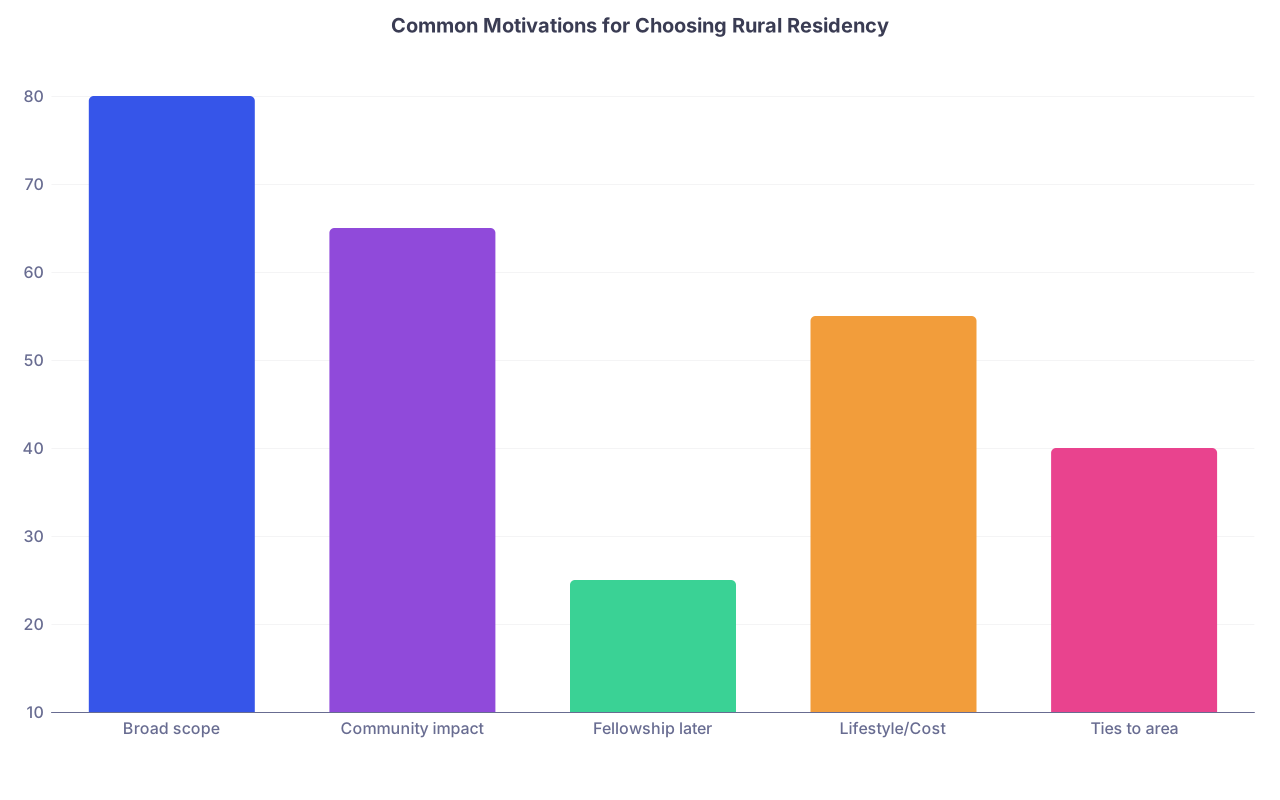
| Category | Value |
|---|---|
| Broad scope | 80 |
| Community impact | 65 |
| Fellowship later | 25 |
| Lifestyle/Cost | 55 |
| Ties to area | 40 |