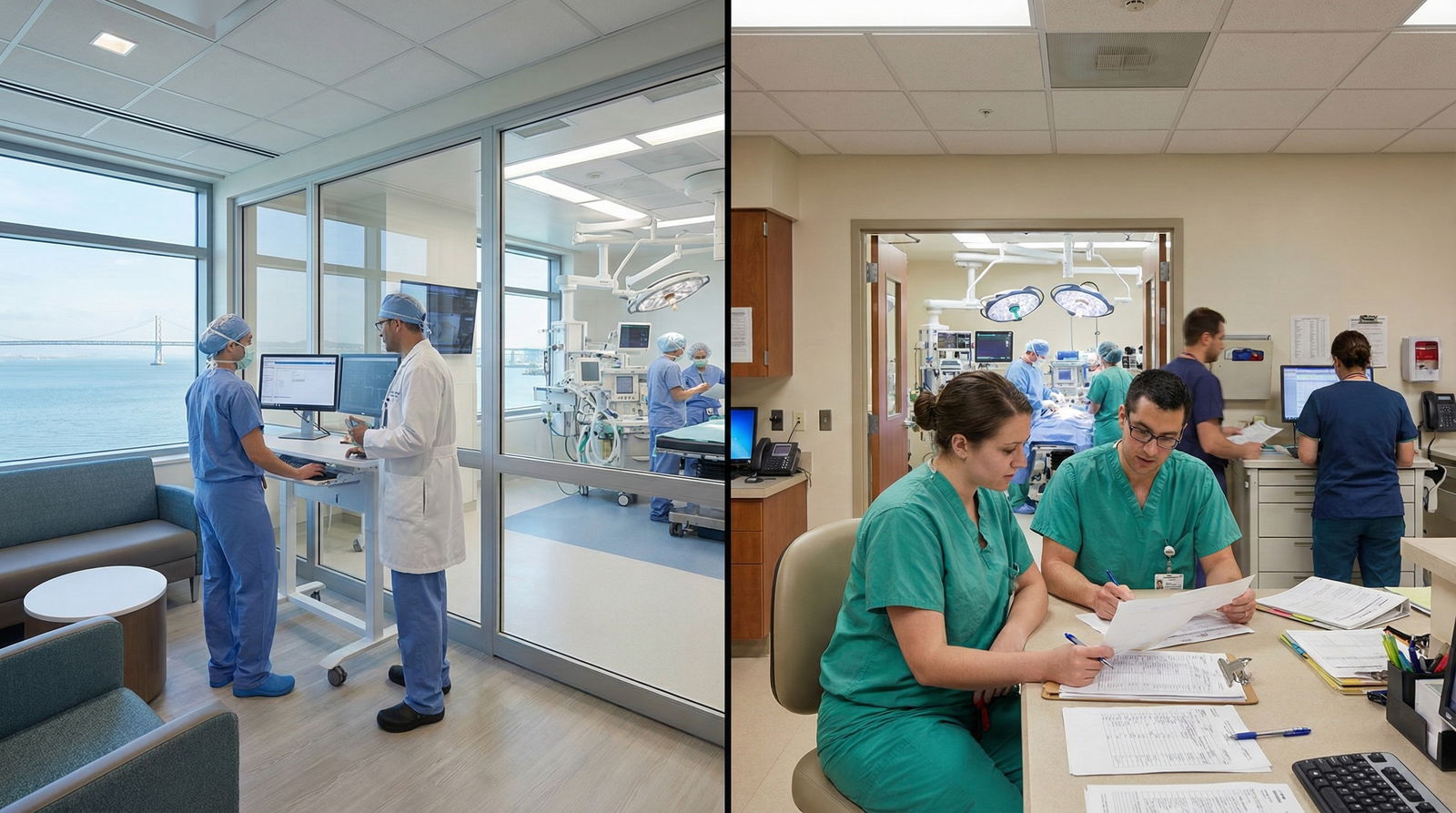
The myth that “big coastal programs give the best training” is only half true. When it comes to procedural autonomy, a lot of the time the opposite is happening.
Let me break this down specifically.
What We Actually Mean by “Procedural Autonomy”
Residents use “autonomy” as a catch‑all. That muddies the conversation. I am going to be precise.
Procedural autonomy has three layers:
- Patient ownership – You are the primary decision-maker for workup and plan, not just executing orders someone else wrote.
- Technical independence – You are physically doing the procedure, not retracting, not “holding the needle.”
- Supervisory distance – How close the attending is: scrubbed and hands-on, scrubbed but hands-off, in-room unscrubbed, or out of the room entirely.
On a spectrum:
- Zero autonomy – You prechart, consent, and observe. Attending or fellow does everything.
- Graduated autonomy – You do key steps with direct attendings scrubbed, then with attendings unscrubbed, then with indirect supervision.
- High autonomy – You run the list; attendings step in only for judgment calls or complex maneuvers.
Now: how coastal vs inland programs structurally push you toward one end of that spectrum.
Why Coastal vs Inland Even Matters
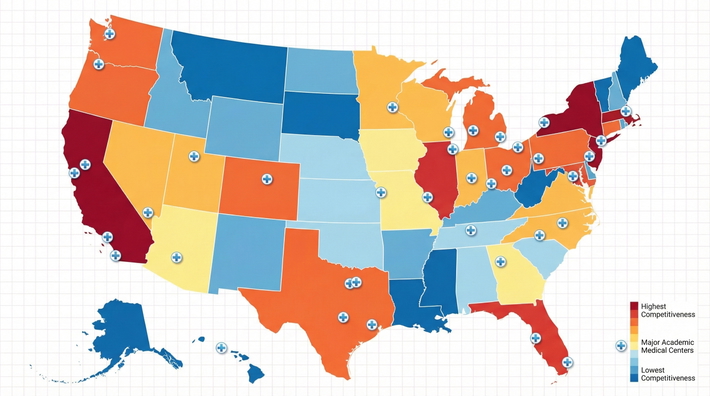
This is not magic geography. It is about case mix, hospital market, and risk tolerance that often track with geography.
Patterns are predictable:
Coastal programs tend to be:
- High-profile, tertiary/quaternary academic centers
- Fellowship-heavy
- Heavily subspecialized with multiple layers of learners
- In regions with dense program competition and affluent, litigious patient populations
Inland programs (especially in the Midwest, Mountain West, parts of the South) are more often:
- Large community or hybrid community-academic centers
- Fewer or no fellows
- Broad generalist practice with fewer subspecialty silos
- Serving medically underserved, less resourced, less competitive markets
Those structural differences create very different autonomy ecosystems.
How Geography Drives Case Mix and Volume
Before autonomy, you need cases.
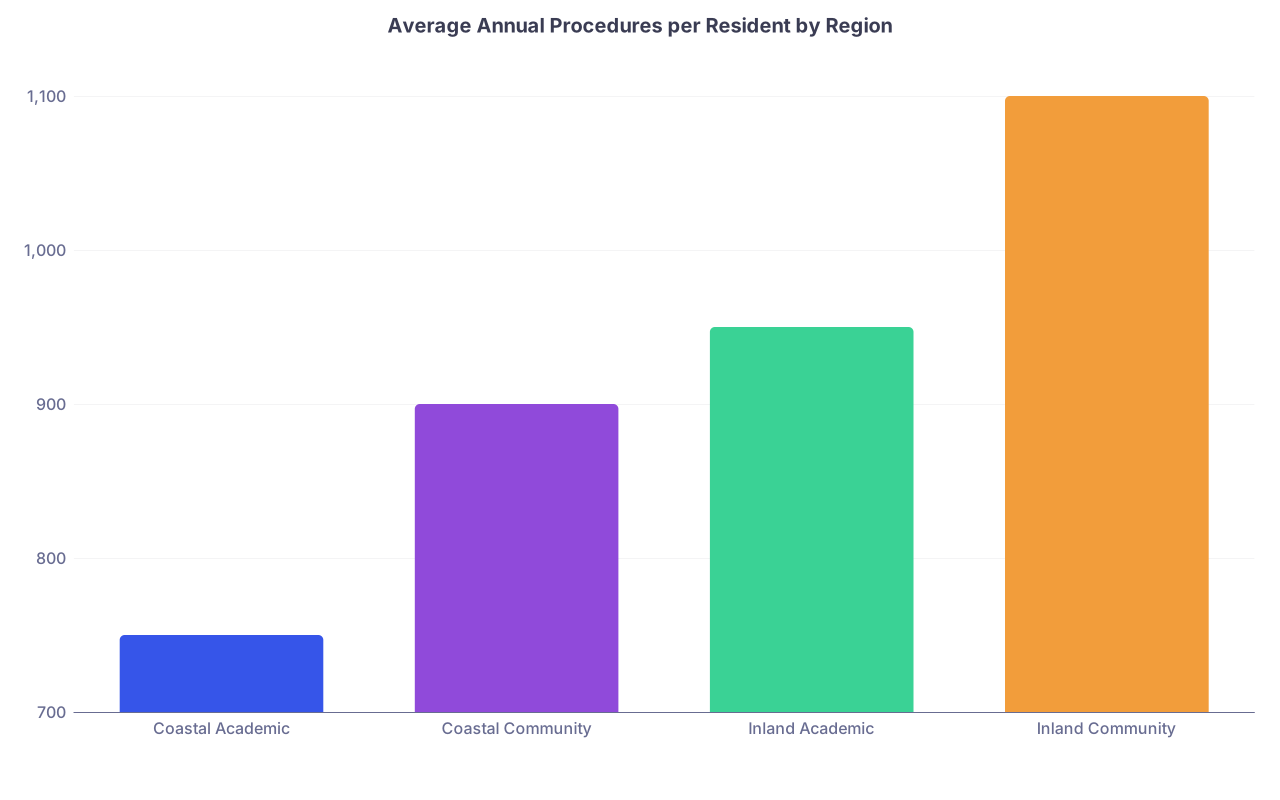
Case Volume: Coastal vs Inland
| Category | Value |
|---|---|
| Coastal Academic | 750 |
| Coastal Community | 900 |
| Inland Academic | 950 |
| Inland Community | 1100 |
That is a rough, but realistic, pattern I have seen reading case logs and program data:
Coastal academic centers often have:
- High total volume
- But distributed across:
- Fellows
- Advanced practice providers (NP/PA)
- Subspecialty attendings with narrow practice scopes
- Residents touch a lot; they own less.
Inland community-heavy systems often:
- Have fewer total complex cases
- But far more bread‑and‑butter cases per resident
- Less competition from fellows and fewer APPs doing procedures
If you are training in a coastal flagship tertiary center, a single pancreas transplant counts as a “case,” but it may give you about 3 minutes of actual hands-on time. Compare that to an inland trauma-heavy community hospital where you are doing 8 ex-laps and 20 appendectomies a month, actually holding the knife.
Pathology Mix and Acuity
Coastal academic centers:
- Strong transplant, ECMO, LVAD, complex oncology, rare diseases
- Heavy referral patterns: advanced pathology but often with high attending/fellow control
- Patients with private insurance who can (and do) demand named surgeons
Inland programs:
- Trauma, emergency general surgery, OB, basic ortho, endoscopy, bread-and-butter IM procedures
- Sicker baseline populations with fewer outpatient resources, leading to higher acuity “late” presentations
- More “nobody else is here; you’re it” scenarios
Complex does not automatically mean more autonomy. In fact, complexity often decreases autonomy because attendings will not delegate risk. The question is not “Who has the most exotic cases?” but “Who lets residents actually run with the cases they have?”
The Fellowship Problem: Layers of Learners
This is the killer variable that applicants consistently underestimate: fellow density.
How Fellows Shift Autonomy
Let’s say you are a surgery resident at an elite coastal program with:
- Trauma fellows
- Surgical critical care fellows
- HPB fellows
- Vascular fellows
- MIS/bariatric fellows
- Colorectal fellows
Where do you think all the major cases go?
The “golden cases” you tell yourself you will do as a senior are exactly the ones the fellows are there to protect. You end up:
- As a PGY-3: 2nd assist on the Whipple, while the HPB fellow drives
- As a PGY-4: waiting for a trauma fellow to stabilize the patient before you get to close skin
- As a PGY-5: finally running a room, but still losing many complex cases to fellows because “they need numbers too”
Contrast that with an inland hybrid or strong community program:
- No HPB fellow. No trauma fellow. Maybe a single vascular fellow or none.
- That Whipple still might go to the HPB referral center, but every colectomy, gastric bypass, lap chole nightmare, and ex-lap in the county is yours.
- By senior year, you are the de facto fellow.
I have read too many case logs where coastal “name” programs produce residents with underwhelming independent operative numbers in core procedures, while inland “no-name” programs have seniors with 200+ major cases where they were primary surgeon.
Culture and Risk Tolerance: Litigation, Reputation, and “Brand Protection”
Coastal cities, especially on the West Coast and Northeast corridor, share three traits:
- Higher plaintiff attorney density and legal aggressiveness
- Strong “hospital brand identity” that leadership is actively protecting
- Patients who Google every attending, every complication, every online review
That trickles down into clinical behavior and autonomy.
You see:
- Attendings who scrub “just in case” for relatively straightforward cases
- Reluctance to let senior residents close independently, perform blocks, or manage airways without the attending in the room
- Formal or informal policies that certain procedures are “attending-only” due to medicolegal scars
In inland systems, particularly safety-net and regional referral centers:
- Less brand obsession, more “just get the work done” mentality
- Fewer lawyers trolling the surgical complication list
- Administrators who value throughput and coverage over PR polish
This does not mean cowboy medicine. It means there is more willingness to let residents:
- Run codes without being micromanaged
- Do lines, chest tubes, paracenteses, LPs as the default operator
- Start bread‑and‑butter procedures with attendings available rather than hovering
The same risk profile shows up in internal medicine, EM, OB/GYN, anesthesia. Autonomy is partly culture, and culture follows the fear of being sued and the fear of bad press. Coastal programs often play defense. Inland programs are usually more practical.
Service Structure: Academic Tertiary vs Community Workhorse
Service design either amplifies or throttles procedural independence.
Common Coastal Academic Patterns
- Subspecialty silos: Cardiology, GI, Pulm, ID, hepatology all owning narrow slices of care. Procedure ownership follows the subspecialties.
- Procedure services run by NPs/PAs or dedicated proceduralists:
- Central line service staffed by hospitalists or APPs
- Dedicated IR doing every drain, every paracentesis, every thoracentesis
- Anesthesia doing all airways in the ED/ICU
- Call systems where residents are more coordinators than doers:
- You call IR, you call anesthesia, you call surgery; you rarely are the first operator
Common Inland / Hybrid Patterns
- Fewer subspecialists → broader generalist practice:
- General surgeons cover “everything that bleeds”
- Hospitalists and intensivists do a wide range of bedside procedures
- ED physicians handle more of their own reductions, splints, airways
- Limited IR coverage:
- No IR after 5 pm, or only for true life-threatening issues
- That means central lines, chest tubes, bedside drains, and some paracenteses are on you
- “If the resident can do it, the resident will do it” culture:
- Staff expect you to be procedural competent; the system is literally built around that assumption

| Step | Description |
|---|---|
| Step 1 | Need central line |
| Step 2 | Call line service |
| Step 3 | Call ICU fellow or APP |
| Step 4 | Resident performs line |
| Step 5 | Attending available for help |
| Step 6 | Coastal program |
| Step 7 | Inland program |
That diagram is overly simple, but the pattern is real. At many coastal flagships, the resident is not the default proceduralist. Inland, they usually are.
Specific Specialty Examples: What Actually Changes
Let’s make this concrete. I will walk through a few specialties where the regional differences are very visible.
General Surgery
Coastal big-name academic program:
- Whipples, transplants, complex HPB, advanced MIS, ECMO cannulations. Impressive case list.
- But:
- Fellows occupy every high-value case: HPB, trauma, vascular, thoracic
- Many lines/chest tubes handled by ICU or ED; bedside procedures by fellows or APPs
- Attendings scrub most cases and are hands-on for key parts
- Senior residents may finish with solid numbers but limited unsupervised time as primary surgeon
Inland hybrid/community-heavy program:
- More bread-and-butter:
- Appendectomies, cholecystectomies, hernias, bowel resections, ex-laps, basic vascular, C-sections coverage
- Fewer fellows → residents are default “next level”:
- PGY-3/4s running trauma bays
- PGY-5s doing colectomies, open choles, emergent ex-laps essentially as independent surgeons with an attending available
- Autonomy pattern:
- Junior: lines, tubes, bedside procedures from day one
- Mid-level: operating major cases with attendings unscrubbed or stepping in briefly
- Senior: entire cases “skin to skin,” sometimes with attending out of room for routine parts
Internal Medicine
Coastal academic IM:
- Tertiary-level complexity: ECMO, advanced heart failure, transplant medicine
- ICU often run by:
- Critical care fellows
- Separate ICU procedure teams
- Thoracenteses, paracenteses, lines:
- Often by fellows, IR, or procedure services
- You may finish 3 years at a major coastal academic center with:
- Strong cognitive skills
- But fewer than 20 independently performed central lines, maybe single digits in LPs
Inland IM program:
- Fewer subspecialty walls:
- Intensivists and hospitalists both heavily procedural
- ICU procedural expectations:
- Intern year: supervised lines and paracenteses are common
- Senior year: you are the one called for septic shock at 3 am, not IR
- Residents routinely graduate with:
- Dozens of lines, thoracenteses, paracenteses, and often LPs done as primary operator
OB/GYN
Coastal academic OB/GYN:
- Heavy MFM, REI, gyn-onc presence
- High-risk and complex OB/gyn-onc cases often run by:
- Fellows as primary operators
- Attendings very reluctant to delegate key portions
- Labor floor dynamics:
- Many private attendings on L&D who control their own cases
- Residents may assist but not independently manage as many deliveries or C-sections
Inland OB/GYN:
- Broad generalist practice, fewer subspecialty silos
- L&D coverage:
- Residents often the default for unassigned or public patients
- Many C-sections and vaginal deliveries run by residents with a “back-up” attending
- Senior residents in inland programs frequently have:
- Higher independent C-section counts
- More primary operator experience in emergent OB situations
Emergency Medicine
Coastal EM:
- High-volume ED, yes, but:
- Trauma may be owned by trauma surgery team; EM residents step back once the patient hits the bay
- All airways may be deferred to anesthesia in some centers
- Procedural sedation tightly regulated, often attending-driven
- IR, ortho, and subspecialists quickly take over certain procedures
Inland EM:
- Trauma bays often staffed by EM as primary team, general surgery as consultant
- EM residents:
- Intubate, do chest tubes, central lines, procedural sedations as default
- Reduce fractures and dislocations without handing off to ortho
- You finish with a very different sense of “this is my job” vs “I call someone else.”
Anesthesia
Coastal anesthesia:
- Cardiac, transplant, complex thoracic, big oncology — but:
- Complex cases dominated by cardiac/transplant fellows
- ICU rotations with fellows absorbing most procedures
- Attendings doing “high-risk” airways and lines
Inland anesthesia:
- Bread-and-butter with some advanced cases, but:
- Every airway in the OR is yours
- Most central lines, arterial lines, and regional blocks go to residents
- Senior residents run rooms with attendings immediately available, not constantly directing
The pattern repeats across specialties: fellow density + subspecialization + risk aversion = less procedural independence.
How to Actually Evaluate Programs for Autonomy (Beyond Geography)
If you are serious about procedural autonomy, you cannot just say “inland good, coastal bad.” That is lazy thinking. You have to interrogate specific program structures.
Here is a concrete framework.
| Factor | High-Autonomy Signal |
|---|---|
| Fellow density | Few or no fellows on core services |
| Procedure services | Residents are default operators |
| Case logs | High primary-operator numbers in bread/butter |
| Supervision culture | Graduated, not micromanaged at senior level |
| Community vs academic mix | Strong community exposure or hybrid model |
Questions You Should Ask Directly
Do not ask, “How is autonomy?” Everyone lies or gives fluff.
Ask:
- “Who does central lines at night in your ICUs — residents, fellows, or a line service?”
- “For typical lap choles or colectomies, who is usually the primary surgeon: senior resident or fellow?”
- “At what PGY level are residents expected to run a room independently with the attending unscrubbed?”
- “How many C-sections/appendectomies/lines did your last graduating class average as primary operator?”
- “Does IR cover all paracenteses/thoracenteses, or do residents still do bedside procedures?”
- “Are there any procedures that are essentially attending-only by policy or culture?”
The way people answer those questions is incredibly informative. Watch for:
- Hesitation, vague generalities, or “it depends” with no specifics → usually low autonomy
- Concrete numbers, clear expectations, and comments like “we expect you to own that by PGY-3” → healthier autonomy
Red Flags That Usually Predict Low Procedural Autonomy
- Extensive list of fellowships in your core clinical area
- Separate “procedure teams” for bread-and-butter IM/ICU procedures
- Heavy private attending presence where residents “help” but do not own cases
- Repeated emphasis on research, NIH funding, “cutting edge,” but very little on “our seniors act like attendings”
Positive Signs, Often More Common Inland
- Residents rotating at a busy community hospital with no fellows
- PDs saying explicitly: “Our seniors leave here fully independent; they run the show on nights.”
- Graduates going straight into independent practice and feeling comfortable, not all funneled into fellowship partly to remediate lack of autonomy
The Future: Is Autonomy Shrinking Everywhere?
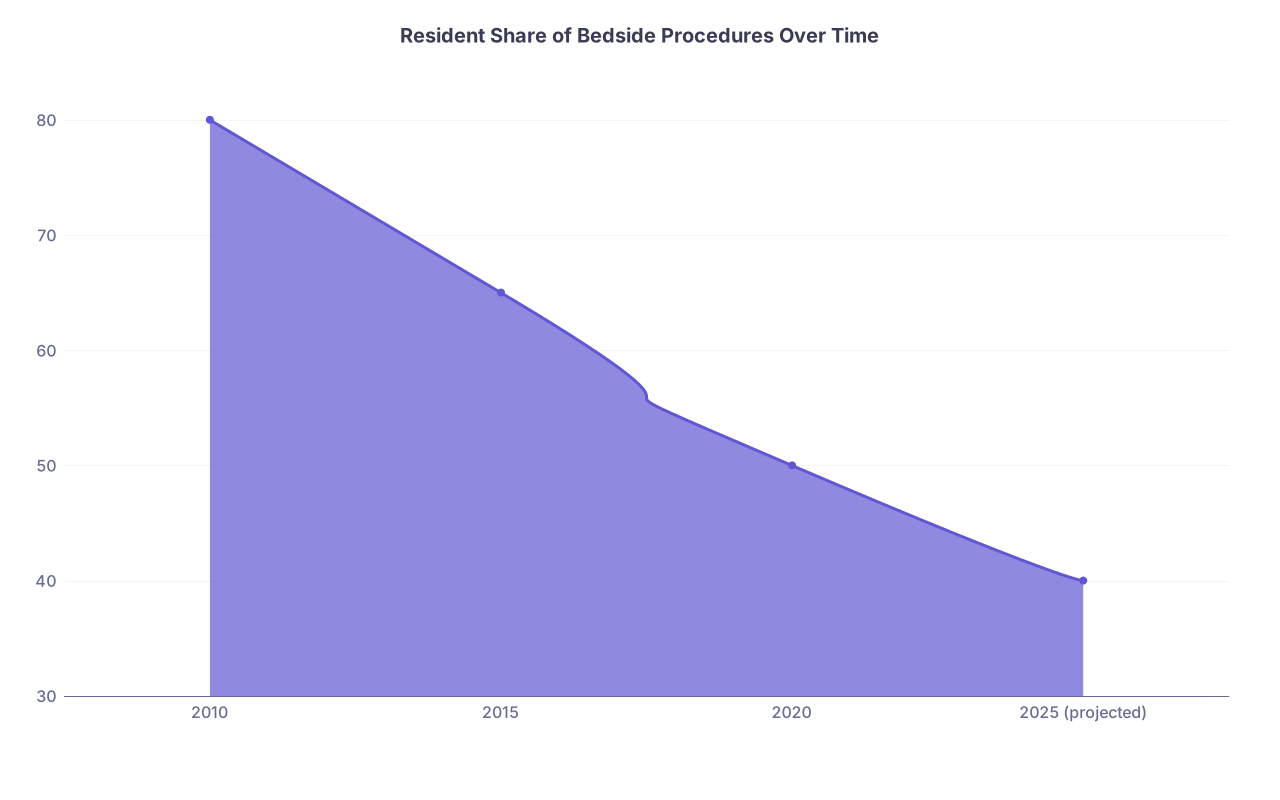
There is a broader trend you cannot ignore: procedural work is being carved away from residents nationally.
Drivers:
- Patient safety culture and zero‑harm initiatives
- Litigation fear and risk management policies
- Growth of advanced practice providers specifically hired to do procedures
- IR expansion and its appetite for anything involving a needle
Coastal academic centers are just further along that path.
But inland programs are catching that wave too:
- “Line teams” appearing in community hospitals
- IR insisting on doing more drains and biopsies
- Airway management shifting to dedicated anesthesia or “airway response” teams
So the coastal vs inland gap may narrow over the next decade, but it will not vanish. Places that structurally need residents to function will continue to provide more autonomy than places that view residents as adjuncts to a robust attending/fellow/APP ecosystem.
| Category | Value |
|---|---|
| 2010 | 80 |
| 2015 | 65 |
| 2020 | 50 |
| 2025 (projected) | 40 |
That kind of trend — residents performing a shrinking share of bedside procedures — is real in many coastal academic centers. Inland community and hybrid programs are sliding down the same slope more slowly.
How to Align Your Goals With Program Type
You cannot have everything. There are tradeoffs.
Coastal research-heavy, subspecialty-dense academic center:
- Pros:
- Name recognition
- Research infrastructure, mentorship, fellowships
- Exposure to rare pathology and advanced technology (ECMO, transplant, robotic platforms)
- Cons:
- Lower day-to-day autonomy, especially procedurally
- Fellow competition for cases
- Potentially weaker independent practice readiness without fellowship
Inland community/hybrid program:
- Pros:
- Higher procedural and clinical autonomy
- Residents function much closer to young attendings by graduation
- Strong preparation for independent generalist practice
- Cons:
- Less prestige on paper
- Fewer niche fellowships and less research muscle
- Less exposure to some cutting-edge subspecialty techniques
You have to decide what you are solving for:
- If your North Star is a specific academic subspecialty fellowship at a brand-name institution, a coastal heavyweight may still be the right move, even if autonomy is thinner.
- If you actually want to feel like a fully competent, independent physician or surgeon when you graduate, inland programs with strong autonomy track records deserve a hard look.
Do not let geography seduce you. Ocean views do not place central lines.
Key points to keep in your head:
- Coastal does not automatically mean better training; heavy subspecialization and fellows often choke off procedural autonomy.
- Inland and hybrid community programs usually offer more real hands-on work, especially in bread-and-butter procedures that matter for independent practice.
- Stop asking “How is autonomy?” and start asking who actually does lines, tubes, scopes, and cases at 3 am — the answer to that question tells you more than any brochure ever will.