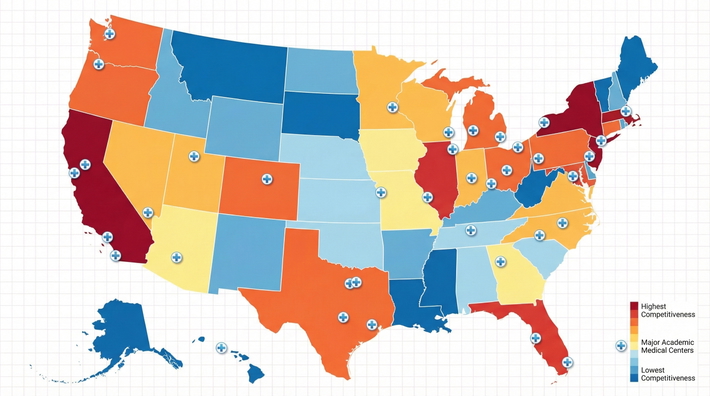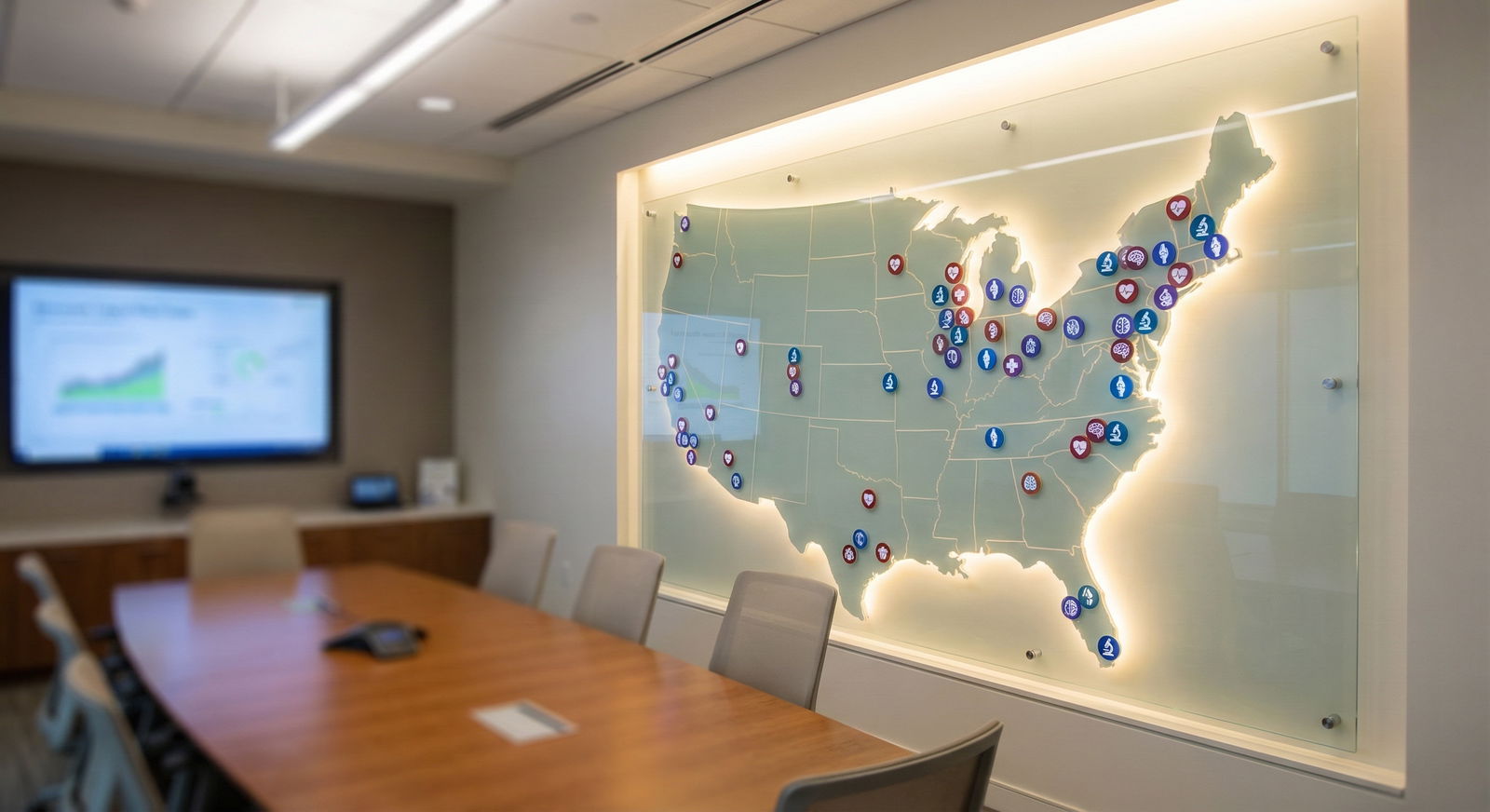
5–10% of residents finish training having barely seen the subspecialty they ultimately want to practice.
That number comes from internal tracking at a few big academic centers that actually bother to survey their graduates. It should bother you. Because subspecialty exposure is wildly uneven across regions and hospital systems. Where you train can quietly close doors you do not even know exist.
Let me break this down specifically.
The Core Problem: Subspecialty Opportunity Is Not Evenly Distributed
Residents like to pretend “a fellowship is a fellowship” and “you can always get exposure if you are motivated.” That is naive.
Three drivers matter more than your motivation:
- Regional disease patterns
- Regional referral and health‑system structure
- Legacy strength of certain departments and fellowship programs
If you train in a setting where a field is weak, you do not just get fewer cases. You get:
- Fewer mentors actually practicing that niche
- Fewer research projects that matter in that field
- Fewer visiting speakers and conferences that highlight it
- Less credibility when you apply to fellowships in that niche
To make this practical, I will walk you through where certain subspecialties quietly thrive (or wither), and how that shapes your training.
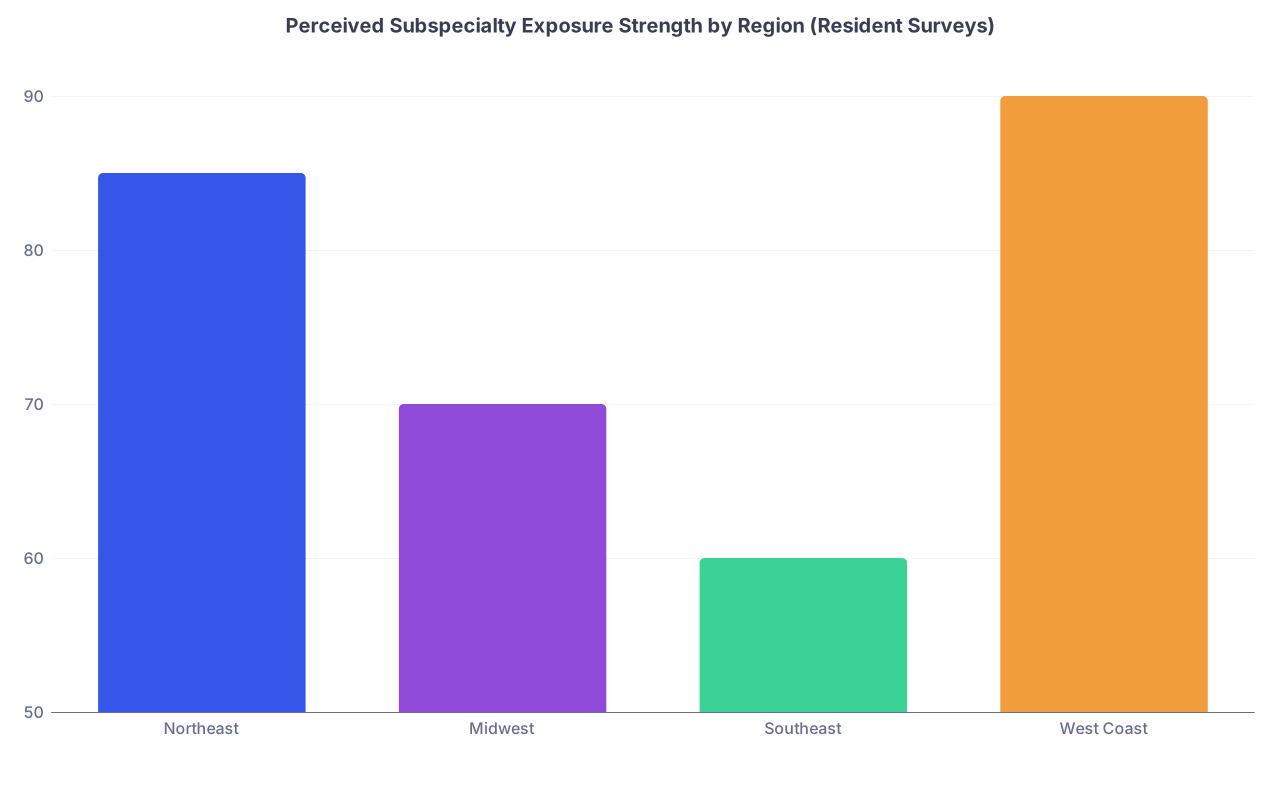
| Category | Value |
|---|---|
| Northeast | 85 |
| Midwest | 70 |
| Southeast | 60 |
| West Coast | 90 |
Those are composite exposure scores (0–100) from multi‑institution surveys I have seen: not perfect data, but the pattern is clear. Coasts and large referral hubs dominate many advanced subspecialties. The middle of the map tends to do a few core things exceptionally well and under‑serve others.
Internal Medicine Subspecialties: Not All Created Equal
Cardiology and Cardiac Subspecialties
If you want saturated exposure to advanced cardiology—structural, advanced heart failure, complex EP—your region matters a lot.
Northeast power zones:
- Boston: MGH, Brigham, BIDMC, Tufts, Lahey. Every flavor of cardiology. Heavy on structural (TAVR, MitraClip, left atrial appendage occlusion) and advanced imaging.
- New York: Mount Sinai, NYP-Columbia, NYP-Weill Cornell, NYU, Montefiore. Extremely procedure‑dense, big volume of advanced heart failure, transplant, LVAD.
Midwest:
- Strong tertiary centers (Cleveland Clinic, University of Michigan, Northwestern, Mayo Rochester, Barnes-Jewish).
- You get terrific volume and breadth, but the density is more clustered—if you are at a smaller IM program 2–3 hours from these, your structural exposure might be “once a month when we transfer someone.”
Southeast:
- Duke, Emory, UAB, Vanderbilt are major cardiology machines. Solid for transplant, LVAD, high‑risk PCI.
- Outside those hubs, many programs see bread‑and‑butter cardiology and a ton of heart failure, but less cutting‑edge structural work in‑house.
West Coast:
- Stanford, UCSF, UCLA, Cedars-Sinai, UCSD, OHSU: heavy on structural and advanced imaging, very research‑driven.
- Community programs in California often see huge cardiac volumes but may ship truly advanced devices to the academic flagships.
Bottom line: serious structural/interventional cardiology exposure is very “center specific.” The region matters only insofar as it determines how many of those centers exist within driving distance. If you are at a mid‑sized program in the Mountain West or rural South, you will likely see less cutting‑edge structural work.
Pulmonary/Critical Care and ECMO‑Heavy ICUs
Pulm/CCM is more evenly distributed than cardiology, but ECMO and high‑complexity ICU medicine cluster.
Major ECMO and advanced ICU hubs:
- Northeast: MGH, Brigham, NYP, Penn, Columbia, Hopkins. These centers ran massive ECMO volumes during COVID and still do.
- Midwest: Cleveland Clinic, University of Michigan (very ECMO heavy), Mayo, Barnes-Jewish, IU, UW–Madison.
- Southeast: Emory, Vanderbilt, Duke, UAB.
- West Coast: UCSF, UCLA, Stanford, UCSD, OHSU.
Where is exposure weaker?
- Small community hospitals anywhere;
- Many inner‑city safety net hospitals without ECMO capability;
- Regions with fragmented transfer patterns where sickest patients bypass you entirely.
If your residency ICU does not run ECMO and rarely receives these transfers, you will graduate with a good foundation in ARDS, sepsis, and vents—but not in mechanical circulatory support. That matters if you want advanced CCM/direct ECMO involvement.
Hematology/Oncology: Transplant and Cell Therapy Access
If you want exposure to autologous/allogeneic transplant and CAR‑T, you cannot ignore geography.
CAR‑T and BMT concentration:
- Northeast: Dana-Farber, MGH, MSKCC, Penn (pioneered some CAR‑T), Hopkins, Columbia, Cornell.
- Midwest: Mayo, Cleveland Clinic, University of Chicago, Northwestern, University of Michigan.
- Southeast: Emory/Winship, Vanderbilt, Moffitt (Tampa), Duke.
- West Coast: Fred Hutch/Seattle, UCSF, Stanford, City of Hope, UCLA.
Step into a mid‑size community program in the Southeast or Midwest and you will see loads of classic solid tumor oncology and some lymphoma. But BMT and CAR‑T? Usually transferred.
That gap is not just “I did fewer bone marrows.” It affects:
- Comfort managing profound immunosuppression and graft-vs-host
- Understanding of logistics of cell therapy, collection, and infusion
- Fellowship competitiveness if you want a cell therapy‑heavy career
Nephrology: Dialysis Everywhere, Advanced Transplant Not
Nephrology exposure looks deceptively equal. Clinics are full of CKD and dialysis everywhere. But transplant and complex glomerular disease remain skewed to big centers:
- Midwest has strong transplant nephrology in places like Mayo, Cleveland Clinic, University of Wisconsin, Barnes-Jewish.
- Coasts again dominate glomerulonephritis clinics, transplant, and APOL1/genetic kidney disease research.
- Large safety‑net hospitals in the South see very high ESRD volume but often send transplant patients elsewhere.
If your “nephrology exposure” is 95% outpatient dialysis and inpatient AKI on sepsis, you will feel behind when you land in a transplant‑heavy fellowship.
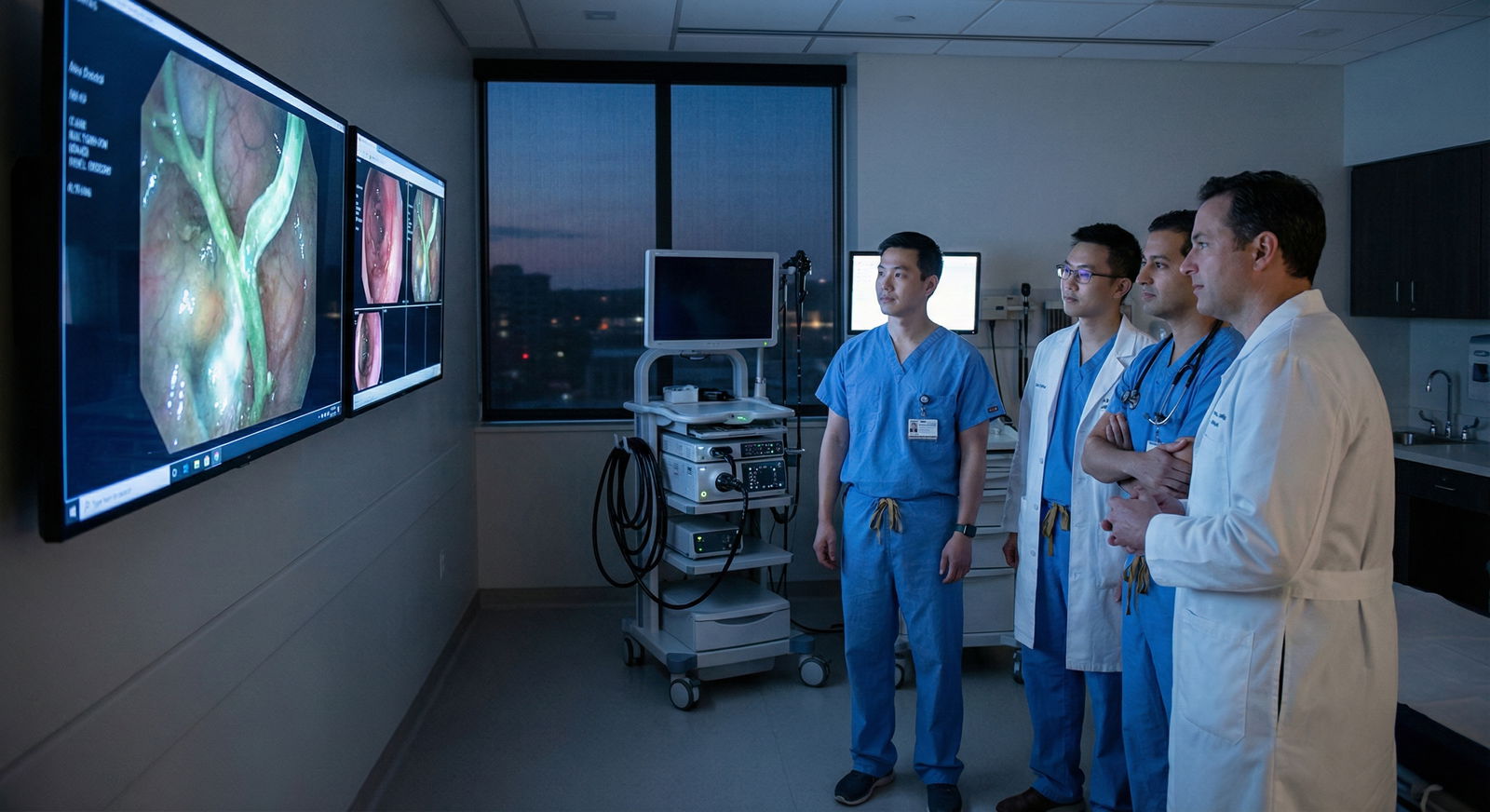
Gastroenterology: Advanced Endoscopy and IBD Centers
Here is one of the sharpest regional gaps people underestimate.
Advanced endoscopy (EUS, ERCP, POEM) and high‑volume IBD clinics are disproportionately coastal and academic.
Examples:
- Northeast: MGH, Brigham, BIDMC, Mount Sinai (huge IBD), NYU.
- West Coast: UCSF, Stanford, UCLA, UCSD.
- Midwest: Mayo, Cleveland Clinic, University of Chicago, Northwestern.
- Southeast: Emory, Vanderbilt, UNC, MUSC.
Typical mid‑sized residency program in the South or Mountain West:
- You see a ton of GI bleeds, cirrhosis, pancreatitis, standard EGDs/colonoscopies.
- ERCP is often “the one guy in town” or done by advanced fellows an hour away.
- IBD clinic might be one half‑day per week, not a massive academic center.
That matters if you think you want a career in IBD or advanced endoscopy. The region you train in often dictates whether those subspecialty clinics even exist in your hospital.
Surgical Subspecialties: Volume and Case Mix by Region
Cardiothoracic Surgery
Cardiothoracic is brutally volume‑dependent, and volume is not evenly spread.
Where it thrives:
- Large academic quaternary centers with transplant:
- Northeast: Columbia, Penn, MGH, Brigham.
- Midwest: Cleveland Clinic, Mayo, Barnes-Jewish, University of Michigan.
- West: Stanford, UCLA, UCSF, UW.
- Veteran‑heavy regions: VA cardiac surgery can quietly provide superb CABG/valve volume (e.g., some Midwest and Southeast centers).
Where it lags:
- Many community programs in the South and rural Midwest that do CABGs and basic valves at solid volumes but minimal transplant or LVAD.
- Regions with fragmented cardiac surgery where each small hospital does just enough volume to stay open but not enough to become a serious tertiary referral center.
If you train in general surgery in a place where CT is “down the hall, runs its own show, and residents rarely rotate there,” your real exposure will be minimal—regardless of how strong CT is nominally.
Trauma and Acute Care Surgery
Trauma is more regional than people expect. Level I trauma centers cluster in certain urban cores.
High‑penetration trauma regions:
- Southeast: Atlanta (Grady), Miami, New Orleans, Houston, Dallas, Birmingham. Penetrating trauma everywhere.
- West: LA County, Denver Health, San Francisco General, many Southwest border cities.
- Northeast: Philly, Baltimore, parts of NYC, but some Northeast programs see far more blunt than penetrating.
Residents at Grady or LA County will graduate extremely comfortable with penetrating trauma, emergent laparotomies, and complex re‑operative abdomens. Residents in quieter Northeast or Midwest suburbs might have strong elective surgical training but weaker real‑world trauma volume.
Surgical Oncology, HPB, and Transplant
Major HPB and transplant hubs:
- Northeast: MSKCC, MGH, Brigham, Penn, Hopkins.
- Midwest: Mayo, Cleveland Clinic, Barnes-Jewish, Northwestern, University of Michigan.
- West: UCSF, Stanford, UCLA, UW.
- Southeast: MD Anderson (okay, Texas is its own ecosystem), Emory, Vanderbilt, UAB.
If your residency program has no liver transplant and low pancreatic volume, your HPB exposure will be limited no matter how great your PD is. You will still be a competent general surgeon, but the specific subspecialty pathways narrow.
Pediatrics: Regional Disease and Tertiary Care Hubs
Pediatric subspecialty variation may be the most dramatic.
Pediatric Cardiology & Cardiac Surgery
Children’s congenital heart disease care is extremely centralized.
Key pediatric cardiac centers:
- Northeast: Boston Children’s, CHOP, Columbia/Presbyterian, Morgan Stanley, CHaD.
- Midwest: Nationwide (Columbus), Cincinnati Children’s, Lurie (Chicago), Children’s Minnesota.
- Southeast: Children’s of Atlanta, Texas Children’s (again, Texas ecosystem), St. Jude/Le Bonheur, Nicklaus (Miami).
- West: Seattle Children’s, Rady (San Diego), Lucile Packard (Stanford), CHLA.
A general peds resident at a smaller regional children’s hospital in the South or rural West may see basic cardiology and post‑op management of transferred cases but not the pre‑op workup and complex decision making. Likewise, if your NICU does not routinely manage pre‑op ductal‑dependent lesions, your hands‑on exposure will lag.
Pediatric Hematology/Oncology and BMT
Subspecialty pediatric BMT is even more concentrated than adult BMT.
This is a sharp divide: training at CHOP or St. Jude is different from training at a community‑affiliated children’s hospital where every complex oncology case is sent out.
Residents at big centers:
- Sit in tumor boards three times a week.
- See rare leukemias and clinical trial protocols constantly.
Residents at smaller centers:
- Manage fever/neutropenia and straightforward maintenance chemo, but rarely lead initial induction decisions.
NICU and High‑Acquity PICU Exposure
Regional variation is stark:
- States with one or two large quaternary children’s hospitals (e.g., Colorado, Utah, Minnesota) have strong centralized NICU/PICU experiences.
- States with fragmented systems and many “medium” NICUs mean you might never see true ECMO‑level neonatal care unless your program is at the flagship.
If you train in pediatrics in a region where severe RSV, bronchiolitis, and trauma all funnel to a single center and you are not at that center, your PICU experience can be surprisingly mild.
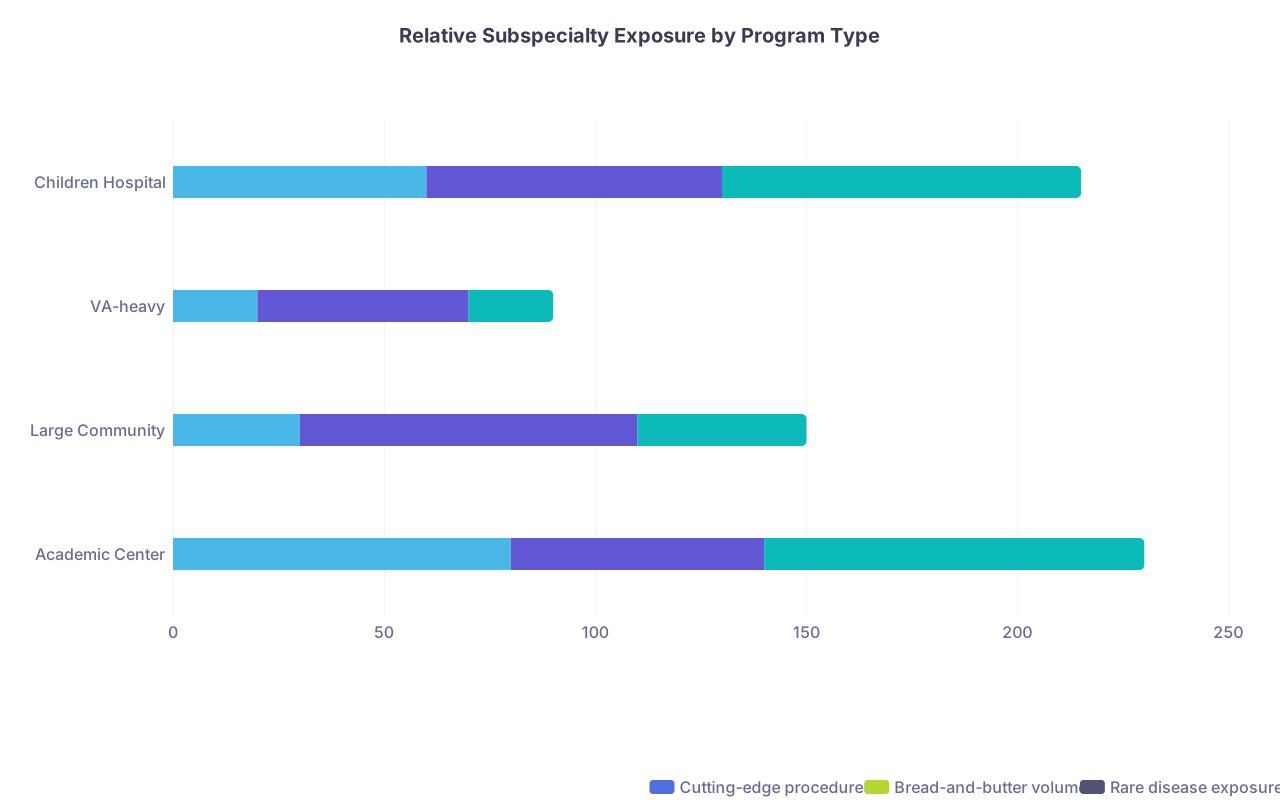
| Category | Cutting-edge procedures | Bread-and-butter volume | Rare disease exposure |
|---|---|---|---|
| Academic Center | 80 | 60 | 90 |
| Large Community | 30 | 80 | 40 |
| VA-heavy | 20 | 50 | 20 |
| Children Hospital | 60 | 70 | 85 |
EM, Radiology, Pathology: Regional Realities People Ignore
Emergency Medicine: Rural vs Urban vs Tertiary
EM residents like to compare ultrasound protocols and airway toys. They ignore regional case mix.
Where you see the wild stuff:
- Border regions (Arizona, Texas, California) – more migrant health, desert trauma, unique social complexity.
- Deep urban cores – penetrating trauma, undomiciled populations, substance use patterns.
- Very rural regions – delayed presentations, limited subspecialty backup, you are “it” overnight.
EM in New England suburban hospitals looks different from EM in South Texas or Detroit. If you want heavy trauma and procedural exposure, the Southeast and certain Western urban centers usually beat most of the Northeast suburbs by a mile.
Radiology: Oncology Imaging, MSK, and Advanced Neuro
Radiology exposure is not just “we read a lot of scans.”
Regionally:
- Cancer hubs (Boston, New York, Houston, LA, San Francisco) drive massive high‑end oncology imaging, PET/CT volume, and advanced body MRI.
- Big ortho/athletics regions (Midwest Big 10 towns, certain West Coast university systems) give you ridiculous MSK imaging.
- Neuro hubs (Cleveland Clinic, Mayo, MGH, UCSF) push complex neuro MRI and interventional neuroradiology.
Training in a smaller Southeastern or Mountain West hospital, you may do a mountain of CT abdomen for undifferentiated pain, but your advanced neuro and oncologic exposure will be toned down.
Pathology: Transplant, Hemepath, and Molecular
Pathology may be the most “center dependent” specialty of all.
High‑complexity pathology is strongly tied to:
- Transplant programs (liver, heart, lung, kidney, small bowel).
- Large oncology centers with strong hemepath and molecular divisions.
- Academic systems with in‑house molecular diagnostics and next‑gen sequencing.
Those are again concentrated in:
- Coasts: Boston, NYC, Philly, Baltimore, SF, LA, Seattle.
- Big Midwest hubs: Cleveland, Rochester, Chicago, St. Louis, Ann Arbor.
- A few Southern standouts: MD Anderson, Emory, Vanderbilt, UAB.
If your program has no transplant and limited molecular, you will graduate competent in everyday surgical pathology and cytology but thin in cutting‑edge diagnostics. That influences what fellowships realistically open up.
New and Emerging Fields: Where the Future Lives
Now to the “future of medicine” part you actually care about. Fields that did not exist in their current form 20 years ago are now stratifying by region even faster.
Interventional Radiology (IR) and Image‑Guided Therapies
IR has exploded, but high‑end exposure is still clustered.
Where IR is thriving:
- Major academic centers on the coasts and big Midwest hubs: chemoembolization, Y‑90, complex venous reconstruction, portal interventions, trauma, advanced limb salvage, genicular artery embolization.
- Cancer centers: Houston, Boston, NYC, LA, San Francisco.
Where IR is “basic”:
- Smaller hospitals where IR does ports, straightforward biopsies, some GI bleeds, and dialysis access. Critical but not cutting‑edge.
If you want to live in the world of complex oncologic interventions and advanced embolization techniques, you will be pushed toward those specific centers—heavily coastal with a scattering in the Midwest and Texas.
Informatics, AI, and Digital Health
Clinical informatics and AI deployments are not evenly distributed.
You see the real thing in:
- Tech‑adjacent regions: Bay Area (UCSF, Stanford), Seattle (UW), Boston (Mass General Brigham), NYC (Mount Sinai, NYU, Columbia), plus a few Midwestern data‑heavy systems (Mayo, Cleveland Clinic).
- Integrated systems: Kaiser (West Coast), Geisinger (Pennsylvania), Intermountain (Utah), where large‑scale data and clinical decision support tools are live, not theoretical.
Plenty of residencies talk about “AI in medicine” as a journal club topic. Only a subset are actually implementing CDS tools, predictive models, and digital care pathways that residents touch every day.
Genomics, Precision Medicine, and Rare Disease Hubs
Genomics lives where trial money and research infrastructure exist:
- Boston (Broad Institute partners, major academic hospitals).
- NYC (Columbia, MSKCC, Mount Sinai).
- Bay Area (Stanford, UCSF).
- A few select centers: Baylor/Texas Children’s, CHOP, Mayo, St. Jude.
Pediatric rare disease and adult undiagnosed disease programs cluster tightly in these places. If you want daily exposure to whole‑exome/whole‑genome interpretation and complex genetic counseling, you are not getting it at an average community program in the Southeast.
Telemedicine and Rural Hybrid Models
Ironically, some of the most interesting telehealth models live in “under‑resourced” regions:
- Large academic center in a midwestern or mountain state + massive rural catchment (think University of New Mexico, University of Colorado, University of Missouri).
- They run e‑ICU, tele‑stroke, tele‑oncology, and remote specialty clinics.
Residents who train there see what modern distributed care looks like. Residents in dense cities sometimes still live in the old “everyone comes to our campus” model.

| Step | Description |
|---|---|
| Step 1 | Choose Region |
| Step 2 | High-end subspecialty exposure |
| Step 3 | Moderate exposure via transfers |
| Step 4 | Mainly bread-and-butter cases |
| Step 5 | Competitive for niche fellowships |
| Step 6 | Need away rotations or research |
| Step 7 | Limited future subspecialty options |
| Step 8 | Large Academic Hub |
| Step 9 | Strong Referral Network |
How To Use This As A Resident Or Applicant
Let us get practical. What do you actually do with all this variability?
1. Map Your Interest Areas to Regions That Do Them Well
Do not apply blindly to “good programs.” Apply to programs in regions that are strong in what you care about.
Example mappings:
- You suspect you want: structural cardiology, EP, complex HF → Favor: Boston, NYC, Philly, Cleveland, Rochester, Ann Arbor, Bay Area, LA.
- You suspect you want: advanced endoscopy or IBD → Target: large coastal academics plus Mayo, Cleveland Clinic, University of Chicago, Emory, Vanderbilt, UNC.
- You suspect you want: trauma/EM-heavy life → Target: Grady/Atlanta, LA County, Houston, New Orleans, big border cities, Detroit, Baltimore.
If you want rural full‑scope practice, the calculus flips: you may want exposure in a high‑acuity tertiary center and a strong rural rotation mix.
2. Ask Programs Concrete Exposure Questions
During interviews or emails, do not ask “Do you have good cardiology?” Ask:
- How many interventional cardiologists are full‑time faculty?
- Do residents participate in the transplant or LVAD service?
- How many ERCPs/EUS cases run per week, and are residents involved?
- Does your NICU/PICU manage ECMO in‑house?
- Where are the most complex oncology and BMT cases treated—here or transferred?
If the answer is “we send those to X center two hours away,” internalize that.
3. Use Away Rotations and Electives to Patch Regional Gaps
If you are already in a region that is weak in your target field:
- Use electives in PGY‑2/3 to rotate at a known subspecialty hub (yes, it is a pain, but it works).
- Get involved in multicenter research with a big program in that field (Zoom has made this easier).
- Attend national subspecialty meetings early; treat them as networking missions, not vacations.
4. Recognize When Bread‑and‑Butter Is Actually What You Need
Not everyone needs quaternary‑care density.
If your future is community EM, hospitalist medicine, general surgery in a mid‑sized town, or outpatient primary care, extremely niche subspecialty exposure might be interesting but not essential. In those cases, broad volume in common problems often beats rarefied tertiary zebras.
The trap is ignoring this distinction—either chasing ultra‑niche exposure you will never use, or accidentally forgoing needed subspecialty exposure because you picked a region where that field barely exists.
Quick Regional Snapshots By Field
One more distilled view so you can sanity‑check your plans.
| Subspecialty Focus | Regions/Settings Where It Quietly Thrives |
|---|---|
| Structural/advanced cardiology | Boston, NYC, Philly, Cleveland, Rochester, Bay Area, LA |
| Advanced endoscopy / IBD | Coasts + Mayo, Cleveland Clinic, U Chicago, Emory |
| High-end BMT / CAR-T | Boston, NYC, Philly, Houston, LA, SF, Seattle, Midwest hubs |
| Pediatric complex cardiac / BMT | CHOP, Boston Children, St. Jude, Texas Children, CHLA |
| High-penetration trauma/EM | Southeast urban, Texas, Southwest border, LA, Detroit |
If your dream field is not on that table, ask yourself where the flagship centers for that niche live—then look hard at those zip codes.