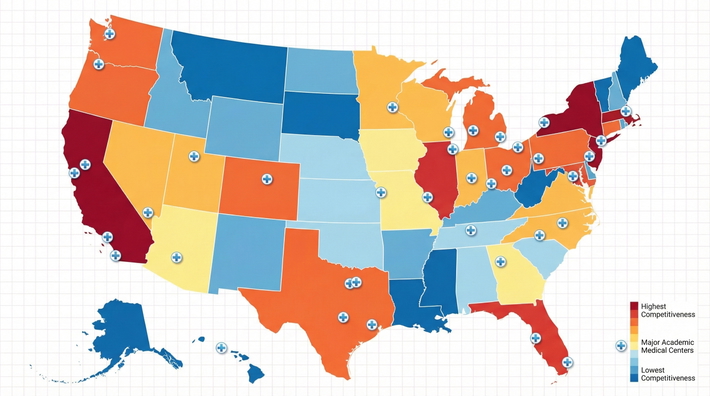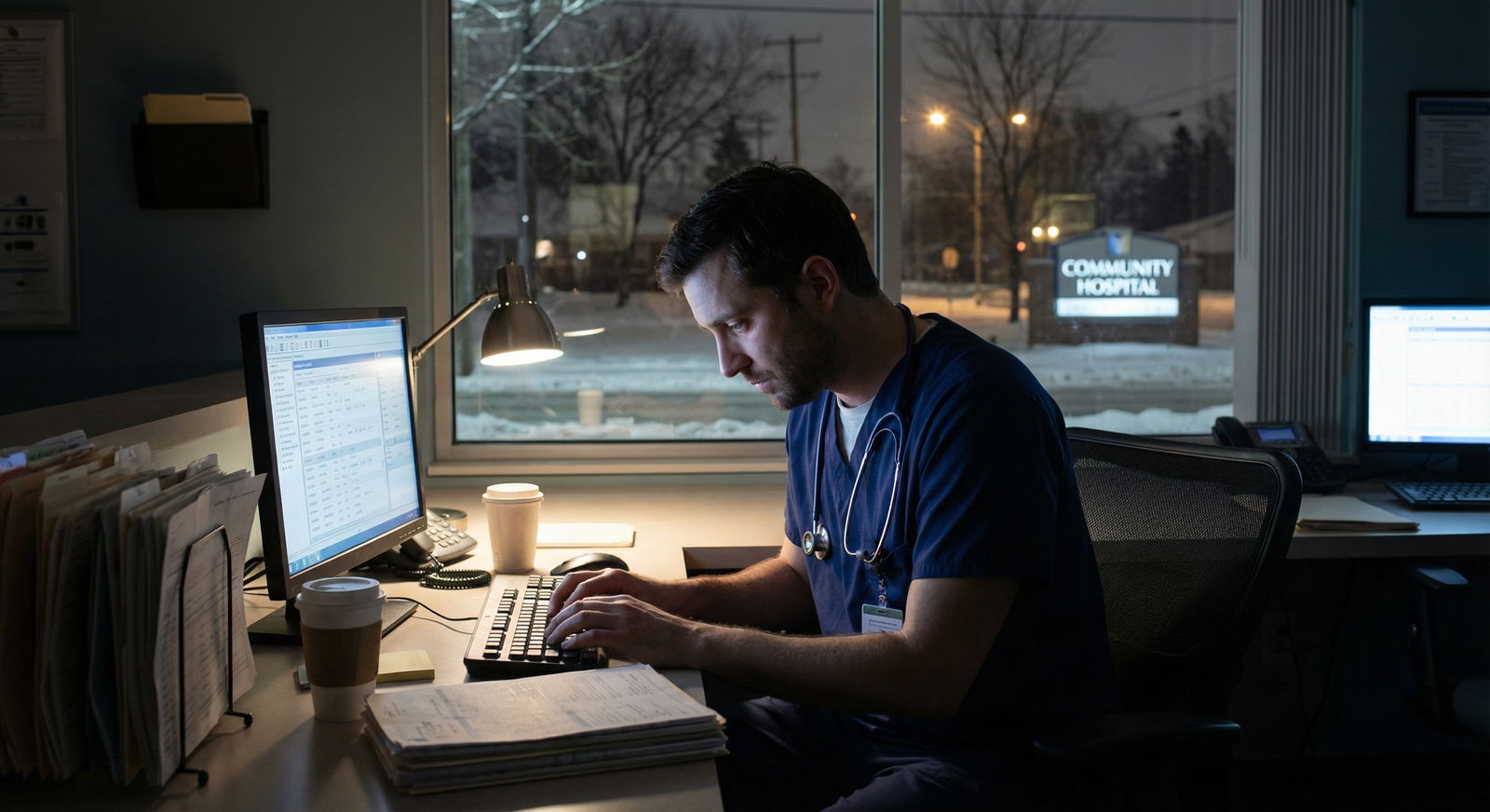
The myth that “academic vs community” is a simple prestige hierarchy is wrong. In the Northeast Corridor, it is a difference in training species—habitat, case mix, supervision culture, career ceiling, and daily grind all shift depending on which side you pick.
You are not choosing “good vs less good.” You are choosing who you will be as a physician five to ten years from now.
Let me break this down specifically, and regionally, because Boston ≠ Philly ≠ North Jersey ≠ rural New England, and the clichés people repeat on Reddit ignore that.
1. What “Academic” and “Community” Really Mean in the Northeast
Forget the brochure language. On the ground, in the Northeast Corridor (roughly Boston to DC with the satellites around it), you see four practical buckets:
Flagship academic powerhouses
Think: MGH/Brigham/Beth Israel in Boston; Columbia/Cornell/NYU/Mount Sinai in NYC; Penn/Jefferson in Philly; Hopkins in Baltimore; Yale in New Haven; Brown in Providence.
NIH money. Subspecialty empires. Fellows everywhere. Residents as the middle layer of a very large teaching stack.Strong academic-affiliated community programs
Examples:
– Lahey, Baystate, UMass, Maine Med around New England
– Northwell, Einstein-Montefiore affiliates, Rutgers-affiliated hospitals, Cooper in NJ
– Christiana Care (DE), UM-affiliated community sites in Maryland
These have academic connections, some research, and fellowship pipelines, but day-to-day patient care feels closer to “real world” than ivory tower.True community workhorses
County hospitals, regional medical centers, many suburban systems.
Some have a single residency or a couple of programs. Faculty are mostly clinical; protected research time is minimal. The mission is service and throughput, not publications.Hybrid “academic community” systems
Large multi-hospital systems like Mass General Brigham, Northwell, Hackensack Meridian, Jefferson, RWJ/Barnabas etc, where one or two sites are clearly academic and the others are high-volume community with various degrees of teaching.
You will see programs market themselves as “academic community” because it sounds palatable. Ignore that label. Look at four things:
- Who writes papers and gets grants?
- How many fellows are on the wards and in subspecialty clinics?
- What is the faculty promotion structure (clinical vs tenure-track)?
- Where do graduates go—jobs vs fellowships, and which ones?
| Feature | Academic Flagship | Academic-Community | True Community |
|---|---|---|---|
| NIH-funded research | Core mission | Some pockets | Rare |
| Number of fellows | Many, multiple fields | Select specialties only | Few or none |
| Fellowship match type | Competitive, national | Mixed, regional | Mostly hospitalist/primary care |
| Patient volume per resident | Moderate-High | High | Very High |
That framing matters more than whatever category ERAS or Doximity pretends to put them in.
2. Core Training Style Differences: How Your Day Actually Feels
You care less about taxonomy and more about: How many notes am I writing? How much autonomy do I get? Who is breathing down my neck at 2 AM?
Supervision vs Autonomy
At a Northeast academic flagship, supervision is layered and formal:
- Intern → resident → fellow (often) → attending.
- Subspecialty services are fellow-driven.
- You present to the fellow; fellow presents to attending; decisions filter down.
Clinical implication: phenomenal exposure to nuanced care—transplant, complex immunology, weird zebras. But your independent decision-making may be slower to develop because someone is always available to sanity-check your plan before it touches the chart.
In a strong community program (say, a busy New Jersey or Connecticut hospital with minimal fellows), the chain often looks like:
- Intern → senior resident → attending.
- Fewer subspecialty consults; more “you and the attending figure it out.”
Autonomy comes earlier and harder. You are the one who has to decide whether to intubate now or transfer. You are the one admitting the crashing DKA at 3 AM with one ICU fellow for the entire tower.
Both are “good” training. They produce different instincts.
The pattern I have seen repeatedly:
- Academic Northeast grads: Very strong in diagnostic frameworks, multidisciplinary management, and handling highly subspecialized patients. Sometimes initially slower with bread-and-butter volume and “owning the floor” chaos.
- Community Northeast grads: Very strong in throughput, practical management, and systems navigation. Sometimes weaker in comfort with rare diseases, research literacy, and big-name fellowship networking.
Volume and Case Mix
A common myth: “Academic centers have sicker patients.” Sometimes. But in places like North Jersey, South Philly, or the Bronx, community or safety-net hospitals have brutal acuity and volume that rival, or exceed, the name brands.
The real differences:
Academic Northeast
- More referrals of rare or advanced disease: vasculitis clinics, transplant, advanced oncology, unusual autoimmune pathology.
- More selective patient population—often insured or “interesting” cases referred in from outside hospitals.
- Many specialists co-manage, and care is highly protocolized.
Community Northeast
- High volume bread-and-butter: CHF, COPD, DKA, septic shock, alcohol withdrawal, nursing home disasters, trauma overflow.
- Often more socioeconomic complexity: lack of follow-up, undocumented patients, drug use, unstable housing.
- You manage the same core conditions again and again, quickly, under pressure.
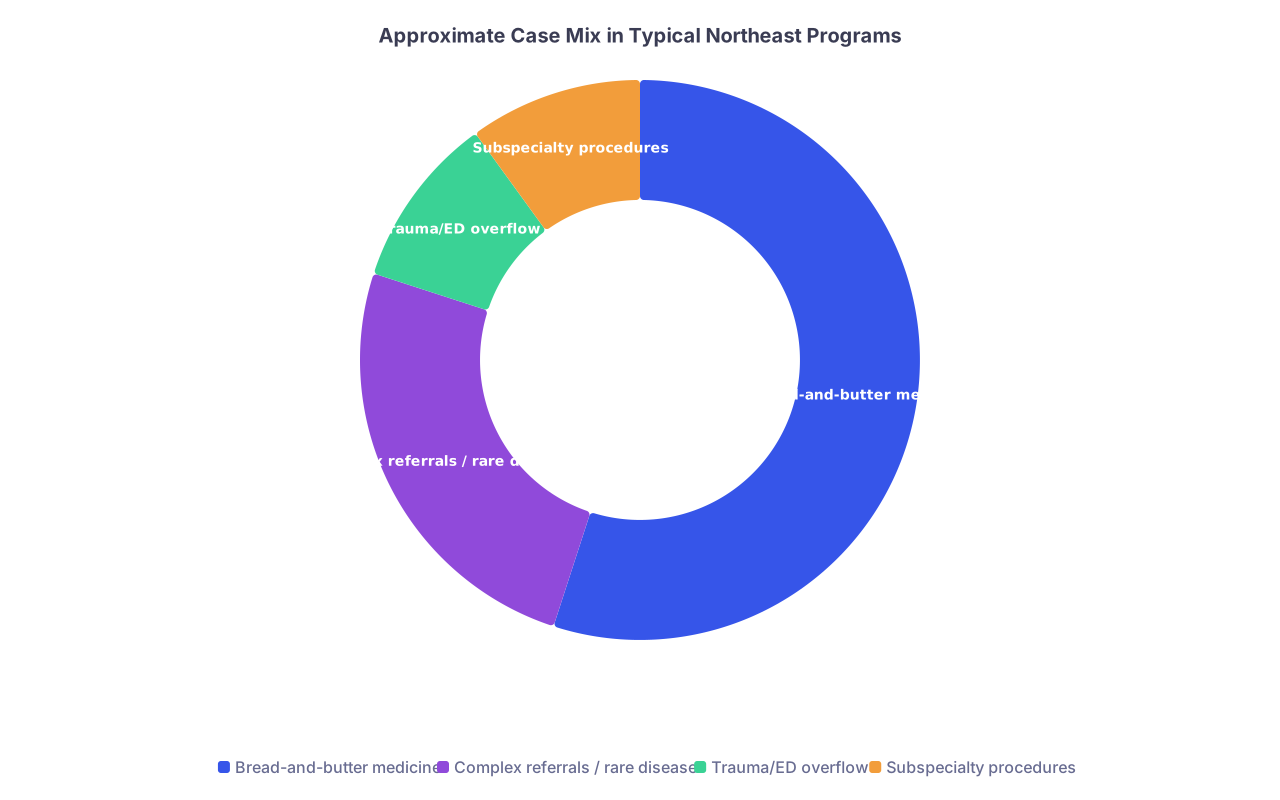
| Category | Value |
|---|---|
| Bread-and-butter medicine | 55 |
| Complex referrals / rare disease | 25 |
| Trauma/ED overflow | 10 |
| Subspecialty procedures | 10 |
The exact distribution depends heavily on location. A “community” hospital in the Bronx will have a completely different case profile compared with a “community” hospital in suburban Connecticut.
Team Composition: Who Is Doing the Work?
In major Northeast academic centers:
- Teams are large: 1–2 interns, 1 senior, 1–3 medical students, often a PA or NP, and occasionally a fellow embedded in the team.
- There might be multiple advanced practice providers covering nights or admissions.
- Nurses and pharmacists are specialized. ICU nurses who have seen fifty VV-ECMO patients. Oncology nurses fluent in every chemo regimen.
In community settings:
- Teams are leaner: 1 intern, 1 senior (maybe 1–2 students), that’s it.
- PAs/NPs cover large swaths of admissions or cross-cover, but the MD resident is often the primary in-house doctor.
- Nursing skill mix can vary widely—some units are phenomenal, others understaffed and stretched.
The practical result: at academic centers, medicine is more of a team sport with more hands but also more complexity and “meetings about meetings.” In community hospitals, you feel more directly responsible, with fewer buffers.
3. The Northeast Corridor Overlay: Boston vs NYC vs Philly vs the Rest
You cannot talk about academic vs community in this region without acknowledging geography. The same “style” of program behaves differently in Boston vs Hartford vs Camden.
Boston and New England
- High density of academic titans: Harvard affiliates, Tufts, BIDMC, BU, UMass, Yale, Brown.
- Community programs in this region often have strong academic connections because there simply is not much distance—geographically or professionally—between “academic” and “community.”
Examples:
- Lahey Hospital (Burlington), Maine Med (Portland), Baystate (Springfield): all have significant academic presence and are academically serious, yet clinically function like large regional referral community hospitals.
- UMass-Chan and its affiliates: blend of state academic and community service mindset.
Training style in New England community-heavy programs:
- You see rural and semi-rural pathology mixed with suburban primary care fallout.
- More winter-related trauma, farming/industrial injuries depending on location.
- Less overlap with the sort of NYC-level density and poverty you get in the Bronx or North Philly.
New York City and Immediate Surroundings
NYC is its own universe. You have:
- Major academic centers: Columbia, Cornell, NYU, Sinai, Montefiore, Downstate, SUNY affiliates.
- Large “community + academic” systems: Northwell (LIJ, NSUH, Lenox Hill), NYU Brooklyn, Mount Sinai’s many affiliates, Montefiore Moses/Weiler/Wakefield spread.
- True community hospitals in boroughs and in Long Island / Westchester that still run residents hard.
Style differences show clearly here:
Manhattan flagships:
- Rounds are evidence-heavy, sub-sub-specialty driven.
- Tons of fellows. Many consults.
- Residents get comfortable with advanced heart failure, transplant, ECMO, neuro-ICU, complex oncologic care, but sometimes at the cost of basic ED hustle.
Bronx/Brooklyn/Queens community or hybrid programs:
- Insane volume. High acuity with low resources.
- Autonomy is high whether you are ready or not.
- Attendings may be clinically excellent but not academically oriented. Research is possible, but you have to grind for it.
Philadelphia, Southern NJ, and Delaware
Philadelphia:
- Penn, Jefferson, Temple, Einstein: classically academic. Penn is the prototypical research behemoth. Temple and Einstein have strong safety-net, high-acuity flavors despite academic standing.
- Surrounding suburban systems (Main Line, Cooper in Camden, some Virtua/RWJ sites): more community or hybrid community-academic, strong clinically, more focused on service lines and throughput.
Delaware:
- Christiana Care is a large regional referral center, academically active but clinically very community-feeling. High autonomy, high volume, good exposure to real-world practice.
Southern NJ:
- RWJ/Barnabas and Cooper create academic-leaning hubs. Beyond that, many hospitals are service-heavy community programs with solid but less research-heavy training.
Maryland and DC Fringe
- Hopkins and University of Maryland anchor the academic side. Rigor, research, subspecialty intensity.
- Surrounding community programs (Sinai Baltimore, MedStar sites, suburban Maryland/Virginia hospitals) deliver large volumes of bread-and-butter and urban pathology with less research overhead.
Bottom line: the usual academic vs community differences are modulated by local demographics—urban poor in the Bronx vs rural Maine vs affluent Boston suburbs lead to very different “patients per hour” and social work skills, even in similarly structured programs.
4. Research, Careers, and Fellowships: How Your Choice Echoes
This is where the divide bites hardest, especially in the Northeast where competition is brutal.
Research Culture and Infrastructure
At academic flagships in the Northeast:
- Protected research time is often baked into the schedule (elective research blocks, scholarly tracks).
- Mentors with major grants are physically in the building.
- There are existing projects—databases, trials, QI initiatives—sitting on shelves needing analysis and a resident with a keyboard.
At academic-community or strong community programs:
- Research exists, but usually as:
- Case reports, retrospective chart reviews, QI projects.
- Less high-impact, more “get something on your CV” type work.
- You are often the driver. Nobody is hunting you down to give you a project.
True community programs without academic partners:
- Minimal infrastructure. IRB processes are clunky.
- If you want serious research output, you have to work disproportionally hard or collaborate externally (remote mentors, multi-institutional projects).
If your goal is a Northeast competitive subspecialty fellowship—cardiology, GI, heme/onc, PCCM, derm, ENT, ortho, you know the list—then:
Academic flagship in the corridor:
- Strong advantage. Program name + local networking + in-house fellowship spots.
- You are physically present at the places you want to match or one phone call away.
Strong academic-community:
- Still viable for competitive fellowships, particularly regionally.
- You will need stronger individual output (research, strong letters) because the name alone will not carry you against Harvard/Columbia/Penn grads.
True community:
- Realistically tougher to break into the most competitive fellowships in Boston/NYC/Philly unless you:
- Generate significant research on your own.
- Network aggressively at conferences.
- Have personal connections or exceptional Step 2/3 and letters.
- Realistically tougher to break into the most competitive fellowships in Boston/NYC/Philly unless you:
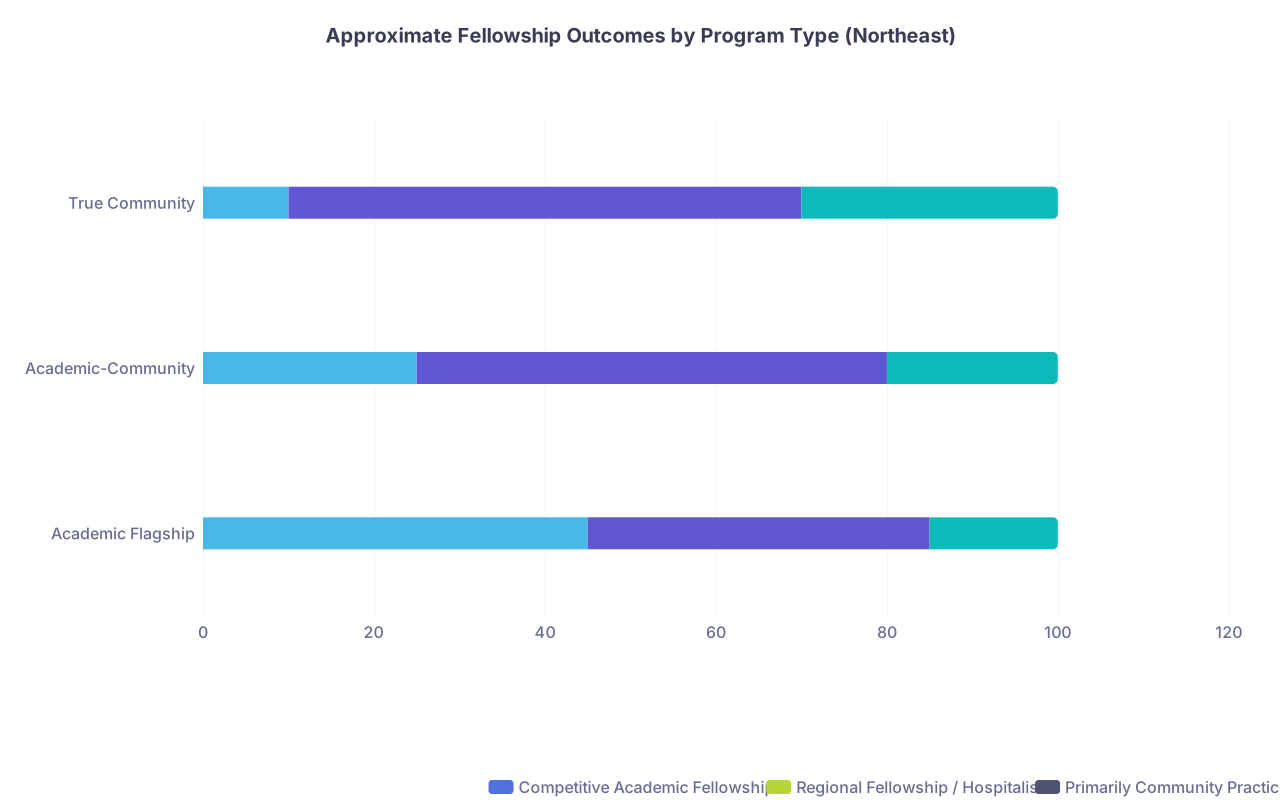
| Category | Competitive Academic Fellowship | Regional Fellowship / Hospitalist | Primarily Community Practice |
|---|---|---|---|
| Academic Flagship | 45 | 40 | 15 |
| Academic-Community | 25 | 55 | 20 |
| True Community | 10 | 60 | 30 |
These numbers are illustrative, but the pattern is real. I have watched it play out, year after year.
Career Trajectories: Academic vs Private Practice
Where you train also shapes what feels “normal” to you.
At big Northeast academic centers:
- Many faculty split their time: 60% research, 40% clinical; or 80% clinical with teaching + minor QI.
- Conferences, M&Ms, journal clubs are non-negotiable parts of the culture.
- Graduates often expect to:
- Do a fellowship.
- Work initially at a large system or academic center.
- Think in terms of H-index, not just RVUs.
At community programs:
- Most faculty are full-time clinicians, maybe with some teaching.
- Graduates see attendings who built solid lives in private or employed practice.
- The default trajectory:
- Hospitalist or outpatient clinician in a community or regional hospital.
- Fellowship if desired, but often locally or in less cutthroat markets.
You are not locked into these tracks. But inertia is powerful. Network matters. The first people who write you serious recommendation letters shape where your CV travels.
5. Daily Culture: Rounding Styles, Education, and Burnout
Let us get down to the micro level—what 10 AM and 2 AM feel like.
Rounding and Teaching
Academic Northeast:
- Attending-led rounds, often with students and sometimes with fellows.
- Structured teaching: chalk talks, case-based learning, multi-disciplinary conferences.
- Expectation that residents can discuss literature, guidelines, and cite trials (and sometimes, the attending is literally an author on those guidelines).
Community Northeast:
- Rounds are shorter, more task-driven: discharges, disposition, social work, “who is going to rehab today.”
- Teaching depends heavily on individual attendings. Some are phenomenal; others treat residents as service extenders.
- Didactics may be compressed due to volume; noon conference can be hit-or-miss depending on coverage.
One phrase I have actually heard from residents moving from an academic to a community elective:
“At my home program, we would spend 20 minutes arguing about the second-line agent for this vasculitis. Here, we are fighting to get the discharge paperwork done before 5 because the rehab bed will vanish.”
Nevither is inherently superior. They produce different reflexes.
Burnout Dynamics
There is a fantasy that smaller community programs are “chiller.” Sometimes they are. But not in a uniformly resource-poor, high-volume Northeast setting.
Patterns:
Academic flagships:
- Burnout from complexity, hierarchy, and constant pressure to do more—more research, more teaching, more committees.
- Night float can be intense, but you usually have more backups (fellow, in-house subspecialist, more robust nursing).
Busy community hospitals:
- Burnout from relentless volume and lack of buffers. 20–25 patients per resident, skeleton night coverage.
- Fewer “nonclinical” obligations, but more pure grind.
Mid-size academic-community programs often hit a middle ground: enough volume to feel real, enough structure to feel supported.
6. How to Choose Smartly Along the Corridor
Let me be blunt. If you are applying or ranking programs along the Northeast Corridor, you should not be sorting them purely by Doximity score or “academic vs community” label. That is lazy and you will regret it.
You want to map programs along three axes:
Your career goal.
- Hard-core academic or highly competitive fellowship (cardiology at Penn, GI at MGH, Heme/Onc at MSK-style programs)? Lean academic.
- Strong clinician, maybe a standard fellowship (endo, rheum, ID) or hospitalist in a solid system? Academic-community is often ideal.
- Confident, efficient community doctor, maybe in a less urban environment? High-volume, well-run community program can be perfect.
Your tolerance for hierarchy vs chaos.
- Hate micromanagement but can handle being truly “it” at 3 AM? Community-heavy.
- Prefer clear supervision, structure, and polished teaching, even if it means less autonomy early? Academic.
Location-specific realities.
- Bronx/Brooklyn vs Boston suburbs vs rural Maine are completely different lives.
- Commute, cost of living, support systems (family, partner’s job) matter more than you think at 3 AM in February in New England.
Concrete Evaluation Steps on Interview Day
When you are physically at these programs in the Northeast, ask specific questions:
- How many fellows are on each core service?
- On nights, how many residents are covering how many patients? Any in-house intensivist?
- What percentage of graduates in the last 3 years matched into the fellowships you care about—and where?
- Are attendings primarily employed by an academic department or by a private group contracted to the hospital? (Huge culture driver.)
- How often do you see your program director on the wards?
Watch for red flags:
- Academic programs where residents say, “Research is technically available, but nobody really has time and nobody cares.” That usually means the written “academic” pitch is aspirational, not real.
- Community programs that brag about giant volume but cannot articulate how they protect resident education or prevent unsafe workloads.
7. The Future: Blurring Lines in the Northeast
One last piece: the future of medicine and health systems is already reshaping training in this region. The academic vs community divide is softening, but not disappearing.
Trends I see:
Consolidation into big systems (Mass General Brigham, Northwell, RWJ/Barnabas, Jefferson, Penn Medicine, etc.):
- Community hospitals are being pulled under academic umbrellas.
- Residents rotate across “academic” and “community” sites within the same system.
- That can be excellent if managed; you get both styles within one program.
Virtual and multi-site fellowships:
- Some fellowships accept strong applicants from high-quality community programs if they can show research and letters, partly because telehealth and cross-institution collaborations are now common.
- The old “no name, no chance” rule is weaker than it was twenty years ago but far from dead in the Northeast.
Increasing focus on health equity and social medicine:
- Academic centers are building out “safety-net” and community health tracks.
- Community programs are formalizing their role in underserved care and adding more scholarly oversight—think QI, population health, SDOH-driven projects.
This is where hybrid programs are quietly winning. A resident who spends PGY-1 on a high-volume urban community ward and PGY-2/3 on subspecialty-heavy academic services can walk into almost any environment afterward and not flinch.
8. Two Archetypes—And Where They Train
To make this concrete, imagine two applicants eyeing the Northeast Corridor.
Applicant A: Wants Cardiology in Boston or NYC
- High Step scores, likes research, thrives on pressure, wants to be in the lab or cath conference room arguing over primary data.
- For this person, training at MGH, BWH, BIDMC, Columbia, Cornell, Mount Sinai, NYU, Penn, Hopkins, or similar is clearly advantageous.
- A strong academic-community place like Lahey, UMass, Northwell LIJ, Montefiore, or Jefferson can still get them there, but they will need to aggressively seek mentors and projects.
If this person goes to a small community IM program in rural New England or outer New Jersey, they are not doomed—but they are swimming upstream. They will need to produce serious scholarship and network intentionally.
Applicant B: Wants to Be a Highly Competent Hospitalist in the Mid-Atlantic
- Values autonomy, procedure skills, and efficiency more than h-index.
- Wants to work in a system like Christiana, Cooper, RWJ, or a large Delaware/Maryland hospital.
- For this person, a strong academic-community or community-based program that trains them to own the floor and handle volume is ideal. An ultra-subspecialized, fellow-heavy place where they rarely run codes by themselves may actually be a mismatch.
The mistake I see constantly is Applicant B chasing Applicant A’s target programs “for prestige,” then feeling miserable in a research-obsessed environment, and eventually taking a hospitalist job at the type of program they could have trained in originally—only less comfortable with autonomy.
Key Takeaways
- Academic vs community in the Northeast Corridor is not a prestige binary; it is a training style spectrum shaped heavily by local geography and system structure.
- Academic flagships give you subspecialty depth, research infrastructure, and strong fellowship pipelines, at the cost of slower early autonomy and heavier academic pressure. Community-heavy programs give you earlier responsibility, higher throughput, and real-world medicine, but you must work harder for competitive fellowships and scholarship.
- The “right” choice is brutally simple: match your career goal and personality to the training style, not the brand name. If you do that honestly, both academic and community paths in this region can produce outstanding, future-ready physicians.