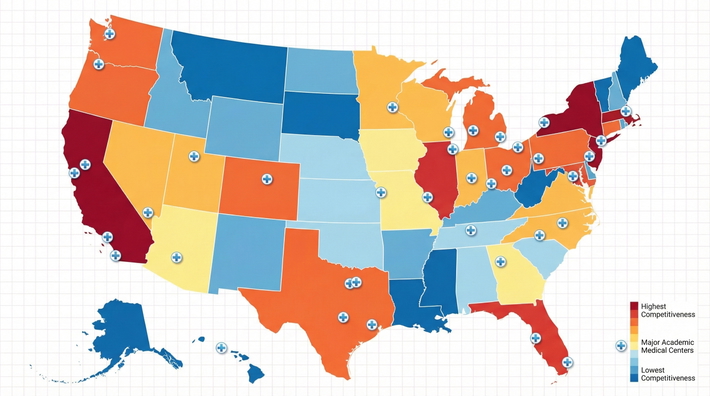
The fantasy that “you’ll just adjust anywhere” is overrated – being matched far from family can hurt. A lot.
You’re not crazy for obsessing over this. I think people massively underplay how destabilizing it is to uproot your entire life and start the hardest years of training without your support system. Everyone says, “You’ll make friends! It’ll be an adventure!” Meanwhile you’re lying awake thinking, “What if I’m miserable for three to seven years and ruin my mental health and my relationships in the process?”
Let’s talk honestly about what actually happens long-term when people match far from home – who crashes, who adapts, what coping really looks like (not the brochure version), and what’s survivable vs what’s a red flag.
The brutal parts people gloss over
Let me start with the stuff no one likes to spell out, because this is what your brain is spinning on at 2 a.m.
The specific ways it hits you
It’s not just “I’ll miss my family.” It’s more like:
- You finish a brutal night shift, walk into your empty apartment, and there’s no one who already knows you. You’re too tired to text anyone, so you just…sit there.
- Holidays become logistics problems instead of comfort. “Can I get post‑call off? Can I afford this flight? Will I be the intern who asks for Christmas off and everyone hates me?”
- You get bad news about a family member and there’s no “I’ll be there tonight.” It’s, at best, “Maybe I can get coverage for next weekend.”
- Big life milestones (births, funerals, weddings) are decisions about who you’re going to disappoint: your program, your co-residents, or your family.
And you’re doing all this while working 60–80 hours a week and trying not to kill anyone with an order you wrote half‑asleep.
So yeah, your fear is rational.
How residents actually cope long-term (not the Instagram version)
Here’s the thing: most people do survive it. Many are okay. Some even end up happier than they expected. But it’s not because they’re magically resilient. It’s because they build structures around themselves, often out of desperation.
I’m going to break this into a few buckets: social, emotional, logistical, and long‑term life planning.
1. Social: manufacturing a “fake family”
You know how people say “your co-residents become your family”? That’s not automatically true. It takes effort and a bit of luck.
Patterns I’ve seen:
- Year 1 is usually rough. You’re too overwhelmed to be strategic. You latch on to whoever is in your intern class, even if they’re not “your people.”
- Year 2–3 is where intentional support networks form. People start saying, “Okay, I cannot do this alone,” and begin building actual community.
What coping actually looks like:
The “rotator family”
You end up with 3–5 people from your class who are your survival crew: sharing rides, venting in stairwells, texting “you okay?” after ugly codes. It’s not always “best friends forever,” but it’s stable enough to feel like someone has your back.“Adopting” an attending or senior
Some residents basically get unofficially “adopted” by an attending or senior who checks on them, gives blunt advice, and occasionally says, “You’re not covering that many nights in a row; I’ll switch.”Micro‑rituals
Same coffee spot post‑call. Same person you call on the drive home. Same weekly Netflix night with whoever’s off. It sounds small, but it tricks your brain into feeling rooted.
Do some people never find this? Yes. Usually those are the folks who:
- Live far from the main cluster of residents
- Say yes to every shift and no to every invite
- Have one foot in “I’m leaving after residency anyway” and never emotionally commit
That’s a risk if you’re shy, anxiety‑prone, or very attached to your home identity. Which…you probably are, if this article title grabbed you. So being proactive here isn’t optional; it’s survival.

Emotional reality: homesickness doesn’t vanish, it dulls
Homesickness in residency is weird. It’s not just missing a physical place; it’s grieving a version of your life you didn’t get.
Like:
- The version where you matched at your home program and still had Sunday dinners
- The version where you could drive 30 minutes to see your parents instead of flying five hours
- The version where you weren’t the one who “left”
What I’ve seen over and over:
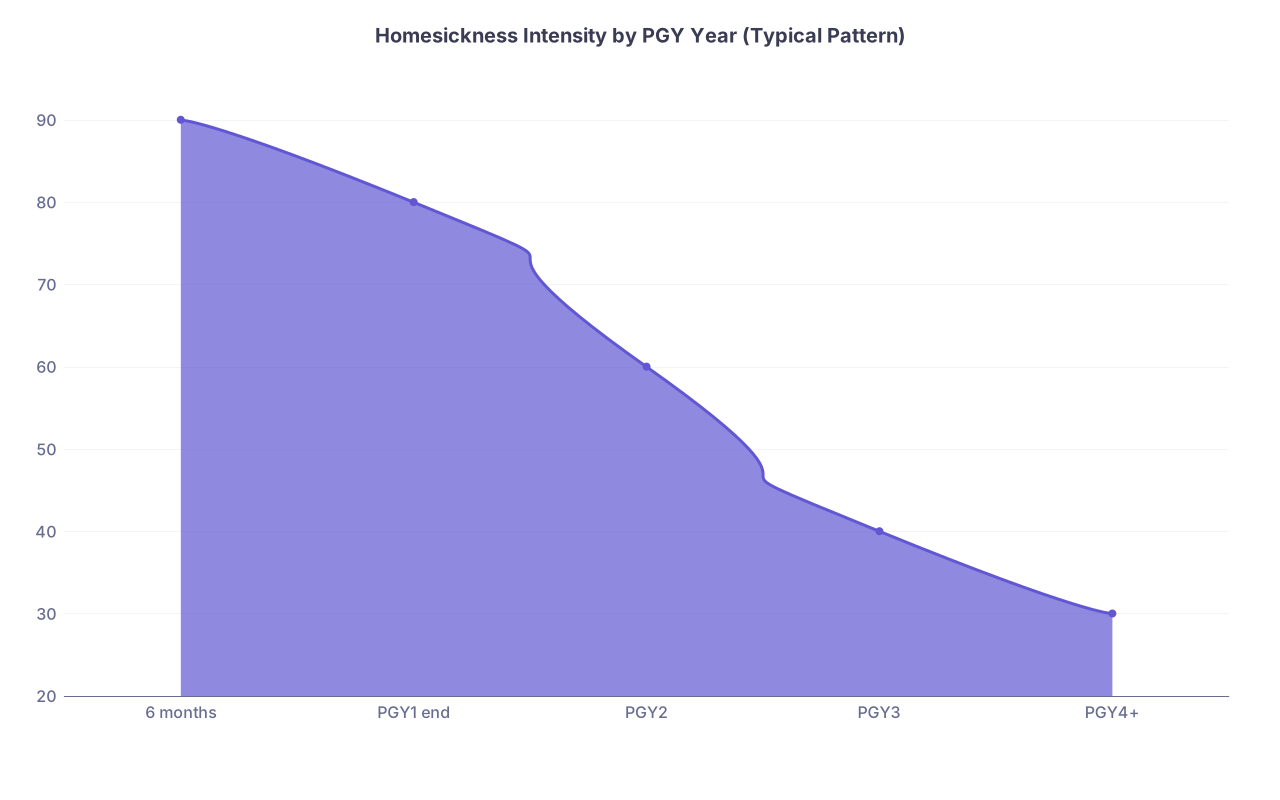
Year-by-year emotional pattern (roughly)
| Category | Value |
|---|---|
| 6 months | 90 |
| PGY1 end | 80 |
| PGY2 | 60 |
| PGY3 | 40 |
| PGY4+ | 30 |
First 6–12 months: Peak “What have I done?” energy. You’re too busy to process it, but it shows up as irritability, crying in your car, doom‑scrolling your hometown friends’ lives.
PGY2: The emotional edge blunts a bit. You know the system. You know your co-residents. You might start saying, “Honestly, I kinda like this city,” and then feel guilty about that.
PGY3+: You’re more focused on next steps: fellowship, jobs, geography again. The homesickness turns into strategic thinking: “Okay, how do I get back closer to my people?”
For some, the ache never fully goes away. For others, their new life genuinely becomes home, and going “back” for holidays starts to feel…off. Both are normal. Both can be unsettling.
Here’s the piece people under‑acknowledge: you’re allowed to grieve. You’re allowed to hate that you’re far. You’re allowed to think this part of the process is unfair. That doesn’t mean you can’t still function and even build something decent where you are.
Logistics: the ugly math of distance
Let’s get very concrete, because your brain is probably already running the numbers in the background.
| PGY Year | Typical Vacation | Realistic Trips Home / Year | Emotional Cost |
|---|---|---|---|
| PGY1 | 2–3 weeks | 1–2 | High |
| PGY2 | 3–4 weeks | 2–3 | Medium |
| PGY3+ | 4–5 weeks | 2–4 | Variable |
Why “emotional cost”? Because every trip home becomes:
- A countdown: “I only have 3 more days here.”
- A guilt storm: you can’t see everyone, so someone feels neglected.
- A reset: it’s harder to go back to your residency city each time, at least early on.
Long-term coping on the logistics front looks like:
Pre‑planning your year
People who do better decide early:
“I’m going home for Thanksgiving and for two weeks in June, and that’s non‑negotiable.”
They build everything else around that.Letting go of every‑holiday expectations
Eventually most residents far from home pick a lane:- “I will do Thanksgiving with friends here and Christmas with family”
- “I’m skipping big holidays this year, doing a long stretch at home in the spring instead” You physically can’t be everywhere. Accepting that hurts but helps.
Funding reality
Matching far usually means:- One or two big flights a year
- Maybe one emergency trip If your family or partner can visit you periodically, that helps a ton. But you should assume: this distance has a budget number attached.
Relationships: who actually survives the distance?
This is the real horror story in most people’s heads: “If I match far, my relationship dies. I miss my siblings’ lives. My parents age without me. I become ‘the absent one.’”
Let’s break it:
Romantic relationships
Patterns I’ve seen:
Couples who both move to the new city tend to do okay if:
- The non-med person can build a reasonable life there (job, community)
- The resident doesn’t act like residency gives them a pass to never show up emotionally
Long-distance where one stays “home,” one goes to residency city: much riskier. Survival requires:
- Clear timeline (“We’ll reunite at fellowship/job, around year X”)
- Actual visits scheduled, not “we’ll see when things calm down” (they don’t calm down)
- Both people genuinely believing this is temporary and purposeful, not random suffering
Honestly? A lot of med school relationships die in PGY1–PGY2, especially if they’re stretched over distance. Not because people are bad, but because the bandwidth isn’t there.
But the flip side is also true: I’ve seen residents in scattered relationships where distance weirdly stabilized things. Less reactive, more deliberate. But that’s not the norm.
Family relationships
Some dynamics that show up when you’re far:
The “you left us” vibe
Especially if you’re the first-gen student, eldest child, or main translator / helper. There can be this unspoken resentment: you “abandoned” them for career. That stings.The “golden child far away”
In some families, your distance actually props up your image. You swoop in for a few precious days, get all the love and praise, then leave your siblings holding the bag. That causes its own tension.
Long-term coping here looks like:
Very explicit conversations
“I hate that I’m far. I didn’t choose this instead of you, I chose this for my training. My goal is to get back closer after residency/fellowship. Can we talk about what would make this feel less like a rejection and more like a phase?”Letting some guilt exist, but not rule you
You will miss things. You will feel awful. You cannot fix everything. At some point you have to say, “I’m doing my best with an impossible setup.”

| Step | Description |
|---|---|
| Step 1 | Matched Far From Family |
| Step 2 | Seek Co resident Support |
| Step 3 | Maintain Current Habits |
| Step 4 | Join Social Events |
| Step 5 | Find Therapist |
| Step 6 | Build Local Routine |
| Step 7 | Plan Visits Home |
| Step 8 | Feeling Isolated? |
| Step 9 | Still Lonely? |
When distance actually becomes dangerous
Let me be blunt: there’s a line where “this is hard” turns into “this is harming you.”
Red flags I’ve seen in residents far from family:
- You start fantasizing about car crashes or getting sick just so someone would force you to stop.
- You stop calling home because every call hurts too much and you feel like a disappointment.
- You’re crying more days than not, and not just on bad rotations.
- You start thinking, “If I just disappeared, it’d be easier for everyone.”
That’s not “normal adjustment.” That’s depression, burn‑out, or both. And no, it’s not automatically solved by being near family, but distance makes it much harder to compensate.
People who pull out of this spiral usually do at least one of these:
- Get an actual therapist (sometimes through GME benefits, sometimes pay out of pocket, sometimes telehealth in their home state).
- Reduce the shame around struggling. Literally say to someone, “I’m not okay being this far from home.”
- Adjust medium‑term plans: commit to fellowship or jobs closer to home, which gives them a psychological exit ramp.
The worst‑case scenario your brain keeps running – “I’ll be trapped and miserable for years” – usually shifts once you give yourself permission to treat this as temporary and strategize an escape toward the people and place you want long-term.
The long game: does anyone regret sacrificing location?
This is the question under all of this: is it worth it?
Here’s the messy, honest answer I’ve seen:
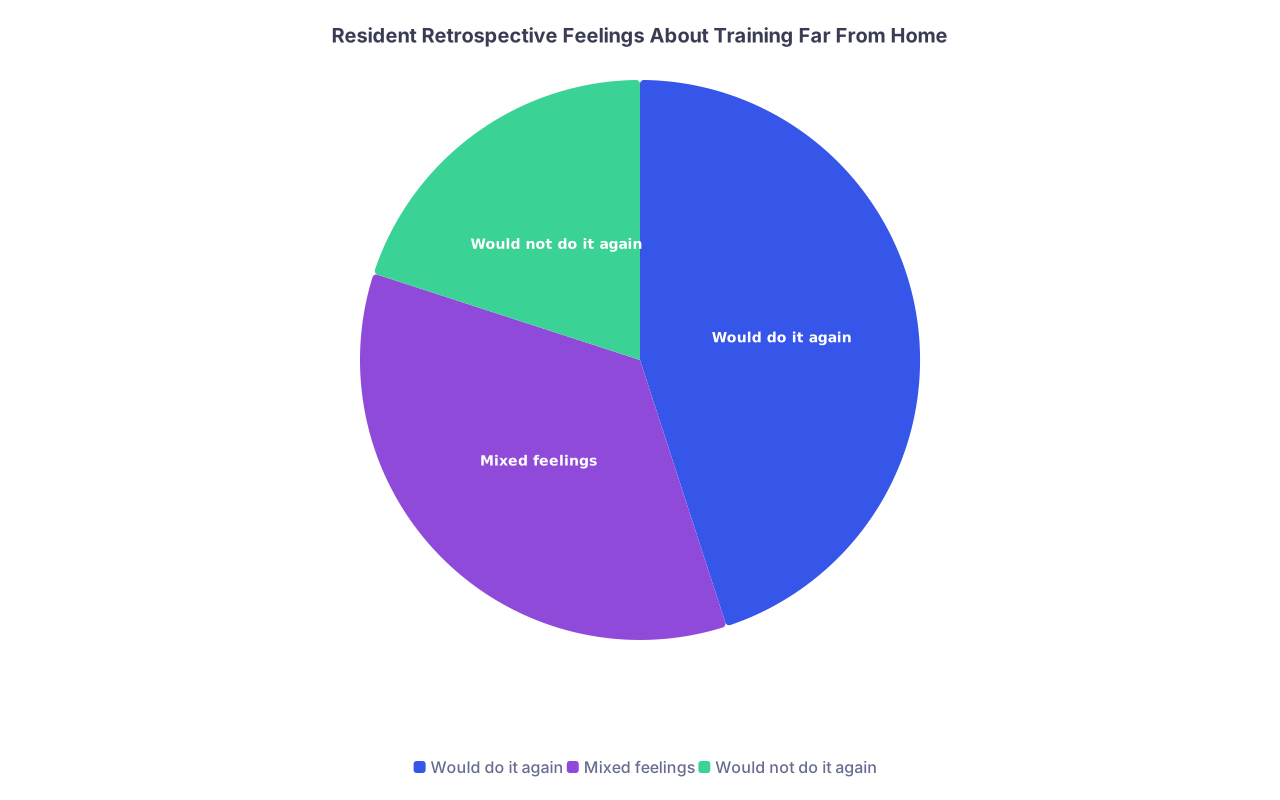
Some residents absolutely say, “I’d do it again.”
They matched into a phenomenal program, gained skills, got fellowship opportunities, and then moved back closer to home after. Distance was awful, but finite.Some say, “I wish I had prioritized location more.”
They realize they would’ve been just as competent coming from a slightly “less prestigious” program near family, and the emotional wear wasn’t worth the marginal brand-name boost.A smaller group says, “Being forced far away actually gave me my life.”
They built independence, new identities, partners, chosen family in this new place. Going “home” is now visiting; their actual life is where they trained.
| Category | Value |
|---|---|
| Would do it again | 45 |
| Mixed feelings | 35 |
| Would not do it again | 20 |
This isn’t scientific data, but it matches what I hear: around 1 in 5 really wish they’d pushed harder to stay close. The rest either think it was worth it or are at least ambivalent-but-okay.
The takeaway for you: you’re not doomed either way. But you are allowed to acknowledge that geography matters to you more than it seems to matter to the people saying, “Prestige is everything.” Because for you, it probably isn’t.
Concrete things you can do now if you’re scared of matching far
You can’t fully control where you end up, but you’re not powerless either.
Build non‑family supports before you match
If your entire emotional life is your family back home, any distance will feel like plunging off a cliff. Start widening your circle now – classmates, mentors, friends you’d call in a crisis.Be strategic on your rank list
If two programs are roughly similar and one is closer to your support system, rank that higher. It’s not “weak” to care about geography; it’s you trying not to burn out.Make a “if I match far” plan in advance
Things like:- “I will see a therapist within the first 3 months.”
- “I will not live 40 minutes from the hospital; I’ll accept a crappier place closer to co-residents.”
- “I will commit to at least one standing weekly event – gym class, faith group, club, whatever – that isn’t medicine.”
You can literally write a one‑page “future me” survival plan so that if you open that email and find out you’re moving across the country, you’re not starting from total emotional zero.
FAQs
1. What if I match far from family and hate the city?
Then you’re in one of the tougher combinations, but still not doomed. Residents in that situation usually:
- Hyper‑invest in their co‑residents and indoor/hobby life
- Treat the city like “where I work” and build their joy in micro‑spaces (apartment, favorite café, gym, church, gaming group)
- Double down on the idea that this is a 3–7 year phase, then they’re out
If you get there and it’s truly unbearable – like dangerous, chronically isolating, or incompatible with your identity – you can explore transferring programs. It’s rare, messy, and not guaranteed, but it does happen. You’re not literally chained.
2. Can regular FaceTime/Zoom actually substitute for being physically close?
Substitute? No. Help a lot? Yes. The people who cope better with distance:
- Have predictable call routines (every Sunday with parents, every X days with partner)
- Don’t just do “how was your day?” but share the boring, everyday stuff – cooking together on video, folding laundry while chatting, watching the same show
- Let themselves be honest: “I’m struggling,” not pretending everything’s fine
Video calls can never replace a hug after a night float from hell. But they can keep relationships alive enough that when you do see each other in person, it feels like continuity, not catching up with a stranger.
3. What if my family is very dependent on me and I feel guilty leaving?
That guilt won’t magically disappear even if you match close. Distance turns the volume up, but the core issue is: you were never going to be able to be full‑time caregiver and full‑time physician trainee without losing yourself. Long‑term coping here means:
- Having explicit conversations about what you can realistically do from afar
- Helping set up local supports for them now, not waiting
- Accepting that you’re allowed to choose your career and still love them; those aren’t mutually exclusive, even if some relatives act like they are
Sometimes distance forces families to expand their support systems beyond “you.” That’s painful but occasionally healthier for everyone.
4. What if I already know I’m someone who doesn’t handle loneliness well?
Then treat that like any other risk factor. You wouldn’t ignore a history of severe asthma and say, “I’ll just hope for the best.” Same idea.
You might:
- Prioritize programs in regions where you have any known person, not just immediate family – cousin, friend, old roommate
- Commit to therapy early, not wait until you’re in crisis
- Choose to live in a busier neighborhood near other residents, not alone in a quiet suburb an hour away
- Be very intentional about joining something non‑medical as soon as you arrive (choir, running club, book club, faith group, whatever fits you)
You can’t change your baseline wiring, but you can design around it instead of pretending you’re someone who thrives in total isolation.
Key points to hold onto:
- Matching far from family is genuinely hard – emotionally, logistically, relationally – and you’re not overreacting by worrying about it.
- Most residents do eventually build a “second family” and survival system where they are, even if the homesickness never fully disappears.
- You’re allowed to prioritize geography on your rank list and long‑term plans; you’re building a life, not just a CV, and staying mentally intact is part of being a good doctor.