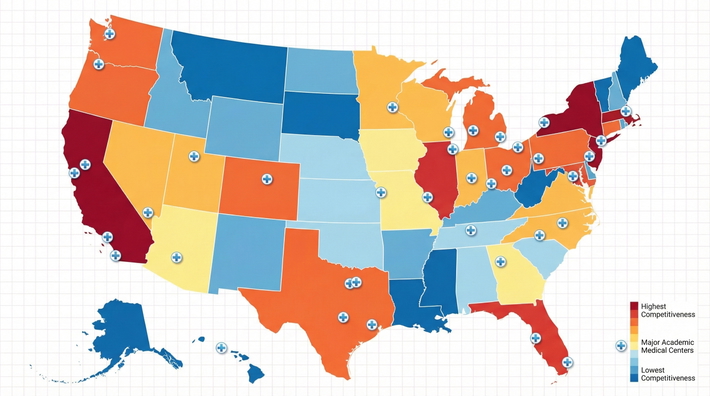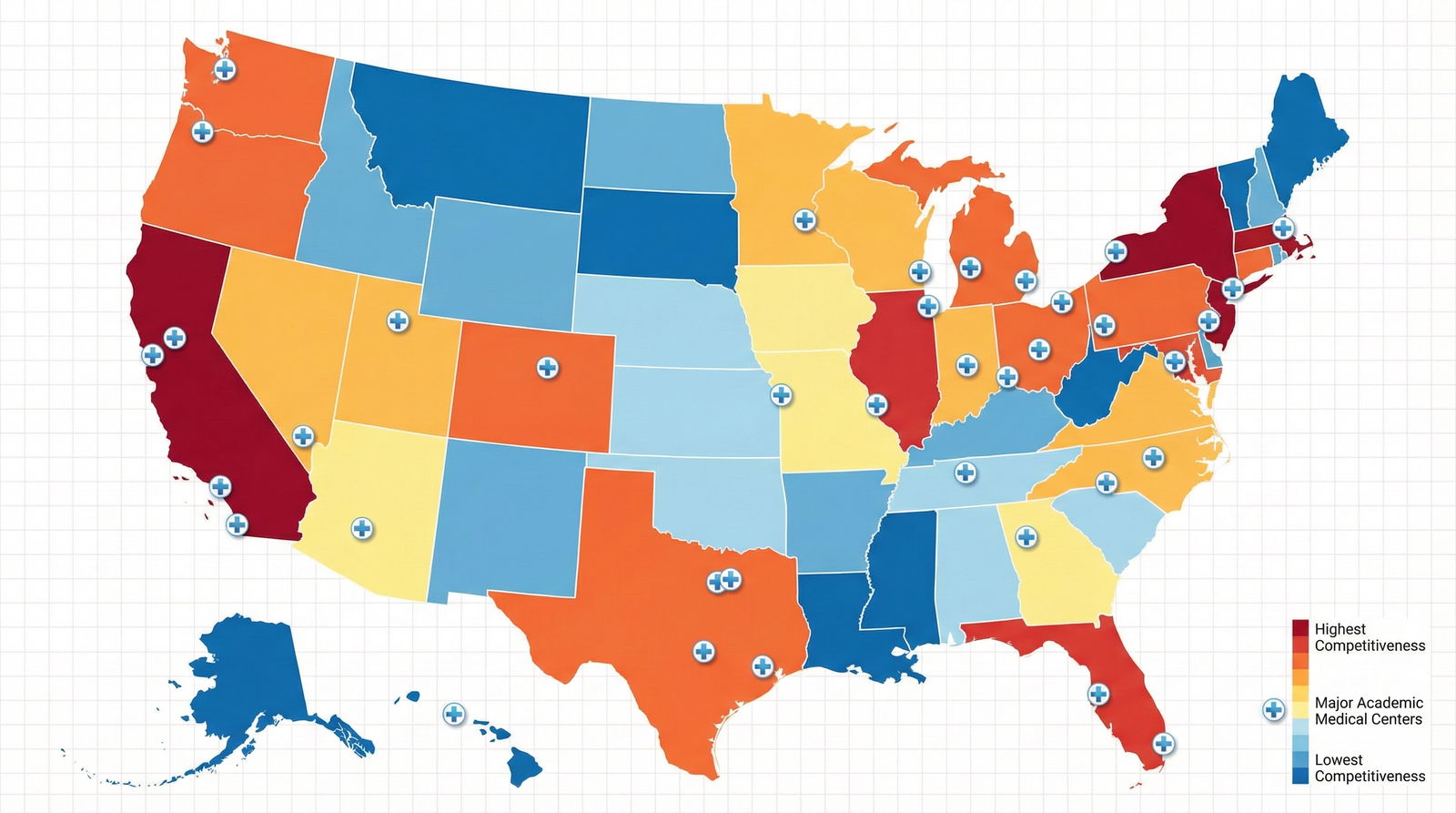
What If I Have Zero Ties to My Dream Region? Honest Match Odds
It’s 11:47 p.m. You’ve got 12 tabs open: FREIDA, Reddit, program websites, a Zillow page for apartments in a city you’ve never even visited. You keep circling the same thought:
“I have no ties there. No family, no school, no rotations. Are they just going to auto-reject me?”
And underneath that:
“Am I kidding myself thinking I can match in my dream region when my entire life is on the other side of the country?”
Let’s talk about that. Honestly. Not the sugar-coated “anything is possible” version, but also not the doomer “you’re doomed unless you grew up there” version either.
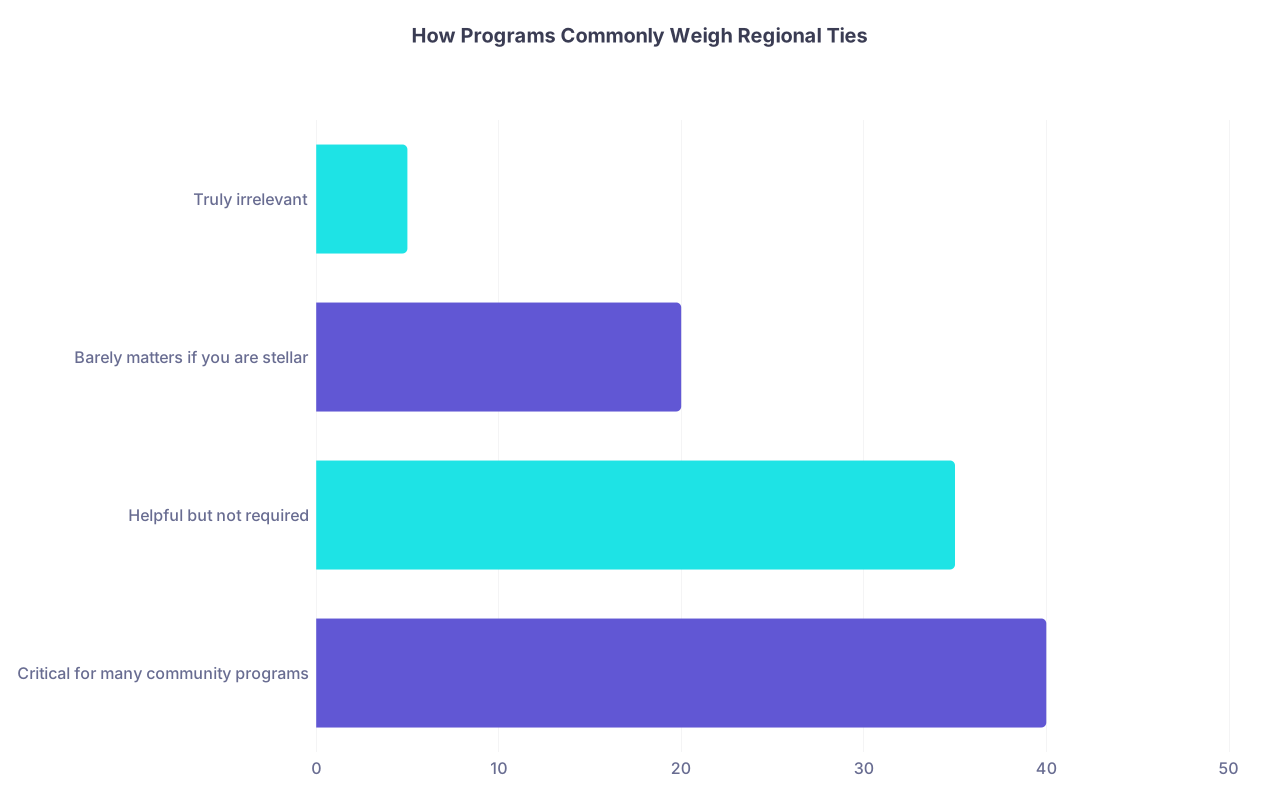
| Category | Value |
|---|---|
| Critical for many community programs | 40 |
| Helpful but not required | 35 |
| Barely matters if you are stellar | 20 |
| Truly irrelevant | 5 |
How Much Do Regional Ties Actually Matter?
Here’s the uncomfortable truth:
Regional ties matter a lot at many programs. But “a lot” doesn’t mean “only.”
Program directors are painfully practical. They worry about one thing above all:
“Will this person actually come here… and will they stay?”
Regional ties are a lazy but convenient proxy for that. If you’re from that state, went to school nearby, or did rotations there, they feel reassured you actually want to be there and won’t ghost them after PGY-1.
I’ve seen patterns like this:
- Small community programs in the Midwest: obsessed with ties. They’ll literally say on interview day, “We really value people with connections to the area.”
- Big coastal academic giants: they like diversity—geographic too. If your application is strong, they’re not panicking about ties; they assume ambitious people move.
- Mid-tier city programs in popular regions (NYC, SoCal, PNW): overwhelmed with apps. Ties become an easy filter.
So where does that leave you if you have zero ties?
You’re not automatically out. But you are:
- Slightly behind applicants with equal stats and strong ties
- Forced to prove interest in other ways
- Going to need a very intentional strategy, not “spray and pray”

Your Realistic Match Odds With Zero Ties
Let me say the quiet part out loud:
If you have no ties and no explanation for your interest in a region, your odds in competitive regions drop. Sometimes sharply.
But ties are just one variable. Programs are constantly doing this mental math:
- Stats (Step 2, class rank, AOA)
- School reputation / prior residents from your school
- Letters
- Research / niche strengths
- Personal story / fit
- Region / ties
The more you compensate in other areas, the more “no ties” becomes a minor annoyance instead of a dealbreaker.
Here’s a very rough way to think about it:
| Applicant Profile | Impact of Zero Ties in Popular Regions |
|---|---|
| Very strong (top quartile, strong letters) | Small to moderate |
| Solid / average applicant | Moderate to large |
| Below-average metrics | Large to severe |
| With unique niche (research, language) | Reduced impact |
| Non-trad with compelling life story | Variable, depends how well explained |
So yeah, if you’re an average applicant trying to match IM in SoCal with no ties, you are competing uphill. That doesn’t mean impossible. It does mean:
- You need more programs on your list
- You need stronger, more specific explanations for interest
- You may need to accept that your “dream region only” plan is a bad gamble
The worst mistake? Acting like region doesn’t matter and only applying to the glitzy area you romanticized on Instagram.
How Programs Sniff Out “Fake” Regional Interest
You can’t just write: “I love the Pacific Northwest.” So do 500 other people who’ve also never been there.
Programs look for patterns that back up what you’re claiming:
- Did you rotate there or somewhere nearby?
- Any research collaborations with faculty in that region?
- Prior grads from your school who went there?
- A partner/family move you’re transparent about?
- Do you express specific interest in their city, patient population, or training style?
Compare these two statements:
“I’m very interested in training in the Northeast because I’ve always loved the culture and energy of the region.”
→ Vague. Looks like filler.“My long-term plan is to settle in the Northeast; my partner is starting law school in Boston, and I’m particularly interested in safety-net hospitals that serve immigrant communities similar to where I grew up.”
→ A real story. A reason they can believe.
They don’t need your entire life history. But they do need something better than “good food and outdoors.”
And if you literally have no real connection? You manufacture direction, not lies. That means:
- Long-term career goals tied to the region (public health, academic niche, specific patient populations)
- Climate or lifestyle plus professional reasons
- Genuine specifics about what that city/region offers that aligns with your goals

| Step | Description |
|---|---|
| Step 1 | No Regional Ties |
| Step 2 | State Explicitly in PS |
| Step 3 | Create Credible Career-Based Reason |
| Step 4 | Targeted Emails to Programs |
| Step 5 | Apply to Enough Programs |
| Step 6 | Real Reason to Move? |
“No Ties” vs “Invisible Ties”
A lot of people say they have “no ties” when they actually have underused ties:
- You did an away rotation there but never mention it in your region story
- You have extended family nearby but assume that doesn’t count
- You grew up in a neighboring state
- You did undergrad in the region but med school far away
- You’ve attended conferences there, collaborated with a PI there, etc.
Programs don’t know any of this unless you:
- Explicitly mention it in your personal statement or supplemental
- Have a letter from someone local
- Bring it up in emails or interviews when appropriate
So before you panic, actually inventory:
- Where you went for undergrad
- Where you grew up
- Where significant friends/partners/family live
- Where you’ve rotated, even for a week
- Any professional connections to that area
You might not have strong ties. But you may not be at absolute zero either.
| Category | Value |
|---|---|
| Critical for many community programs | 40 |
| Helpful but not required | 35 |
| Barely matters if you are stellar | 20 |
| Truly irrelevant | 5 |
How to “Build” Interest When You Have No Ties
Let’s say you truly have nothing. Different coast. No family. Never visited. Just vibes.
You can’t manufacture a hometown, but you can build a believable, rational narrative for why you’d move there.
Here’s what actually helps:
Get specific on your long-term plan
Instead of: “I like the West Coast.”
Try: “I want to work long-term in safety-net systems with large immigrant/refugee populations and strong primary care integration—this region’s big county systems and FQHC networks fit what I’m aiming for.”
Or: “I’m drawn to this region’s strong academic-community hybrid programs because I see myself as a clinician-educator with protected teaching time but a diverse patient mix.”
Show you did homework on that region
Talk about things like:
- State Medicaid expansion and what that means for patient access
- Specific underserved communities in the city
- Research ecosystems (biotech, cancer centers, etc.)
- Lifestyle factors that matter for physician burnout, not just “nice restaurants”
If you can name 2–3 programs in that region and say why each is appealing in slightly different, thoughtful ways, you’re already ahead of the “I just like the ocean” crowd.
Use your personal statement and supplemental wisely
Not “I only want to train in X region”—that can backfire for other areas.
But you can include one or two lines like:
- “I’m open geographically, but I’m particularly interested in regions with [X characteristics], such as [brief example aligned with your dream region].”
- For region-specific essays: clearly state your reason to build a life there (career, partner, culture, community).
Reach out—sparingly but purposefully
Not mass emails. But if:
- You have a genuine long-term reason to be in that city
- You’re a borderline applicant and the program’s a high priority
- You can briefly articulate why you’re serious about them
A short, respectful email to the coordinator/PD can help you not be written off as a casual, no-ties applicant. It won’t magically create an interview, but it can nudge you out of the “probably won’t rank us” bucket.

The Big Trap: Dream Region or Bust
Here’s where people blow up their own match:
They decide: “If I’m not in [West Coast / NYC / Boston / Miami / PNW], I’ll be miserable.”
Then they:
- Apply to too few programs, mostly in that region
- Apply disproportionately to the hottest cities
- Ignore strong programs in less flashy locations
- Downplay how risky that actually is because “I’ll be okay, my app is decent”
I’ve watched applicants with completely normal stats go unmatched because their list was:
- 10 NYC psych programs
- 8 Boston IM programs
- 6 SoCal prelim/transitional years
And that’s it. No backup region, no safer programs, no breadth.
Zero ties didn’t kill them. Overconfidence about their “must live in X” dream did.
If match is non-negotiable, then your spreadsheet needs:
- A mix of regions (your dream + some where ties matter less)
- A mix of competitiveness levels
- Enough total programs (especially if you’re average or below average on paper)
Your “dream region only” fantasy is not worth a SOAP nightmare.
Where Ties Matter Less (Or At Least Differently)
Some situations where lack of ties hurts less:
Highly academic, big-name programs
They’re used to people moving across the country for reputation and training. They care more about your academic alignment than your zip code.Very underserved or rural areas
If you can convincingly argue you’re committed to that kind of medicine, they’re not expecting you to be from there. Many actually expect you’re not local.Regions with a lot of transplant professionals
Big, transient cities (think Houston, Dallas, Chicago) sometimes put less weight on “grew up here” and more on “can thrive in this environment.”
But even in those places, if they have 200 apps and 80 of them have clear ties, those 80 get a little psychological bump. You’re just trying to make sure you’re not instantly dismissed as a flight risk.
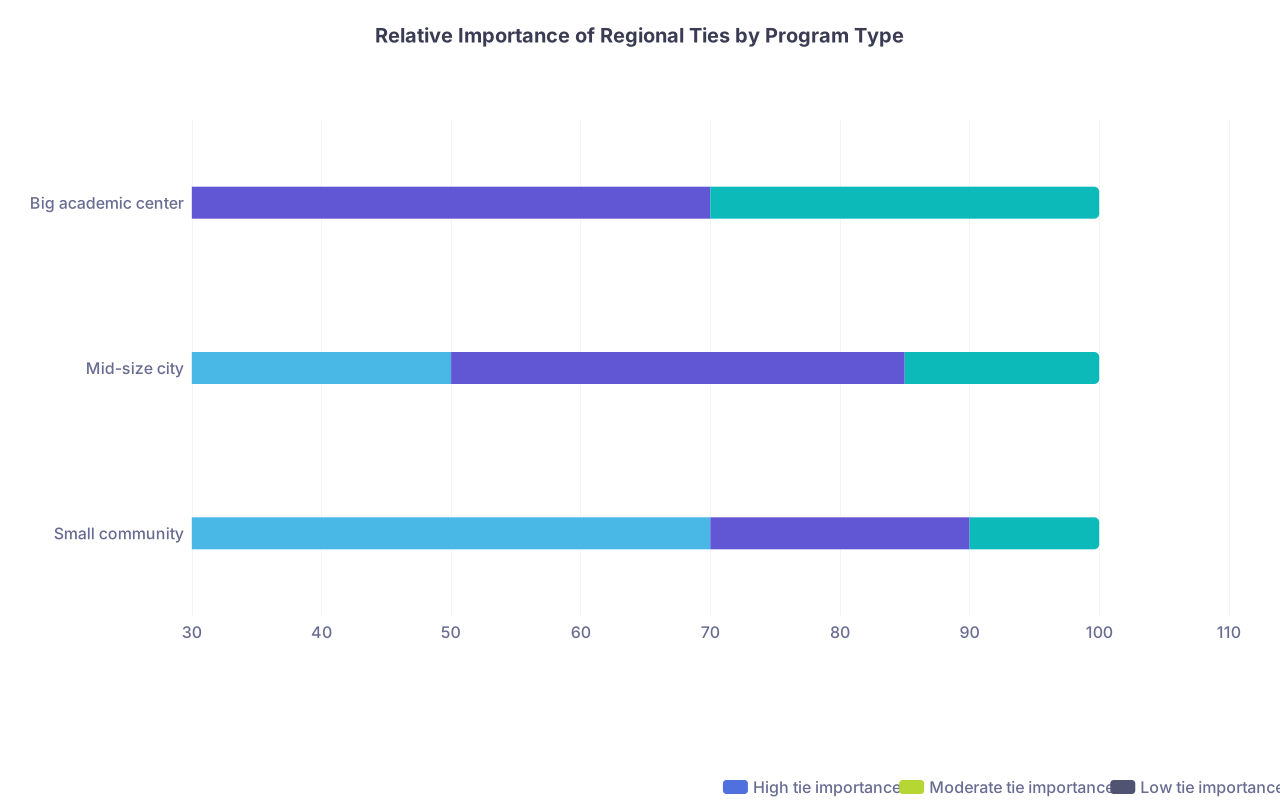
| Category | High tie importance | Moderate tie importance | Low tie importance |
|---|---|---|---|
| Small community | 70 | 20 | 10 |
| Mid-size city | 50 | 35 | 15 |
| Big academic center | 30 | 40 | 30 |
What You Should Actually Do If You Have Zero Ties
Boil it down:
Be brutally honest about your competitiveness.
If you’re not top-tier, you don’t get to be geographically picky and regionally untied without accepting real risk.Build a coherent story about why your dream region makes sense for your life and career.
Not fluff. A story someone could repeat about you to the ranking committee in one sentence.Apply widely enough.
Dream region = sure. But also:- Neighboring regions
- Programs that historically take more out-of-region applicants
- A few places where you do have even weak “ties”
Use PS/supplementals/emails to make your interest visible.
Don’t assume they’ll infer anything. Spell it out.

FAQ (Exactly 6 Questions)
1. Am I basically wasting my money applying to a region where I have zero ties?
No—unless your whole list is only that region and it’s ultra-competitive. One region with no ties is fine as part of a balanced list. Where it becomes a waste is when you treat your dream region like a sure thing instead of a stretch.
2. Should I lie and invent a tie, like saying I have family there?
Don’t. Program people are not stupid, and lies unravel fast. You don’t need fake ties. You need a real explanation: long-term career plans, partner moving there, interest in a specific patient population or training environment. You can create a narrative without creating fiction.
3. How do I explain wanting a region I’ve never even visited?
Be honest but thoughtful. Something like:
“I haven’t lived in this region yet, but my long-term goals align with the city’s large [X] population and the strong [Y] systems here. I’ve talked to residents, researched the local health landscape, and I see myself building a life and career in this environment.”
Curiosity plus preparation is better than pretending you’re already a local.
4. Will programs assume I won’t rank them highly if I have zero ties?
Some will. Especially in popular areas where they feel used as “backup prestige” or a “cool city” option. That’s why you have to give them explicit reasons to believe you’d actually come: clear story, specific interest, and not acting like they’re interchangeable with every other program in the city.
5. Should I do an away rotation in my dream region to create a tie?
If timing and money allow, it can help—if you perform well and actually connect with people. But don’t expect one away to erase every other concern. Also, doing an away and then not getting an interview there hurts emotionally. Do it as a strategic move, not as a magical fix.
6. What if I have zero ties anywhere—does that hurt me across the board?
Honestly? That’s kind of normal. Lots of people don’t have clear regional ties as adults because they moved for school and training. The real issue isn’t “ties everywhere”; it’s:
- Do you sound like you’ve thought about where you want to build a life?
- Can you give programs believable reasons you’d commit to their city?
You don’t need 10 regions you’re tied to. You need a few where your story and their needs line up.
Quick Takeaways
- Zero ties doesn’t equal zero chance—but it does mean you have to be smarter and more explicit about your interest.
- The riskiest move isn’t “no ties”; it’s “dream region or bust” with an unbalanced, overconfident rank/app list.
- Your safest path: build a credible story, apply broadly, and stop assuming geography is fixed while everything else magically works out.