What are you supposed to think when literally every program in your home region is silent and everyone else is posting “Just got my [Home Institution] invite!!”?
Same specialty. Same state. Same application cycle.
They get love. You get…nothing.
Let’s pull this apart before your brain convinces you your entire career is over.
First: Does Silence From Your Home Region = Rejection?
Short answer: no.
Your anxiety-flavored brain: “Okay but it feels like yes.”
Here’s the harsh but honest breakdown:
- Silence does not automatically mean rejection
- Silence does not automatically mean they hate you
- Silence does mean you don’t have enough information yet
Residency programs are not a group chat. They don’t coordinate to send invites in a neat, fair way. It’s chaotic:
- One PD sends invites at 7:05 am
- Another waits for “holistic review” rounds
- Another loses half a week to the hospital going on diversion and everyone getting pulled into service
Meanwhile, you’re on Reddit building conspiracy theories from a sample size of 12 posts.
I’ve seen this specific scenario more times than I like:
- Applicant from Midwest
- Wants to stay close to home
- Has interviews from East Coast + Southeast
- Literally zero invites from home state by mid-season
- Panics, assumes total rejection
- Ends up getting 1–2 home region invites late, ranks one highly, matches there
The most common mistake? Treating your region like a single entity that has “collectively decided” they don’t want you.
They haven’t “collectively” done anything. They’re just slow, disorganized, or playing their own weird internal strategy game.
Why Your Home Region Might Be Quiet (That Isn’t “You Suck”)
Let me be blunt: sometimes it is about your application.
But not always and not usually in the way you think.
1. Home Programs Are Weirdly Selective (And Political)
Your “home region” has baggage:
- PDs know your med school reputation
- They might know your dean, your clerkship directors
- They may have strong preferences for:
- Their own med school
- Certain feeder schools
- Students who rotated there
- Students with local ties deeper than yours
Example I’ve seen:
A solid IM applicant from a midwest DO school applied to 5 programs in her nearby metro. Didn’t rotate there. No research with them. No insider connections. She assumed “I’m local, that’ll help.”
Result: 0 invites locally, 12 invites elsewhere, matched in another state easily.
Being from the region isn’t always the advantage we’re told it is. Sometimes it’s neutral. Sometimes it’s even a disadvantage if they prefer their own students heavily.
2. They Think They Already “Know” You
If you’re from that med school or region, programs might:
- Assume you’ll be very likely to accept → invite later
- Assume you’re already in their “consider strongly” pile but want to:
- See Step 2/CK first
- Finish reviewing the pile of “unknown quantities”
It’s messed up, but a lot of places treat home applicants as “we’ll get to them” because they assume interest and familiarity.
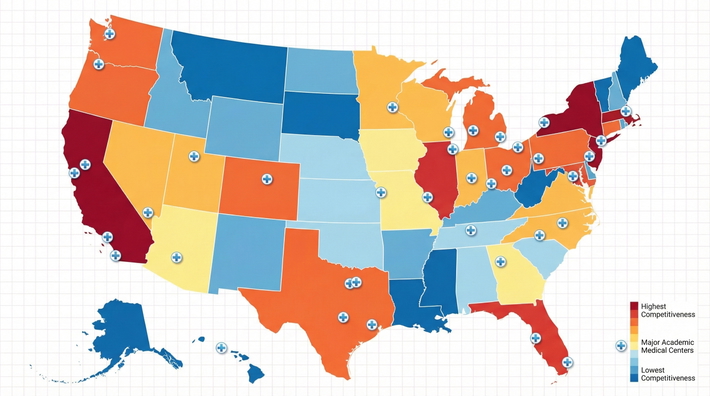
3. Regional Competitiveness Is Brutal
Your region might just be a bloodbath.
| Region | Typical Apps per Spot | % Local Med Grads Filling Spots |
|---|---|---|
| Northeast | 60–80 | 40–60% |
| West Coast | 70–100+ | 50–70% |
| Midwest | 40–60 | 30–50% |
| South | 40–70 | 35–55% |
| Mountain/Plains | 30–50 | 20–40% |
If you’re in a popular city/region (Boston, NYC, Bay Area, Chicago, etc.), you’re not just competing with:
- Your classmates
- Your state schools
You’re competing with:
- Ivy/“top 10” students who want your city
- People couples matching
- People with serious geographic preferences (family, visas, partners, kids)
So when you don’t hear from your region but get love from less-saturated areas?
That’s not a character judgment. It’s just supply and demand.
Timing: When Silence Starts to Mean “Probably No”
Honestly, this is what you’re really asking: “When should I mentally label them as rejections?”
Different specialties + regions = different timelines, but here’s the general emotional damage schedule:
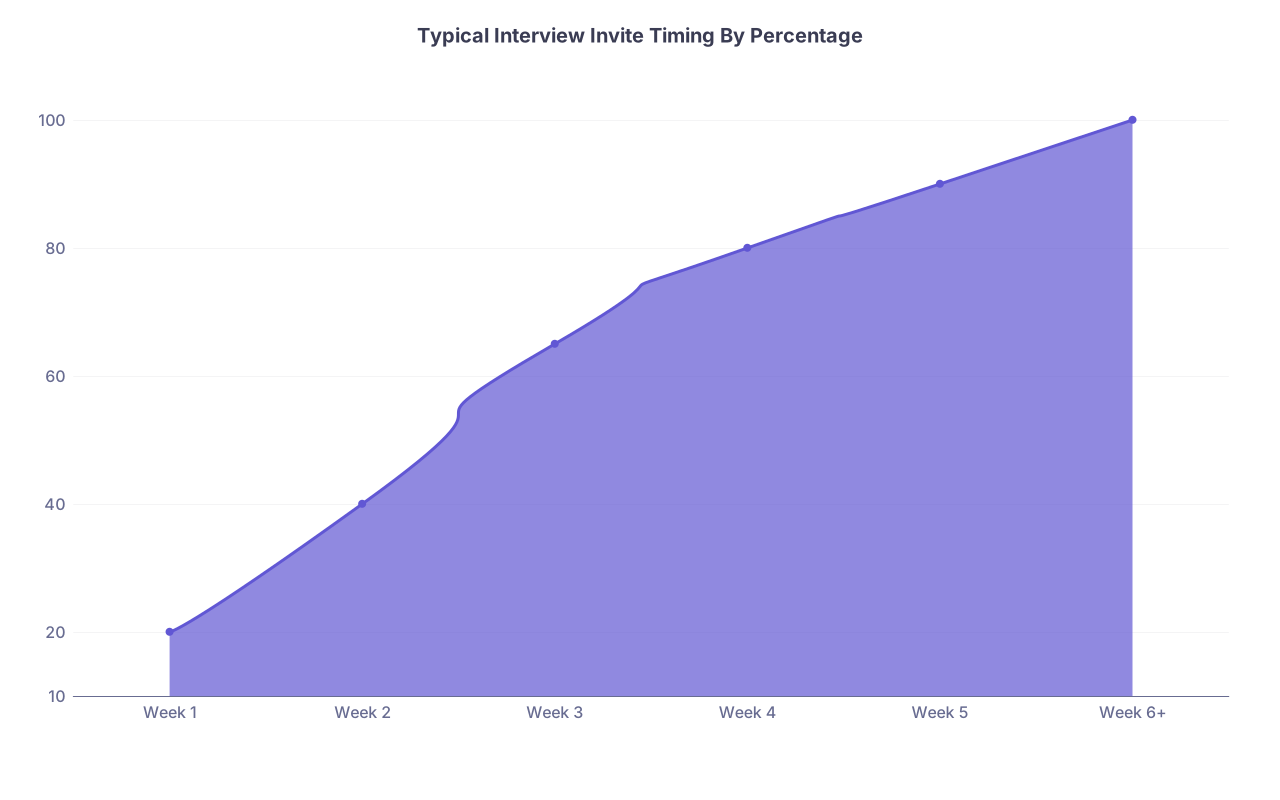
| Category | Value |
|---|---|
| Week 1 | 20 |
| Week 2 | 40 |
| Week 3 | 65 |
| Week 4 | 80 |
| Week 5 | 90 |
| Week 6+ | 100 |
Reality:
- ~50–70% of interviews go out in the first 2–3 major waves for most programs
- Many programs hold a small number of invites for late-season:
- After seeing Step 2 scores
- To replace cancellations
- To improve “diversity” or geographic spread
So what does this mean for you?
Here’s my rule of thumb:
- If it’s early-mid season and a region is silent → shrug, annoying but not fatal
- If it’s late season and you have:
- 0 invites from that region
- Multiple invites from other areas
→ It likely does mean those specific programs are not leaning toward you
But even then, is it a total rejection until they change your status? No.
Could you still get a last-minute invite if others cancel? Yes.
Is that something to emotionally bank on? Absolutely not.
“But Everyone From My School Got Local Invites Except Me”
This is the nightmare scenario.
You’re in the group chat. People drop screenshots of invites from the same 2–3 local programs. Your phone? Silent.
Your brain immediately writes one of these scripts:
- “The PD must hate me.”
- “Someone said something bad in my MSPE.”
- “My advisor overestimated me. I’m actually the weak link.”
Here’s the less dramatic, more annoying truth:
Programs stratify.
They rank your class in their heads way more than anyone admits. Someone from your school will be “preferred.” It might not be you. That doesn’t mean you’re bad; it means they had to pick.Fit is wildly subjective.
Maybe they wanted:- More research-heavy
- More primary-care-committed
- More diverse background
- More nontraditional applicants
That can shift “who gets the local invite” very quickly.
Sometimes it really is random noise.
I’ve watched:- People with 10+ pubs get skipped while others with 0 got invites
- ADOLESCENT “interest” paragraphs turn PDs off
- A throwaway hobby line hook a PD who shared it
So no, you’re probably not secretly blacklisted.
You’re just experiencing the unspoken cruelty of being compared side-by-side with people the PD already knows.
What You Can Actually Do (Instead of Just Spiraling)
You can’t force an interview invite out of a silent program. But you’re not completely powerless either.
1. Look at Your Overall Interview Count First
Before you obsess over where they are, check how many you have.
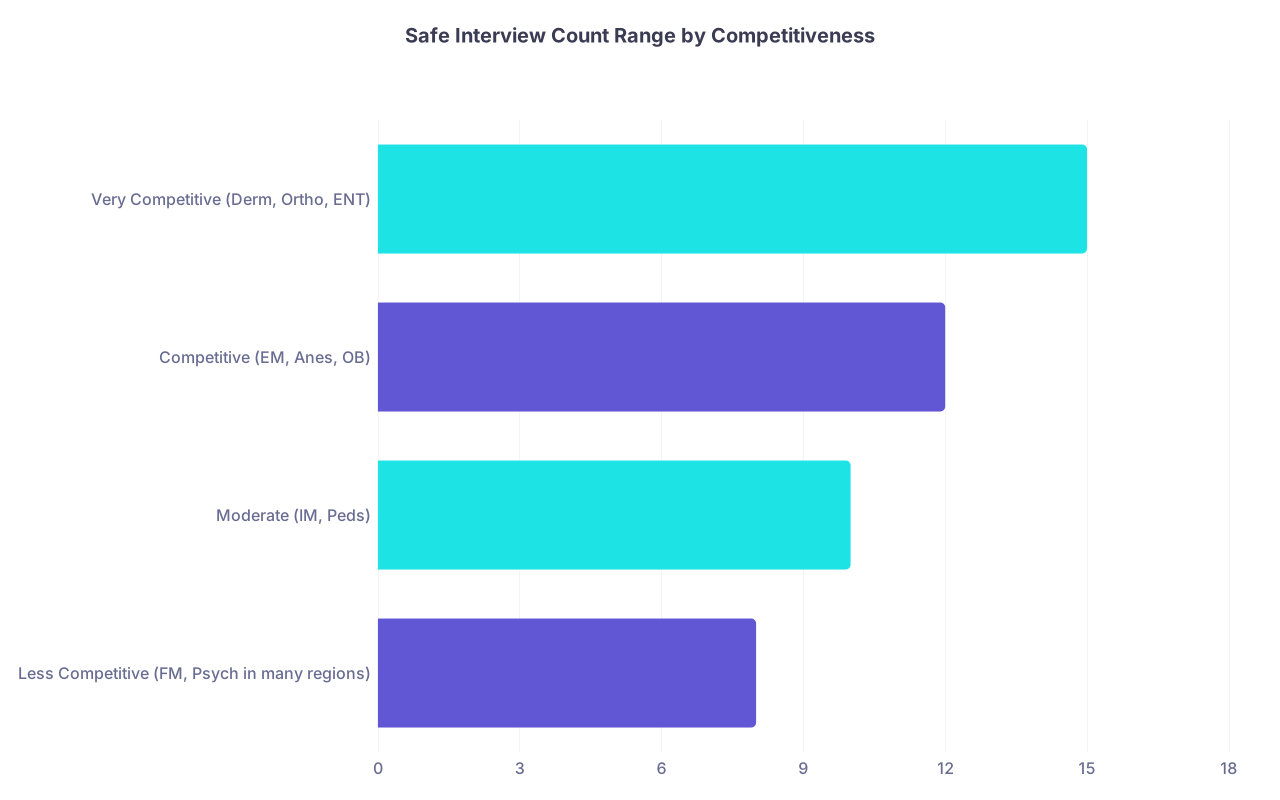
| Category | Value |
|---|---|
| Less Competitive (FM, Psych in many regions) | 8 |
| Moderate (IM, Peds) | 10 |
| Competitive (EM, Anes, OB) | 12 |
| Very Competitive (Derm, Ortho, ENT) | 15 |
General logic (not absolute, but real-world):
- If you’re in a less or moderately competitive specialty and have:
- ~10+ solid interviews overall → you’re in a decent place, region or not
- If you’re in a very competitive field and:
- Have < 8–10 interviews total → okay, then I’d start sweating strategically
If you’re sitting on a reasonable number of total invites but just not from home?
Annoying, yes. Catastrophic, no.
2. Ask Yourself: Do I Actually Need My Home Region?
You might prefer it. That’s valid. Family, partner, cost of living, whatever.
But Match math cares about:
- How many interviews
- The quality of programs (in terms of how likely they are to rank you)
- Your rank list length
It does not care about your zip code.
I’ve watched so many people torture themselves about geography, then:
- Match in another state
- Start residency
- Three months in: “Yeah, I’m fine. Tired. Busy. Don’t really care where I am honestly.”
Geography feels huge when you’re in limbo.
Once you’re drowning in intern year, where your car is registered matters a lot less than whether the hospital feeds you on call.
3. Consider a Tactful Signal or Update (But Don’t Beg)
If there are 1–2 home region programs you’d truly love:
You can send a short, adult-sounding email:
- Brief expression of interest
- One or two genuine, specific reasons (not “close to home,” that’s everyone)
- Short update if you have something meaningful (new score, publication, leadership, rotation comments)
DO NOT:
- Send “just checking in on my status” emails. They know your status: you’re uninvited.
- Email weekly. That moves you into “red flag” territory.
- Send long paragraphs about your childhood dream to be at TheirProgram™.
One concise, well-written email to each of your top programs is fine.
More than that starts looking desperate.
What This Means For Future Years (And The Direction Things Are Going)
Since this is under “Miscellaneous and Future of Medicine,” let’s zoom out for a second.
The pattern you’re seeing—regional clustering, weird silences, hyper-competition in certain cities—isn’t going away. If anything, it’s amplifying:
- More schools → more grads
- Same (or fewer) spots at popular programs
- More people wanting big-name cities or “cool” regions
- Step 1 pass/fail → programs lean even more on geography, perceived fit, Step 2, and random filters
What I’m already seeing:
- Strong applicants getting completely shut out of their home region but matching fine elsewhere
- Programs caring more about “do you have a real connection to us” instead of vague “I like your city” statements
- Virtual interviews making it easier to apply everywhere, which ironically makes regional competition worse
So no, your current situation is not a sign that the universe is uniquely against you.
You’re just stuck in a system that’s badly designed for transparency and emotional sanity.
A Quick Reality Check: The Worst-Case You’re Imagining
Your brain’s script probably goes like this:
“No invites from home region → they all rejected me → I won’t match → I’ll have to reapply → no one will want a reapplicant → my life is over.”
Slow down.
Most people who don’t get regional interviews:
- Still match
- Often match in places they didn’t originally consider “top choices”
- Then build perfectly fine careers and move geographically later if they want
You know who actually ends up limited?
Not the person who did residency out of state.
The person who never finishes residency because they burned out, picked a toxic program, or didn’t match at all due to poor strategy.
I care a lot less about where you match than that you match into a program that will train you decently and not destroy you as a human being.
If that’s 2 states away instead of 20 minutes from your parents? That’s not failure.
That’s just not the fairy tale.
FAQ: No Home Region Interviews
1. Should I email programs in my home region asking why I wasn’t invited?
No. That’s a great way to make sure they remember you for the wrong reasons. If the season is still ongoing and you haven’t heard anything, you can send a single, concise email expressing interest and sharing a brief update. But never ask “why didn’t I get an interview?” They won’t tell you, and it looks unprofessional.
2. Does not getting an interview from my home institution mean they didn’t like me as a student?
Not necessarily. Home institutions often have very limited slots and tons of internal pressure—faculty kids, star researchers, people with specific career aims that align with the program. You might be totally respected and liked as a student but just not at the top of their very specific internal list. It stings, but it’s more politics and numbers than a personal indictment.
3. If I don’t match this year, will the lack of home region interviews hurt me as a reapplicant?
Programs don’t sit around saying, “They’re from here and we didn’t interview them last year, so blacklist forever.” If you reapply, what matters more is: what changed? Extra year, new experiences, stronger scores, better letters. The fact that they ignored you once is background noise compared to how you present the second time.
4. Should I prioritize programs that interviewed me over “better” programs in my home region that ignored me?
Yes. Rank the places that actually showed interest and where you’d be reasonably happy and supported. A “prestigious” or geographically perfect program that never even gave you an interview is irrelevant. You’re building a rank list from real options, not fantasy ones. Forget the programs that didn’t invite you; they’re not in your universe anymore.
5. How do I stop obsessively refreshing my email and stalking invite spreadsheets?
You probably won’t stop completely, but set guardrails. Give yourself specific “check times” (e.g., 9 am, 1 pm, 5 pm), turn off push notifications, and delete or mute the most triggering group chats for a bit. Then redirect your nervous energy somewhere vaguely productive: prep for the interviews you do have, read a little about the programs, or honestly, just sleep. You’re going to be chronically exhausted soon. Take the rest while you can.
Key Takeaways:
- No interviews from your home region does not automatically mean rejection or doom; it usually means competition, timing, and politics.
- Your total interview count and how you rank programs matters far more for matching than whether they’re geographically close.
- Obsessing over silent local programs won’t change them; focusing on the interviews you do have actually will.