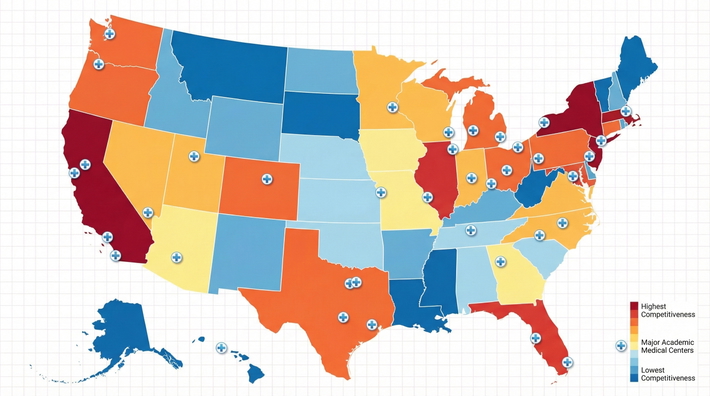
The usual “just go to the most prestigious program you can” advice is lazy and often wrong.
If you’re serious about your career and your sanity, you need a more ruthless framework than “chase reputation” or “stay near home.” Let’s walk through it.
The Short Answer: Most People Overrate Prestige and Underrate Region
Here’s the direct answer you’re looking for:
- If you’re going into a competitive specialty or gunning for an elite academic career → lean toward program reputation.
- If you care about long‑term happiness, family, and where you’ll actually practice → region jumps way up the list.
- If you’re in a core specialty (IM, FM, peds, psych, OB/GYN, EM, general surgery) and not chasing ultra-competitive fellowships → the region + fit + training quality triad usually beats raw “top‑10” name brand.
The trick is figuring out which bucket you’re actually in—not the one your ego wants you to be in.
Let’s break it down by what really changes your life: career ceiling, day‑to‑day resident experience, and where you’ll end up practicing.
How Region Quietly Controls Your Future
People treat region like a lifestyle choice. It isn’t. It’s a career choice dressed up as a lifestyle decision.
1. Most doctors practice near where they train
Look at where attendings around you went to residency. Patterns jump out fast.
- Northeast programs → lots of attendings stay in the Northeast
- Texas residencies → Texas-heavy job networks
- California training → good luck leaving the West Coast if you never networked elsewhere
Programs have pipelines. To local hospitals, local private groups, and regional health systems. You’re not just picking where you’ll live for 3–7 years—you’re picking the default job market that will know you.
If you already know you want to end up in:
- The Midwest near family
- The Southeast for cost of living
- The West Coast for partner’s job
…then ranking a bunch of shiny coastal “name” programs far from that target comes with a cost: you’ll be an outsider when it’s time for your first real job.
2. Support system matters more than people admit
I’ve seen residents on the verge of quitting medicine at an “elite” program because:
- Their entire life is a 5-hour flight away
- Every holiday is a choice between sleep and seeing family
- No local friends outside residency
- Partner is miserable, isolated, or stuck in a terrible job market
Contrast that with the resident at a solid (not famous) regional academic center:
- Family within a 2-hour drive
- Built‑in childcare from grandparents
- Partner in a stable job
- A couple of med school friends nearby
Guess which one has the bandwidth to actually read, publish, and show up as their best self?
Burned-out people do not become stars, no matter the program name.
3. Region shapes your patient population and skillset
You want to work:
- Urban underserved? You’ll see a very different pathology mix in Philly vs. Vermont.
- Rural critical access? A NYC program may not prepare you as well as a big regional center with actual rural rotations.
- Certain language-heavy communities (Spanish in Texas/California, for example)? Region matters more than brand.
If you want to serve a specific community, training where that community actually exists is not optional.
When Program Reputation Should Win (And When It Shouldn’t)
“Reputation” is a lazy word. Let’s separate it into things that actually matter.
- Name brand (what laypeople and some docs recognize)
- Academic firepower (research volume, fellowship placement, subspecialty depth)
- Training quality (service vs education, procedural volume, autonomy, didactics)
- Network (who answers your emails 10 years later)
People conflate all of these and slap on “top tier.”
1. You should prioritize reputation if:
You fit one of these categories:
You want a highly competitive fellowship
Think: Derm, ortho subspecialties, GI, cardiology, onc, advanced IBD, complex structural, etc.
A program with:- Strong match lists into those fellowships
- Big-name faculty in that field
- A real research machine
…will give you a significantly easier runway. Not just because of “prestige” but because:
- PDs know and trust the training
- Letters from recognized names carry real weight
- You’ll have fellows and faculty pushing your case
You want a national-level academic career
If your dream is:- NIH-funded PI
- Chair of a major department
- Full-time academic with a big research portfolio
Then yes, the top 10–20 research-heavy programs can open doors faster. You’ll have:
- Access to huge trials
- Grant-writing mentorship
- People who casually name-drop the R01s they’re on
Your specialty is small and insular
In fields where “everyone knows everyone,” training at a place that’s a central hub for that niche really matters. Pediatric cardiac surgery. Complex epilepsy surgery. Certain path subspecialties. You get the idea.
But even in these paths, there’s a limit. A top‑5 name does not excuse toxic culture, malignant call, or terrible support. You won’t thrive if you’re barely surviving.
A Simple Framework: How to Decide for Your Rank List
You need a hierarchy, not vibes. Here’s a clean decision structure.

| Step | Description |
|---|---|
| Step 1 | Define career goal |
| Step 2 | Prioritize reputation within target region |
| Step 3 | Prioritize region then training quality |
| Step 4 | Balance region and reputation based on fit |
| Step 5 | Compare culture, support, and fit |
| Step 6 | Create final rank list |
| Step 7 | Competitive fellowship or national academic career? |
| Step 8 | Strong preference for where to live or work long term? |
Step 1: Be brutally honest about your career goal
Answer this without posturing:
- Am I actually going to push hard for a top fellowship / R01 grants / national academic career?
- Or do I like the idea more than the day-to-day grind it requires?
If you’re solidly in the “I want elite academic/competitiveness” camp, reputation jumps up. If you’re not sure, assume you’re not, and keep your options flexible.
Step 2: Decide your “absolutely not” regions
Where are you unwilling to spend 3–7 years?
Cold, dark winters?
Insane cost-of-living coastal cities?
Places where your partner’s career is dead on arrival?
Cross those off. Do not rank places you’d secretly hate matching at “just in case.” The Match has no sense of humor.
Step 3: Within your acceptable regions, compare programs like this
Here’s a cleaner way to look at tradeoffs:
| Scenario | Region Priority | Reputation Priority | Tie-Breaker |
|---|---|---|---|
| Competitive fellowship goal | Medium | Very High | Fellowship match history |
| Community practice, known target area | Very High | Medium | Lifestyle and support |
| Unsure career path | High | High | Culture and flexibility |
| Strong partner/family constraints | Very High | Low–Medium | Call schedule, benefits |
| Non-competitive specialty, open to move | Medium | Medium | Resident happiness |
If two programs are similar on training quality, then use region and reputation to sort them. Not the other way around.
Training Quality vs Name Brand: What Actually Matters
I’ve seen residents at mid-tier programs run circles around “top‑5” grads when it comes to real-world competence. Why?
Training quality and autonomy beat the logo on your badge.
Here’s what you actually care about:
- Do graduating chiefs feel ready and get the jobs they want?
- Do residents match into fellowships you’d realistically want?
- Is the program all service, no education, or do you actually have protected learning?
- Do people stay, or do they transfer out or “mysteriously disappear”?
This is where talking to current residents (not just leadership) matters. Off-the-record Zooms. Group chats. The “what sucks here?” conversation.
Lifestyle, Cost of Living, and the Stuff You Can’t Ignore
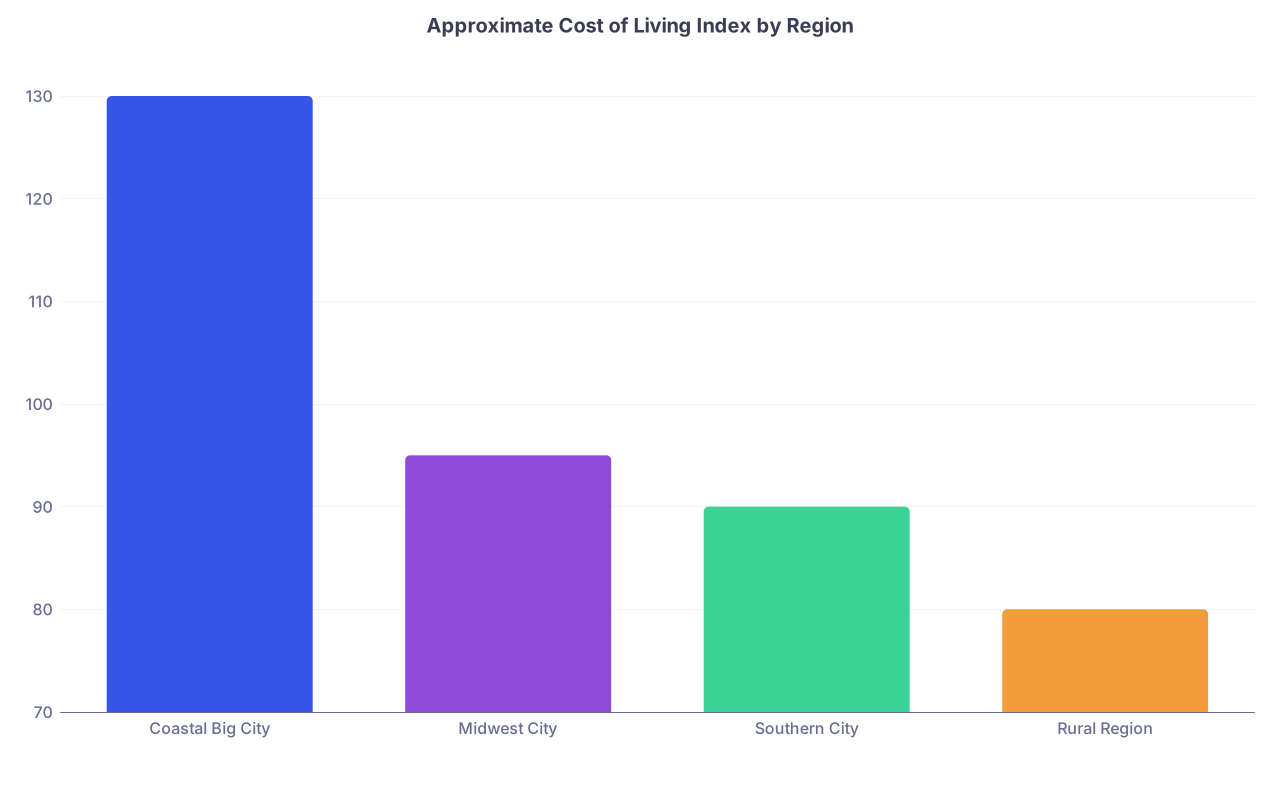
You will make resident money for years. Where you live changes what that actually feels like.
| Category | Value |
|---|---|
| Coastal Big City | 130 |
| Midwest City | 95 |
| Southern City | 90 |
| Rural Region | 80 |
Don’t overcomplicate it:
- A $65k salary in Manhattan is not the same as $65k in the Midwest
- Owning a car is a burden in some cities, essential in others
- Daycare can be the difference between “tight but fine” and “this is impossible”
Combine that with call structure:
- Night float vs 24‑hour calls
- Home call vs in‑house
- Realistic enforcement of duty hours vs “we don’t log everything”
An “amazing” name brand in a brutal environment, far from your support system, with crushing cost of living? That’s how you sleepwalk into depression, weight gain, and burnout.
A less famous program in a sane city, near people you love, with supportive leadership? That’s how you actually read, grow, and become very good.
Special Cases: When Region Is Non‑Negotiable
There are some situations where region simply wins. Period.
1. You have a partner with a real career
Not “they’ll figure it out when we get there.” If your partner is serious about their work, their job market is your job market.
- Niche tech work? They may need the West Coast or a few big hubs.
- Academia? They probably need specific cities.
- Licensing-heavy professions? Crossing state lines is not trivial.
Your relationship is more important than the difference between a “top‑10” and “top‑40” program. Anyone who tells you otherwise is either single or lying.
2. You have kids or dependents
School systems. Childcare cost. Proximity to grandparents. Access to pediatric subspecialists if your child needs them.
I’ve watched residents with kids survive because their parents lived 45 minutes away. And others barely hang on because they had zero backup and lived in a city where daycare was another rent payment.
3. Immigration and visa issues
For international grads, region = visa stability + long-term job options.
- Some states and systems are far more IMG/visa friendly.
- Some regions have more J‑1 waiver jobs afterward.
- Your first job after residency may be dictated by where you can stay legally, not where you’d ideally want to go.
In these cases, training in the region that understands and supports your visa reality is significantly more important than program name.
How to Compare Two Specific Programs: A Quick Script
You have two spots on your rank list you’re obsessing over:
Program A: Bigger name, worse region for your life
Program B: Better region, less national reputation
Ask yourself these, in order:
Five years out, what am I most likely doing?
- In fellowship X
- Academic hospitalist or specialist
- Community practice in Y region
Answer honestly, not aspirationally.
Which program has:
- Recent grads living the life I want?
- A track record of placing people into my likely path?
If both produce similar outcomes:
- Where will I be less burned out?
- Where will my partner/family be less miserable?
- Where will I be able to save something and not drown financially?
Gut check: If I matched at Program B tomorrow and never reapplied anywhere else, would I feel:
- Relieved
- Neutral
- Sick to my stomach
If the answer for B is “relieved or neutral,” and it’s in the right region, it probably deserves to rank higher than your ego thinks.
The Future of Medicine Angle: How Much Will Reputation Matter Later?
Medicine is shifting. A few trends to factor in:
Big health systems and private equity groups care more about:
- Board certification
- Being credentialed and “clean”
- Basic competence and patient satisfaction
…than where you trained, outside of ultra-competitive markets.
For many hospital-employed or large group jobs:
- “Completed an accredited residency in X” is the bar. Not “Harvard vs State Program.”
Reputation still matters more for:
- Academic jobs at major centers
- Ultra-competitive urban/suburban markets
- Niche subspecialties
But for a huge chunk of future jobs, especially as consolidation continues, your skills, work ethic, ability to not be a nightmare colleague, and flexible CV will matter more than where your residency certificate came from.
So yes, reputation matters. But not as much, and not as universally, as most MS4s think.
What To Do Right Now
Open your draft rank list and do three things today:
- Mark every program in a region where you could realistically see yourself living long term with a “✓”.
- For each “✓” program, look up where their last 3–5 years of graduates went—jobs and fellowships.
- Move up any program that:
- Is in a region you’d be happy in
- Has graduates doing what you want to do
- Has residents who sound genuinely supported when you talk to them
Then look at your top 5. If it’s just a stack of brand names in cities you quietly hate, fix it.