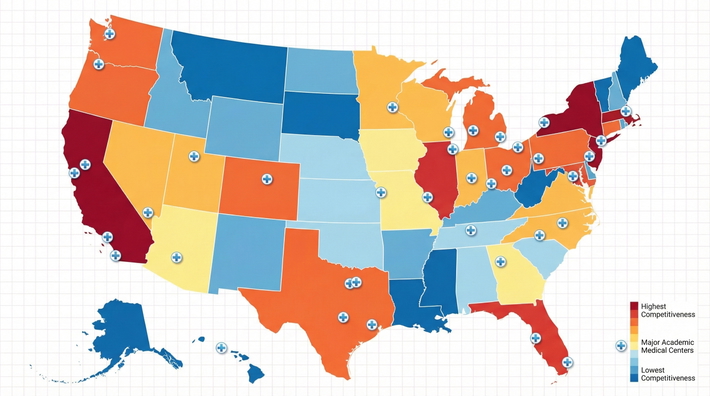
Which Factors Matter Most When Comparing Residency Regions?
What actually changes in your life if you match in Boston vs Phoenix vs rural Midwest—beyond just the name on your white coat?
Let me be blunt: most applicants obsess over “program reputation” and barely think about region until rank list week panic sets in. That’s backwards. Region quietly determines your cost of living, your support system, your future job market, and how burned out you’ll feel at 3 a.m. on your fifth ICU night in January.
Here’s how to think about residency regions like an adult, not like someone just chasing a brand name.
The 7 Big Levers That Actually Matter
These are the factors that should drive your regional comparison. Programs differ, yes—but regions set the baseline.
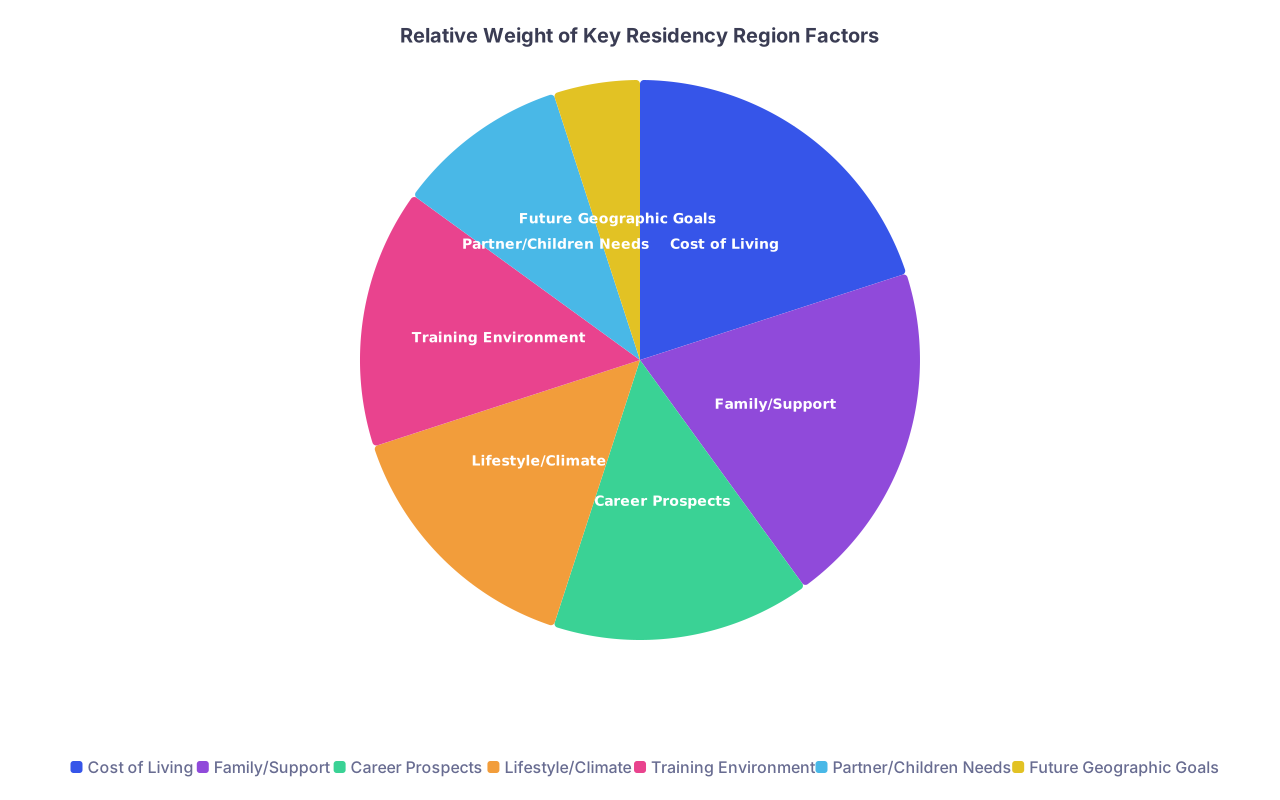
| Category | Value |
|---|---|
| Cost of Living | 20 |
| Family/Support | 20 |
| Career Prospects | 15 |
| Lifestyle/Climate | 15 |
| Training Environment | 15 |
| Partner/Children Needs | 10 |
| Future Geographic Goals | 5 |
You might tweak the percentages, but this is roughly how I’d weight them for most people.
1. Cost of Living vs Salary (and Your Real Take-home)
You’re not choosing a city. You’re choosing your monthly bank account balance and your stress level when the credit card bill hits.
Same PGY-1 salary. Very different realities:
| Region/City | PGY-1 Salary | Est. Rent (1BR) | Left After Rent* |
|---|---|---|---|
| NYC / SF | $72,000 | $2,700 | Low |
| Major Coastal | $70,000 | $2,000 | Medium |
| Mid-size Midwest | $65,000 | $1,100 | High |
| Rural/Small City | $60,000 | $800 | Very High |
*Left After Rent = relative disposable income after rent and basic expenses
Two key things people ignore:
- Effective hourly rate. In a high-cost city with brutal call you can end up making less per hour than the resident in a cheaper city with a slightly lighter schedule.
- Debt strategy. In a low cost-of-living region you might actually be able to:
- Aggressively pay down loans
- Save for a house
- Avoid living on credit cards
Region is a lever on whether money is a constant background stressor or just an annoyance.
2. Family, Support System, and Partner’s Life
If you’re pretending this does not matter, you’re lying to yourself. Support is oxygen in residency.
Ask:
- Do you have parents, siblings, close friends within driving distance?
- Is there anyone who can:
- Watch a sick kid on short notice?
- Help when your car dies post-call?
- Bring you real food during ICU month?
For partners:
- What is the job market like for their field in that region?
- Are they going to be underemployed, miserable, and isolated while you live at the hospital?
- If they’re also in healthcare or academia, are there realistic options nearby?
I’ve watched great residents fall apart because they were isolated in a region that never fit them socially or emotionally. Training is hard everywhere. Doing it without any in-person support is worse.
3. Lifestyle, Climate, and “Can I Actually Live Here for 3–7 Years?”
You’re not doing a 4-week away rotation. You’re living there.
Regions differ massively on:
Climate:
- Northeast/Midwest: long winters, dark commutes, seasonal affective issues
- South: brutal summers, humidity, hurricanes in some areas
- West: wildfires, drought, but milder temps in many places
Access to outdoors:
- Mountain West / Pacific Northwest: hiking, skiing, outdoor culture
- Dense urban coasts: more nightlife, less green space unless you plan for it
- Suburban/small cities: backyards but less public transit
Commute patterns:
- Big coastal cities: traffic + expensive parking + unpredictable transit
- Mid-size cities: 10–20 minute drives are common
- Rural: zero traffic but longer drives and sometimes bad winter roads
Scenarios I’ve seen repeatedly:
- The Southern-born applicant who thinks “snow will be fun” then hits February in upstate New York on wards and is just done.
- The big-city person who moves to a small Midwest town, hates the social and cultural isolation, and spends residency counting days.
You do not need to love the region forever. But you do need to be able to stand it for several years while under maximum stress.
4. Training Environment: What Regions Tend to Emphasize
Training quality is program-specific, but regions have patterns.
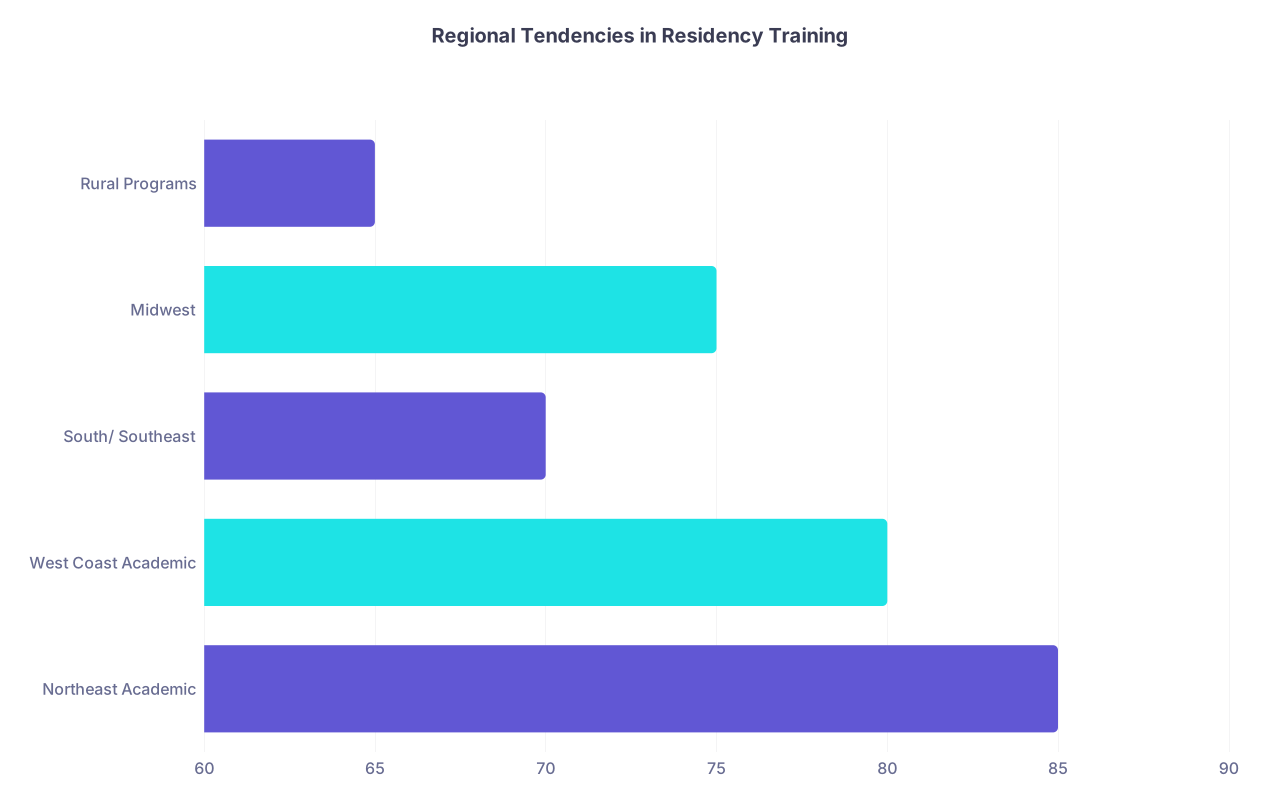
| Category | Value |
|---|---|
| Northeast Academic | 85 |
| West Coast Academic | 80 |
| South/ Southeast | 70 |
| Midwest | 75 |
| Rural Programs | 65 |
(Think of the numbers as “intensity/academic focus” scores—not scientific, but directionally real.)
Common tendencies:
Northeast (Boston, NYC, Philly, etc.)
- Heavy academic focus
- Higher patient complexity
- More subspecialty exposure
- Often more aggressive culture, faster pace
West Coast (SF, LA, Seattle, etc.)
- Academic but often more “balanced life” rhetoric
- Strong in certain specialties (EM, anesthesia, primary care, tech-adjacent fields)
- Some programs very progressive in systems-based practice, QI, informatics
South / Southeast
- Wide mix: from powerhouse academic centers to solid community hospitals
- Strong volume, lots of bread-and-butter plus advanced pathology
- Sometimes more conservative social environment; important for LGBTQ+ or minority residents to assess vibe closely
Midwest
- Often excellent training with strong autonomy
- High pathology volume, especially in large tertiary centers
- Cost of living advantage; culture can be very “down to earth”
Rural / Smaller Regional Programs
- Strong generalist training
- Earlier autonomy out of necessity
- Less subspecialty depth, but more “figure it out” independence
You want alignment between:
- Your personality
- Your specialty goals
- The regional culture of medicine
If you want highly academic research careers, it’s easier in regions dense with academic centers. If you care more about being a strong clinician ready for community practice, many regions and program types will get you there.
5. Future Job Market and “Where Do You Want to End Up?”
Residency region has inertia. Many people stay near where they train—by choice or by ease.
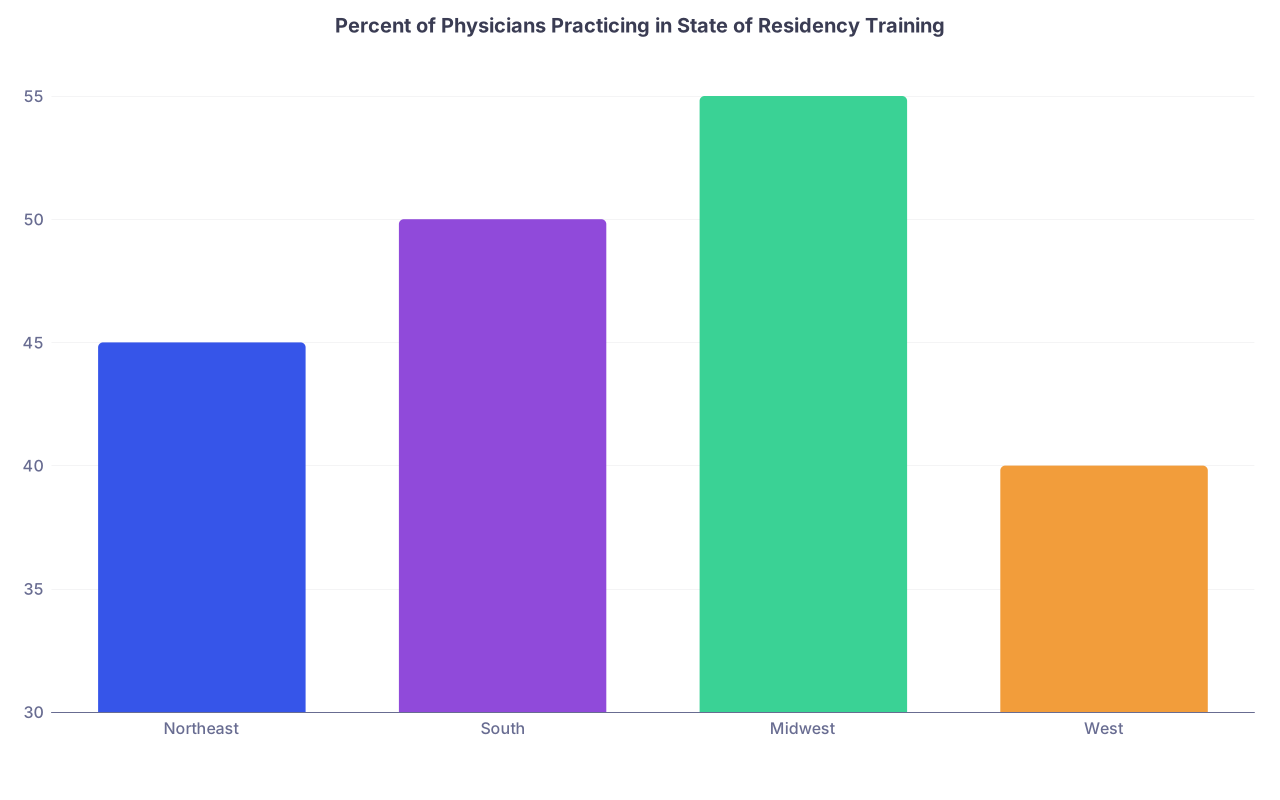
| Category | Value |
|---|---|
| Northeast | 45 |
| South | 50 |
| Midwest | 55 |
| West | 40 |
Your region choice matters more if:
- You already know the broad region where you want to build your life
- You want to practice in a competitive urban market (Boston, NYC, SF, LA, Seattle, DC)
- You’re aiming for fellowship in a specific region, where local faculty connections help
Rough rules:
- It’s easiest to get jobs and fellowships in the same state or region as your residency.
- Moving between coasts is totally doable—but smoother if you’ve got:
- Letter writers known in that region
- Rotations, conferences, or research connections that cross regions
If you’d be miserable living long term in a certain region, think hard about training there. You might end up with strong ties that make it harder to leave.
6. Safety, Identity, and “Will I Feel Like I Belong Here?”
People pretend this is secondary. It is not.
For you, region matters more if you’re:
- LGBTQ+
- A racial or ethnic minority
- Religious and want community (or specifically don’t)
- Someone who has experienced discrimination and doesn’t want to fight that battle daily
Region-level questions:
- How diverse is the city? The hospital? The patient population?
- Are there neighborhoods where you’d feel safe walking home post-call?
- What’s the local climate around politics, healthcare issues, reproductive rights?
Program-level questions (but tied to region):
- Do they have visibly diverse residents and faculty?
- Are there affinity groups (LGBTQ+, BIPOC, women in medicine, etc.)?
- Do residents actually live in the area around the hospital—or all commute from one “safe” bubble?
If you’re a queer resident considering rural Deep South vs West Coast city, the regional difference in daily life can be massive. Do not minimize that.
7. Schools, Childcare, and Real Life Logistics
If you have (or plan to have) kids during residency, region suddenly dominates your decision.
You’ll need to check:
Childcare cost and availability
- Some academic centers have on-site daycare, but waitlists can be brutal
- In some regions, home daycare is common and affordable; in others, it’s a second rent
School quality
- Are there good public schools in realistic commuting distance?
- Will you be forced “far out” to find schools, then eat a 45-minute commute?
Backup support
- Do you have family in the region or will you pay for every hour of help?
Even if kids are “maybe someday,” think about whether the region allows that to be remotely realistic during a 3–7 year residency stretch.
How to Actually Compare Regions (Not Just Vibes)
Here’s a simple, real-world way to sort this out.

| Step | Description |
|---|---|
| Step 1 | Pick Top 3 Regions |
| Step 2 | Check Cost of Living |
| Step 3 | Family and Support Map |
| Step 4 | Climate and Lifestyle Fit |
| Step 5 | Training and Career Goals |
| Step 6 | Identity and Safety Check |
| Step 7 | Partner and Kids Needs |
| Step 8 | Build Region Rank List |
Step-by-step:
- Pick 2–4 candidate regions you’re realistically considering.
- For each region, answer:
- Could I afford to live near the hospital without roommates?
- Do I have or want any support network there?
- Could I handle the weather + lifestyle for multiple years?
- Does this region support my career goals (fellowship, job market)?
- Would I feel safe and seen there?
- How would this region impact my partner/kids if applicable?
- Build two separate rank lists:
- “Pure training” ranking (assuming all in the same vacuum)
- “Overall life” ranking (realistic, includes everything above)
- Then merge them honestly. A slightly less famous program in a region that fits your life usually beats a “name” in a region that breaks you.
Classic Traps to Avoid
I’ve watched applicants make these mistakes over and over:
- Choosing an ultra-expensive coastal city “for the name” and spending 3 years broke, exhausted, and commuting 45 minutes.
- Ignoring partner career until Match Day, then realizing the local job market is awful in their field.
- Romanticizing snow or “seasons” then discovering seasonal depression in PGY-2.
- Assuming “I’ll just move after residency” and then getting locked in by contacts, kids in school, or spouse’s job.
- Underestimating how much being close to family helps when life falls apart (illness, depression, childcare crises).
You’re allowed to care about more than prestige. In fact, you’re smart if you do.
Quick Regional Snapshot: What Each Major Region Tends To Offer
This is a crude but useful summary:
| Region | Big Pros | Big Cons |
|---|---|---|
| Northeast | Academic, complex cases, fellowships | Cost, winters, competition |
| West Coast | Lifestyle, innovation, outdoors | Cost, housing, fewer programs overall |
| South/Southeast | Volume, mix of urban/rural, jobs | Variable politics, humidity, hurricanes |
| Midwest | Cost, autonomy, strong training | Winters, can feel isolated culturally |
| Mountain West | Outdoors, lifestyle, smaller programs | Fewer big-name centers, limited variety |
| Rural/Small City | Autonomy, cost, generalist prep | Less subspecialty exposure, social scene |
You’re not marrying a stereotype, but you are choosing a set of tradeoffs attached to geography.
FAQ: Residency Regions and What Actually Matters
1. Should I prioritize program reputation or region?
If you’re choosing between a slight reputation bump and a much better life fit regionally, choose region. The exception is when you have very specific academic goals (e.g., cardiology at a top-10 IM program) and the name will clearly open doors. For most people in core fields, three sane years in the right region beats misery in a name-brand zip code.
2. How much does region matter for fellowship chances?
Region matters less than program quality, mentorship, and your CV. That said, certain regions have denser fellowship ecosystems—Northeast and big coastal cities especially. If you want a competitive fellowship, being in a region with multiple strong fellowships and attendings known nationally helps. But you can absolutely match strong fellowships from the Midwest or South; it just may take more deliberate networking.
3. Is it a bad idea to train far from family?
Not automatically. Some people need space and thrive on independence. It turns bad when:
- You rely heavily on family support emotionally or practically
- You have or plan for kids and have zero backup
- You underestimate how hard residency hits when you’re truly alone
If you’ve never lived far from home, I’d think very hard before picking a remote region with no built-in support.
4. How can I assess a region if I have never lived there?
Do three things:
- Talk to residents from that region during interviews—ask what they do on their one golden day off.
- Look at where current residents actually live and what their commutes are like.
- Visit once on your own dime if the region is wildly different from your current experience (e.g., coastal city to rural town, or Deep South to Northeast winter) and walk around the neighborhoods you’d realistically live in.
5. What if my partner hates the region where the best programs are?
Then that region is not actually ideal for you. Your partner’s career and happiness matter, or your life will reflect that. Map out options explicitly: where can both of you work, have community, and tolerate the tradeoffs? You’re building a combined life, not winning a solo prestige contest.
6. Is it risky to choose a smaller or rural region if I want options later?
It can be, if you completely isolate yourself from the broader field. You counter that by:
- Going to national conferences
- Getting involved in multicenter projects or virtual research
- Maintaining relationships with mentors who have broader connections
Strong, well-connected people from smaller regions do just fine. Invisible people at big-name coastal programs don’t.
7. What’s one simple way to sanity-check my regional preferences?
Open a blank page and write two lists:
- “Regions I’d be okay living in for 5–7 years”
- “Regions that sound cool but I’d probably hate after 6 months”
Be brutally honest. Then compare your interview and rank list plans against those lists. If they don’t match, something’s off.
Open your current list of programs by city or state. Next to each one, write a quick “Life Score” from 1–10 for that region—ignoring the program name. Now look at the numbers. Are you actually ranking where you’d want to live, or just where you think you “should” go?