The weather can absolutely make or break your residency. Anyone who tells you it’s “just weather” either had a car, money, or an easy schedule. Or all three.
If you’re stuck between brutal winters up north and soul-melting summers in the south, you’re not being dramatic. You’re asking: “Will this climate make my already-miserable intern year worse?” And that’s a very fair question.
Let’s walk through the honest, slightly ugly reality of both. Because the brochure version (“four beautiful seasons!” / “sunshine all year!”) is not what you live at 4:30 a.m. on a call month.
The Real Fear: Will the Climate Break Me on Top of Residency?
Here’s the thing nobody says in info sessions: the baseline for residency is already sleep-deprived, stressed, and physically borderline. Then you layer on:
- Ice, black slush, and 20-minute walks in subzero wind
- Or 110°F heat index at noon with humidity so thick you’re sweating through scrubs before you even get to the door
You’re right to worry about:
- Slipping on ice on the way to your jeep at 5 a.m.
- Overheating on your walk from the parking lot to the ED
- Seasonal depression in January when you literally go to work in the dark and leave in the dark
- Constant dehydration and headaches in July in the Deep South after 14 hours in a hot, poorly ventilated OR lounge
I’ve seen residents in places like Minneapolis, Rochester, Cleveland practically live in their parkas. I’ve also seen interns in Houston, New Orleans, Phoenix show up with sweat literally dripping down their backs before sign-out. You trade one misery for another.
So the question isn’t “which weather is perfect?” It’s “which type of misery fits your body, your brain, and your coping skills better?”

Winters Up North: Romantic Snow Or Seasonal Dungeon?
People love to romanticize northern winters: cozy coffee shops, cute snow, holiday lights. That’s not your life as a resident.
Your life is: the plow hasn’t hit your street yet, your car is buried, and you’re supposed to be at sign-out in 18 minutes.
Here’s how northern winters actually hit you as a resident:
Sleep, Sunlight, and Your Brain
Short days are brutal. In places like Buffalo, Boston, Chicago, Minneapolis, sunrise in winter is late, sunset is embarrassingly early. On wards, you might literally not see daylight for days at a time.
You start to ask:
- Am I tired because of call, or because it’s literally dark 18 hours a day?
- Am I depressed, or is this seasonal? Or both.
Residents up north quietly invest in things like:
- SAD lamps on their desks
- Vitamin D supplements
- Gym memberships just to move indoors like a hamster on a wheel
On heavy rotations, I’ve seen people go from “kinda tired” in October to “I feel like a ghost” by February. That’s layered on top of already high burnout rates.
Commute and Physical Safety
Worst-case scenario thinking? Honestly justified here.
You will at some point:
- Drive on icy roads half-awake after a 28-hour call
- Shuffle across an untreated sidewalk that’s essentially a skating rink
- Spend 10 minutes scraping ice off your windshield with your badge because you forgot your real scraper
And yes, people have:
- Falled and sprained wrists/ankles on the way in
- Spun out in the hospital parking lot
- Gotten stuck in their driveway at 4:45 a.m. and had to call an Uber because their car gave up
Programs up north are used to this, but that doesn’t mean they magically make it easier. You’re still expected to show up.
Ward Life in the Deep Winter
Inside the hospital, you’d think weather doesn’t matter. It does.
- Patients surge with flu, RSV, pneumonia, heart failure exacerbations
- You’re seeing more respiratory illness, more admissions, constantly overfilled wards
- You’re already exhausted and now the patient load piles on
Morale in mid-January? Historically bad. People start staring at fellowship websites just to feel something.
Any Upsides to Northern Winters?
There are some. But be honest about whether they matter to you.
Upsides might be:
- Less brutal heat inside the hospital in summer (north tends to have decent AC + less 110°F outdoor hell)
- Actual seasons if you like fall and spring
- Fewer bugs, no roaches the size of your thumb running through call rooms (yes, that’s a thing in some southern hospitals)
- Some people genuinely love snow sports and winter culture
But the core tradeoff is this: can your mood and energy survive months of cold and darkness while doing 70–80 hour weeks?
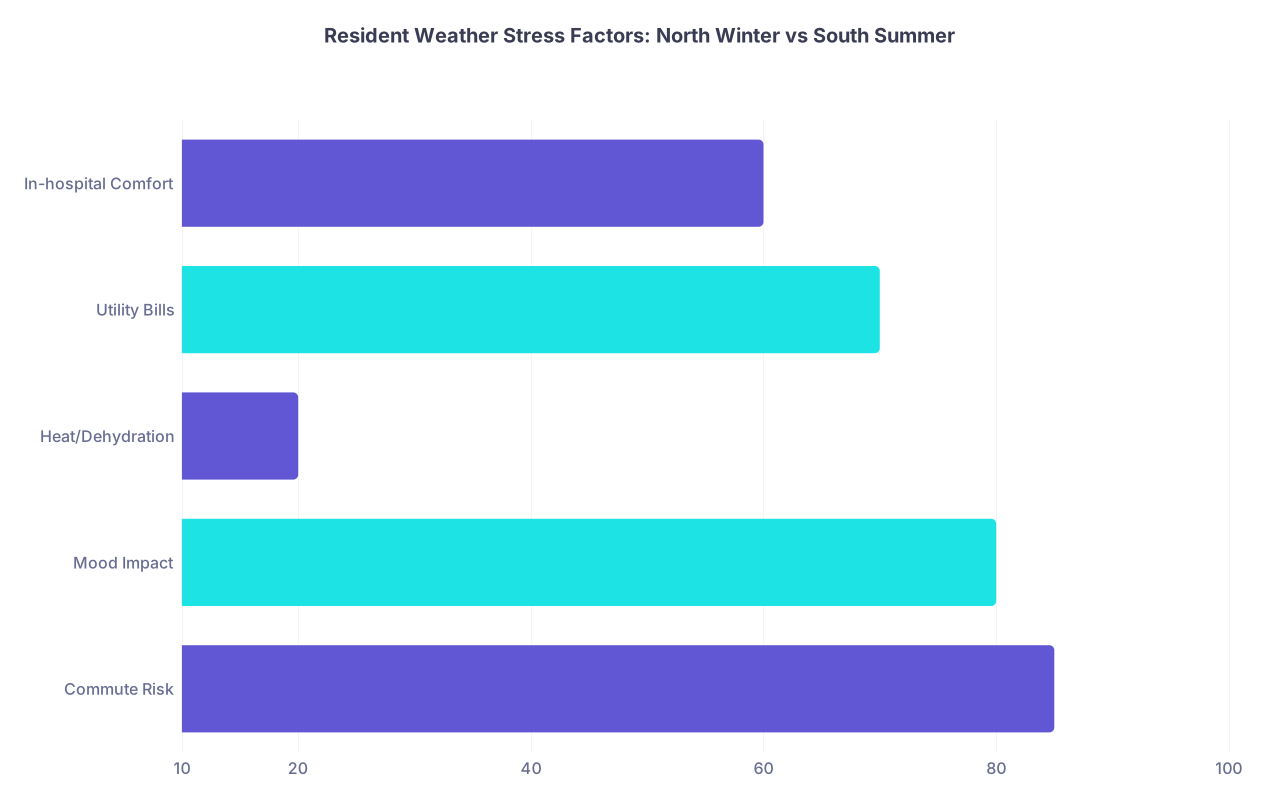
| Category | Value |
|---|---|
| Commute Risk | 85 |
| Mood Impact | 80 |
| Heat/Dehydration | 20 |
| Utility Bills | 70 |
| In-hospital Comfort | 60 |
(Think of 0 as “no stress” and 100 as “max stress” for winter up north. Now compare that in your head to summer in the south.)
Summers in the South: Sunshine or Slow-Baking Misery?
Now let’s talk about the south. Everyone loves to throw around lines like “but it’s warm!” as if 105°F with 80% humidity is just a nice beach day.
If you’re picturing “mild warm evenings,” that’s not what you get in places like Houston, Dallas, New Orleans, Miami, Phoenix, Las Vegas, Atlanta in July and August. You get:
- Sweat-soaked scrubs between car and hospital
- Heat that doesn’t let up at 9 p.m.
- Humidity that makes your lungs feel heavier
The Heat and Your Body
You’re already sleep-deprived. Now add:
- Chronic mild dehydration because you forgot to drink water for 6 hours while cross-covering
- Headaches from heat + caffeine + no real food
- Feeling faint walking across a giant uncovered parking lot at 3 p.m.
People joke about “walking into a wall of heat.” It’s not a joke after a night shift. I’ve seen interns:
- Sit in their cars after a shift with AC blasting for 10 minutes just to feel alive
- Keep spare T-shirts in the car because they arrive drenched before pre-rounds
- Get heat rashes under their scrub pants
You’re not weak for worrying about this. The combo of heavy scrubs, compression socks, a lead apron (if you’re in IR or cath lab), and summer heat? Vicious.
Commute and Daily Living
Here’s a classic southern-resident life pattern:
- Park in an open, sun-baked lot that turns your car into an oven
- Touch the steering wheel at 6 p.m. and it’s still too hot to hold
- Pay ridiculous electric bills because you must run AC almost nonstop
Winters are generally easy and honestly kind of pleasant. You go outside. You see the sun. You might actually feel like a human from November through March. Then summer hits and it’s like living on the surface of the sun for 3–4 months straight.
Bugs, Storms, and “Bonus” Misery
You were worried about worst-case scenarios? The south hands you a few:
- Roaches in the hospital stairwells (yes, really)
- Mosquitos practically year-round in some places
- Hurricane season in coastal areas (Houston, New Orleans, Miami, Tampa)
- Power outages during storms when you desperately need AC
Imagine prepping for Step 3 or boards and suddenly your apartment AC goes out during a heat wave. You’re not studying. You’re just trying not to melt.
Any Upsides to Southern Summers?
Yeah, there are:
- Winters are genuinely better. Short jackets, actual sunshine, viable outdoor time.
- If you’re prone to seasonal depression, continuous sun can help.
- Fewer ice-related car crashes on the way to call.
- No scraping windshields at 5 a.m., no trudging through snow in clogs.
So the tradeoff flips: can your body handle sustained heat, sweating, and AC dependency while working long, exhausting weeks?
| Factor | North Winter | South Summer |
|---|---|---|
| Commute hazard | Ice, snow, low light | Heat, storms, flooding |
| Mood risk | High (dark, cold) | Moderate (heat fatigue) |
| Physical comfort | Cold walks, dry skin | Sweaty, overheated |
| Utility costs | High heating bills | High AC bills |
| Outdoor life | Limited in winter | Limited midday in summer |
Personality, Mental Health, and “Which One Will Break Me Less?”
This is the part everybody skips, but it’s the most important.
Forget what looks better on postcards. Which environment is more likely to push you over the edge psychologically when you’re already at 40% battery?
Here are hard questions to ask yourself, and you need to answer them honestly, not the “ideal version of you” answer.
- Do you already feel your mood crash in gray, cold months?
- If winter has consistently wrecked you in the past, northern programs are not going to magically be different just because the hospital has prestige.
- Do you get easily irritated, headachy, or gross in intense heat?
- If you shut down in 90°F weather, you will absolutely suffer in a Deep South or desert summer.
- Are you sensitive to light changes?
- Northern winters: massive drop in natural light.
- Southern summers: constant harsh bright sun, but also a better winter.
Think of it as choosing your main villain: seasonal darkness vs relentless heat.
If you already struggle with depression, winters up north are a real risk. That’s not melodramatic. It’s pattern recognition.
If you have migraines, cardiovascular issues, or just a low tolerance for heat, southern summers (especially humid ones) might wreck you.

| Step | Description |
|---|---|
| Step 1 | Know your history |
| Step 2 | Favor South or mild climates |
| Step 3 | Favor North or cooler regions |
| Step 4 | Choose based on program fit |
| Step 5 | Winter worsens mood |
| Step 6 | Heat overwhelms you |
How Weather Actually Shows Up in Your Day-to-Day Residency Life
The big anxiety is: “Will I regret this every single day?” So imagine a normal week in each place.
Up North, January, Inpatient Month
You:
- Wake up at 4:30 a.m. in total darkness
- Debate if it’s worth starting the car early just so it’s not an icebox
- Step outside into air so cold it hurts your face
- Shuffle-walk across icy sidewalks, praying you don’t fall
- Get into the hospital before sunrise and don’t leave until after sunset
- Go home to a dark apartment and maybe don’t go outside at all on your golden weekend because it’s 5°F and sleeting
You might not even notice how much it’s draining you until one day you’re halfway through prerounds and realize you can’t remember the last time you saw the sun.
Down South, July, ICU Month
You:
- Walk out of your apartment at 5:15 a.m. and it’s already hot and sticky
- Show up mildly sweaty to pre-rounds despite trying your best
- Drink three coffees and one bottle of water in 8 hours, still feel dried out
- Leave at 7 p.m. and step into an oven. The sun’s still brutal.
- Get in your car that’s been sitting in open sun all day and spend the first 3 minutes just cooling it down enough to hold the steering wheel
- Go home and immediately crank the AC, shower, and feel like you need another shower in an hour
You’re constantly slightly uncomfortable and thirsty, and your brain fog is quietly worse than it should be.
Neither of these is glamorous. Both wear you down differently.
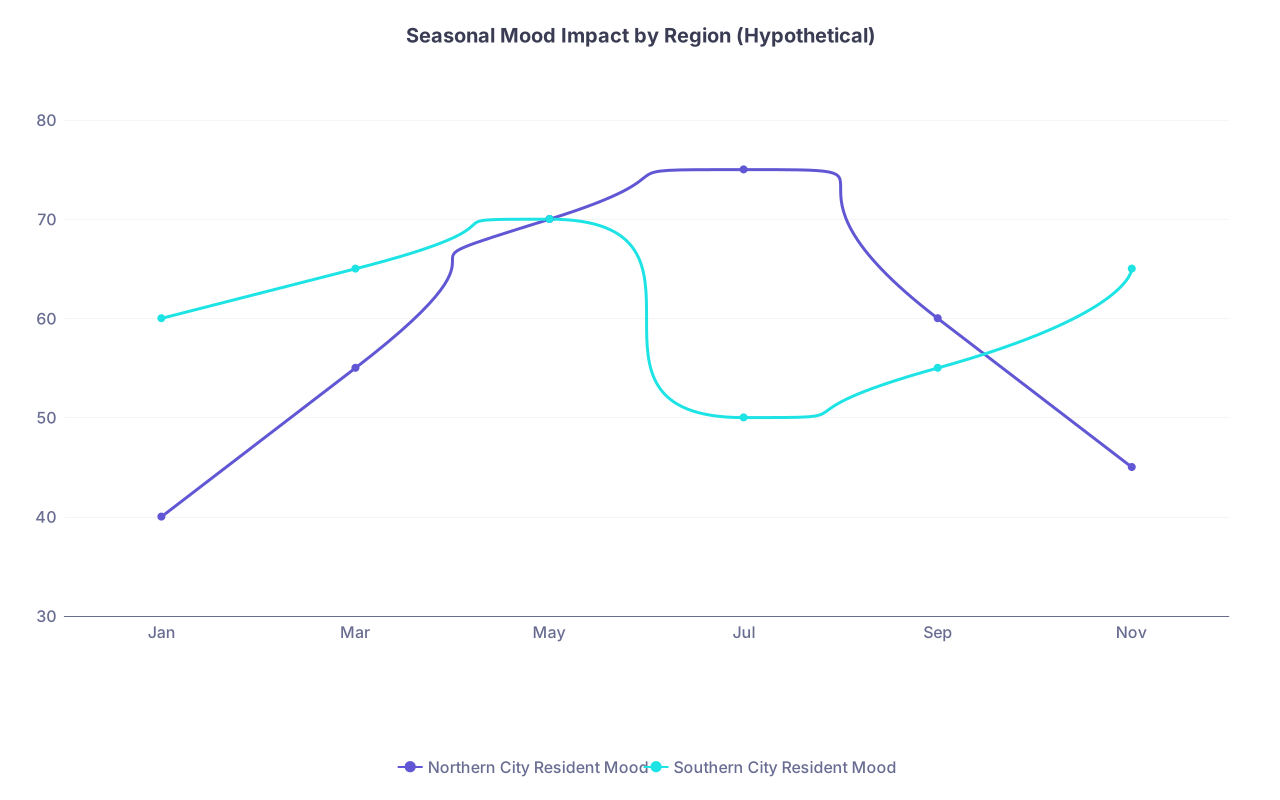
| Category | Northern City Resident Mood | Southern City Resident Mood |
|---|---|---|
| Jan | 40 | 60 |
| Mar | 55 | 65 |
| May | 70 | 70 |
| Jul | 75 | 50 |
| Sep | 60 | 55 |
| Nov | 45 | 65 |
(Scale 0–100, higher = better mood. You can see how each place has its dip.)

So… Which Should You Choose?
Here’s my blunt opinion: choose the climate that’s least likely to amplify your existing weaknesses.
If cold and darkness have always hit you hard, don’t sign up for 3–7 years in a place where January through March feel like a cave. Prestige isn’t worth a slow mental health crash.
If heat makes you anxious, claustrophobic, or physically ill, don’t minimize that just because “the winters are nice.” You’re not on vacation. You’re grinding.
People love to say “you’ll be in the hospital all the time anyway” like that fixes everything. It doesn’t. You still have to:
- Commute
- Sleep
- Run errands
- Try to see friends or touch grass if you ever get a day off
Weather shapes all of that.
If you’re still torn, think in terms of which extreme is more time-limited.
- North: Winter hell ~3–4 months, but spring/fall can be great.
- South: Summer hell ~3–4 months, but winter is actually decent.
So ask yourself: would you rather be slightly trapped indoors and miserable in winter, or in summer?
That’s honestly the core trade.

One Concrete Thing You Can Do Today
Open up your residency list (or mental list) right now.
For every northern program you’re considering, google: “Name of city + average daylight hours January” and “average low temperature January.”
For every southern program, google: “Name of city + average heat index July” and “humidity July.”
Then ask yourself, out loud if you have to: Which of these actual numbers scares me more?
Circle the cities that line up with your honest answer. If a program you love is in your weather “danger zone,” that doesn’t mean cross it out immediately—but it does mean you should plan serious coping strategies (SAD lamp, car with remote start, high-quality AC, hydration setups, etc.).
But start with that: look at the real numbers and your real reactions.
Because if you don’t, you risk waking up in PGY-1, staring at a snowbank or a heat index alert, and thinking, “I knew this would be bad. I just didn’t take myself seriously when I had the chance.”