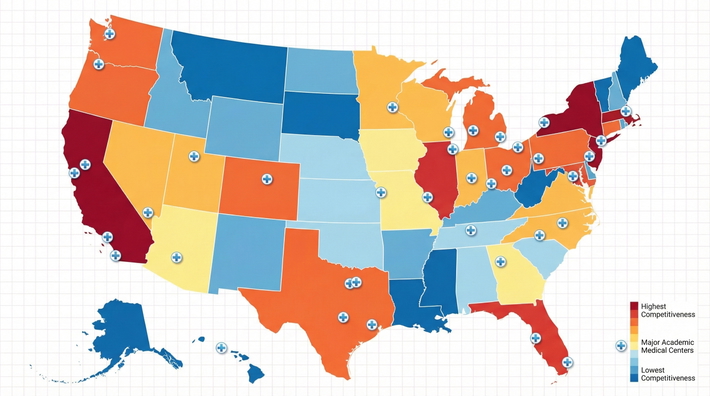
The match in Texas is not “national with a twist.” It is a different game with its own politics, its own priorities, and its own unspoken rules about who gets ranked and how high.
If you apply here like it’s just ERAS plus a quirky portal called TMDSAS, you’re already behind the people they quietly prefer. And they do prefer certain people.
Let me walk you through what program directors, faculty, and coordinators in Texas actually say in ranking meetings when you are not in the room.
The Texas Reality: This Is a State Project, Not Just a Match
Texas residency is first and foremost a state workforce machine. That phrase gets used in more meetings than you’d believe. The legislature funds huge portions of GME, and in exchange there’s a very clear expectation: train people who will stay in Texas, especially in underserved, rural, and border areas.
You don’t see that phrase on the website. You hear it when the chair walks in and says, “Remember, we’ve got to show that our grads are staying in-state or we’re going to have a problem next funding cycle.”
So when you ask, “How do Texas residency programs decide who to rank?”, the honest answer is:
They ask, “Is this someone who’s going to be a Texas doctor?” and then everything else—scores, letters, research—gets filtered through that.
The hierarchy most programs won’t admit
Here’s the practical order that shapes ranking discussions at many Texas programs:
- Texas medical school grads with clear ties and likely to stay
- Out-of-state or Caribbean grads with deep Texas ties (born, family, undergrad, spouse here)
- Strong applicants from bordering states or the South with plausible reasons to stay
- Everyone else, including “nationally competitive” applicants who sound like they’re just passing through
They won’t label it that way on Zoom. But that’s how the conversations go.
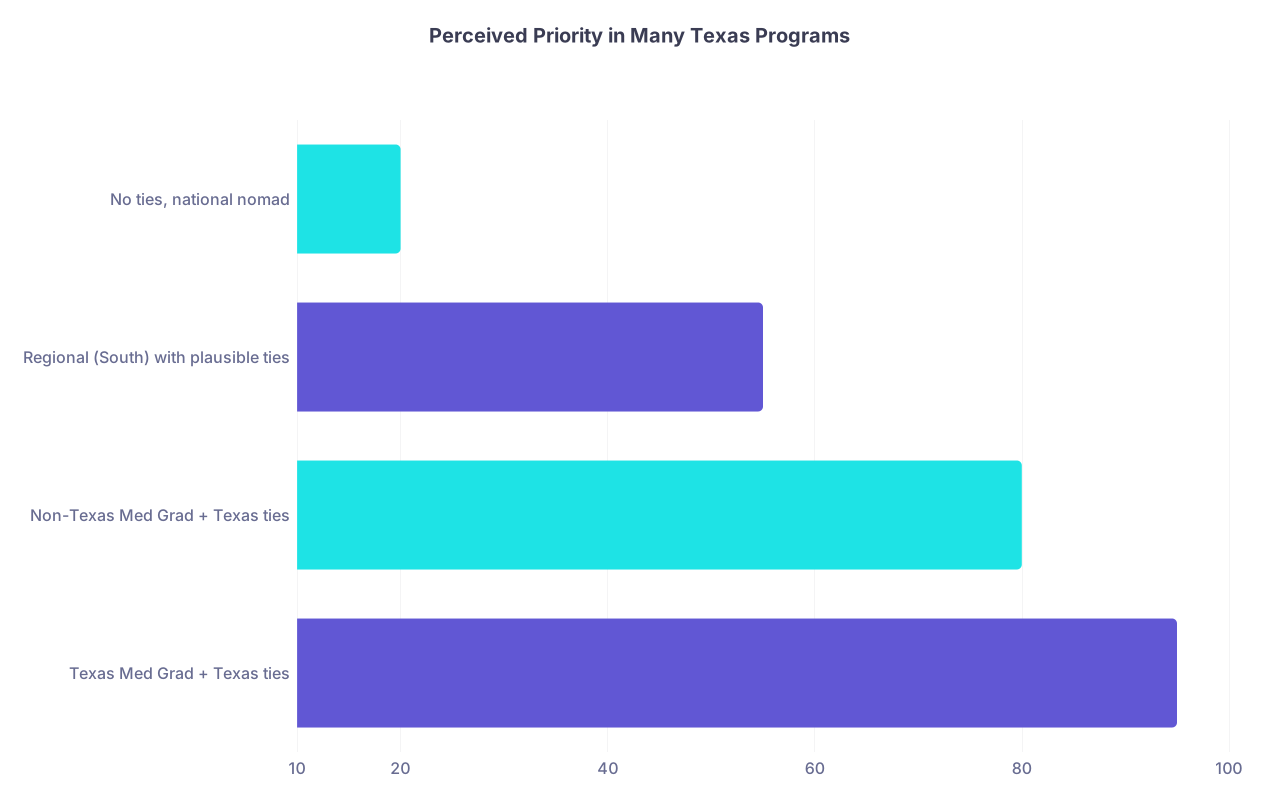
| Category | Value |
|---|---|
| Texas Med Grad + Texas ties | 95 |
| Non-Texas Med Grad + Texas ties | 80 |
| Regional (South) with plausible ties | 55 |
| No ties, national nomad | 20 |
Those “values” aren’t official numbers. They’re about how preferred you are compared to others. And the gap is real.
Why Texas Grads Get a Different Kind of Gravity
Let me be even more blunt: if you’re a Texas med student, you live on a different planet in this match. The entire system is built around you.
I’ve sat in ranking meetings at UT, Baylor-affiliated programs, and community programs around Dallas, Houston, San Antonio. The same phrases come out:
- “We owe it to our own.”
- “Our mission is to train Texas students for Texas.”
- “If we do not fill with Texas, people in Austin will ask questions.”
Texas med schools and GME programs have an incestuous, symbiotic relationship. The pipeline is tight.
How this shows up in rank meetings
Picture the rank list meeting at a Texas IM or FM program:
A Texas med school grad with okay Step 2, solid letters, some Spanish, and clear desire to stay in-state?
“That’s our bread and butter. They go in the top third.”A non-Texas MD with a 260, research, great letters, but from the Northeast, no ties, says they’re ‘very interested in exploring Texas’?
“Love the app. But are they actually going to stay? They feel like a tourist.”
They get pushed lower. Often a lot lower.
It’s not that Texas programs ignore quality. They just weight “likely to stay here” much more heavily than programs in, say, the Midwest that are trying to fill any way they can.
The hidden TMDSAS mentality that leaks into residency
Even though NRMP runs most residencies, the mindset of TMDSAS bleeds over.
Texas med school admissions is famously “Texas-first.” They protect seats for state residents. That thinking continues at the GME level: the “public good” is Texas residents getting trained and staying here.
So when you hear:
- “We want to recruit people who reflect Texas”
- “We need residents who understand our population”
Understand that it’s partly diversity, partly culture, partly politics, and very heavily: will you be practicing here five years from now?
The Types of “Texas Ties” That Actually Matter
Not all ties are equal. You saying “I really like Austin” is not a tie. That’s tourism.
Here’s what gets taken seriously in the room.
Tier 1: The anchors
These are the ones that immediately change how you’re perceived:
- Born and raised in Texas (especially if it’s in the same region as the program)
- Spouse or long-term partner with a job or license in Texas
- Kids in Texas schools
- Texas undergrad at a big-name local institution (UT Austin, A&M, Rice, Tech, UH, Baylor, etc.)
- Parents or close family still living in Texas
When a coordinator or faculty member says, “Oh, she grew up in El Paso, parents still there,” that gets underlined. People literally say, “She’s likely to stay. Bump her up.”
Tier 2: The credible pulls
These are weaker but still move the needle:
- Multiple years living in Texas previously (military family, prior job, etc.)
- Significant rotations or sub-Is at Texas sites (especially if you impressed them)
- Strong Spanish skills with a stated interest in serving Texas border or rural communities
- Clear family pipeline: “My siblings and cousins all live in San Antonio; I’m the only one out.”
It sounds silly, but the way you talk about those connections in your interview and personal statement matters. People are watching for whether it feels like a story or an excuse.
Tier 3: Cosmetic nonsense
These fool only naive applicants, not PDs:
- “I visited Austin once and loved the food scene.”
- “I’m a huge Cowboys/Texans fan.”
- “I really like warm weather.”
That stuff is neutral at best. Sometimes it actually hurts because it sounds like you’re trying to fake interest.
Texas vs Non-Texas Applicants: How the Board Actually Weighs You
Let’s compare two fictional applicants that mirror real conversations I’ve watched.
| Factor | Texas Grad (T) | Non-Texas Grad (N) |
|---|---|---|
| School | UTMB | Northeast MD |
| Step 2 CK | 238 | 252 |
| Ties | Born in Houston, family here | None |
| Stated Plans | “Want to practice in Texas” | “Open to moving around US” |
| Rank List Outcome | Top 10 on list | Middle/low third |
On paper, N “wins.” In Texas reality, T outranks them 9 times out of 10 at most state-focused programs. Not because the PD is blind. Because the PD is playing the retention game, not the prestige game.
You’ll also hear this line: “The 252 will get interviews anywhere. The 238 is ours. We should take care of them.” It’s protective, almost tribal.
The Legislative and Funding Pressure No One Tells You About
Behind closed doors, Texas residency leadership talks about Austin. A lot.
GME expansion money in Texas doesn’t come free. Legislators care about rural coverage, border health, and in-state retention. They track:
- Where residents went to med school
- Where they end up practicing
- How many end up in primary care or underserved areas
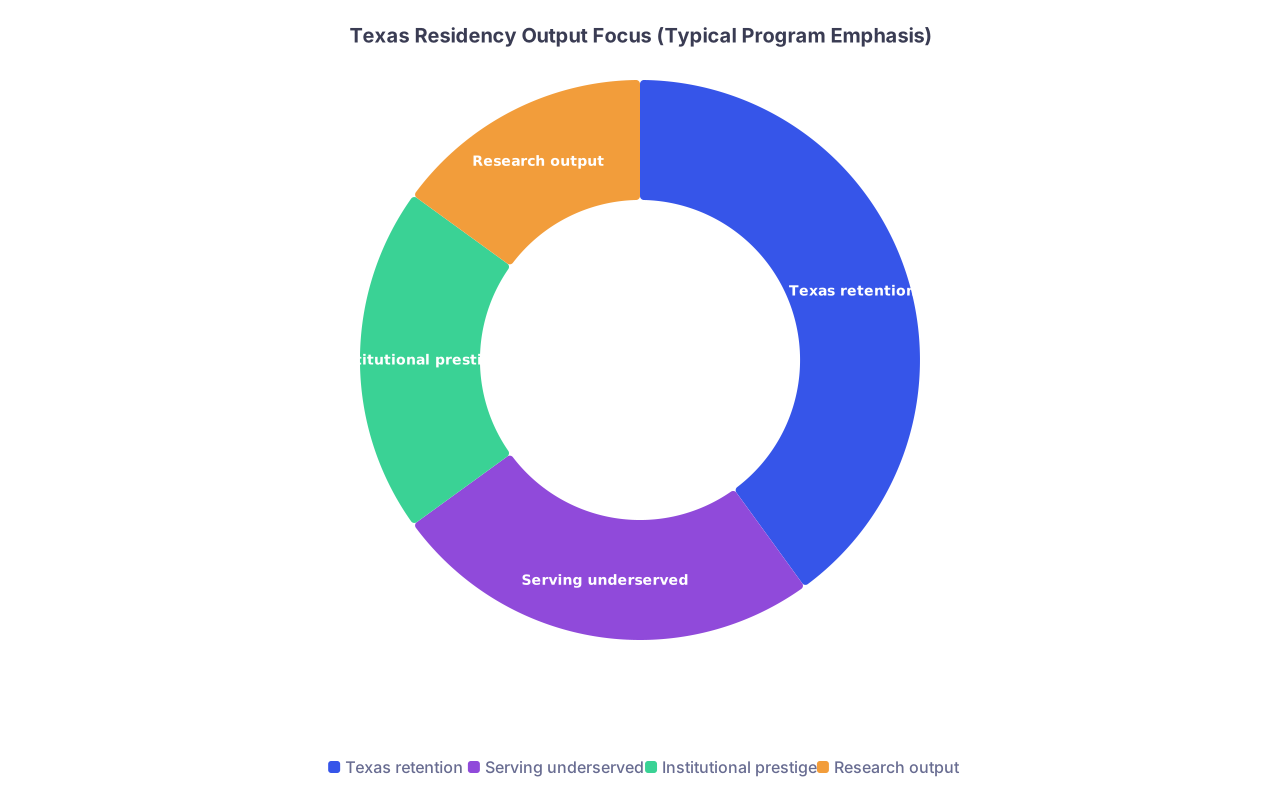
| Category | Value |
|---|---|
| Texas retention | 40 |
| Serving underserved | 25 |
| Institutional prestige | 20 |
| Research output | 15 |
Again, those aren't exact statewide stats. That’s the mindset.
So PDs know: if we fill our spots with people likely to leave the state, our numbers look bad. When renewal, expansion, or new slots are on the table, those stats matter. I’ve heard chairs say, “We cannot look like we’re training for the coasts.”
It all filters back down to the question they ask each other in rank meetings: “Is this applicant a likely Texas doc?” If the answer is no or even maybe, you pay a tax on your ranking position.
Specialty Differences: Where Politics Hits Hardest
This Texas preference doesn’t land equally across all specialties.
Primary care and hospital-based fields
Family Medicine, Internal Medicine, Pediatrics, Psychiatry, EM in many Texas programs are under explicit or implicit pressure to produce in-state workforce.
So you’ll see:
- A clear tilt toward Texas med school grads
- Heavy interest in Spanish-speaking applicants, especially for programs in San Antonio, Rio Grande Valley, Lubbock, El Paso, parts of Houston
- Extra ranking love for people who talk about underserved, border, or rural Texas
If you’re a strong non-Texas applicant with no ties, you can still match. But you don’t get the “automatic top third” treatment many Texas grads enjoy.
Competitive fields
Derm, Ortho, ENT, Plastics, Urology, some Anesthesia and Rads programs are pulled in two directions.
- On one side: Texas loyalty and in-state pipeline.
- On the other: national prestige pressure, wanting big-name CVs and high scores.
So what happens?
They split the difference. The top of the rank list is often a mix of:
- Elite Texas students (UTSW, Baylor, McGovern, Dell)
- A few national stars (Hopkins, Penn, UCSF, etc.) they want for bragging rights
- Then a solid core of Texas-with-ties applicants
The “random 250 from Boston with no Texas story” still gets looked at, but if you’re up against a 243 from UTSW who wants to stay in Dallas? The internal pressure is to favor the local.
How Virtual Interviews Changed Texas Politics (And Not In Your Favor)
When interviews went virtual, a lot of out-of-state applicants thought, “Great, easier to break in.” What actually happened in many Texas programs was more conservative ranking behavior.
Coordination rooms were saying things like:
- “It’s harder now to tell who’s serious about Texas.”
- “Anyone can click a Zoom link; we need more evidence they’ll come and stay.”
- “We should lean more on ties and home institution feedback.”
Virtual format made it easier for you to appear interested. It did not make it easier to prove you’re committed.
So more weight went onto:
- Past Texas life history
- Texas med school pipeline
- Letters from Texas attendings saying, “This person really wants to be here.”
If you’re outside that sphere, you have to compensate harder with how you present your story and rank list behavior.
What Actually Moves You Up or Down the Texas Rank List
Let me strip away the fluff and give you the levers that matter in this state.
Things that move you up
- A convincing, detailed narrative of why Texas specifically and not just “the South” or “cheaper cost of living”
- Repeated mention of specific regions or communities: “I want to work in the Rio Grande Valley / West Texas / East Houston”
- Concrete language about settling: “My partner and I are planning to buy a home in Texas,” not vague “I could see myself here” talk
- Evidence of Spanish usage or cross-cultural work with similar populations
- Multiple contacts with the program that suggest real interest: emails with thoughtful questions, attending virtual events, away rotations when possible
Programs absolutely share notes like, “She came to all our Q&As and followed up with our chief resident about the night float schedule.” That signals more than “I like BBQ.”
Things that quietly move you down
- Generic geographic answers: “I’m open anywhere,” “I just want strong training,” “I’d like to stay in a big city somewhere.”
- Obvious coastal bias in your CV and conversation: raving about going back to California, New York, Boston eventually.
- Being overly honest about wanting a “new adventure” and not mentioning long-term roots. In Texas, adventure reads as “temporary.”
- Acting surprised by Texas demographics. If you treat the border, rural, or Spanish-speaking population as exotic, that does not land well.
And yes, programs notice if you obviously anchor your rank list elsewhere. Word circulates enough to adjust how they rank certain “overreaching” applicants the next cycle.
If You’re Not From Texas: How To Fight The Gravity
You can’t manufacture a Texas birth certificate. But you can stop playing this like a generic national match.
Here’s how to make yourself less of an outsider in their eyes.
1. Build a believable Texas arc
Your story has to answer, very cleanly: “Why would someone with your history end up building a life in Texas?”
That might be:
- Family gradually moving there
- A spouse or partner anchoring there
- Prior time stationed or working in Texas you want to return to
- A specific patient population (border health, immigrant communities, oil field/rural medicine) that Texas offers in a way your home state does not
If your narrative is just “I want to leave the cold” or “I heard Austin is cool,” you won’t outrun the in-state bias.
2. Attach yourself to Texas humans, not brochures
Real talk: an enthusiastic email from a Texas faculty member on your behalf carries more weight than your 2 extra research posters.
If you can:
- Do an away rotation at a Texas site and actually show up strong
- Find mentors from Texas programs through conferences or virtual networking
- Get someone on Texas faculty to say, “I believe this person genuinely wants to be here”
You’ve suddenly jumped tiers. You’re no longer an anonymous out-of-stater; you’re “that student Dr. X recommended.”
3. Stop sounding like a short-term renter
In interviews and emails, cut the “maybe,” “possibly,” “we’ll see where life takes us.”
Use language that sounds like someone putting down roots:
- “My partner and I have talked seriously about settling in Texas long term.”
- “I see my career focusing on the patient populations you serve here.”
- “This state offers exactly the practice environment I want: [be specific].”
Is some of this performance? Of course. So is half of residency application season. But if you actually want to train here, you need to speak their language.
The Future: Is Texas Opening Up Or Doubling Down?
Here’s the twist. Texas is expanding GME at a pace most states would kill for. More programs, more community sites, more rural tracks. You’d think that means more open doors for out-of-state applicants.
What I’m hearing in GME retreats and PD meetings across multiple institutions is more like:
- “We’re adding slots to meet Texas needs.”
- “We want to recruit more from our own med schools; they’re expanding too.”
- “The legislature likes seeing Texas students stay in Texas; we should keep that front and center.”
So as the number of positions grows, the competition among Texas med grads also grows. Programs feel even more obligated to absorb their own.
At the same time, the big academic centers—UTSW, Baylor, McGovern, Dell, UTMB—will continue to court some national stars for prestige and research. But that core political expectation stays: train Texas for Texas.
If you’re coming in from out-of-state, you’re not shut out. But you’re walking into a room where the default assumption is that someone else has a bigger claim.
FAQs
1. I have no Texas ties at all. Should I even bother applying?
If you’re a solid applicant and genuinely open to living here long term, yes. But do not carpet-bomb. Target programs where your interests match their mission (safety net hospitals, border/rural focus, research niches) and be very explicit about your willingness to stay in Texas. Without that, you’ll usually sit in the middle or bottom of rank lists.
2. Does being a Texas resident for med school admissions help for residency?
Being a legal Texas resident matters most at the medical school level. For residency, what matters more is where you trained and your narrative of staying. A non-resident who went to a Texas med school will still get “one of ours” treatment. A Texas-born student who left for med school and wants to come back can still leverage that, but they’re a half-step behind current Texas med grads.
3. Do Texas programs actually look down on non-Texas schools?
No. They respect strong national schools. The bias isn’t against your school; it’s against your perceived likelihood to leave the state. A Harvard or Michigan grad with meaningful Texas ties and a believable story can do extremely well. The issue is when your whole file screams “coastal academic career” with zero anchor to Texas.
4. How do I show Texas interest without sounding fake?
Anchor it in specifics and people. Reference concrete experiences (time living there, family moves, rotations, mentors from Texas). Talk about particular patient populations and practice environments found in Texas, not generic “I love the South.” Name programs and regions accurately. Vague “I love Texas” lines sound fake. Specifics land.
5. Are certain Texas cities more open to outsiders than others?
Yes. Big academic centers in Houston and Dallas often bring in more out-of-state grads at the top end, especially in competitive specialties. Some community and border/rural programs lean even harder into Texas-first, because their mission is explicitly workforce for local communities. But the core pattern—Texas ties and retention concerns shaping rank lists—shows up statewide.
Key takeaways:
Texas residency is not a neutral playing field; it’s a state project built to keep doctors in Texas. Texas med grads and applicants with real, believable Texas ties get pulled up the rank list by invisible political gravity. If you’re an outsider and you want in, you can’t just be strong on paper—you have to give programs a credible reason to believe you’ll stop being an outsider and become a Texas doctor for real.