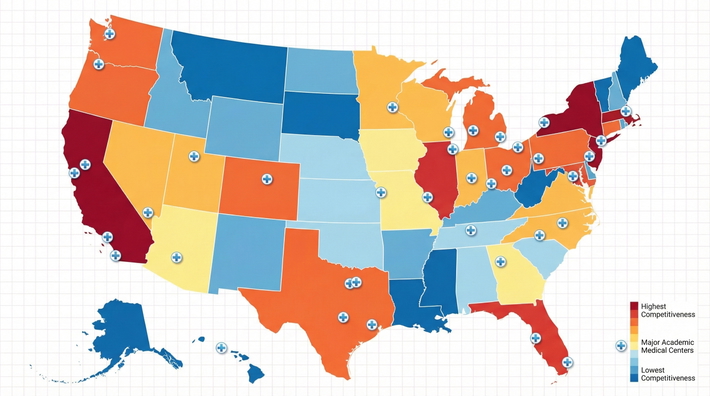
The honest answer: a high cost-of-living region is “worth it” for some residents—and absolutely brutal for others. The trick is knowing which side you’re on before you move, sign a lease, and lock yourself into three to seven years of paycheck stress.
Let’s pull this out of vague “pros and cons” and into real numbers and concrete scenarios.
The Core Question: What Are You Actually Buying With That Higher Cost?
You’re not just paying for rent and overpriced groceries. A high cost-of-living (HCOL) region usually bundles several things together:
- Stronger hospital systems and academic centers
- Better subspecialty exposure
- Networking density (fellowships, industry, research)
- A big city lifestyle: culture, restaurants, nightlife, airports
- Sometimes, a better job market for your partner
On the flip side, you’re taking on:
- Higher rent and utilities
- Often longer commutes if you try to “save” on housing
- Lower savings rate (or no savings at all)
- More reliance on credit cards or family help
So the useful question is not “Is HCOL good or bad?”
It’s: “Do the long-term career gains and personal benefits outweigh the short-term financial hit for me?”
That depends on four things:
- Your specialty (and future income)
- Your debt load
- Your life situation (partner, kids, support system)
- How important location and lifestyle are to you—really, not theoretically
The Money Reality: What High COL Actually Does to a Resident Paycheck
Let’s stop hand-waving and look at what this looks like in practice.
Typical Resident Salary vs. Rent in Different Markets
| City/Region | PGY1 Salary | Typical 1-BR Rent |
|---|---|---|
| Midwest medium city | $62,000 | $1,000–$1,200 |
| Southeast city | $60,000 | $1,100–$1,300 |
| Houston/Dallas | $63,000 | $1,300–$1,600 |
| Chicago | $66,000 | $1,800–$2,200 |
| NYC / SF / Boston | $72,000 | $2,500–$3,500 |
Numbers vary by program, but the pattern is consistent: HCOL areas pay a bit more, but not nearly enough to fully offset rent.
Let’s do a quick, blunt comparison.
Assume:
- PGY1 salary:
- Midwest: $62k
- NYC: $72k
- Federal + state taxes + FICA: ~25% (varies, but good enough for ballpark)
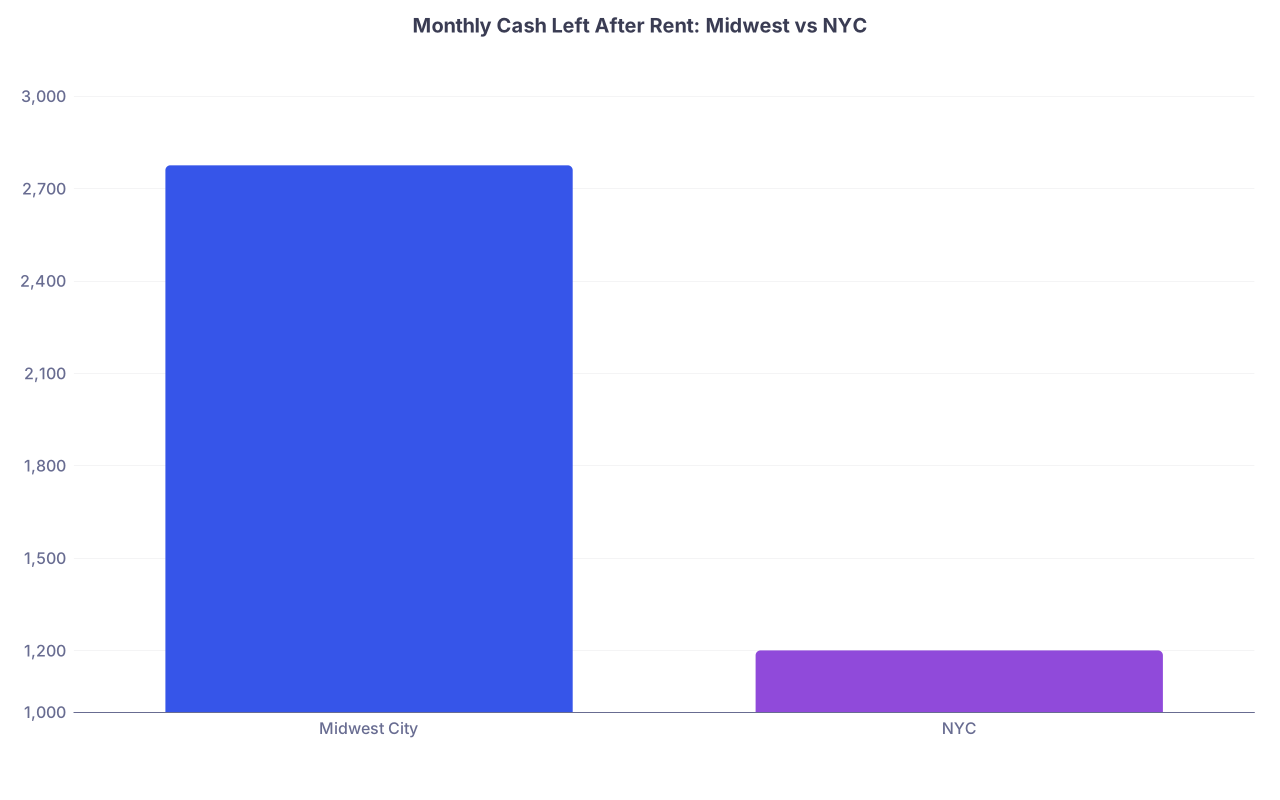
Midwest take-home:
- $62,000 – 25% ≈ $46,500 / year ≈ $3,875 / month
- Rent: $1,100
- Remaining: ~$2,775
NYC take-home:
- $72,000 – 30% (higher state/local) ≈ $50,400 / year ≈ $4,200 / month
- Rent: $3,000
- Remaining: ~$1,200
So in a lower COL city, you might have 2–2.5x more free cash every month.
That’s not subtle.
| Category | Value |
|---|---|
| Midwest City | 2775 |
| NYC | 1200 |
If you’re trying to:
- Pay down high-interest credit cards
- Save for a house
- Support family
- Avoid your loan balance ballooning
that difference matters a lot.
When a High Cost-of-Living Region Is Worth It
There are situations where I’d tell you flat out: yes, it might be worth it to bite the bullet on COL.
1. You’re Aiming for a Hyper-Competitive Fellowship or Niche Career
If you’re targeting:
- Derm, plastics, ortho, ENT, neurosurgery, IR
- Academic careers at top-tier places
- Heavy research careers (NIH, major academic centers)
then being in a HCOL academic powerhouse can pay off long-term.
Examples:
Training at MGH/Brigham (Boston), UCSF (San Francisco), Columbia/Cornell (NYC), UCLA (LA), Stanford (Bay Area).
Why it might be worth it:
- You work with “name” faculty who write letters that actually move the needle
- You get exposure to complex cases and research infrastructure not available everywhere
- Networking: you’re walking the same halls as people on fellowship selection committees
If your endgame is a $500k–$800k/year specialist or a tenure-track academic position, a few lean years in an expensive city may be a rational trade.
2. Your Partner’s Career Needs a Big Market
If your spouse/partner is in:
- Tech
- Finance
- Entertainment/media
- Certain consulting roles
They may earn more in NYC/Boston/SF than you’ll make as a resident. That income can flip the math.
In that case, the resident salary is not the entire equation. A HCOL city might be the only place where both of your careers can thrive at the same time.
3. You Have Strong Family or Social Support There
People underestimate this.
If your parents live 20 minutes away in LA and:
- Watch your kids
- Feed you real food once a week
- Spot you for emergencies
your effective cost of living drops dramatically. Free childcare alone can dwarf your rent.
If the choice is:
- Low COL but no support, expensive childcare, and isolation
vs. - Higher COL but daily, practical support
then the expensive city may actually be the safer option emotionally and logistically.
4. You’re Willing to Treat Residency as an Investment Period, Not a Building-Wealth Period
Some residents decide, consciously:
“I’m not trying to build wealth during residency. I’m buying training, connections, and location. I’ll fix the money later.”
That’s a valid strategy if:
- You’re entering a higher-paying specialty
- You’re comfortable deferring aggressive loan payoff to attending years
- You’re realistic about living very lean for 3–7 years
If you go this route, you must be deliberate. No pretending you can also live the full big-city lifestyle like your non-medical friends.
When a High Cost-of-Living Region Is Probably Not Worth It
On the other hand, there are scenarios where choosing a HCOL program is usually a bad deal.
1. You’re Going Into a Lower-Paying Specialty and Already Have High Debt
Think:
- Pediatrics
- Psychiatry
- Family medicine
- Internal medicine without plans for a high-paying subspecialty
- OB/GYN (better pay but still not ortho money)
And you’re carrying:
- $300k+ in loans
- Maybe also a car loan or credit card debt
In this scenario, adding HCOL strain often means:
- No emergency fund
- Minimal or no retirement contributions
- Growing loan balance for years
- Being forced into moonlighting purely for survival, not choice
You can still live decently, but you’re boxing in your future financial flexibility.
2. You Hate Being Stressed About Money
Some people can tolerate financial stress. Others lose sleep, fight with their partner, resent work, and feel trapped.
If you already know you’re sensitive to money stress, don’t romanticize big cities. Being “where the action is” is not worth chronic anxiety over every bill.
Go where you can:
- Afford a safe place to live
- Buy groceries without doing math in the aisle
- Occasionally see friends, travel, or just exhale
That probably is not San Francisco on a PGY1 salary.
3. You Want a House and Kids Soon
Yes, residents can have kids in HCOL areas. Many do. But look at the tradeoffs.
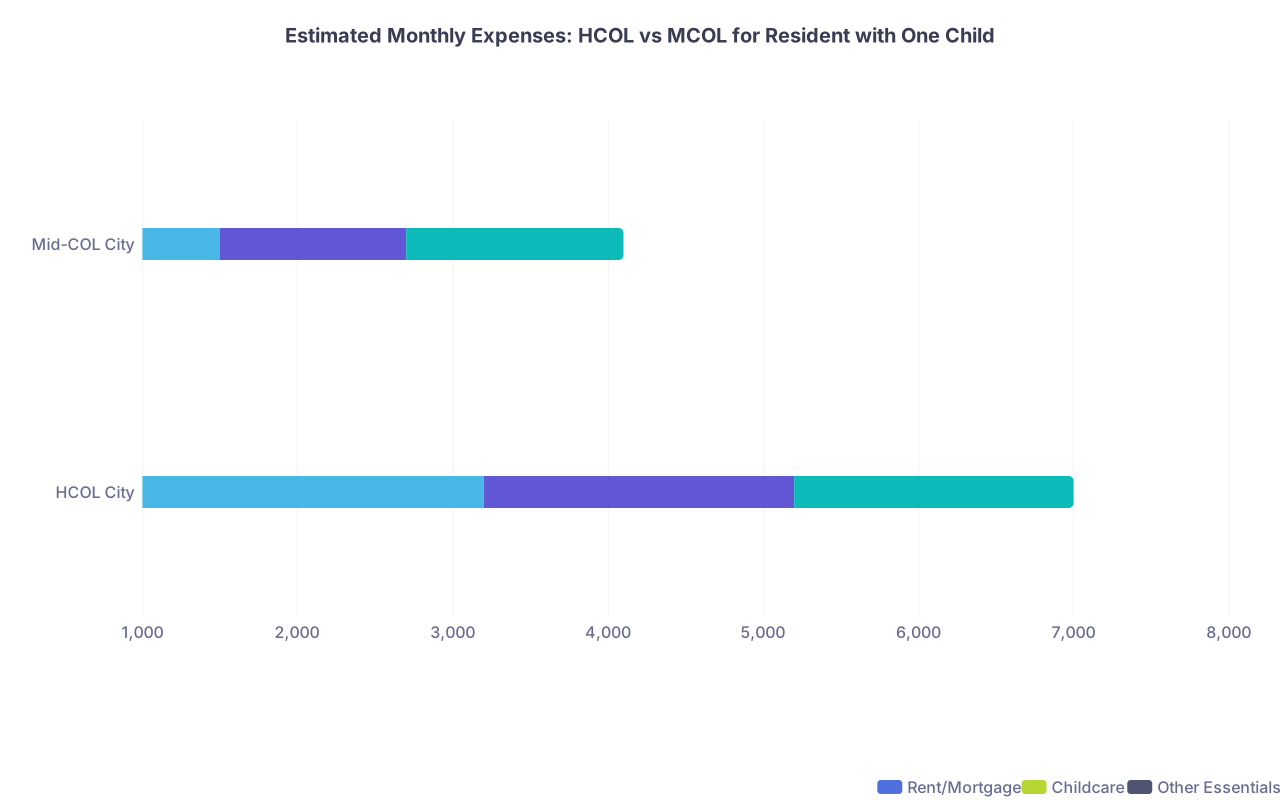
| Category | Rent/Mortgage | Childcare | Other Essentials |
|---|---|---|---|
| HCOL City | 3200 | 2000 | 1800 |
| Mid-COL City | 1500 | 1200 | 1400 |
You’re not buying a house in Boston or SF on a PGY2 income unless you have serious family help or a high-earning spouse. And full-time childcare can easily match or exceed your rent.
If starting a family and owning a home early is a non-negotiable goal, HCOL residency will fight you on it the whole way.
The Career vs. Cash Framework: How to Decide
Here’s the decision framework I’d use if you’re staring at a rank list with big-city and lower-COL options.
Step 1: Classify Your Goal
Be honest: what’s your priority for the next 10–15 years?
- “Maximize career ceiling and prestige”
- “Balance career and financial stability”
- “Minimize stress and maximize life outside the hospital”
If you’re in the first category, HCOL academic powerhouses are more attractive.
If you’re in the second or third, they’re often a trap.
Step 2: Run a 5-Minute Budget for Each City
Do not skip this. Do not say “I’ll figure it out when I get there.”
Estimate:
- Net monthly income (take base salary × 0.7 as a rough after-tax number; 0.65 in high-tax states)
- Subtract:
- Rent (look on Zillow or similar near your program)
- Utilities + internet
- Food (realistic, not fantasy)
- Transport (car, insurance, gas/parking or public transit)
- Loan payments if you’re planning to pay anything during residency
Look at what’s left. If it’s under $500/month consistently, you’re on a tightrope. If it’s under $200/month, it’s basically “one emergency from chaos.”
Step 3: Ask What This Program Actually Buys You
For each HCOL program, list:
- Name recognition: Is it truly top-tier or just “big city, average program”?
- Fellowship placement track record in your field
- Research/mentorship quality
- Partner job prospects
- Family/social support nearby
If the only thing you can honestly list is “Cool city, good restaurants” and a program that’s fine but not elite—you’re just paying extra to say you live there. That’s rarely worth it.
Step 4: Consider Your Exit Path
Imagine:
- You match at HCOL, you do 3–7 years there
- Then you move to a lower COL for attending life
Can you:
- Handle scraping by now to live much more comfortably later?
- Avoid lifestyle creep when you finally start making attending money?
Or will you:
- Be forced into taking a higher-paying job you might not love just to dig out of the hole?
If you know you’re not great at delayed gratification, pretending you’ll “fix it later” is how people stay financially stuck for a decade.
The Hidden Factor: You Still Have to Like Your Life
I’ve seen residents miserable in both high and low COL areas.
- The person in NYC who never has time or money to enjoy the city
- The person in a low COL midwestern town who hates the social scene and feels trapped in a suburb with nothing to do
Here’s the rule: Residency is hard everywhere. Do not pick pure misery for a slightly better balance sheet.
If a big city genuinely energizes you—even if you’re broke—and you have a realistic financial plan, that can still be a rational choice.
But be clear-eyed:
- If your program is malignant, the bar across the street won’t fix it
- If your commute is an hour each way because you tried to save on rent, those skyline views get old fast
Balance training quality, financial survivability, and daily life satisfaction. All three matter.
Simple Heuristics You Can Actually Use
If you want blunt rules of thumb, here they are:
- If you’re going into a low-paying specialty, lean strongly toward lower COL unless the HCOL program is truly elite or offers something unique you need.
- If you have >$300k debt and no family help, HCOL should be a conscious sacrifice, not a default.
- If a HCOL program is not obviously better for your career than a mid-COL program, it’s usually not worth the extra financial strain.
- If your partner’s income will be higher than yours in a big city, run the math again—HCOL might now be a net win.
- If your mental health falls apart under money stress, do not willingly sign up for high-rent, high-tax residency life.
FAQ: High Cost-of-Living Residency Decisions
1. Do residents ever actually “save money” in high cost-of-living cities?
Some do, but they usually have help: a higher-earning partner, family support, or living with multiple roommates. On a solo PGY1 salary in places like NYC or SF, real saving (not just treading water) is tough. If you truly want to build a cushion, mid- or low-COL programs make that far easier.
2. Are academic programs in lower cost-of-living areas “worse” for fellowship?
Not automatically. There are excellent academic centers in more affordable cities: Mayo (Rochester), UAB (Birmingham), UT Southwestern (Dallas), University of Michigan (Ann Arbor), etc. Look at fellowship match lists, research output, and faculty reputation—not just city name recognition.
3. Should I rank my dream city higher even if it’s expensive?
Rank it higher only if you can articulate clear reasons: significantly better training, specific mentors, partner opportunities, or personal support. If the reason is just “I like that city,” be careful. Three to seven years of financial strain is a big price for vibes.
4. Is it smart to moonlight in HCOL areas to offset costs?
It can help, especially in later years when you’re allowed to moonlight. But you’re trading time and energy during an already exhausting phase. Use moonlighting to strengthen your position, not to rescue a fundamentally unsustainable living situation.
5. What about loan repayment programs—do they change the math?
They can. If you’re planning PSLF and working at a qualifying nonprofit hospital, your loan payments under income-driven repayment may be lower, making COL slightly less painful. But COL still affects your day-to-day cash flow; PSLF does not pay your rent.
6. Is car-free living in big cities enough to balance the high rent?
Sometimes it helps a lot. Saving on car payment, insurance, gas, and parking can free up $400–$800 a month. But in many HCOL cities, rent overwhelms those savings. Run actual numbers: zero car in NYC vs. modest car in a midwestern city. Do not assume car-free automatically solves the problem.
7. What’s one concrete thing I should do before finalizing my rank list?
Pick your top 3 HCOL and top 3 lower-COL programs. For each, pull real rental listings within 30 minutes of the hospital and build a rough monthly budget. If the leftover number in a city scares you, listen to that discomfort. That’s your future Tuesday night talking.
Open a spreadsheet—or a napkin, I do not care which—and run your monthly numbers for your top programs right now. If you cannot make the math work without magical thinking, fix your rank list before it fixes you.