The way most applicants “judge” a new city from one interview day and a Yelp search is lazy and dangerous. You can do much better with a simple, systematic approach.
Here’s how to actually assess safety and lifestyle in an unfamiliar region like a grown adult making a multi‑year decision, not a tourist picking a weekend getaway.
Step 1: Start With Hard Data, Not Vibes
Your impressions on a 24‑hour visit are wildly biased. You saw the hospital, a “nice” neighborhood, and whatever was visible from the Uber window. That’s nothing.
Start with objective data.
| Category | Recommended Source |
|---|---|
| Crime & safety | City crime dashboards, FBI data |
| Cost of living | Numbeo, federal salary calculator |
| Schools | State DOE sites, school district report cards |
| Transit | City transit authority, Google Maps commute |
| Climate | NOAA climate data, WeatherSpark |
Then go deeper.
Crime and safety (reality, not rumor)
- Look for:
- City or police department crime dashboards
- Official open‑data portals (search “[City] crime data portal”)
- Neighborhood‑level statistics, not just city‑wide averages
- Pay attention to:
- Violent vs property crime (very different implications)
- Trends over 5–10 years (is it getting better or worse?)
- Time of day clustering (some areas are fine by day, sketchy at night)
Red flag: Programs that casually say “oh that area’s totally fine” when every local dataset and forum says otherwise. Either out of touch or just selling.
- Look for:
Cost of living and salary reality check
Don’t just ask “Is it expensive?” Ask: “What’s my real hourly wage here?”Use a COL calculator + your contract numbers. Work out:
- Take‑home pay after taxes, health insurance, retirement
- Typical rent for a 1‑bedroom within a 20–30 minute commute
- Parking or transit passes
- Childcare (if applicable – this can dwarf rent)
Then compare across cities.
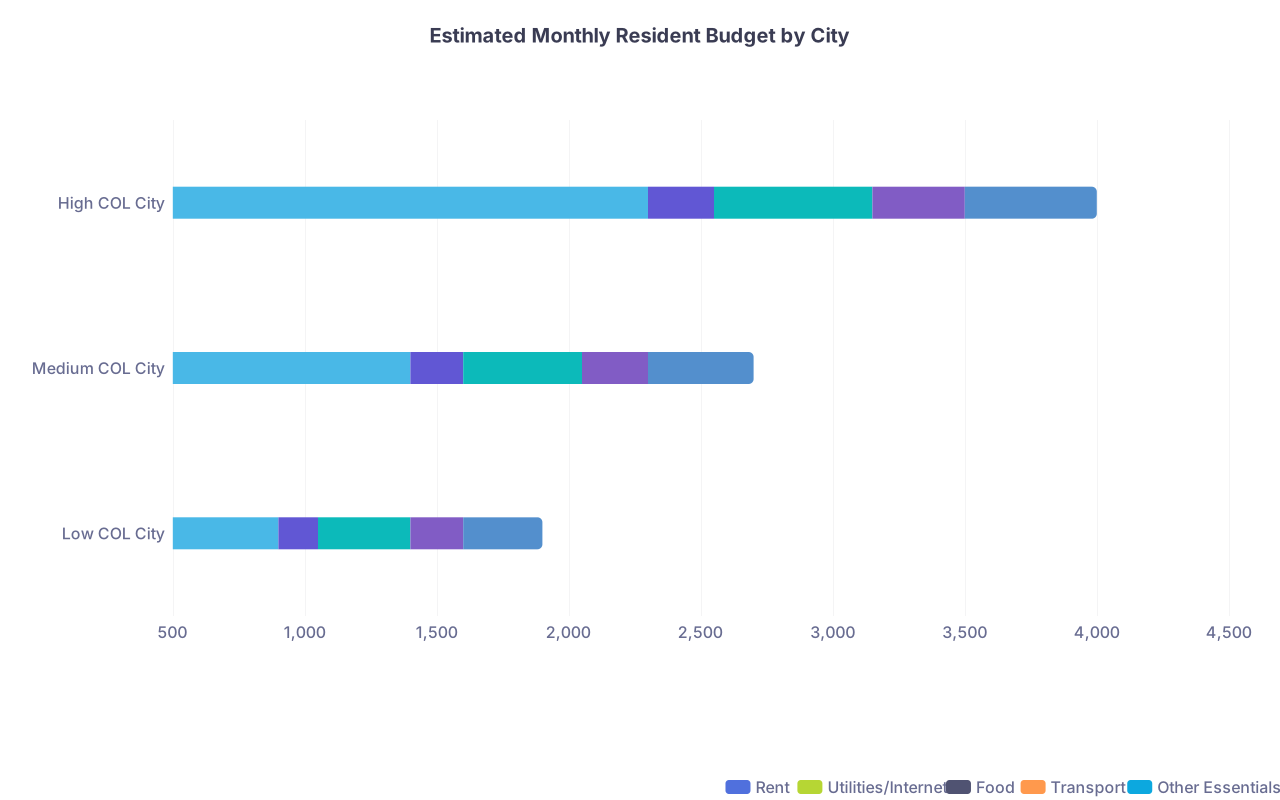
| Category | Rent | Utilities/Internet | Food | Transport | Other Essentials |
|---|---|---|---|---|---|
| Low COL City | 900 | 150 | 350 | 200 | 300 |
| Medium COL City | 1400 | 200 | 450 | 250 | 400 |
| High COL City | 2300 | 250 | 600 | 350 | 500 |
If the numbers say you’ll be “house poor” in a trendy area, believe the math. Residents burn out hard when their entire life is hospital + cramped apartment + financial stress.
- Schools and family infrastructure (if relevant)
- Look at school district report cards, not just internet rankings.
- Search for:
- “[County] school district performance report”
- “[City] childcare costs”
- Check:
- Availability of early‑morning and late‑pickup options
- Waitlists for daycare within a reasonable commute
If you have kids or plan to during residency, this is not a side issue. It’s central.
Step 2: Do a “Commute and Coverage” Test
Safety and lifestyle for residents live or die on three things: your commute, where you park, and what it’s like outside the hospital when you leave at weird hours.
Here’s what to test.
Commute sanity check
On Google Maps, map the hospital to several potential neighborhoods:- Set the time to:
- 6:30–7:30 am (pre‑call mornings)
- 4:30–6:30 pm (post‑clinic traffic)
- 10 pm–2 am (late shifts)
Look at:
- Transit options and frequency
- Driving vs transit time
- Walking conditions from transit/parking to hospital
If your commute is 35 minutes on a good day and you’re on q4 call? You’ll hate your life by month 3.
- Set the time to:
Parking and late‑night safety
Residents underestimate this constantly. Ask:- Is parking on‑site, secured, and well‑lit?
- Do you walk through a parking structure or across empty lots at night?
- Is there security escort available 24/7?
- Is street parking realistic, or will you circle for 20 minutes after a 28‑hour call?
You want: predictable, close, and safe. If the answer is “Most people just figure it out,” that means it’s a problem.
How many “safe bubbles” exist?
Dangerous mindset: “As long as I live in this one good neighborhood I’ll be fine.”
Better question: “Are there multiple reasonable places I could live safely on my salary within a feasible commute?”If the answer is basically one overpriced enclave or nothing, that’s a risk.
Step 3: Read the Internet Like a Local, Not a Tourist
You can learn more from 2–3 hours of smart online sleuthing than from a whole interview day.
Here’s how to do it without falling into the angry‑person review hole.
Local subreddits and forums
Search:- r/[cityname]
- r/Residency and r/medicalschool for “[program name] safety”
- City‑specific forums (sometimes old‑school message boards are gold)
Things to look for:
- “Where should I not live?” threads
- “Best neighborhoods for young professionals”
- “Is [X area] safe at night?”
Ignore:
- One‑off horror stories with no pattern
- Extremely political rants that never mention concrete locations or times
Google Street View reality check
Drop into Street View around:- Hospital
- Parking areas
- 3–4 candidate neighborhoods
You’re not judging “nice vs ugly.” You’re scanning for:
- Lighting, visibility, and open sight lines
- Foot traffic vs totally deserted streets
- Mixed‑use (shops, people) vs abandoned industrial pockets
I’ve seen applicants fall in love with a “cute converted warehouse” that on Street View is actually surrounded by empty lots and fenced junkyards. Don’t be that person.
Program‑adjacent talk that reveals lifestyle
Google: “[hospital name] employee parking,” “[hospital name] neighborhood,” “[hospital name] shuttle complaints.”
Watch for:- Nurses/techs complaining about unsafe parking walks
- Staff arguing about which routes are safe at night
- People asking if they should carry mace/alarms to the lot
If current employees are uncomfortable, you should take that seriously.
Step 4: Ask Residents Targeted, Non‑Awkward Questions
Residents are your best source of honest signal—if you ask questions that force specifics, not vague reassurances.
Don’t ask: “Is it safe there?”
Ask questions that require concrete answers, like these:
“If you were advising a new intern with no local knowledge, where would you tell them to look for housing—and where would you tell them to avoid?”
- Listen for: specific neighborhood names, not “it’s all fine.”
“How do people usually get to work—drive, transit, walk? Does anyone feel uncomfortable with their commute at night?”
- If they dodge or laugh uncomfortably, that’s data.
“If I’m leaving the hospital at 2 am, what’s my path from the hospital door to my bed?”
- You want them to walk you through: exit → elevator → secure garage → car → freeway → residential street.
- If the answer is “You park on the street and it’s usually okay,” that’s a no.
“How many of your co‑residents live within 15 minutes? 30 minutes?”
- If everybody’s 35–45 minutes away to escape safety or cost issues, that affects lifestyle heavily.
“What do people actually do on their days off?”
- Do you hear concrete things: trails, parks, coffee shops, gyms, restaurants?
- Or do they say: “We mostly recover and watch Netflix”? Sometimes that’s just residency. Sometimes it’s because the city’s logistics suck.
Step 5: Define Your Non‑Negotiables Before You Compare
This is where people mess up. They go visit 10 cities, collect “vibes,” and then try to make a rank list out of feelings. Backwards.
You should have your non‑negotiables before you ever set foot in an interview.
Break it into three buckets:
Safety non‑negotiables
Examples:- No regular street parking far from my building after midnight
- No living in an area with clearly rising violent crime trends
- Security escort or well‑used, well‑lit path from hospital to parking
Lifestyle non‑negotiables
This is personal. But be honest.
Maybe you need:- A gym you can get to in under 15 minutes
- At least one grocery store open late on your route home
- Green space within walking distance on off days
Family‑specific non‑negotiables
For partnered residents, kids, or caregiver responsibilities:- Reasonable childcare or school plan you can actually afford
- Commute arrangements that don’t leave one person stranded
- Access to your own or partner’s support network within flying/driving distance
Once you write these down, each region gets scored against them. No program gets a pass just because the fellowship match list looks shiny.
Step 6: Sanity‑Check the Match Between You and the Region
The last piece: are you and the region actually compatible, or are you trying to force a life that doesn’t make sense for you?
Ask yourself bluntly:
- Am I a car person or a transit/walk person?
- Do I recharge in quiet, spread‑out suburbs or in dense, buzzy urban settings?
- How much does weather affect my mood and energy?
Climate is not superficial. Look at actual data.
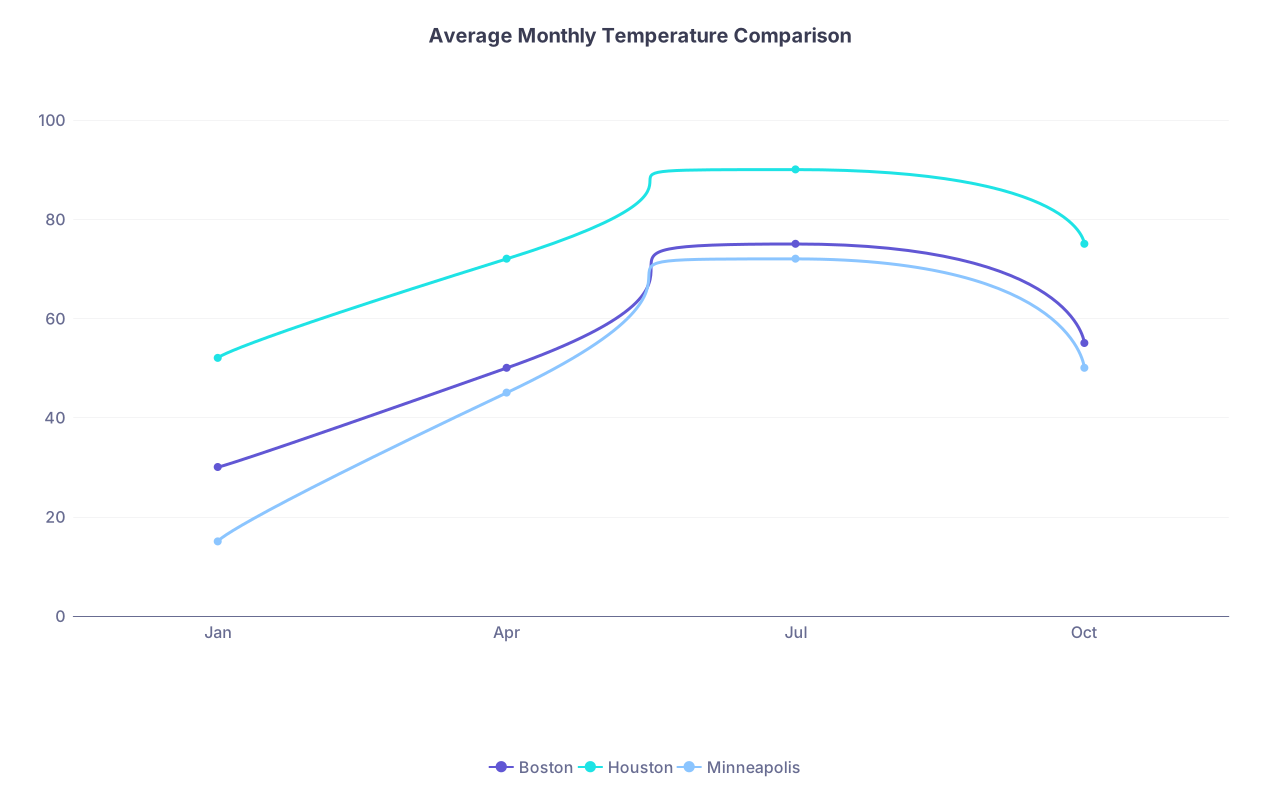
| Category | [Boston](https://residencyadvisor.com/resources/regional-residency-guides/the-hidden-hierarchy-between-nyc-boston-and-philly-residencies) | [Houston](https://residencyadvisor.com/resources/regional-residency-guides/how-texas-residency-politics-shape-who-actually-gets-ranked) | Minneapolis |
|---|---|---|---|
| Jan | 30 | 52 | 15 |
| Apr | 50 | 72 | 45 |
| Jul | 75 | 90 | 72 |
| Oct | 55 | 75 | 50 |
If winter darkness and cold absolutely wreck you and you rank a northern program highly “for prestige,” be honest about what 5 straight months of icy commutes and 4 pm sunsets will do to your mental health on 70‑hour weeks.
Same for heat: walking across blacktop at midnight in 95°F after a trauma call is its own kind of misery.
Step 7: Build a Simple Comparison Grid
You don’t need a PhD in urban planning. You need a clear, side‑by‑side look.
Pick your top 5–8 criteria and score each region 1–5. For example:
| Factor | City A | City B | City C |
|---|---|---|---|
| Safety (commute) | 4 | 2 | 5 |
| Cost of living | 3 | 5 | 2 |
| Transit/parking | 5 | 3 | 4 |
| Weather fit | 2 | 4 | 3 |
| Family support | 1 | 4 | 5 |
Weight what actually matters to you (not your classmates, not Reddit). A single “1” in a non‑negotiable category should outweigh a “5” in something you barely care about, like restaurant diversity if you almost always cook at home.
A Visual: How Your Residency Life Balance Shifts by Region
To hammer the point home: different regions mechanically change how your time and energy get chopped up.
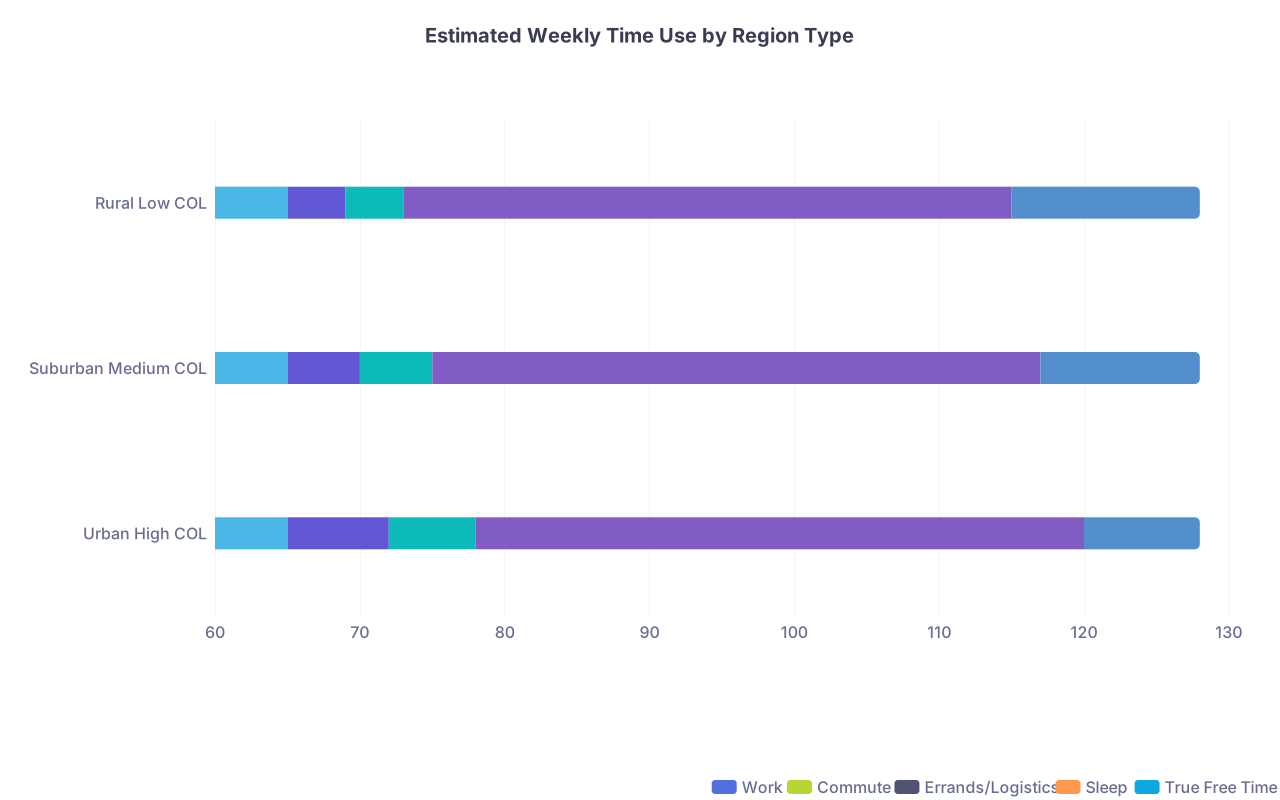
| Category | Work | Commute | Errands/Logistics | Sleep | True Free Time |
|---|---|---|---|---|---|
| Urban High COL | 65 | 7 | 6 | 42 | 8 |
| Suburban Medium COL | 65 | 5 | 5 | 42 | 11 |
| Rural Low COL | 65 | 4 | 4 | 42 | 13 |
That “extra” free time in some settings is the difference between barely surviving and actually developing as a human being during training.
FAQ: Assessing Safety and Lifestyle in an Unfamiliar Region
1. How much should safety matter compared to program reputation?
More than most people admit. A toxic safety/living situation will erode whatever advantage you think you’re getting from a “top name.” If you’re chronically anxious walking to your car, sleeping badly because of neighborhood noise or crime, or stuck with a hellish commute to avoid danger, your performance and happiness will both tank. Unless programs are truly comparable, I’d only sacrifice safety very slightly—and never on essentials like safe access to the hospital at night.
2. Is it okay to directly ask residents if they feel safe walking to their cars at night?
Yes. Phrase it simply: “Do you feel safe leaving the hospital at night—walking to parking, waiting for transit, getting home?” Then stay quiet. The pause after that question is often more revealing than the words. If they say “It’s fine, just don’t…” followed by a long list of caveats, that’s a clue.
3. How do I assess safety if crime data makes everywhere look bad?
Zoom in on specifics: your likely commute routes, late‑night paths, neighborhoods in your budget. Compare relative risk instead of chasing a mythical “zero‑crime” zone. Focus most on violent crime and patterns around transit stops, gas stations, parking structures—places you’ll actually be. If you see consistent issues right where you’ll be at 1–3 am, that matters more than city‑wide stats.
4. Can I be happy in a city that’s not my “type” if the program is great?
Sometimes, yes. People discover they like quiet suburbs or mid‑size cities they’d never have chosen on purpose. But it works best when at least your non‑negotiables are met: basic safety, tolerable weather, and one or two things you genuinely enjoy (parks, food, music, whatever). If everything about the region clashes with who you are, hoping the program’s name will carry you emotionally is wishful thinking.
5. How do I factor in my partner or family when assessing a region?
You don’t “factor them in” after the fact. You start with them. Have them do the same research: cost of living, jobs, commute, social outlets. For dual‑career couples, check job markets realistically, not theoretically. If they’ll be isolated, under‑employed, or unsafe, that will bounce back onto you within 6–12 months. Their lifestyle is part of your lifestyle.
6. What if the program insists the area is safe but online sources disagree?
Trust patterns over promises. Programs want to recruit; they minimize problems. If you see multiple independent sources—local forums, crime maps, staff comments—flagging an area as risky, believe the pattern. Doesn’t mean the program is lying; often they’re insulated by parking decks, tunnels, and their own routines. But your new‑resident experience will be different from a 15‑year attending who lives in the suburbs.
7. How early in my application process should I start looking at cities this way?
Before you build your application list is ideal. At least before you make your rank list. You don’t need to deep‑dive 50 places, but for every region you could realistically match in, you should have a basic handle on: cost of living vs salary, viable neighborhoods, commute patterns, climate, and any glaring safety issues. It’s much easier to adjust your list than to fix a bad life setup once you’re already an intern.
Key points: Don’t trust vibes; use hard data and resident specifics. Define your non‑negotiables before you compare regions. And never trade away basic daily safety and livability for a name on your badge.