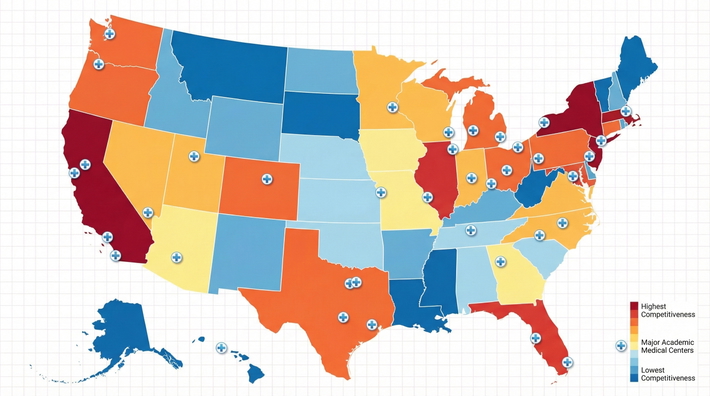
It’s late. You’re on FREIDA or Reddit again, staring at a program in a city everyone loves to trash. The place that gets described as “dangerous,” “boring,” “nothing to do,” or “ugh, why would anyone live there?” And now you’re spiraling.
“If I train there, will people judge me? Will fellowship PDs roll their eyes at this city? Am I basically branding myself as ‘couldn’t match anywhere better’ just by being associated with that zip code?”
Let’s pull that whole knot of anxiety onto the table and actually look at it.
What people really mean by “bad” regional reputation
Most of the time, when people say a city has a “bad” reputation, they’re not talking about objective career damage. They’re talking about:
- Crime rates or safety concerns
- “Rust belt,” “flyover,” or “oil town” stereotypes
- “There’s nothing there” / “No culture” / “Not a place young people want to live”
- Political climate, weather, or general vibe
- A few loud posts on SDN or Reddit that then get repeated like gospel
Very rarely is anyone saying: “Graduates from that city’s residencies can’t get fellowships or jobs.”
But our brains love to collapse those two things together:
“This city is looked down on” → “Programs there must be bad” → “If I go there, people will assume I’m bad.”
That’s the story you’re telling yourself. Let’s compare that to how people who actually make hiring and fellowship decisions think.
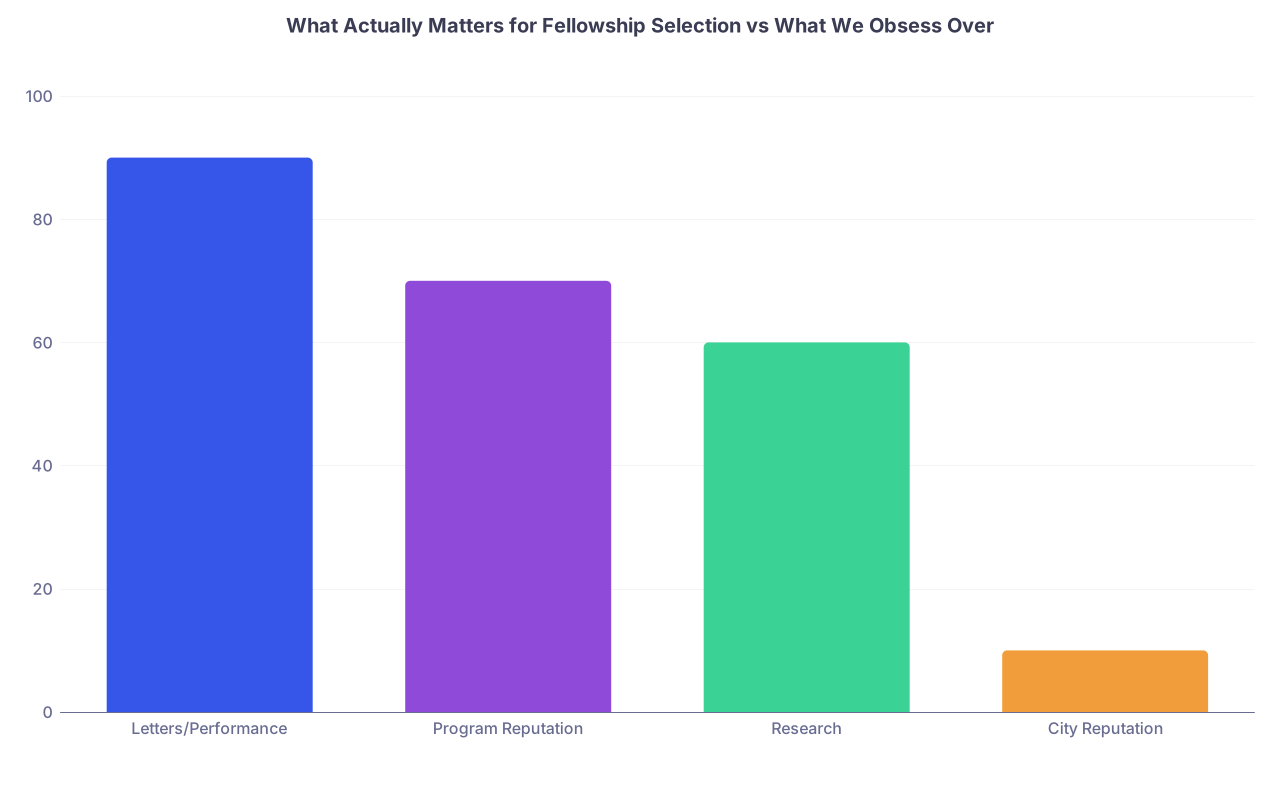
| Category | Value |
|---|---|
| Letters/Performance | 90 |
| Program Reputation | 70 |
| Research | 60 |
| City Reputation | 10 |
How much does city reputation matter to program directors?
Short version: way, way less than you think. Almost to the point of irrelevant.
Program directors, fellowship directors, and hiring chiefs care about:
- The program you trained at
- The people who trained you
- Your letters, your reputation as a resident, your skills, and your board performance
They’re not sitting in a committee room saying, “Hmm, this candidate is strong, but they trained in [insert city Reddit hates], so… pass.”
I’ve watched actual selection meetings. The conversation sounds like:
- “She’s from X program—solid training, they work hard there.”
- “I know her PD; if they say she’s good, she’s good.”
- “He did that big QI project on sepsis; I remember that abstract.”
- “They’re from a smaller program but have outstanding letters and excellent board scores.”
You know what nobody says?
“Wait… that city has a bad Yelp review. Hard no.”
If a city has a regional reputation, that can color how students talk about it. It can color how co-residents from other places imagine it. But PDs are looking at something different: training quality and outcomes.
The invisible disconnect: applicants vs decision-makers
Applicants obsess over:
- City “tier”
- Coast vs “flyover”
- “Would my non-med friends be impressed?”
- Vibes
Decision-makers obsess over:
- “Will this resident be competent and safe?”
- “Will this person work hard and not blow up my service?”
- “Do I trust the PD who’s vouching for them?”
- “Can they handle fellowship-level complexity?”
There is overlap, sure. Some cities also host powerhouse flagship institutions, so the program reputation and city reputation get braided together (Boston, NYC, San Francisco, etc.). But the leverage is the institution, not “ooh, cool ZIP code.”
When a city’s reputation can indirectly matter
I’m not going to lie and pretend location is 0% relevant. It’s just not the way we usually fear it.
Here’s where a “bad” or less-desired regional reputation can have indirect effects:
1. Applicant pool and co-resident quality
If a city is very unpopular with applicants, some things can follow:
- The program might get fewer top-choice applicants.
- They might scramble more often.
- They might take more people who see it as a backup or didn’t really want to be there.
That can influence call, culture, and your day-to-day sanity. Not necessarily career outcomes, but your actual life.
However, that’s not automatic. Some so-called “undesirable” cities have insanely strong, malignant-in-a-good-way workhorse programs that quietly produce absolute monsters (the good kind) who match great fellowships every year. Rust belt academic centers. Safety-net hospitals in “dangerous” cities. Places nobody outside medicine respects… but every PD knows produce battle-tested grads.
This is where you have to stop listening to anonymous city-bashing and start reading actual program outcomes.
| Factor | Actually Hurts Career? |
|---|---|
| City is considered "boring" | No |
| Higher crime perception | Only if you feel unsafe and underperform |
| Not a "name brand" city | No, program brand matters more |
| Regional political stigma | Rarely, and mostly socially, not career-wise |
| Lower cost-of-living city | Often a hidden advantage |
2. Networking and regional pipelines
Medicine is regional whether we like it or not. A few patterns:
- Train in the Midwest → easier to get jobs in the Midwest
- Train in the Northeast → local hospitals know your program and PD well
- Train in a small or maligned city → your network might be concentrated regionally
This isn’t punishment for picking the “wrong” city; it’s just how relationship webs form. If your PD and attendings mostly trained and work in that region, that’s where their phone calls go.
Does this hurt you if you want to leave? Not necessarily. But it means:
- You may need to work a bit harder to show specific interest in another region.
- You might need to cold email more, network more, or do an away elective if you want to break into a totally different region or coast.
None of that is fatal. It’s just extra steps.
3. Your own happiness and performance
This part honestly matters the most.
If you’re in a city you absolutely hate:
- You isolate.
- You don’t explore.
- You feel stuck, resentful, maybe unsafe.
- You come home from call and just lie in bed doomscrolling.
That can tank your:
- Energy for research
- Motivation to go the extra mile
- Emotional bandwidth to show up fully at work
- Overall mental health
And all of that can hurt career outcomes: weaker letters, fewer projects, more burnout, maybe even performance issues.
So the city won’t hurt your career directly because “people think it’s trash.”
It can hurt you indirectly if you’re miserable and your work suffers.
That’s the real risk you need to think about.
Big-name city vs “bad” city: what actually moves the needle?
Let me be blunt: if your choice is between:
- A strong program in a “meh” or “bad rep” city
- A mediocre program in a glamorous city everyone loves to brag about
And you care about long-term training and career options?
I’d pick the stronger program in the “unsexy” city 9 times out of 10.
Fellowship directors know the difference between:
- “Wow, that’s a brutal county program with legit pathology.”
- “That’s a cush program in a nice city where you see straightforward cases and go home at 3.”
They don’t care if your friends want to visit your nightlife.
The hierarchy usually looks more like this:
- Program reputation and training rigor
- Your performance and letters
- Research/extra stuff (especially for competitive fellowships)
- Geographic/regional familiarity
- Way down the list: vague city reputation noise
Not:
- “Is this a cool city?”
- Everything else
We obsess over #5. The people with power care about #1–3.
The edge cases where city reputation might play a role
I’ll acknowledge a few scenarios where city perception could sneak in:
1. Extreme safety or political issues
If a city is in the news constantly for extreme violence or social unrest, people might assume you had a particularly rough or chaotic training environment.
That can cut both ways:
- Some see that as a badge of honor: “They trained in a war zone. They can handle anything.”
- Others worry about burnout or gaps in education if systems were constantly imploding.
But again—this is about program stability, case mix, and support, not “ew, that city.”
2. International perception
If you’re planning on working abroad or in very prestige-conscious environments, big-name cities sometimes carry brand recognition shortcuts: “Oh, Boston / New York / London = strong medicine.”
But if someone actually knows your specialty, they still look at your institution. It’s lazy people who stop at the city name. Those are not usually the ones deeply involved in serious academic hiring.
3. Private practice in snobby markets
If you want to work in a super snobby, ultra-prestige, coastal private practice group that loves brand names and cocktail-party credentials, yes, sometimes having “NYC” or “LA” on your training history gets more instant respect.
But again, they still ask:
- Who trained you?
- Do our docs know your PD or mentors?
- What’s your reputation?
I’ve seen plenty of docs from “nobody cares about that city” backgrounds join big-time groups because they were just that good.
How to sanity-check a “bad rep” city program
Instead of spiraling about “Will people think less of me because of this place?”, ask some surgical questions:
- Where do their grads go for fellowship and jobs? Check actual outcomes, not vibes.
- Are there 1–2 big-name attendings or a strong PD whose letter really carries weight?
- Is the pathology broad and serious, or are you going to be underexposed?
- Do residents actually feel safe living there? Different from online hysteria.
- Could you tolerate living there for 3–7 years without hating your life?
If the answers look good and you can imagine a life there that’s not soul-crushing, the city’s “reputation” stops being a real career problem and becomes more of a lifestyle preference.
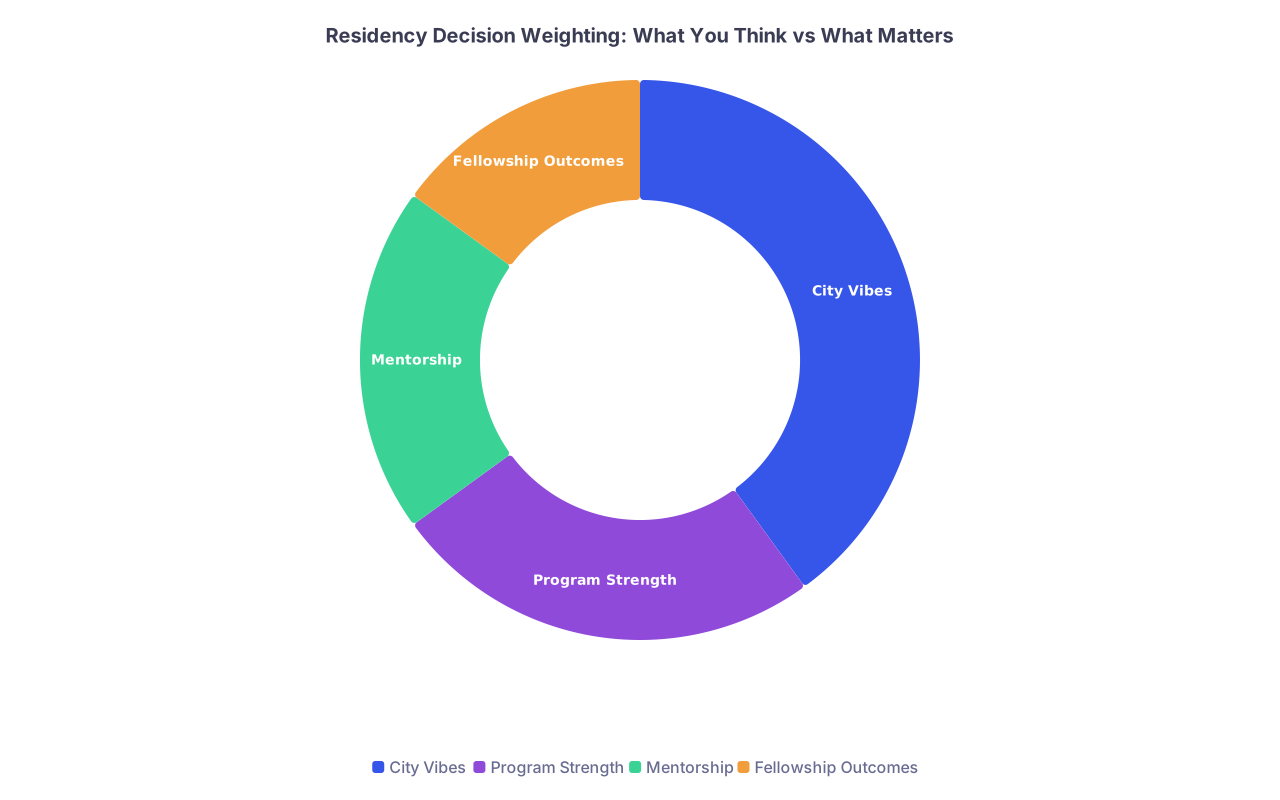
| Category | Value |
|---|---|
| City Vibes | 40 |
| Program Strength | 25 |
| Mentorship | 20 |
| Fellowship Outcomes | 15 |
(That’s how your brain wants to weigh it. Try to flip that weighting as much as you can.)
If you end up in a “bad” city, how to protect your future options
Say you match somewhere that makes your classmates raise their eyebrows. Here’s how you keep it from touching your future:
- Crush residency. Sounds obvious, but being reliable, teachable, hardworking, and kind still moves mountains.
- Get killer letters. Identify 1–2 attendings early who are respected in your field and invest in those relationships.
- Do at least one meaningful project. QI, research, curriculum—something you can talk about intelligently and show impact.
- If you want to leave the region, explicitly show interest. Away rotations, conferences, reaching out to programs in your target region.
- Tell your story confidently. “I chose a high-volume safety net program in a tough city. We saw everything. It made me a better clinician.” That lands.
No one wants to hire the person who’s apologizing for their city or program with every other sentence. Own it, explain what it gave you, and move on.
The fear underneath all this
Under all these questions about “bad” cities is usually something more raw:
“Am I already being judged as less-than?”
“Did I lose the prestige game before I even started?”
“Is this proof I wasn’t good enough?”
That’s the part that keeps you up at night. Not whether some random future colleague thinks your city is ugly.
Here’s the uncomfortable truth: some people in medicine will always use geography and brand names as shorthand for worth. They’re the people who say things like, “Oh, he’s just from [non-top-10 place].” They also tend to severely underestimate a lot of excellent physicians.
You can’t build a career hoping to please those people.
You build it by training hard, taking good care of patients, getting mentored well, and doing your best work where you are. Strong programs in “uncool” cities quietly produce beasts every year. People who match great fellowships and land great jobs and then laugh a little at how stressed they once were about “Would anyone respect me if I live in [insert city]?”
They’re fine. You will be too.
FAQ (exactly 6 questions)
1. Will training in a “bad” or unpopular city hurt my chances at a competitive fellowship?
Not automatically. Fellowship directors care way more about your program reputation, letters, board scores, and projects than whether your city gets roasted on Reddit. If your residency has a history of placing people into solid fellowships and you perform well, the city’s reputation won’t be the limiting factor. The risk is only if the program itself is weak and happens to be in a bad-rep city—then it’s the program quality, not the city, that hurts you.
2. Will people assume I was a weaker applicant because I matched in a less-desired city?
Some med students might think that. A few shallow attendings might casually assume it. But people who actually hire and rank you will look at your whole application and your program, not just the city name. If your letters say you’re outstanding, your performance backs it up, and your PD vouches for you, nobody serious is throwing out your file because they don’t like your city.
3. Is it harder to get a job in another region if I train in a “bad” city?
It can be slightly harder to move very far from where you trained, but that’s more about regional networks than “bad vs good” cities. If most of your faculty have connections in your region, that’s where their calls go. If you want to move coasts or jump to a prestige market, you may just need to be more proactive: go to national meetings, connect with people in your target region, and signal clear interest. It’s usually doable, just not completely automatic.
4. Should I pick a weaker program in a great city over a stronger program in a city with a bad reputation?
If your priority is long-term career flexibility and solid training, I’d almost always pick the stronger program in the less-glamorous city. Three to seven years in a not-amazing city with excellent training is usually a better trade than loving the restaurants and hating your CV. The only time I’d lean the other way is if you know you’ll be truly miserable in the “bad” city to the point that your performance and mental health will crumble.
5. How can I tell if a “bad city” program still has strong career outcomes?
Ignore the city gossip and look at hard data and recent grads. Where did the last 3–5 classes go for fellowship or jobs? Do they get into recognized programs in your field? Do they land at solid hospitals? Ask the residents directly: “Where have recent graduates gone?” If you see consistent matches into decent fellowships or job placements that you’d be happy with, the program is clearly respected enough that the city’s reputation isn’t holding people back.
6. If I already matched in a city people look down on, what should I do right now to protect my future career?
First, stop apologizing for it. Then: learn your program’s strengths, identify 1–2 mentors whose names and letters will carry weight, and start acting like the resident everyone wants to write a glowing LOR for. Go to at least one conference, present something, and meet people outside your region if you want options. Most of all, focus on being excellent where you are—the surest way to make your city’s reputation irrelevant is to become the person people want on their team, no matter where you trained.
Today, do one concrete thing: pull up your top “bad rep” city program, and instead of reading another Reddit thread about the city, look up where their last 3 graduating classes went for fellowship or jobs. Screenshot it. That’s your reality check—not the internet’s opinion of the zip code.