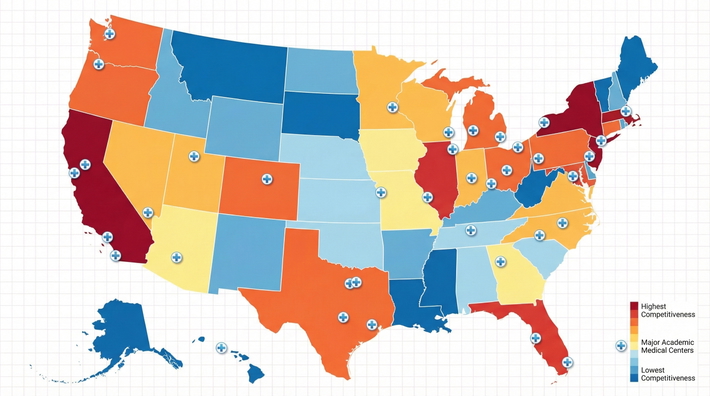
The idea that “residency is the same everywhere” is wrong, and it will quietly shape your whole career if you pretend otherwise.
Regional epidemiology does not just change your patient mix a little. It changes what you recognize in 30 seconds vs what you miss for 3 days. It changes which pages you get at 2 a.m., which drugs you are actually comfortable prescribing, which public health systems you learn to partner with, and which future patient populations you are truly trained to serve.
So if you are choosing between a program in the American South and one in the Pacific Northwest, you are not just choosing weather and cost of living. You are choosing your clinical vocabulary for the next decade.
Let me break this down specifically.
1. The Big Epidemiologic Split: South vs Northwest
Forget stereotypes for a minute—let’s go straight to the data patterns you actually feel on the wards.
At a high level, the American South (especially the “Stroke Belt” and “Diabetes Belt”) and the Pacific Northwest sit on opposite ends of several epidemiologic spectra: cardio‑metabolic disease, substance use patterns, infectious disease profiles, and social determinants.
Here is a stripped‑down comparison of what you will actually see as a resident:
| Domain | South (e.g., GA, MS, AL, LA, TX) | Pacific Northwest (e.g., WA, OR, ID) |
|---|---|---|
| Obesity/Diabetes | Very high, younger onset | Moderate, often later onset |
| Hypertension/Stroke | Extremely high (Stroke Belt) | Moderate |
| COPD/Smoking | Higher in many rural areas | Mixed; pockets but more vaping |
| Substance Use | Meth, opioids, cocaine mix | Meth, fentanyl, heroin, polysubstance |
| HIV/STIs | Higher, especially urban/Black | Lower overall but local clusters |
| TB/Immigrant Health | Lower TB, fewer recent immigrants | More TB/HEP B, refugee/immigrant care |
Is that oversimplified? Of course. But as a resident, this is exactly the level at which your training reality changes.
2. Cardio‑Metabolic Disease: The South’s Heavy Burden vs Northwest’s Different Mix
If you train in the South, you are signing up for an immersion course in complex cardio‑metabolic medicine. If you train in the Northwest, you still see it—but the proportion, age distribution, and trajectory of disease are different.
The South: Stroke Belt, Diabetes Belt, Heart Failure University
In a large Southern academic program (think UAB, Emory, UT Southwestern, Ochsner, UNC), your day‑to‑day census is dominated by:
Young patients (30s–50s) with:
- Long‑standing uncontrolled type 2 diabetes
- Morbid obesity
- Resistant hypertension
- Tobacco plus often illicit drug use
End‑stage complications by middle age:
- Refractory heart failure with reduced EF in 40‑ and 50‑year‑olds
- Advanced CKD/ESRD with long dialysis histories
- Peripheral arterial disease with repeated amputations
- Hypertensive emergency strokes in relatively young patients
This produces a very specific training environment:
You become excellent at:
- Aggressive blood pressure management across multiple drug classes (when to use minoxidil vs adding a third diuretic, which primary docs rarely touch)
- Nuanced insulin regimens in people with chaotic home situations
- Diuresis strategies in patients with poor adherence, low health literacy, and tenuous outpatient follow‑up
- Negotiating care across county hospitals, underfunded clinics, and fragmented insurance coverage
You see less of:
- Very late‑life, slow‑burn chronic disease as the dominant pattern. Because many of your sickest patients… do not make it to 85.
That shapes your clinical instincts. A 45‑year‑old with mild dyspnea in Atlanta is not “reassuring” in the same way that a 45‑year‑old in Seattle might be. Your threshold to get an echo, screen for LVH, or push statins is lower. Because you have been burned.
Northwest: Still Cardio‑Metabolic, but Skewed Differently
In major Northwest programs (UW, OHSU, Swedish, Providence, Harborview) you absolutely see diabetes, obesity, CAD, and heart failure. This is still the United States.
But the median patient is often:
- Older at time of first MI or decompensated heart failure
- More likely to have had some preventive care
- More likely to be insured (Medicaid and ACA expansion are more robust in WA/OR)
- More likely to present with subspecialty‑referred disease (e.g., complex cardiomyopathy clinics, advanced heart failure)
You end up doing a lot of:
- Management of multi‑subspecialty patients: cardio‑onc, cardio‑renal, heart failure plus advanced lung disease
- Navigating system‑rich environments: advanced imaging, transplant evaluations, LVAD programs
- Co‑managing elective interventions: TAVR workups, complex ablations, transplant follow‑up
So while Southern programs might train you to stabilize huge volumes of severely uncontrolled disease with weak outpatient scaffolding, Northwest programs often train you to operate within stronger systems, more integrated EHRs, and more proactive subspecialty networks.
You need to be honest with yourself: Which environment will actually prepare you for the population you plan to serve in 10 years?
3. Infectious Disease and Public Health: Different Threats, Different Skills
ID training is unusually sensitive to geography. Pathogens, risk behaviors, and public health infrastructure all have regional fingerprints.
South: HIV, STIs, and Unequal Public Health
In the Deep South and parts of Texas:
HIV clusters are dense, especially in:
- Black men who have sex with men
- Women in high‑poverty areas
- Rural communities with weak testing and PrEP access
STI burden (syphilis, gonorrhea, chlamydia) is consistently high.
Vaccination rates may be lower, especially in certain rural or politically conservative areas.
What this means on the floors and in clinic:
You see a lot of:
- Opportunistic infections in patients who entered care late
- Complicated HIV with social barriers—homelessness, stigma, lack of transportation
- Congenital infections in OB/peds interfaces when prenatal care was limited
You actually learn:
- How to diagnose late HIV with subtle presentations (chronic diarrhea, weird “pneumonia,” CNS changes)
- How to manage ART in real‑world messy situations: poor adherence, drug–drug issues with TB or rifamycins, psychiatric meds
- How to coordinate with under‑resourced public health departments for partner notification, contact tracing
This is not theoretical. I have watched Southern interns catch late‑stage HIV on a patient labeled “COPD” because they had simply seen too many similar cases.
Northwest: TB, Refugee Health, Zoonoses, and Fentanyl‑Related Infections
In the Pacific Northwest, ID has a different flavor:
Higher proportion of:
- TB and latent TB in immigrants and refugees (e.g., East African, Southeast Asian communities)
- Hepatitis B in foreign‑born populations
- Hepatitis C and serious bacterial infections in people who inject drugs
Public health infrastructure is usually stronger:
- Needle exchange programs
- Methadone and buprenorphine access
- Housing‑first and supportive housing models
You become good at:
- Screening and managing latent TB, interpreting complex PPD vs IGRA histories, and understanding CDC vs state TB rules
- Navigating vaccination catch‑up in refugees with no documentation
- Working closely with addiction medicine and social services when recurrent endocarditis, osteomyelitis, or epidural abscesses show up
Different mental map. Same ID knowledge base. But the “index of suspicion” is calibrated to completely different risk profiles.
4. Substance Use, Mental Health, and Homelessness: The Northwest Pressure Cooker
You will hear this from almost every trainee who has moved between these regions: substance use and homelessness feel different in Seattle/Portland compared with Birmingham/Jackson or Houston.
Northwest: High‑Intensity Urban Vulnerability
In major Northwest cities:
- Visible street homelessness is intense. Large encampments. People living in doorways outside the hospital. Regular ED “frequent flyers” without any realistic path to stable housing in the short term.
- Fentanyl, meth, and polysubstance use are everywhere. Overdose is not a rare event on call nights.
- Mental health services are overwhelmed. You will admit people with:
- Severe psychosis living unsheltered in winter
- Co‑occurring opioid and stimulant use disorders
- Recurrent ED visits for suicidality without long‑term follow‑up options
Clinical impact on your training:
- You become highly proficient in:
- Buprenorphine initiation on the wards, often under addiction medicine consult
- Harm reduction counseling that is realistic, not moralizing
- Navigating involuntary treatment laws, psychiatric boarding, and long ED holds
- Medical management when the social problem (no housing, no safety) is the true primary driver of disease
You also learn a harsh lesson: many “textbook” discharge plans are impossible. You end up discharging people into the same doorway they came from. That changes how you think of “success” in medicine.
South: Substance Use with a Different Backdrop
In the South, you still see:
Ongoing opioid epidemic, plus:
- Methamphetamine
- Cocaine
- Alcohol at very high levels in some populations
Homelessness is present, but:
- Often less concentrated visibly on the street (depends on the city)
- Sometimes more hidden in rural poverty, couch‑surfing, unstable housing
The training consequence:
- You will see plenty of alcohol‑related disease (cirrhosis, pancreatitis) and stimulant‑associated strokes or cardiomyopathy.
- In some Southern programs, addiction medicine and harm reduction are less formally integrated than in the Northwest—though that is slowly changing.
- You may develop more skills in:
- Managing substance use in the context of strong religious communities, stigma, and family dynamics
- Handling limited availability of inpatient detox or rehab
- Working with rural law enforcement and court‑mandated treatment interfaces
Different environment. Different modes of failure. You need to decide where you want to develop real depth in caring for people with addiction.
5. Rural vs Urban: Referral Patterns and Breadth of Training
Both regions have large rural catchment areas. But those rural areas are not the same.
Southern Rural Medicine: Poverty, Underinsurance, Lower Health Literacy
Large Southern academic centers often pull from deeply underserved rural counties:
- High rates of:
- Poverty
- Uninsurance or underinsurance
- Limited primary care access
- Lower average health literacy
You routinely admit patients who:
- Have not seen a doctor in years
- Present with “first touch” of the health system at catastrophic stages of disease
- Travel 2–4 hours to reach your hospital
This trains you to:
- Handle extreme presentations: fungating cancers, end‑stage heart valve disease, severe malnutrition in adults, diabetic complications that look like textbook images
- Make decisions when follow‑up is extremely uncertain: Should you initiate anticoagulation for AFib in a patient who “can’t come back” and has poor understanding of bleeding risk?
- Be very pragmatic with testing: if the nearest CT scanner to their home is 2 hours away, you think twice before requiring frequent imaging as part of your plan
Northwest Rural Medicine: Geographic Barriers, Native and Immigrant Health
Rural Northwest is a different story:
- Large Native American and Alaska Native populations in some catchment areas
- Immigrant and refugee agricultural workers in Central Washington and parts of Oregon
- Extreme weather and geographic barriers (mountain passes, isolated coastal towns)
Your training cases include:
- Late presentations due to weather/transport barriers, not just poverty
- Culturally specific health challenges in Native communities: high diabetes rates, but also specific historical trauma and trust issues with the health system
- Occupational injuries and pesticide‑related issues in farmworkers
You learn how to:
- Coordinate with Indian Health Service or tribal clinics
- Work with telemedicine and air transport decisions
- Respect cultural frameworks that are very different from typical urban practice
Two programs may both describe themselves as “major regional referral centers.” The lived experience is not interchangeable.
6. Preventive Care, Systems Training, and Public Health Exposure
Training is not just what you see. It is what your system tries to prevent—and whether you ever see what failure looks like.
Southern Programs: Tension between Huge Need and Thin Systems
Many Southern states:
- Expanded Medicaid later or not at all
- Invest less in public health infrastructure
- Have higher uninsured rates and weaker safety nets
On the ground, this produces:
- Discharges where you genuinely do not know whether the patient can fill their medications
- Specialty follow‑up that is functionally unavailable for uninsured patients
- Preventive care that is basically nonexistent in your sickest patients
From a training standpoint, you become:
- Very skilled at “MacGyver medicine”: choosing older, cheaper generics strategically; involving social workers early; manufacturing follow‑up through free clinics or charity systems.
- Very aware of structural determinants: housing, food insecurity, transportation absolutely dominate your decision‑making.
You also get a real‑world education in why U.S. life expectancy is falling in certain groups. Not from a textbook—at 3 a.m. in the ED.
Northwest Programs: Prevention Systems and Integrated Networks
In the Northwest, especially in states with strong Medicaid expansion and integrated health systems (Group Health/Kaiser heritage in Washington, big health networks in Oregon), you have:
- Better baseline access to primary care for many patients
- Large integrated networks with:
- Embedded care coordinators
- Electronic referral tracking
- Managed care initiatives focused on quality metrics
Practically, this means:
- You witness more successful transitions clinic → hospital → rehab → home health
- You participate in system‑level QI pushing vaccines, cancer screening, readmission prevention
- You get exposed to population health dashboards, registries, and care management programs
Your training here is less about “how to deliver care in a vacuum” and more about “how to function inside complex systems that are trying (not always successfully) to improve outcomes at scale.”
If you plan a career in health systems leadership, Northwest models can be incredibly instructive. If you plan to work in deeply under‑resourced environments, Southern training might prepare you more directly for that reality.
7. Specialty‑Specific Angles: How Your Field Changes by Region
Different specialties feel regional epidemiology in sharply different ways.
Internal Medicine
- South:
- Bread‑and‑butter wards filled with decompensated HF, COPD, DKA, severe infections on top of uncontrolled diabetes.
- Heavy emphasis on complex chronic disease with poor outpatient structure.
- Northwest:
- More co‑management of substance use and homelessness, more TB and refugee health, more integrated subspecialty exposure.
Emergency Medicine
- South:
- Many undifferentiated patients with no prior care. First‑time diagnoses of diabetes, cancer, HIV, heart failure.
- High trauma in certain cities (depending on local violence and traffic patterns).
- Northwest:
- High volume of intoxication, overdose, hypothermia, psychiatric crises from unsheltered populations.
- Strong integration with EMS, harm reduction, and social work teams.
Family Medicine / Pediatrics / OB‑GYN
- South:
- High teen pregnancy rates in some areas, under‑resourced prenatal care, high maternal morbidity and mortality in Black women especially.
- Lots of pediatric obesity, early metabolic syndrome, vaccine hesitation in certain subcultures.
- Northwest:
- More emphasis on adolescent mental health, gender‑affirming care (depending on institution), refugee pediatrics, chronic disease in the context of stronger school and public health systems.
Psychiatry
- South:
- Severe mental illness plus substance use, but access to community psychiatry and inpatient beds can be especially poor in rural areas.
- Cultural and religious overlays on depression, suicidality, and addiction.
- Northwest:
- Constant interface with unsheltered serious mental illness, psychosis plus polysubstance use, and intense boarding crises.
- Robust but overwhelmed outpatient networks, more attention to integration with primary care.
ID, Pulm/CC, Cards, Endo…
They all follow the same pattern: the base science is constant, but the proportions, social reality, and system interfaces are dramatically regional.
8. Training Philosophy: What Type of Physician Do You Want to Be?
You are not just matching into a hospital. You are matching into an epidemiologic laboratory that will wire your default clinical reflexes.
Let me put it bluntly:
If you care about mastering high‑volume, high‑severity cardio‑metabolic disease in relatively young patients, and you want to be extremely comfortable in under‑resourced environments → a strong Southern program will give you an edge.
If you care about addiction medicine, homelessness, refugee and immigrant health, TB and hepatitis, plus functioning inside more integrated systems with stronger public health partners → a Pacific Northwest program will shape you in that direction.
If your long‑term goal is rural practice:
- Southern rural training: prepares you for deep poverty, low health literacy, limited infrastructure.
- Northwest rural training: prepares you for geographic isolation, Native/tribal health, agricultural and environmental issues.
You cannot have everything in one residency. You need to be intentional about what kind of complexity you want baked into your foundation.
9. How to Use This When Ranking Programs
A few concrete questions to ask when you talk to residents and faculty—because glossy websites never say this out loud.
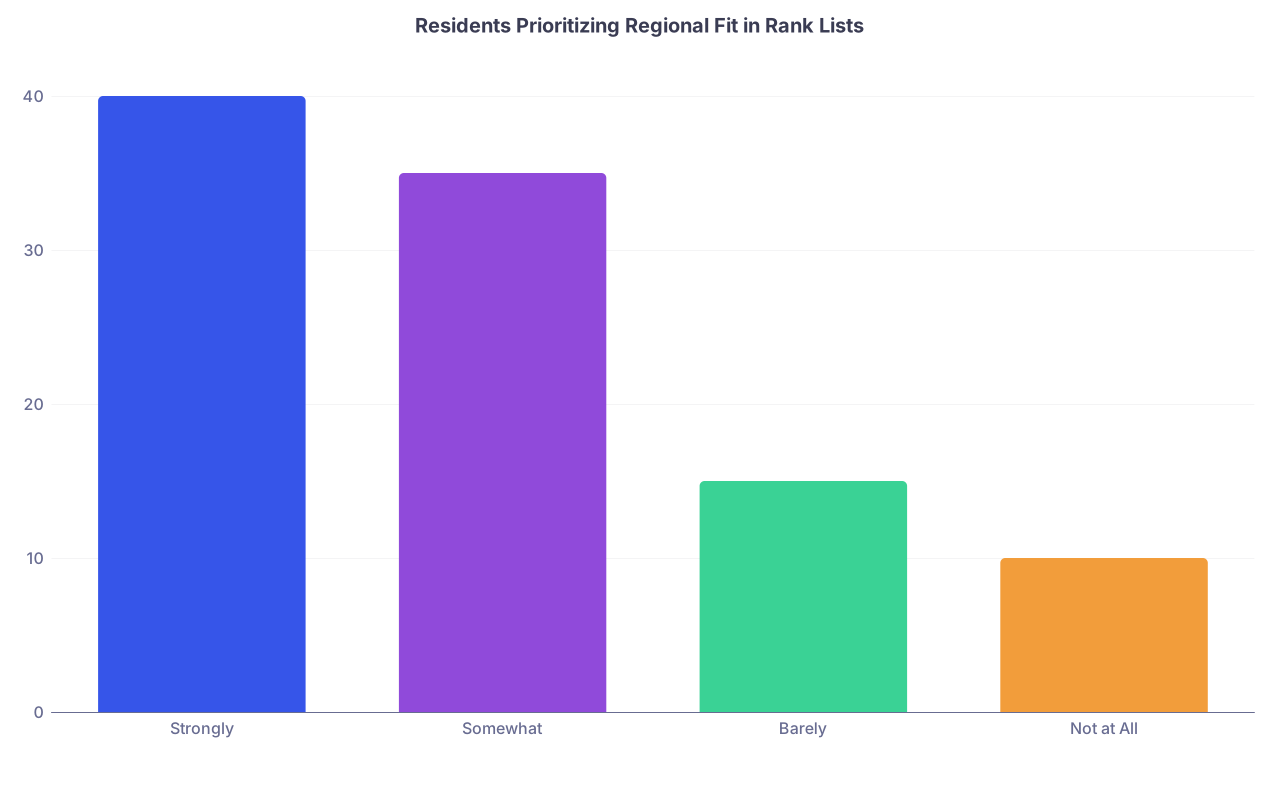
| Category | Value |
|---|---|
| Strongly | 40 |
| Somewhat | 35 |
| Barely | 15 |
| Not at All | 10 |
Ask current residents:
- “What are the three most common diagnoses on your typical ward team right now?”
- “What is the classic 2 a.m. page that interns here handle every single night?”
- “For HIV, TB, hepatitis C, addiction—how often are consult teams involved, and how much primary management do residents do themselves?”
- “How far do your sickest patients travel to get here? Do they tend to come from rural areas, or from within the city?”
- “How often do you start or adjust buprenorphine? How many patients discharge to shelters, the street, or extremely unstable housing?”
Then map the answers against this simple mental framework:

| Step | Description |
|---|---|
| Step 1 | Start - Your Priorities |
| Step 2 | Lean South |
| Step 3 | Lean Northwest |
| Step 4 | Consider other factors like family location prestige |
| Step 5 | Primary interest cardio metabolic burden? |
| Step 6 | Primary interest addiction homelessness immigrant health? |
| Step 7 | Interested in under resourced systems? |
You are not choosing “good vs bad.” You are choosing “which problems do I want to become an expert in by repetition, not by reading.”
Key Takeaways
- Regional epidemiology is not background noise; it directly shapes which diseases, risk patterns, and social realities you become fluent in during residency.
- Southern programs tend to immerse you in early, severe cardio‑metabolic disease, high HIV/STI burden, under‑resourced systems, and deep rural poverty; Northwest programs emphasize addiction, homelessness, immigrant and refugee health, TB and hepatitis, and functioning inside more robust public health networks.
- Be explicit with yourself: decide what types of clinical and social complexity you want to master, then choose your training region—South vs Northwest—accordingly, instead of pretending all residencies offer the same education.