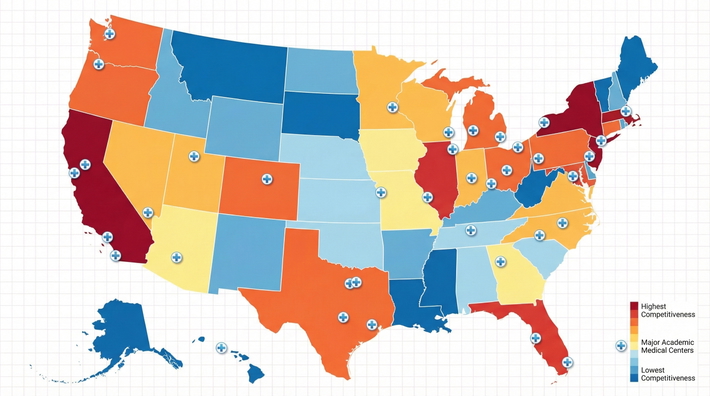
What do you think happens to your application at a Boston or New York program when your file screams “I’ve never lived above 40°F and I ranked all of California first”?
It does not go to the “maybe” pile.
Let me walk you through the regional preference mistakes that quietly kill otherwise strong applications in the Northeast. These are not theoretical. I’ve seen 250+ Step 2 scores, serious research, and honors everywhere get ignored because the file told a very simple story:
“This person is not staying here.”
The Ugly Truth: Northeast Programs Care About Fit and Staying Power
Before we get into the specific mistakes, you need to accept a core reality:
Northeast programs are drowning in applications. They don’t “holistically” agonize over every file. They use shortcuts.
And regional commitment is one of their favorite shortcuts.
Why? Because from their perspective, the risks of taking someone who is not actually committed to the region are obvious:
- They’re more likely to be miserable in the winter and complain constantly.
- They might transfer out after PGY-1 to get “closer to family” out West.
- They’re less likely to join the faculty or stay in the hospital network.
- They may be using the program as a backup for more desirable locations.
So if your application doesn’t clearly answer:
“Why this region specifically, not just this specialty?”
you’re already in trouble.
Now let’s look at the exact mistakes that make them hit “no” faster than you think.
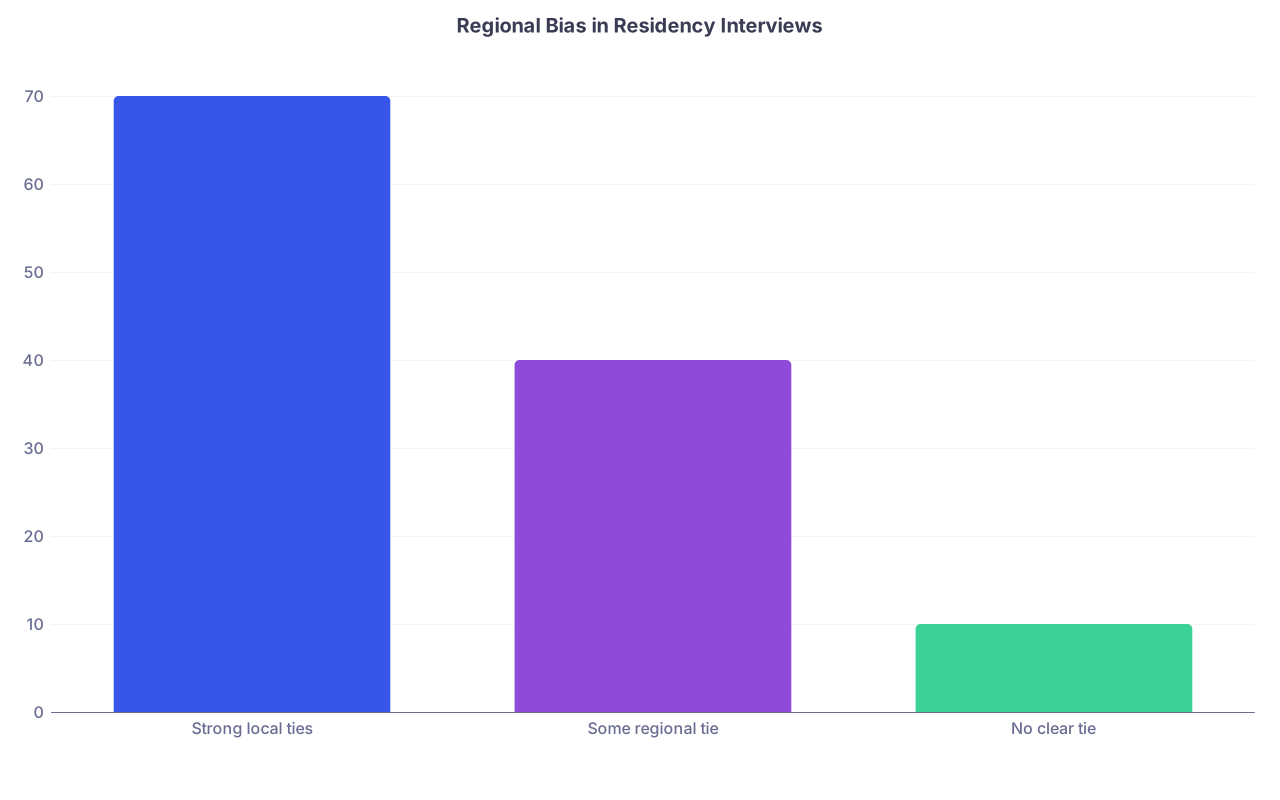
| Category | Value |
|---|---|
| Strong local ties | 70 |
| Some regional tie | 40 |
| No clear tie | 10 |
Mistake #1: Pretending Region Doesn’t Matter (When It Obviously Does)
The first and most fatal mistake: acting like geography is irrelevant.
You apply to 75 programs, scatter them across the country, and then write generic boilerplate about “training in an urban, diverse environment.”
Northeast programs see this all day. It’s white noise.
Red flags they pick up quickly:
- All clinical rotations at Southern/West Coast sites, no visiting rotations in the Northeast.
- Personal statement written like you’re talking to “any large academic center.”
- ERAS geographic preferences left blank or set in a way that obviously deprioritizes the Northeast.
- No mention of weather, cost of living, or family/professional ties to the area anywhere.
Here’s the uncomfortable part:
If your file doesn’t show any connection to the Northeast, a lot of PDs and APDs will assume you’re ranking them low or using them as a backup. Some won’t risk an interview slot on that.
How to avoid this mistake:
Decide early: is the Northeast a real priority or just “I’ll take it if I match there”?
If it’s not a priority, fine. Just don’t be surprised when they treat you the same way.If it is a priority, your application has to say so explicitly:
- Mention the region in your personal statement (not every program-specific paragraph, but once in the body).
- Use ERAS geographic signaling (if applicable that year) to reflect your interest honestly.
- Get at least one meaningful experience (rotation, conference, research collab) that connects you to the region.
If you ignore region, they’ll ignore you.

Mistake #2: Not Respecting the Weather Reality (Yes, They Notice)
Northeast winters are not theoretical. You’ll be walking to your car at 4:45 AM in sleet, then rounding while your shoes are still wet.
Programs know that people raised in warm climates sometimes underestimate how much they’ll hate this.
The mistake: acting like weather is irrelevant, especially when your entire life to date has been in Florida, Texas, SoCal, or Hawaii — and your application doesn’t show a single line of “lived in a cold climate” or “family in the region.”
You don’t have to love snow. You do have to make it plausible that you won’t be shocked by it.
Common ways people screw this up:
- Telling interviewers, “I’ve never seen snow, but I think it’ll be fun!”
(They’ve heard this. They don’t believe you.) - Making jokes in your personal statement or interview about hating the cold.
- Listing “beach volleyball” and “surfing” as your only hobbies and nothing that works in a Northeast winter.
- Social media (yes, some residents look) filled with “I could never live anywhere cold” posts.
Better approach:
You don’t have to oversell it. But show maturity about it:
- “I grew up in Houston, but I did undergrad in Chicago and got used to winter quickly.”
- “My family is in New Jersey; I travel up several times a year and know the climate.”
- “I value being near my support system more than climate comfort.”
If you’re warm-climate born and raised with no obvious ties and no mention of how you’ll handle the environment, you look like a flight risk.
And flight risks don’t get interview invites.
Mistake #3: Having a Rank List That Betrays You (Yes, They Connect the Dots)
You might think programs don’t see your rank list. True.
But what they do see sometimes:
- Your school’s match list.
- Where your friends and classmates are applying and talking about.
- Your behavior in interviews and communication patterns.
- Sometimes even word-of-mouth from other programs.
I’ve watched this play out at a big Northeast academic program:
Applicant: Step 2 high 250s, AOA, several publications, from California, goes to school in California.
They applied everywhere, interviewed at multiple West Coast powerhouses. When they got the Northeast interview:
- They didn’t show up to the pre-interview social.
- They sent a generic thank you email that might as well have gone to 20 programs.
- They mentioned in the interview, “My partner is in LA; we’re hoping to end up out there long term.”
Result: Ranked, but very low. Because the program assumed (correctly) they’d put all the West Coast places above.
Where this ties into you: if the Northeast is not your top regional preference, be careful about sending mixed signals. Programs are not stupid. They can smell when they’re your “backup coast.”
To avoid the mistake:
- Don’t over-promise. If you say “this is my top choice region” to three different coasts, someone’s going to feel lied to.
- If you’re dual-region (e.g., “Northeast or Midwest”), explain it clearly: family split, partner’s job flexibility, etc.
- Make your commitment level match your story. If you say “I’m committed to the Northeast” but only apply to 3 programs there and 25 out West, your ERAS list says otherwise.
You won’t get “auto-screened” for being open to multiple regions. You will get quietly downgraded for being obviously noncommittal or contradictory.
| Signal Type | Weak / Risky Example | Strong / Reassuring Example |
|---|---|---|
| Family location | No mention anywhere | Parents/siblings in NY/NJ/MA/PA |
| Training history | All South/West, no away rotations | Med school or away in Northeast |
| Stated goals | “Urban, diverse” only | “Plan to practice in Northeast” |
| Activities | None region-specific | Community work tied to local orgs |
| ERAS geography | Blank or conflicting | Clearly includes Northeast as priority |
Mistake #4: Generic Personal Statements That Could Be Sent Anywhere
Programs in Boston, NYC, Philly, Providence, New Haven — they see oceans of the same thing:
“I am drawn to training in a large, academic center that serves a diverse patient population…”
That sentence could have been sent to 90% of residencies.
You don’t need a special personal statement for every single program. But if the Northeast is high on your list and you’re not from there, some part of your written application needs to connect you to the region in a believable way.
Here’s what people do wrong:
- Zero mention of geography in the main statement, then a canned sentence in the “program preference” box like “I would be honored to train at your excellent institution.”
- Overusing buzzwords like “underserved,” “urban,” “academic” without mentioning actual places.
- Including stories that are obviously West Coast or Southern-centered with no bridge to why you’re now applying up North.
Better pattern:
You weave in one or two very deliberate lines:
- “My extended family is in New Jersey and Massachusetts; I’ve spent most holidays there and want to be closer to them long term.”
- “My long-term plan is to work as a primary care physician in the Northeast, where I grew up receiving care in safety-net systems similar to your institution.”
- “After attending college in Boston, I came to appreciate the density of academic hospitals and collaborative environment unique to this region.”
No need for poetry. Just give them a plausible narrative they can repeat in the committee room when someone says, “Why would this Texas student come here and stay?”

| Step | Description |
|---|---|
| Step 1 | Applicant from non Northeast region |
| Step 2 | Highlight in PS and experiences |
| Step 3 | Do away rotation or project in Northeast |
| Step 4 | Align ERAS geographic preference |
| Step 5 | Reduce risk of auto screen |
| Step 6 | Any strong ties? |
Mistake #5: Ignoring Sub-Regional Differences (Northeast Is Not One Thing)
Lumping “the Northeast” into one bucket is sloppy. Programs can tell when you do this.
New York City ≠ rural upstate New York ≠ suburban New Jersey ≠ Maine ≠ Boston.
If your story is “I love big cities and fast-paced environments” and you apply to small-town Northeast community programs without adjusting your messaging, you look unserious.
And the reverse is just as bad:
If you’re clearly a “small town continuity clinic” person but your list has only Manhattan and downtown Boston, then you tell everyone “I love the Northeast,” they know what you actually mean is “I love prestige and big cities.”
To avoid this mistake, get specific about what in the Northeast works for you:
- “I want to be near Boston specifically because my partner is starting a program there next year.”
- “I’m drawn to smaller, community-based programs in New England where teaching is strong but the environment is tight-knit.”
- “I prefer large safety-net hospitals serving immigrant communities like in NYC and Philly.”
Vague “Northeast is nice” language with a shotgun list of programs just looks like rank-chasing.
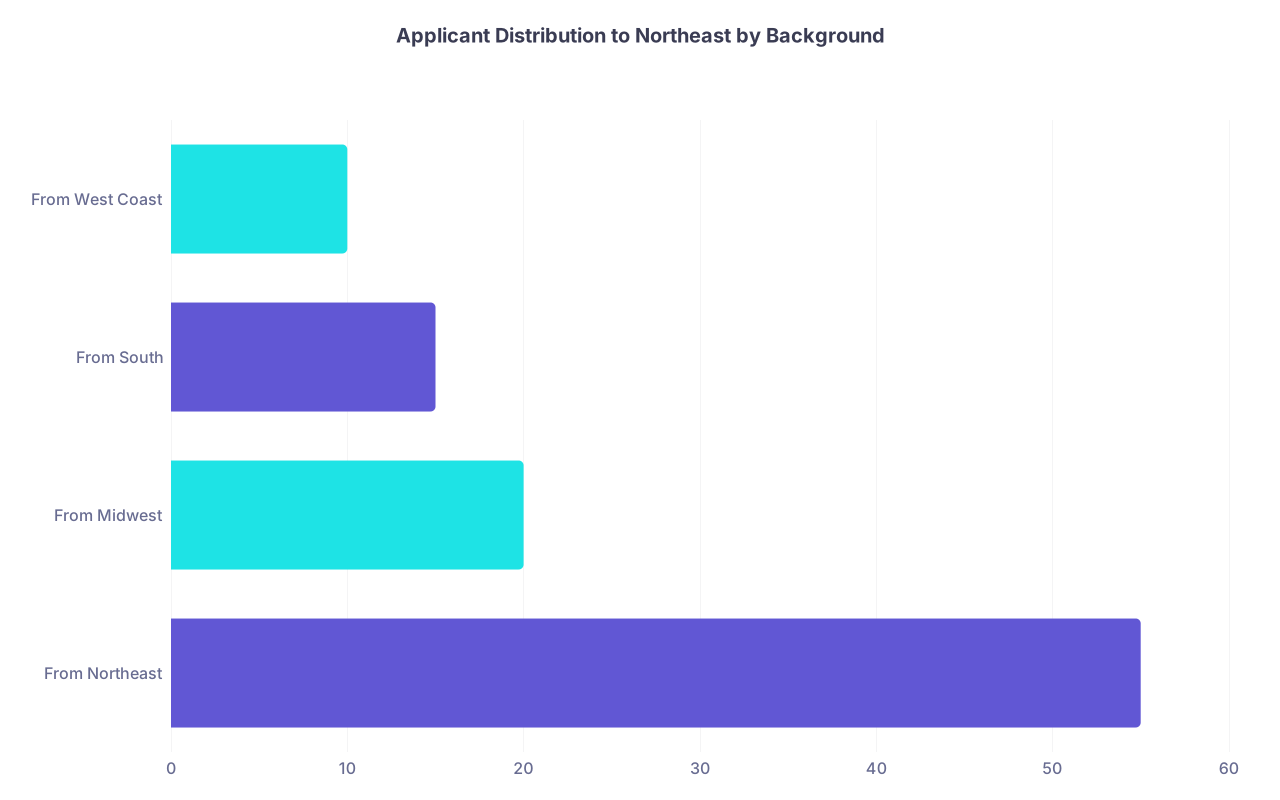
| Category | Value |
|---|---|
| From Northeast | 55 |
| From Midwest | 20 |
| From South | 15 |
| From West Coast | 10 |
Mistake #6: Blowing Off Pre-Interview & Post-Interview Signals
Another way you silently get auto-screened: your behavior around interviews screams, “This is a low-priority region for me.”
Programs watch:
- How fast you respond to interview offers (you’re not obligated to respond instantly, but consistent multi-day delays compared to other regions look bad).
- Whether you attend pre-interview social events.
- If your questions show genuine interest in the area versus only the brand name of the hospital.
- What you talk about when asked where you see yourself in 5–10 years.
Common errors that read badly for Northeast interest:
- Telling Northeast programs, “Honestly, I’ll go anywhere that will take me,” while telling another region “I’m really trying to be close to home.”
- Never asking anything about living in the region — schools, housing, commuting — which tells them you haven’t thought seriously about being there.
- Making side comments like, “I’m really more of a warm-weather person, but I’d consider here.”
Also: half-hearted thank you notes that clearly could be mailed to 25 places. You don’t have to write essays, but if this region actually matters to you, it should show in even 1–2 specific details per program you’re genuinely excited about.
You’re competing with people whose emails say, “My parents are 20 minutes from your hospital” and “I rotated here and loved your ICU team.”
Your “Thank you for your time, I really enjoyed learning about your program” just doesn’t stack up.

Mistake #7: Letting Your School or Advisor’s Bias Wreck Your Strategy
I’ve lost track of how many times I’ve heard something like this coming from advisors in warm-weather states:
“Why would you go to the Northeast? The people are rude and the winters are awful. Just stay here.”
Or the opposite from big-name East Coast schools:
“Why would you apply anywhere else? The Northeast is where the real medicine is.”
If you’re not careful, you end up with:
- A skewed program list that doesn’t reflect your actual willingness to move or stay.
- A story that doesn’t line up: “I’m open to anywhere,” but your 80 applications are heavily coastal.
- No one helping you articulate a coherent reason for placing the Northeast high (or low) on your list.
Your job is not to inherit your advisor’s regional prejudice. Your job is to build an application that accurately reflects where you’re willing to live for 3–7 years and why.
Danger signs you’re messing this up:
- You can’t explain, in one clear sentence, why the Northeast is or is not a good long-term fit for you.
- Your partner, family, or support system is not actually aligned with your geographical application strategy.
- You’re applying “just to see,” but haven’t thought about whether you’d actually be happy there.
Programs smell ambivalence. And in a stack of hundreds of files, ambivalence gets cut.
Mistake #8: Thinking “Stats Fix Everything” in Hyper-Competitive Northeast Markets
Places like Boston, NYC, and Philly are flooded with high-stat applicants.
If you think a 260 Step score automatically gets you into MGH, Columbia, or Penn while your application looks like:
- Born and raised in SoCal
- Undergrad in SoCal
- Med school in SoCal
- Partner in SoCal
- Family in SoCal
- No mention of the Northeast anywhere
…then you’re overestimating how badly they need you.
Are there exceptions? Sure. Programs do occasionally take “flight risk” applicants because they’re too strong to ignore. But if you’re competing with someone 10–15 points lower who:
- Did undergrad in Boston
- Has family in Connecticut
- States clearly they plan to work in New England long term
— many committees will choose the slightly lower score who is more likely to thrive and stay.
Your board scores open doors. They don’t erase every red flag about regional mismatch.
How to Correct Course If You’re Late in the Game
What if you’re reading this with ERAS already submitted and interviews trickling in (or not)?
You can still fix some of the damage:
On interviews:
When asked “Why this area?” have a real answer. Not, “I love the energy of New York,” but something anchored: family, professional network, prior time spent there, long-term career goals.In communications:
Show you’ve done your homework about living there — neighborhoods, commuting, lifestyle. You don’t need to fake deep knowledge, just show you’ve thought about the practical parts of moving.With your rank list:
Don’t rank programs in a region you’d be unhappy in “just because they’re big names.” Being misaligned in region is a real contributor to burnout and transfers. Programs also remember who transfers out.For future cycles (preclinical or early clerkship students):
Get at least one meaningful tie to the Northeast if you’re even remotely considering it: a sub-internship, research month, or repeated family visits that you can speak about concretely.
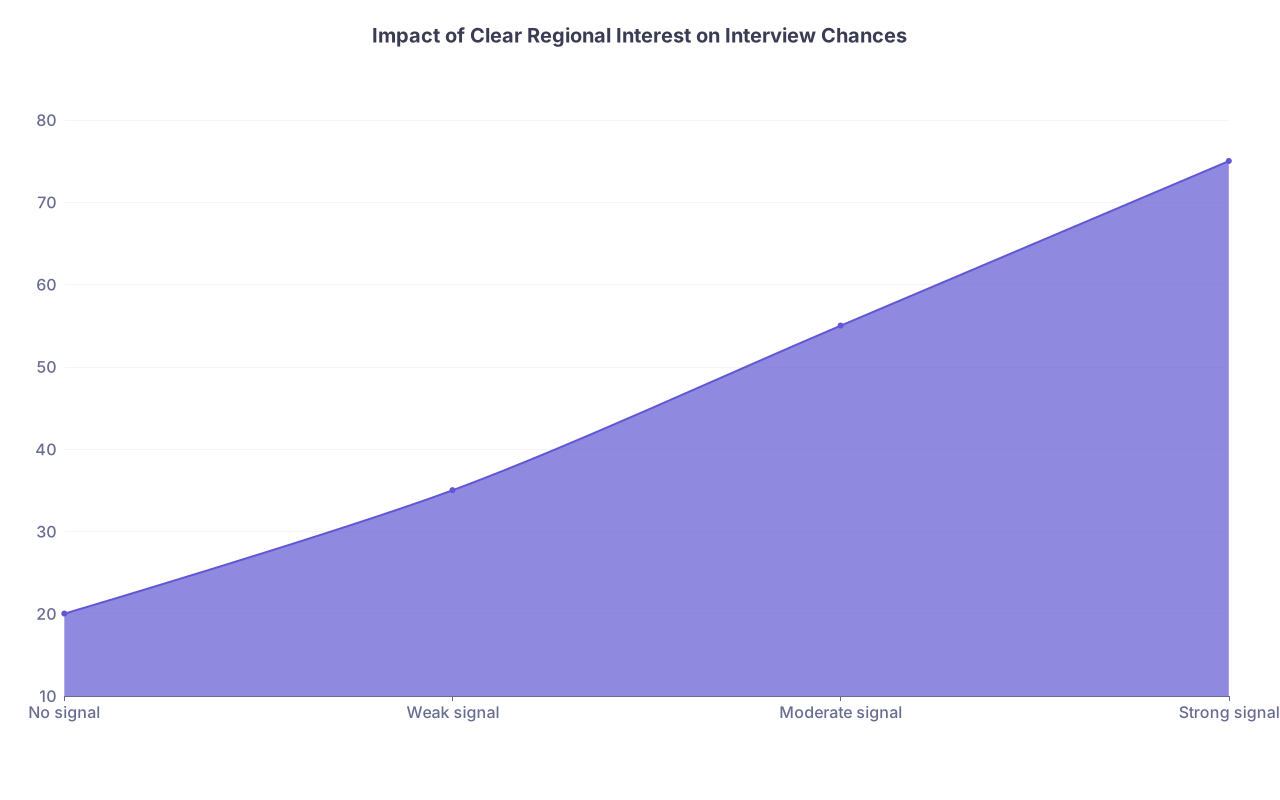
| Category | Value |
|---|---|
| No signal | 20 |
| Weak signal | 35 |
| Moderate signal | 55 |
| Strong signal | 75 |
FAQs
1. I have zero family or training history in the Northeast. Can I still match there?
Yes, but do not make the mistake of pretending that geography is irrelevant. You’ll need to create a believable story: maybe your partner’s job is flexible and you both want to experience living in Boston or NYC; maybe you’re drawn to the density of academic centers and specific fellowships common in the region. Consider doing an away rotation there, attending a regional conference, or joining a project with a Northeast institution so you have something concrete to point to. Without any of that, you’re competing against applicants with deep ties, and you’ll lose too many tie-breakers in the file-review room.
2. Should I write different personal statements for Northeast vs other regions?
If the Northeast is a top priority region, having a version of your personal statement or program-specific paragraph that explicitly mentions your interest in training and eventually practicing there is smart. You don’t need 20 custom essays, but having one “Northeast-aware” version is often worth the effort — especially if you’re applying from a distant region. The mistake is either using ultra-generic language for everyone or over-customizing and then contradicting yourself across regions.
3. What if I honestly do not care where I live as long as I match my specialty?
Then you’re the exception, but you still have to sound coherent. “I’ll go anywhere” is not a helpful story. Pick 1–2 regions you can articulate plausible reasons for: family access, cost of living, job opportunities for a partner, type of patient population, or academic density. When speaking to Northeast programs, be clear that you’d be genuinely willing to live and work there for 3–7 years and back that up with at least one concrete detail (prior visit, friends there, lifestyle you’d like, professional advantages). Otherwise, you risk sounding directionless rather than flexible.
Key Takeaways
- Northeast programs screen hard for regional commitment because they’re flooded with applicants and burned by flight risks.
- If you want real consideration, your file must tell a believable story about why you’d come — and stay — in that region.
- Generic geography-blind applications get quietly cut; specific, coherent regional narratives survive the first pass.