You’ve just opened your email: “Welcome to Intern Year!” It’s a West Coast program—Seattle, San Francisco, LA, San Diego, Portland—your dream geography. You glance at the PGY‑1 salary, do a quick mental comparison to your med school rent in the Midwest, and think, “Okay, tight but doable.”
Fast forward three months.
Your checking account is at $47. Pay hits in five days. You’re post‑call, you just dropped $22 on a “quick” DoorDash breakfast, and you’re staring at your credit card balance thinking: Where is all my money going?
This is where a lot of new West Coast interns land. Not because they’re reckless. Because they miscalculate the cost of living in ways that are painfully predictable.
Let’s walk through the traps so you do not become the intern crying in their car over a declined debit card.
1. Believing the Salary Number Without Running a Realistic Net Pay
The first big mistake? Treating the posted PGY‑1 salary like it’s actually what you’ll live on.
“$75,000 in LA? That’s not bad,” you tell yourself. That’s your first error.
What you think you get vs what you actually get
Here’s what actually eats that number before you ever see it:
- Federal income tax
- State income tax (CA/OR) or high local costs (WA with no state tax but brutal everything-else)
- FICA (Social Security + Medicare)
- Health insurance premiums
- Retirement contributions (even if “optional,” most people put at least something in)
- Union dues (in some systems)
- Disability / life insurance deductions
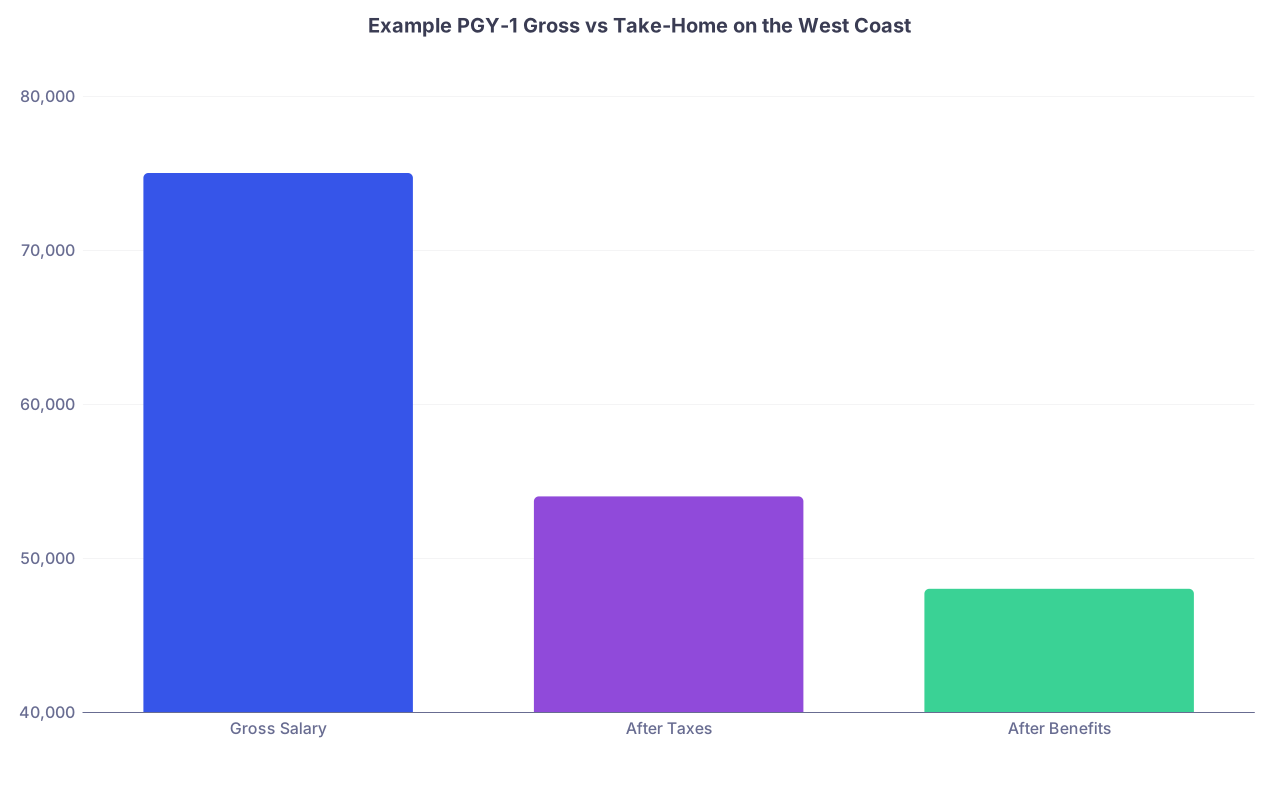
| Category | Value |
|---|---|
| Gross Salary | 75000 |
| After Taxes | 54000 |
| After Benefits | 48000 |
On a 75k salary, it’s very possible you’re actually living on ~48k–52k. That’s roughly $4k/month before you buy a single thing.
The mistake that sinks people
They budget off the gross number, or they run a vague “I’ll probably take home 80%” assumption. That’s too generous in most West Coast metro areas.
What to do instead (today):
- Use a paycheck calculator with:
- Your program’s city
- Single, no dependents
- Health insurance selected
- 5% retirement contribution as a starting point
- Get the monthly net pay. That’s your real income. Not the brochure number.
If you do not run this number before signing a lease, you’re driving blind. I’ve watched interns lock into $2,600/month studios and then discover their actual take-home is $3,900. That math does not magically fix itself.
2. Underestimating Housing – Especially the Hidden Housing Tax
Housing is where West Coast dreams go to die.
You look at Zillow and see:
- San Francisco: “Small studio, $2,400”
- Seattle: “1 bed/1 bath, $2,000”
- LA: “Shared 2BR, $1,600”
You think, “Pricey, but fine.”
You’re missing at least four things.
Mistake 1: Using pre-tax rent-to-income ratios
That old “30% of income on rent” rule? Useless if you’re comparing rent to gross income.
If your take-home is $4,000/month, 30% is $1,200. That number barely exists on the West Coast near major hospitals unless you have roommates, a long commute, or both.
New interns routinely:
- Compare rent to 75k instead of their net
- Say “40% of income on rent is okay as an intern”
- Forget parking, utilities, and renter’s insurance
You end up at 55–65% of your net income on housing, and everything else has to fit in the scraps.
Mistake 2: Ignoring the “hospital tax” on rent
Anything walkable or 10–15 minutes from a major academic center (UCSF, UW, OHSU, UCLA, Stanford, etc.) gets quietly “taxed”:
- Higher rents because of endless med students, nurses, and residents all chasing the same places
- Landlords who know July 1 brings a new crop of desperate interns
- Shared housing that’s already priced as “med roommate ready”
You’re not renting in “Seattle.” You’re renting in “within 20 minutes of Harborview/UW,” and that’s a different market.
Mistake 3: Not accounting for move-in costs
I’ve seen interns wiped out before day 1 by:
- First month’s rent
- Last month’s rent
- Security deposit
- Pet deposit
- Parking deposit
- Key/fob fees
That’s easily $5,000–$8,000 upfront in many West Coast cities. If you show up with $2k in savings because you “just finished med school,” you’re in trouble.
Mistake 4: Ignoring utilities & parking
Those “$2,000/month” listings often do not include:
- $100–$200 for utilities
- $100–$250 for parking (garages are brutal in dense areas)
- $15–$30/month renter’s insurance (which you absolutely need)
Your “2k rent” is now $2,300–$2,450. On a $4,000 net. You see the problem.
Minimum housing rules:
- Do not sign a lease where total housing (rent + parking + utilities) > 50% of net unless you’ve run the numbers down to the dollar and accept the lifestyle hit.
- If you have loans and/or credit card debt, aim for 35–45% of net. Yes, that means roommates or commute. No, you’re not the exception.
3. Pretending Transportation Is “Just Gas and an Uber Sometimes”
You look at a map and think: “It’s only a 20-minute drive.” Or, “I’ll just use public transit, it’s a West Coast city.”
Then intern year hits:
- Pre-rounds at 5:30 am
- Post-call at 10 am on a Sunday
- Cross-cover, nights, weird split days
Transit doesn’t always run when you need it. You don’t want to walk 20 minutes in the rain post-call. You’re too tired to bike safely. Suddenly your “low cost” plan is gone.
Car costs people forget
If you bring or buy a car, do not ignore:
- Registration (California and Washington in particular will kick you in the teeth)
- City parking permits
- Hospital parking (not always free, sometimes $100–$200/month)
- Higher insurance in big metro areas
- Tolls/bridges (Bay Area, Seattle)
- Occasional Uber/Lyft when parking is impossible or you’re absolutely wiped

On the flip side, if you ditch the car:
- Transit passes (sometimes discounted by the hospital, sometimes not)
- Time cost of longer commutes
- Uber/Lyft safety costs leaving the hospital at 11 pm after a late case or call
- Occasional car rentals or car-share fees
Common intern miscalculation:
“I’ll sell my car, save money, and just bus.” Then they realize:
- Bus doesn’t run reliably at 5 am or midnight
- They’re on nights for 4 weeks straight
- They’re too exhausted to stand at a bus stop in the rain at 3 am
So they spend hundreds on rideshares they never budgeted.
You need a realistic monthly transport line item. Not a fantasy.
4. Getting Blindsided by Food Prices and Lifestyle “Micro-Leaks”
Here’s the trap: You’re tired, you’re stressed, you’re hungry. You’re in a city where:
- Groceries are 15–30% more than what you’re used to
- “Quick food” under $15 basically doesn’t exist near hospitals
- Coffee culture is religion
You think you’ll meal prep. Then you do 6 days of wards with one golden day off and choose sleep over Tupperware.
How interns quietly bleed $400–$700/month
- $5–7 coffee x 4–5 days/week = ~$100–$150
- “I forgot lunch” hospital cafeteria runs = $8–$15/meal
- End-of-call “I deserve this” DoorDash = $25–$40 per order with fees/tip
- “I’m too tired to cook” dinners 2–3x/week = $150–$250/month
Stack that on top of already-expensive groceries and you can easily hit:
- $500–$600/month on groceries
- $400–$700/month on eating out/coffee/ordering in
Now food is $900–$1,300/month. On a $4k net. That’s 22–32% just on eating and drinking coffee.
The rookie mistake:
Budgeting “$400–$500/month on food” because that’s what you spent in med school in a cheaper city with more time to cook. That’s not your new life.
You need a realistic, not aspirational, number. Then you work backward to build in systems (bulk cooking, frozen options, realistic meal prep—more on that in a bit).
5. Forgetting About Student Loans, Interest, and Credit Card Drag
You know loans exist. You’ve just been shoving them into a dark mental closet.
On the West Coast, where your budget is already thin, ignoring them is how you quietly lock yourself into 10–15 years of financial stress.
Two brutal truths:
- Interest is still accumulating even if you’re in an income-driven repayment plan or in some cases during grace/deferment changes.
- If you’re leaning on credit cards for housing gaps and daily life, you’re effectively giving yourself a high-interest pay cut.
| Debt Type | Balance | Typical Rate | Rough Monthly Cost |
|---|---|---|---|
| Federal loans (IDR) | $250,000 | 5–7% | $250–$400 |
| Private loans (standard) | $80,000 | 7–9% | $700–$900 |
| Credit card balance | $5,000 | 20–25% | $100–$150+ |
The mistake isn’t “having loans.” It’s:
- Signing an expensive lease, then realizing your IDR payment just kicked up to $350/month
- Using credit cards to float move-in costs and never planning how to pay them down
- Convincing yourself you’ll “fix it as an attending” while making avoidable high-interest mistakes now
You don’t need to be debt-free as an intern. But you cannot pretend debt isn’t there when you decide what you can afford for rent and lifestyle.
6. Underestimating How Residency Schedule Destroys Your “Frugal Plans”
Med students fantasize about how thrifty they’ll be.
- “I’ll cook on my days off.”
- “I’ll take the bus and read.”
- “I’ll shop sales and go to Costco.”
Then reality:

| Step | Description |
|---|---|
| Step 1 | Plan - Cook Sundays |
| Step 2 | On wards month |
| Step 3 | Post call Sunday |
| Step 4 | Too tired to cook |
| Step 5 | Order takeout |
| Step 6 | Credit card balance grows |
What actually kills your budget is not the big, deliberate choices; it’s the way residency annihilates your energy and time.
Places interns overestimate their discipline
- Meal prep after 6 consecutive 12–14 hour days
- Public transit in dark, rainy winter evenings when you’re post-call
- Biking during wildfire season or heat waves
- Saying no to all social events because “I’m saving money”
You will not be a robot. If your budget only works when you behave like one, you built a fragile system that will break by October.
Smart move: Build your budget assuming:
- 1–2 takeout/Delivery nights per week
- You’ll forget or be unable to pack lunch 1–2 times/week
- You’ll pay for convenience sometimes (Uber, coffee, prepared food)
Then cut back when you can. Not the other way around.
7. Ignoring Regional Quirks That Jack Up Your Costs
Each West Coast city has its own special way of siphoning your money. Interns who don’t research this get nailed.
Some common regional landmines
San Francisco / Bay Area
- Bridge tolls for cross-bay commutes
- Extra-high parking costs, even in hospital garages
- Wildly variable neighborhood prices and safety; cheap options may come with long, draining commutes
Seattle
- Expensive parking around large hospitals (UW, Harborview, Swedish)
- Steep hills and rain make “I’ll walk/bike” less realistic in winter
- Some neighborhoods require extra transit links that add time and cost
LA / Orange County
- You will almost always need a car
- Traffic = more gas, more wear/tear, sometimes more parking
- “Cheaper” areas may involve 40–60 min commutes that destroy your sleep and sanity
San Diego
- Less brutal than SF/LA, but still not cheap
- Limited truly walkable neighborhoods near some hospitals
- Higher expectations of social/lifestyle spending among peers in certain areas
Portland
- Slightly cheaper housing than SF/Seattle, but salaries may also be lower
- Car break-ins and certain neighborhood safety issues can push you into pricier areas
- Food scene temptation is real and constant
The mistake is applying “generic big city” assumptions instead of “this specific city, near this specific hospital” realities.
8. Not Building a Buffer for the Inevitable Surprises
Here’s what interns forget when they move to the West Coast:
- Your phone breaks.
- You get a parking ticket (or three).
- You need last-minute scrubs, clogs, or a stethoscope replacement.
- Your car needs unexpected repairs.
- You fly home for a family emergency.
- You match into a prelim + advanced combo and have a second move in a year or two.
I’ve watched smart people get financially wrecked not by rent or loans—but by one $1,000–$2,000 hit at the wrong time.
You need some buffer. Even if it’s small.
9. How to Avoid the Classic West Coast Cost-of-Living Disaster
Let me pull this together into something you can actually use.
Step 1: Get your real net pay
- Use a payroll calculator with:
- City & state
- 5% retirement
- Typical health plan
- Write down monthly net.
Step 2: Pre-allocate your money realistically
As a starting template for West Coast interns, think:
- 35–50% = Housing (rent + utilities + parking)
- 15–25% = Food (groceries + eating out + coffee)
- 5–15% = Transport (car or transit + rideshare)
- 5–15% = Debt payments (loans, credit cards)
- 5–10% = “Life” (phone, insurance, subscriptions, clothing, licensure fees)
- 5–10% = Savings/emergency fund
If your housing number blows past 50%, you’re going to squeeze everything else mercilessly, or you’ll end up plus-credit-card every month.
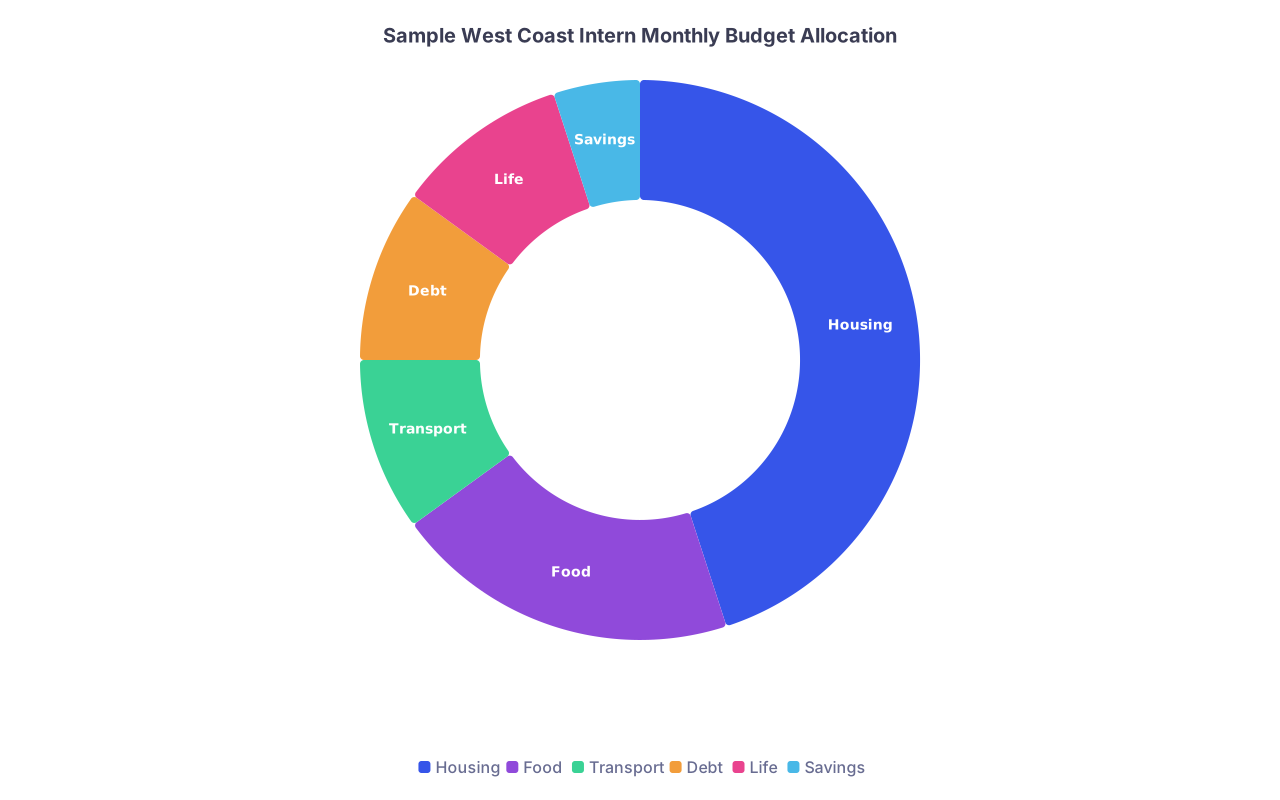
| Category | Value |
|---|---|
| Housing | 45 |
| Food | 20 |
| Transport | 10 |
| Debt | 10 |
| Life | 10 |
| Savings | 5 |
Step 3: Work backward into a maximum rent number
Take your monthly net. Multiply by 0.45. That’s your absolute max for rent + utilities + parking if you have loans and any other debts.
If you’re carrying heavy debt or supporting family, shoot for 0.35–0.40 instead.
Step 4: Accept reality about roommates and commute
Do not make the mistake of:
- Refusing roommates out of ego
- Refusing a 20–30 minute commute when that’s the difference between constant financial stress and being okay
You’re an intern, not a tech VP. You’re allowed to have roommates.
FAQ (Exactly 4 Questions)
1. Is it ever reasonable to spend 50–60% of my net income on rent as a West Coast intern?
It can be survivable, but only if you’re brutally honest about the trade-offs. If you’re debt-free, single, and willing to live with almost no eating out, minimal travel, and very tight discretionary spending, fine. For most interns—with loans, some need for social life, and normal exhaustion—60% on rent is a trap. It forces you into credit card use for normal emergencies, which costs you far more long-term than you gain by living alone in a nicer place.
2. Should I bring a car, or is it better to go without in cities like SF, Seattle, or Portland?
The mistake is making this decision on ideology (“cars are bad,” “I hate buses”) instead of your actual schedule and neighborhood. If you can live walking distance to the hospital or on a reliable transit line that runs at 5 am and late at night, going car-free can save a lot. If your only affordable housing options are far away or in areas with sketchy late-night transit, a modest used car may actually be safer and cheaper than constant rideshares. Run the full monthly numbers: car payment (if any), insurance, gas, parking, maintenance vs. transit pass + realistic Uber/Lyft usage.
3. How much savings should I have before starting a West Coast residency?
More is always better, but I’ll give you a floor: aim for at least one month of net pay saved before you move. Two to three months is safer, especially in high-deposit markets like SF, Seattle, and LA. You’ll burn through cash on deposits, furniture, travel, licensing fees, and initial work expenses faster than you expect. Showing up with $500 and a credit card is how people end up paying interest on their fridge, mattress, and security deposit for years.
4. I already signed an overpriced lease. Am I doomed for intern year?
No, but you lost your margin for error, so you have to be deliberate. You can: (1) aggressively cut recurring non-essentials (subscriptions, frequent takeout, unnecessary car costs); (2) pick up occasional moonlighting as a PGY‑2 as soon as allowed and safe; (3) refinance high-interest private loans if possible; (4) consider moving after the first lease term ends, even if moving again sounds miserable. What you should not do is quietly plug the gap with credit cards and hope attending life will erase the damage. It will not erase compound interest.
Next step for today:
Pull up a paycheck calculator, plug in a realistic PGY‑1 salary for your West Coast program, and get your actual monthly net. Then write down the maximum total housing number (rent + utilities + parking) that’s 40–45% of that net. That number—right there—is your real guardrail. If your dream apartment is above it, walk away before it becomes the mistake that follows you all year.