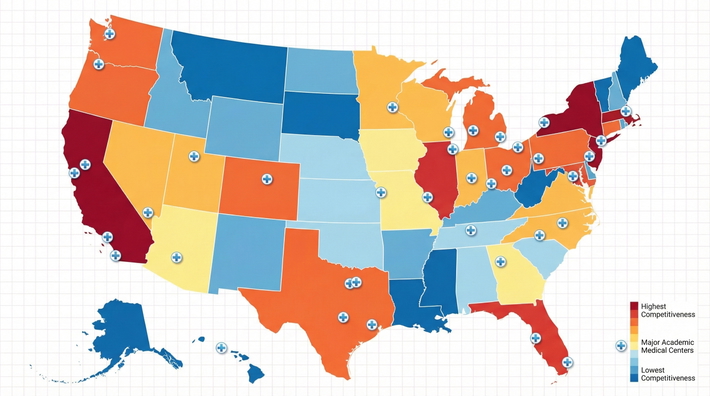
It is 9:30 p.m. You just finished a Zoom social with a residency program. The PD said all the right things about “resident wellness.” There was a slide with yoga mats, a picture of a retreat at a mountain lodge, and three residents smiling in branded fleece jackets.
You close your laptop thinking, “They really care about wellness.”
This is exactly where people get burned.
You are not just reading a program. You are reading a region’s culture filtered through marketing language. And if you assume “resident wellness” looks the same in Boston, Phoenix, and Birmingham—you will misread the signals, rank incorrectly, and then spend several years wondering how you missed the red flags that were right in front of you.
Let me walk you through the common mistakes I keep seeing, region by region, and how to avoid confusing buzzwords with reality.
1. The Core Mistake: Treating “Resident Wellness” as a Universal Concept
The big error: assuming that “resident wellness” means the same thing across the country.
It does not. Programs are shaped by:
- Regional labor culture
- Cost of living
- Patient volume and case mix
- State laws about duty hours, overtime, and leave
- Market competitiveness (oversupplied or undersupplied region)
Yet applicants read every “we value wellness” line like it came from the same template. Then wonder why two programs with identical language feel completely different on day one.
Here is how this plays out.
| Region | What Programs Often Mean by Wellness | Common Reality Check Needed |
|---|---|---|
| Northeast | Strong teaching, protected didactics | Check actual workload and commute |
| West Coast | Culture, lifestyle, DEI and mental health | Verify hours vs vibe |
| South | Family-friendly, community, stability | Examine benefits and schedule details |
| Midwest | Supportive culture, low cost of living | Look at caseload and staffing levels |
| Mountain/Desert | Outdoors, active lifestyle, wellness events | Confirm actual time off and flex policies |
The phrases are interchangeable. The lived experience is not.
The mistake is assuming you can take coastal “wellness” expectations and drop them into a high-volume Southern safety-net hospital or a resource-stretched Midwestern system. You cannot. You will either be pleasantly surprised or deeply miserable, depending on how accurately you read the signals.
2. Northeast: Confusing “Academic Rigor” with “Support”
In the Northeast—Boston, NYC, Philly, Baltimore, New Haven—the hidden assumption is: serious medicine = serious sacrifice.
I have heard PDs literally say, “We take wellness seriously. That is why we focus on strong education so you feel prepared.” Translation: your main “wellness intervention” is that you will become very competent while being very tired.
Common misreads in the Northeast:
“Protected didactics” as a wellness shield
Residents will tell you, “We almost always get to go to noon conference.” That is good. But applicants hear this and assume it implies a humane schedule overall. It does not. You can have excellent didactics and still live in a call room.Wellness framed as resilience training
Mindfulness sessions. Resilience workshops. Wellness lectures. All useful. But if those exist in place of reasonable staffing, backup coverage, or functioning ancillary support, you are just being taught how to tolerate dysfunction.Ignoring the commute + cost of living factor
Big miss. Having a “wellness committee” means nothing if you are working 70 hours, paying 50% of your salary for a one-bedroom, and spending 60–90 minutes a day commuting. That is wellness erosion, not wellness support.
Do not make the mistake of equating:
“Top name + strong teaching + wellness slide” with “sustainable life.”
Ask pointed questions:
- How far do most residents live from the main hospital, realistically?
- How many days a month are you truly leaving before 6 p.m.?
- What is the last time you left on your most recent inpatient month?
- How often are jeopardy/back-up residents actually activated?
If the answers are vague, or residents look away when someone says “We all leave by 5,” that is your signal. Academic prestige can hide very traditional, grind-heavy expectations in this region, wrapped in “we produce strong clinicians” language.
3. West Coast: Mistaking Vibes and Scenery for Actual Time Off
On the West Coast, the wellness pitch leans hard on culture, identity, and environment. You will hear a lot about:
- “Supportive, non-hierarchical teams”
- “Outdoor lifestyle”
- “Strong mental health support and DEI focus”
All good things. The trap is assuming that relaxed culture automatically means relaxed hours.
I have seen this play out at places in California and the Pacific Northwest:
Residents wear Patagonia, call attendings by their first names, discuss surfing or rock climbing on interview day… and also log 65–80 hour weeks on busy rotations. The vibe is light; the workload is not.
Typical misreads:
Confusing progressive culture with generous time
Just because the institution talks about burnout, equity, and psychological safety does not mean you will consistently have golden weekends or be under 60 hours. Some of the heaviest-service safety-net hospitals on the West Coast are also the most socially progressive on paper.Overvaluing “mental health resources” without asking about access
You will hear: “Free counseling, confidential, available anytime.” Good. Ask:- How long is the wait to get an appointment?
- Are sessions during work hours or only evenings?
- Do people actually use it or say they are “too busy”?
Assuming nature proximity equals nature access
You saw a slide: “Two hours from skiing and the beach.” Reality: you are on q4 call plus heavy nights. Skiing is a once-a-year retreat, not a weekly habit.
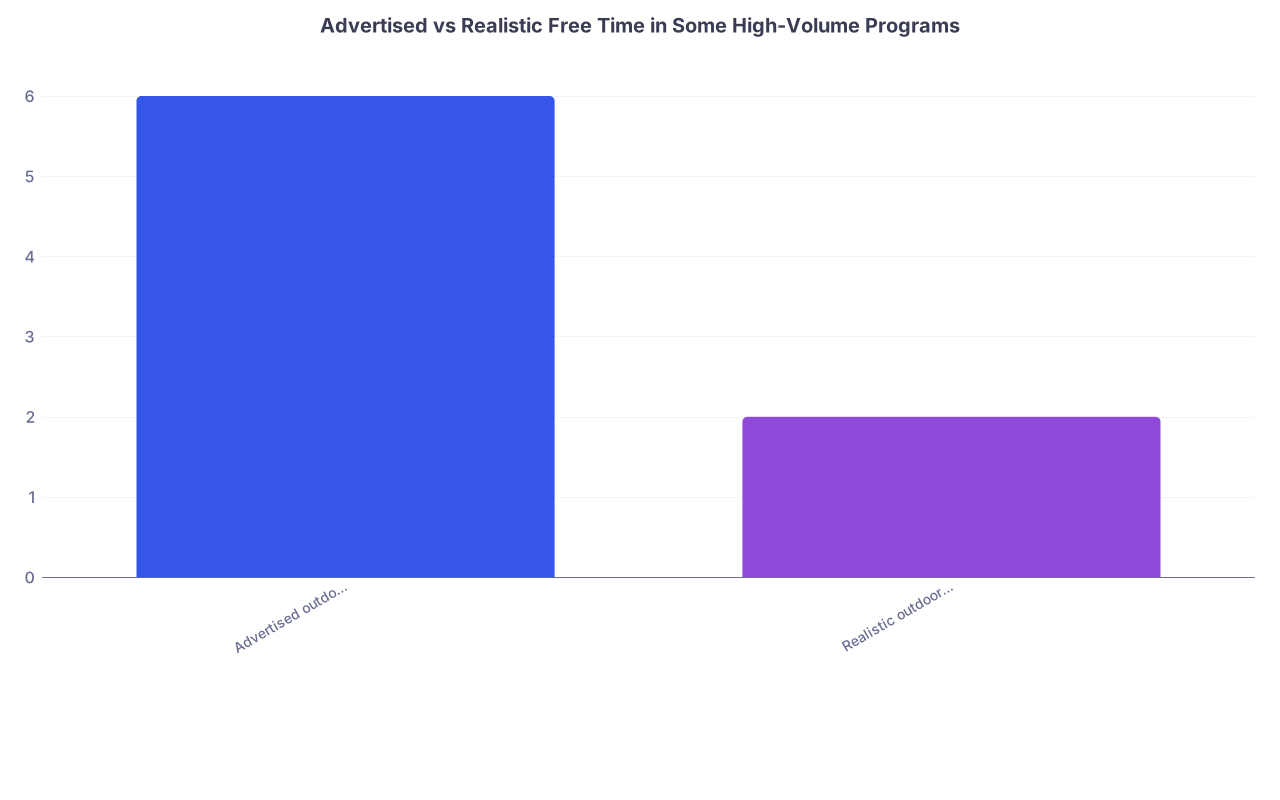
| Category | Value |
|---|---|
| Advertised outdoors days per month | 6 |
| Realistic outdoors days per month | 2 |
The West Coast mistake: buying the lifestyle branding without interrogating the schedule logistics.
Your questions:
- In the last 3–4 months, how many full days off did you use for actual outdoor activities or hobbies?
- Are there rotations where residents routinely violate duty hours?
- What is the culture when you are post-call and there is work left? Do people push you to leave, or is it “stay until it is done”?
If residents keep referring to “hidden work” or “just finishing notes at home,” that is unpaid overtime disguised as flexibility.
4. South: Romanticizing “Family-Friendly” and Overlooking Structural Gaps
Southern programs (Texas, Southeast, Deep South) often lean heavily on words like:
- “Family-friendly”
- “Tight-knit community”
- “Low cost of living and great place to raise a family”
This is very appealing. Especially if you are burnt out by big-city, high-rent life. But there are traps.
Common misreads:
- Equating “family-oriented culture” with protected time
A PD saying, “We are very understanding of family needs” is not the same as:- Paid parental leave
- Back-up call pool when your kid is sick
- Reasonable postpartum call expectations
You will hear stories like, “We helped our resident arrange coverage during her delivery.” That sounds kind. It is also the bare minimum.
Assuming low cost of living solves wellness
Your rent is half of what it would be in DC. Good. But if you are working at a high-volume, understaffed, regional referral center with weak ancillary support, that “savings” is traded for exhaustion. You cannot buy back sleep with cheaper groceries.Missing the gap between “we are a family” and actual policy
A lot of Southern programs genuinely do care about their residents as people. The mistake is assuming that warmth replaces formal infrastructure. You want both.
Ask specifically:
- What is your formal parental leave policy, and how many residents used it in the last 2 years?
- Does the program have written policies for schedule modification for pregnancy, illness, or caregiving?
- How is sick call covered? Is there a jeopardy resident, or do you “all pitch in” each time?
If the answer to every difficult scenario is “we just all help out,” that can quickly become resentment territory when the same people are always helping out.
5. Midwest: Confusing “Nice People” with Sustainable Workloads
Midwestern programs often sell:
- “Supportive, friendly culture”
- “Low ego, high cooperation”
- “Great place to live and save money”
And frequently, that is true. Some of the kindest programs I know are in the Midwest. But friendliness does not magically lower patient volume.
The mistake here: assuming kindness = low stress.
Here is the actual pattern I see:
- Very collegial attendings
- Reasonable PDs
- Genuinely kind co-residents
- High census, high responsibility, sometimes thin ancillary staff
So yes, they are nice while you are drowning. That still counts as drowning.
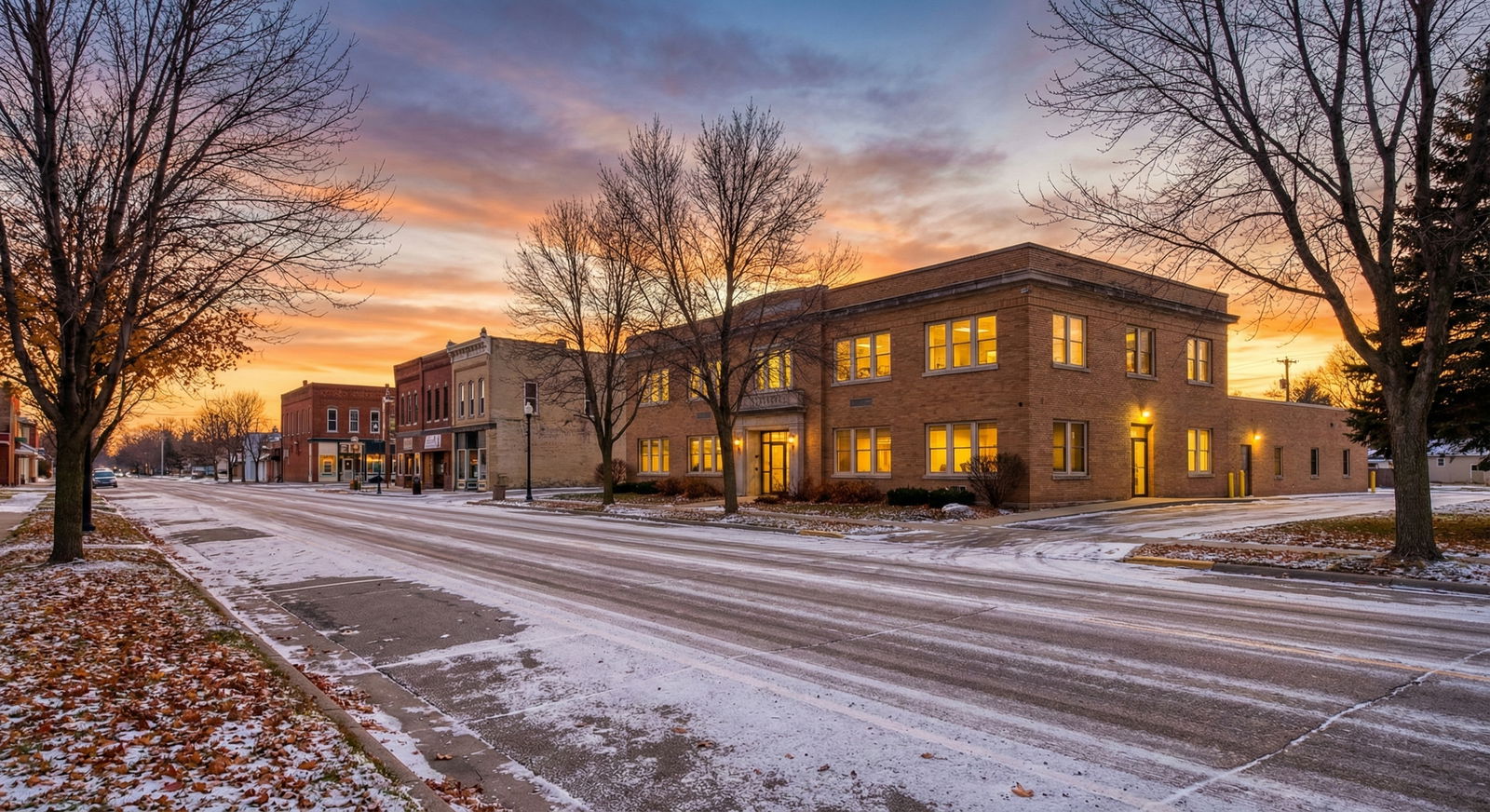
Another issue: applicants underestimate the impact of winter and isolation. If you are coming from a coastal city, moving to a smaller Midwestern town with harsh winters and fewer built-in social/outdoor options, the “we hang out a lot” line may not hold up in January when everyone is exhausted and it is dark by 4:30 p.m.
Do not ignore:
- Actual patient load per resident on wards and ICU
- Night float structure and whether shifts are truly capped
- ED boarding and whether residents are doing constant placement work
You want numbers, not adjectives. On interview day or socials, ask:
- On your last inpatient month, what was the average number of patients you carried?
- How often do you stay late to finish notes?
- In winter, how often do residents actually socialize outside of work?
If people say, “We are a family” but cannot tell you their average census or how many golden weekends they had in the last block, they may be normalized to chronic overwork. Nicely overworked. Still overworked.
6. Mountain/Desert Regions: Overestimating “Outdoorsy” Wellness
Programs in Colorado, Utah, Arizona, Nevada, New Mexico love to show you:
- Residents hiking, skiing, trail running
- Majestic landscape pictures
- “We love the outdoors and active lifestyles”
Again, that is all fine. The trap is thinking terrain = time.
I have seen several residents move to Denver or Phoenix expecting 3–4 hiking days a month. Reality: one full free weekend a month that is not half-consumed by catching up on life, laundry, and basic recovery.
The Mountain/Desert-specific misreads:
Believing “we do wellness retreats” means routine work-life balance
A yearly retreat to a cabin is nice. It is also one day of the year. You cannot extrapolate 365 days of wellness from a single off-site event.Underestimating heat, altitude, or distance
In Phoenix or Vegas, half the year it is not realistic to run or hike comfortably mid-day post-call. In more rural or mountain areas, getting to a decent trail may take an hour from where you can afford to live. Those logistics matter.Ignoring call structure and coverage across multiple sites
Many Mountain/Desert programs cover wide catchment areas. You might rotate at multiple hospitals spread over a metro region or even rural sites. Commute plus call can quietly erase all the theoretical outdoor time.
Your script:
- “On your hardest rotation, how many post-call days feel like real days off versus just recovery?”
- “How far do you personally live from the main hospital and from the places you like to go outdoors?”
- “What percentage of your days off last block did you spend doing something recreational, versus just sleeping or errands?”
If you hear, “I try to get outdoors once a month,” you have your answer. The mountains are for the brochure; your actual mountain will be the work list.
7. Red-Flag Phrases and How They Differ By Region
Some wellness language is fluffy everywhere, but the meaning shifts by geography. Here is how to stop falling for it.
| Phrase | Region Where It’s Risky | What You Should Suspect |
|---|---|---|
| “We are a family” | South, Midwest | Informal fixes, weak formal policy |
| “We take education seriously” | Northeast | Heavy workload justified by rigor |
| “We value lifestyle” | West Coast, Mountain | Great location, unknown hours |
| “We support mental health” | West Coast, Northeast | Counseling exists, time to use it unknown |
| “We are resident-driven” | Any | Residents filling system gaps |
The mistake is hearing these phrases and stopping there. You need to push one level deeper and ask, “Show me the structure behind those words.”
Look for:
- Actual written policies (parental leave, sick leave, wellness half-days)
- Concrete schedule rules (capped census, true admission cut-off times)
- Real examples from residents in the past 6–12 months
If all you get are stories from “a resident a few years ago” or generic “we work with people,” that means there is no real scaffolding. Wellness depends on who is in charge that year, not on a stable system.
8. What To Pay Attention To On Interview Day (Region-Specific Tells)
You cannot fully audit a program from one day, but you can catch patterns if you stop being dazzled by the slide deck.
Northeast tells
- Residents joke self-deprecatingly about “surviving” or “getting through it.”
- No one gives actual numbers on average hours or census.
- Every answer about wellness drifts back to how strong their fellowship matches are.
West Coast tells
- Heavy emphasis on mission, justice, DEI—but residents hesitate when you ask about hours.
- Lots of talk about local restaurants, beaches, mountains—but vague about how often they get there.
- PD proudly mentions mental health resources. Residents quietly mention “hard to book.”
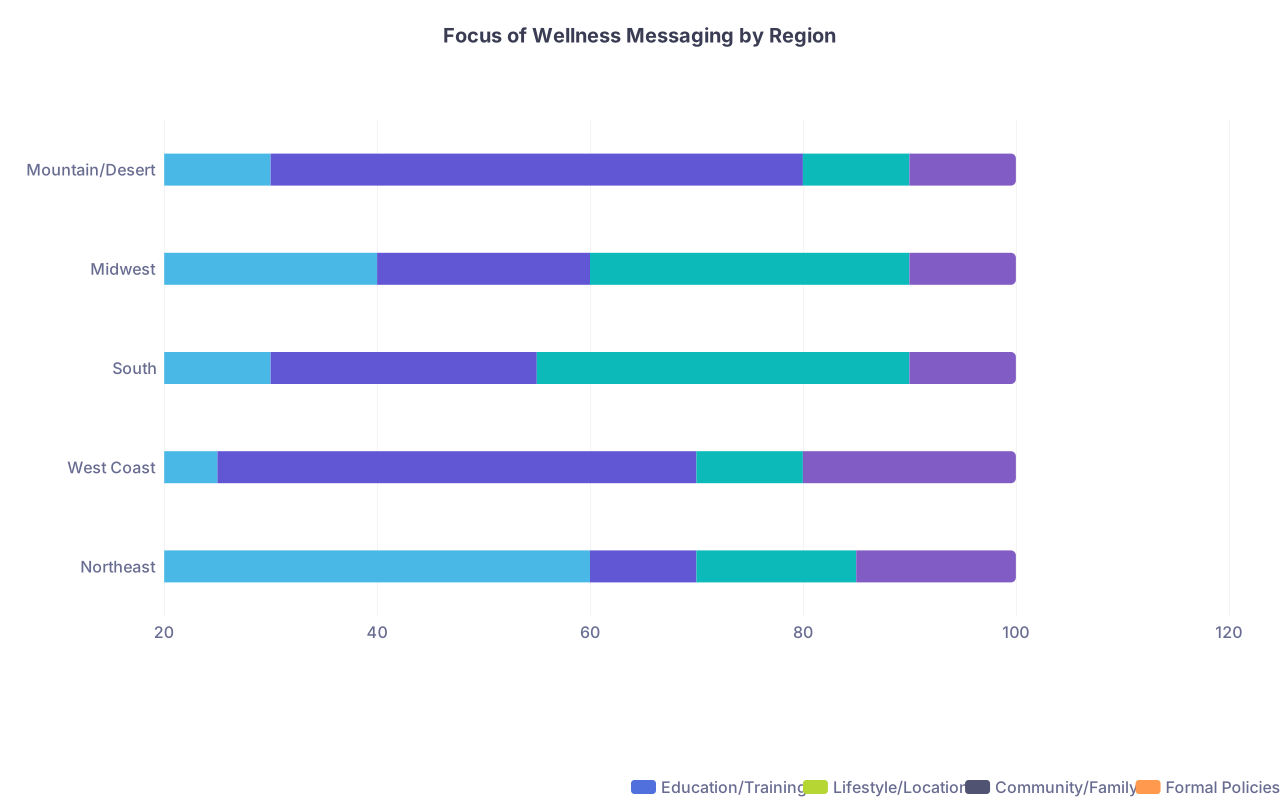
| Category | Education/Training | Lifestyle/Location | Community/Family | Formal Policies |
|---|---|---|---|---|
| Northeast | 60 | 10 | 15 | 15 |
| West Coast | 25 | 45 | 10 | 20 |
| South | 30 | 25 | 35 | 10 |
| Midwest | 40 | 20 | 30 | 10 |
| Mountain/Desert | 30 | 50 | 10 | 10 |
South tells
- Everyone mentions “we are a family,” but no one can quote the official parental leave policy.
- Sick call is “we all help each other out” instead of a structured jeopardy system.
- Residents talk warmly about attendings but also casually about “crazy” volumes.
Midwest tells
- Residents seem genuinely kind and happy together but casually mention “we work hard” as if 70-hour weeks are just the norm.
- PD emphasizes low cost of living more than time off.
- Conflicting answers on whether people actually use vacation when service is thin.
Mountain/Desert tells
- Socials are filled with hiking / skiing stories from a few super-active residents, while quieter residents do not talk as much.
- PD shows nature slides but gives no detail on call schedules or golden weekends.
- Multi-site coverage is mentioned briefly, hand-waved as “a short drive,” without considering fatigue.

| Step | Description |
|---|---|
| Step 1 | Hear Wellness Pitch |
| Step 2 | Check workload vs education |
| Step 3 | Check hours vs lifestyle talk |
| Step 4 | Check policies vs family talk |
| Step 5 | Check census vs nice culture |
| Step 6 | Check time off vs outdoors |
| Step 7 | Ask for numbers and policies |
| Step 8 | Decide if words match structure |
| Step 9 | Which region |
9. How To Cross-Check Wellness Claims Before You Rank
If you accept the premise that “resident wellness” is regional and contextual, then your job is not just to listen. You have to verify.
Minimum steps, if you do not want to regret your rank list:
Talk to off-cycle or non-recruitment residents
The curated residents on interview day will usually be positive. Ask the coordinator (or residents you meet) if you can talk to a night float resident, a PGY-3 on wards, or someone who is not on the “recruitment committee.” Tone shifts there are very telling.Look hard at duty hour violations and ACGME citations
If a program casually mentions “we had a few duty hour concerns but fixed them,” press:- How many?
- Which rotations?
- What did you change structurally, not just “we reminded residents to log correctly”?
Check where graduates go and how they talk about it
Reach out to alumni from your med school who matched there. Ask one question:- “If you were me, knowing what you know now, what would you want to know before ranking this program?”
People are blunt once they are out.
- “If you were me, knowing what you know now, what would you want to know before ranking this program?”
Map your own priorities to regional realities
If you care deeply about being near family, or being in a large coastal city, or having real outdoor time off—you must adjust your expectations about hours and support accordingly. Some tradeoffs are real, not marketing artifacts.
Key Takeaways
- “Resident wellness” is not a standardized concept. Each region loads that word with different assumptions, and programs hide a lot behind familiar phrases.
- Do not trust vibes, scenery, or slogans. Trust structure: schedules, policies, census caps, and recent resident experiences—especially from people not handpicked for recruitment.
- Your job is to match your expectations to a region’s reality, not to a slide deck. Ask the uncomfortable questions now, or you will live the uncomfortable answers later.