The way you’d behave at a big-name urban program will quietly sink you at a small‑town or rural residency if you’re not careful.
You can absolutely crush the interview itself, have perfect Step scores, and still get soft‑rejected because you made three or four “small” mistakes that scream: I don’t actually want to live or train here.
Let’s walk through the landmines.
1. Treating the Program Like a Backup or Consolation Prize
This is the single fastest way to get rank‑listed into oblivion.
At many rural and small‑town programs, faculty and residents are hypersensitive to one thing: Are you actually going to come here and stay, or are you going to bolt at the first chance?
If they smell “backup,” you’re done.
How applicants accidentally signal “backup”
I’ve seen people do these specific things:
- Saying in the pre‑interview dinner: “Yeah, I’m really into [big-city coastal city], but keeping an open mind!”
- Telling the PD: “I’m hoping to match closer to home, but I’d be happy anywhere.”
- Asking residents: “So is it easy to leave after residency and get back to [major metro]?”
- Looking visibly disappointed at the small facility, old equipment, or “quiet” town.
- Making a big deal about how many “reach” programs they interviewed at.
You may think you’re sounding honest and flexible. You’re not. You’re telling them they’re your consolation prize.
How to signal genuine interest (without lying)
You don’t have to swear a blood oath to stay forever. But you absolutely must show that you can see yourself here.
Do this instead:
- Mention specific, believable things you like about smaller communities: continuity of care, tighter teams, less traffic, more procedural autonomy.
- Connect it to your history: grew up in a smaller town, enjoyed a rural rotation, liked your community hospital experience.
- Ask grounded questions: schools nearby, spouse job market, resident life off‑duty, hiking, hunting, local gyms, community events.
Red flag question that programs hate:
“Do you think this program prepares you well to match into a very competitive fellowship in [super‑subspecialty] in [top-5 coastal city]?”
Better version:
“How have graduates done with fellowships and with jobs in both community and academic settings?”
Same intent. Very different vibe.
2. Ignoring the Community Context (You’re Not Just Interviewing for a Hospital)
At rural and small‑town sites, the community and the program are fused. Interviewers are assessing whether you fit both.
Blowing off the town is a rookie mistake.
What this looks like in real life
- You don’t research the town at all, so when asked “What do you think of the area?” you say, “Oh, I didn’t really have time to look around.”
- You laugh when someone mentions the nearest Target is 40 minutes away.
- You say, “I’m really a big‑city person,” as if that’s a flex.
- On the tour, you’re visibly unimpressed by the cafeteria, the single coffee shop, or the small ED.
Here’s the truth: They know exactly what they are. They know they don’t have 17 Michelin‑starred restaurants. They’re watching how you respond anyway.
How to not insult their whole life in one sentence
Bare minimum prep:
Spend 30 minutes on Google Maps before the interview
Look at:- Nearest airport
- Schools (if relevant)
- Housing prices
- Parks/outdoors
- Local industries (farming, mining, manufacturing, etc.)
Have at least two specific, non‑fake observations:
- “I noticed you’ve got access to some great hiking just outside town.”
- “Looks like there’s a strong farming community here—does that shape your patient population a lot?”
Never say: “There’s not much to do here.”
- Say: “It looks quieter than where I am now, but I could see myself enjoying the space and the outdoors.”
You’re not auditioning as a tourist. You’re auditioning as someone who can live there for 3–5 years without being miserable and toxic.
3. Talking Like You Need a Big Tertiary Center to Be a “Real” Doctor
Small‑town and rural programs are used to a certain condescension from applicants. They may not call you on it, but they hear it.
The dangerous slip-ups sound like:
- “Do you feel limited not being at a big academic center?”
- “Are you worried about being underprepared compared to people at [famous program]?”
- “Is it frustrating to have to transfer so many patients out?”
You intend curiosity. They hear: This place is second‑rate.
Understand what they’re proud of
Most rural/small‑town programs lean heavily on:
- Broad, generalist training
- More autonomy, earlier
- Strong procedural volume
- Longitudinal continuity with patients
- Tight resident–faculty relationship
They often think—quietly but firmly—that you can become a more capable, independent physician here than at some big ivory‑tower name brand.
Whether that’s fully true or not isn’t the point. Respect the model.
Better ways to ask hard questions
You’re allowed to care about your training quality. Just don’t phrase it like a Yelp review.
Instead of:
“Will I be disadvantaged coming from a smaller program when applying for fellowship?”
Try:
“How do your graduates fare when they apply for fellowships or jobs? Do you find they need to explain the strengths of a smaller program to bigger institutions, and how do you help them with that?”
Respectful. Still direct.
4. Mishandling the “Will You Stay Here?” Question
You will be asked—directly or indirectly—if you plan to stay in a similar setting after residency.
Do not panic and blurt out something dishonest. But also don’t make the classic mistake of treating it like a trick question and overcorrecting.
The two bad extremes
Blunt rejection of rural life
- “Honestly, I want to get back to the city as soon as I can.”
- “I can’t really see myself living long‑term in a town this small.”
Result: they won’t waste a spot on someone who’s already halfway out the door.
Over-the-top fake enthusiasm
- You claim a lifelong dream of rural medicine with zero prior evidence.
- Your application has nothing but big-city research, no rural rotations, no mention of underserved care.
They’ve seen that act before. They don’t buy it.
A credible middle path
Own your uncertainty without signaling disrespect or disinterest.
Something like:
“I’m genuinely open. I’ve mainly trained in larger cities so far, but my rural rotation in third year really surprised me—in a good way. I could see myself in a smaller community if the fit is right, and at the very least I want training that prepares me to care for rural and underserved patients, wherever I end up.”
What they’re listening for:
- You don’t find rural life ridiculous.
- You can imagine yourself here without hatred.
- You understand the patient population and mission.
If your partner / family is a factor, don’t hide it—but don’t weaponize it either:
Bad: “My spouse would probably hate it here.”
Better: “My spouse and I have talked about smaller towns. We’d want to visit again together to get a feel for it, but we’re open if it’s a good professional and personal fit.”
5. Underestimating How Much Everyone Talks to Each Other
At some massive urban program, you might “get away” with being slightly rude to a coordinator but charming to the PD. At a rural site? No chance.
The program administrator, the chief resident, the office assistant, the person who gave you directions in the hallway—they all talk.
And their opinions matter more than you think.
Common reputation-killing behaviors
I’ve watched applicants sink themselves with:
- Ignoring or being curt with the program coordinator
- Being clearly disinterested during the residents’ informal Q&A
- Asking only the PD questions and blowing off junior faculty
- Being on their phone constantly during breaks
- Cutting people off during group sessions or Zoom calls
You don’t need to be fake cheerful. You do need to be consistently respectful.
Small-town programs in particular value how you’ll be as a colleague. They’re going to see you daily. On nights. In crises. At community events.
If you act like you’re too important to talk to staff or you’re “above” this place, it shows.
6. Misjudging the Dress Code and Vibe
No, you shouldn’t show up in jeans because “it’s a small town.” But I’ve seen people go the other wrong direction—hyper‑formal, stiff, and out of sync with the program culture.
Typical culture differences
Many rural and small-town programs are:
- Less performatively formal
- More first‑name basis
- Less impressed by high fashion, more impressed by practicality and humility
That doesn’t mean scrubs and sneakers on interview day. But if everyone else is business-professional but relaxed, and you’re in a three‑piece suit with cufflinks, it can look like you didn’t even try to read the room.
Baseline:
- Standard, clean, well‑fitting business attire
- Comfortable enough to walk, tour, or stand for a while
- Subtle accessories, nothing screaming “I’m here for Wall Street”
If you’re not sure, err slightly formal—but then let your personality and body language be relaxed and human.
7. Wasting Your Questions on the Wrong Things
The questions you ask tell them exactly what you care about. This is where many people accidentally reveal they’d be miserable there.
Questions that raise red flags at rural programs
- “How easy is it to moonlight enough to afford flights back to [big city] frequently?”
- “How soon can residents realistically move out of town and commute from [nearest major metro]?”
- “Are there ways to avoid doing clinic in the county health department?”
- “Do we have to do rotations at the critical access hospital 40 minutes away?”
What they hear: You have zero interest in the actual community or mission. You’re already trying to escape.
Ask questions that align you with their mission
These tend to land better:
- “How does the program support residents who are new to rural medicine or small-town living?”
- “What kinds of community partnerships or outreach opportunities do residents get involved in?”
- “What do recent grads who stay in similar communities usually say they liked most about their training here?”
You can still ask about logistics, fellowships, call, and workload. Just don’t make it sound like your top priority is escaping.
8. Being Clueless About Rural Workflow and Resources
You don’t need to be a rural medicine expert. But sounding totally naïve about what a resource-limited setting means can be painful.
The mistakes that make you sound unprepared
- Saying: “So if something is really sick, you just transfer them out, right?” as if that’s trivial and not a huge decision.
- Being shocked there’s no in‑house neurosurgery, cardiothoracic, or transplant.
- Asking: “Do you ever see really complex patients here?” (Yes. They do. Often without backup you’d have in a city.)
Remember: in many of these programs, you are the first line. Sometimes the only line for hours.
Better way to approach it
Ask with respect for the reality:
- “How do you balance stabilizing sick patients locally with deciding when to transfer?”
- “What was a recent case where you felt the resources here were stretched—and how did the team handle it?”
- “How independently do residents manage overnight before subspecialists are involved?”
You’re showing awareness of the challenge, not sounding shocked that a small town isn’t an academic fortress.
9. Forgetting That Lifestyle Here Is Different (and Talking About It Poorly)
Many applicants say they want “work–life balance.” Then they talk about life in a way that clearly doesn’t fit a small town.
Clashing lifestyle expectations
Example missteps:
- Telling residents: “I really need great nightlife to decompress.”
- Complaining that the local gym isn’t “nice enough.”
- Saying: “I’m a foodie; I’d really miss all the restaurants I’m used to.”
- Asking only about flight connections out of the local airport.
You’re allowed to like what you like. But if your happiness depends on things this town clearly doesn’t have, be honest with yourself before wasting everyone’s time.
On interview day, if you’re there, show you’re capable of finding satisfaction in what is available:
- Outdoor activities
- Community events
- House gatherings with co‑residents
- Quiet time, hobbies, family
If that sounds like hell to you, you shouldn’t rank this program highly anyway.
10. Acting Like a Tourist Instead of a Future Colleague
Small programs in smaller communities are tight-knit. They’re not just hiring worker bees; they’re basically choosing future family members.
Big mistake: showing up like you’re on a one‑day field trip. Detached. Observing, not imagining yourself as part of it.
You can usually spot it by:
- Noncommittal answers: “Yeah, it seems nice,” “I could maybe see it,” “I’m just keeping options open.”
- Smiling politely but never asking follow-up questions that show real interest.
- Opting out of the pre‑interview dinner or post‑interview informal events if you had the option and no true conflict.
- Not remembering people’s names or roles ten minutes after meeting them.
Body language matters here. Maintain eye contact. Engage. Sit forward. Say things like:
- “If I were a resident here, I think I’d really appreciate…”
- “As an intern on this service, would I be the one doing X or Y first?”
You’re putting yourself into the picture. That’s what they want to see.
| Category | Value |
|---|---|
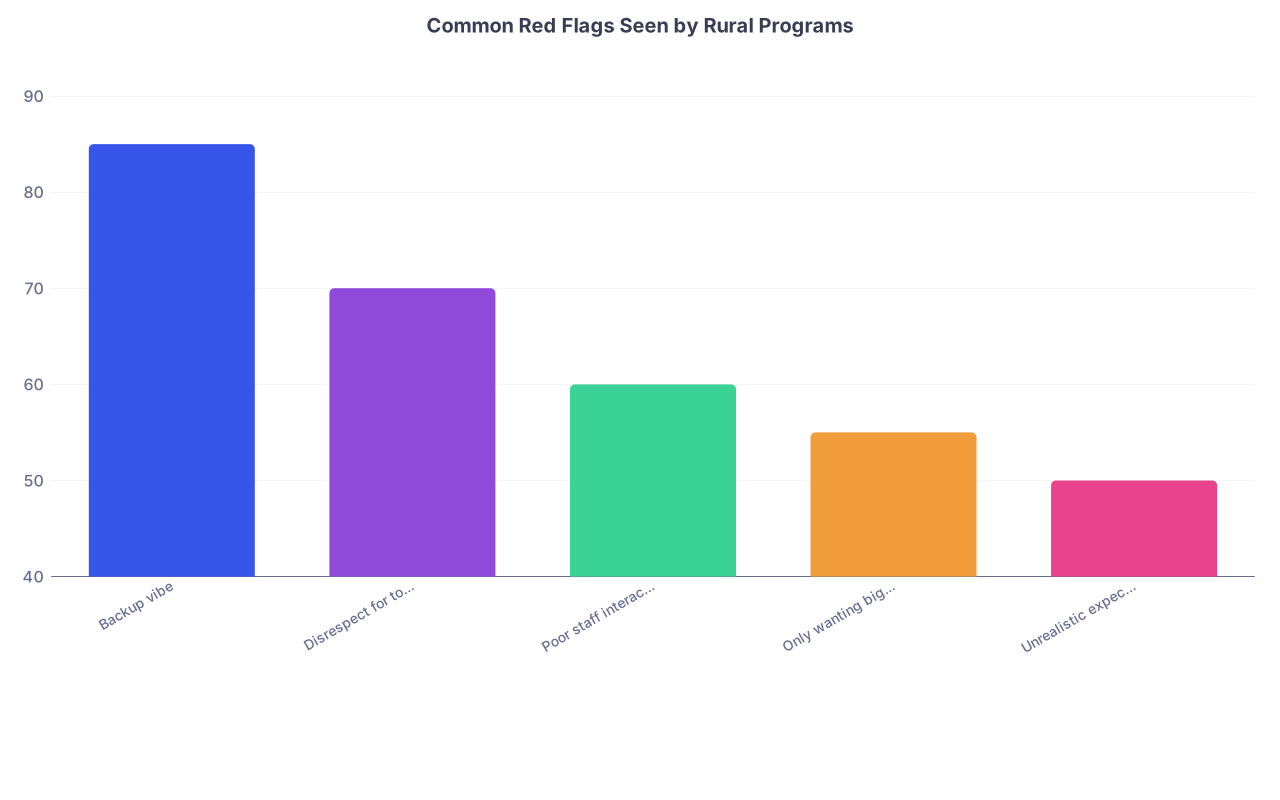
| Backup vibe | 85 |
| Disrespect for town | 70 |
| Poor staff interactions | 60 |
| Only wanting big-city life | 55 |
| Unrealistic expectations | 50 |

| Step | Description |
|---|---|
| Step 1 | Applicant arrives |
| Step 2 | Interactions with staff |
| Step 3 | Low rank |
| Step 4 | Fit with community |
| Step 5 | Strong rank |
| Step 6 | Respectful and engaged |
| Step 7 | Sees self living here |
| Factor | Large Urban Programs | Small-Town / Rural Programs |
|---|---|---|
| Prestige focus | High | Moderate |
| Community fit importance | Medium | Very high |
| Research emphasis | High (many specialties) | Low–Medium |
| Continuity of care focus | Medium | Very high |
| Concern about retention | Moderate | Extremely high |
11. Zoom / Virtual-Specific Missteps for Rural and Small Programs
Plenty of rural programs use virtual interviews to broaden their reach. That doesn’t mean standards are lower. If anything, they pay more attention to behavior, because it’s all they’ve got.
Common virtual screwups:
- Making jokes about the town or state (“Always wanted to see if people actually live out there, haha.”)
- Using a virtual background that screams “luxury penthouse” while you complain about how “small” the program looks.
- Obviously multitasking because “it’s just a Zoom.”
- Skipping the optional virtual social with residents.
If you can’t even be fully present on Zoom, they know exactly how engaged you’ll be on a long ward month.
Treat the virtual social as seriously as the main interview. For small-town programs, that informal session is often where they really decide if you’re a fit.

12. Failing to Follow Up Appropriately
No, a thank‑you email will not magically leapfrog you 20 spots on the rank list. But poor follow‑up can absolutely reinforce a bad impression.
Mistakes after the interview
- Sending a form‑letter thank you that mentions the wrong program or city. (Yes, this happens constantly.)
- Writing nothing at all when you were unsure during the interview and need to clarify actual interest.
- Over‑promising: “You are my absolute top choice” in identical emails to five different programs. People talk.
For small-town and rural places, a short, specific, honest note actually matters more. They’re looking for commitment signals.
Aim for:
- One concise thank‑you to the PD and maybe a key faculty or chief resident.
- Two specific things you appreciated—ideally tied to the rural or community aspect.
- A clear but not desperate line about your level of interest.
Example:
“Our conversation about the broad scope of practice and the tight-knit community really confirmed that a smaller program in a town like yours could be a great fit for me.”
That reinforces that you get what they’re offering—and you’re not just chasing brand names.
| Category | Value |
|---|---|
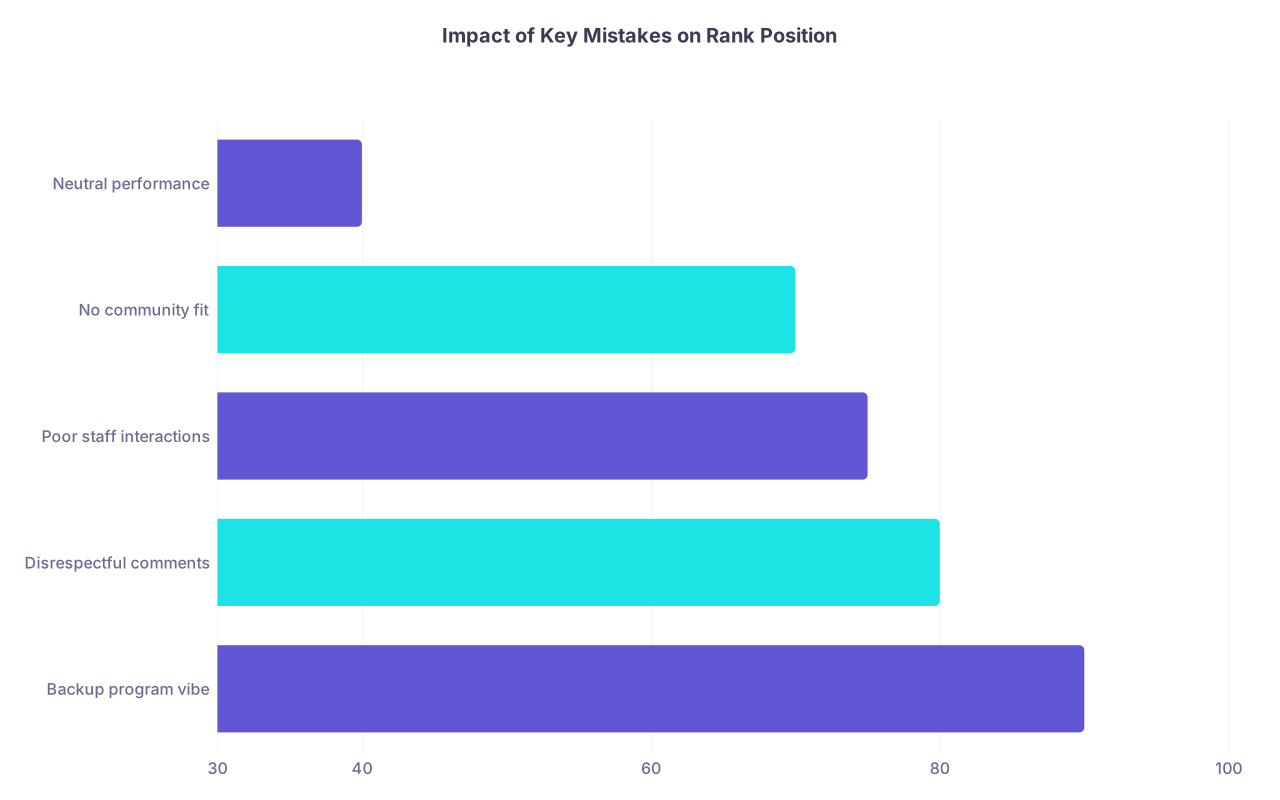
| Backup program vibe | 90 |
| Disrespectful comments | 80 |
| Poor staff interactions | 75 |
| No community fit | 70 |
| Neutral performance | 40 |

FAQs
1. Do I have to promise I’ll stay in a rural area forever to match at a small-town program?
No. And if you try, they probably won’t believe you. What they do want is:
- Evidence you won’t be miserable in a small town
- Openness to rural or community-focused practice
- Respect for their patients and context
Saying, “I’m open, and I want strong, broad training that works in rural or urban settings,” is completely fine—as long as your tone doesn’t imply rural is beneath you.
2. What if I honestly prefer big cities—should I still apply to or interview at rural programs?
If living in a small town would make you genuinely unhappy, do not pretend. You’ll be a burnt‑out, resentful resident, and everyone loses.
If you prefer cities but could realistically be okay in a small town for 3–5 years—maybe for better training, more autonomy, or a supportive environment—then:
- Be honest about not having much small-town experience
- Emphasize what does appeal to you (community, continuity, autonomy)
- Avoid framing rural life as a sacrifice or downgrade
If your whole personality is “I hate quiet and I need constant nightlife,” this is not your path.
3. How do small-town programs view applicants with strong academic or research backgrounds?
Contrary to the myth, they’re not allergic to high‑achieving applicants. But they are cautious.
If your application screams “only wants NIH funding and quaternary ICUs,” they’ll wonder why you’re here. To avoid that:
- Explain how your academic skills can serve a community setting (QI projects, population health, telemedicine, etc.)
- Make it clear you care about patients more than prestige
- Don’t talk down to people or imply they’re “settling” by being there
They’re not looking for someone who couldn’t match higher ranked—they’re looking for someone who chooses them for what they actually offer.
Bottom line:
- Don’t act like the program, hospital, or town is beneath you—even subtly.
- Show you understand and respect the reality of rural/small‑town medicine and could genuinely live that life for a few years.
- Treat every single person you meet like they vote on your future—because at small programs in small towns, they basically do.