You absolutely can rank a program you have not visited in person—and many applicants should. The bad advice is pretending you should only rank places you’ve seen. That’s how people end up with way too short rank lists and unnecessary SOAP chaos.
Let me walk through when it’s smart, when it’s risky, and how to make that decision like an adult, not a panicked MS4.
The Short Answer: Yes, But Not Blindly
Here’s the reality:
- NRMP does not require an in-person visit or interview to rank a program.
- Many applicants rank virtual-only programs or programs they never toured.
- What matters most for matching is:
- You’re willing to train there.
- You’ve done enough homework to know it’s not wildly unsafe or toxic.
- You do not shorten your rank list out of some imaginary “rule” about only ranking visited programs.
If you would rather train there than go unmatched or SOAP into something random, you rank it. Full stop.
But you do need a system to avoid ranking disaster programs just because they’re on ERAS.
When It’s Smart to Rank a Program You Haven’t Visited
There are a few common scenarios where ranking an unvisited program is not just okay—it’s rational.
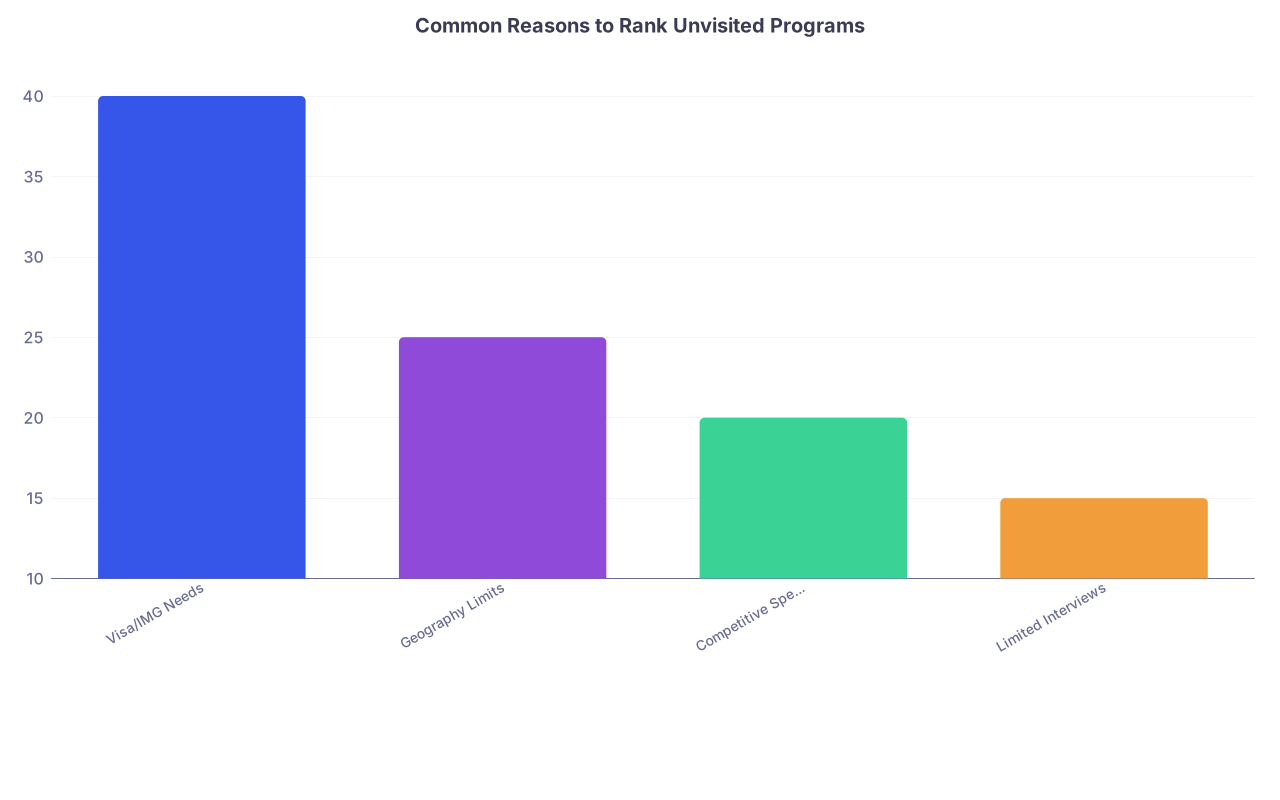
| Category | Value |
|---|---|
| Visa/IMG Needs | 40 |
| Geography Limits | 25 |
| Competitive Specialty | 20 |
| Limited Interviews | 15 |
1. You Have Limited Interviews
If you have:
- Fewer than ~10 interviews in a competitive specialty, or
- Fewer than ~8 in a less competitive field
…you cannot afford to be picky to the level of “only places I’ve physically been.”
You’re not ranking dream vacations. You’re trying to secure a job and training spot.
In that case:
- Rank every program where:
- You interviewed (virtual or in-person) and
- You’re not morally or practically opposed to being there (safety, family, finances).
2. The Program Interview Was Virtual-Only
This is the new normal. For a lot of specialties and regions, nobody visits in person anymore except maybe for a second look.
Virtual interview + decent intel = enough to rank confidently.
If you:
- Had a normal interview day
- Met residents and faculty virtually
- Got answers to key questions
…there’s no penalty for not having “walked the halls.” Programs know this too.
3. You’re an IMG or Need a Visa
Many IMGs match at programs they’ve never seen physically. Sometimes even in cities they’ve never set foot in.
For you, it’s usually a choice between:
- Ranking unvisited programs with some research
- Or shrinking your list and massively increasing your risk of not matching
I’ve watched too many IMGs regret playing it “safe” with tiny lists. Don’t do that to yourself.
4. Geography Is Secondary to Matching
If you care about a region but aren’t completely locked in, unvisited programs in less popular locations (Midwest, rural South, smaller cities) can be smart adds to your list.
They’re often:
- Less competitive
- More likely to rank you highly if you showed any interest
- Perfectly solid training environments, just not Instagram-famous cities
If you’re okay living there for 3–7 years, rank them.
When You Probably Shouldn’t Rank an Unvisited Program
There are, however, some legitimate “no-go” situations.

Do not rank a program (visited or not) if:
You’d be miserable or unsafe living there.
If a partner can’t get a visa, a child can’t access needed care, or the area feels legitimately unsafe for you (racially, politically, LGBTQ+, etc.), don’t overrule your gut purely for a match.You have credible, consistent reports of serious toxicity.
I don’t mean “people work hard.” I mean:- Chronic violations of duty hours that leadership admits and shrugs off
- Residents leaving mid-year, not just switching specialties
- Pattern of bullying, discrimination, or abuse documented by multiple sources
The program’s structure actually does not fit your career goals.
Example: You’re set on academic cardiology, and the program has:- No fellows
- Almost no research
- Weak subspecialty exposure
You might still rank it lower. But if it’s completely misaligned with your non-negotiables, you can leave it off.
The test I use:
If this were your only match, would you be grateful you matched there instead of going unmatched/SOAP?
If your honest answer is still “no,” do not rank it.
How to Evaluate a Program You Haven’t Seen
Here’s where people get lazy. They say, “Well, I didn’t visit, so I just don’t know.” That’s an excuse. You can gather a lot of information without ever stepping foot there.
| Method | What You Learn |
|---|---|
| Resident contacts | Culture, workload, happiness |
| Program website | Structure, rotations, electives |
| Social media | Vibe, diversity, current events |
| Alumni at your med school | Real talk, red flags |
| City research | Cost of living, safety, lifestyle |
1. Talk to Current or Recent Residents
This is the gold standard.
How to do it:
- Ask the program coordinator: “Could I speak to a current resident informally?”
- Use alumni or class group chats: “Anyone know residents at X program?”
- LinkedIn or Doximity: message respectfully, brief and specific.
Ask questions like:
- Are people generally happy, or just surviving?
- How are duty hours actually handled?
- Do people feel supported when they struggle?
- What do you wish you knew before you came?
- If you had to choose again, would you rank it high?
If 2–3 independent residents say the same thing—believe them.
2. Study the Program’s Structure
From website, FREIDA, and your interview materials, look at:
- Size of program and call structure
- ICU exposure, procedure volume, clinic time
- Presence of fellows (for or against, depending on your goals)
- Elective time and away elective policies
- Fellowship match lists for IM/FM/EM/Peds
A program that seems “meh” on vibe but strong on training may still be very rankable, especially mid-list.
3. Research the City Like You’d Research an Airbnb Neighborhood
You don’t need to know every coffee shop. Just the basics:
- Cost of living vs your potential salary
- Crime patterns (not fear-mongering, actual data)
- Commute options and parking
- Proximity to airports if family is far
- Schools/daycare if you have or plan kids
Ask yourself: “Can I reasonably build a life here for a few years?” Not “Is this my dream city forever?”
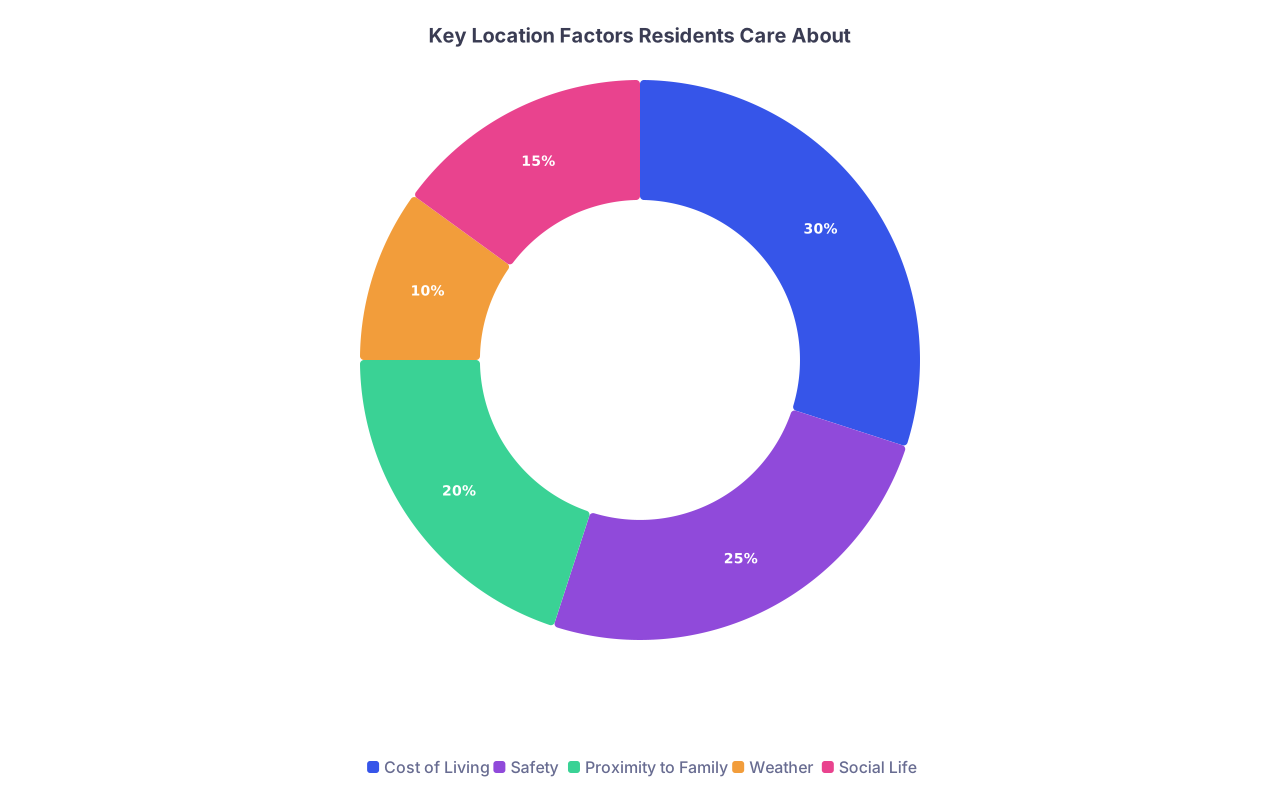
| Category | Value |
|---|---|
| Cost of Living | 30 |
| Safety | 25 |
| Proximity to Family | 20 |
| Weather | 10 |
| Social Life | 15 |
4. Look for Patterns, Not One-Off Comments
A single angry comment on Reddit doesn’t mean much. But:
- 5 reviews on different platforms all say residents are burned out
- Multiple alumni independently say “We had like 4 people quit in 2 years”
That’s a pattern. Adjust the rank accordingly.
How to Decide Where to Place an Unvisited Program on Your List
Now the part everyone stresses about: if you would rank it, where?
Here’s the basic framework.

| Step | Description |
|---|---|
| Step 1 | Interviewed? |
| Step 2 | Do NOT Rank |
| Step 3 | Would you rather match here than not match? |
| Step 4 | Do NOT Rank |
| Step 5 | Gather More Info |
| Step 6 | Rank Low or Remove |
| Step 7 | Compare to Visited Programs |
| Step 8 | Place Based on Fit & Priorities |
| Step 9 | Any Major Red Flags? |
Step 1: Start With Your True Preference, Not “Deservedness”
Forget who “liked you” more. Forget perceived competitiveness. Rank purely by where you’d most want to train, assuming you could match at each one.
Ask yourself:
- Between Program A (visited) and Program B (unvisited), where would I honestly rather spend my next 3–7 years?
- Which program’s structure, city, and future opportunities fit my priorities better?
If the unvisited program wins, it goes higher. Yes, even over a place you toured.
Step 2: Break Ties with Uncertainty
If two programs feel roughly equal but:
- You’ve physically visited one, talked with residents, walked the units
- You only have virtual and second-hand info on the other
It’s reasonable to give a slight edge to the one you know more concretely. Not because in-person is magical—but because your information is more reliable.
Step 3: Don’t Bury Rankable Programs Too Far
The NRMP is clear:
You do not “waste” higher ranks on reaches. The algorithm always tries to give you your highest ranked program that also ranked you.
So if an unvisited program in a great city with strong training is actually your #3 pick in your heart, don’t shove it down to #10 just because you never saw the resident lounge.
The NRMP and “Unvisited” Programs: What the Match Actually Cares About
The algorithm doesn’t know or care whether you:
- Toured the hospital
- Joined the pre-interview social
- Have a friend in the program
All it sees is:
- Your rank list
- Program rank lists
- Who lands where.
What does matter for outcomes is:
- Length of your rank list
- How many programs you interview at
- How realistic your list is for your competitiveness
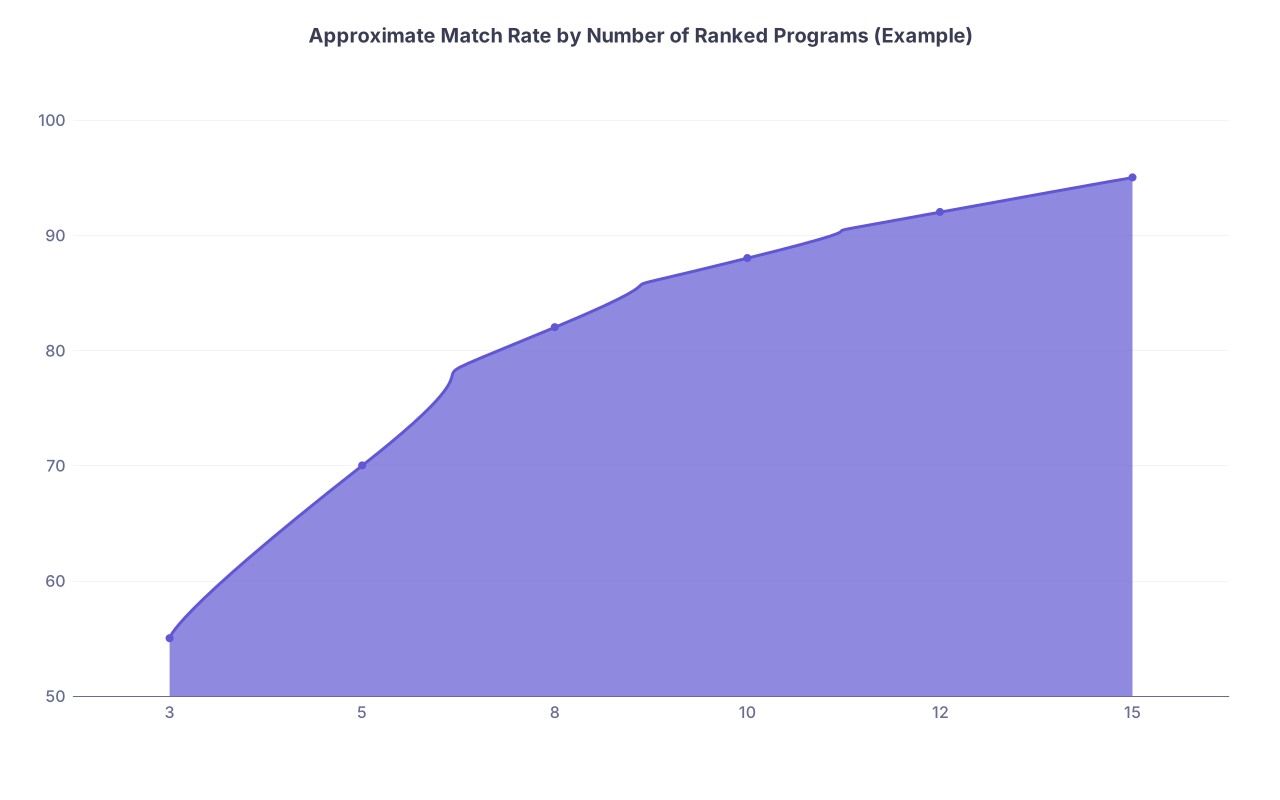
| Category | Value |
|---|---|
| 3 | 55 |
| 5 | 70 |
| 8 | 82 |
| 10 | 88 |
| 12 | 92 |
| 15 | 95 |
The trend is clear: longer (reasonable) lists are safer. Cutting out perfectly adequate unvisited programs just makes your list shorter and your risk higher.
Practical Rules of Thumb
Here’s the condensed playbook.
- If you interviewed there (even virtually) and could tolerate living there, it probably belongs somewhere on your list.
- If you’d truly rather go unmatched than train at a program—do not rank it.
- If you’re unsure, do more homework: resident conversations, alumni, city research.
- Rank by preference, not by who “seemed most interested” in you.
- Err on the side of including borderline-but-acceptable programs rather than leaving them off and gambling on SOAP.

FAQs
1. Can I rank a program if I didn’t interview there at all?
No. You can only rank programs where you had a formal interview and they can only rank people they interviewed. If you applied but never got an interview, they will not appear on your NRMP list and you cannot add them manually.
2. Should I rank a program where the interview went badly or felt “off”?
Maybe, but carefully. Ask yourself: did it feel off because of nerves and awkward small talk, or because you sensed genuine disrespect, disorganization, or major culture clash? If it was just you stumbling over an answer, that’s not a reason to drop them completely. If the vibe was truly toxic—do not rank, visited or not.
3. Does ranking a program I haven’t visited hurt my chances of matching there?
Not at all. Programs do not see your rank list. They have no idea where you put them or who else you ranked. The only thing that matters is whether they ranked you and where you ranked them relative to other programs.
4. What if I learn something negative about an unvisited program after certifying my list?
Once the NRMP rank list deadline passes, you cannot change your list. Do all your serious digging before certification. If something truly serious emerges (e.g., loss of accreditation), NRMP and ACGME occasionally step in, but that’s rare. Treat the deadline as final.
5. How many unvisited programs is “too many” on my rank list?
There’s no fixed number. I’ve seen successful matches where 100% of programs were virtual-only. The real question is: for each unvisited program, have you done enough homework to say, “Yes, I’d be okay spending the next 3–7 years of my life here”? If the answer is yes, it belongs on the list. If the answer is “I have no clue and did zero research,” that’s the problem—not the lack of a plane ticket.
Key points: You do not need to visit a program in person to rank it. Rank every program where you interviewed and would genuinely be okay training—after real research, not just vibes. And never shrink your rank list out of some fake rule about only ranking places you’ve physically seen.