
It’s November. You’re sitting with a spreadsheet of programs, interview invites dribbling in, and you keep hearing this word thrown around: “malignant.” One classmate swears a certain surgery program is toxic. Someone else says it’s fine, just “old-school.” Reddit is a dumpster fire of horror stories.
You’re stuck on the real question: How do you actually know if a residency program is malignant—and not just hard, or demanding, or competitive?
Here’s the answer you’re looking for: malignant programs are not just “tough.” They’re systematically unsafe, disrespectful, or exploitative. Residents don’t just feel tired; they feel trapped.
Let’s break down how to spot that before you sign away the next 3–7 years of your life.
First: What “Malignant” Really Means (And What It Doesn’t)
Forget the vague gossip. When people say “malignant residency,” they usually mean some combination of:
- Chronic violation of duty hours and gaming the system
- Culture of fear and retaliation for speaking up
- Lack of educational value – you’re cheap labor, not a trainee
- Bullying, harassment, or discrimination that’s tolerated
- Horrible outcomes – burnout, people quitting, poor boards, bad fellowship placement
Tough but solid training isn’t malignant. Example: busy trauma center, high expectations, blunt feedback, but:
- Leadership advocates for residents
- People actually like each other
- Alumni recommend it
- Residents are tired but not broken
Malignant is when residents say, “Don’t come here. I regret matching.”
The Core Warning Signs: What To Look For
1. Resident Body Language and “Vibes” On Interview Day
You’ll learn more from hallway conversations than from any glossy PowerPoint. Watch and listen like a hawk.
Red flags in how residents act:
- They look exhausted and flat, not just tired. Smiling on cue, then going blank.
- They avoid eye contact with leadership around.
- They say weirdly generic things: “We get great exposure.” “We’re like a family.” But can’t give specifics.
- They don’t joke about the program. Even in private. Residents in healthy programs sarcastically roast their lives nonstop.
- You hear: “It’s hard, but it makes you strong” with a tense face and no follow-up about support.
Good sign: a resident says something like, “Yeah, the ICU months are rough. But the PD actually changed X after we brought it up,” and they sound…normal. Not like they’re trying to convince themselves.
2. Program Director and Leadership Behavior
Leadership sets the tone. Some very straightforward filters:
Watch for these red flags in the PD/chair:
- Blame-heavy language: “Residents these days don’t want to work,” “We’re not here to coddle you.”
- They brag about how hard the program is more than how well it trains. “We’re the toughest program in the region.” That’s not a compliment.
- They mock wellness or mental health: “We don’t have a wellness curriculum, our wellness is competence.” I’ve heard this verbatim. Huge red flag.
- They’re vague or defensive about attrition (“People leave for personal reasons” with no details).
- They dismiss ACGME complaints or prior citations as “disgruntled residents.”
Good leadership signs:
- They can name specific changes they made in response to resident feedback.
- They openly discuss weaknesses of the program and what they’re doing about them.
- Residents interrupt them comfortably, joke with them, or push back a little without fear.
3. Duty Hours and Call: Watch How They Talk About It
No one is perfectly compliant 100% of the time. But the attitude around duty hours and call coverage tells you if you’re entering a pressure cooker.
Malignant patterns:
- Residents say they routinely work 80–90+ hours and write 75–80 in MedHub “because that’s what we’re told to log.”
- Covering extra call is “expected” with no comp time or gratitude.
- You hear: “Yeah, you’re technically supposed to go home post-call, but in reality you stay until the work is done.” Translation: post-call days don’t exist.
- Nobody mentions any system to monitor or fix duty hour violations.
Healthier pattern:
- Residents admit: “Some months hit the upper limit, but we report violations, and they adjusted X/Y rotation recently.”
- PD explicitly says: “If you’re consistently over 80 hours, I want to know. It’s my problem.”
4. Resident Outcomes: Attrition, Boards, and Fellowships
This is where numbers help.
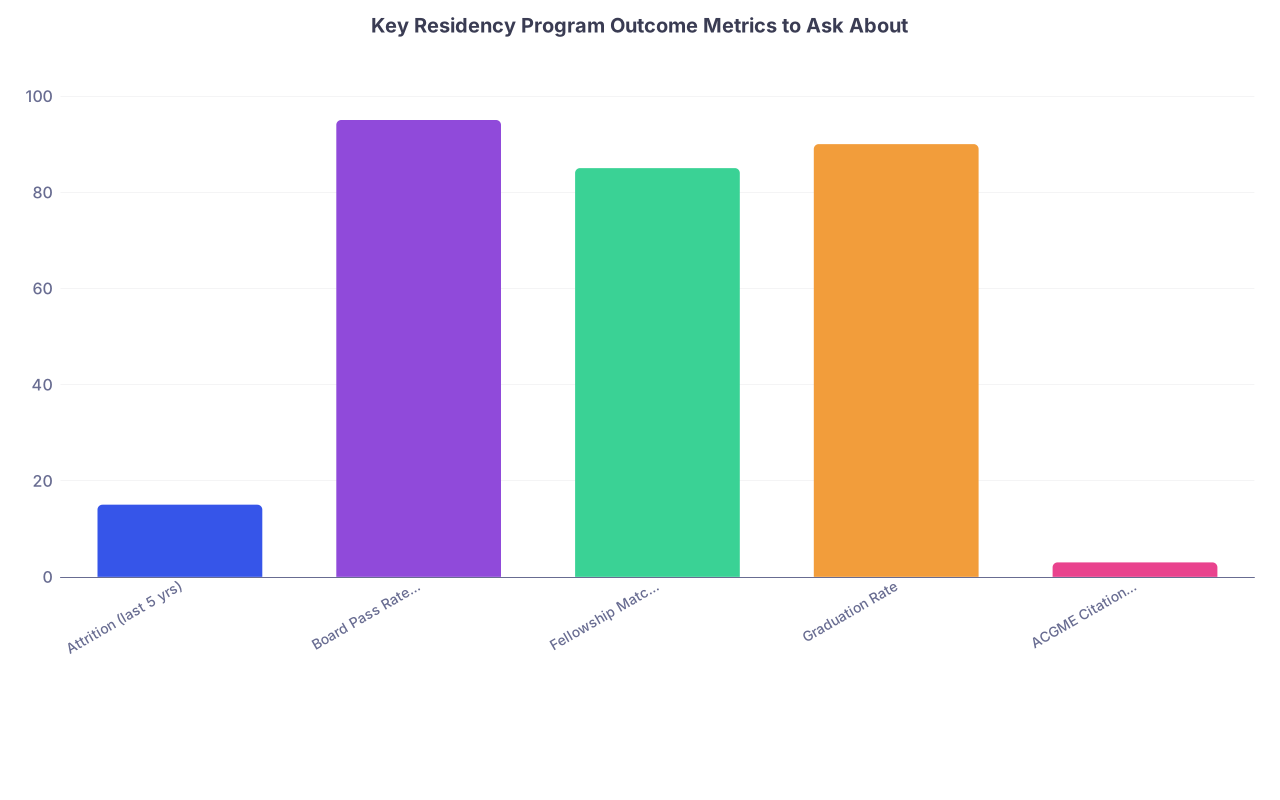
| Category | Value |
|---|---|
| Attrition (last 5 yrs) | 15 |
| Board Pass Rate (5 yrs) | 95 |
| Fellowship Match (if applicable) | 85 |
| Graduation Rate | 90 |
| ACGME Citations (recent) | 3 |
These numbers are fictional here, but this is exactly the type of data you want.
Ask directly on interview day or second looks:
- “How many residents have left the program in the last 5 years?”
- 1–2 for personal/health/family across 5+ years? Okay.
10% consistent attrition “for personal reasons”? That’s code.
- “What’s your first-time board pass rate over the last 5 years?”
- Anything under ~85–90% in most core specialties needs explanation.
- “How many grads pursue fellowship, and how do they do?”
- If everyone says they wanted community jobs but alumni lists suggest otherwise, be skeptical.
Malignant programs often have:
- Residents failing boards because they’re too burned out to study
- People quietly transferring after PGY-1 or PGY-2
- A culture where leaving is treated as betrayal instead of a signal
5. How They Talk About Feedback, Complaints, and Advocacy
This is huge. Malignant programs punish dissent.
Specific questions to ask:
- “What happens if a resident reports a concern about a faculty member?”
- “Can you give an example of resident feedback that led to a real change?”
- “When’s the last time the schedule or curriculum was changed based on resident input?”
Red flags:
- Vague answers: “We have an open-door policy” with no specific example.
- Residents say things like, “Yeah, we’ve brought that up…” and then trail off.
- They mention anonymous surveys, but nothing concrete that came from them.
- Someone quietly tells you “Be careful who you complain to.”
Positive signs:
- Specific: “We changed night float structure last July because our PGY-2s were drowning.”
- You hear about a faculty member being removed from teaching roles after multiple complaints.
- Chiefs and juniors disagree openly but respectfully in front of you.
6. Rotations That Sound Unsafe or Exploitative
Every program has tough rotations. You’re not going to have a spa year. I’m talking about rotations where the word “unsafe” keeps coming up.
Ask residents how they’d describe key rotations in one word. Then listen.
Red-flag descriptions:
- “Brutal,” “unmanageable,” “unsafe,” “soul-crushing,” “you just survive it.”
- “You don’t really have an attending; you just figure it out.”
- “We’re essentially the only provider at night, the attending is home and doesn’t answer sometimes.”
Also bad:
- Residents tell you they routinely skip meals or can’t use the bathroom for entire shifts.
- They describe frequent near-misses or errors that they chalk up to chronic exhaustion.
A hard but solid rotation sounds more like:
- “It’s heavy, but you learn a ton.”
- “You’re busy but the attendings are present and actually teach.”
- “You’ll be tired, but you come out confident.”
7. Discrimination, Harassment, and Who Actually Thrives There
If a place is malignant, marginalized residents usually get it worst.
Things to check:
- Look at who’s on the resident roster. Is there at least some diversity across gender, race, background?
- Ask: “How has the program responded to concerns around microaggressions or discrimination?”
- Listen for stories like:
- “We had a faculty who made repeated sexist comments and is still here.”
- “We brought up issues around bias and were told to be less sensitive.”
Talk to residents who look like you, or who share your background if possible. Ask them privately: “Would you recommend this program to someone like me?” Their face will answer before their words do.
8. What Current Medical Students and Alumni Say (Off the Record)
Your best intel often comes from:
- Residents from your med school who matched there
- Recent grads who rotated there as students
- Upperclassmen who interviewed and ranked them low
Questions to ask them:
- “Would you rank there again?”
- “If your sibling was going into this specialty, would you want them there?”
- “What surprised you most after starting?”
Patterns to take very seriously:
- Multiple people from different years say: “On paper it looks fine, but don’t go there.”
- People say they can’t talk about it over email/text and want to call instead. That’s not usually about good news.
9. Online Reviews: How To Use Reddit, SDN, and Scut Rumors Without Losing Your Mind
You should absolutely scan Reddit, SDN, specialty forums. But don’t treat them as gospel.
How to read them intelligently:
- Look for patterns, not one angry post. Same program flagged by 4–5 unconnected people over 2–3 years? Take that seriously.
- Weigh specific, detailed stories higher than “this place sucks.” Example: “On X rotation we routinely worked 100 hours, logged 80, and faculty said, ‘If you can’t hack it, you shouldn’t be in this specialty.’”
- Compare what you read with what you hear on interview day. If everything you read is glowing but interview vibes are off, trust your eyes.

How To Systematically Evaluate Malignancy: A Simple Framework
Here’s a quick-and-dirty structure you can actually use.
| Domain | 0 (Good) | 1 (Mixed) | 2 (Bad) |
|---|---|---|---|
| Resident vibe | Tired but content, candid | Guarded, some tension | Fearful, flat, evasive |
| Leadership attitude | Supportive, specific, owns problems | Vague, mildly defensive | Blaming, dismissive, authoritarian |
| Duty hours/call | Reported, mostly compliant | Occasional overages, “it happens” | Chronic violations, underreporting expected |
| Outcomes (boards/attrition) | Strong boards, minimal attrition | Average boards, some attrition | Weak boards, recurrent attrition |
| Feedback & advocacy | Real changes from feedback | Some lip service, slow changes | Retaliation, no meaningful changes |
| Safety/rotation structure | Hard but supervised, reasonable caps | Some unsafe-feeling stretches | Repeated stories of unsafe patient care |
| Culture & equity | Inclusive, diverse, real efforts | Mixed experiences | Repeated discrimination tolerated |
Add up your scores:
- 0–4 points: Probably fine, maybe even excellent.
- 5–8 points: Yellow flag. Dig deeper; second look, more backchannel intel.
- 9+ points: Very high risk of malignancy. Rank with extreme caution, if at all.
How To Ask The Hard Questions Without Torpedoing Your Interview
You don’t need to walk in like an investigator. You just need smart, neutral questions.
Use these:
- To residents:
- “What’s something about this program you’d change if you could?”
- “How often do you feel unsafe or too tired to function?”
- “How does leadership respond when residents are overwhelmed?”
- To PD/faculty:
- “Can you give an example of resident feedback that led to a significant program change?”
- “How do you monitor duty hours and prevent burnout?”
- “What support is there for residents struggling academically or personally?”

| Step | Description |
|---|---|
| Step 1 | Interview Invite |
| Step 2 | Pre-interview Research |
| Step 3 | Reddit/Alumni Intel |
| Step 4 | Interview Day Observations |
| Step 5 | Rank Higher |
| Step 6 | Seek More Info/Second Look |
| Step 7 | Rank Low or Not Rank |
| Step 8 | Red Flags? |
If someone gets defensive or irritated by these very reasonable questions, that’s your answer.
Common Myths That Get People Trapped In Malignant Programs
Let me be blunt about some lies people tell themselves.
Myth 1: “I can handle it. I work hard.”
Malignancy isn’t about stamina. It’s about chronic, system-level abuse and no support. You can’t “grit” your way out of an unsafe system.
Myth 2: “It’s worth it for the name.”
Prestige won’t help you if you’re miserable, fail your boards, or quit. Plenty of people match great fellowships from solid, not malignant, programs.
Myth 3: “All surgical/EM/ICU-heavy programs are malignant.”
Wrong. Some of the busiest programs I’ve seen are also the most resident-centered. High volume isn’t the problem; contempt and neglect are.
Myth 4: “I don’t have the stats to be picky.”
You can absolutely choose to rank fewer programs rather than knowingly putting a truly malignant one high. Matching somewhere awful is not “better than nothing” in every scenario.
FAQ: Malignant Residency Programs – 7 Key Questions
1. Is one unhappy resident enough to label a program malignant?
No. Every program has at least one miserable person in any given year. What you’re looking for is patterns: multiple residents, multiple sources, across different years, all pointing to the same specific problems. One bad story is a yellow flag; repeated, consistent stories are a red one.
2. Are community programs more likely to be malignant than university programs?
Not automatically. I’ve seen fantastic community programs with deeply supportive leadership and some university programs that were pure misery factories. What matters more is leadership culture and accountability, not whether there’s a big-name hospital logo on your coat.
3. How seriously should I take ACGME citations or warnings?
Very seriously—but with nuance. A single past citation that’s been addressed transparently can actually be a good sign of a program that improves and owns mistakes. Recurrent or recent citations (especially around duty hours, supervision, or professionalism) are a major red flag, especially if leadership seems defensive about them.
4. What if residents seem divided—some love it, some hate it?
That’s where you look at who feels what. If seniors are happy and juniors are drowning, maybe the program is in transition or just rough at the bottom. If residents with power (chiefs, favorites) are happy but more vulnerable folks (IMGs, women, racial minorities, parents) are struggling or leaving, that’s a culture problem. Inconsistent experiences are a signal to investigate harder, not a reason to shrug.
5. Is high workload alone a sign of malignancy?
No. High workload with support, supervision, and learning is demanding but not malignant. High workload with disrespect, fear, unsafe staffing, and no recourse is malignant. Ask yourself: are residents getting better and more confident over time, or just more numb?
6. What if I only notice red flags after I’ve already ranked them?
You’re not locked in until the rank list deadline. If you get new serious information—multiple credible stories of abuse, chronic duty hour violations, retaliation—you can and should adjust your list. Worst case, if you match somewhere you truly believe is unsafe, there are mechanisms (GME office, ACGME, ombuds) to seek help or even transfer, but that’s obviously not Plan A.
7. Is it ever worth ranking a clearly malignant program to avoid going unmatched?
Sometimes, but not always. If you’re in a non-competitive specialty, have reasonable stats, and a functional list, you don’t need a known malignant program as “insurance.” In ultra-competitive situations, some applicants decide any match is better than SOAP or reapplying; others would rather wait than spend years in a toxic environment. That’s a personal risk calculation—but go in with your eyes open, not telling yourself “it probably isn’t that bad.”
Here’s your next step today:
Pick your top 5–10 programs and write down three pointed questions you’ll ask residents and three you’ll ask leadership at each interview about culture, duty hours, and feedback. Don’t wing it. Show up with those questions in your notes and actually use them. Your future self will be very, very glad you did.