The people who decide your fate notice far more about your interview behavior than you think—and they talk about it behind closed doors.
Let me walk you through what actually gets noticed, what gets written down, and what quietly kills applicants who look great on paper.
The Quiet Surveillance You Do Not See
Here’s the first truth: your “interview day” starts the moment you step within eyesight of the program. Not when the Zoom link opens. Not when you sit down with the PD. The second a coordinator can see your name badge or your Zoom tile appears, you’re being evaluated.
Every person you interact with is a data point.
Coordinators, chiefs, residents, even the PGY-1 who’s clearly half-awake at 6:45 AM—programs use them all as sensors. They notice patterns you think are invisible. They report those patterns back in short, brutal statements:
- “Nice, but seemed disinterested.”
- “Treated staff weirdly differently than faculty.”
- “Came off entitled.”
- “Loved them. I’d take call with this person.”
Those one-line comments matter more than your Step 2 score once you’re in the serious discussion tier.
Let me spell out the unwritten rules—the etiquette program staff actually judge you on.
How You Treat the People Who “Don’t Matter”
This is the single biggest unwritten rule: we test whether your personality changes with hierarchy.
On every interview day I’ve been part of, there was at least one candidate one of us flagged for this. They were sugary sweet with the PD. Friendly with attendings. Barely made eye contact with the coordinator. Talked over the junior resident. Cut off another applicant in conversation.
We notice. And we absolutely talk about it.
Typical behind-the-scenes exchange in the post-interview debrief:
Chief: “Applicant 17?”
Coordinator: “He was… fine, but he didn’t thank me once, and he interrupted three other people on Zoom.”
PD: “Okay. Drop him down. We have enough good people.”
You want the coordinator, the chief resident, and the randomly assigned tour resident to all say the same thing: “Easy to talk to. Respectful. Seemed normal.”
Concrete, specific behaviors that get noticed:
- Do you say “good morning” and use people’s names?
- Do you thank the coordinator explicitly at the end of the day?
- Do you include quieter applicants in a group conversation or dominate the airspace?
- Do you say “thank you” after breakout room transitions on Zoom, or do you just stare and log off?
If you’re warm with faculty and lukewarm with everyone else, you look transactional. Programs assume you’ll be toxic once you’re a resident.
The Unspoken Dress and Demeanor Code
Nobody will email you: “We expect X.” But there is a baseline professional look and behavior that’s assumed in every specialty.
You don’t have to be fancy. You do have to look like you understand you’re at work.
Clothing
No one’s docking you for a suit color, but we do notice extremes.
We’ve talked about:
- The candidate in a wrinkled shirt that looked like it came from the car floor.
- The person whose tie was halfway loosened by the end of the day.
- The “I’m interviewing from bed” Zoom candidate with a headboard behind them.
Are they automatic rejections? Not necessarily. But those details become tiebreakers when we’re deciding between two otherwise similar people.
Baseline unwritten expectations:
- In-person: conservative, clean, properly fitting, not distracting.
- Virtual: solid background (or at least uncluttered), you framed in the center, good lighting, full professional top (no hoodies, no casual shirts).
No one cares that your suit isn’t bespoke. They care that you look like you took the day seriously.
Demeanor
Interview day isn’t happy hour. You’re allowed to be human and relaxed, but there’s a line.
Things that quietly hurt you:
- Laughing too loudly or making sarcastic comments about other programs, schools, or patients.
- Talking about how hungover you were last weekend as a “funny” icebreaker.
- Being overly familiar with attendings on a first meeting (“So, Mike, tell me about your research” when his name tag says “Michael Johnson, MD, Program Director”).
Program staff are constantly asking themselves one question:
“Would I trust this person alone with a vulnerable patient at 3 AM?”
If your demeanor suggests “maybe not,” you’re done.
Email, Scheduling, and the Hidden “Professionalism File”
You think sending an email to the coordinator about scheduling is purely logistical. It is not. That communication sets your baseline professionalism score long before you appear on screen.
Here’s a typical internal discussion you never see:
Coordinator: “Applicant X sent 7 emails over one week, all with ‘URGENT’ in the subject line, about minor schedule changes.”
Faculty: “That’s how they’ll be as a resident.”
We remember the high-maintenance ones.
| Behavior Type | How It’s Interpreted |
|---|---|
| Polite, concise emails | Professional, easy to work with |
| Repeated rescheduling without apology | Disorganized, self-centered |
| All-caps/urgent subject lines | Drama, poor judgment |
| Thank-you to coordinator after match | Genuine, team-oriented |
| Ghosting for post-interview socials | Low interest / poor professionalism |
Here’s what gets you quietly upgraded:
- Clear subject lines: “Residency Interview – [Your Name] – Scheduling Question”
- Short, respectful messages, no emotional drama.
- A simple thank-you at the end of the season to the coordinator and maybe the PD’s assistant. Not a love letter. Two sentences.
And here’s what gets you quietly downgraded:
- Demanding tone: “I need to reschedule ASAP, this time doesn’t work for me.”
- Treating the coordinator like a travel agent.
- Last-minute cancellations with no acknowledgment of inconvenience.
By the time you show up on-screen, the program already has a rough sense of whether you’re low-touch or high-drama. You really don’t want the second label.
Zoom Etiquette: The New Hidden Curriculum
Virtual interviews exposed every habit you got away with in lecture. Programs adjusted faster than applicants did.
I’ve watched PDs write comments in real time during virtual interview days like:
- “Camera way below eye level, looking down at us.”
- “Appears to be in cafeteria? Background noise.”
- “Clearly texting during resident Q&A.”
You think we don’t notice? We do. The residents absolutely do.
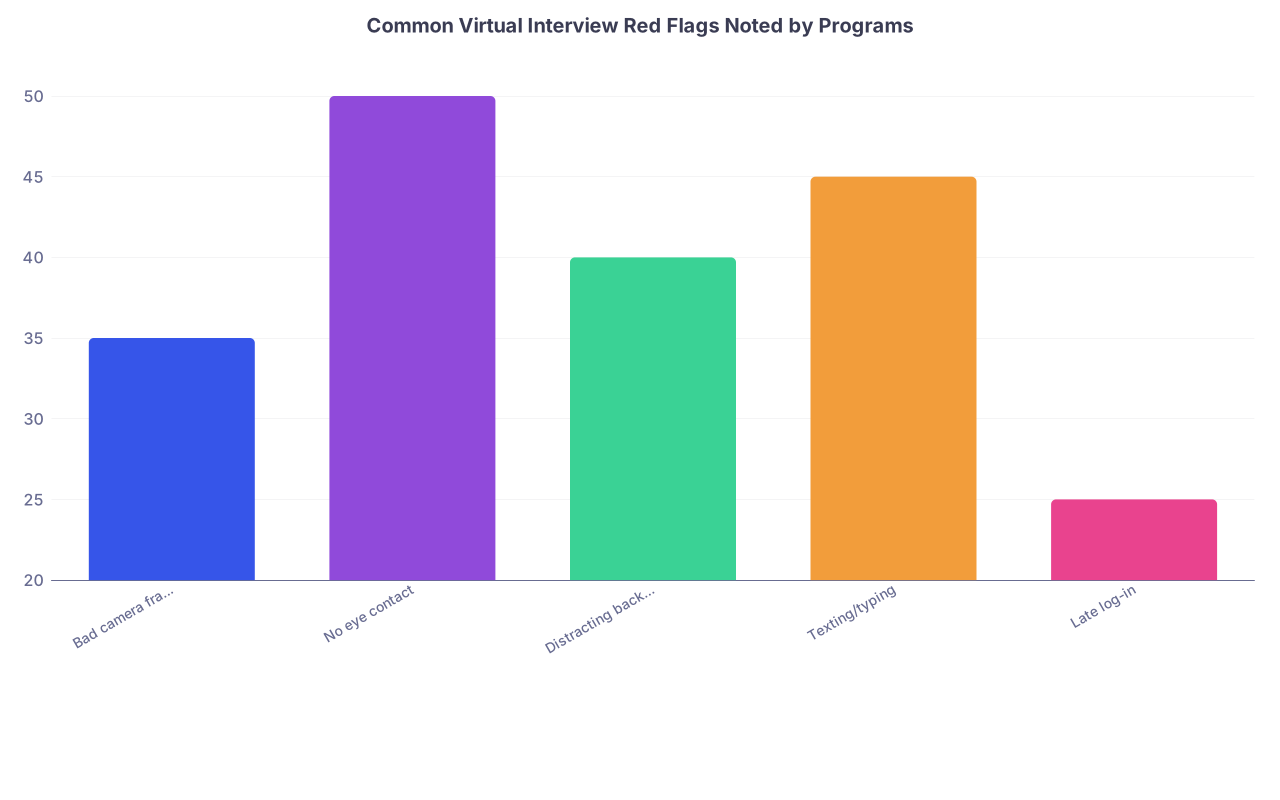
| Category | Value |
|---|---|
| Bad camera framing | 35 |
| No eye contact | 50 |
| Distracting background | 40 |
| Texting/typing | 45 |
| Late log-in | 25 |
Unwritten virtual etiquette rules program staff expect you to know without being told:
- Log in early. Sitting in the waiting room 5–10 minutes before start time tells the coordinator you’re reliable.
- Camera at eye level. Looking down at a laptop on your lap makes you look disengaged or arrogant.
- Real background or clean wall. No unmade beds. No cluttered kitchen. No roommate walking by in shorts.
- No obvious multitasking. Glancing down briefly is fine. Looking off-screen and typing repeatedly? We all assume you’re on your phone or chat.
- Mute intelligently. When in larger groups, mute; in small interview rooms, stay unmuted so you can naturally respond.
I’ve seen borderline applicants get bumped up because they handled a glitch well. Internet dropped, they rejoined quickly, calmly apologized once, moved on, and stayed engaged. Cool under pressure counts for more than a perfect connection.
Micromoments During the Day That Cost You
Internally, we don’t usually destroy an applicant over one tiny misstep. But several small moments added together become a clear story.
Here are the places candidates underestimate how much we’re paying attention.
The Pre-Interview Small Talk
That first 10–15 minutes of “awkward chat” before things really begin?
Not filler. It’s your soft skills exam.
The coordinator is watching:
- Do you stare at your phone instead of introducing yourself to other applicants?
- Do you respond with one-word answers when someone asks where you’re from?
- Do you dominate the conversation with all your “accomplishments”?
The residents are watching:
- Are you relatable?
- Would they want you in their work room?
- Do you seem curious about the program and about other humans?
The Resident-Only Session
Here’s a secret: what you say to residents is often summarized to faculty in one sentence.
Classic debriefs sound like:
- “She was genuine, asked good questions, didn’t badmouth anyone. I liked her.”
- “He kept angling for fellowship talk, seemed uninterested in the actual residency.”
- “Seemed to be interrogating us like we were hiding something.”
Unwritten rule: you’re being evaluated more on vibe here than on content. Residents are deciding: “Will this person pull their weight and not be a jerk at 3 AM?”
The Goodbye
The end of the day is not a formality. Program staff notice who still has gas in the tank.
You don’t need to give a speech. They just expect:
- Camera still on.
- A simple “Thank you all so much for your time today, I really appreciated hearing about X.”
- Eye contact and a normal facial expression that doesn’t scream “I’m already out the door.”
The ones who log off in silence stand out for the wrong reason.
Questions You Ask That Raise Red Flags
Another unwritten rule: you are judged at least as much by your questions as by your answers.
I’ve watched faculty scribble “poor judgment” next to an applicant’s name based on one question.
Here’s the kind of thing that sets off alarms:
- Asking about moonlighting as your first or second question for a categorical spot.
- Asking about vacation flexibility in a way that sounds like you’re planning long absences.
- Pressing residents to gossip about which attendings are “toxic.”
- Fishing for rank list guarantees: “So where would you rank someone like me?”
You’re allowed to care about wellness, vacation, moonlighting, and malignant faculty. You just have to signal that patient care and training come first.
Good questions sound like:
- “How do you support interns in transitioning to increased responsibility throughout the year?”
- “Can you walk me through how feedback is given and how remediation is handled if someone struggles?”
- “What distinguishes residents who really thrive here?”
Those signal you’re thinking like a professional, not like a tourist browsing residency “perks.”
Behind the Closed-Door Meeting: How Etiquette Actually Affects Your Rank
Let me pull back the curtain on how this plays out when we build the rank list.
What you imagine:
- “We sort Step 2 scores, then research output, then class rank.”
What really happens for serious candidates:
- The PD and selection committee pre-sort based on file (scores, letters, MSPE).
- Post-interview, there’s a discussion day where people bring their impressions.
- This is where your etiquette lives or dies.
It sounds like this:
Faculty 1: “On paper, very strong. Interview was okay, but pretty rehearsed.”
Faculty 2: “I actually liked them more in the small group.”
Coordinator: “They were very kind, sent a thank-you, flexible with scheduling.”
Chief: “Residents liked them. Said they seemed like they’d fit well.”
That candidate moves up the list.
Now compare:
Faculty 1: “Strong CV, came off a bit arrogant.”
Coordinator: “We had to chase them twice for confirmations, and they sounded annoyed in emails.”
Residents: “Didn’t ask about the program at all, mostly talked about fellowship prestige.”
That candidate slides down into the “if we get them, fine; if not, also fine” zone.
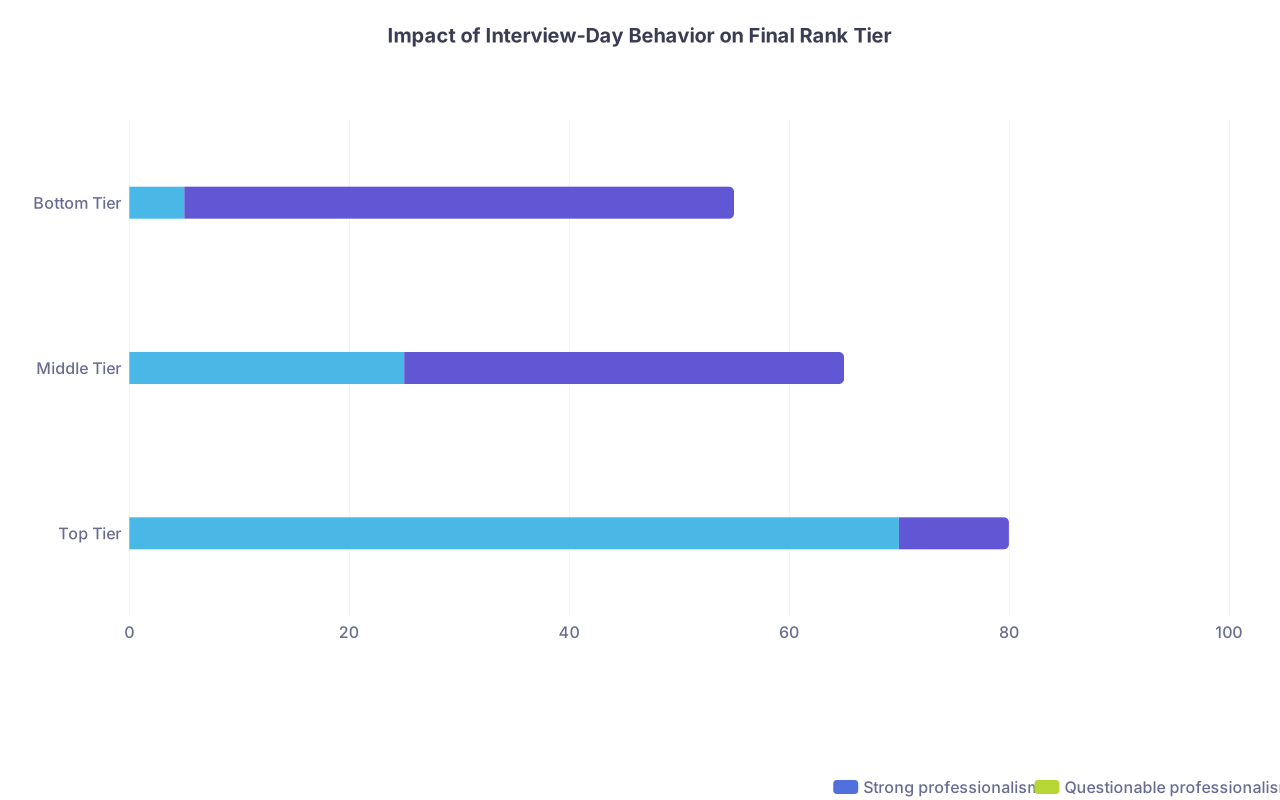
| Category | Strong professionalism | Questionable professionalism |
|---|---|---|
| Top Tier | 70 | 10 |
| Middle Tier | 25 | 40 |
| Bottom Tier | 5 | 50 |
Numbers are illustrative, but the pattern is real: once you’re in range academically, etiquette and “would I work with this person?” heavily determine your final position.
Programs don’t use a formal “etiquette score.” They just let the human memory of your behavior decide whether they fight for you or let someone else take your spot.
The Thank-You Note Reality Check
Let me kill a myth while we’re here: a thank-you email will not rescue a bad interview. Ever.
But the absence of any thank-you, across all programs, sends a subtle message: “I’m doing the bare minimum.”
Here’s the inside take:
- Some PDs don’t care about thank-yous at all.
- Some skim them for signs of weirdness or unprofessional language.
- Coordinators sometimes notice who thanks them vs only faculty.
You don’t need to write an essay. One short, personalized note to the PD or main interviewer is enough. If you had a genuine connection with a resident or faculty, a brief note to them is fine too.
Things that hurt you:
- Mass-looking, generic thank-you templates with the wrong program name. (Yes, we see this every year.)
- Gushing, emotional, almost love-letter style emails.
- Pushy language about ranking: “You’re my number one choice” sent to ten programs.
The unwritten rule: thank-yous are minor plus points or neutral. They become negative only when they’re sloppy, desperate, or dishonest.
How to Actually Behave: The Short Version
Strip away all the noise and the rules are simple, but not easy.
You’re being evaluated on whether you:
- Treat everyone—especially low-status staff—with respect.
- Look like someone patients will trust and colleagues won’t dread being on call with.
- Handle small stresses (tech glitches, schedule confusion, awkward silences) calmly.
- Show genuine curiosity about the program rather than just angling for status.
If you behave like a junior colleague, not a guest star, you’ll land where you belong.